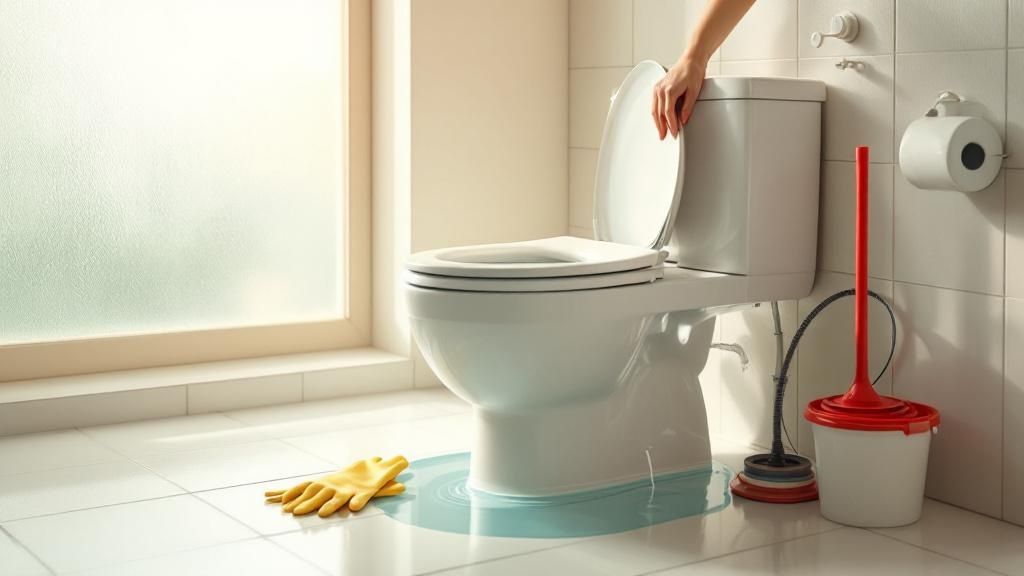
That first wave of panic when you see the toilet water rising is something no homeowner wants to experience. But your first move is actually quite simple: stop the water. Whatever you do, don't flush it again. Look for the small shut-off valve on the wall behind the toilet and turn it clockwise until it stops.
A toilet overflow is one of those messy, stressful household emergencies that always seems to happen at the worst possible time. For homeowners from Salinas to Pacific Grove, knowing exactly what to do in those first few critical seconds can mean the difference between a minor cleanup and a full-blown water damage disaster. This isn't a DIY tutorial; it's a guide to help you manage the immediate crisis and know when to call for professional help.
Taking immediate action is the key to minimizing damage. Before you do anything else, you need to cut off the water supply.
Your Immediate Toilet Overflow Action Plan
This table is your quick-reference guide for the first moments of an overflow. Follow these steps immediately to get the situation under control before calling a plumber.
| Action | How to Do It | Why It's Critical |
|---|---|---|
| Stop the Water Supply | Find the small oval handle on the wall behind the toilet. Turn it clockwise until it's tight. | This immediately halts the flow of new water into the tank, stopping the overflow at its source. |
| Lift the Tank Lid | Carefully remove the ceramic lid from the toilet tank and place it somewhere safe. | This gives you access to the internal parts, allowing you to manually stop the water if the valve is stuck. |
| Secure the Flapper | Reach into the tank (the water is clean!) and press the rubber flapper down over the drain hole at the bottom. | This creates a seal that prevents any more water from entering the bowl. |
| Prop Up the Float | Gently lift the float ball or float cup until the water stops running. | This tricks the toilet into thinking the tank is full, shutting off the fill valve. |
Once you've stopped the active overflow, you can take a breath. The immediate crisis is over, but the next step is figuring out why it happened. This is where professional diagnosis is crucial.
As a family-owned plumbing company serving this area since 1988, we've seen every kind of overflow you can imagine. The most important lesson is always the same: act fast to stop the water, then call in a professional to safely diagnose the real problem.
How To Stop the Water and Assess the Situation
That moment of panic when you see the water in your toilet bowl rising instead of falling is something no homeowner wants to experience. But your first move is absolutely critical. You have to stop more water from entering the bowl.
Behind your toilet, you'll find a water line coming from the wall that leads to the tank. On that line is a small, usually oval-shaped handle—that’s your toilet's shut-off valve. Your job is to turn it clockwise as far as it will go. This simple action immediately cuts off the water supply feeding the overflow.
What if the Valve Is Stuck?
I get it. In many older homes around Salinas and Carmel, these valves can get caked with mineral buildup and feel like they're cemented in place. If it won't budge, don't try to be a hero and force it. The last thing you want is a broken valve and a much bigger plumbing emergency on your hands.
Instead, you may need to shut off your home's main water supply. If you're not sure how to do that, our guide on how to shut off your main water supply is something every homeowner should read before disaster strikes.
Even with the water off, there’s one more trick. Carefully take the heavy ceramic lid off the toilet tank and set it somewhere safe. Inside, you'll see a float mechanism—either a ball or a cup. Simply lift it up. This manually stops the fill valve from letting any water left in the pipes from entering the tank.
This image shows you exactly what to look for—the shut-off valve is your first line of defense.
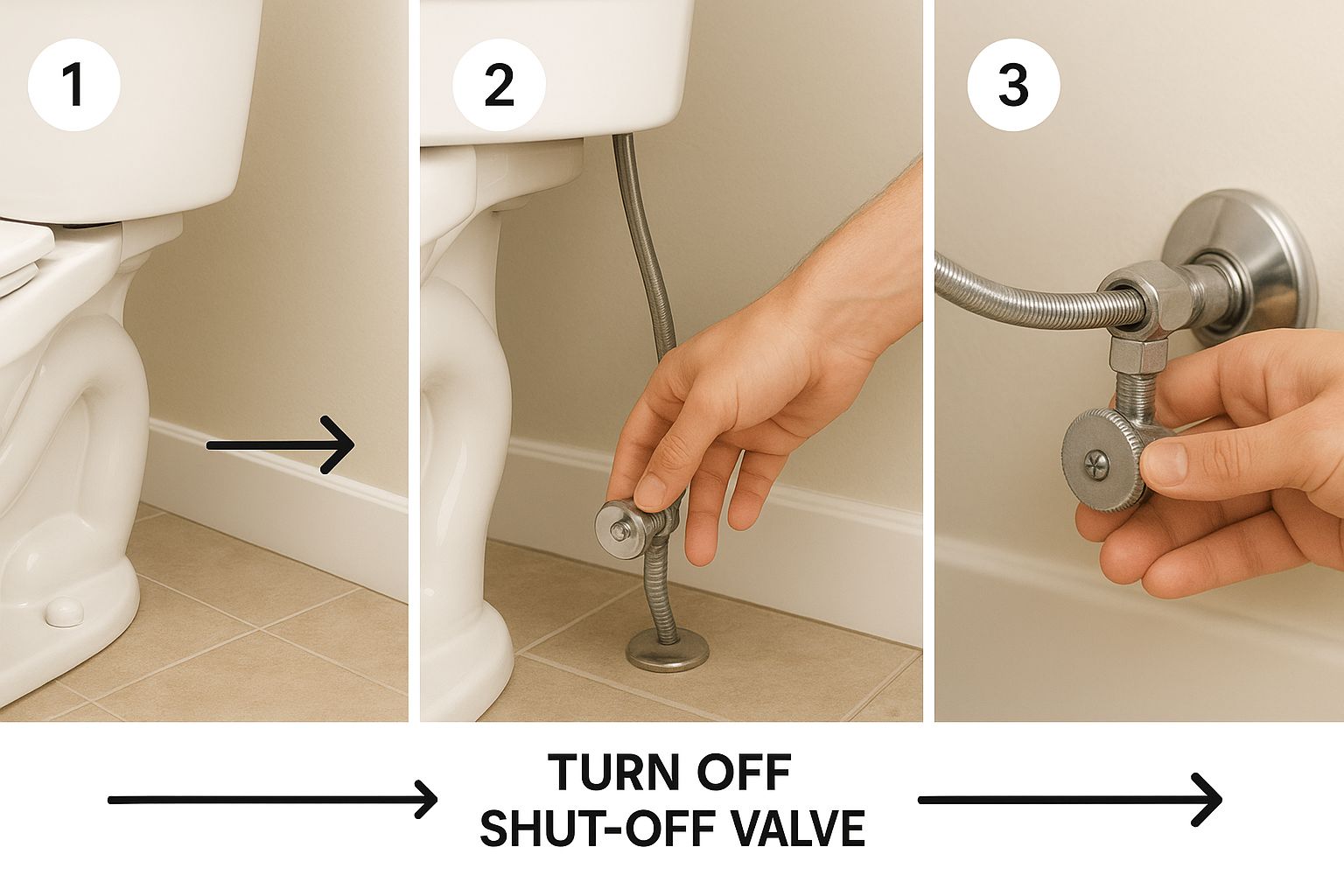
Knowing where this little valve is and how to turn it is the quickest way to get the situation under control.
Once the water has stopped rising, it's tempting to reach for a plunger. A simple clog can sometimes be dislodged, but if it doesn't clear on the first or second try, stop. Plunging repeatedly can make the problem worse. And never pour chemical drain cleaners into a toilet that is completely blocked. Those caustic chemicals will just sit there, potentially damaging your porcelain and creating a hazardous situation. The safest bet is to call a pro.
Common Causes of Toilet Overflows in Monterey County
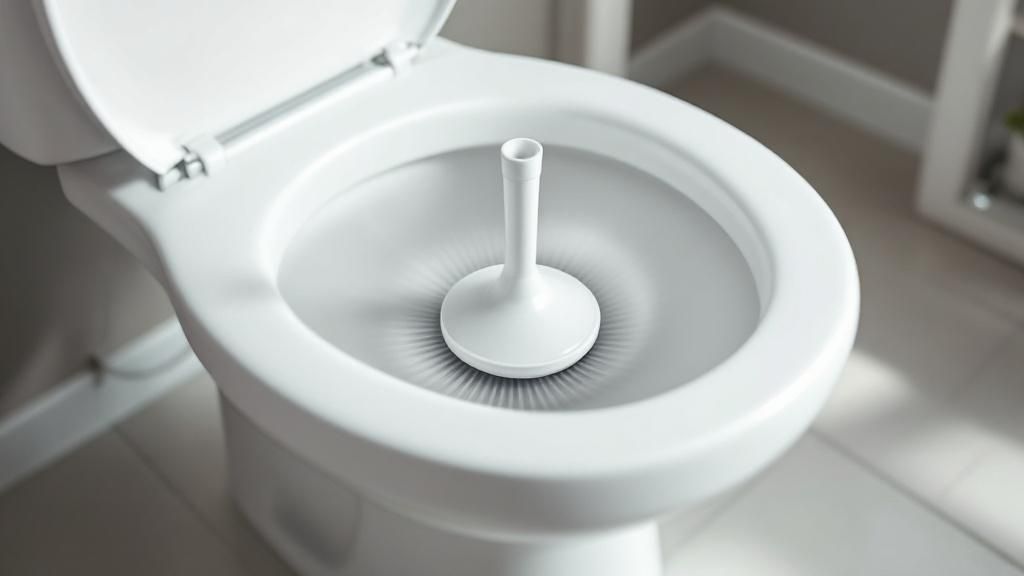
After you've managed to stop the rising water, the big question is always, "Why on earth did that happen?" Getting to the bottom of the cause is the only way to make sure it doesn't happen again next week. Here in Monterey County, we tend to see a few key culprits over and over.
With over 35+ years of experience as a family-owned plumbing company, we've learned that local conditions are a huge factor. The reason for a backup in a Marina home can be totally different from one in Carmel Valley. Knowing those local quirks is how we diagnose the problem and fix it fast.
Simple Clogs and Foreign Objects
This is a common reason we get called out. Your toilet is designed to flush human waste and toilet paper. That’s it. Anything else—even products that claim to be "flushable" on the package—can create a massive headache. We frequently find clogs are made of paper towels, dental floss, feminine hygiene products, or sometimes a curious child's toy. These items simply don't break down in water the way toilet paper does.
Main Sewer Line Blockages
What if it's not just the toilet? If you notice that multiple drains in your house are slow, or if water is backing up in the shower when you flush, the problem likely isn't your toilet at all. It's probably a clog in your main sewer line. This is an especially frequent issue for homeowners in Watsonville and other local communities blessed with beautiful, mature trees.
Tree roots are relentless. They're naturally drawn to the moisture and nutrients inside your sewer pipes. They'll find the tiniest crack and worm their way inside, eventually growing into a dense mat that completely blocks the pipe and sends wastewater right back into your home. This is a serious problem that requires professional equipment to solve.
Faulty Toilet Components
Sometimes, the problem isn't a clog but the toilet itself. The parts inside the tank are what control the water, and when they wear out, an overflow can happen even if the drain is perfectly clear. A worn-out flapper that no longer creates a proper seal or a broken fill valve that continuously lets water run are common offenders. These problems can also lead to quiet, slow leaks that waste water. If you're concerned about hidden leaks, you can learn more about how to detect a water leak.
Safely Managing The Cleanup Process
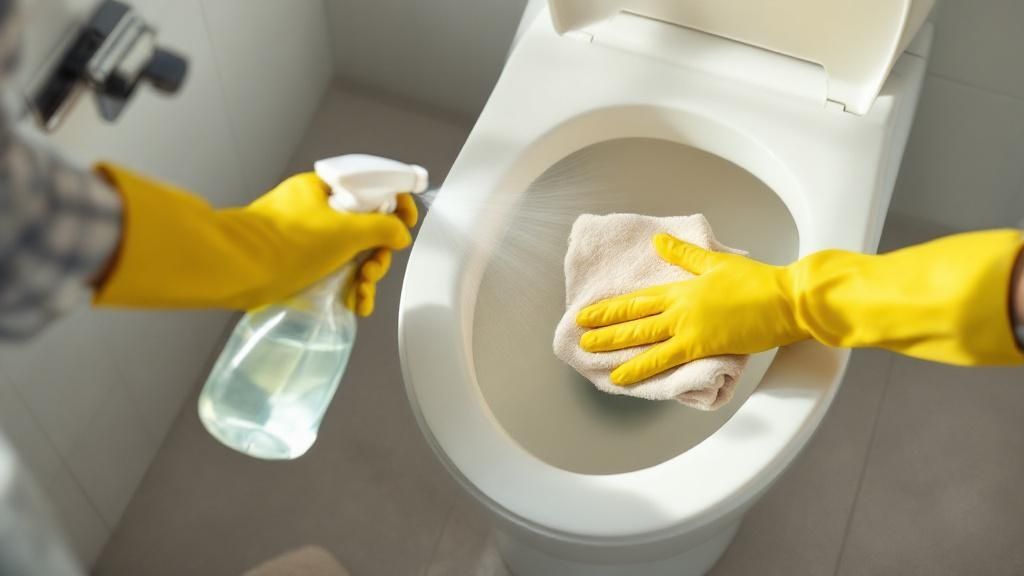
Okay, you’ve stopped the gusher. Now, the real work begins. Safely tackling the cleanup is every bit as critical as stopping the flow, but it's crucial to understand that not all overflows are the same. Before you even think about reaching for a mop, you need to know exactly what kind of water you're up against.
If the water came from the toilet tank itself and hasn't mixed with bowl contents, you're likely dealing with "clean water." However, if the water overflowed from the bowl after a flush or is backing up from the drain, you have a much more hazardous situation.
Clean Water vs. Black Water
When a sewer line backs up, it pushes "black water" into your home. This isn't just dirty water; it's a serious biohazard, potentially loaded with harmful bacteria and pathogens that can make you sick.
- Clean Water: This usually comes from a problem with a supply line or a tank part that failed. While it can cause significant water damage, it doesn't carry the same immediate health risks.
- Black Water: This is water that has come up from the sewer line, meaning it contains raw sewage. This is not a DIY cleanup job. Contact with black water requires professional remediation to make sure your home is properly and safely sanitized.
For a minor spill involving only clean water, you can perform a basic cleanup while waiting for a plumber to address the cause. Put on rubber gloves and use old towels to soak up the water. Then, use a quality disinfectant to wipe down the toilet, floor, and any affected surfaces.
The biggest mistake we see homeowners in coastal communities like Monterey and Carmel-by-the-Sea make is underestimating moisture. Our damp, foggy climate is the perfect breeding ground for mold. Even a small amount of water seeping into your subfloor or drywall can lead to a major mold problem down the road.
If carpets or rugs got soaked, you need to act fast to prevent permanent damage. You can learn some general tips on the best way to dry carpet after cleaning but for water from a toilet overflow, professional assessment is recommended.
Of course, the best way to handle a flood is to stop it before it ever starts. We have a whole guide on how to avoid floods with proper drain maintenance that can help. When in doubt, especially with water damage, calling a professional is always the safest bet.
Knowing When to Call a Professional Plumber
While a trusty plunger can sometimes save the day, it's so important to know when you're facing something more serious. Recognizing the difference between a minor jam and a major plumbing problem is what protects your home from serious water damage. Calling our team isn't throwing in the towel; it's the smartest, safest move you can make.
You should pick up the phone right away if you spot any of these red flags. These are clear warnings of a deeper issue that a plunger just can't touch.
Signs of a Deeper Plumbing Problem
- The Toilet Overflows Repeatedly: You plunge the toilet, it seems to work, but the very next flush brings the water right back up. This is a classic sign the blockage is way down the line, far beyond a plunger's reach.
- Multiple Drains Are Backing Up: Is your shower drain making a weird gurgling sound every time you flush the toilet? Have you noticed the kitchen sink in your Castroville home is draining slowly? This almost always points to a blockage in your main sewer line.
- You See Water Backing Up Elsewhere: When a home's main line is clogged, all that wastewater has nowhere to go but back up into your house. It usually shows up at the lowest point, like a basement floor drain or a ground-floor shower.
As a family-owned company serving communities from Prunedale to Pacific Grove since 1988, we understand the specific challenges of our local plumbing systems. Whether it’s invasive tree roots in Carmel Valley or aging pipes in Salinas, we’ve handled it all.
If you're dealing with any of these issues, or if you just feel out of your depth, it’s time to bring in the pros. Don't risk making a bad situation worse. Our team has the right equipment, like video camera pipe inspectors and hydro-jetting tools, to find the real problem and fix it correctly the first time.
For those urgent situations that just can't wait, take a look at our emergency plumbing services to get help on the way, fast.
Your Top Toilet Overflow Questions Answered
When you're staring at a toilet that's backing up, it's easy to feel panicked. We get calls all the time from worried homeowners across Monterey County who are in the middle of that exact messy situation. With over 35+ years of local plumbing experience, we've heard just about every question there is. Here are some straightforward answers to the most common ones.
Should I Use Chemical Drain Cleaners on an Overflowing Toilet?
Our professional advice is a hard no. We strongly advise against pouring chemical drain cleaners into a clogged toilet.
Those harsh chemicals are rarely powerful enough to dissolve the serious clogs that cause a toilet to overflow. Even worse, they can eat away at the older pipes common in many homes around Pacific Grove and Seaside, which can lead to much bigger, more expensive problems down the line. When the toilet is already backed up, the chemicals have nowhere to go. They just sit in the bowl, creating a toxic stew that is a serious health risk. Our team can clear the blockage safely without putting your health or your home's plumbing on the line.
How Do I Keep My Toilet from Overflowing Again?
The best fix is prevention. It really comes down to being mindful of what you're flushing. The only things that should ever go down your toilet are human waste and toilet paper—that’s it. So-called "flushable" wipes are one of the biggest culprits we see, along with paper towels and other hygiene products. They just don't break down properly and are notorious for causing clogs.
If you live in an area like Carmel Valley or Prunedale with a septic system, or you have an older home anywhere in the Salinas area, preventative maintenance is your best friend. A proactive drain inspection can spot issues like creeping tree roots before they turn into a sudden, messy emergency.
Most toilet overflows are completely preventable. Just by being careful about what goes down the drain and getting your system checked out once in a while, you can sidestep most plumbing headaches. Knowing what's a true emergency and what isn't can save you a lot of stress and money. To learn more, take a look at our guide on what counts as a plumbing emergency.
When you're dealing with a clog that won't budge or a toilet that keeps overflowing, don't wait. Call the team that’s seen and fixed it all. Contact Alvarez Plumbing for fast, reliable, and professional service you can trust.