That gushing sound of water from a burst pipe is a noise no homeowner in Salinas or Carmel-by-the-Sea ever wants to hear. In that moment, knowing how to shut off your main water supply is the single most critical action you can take to stop a small problem from turning into a full-blown catastrophe. It's the move that can save your property from thousands of dollars in water damage.
Your First Step in a Plumbing Emergency
Finding that shut-off valve quickly is what separates a moment of panic from a manageable situation. For over 35 years, our family at Alvarez Plumbing has been right there with our neighbors from Marina to Pacific Grove, helping them navigate these exact high-stress moments. This guide isn't a DIY manual; think of it as your emergency playbook—a quick-start plan to protect your home and know when it's time to call a licensed plumber.
Protecting Your Home Before Help Arrives
The immediate goal is simple: stop the flow of water to prevent any more damage. A serious leak can quickly warp hardwood floors, ruin drywall, and invite mold growth—a real concern with the coastal fog we get in places like Seaside and Castroville. When you shut off the water, you're taking back control.
But turning off the valve is just the first step. The root cause—whether it’s a corroded pipe, a busted water heater, or a leaky connection—is still there waiting for a professional fix. This is especially true given the variety of homes in our area; the plumbing in a historic Pacific Grove house is a world away from what you'll find in a newer Prunedale development.
As a family-owned business since 1988, we've truly seen it all. The homeowners who navigate these situations best are the ones who know two things: where their main shut-off is located and when it's time to call a licensed plumber to handle the actual repair.
While it's good to know where your valve is, remember that older valves can be stiff or fragile. Forcing it can cause it to break, making things much worse. If you can't get the valve to turn or you're not 100% sure which one it is, the safest bet is to call us for professional help. We're here 24/7 because we know emergencies don't stick to a 9-to-5 schedule.
Locating Your Shut-Off Valve in Monterey County
When a pipe bursts, the last thing you want is a frantic scavenger hunt for your main water shut-off valve. Knowing its location ahead of time is one of the most empowering things you can do as a homeowner. The layout of your property, whether it's a hillside home in Monterey or a classic ranch-style house in Salinas, is the biggest clue to finding it. Learning where to look is the first real step in knowing how to shut off your main water supply before a small leak becomes a major disaster.
For many homes we service, from Watsonville down to Carmel Valley, the first place to check is out by the street. Look for a concrete or plastic box, often labeled "WATER," set right into the ground near the curb. Pop the lid off, and you'll see the water meter. You might see two valves; the one on the "street side" of the meter belongs to the utility company, but the one on the "house side" is yours to control.
Common Valve Locations and Types
If you don't find it at the curb, your next best bet is along an exterior wall of your house. It’s often located near the hose bib (your outdoor faucet) or where you see a main pipe coming up through the foundation. In some of the newer developments in Prunedale or Marina, it might be tucked away inside the garage or a utility closet.
In short, you'll likely find one of two kinds of valves:
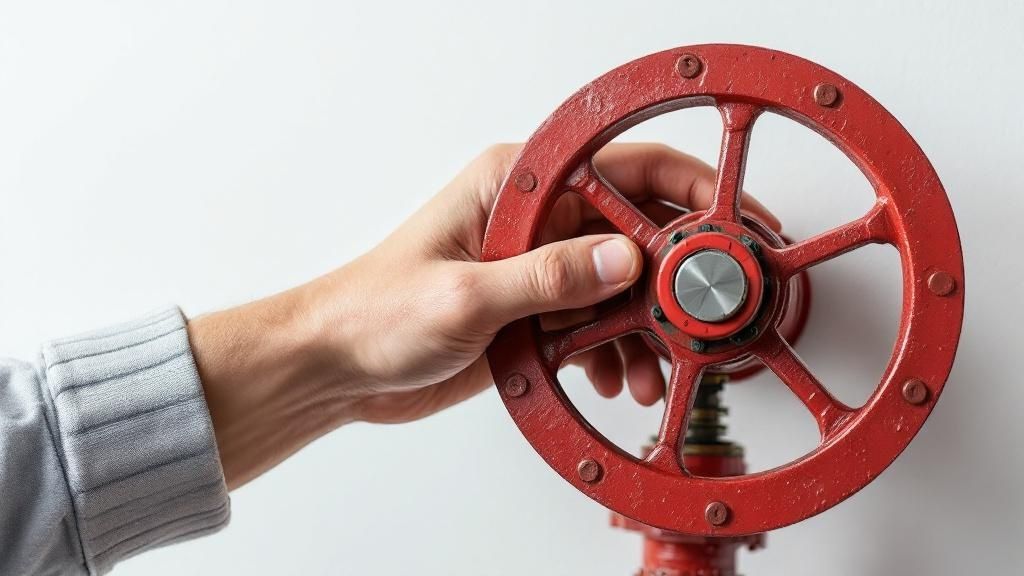
- Gate Valve: A round, wheel-like handle that you turn clockwise several times to close.
- Ball Valve: A simple lever handle that only needs a quarter-turn. When the lever is parallel with the pipe, water is on; when it's perpendicular, water is off.
It’s so important to make sure you've found the right valve. You definitely don’t want to mistakenly turn off your gas line or just an irrigation line. The main water valve will always be the very first one on the primary pipe that enters your home.
When Valves Get Stubborn
Since 1988, we've twisted more than our fair share of stubborn valves. An old gate valve that hasn't been touched in a decade, which is common in historic homes around Pacific Grove and Carmel-by-the-Sea, can get corroded and feel completely seized up. If you try to force it, you risk snapping the stem right off, which turns your leak into a full-blown plumbing emergency.
If you give the valve a firm but reasonable turn and it won't budge, just stop. Don't pull out a giant wrench. Serious resistance can point to bigger problems inside your plumbing. Sometimes, a stiff main valve is linked to other system-wide issues; you can learn more about how to fix low water pressure in our other guide.
Honestly, it’s always safer to call a professional. We have the proper tools and, more importantly, the experience to work a frozen valve loose—or replace it if needed—without causing any more damage.
Why Stopping the Water Is Only Half the Solution
Okay, you did it. You found the valve, got it turned, and that horrible sound of rushing water has finally stopped. The immediate crisis is over. Getting the water shut off is absolutely the most important first step, but it’s just that—a first step. It doesn't actually fix the problem, it just hits the pause button.
The real issue, whether it's a corroded pipe hidden behind drywall, a burst washing machine hose, or a faulty water heater, is still lurking. Now, the real work starts: calling a professional to figure out why the leak happened and making sure it gets repaired for good.
From Emergency Stop to Permanent Fix
We’ve seen this exact scenario play out in homes all over, from Seaside to Castroville. A homeowner manages to stop the water, assumes the worst is over, and then waits a few days—or even weeks—to call a professional. Unfortunately, that delay can turn a manageable issue into a much bigger one. The initial water damage might be contained, but that broken part is a ticking time bomb just waiting to cause another flood.
The goal isn’t just to stop the immediate flood; it's to get your home's plumbing back to a safe, reliable state. A quick shut-off is the essential first aid, but a professional diagnosis from a licensed plumber is the cure.
This is especially critical when you consider the age of many plumbing systems here in Monterey County. The public infrastructure itself is under a ton of stress. A leak inside your house could easily be a symptom of a much larger problem.
After you've stopped the flood, your very next move should be to call a licensed plumber. We can track down the root cause of the failure, check the condition of the surrounding pipes, and perform a lasting repair that’s up to current local codes. To get a better handle on the entire process, you can learn more about what to do when a waterline breaks.
Common Leaks We See in Local Homes
Not every plumbing problem starts with a dramatic flood. As a family-owned business here since 1988, we've learned that the most destructive issues often begin as slow, silent drips. These are the leaks that cause serious rot and mold—a problem that our persistent coastal fog in Monterey and Marina only makes worse. Knowing what to look for can help you spot trouble early.
A sudden, unusually high water bill is often the first red flag that something’s wrong. You might also notice damp spots appearing on walls or ceilings, a musty mildew smell you just can’t track down, or hear the faint sound of water running when every faucet is off. These are the subtle clues telling you it's time to investigate before a small leak becomes a huge expense.
The Most Frequent Culprits
As we serve homeowners across the peninsula, we see a few recurring themes. In the beautiful, older homes of Pacific Grove and Carmel-by-the-Sea, we frequently find tiny pinhole leaks in aging copper pipes. These can drip for months inside a wall, causing damage you won’t see until it’s already extensive. You can read more about how we find and fix a pinhole water leak in Salinas in our detailed guide.
Meanwhile, in neighborhoods like Seaside and Prunedale, we often deal with appliance failures. The supply hoses for washing machines and dishwashers are notorious weak points. We also get plenty of calls about failing water heater tanks, which can suddenly let go and flood a garage or utility closet in minutes.
A critical part of protecting our community's resources is tackling leaks at home. It’s staggering to think that some cities can lose up to 40% of their clean water to leaks and infrastructure failures. Fixing even a small household drip contributes to a much larger conservation effort for all of us here on the Monterey Peninsula.
After a major winter rainstorm, it’s always wise to have a professional plumber check your system. The shifting, saturated ground we experience in places like Carmel Valley can put immense stress on underground water lines, sometimes causing cracks or separations. These lead to slow, hidden leaks in your yard or under your foundation. Knowing how to shut off your main water supply is crucial, but recognizing the signs of these stealthy leaks is just as important for protecting your home and conserving our precious local water.
When to Call a Licensed Plumber for Your Leak
Once you’ve wrestled that main valve shut and the immediate crisis is over, it’s incredibly tempting to look for a quick DIY fix. We get it. But plumbing is a complex, licensed trade for a very good reason. An improper repair can easily spiral into a much bigger headache.
You could end up violating local building codes, which differ from Monterey to Salinas, or even doing something that could void your homeowner’s insurance policy. That's a risk no homeowner should take.
As a family-owned business serving this community since 1988, we've seen it all. We understand the unique plumbing quirks of homes in Carmel-by-the-Sea, Castroville, and everywhere in between. Our job isn't just to put a bandage on the leak; it's to figure out why it happened in the first place and make sure your entire system is safe and sound.
The Value of Professional Expertise
Calling in a licensed professional is really an investment in your home’s safety and your own peace of mind. We know a plumbing emergency is one of the most stressful things a homeowner can face. That’s why when you need an emergency plumber in Monterey County, our entire focus is on restoring your water affordably and, most importantly, correctly the first time.
Beyond the immediate fix, understanding the financial side of water damage is also crucial. Knowing what your policy covers can make a huge difference, so we recommend reading your essential guide to homeowners insurance to be better prepared.
Our licensed plumbers don’t just treat the symptom—we diagnose the root cause. We make sure the repair not only stops the water but also brings your plumbing up to current codes, protecting your home for the long haul.
Your Main Water Supply Questions Answered
Over the years, we've heard just about every question imaginable from homeowners across the Monterey Bay area. When water is spraying everywhere, you need answers fast. Here are some of the most common questions we get about main water supplies.
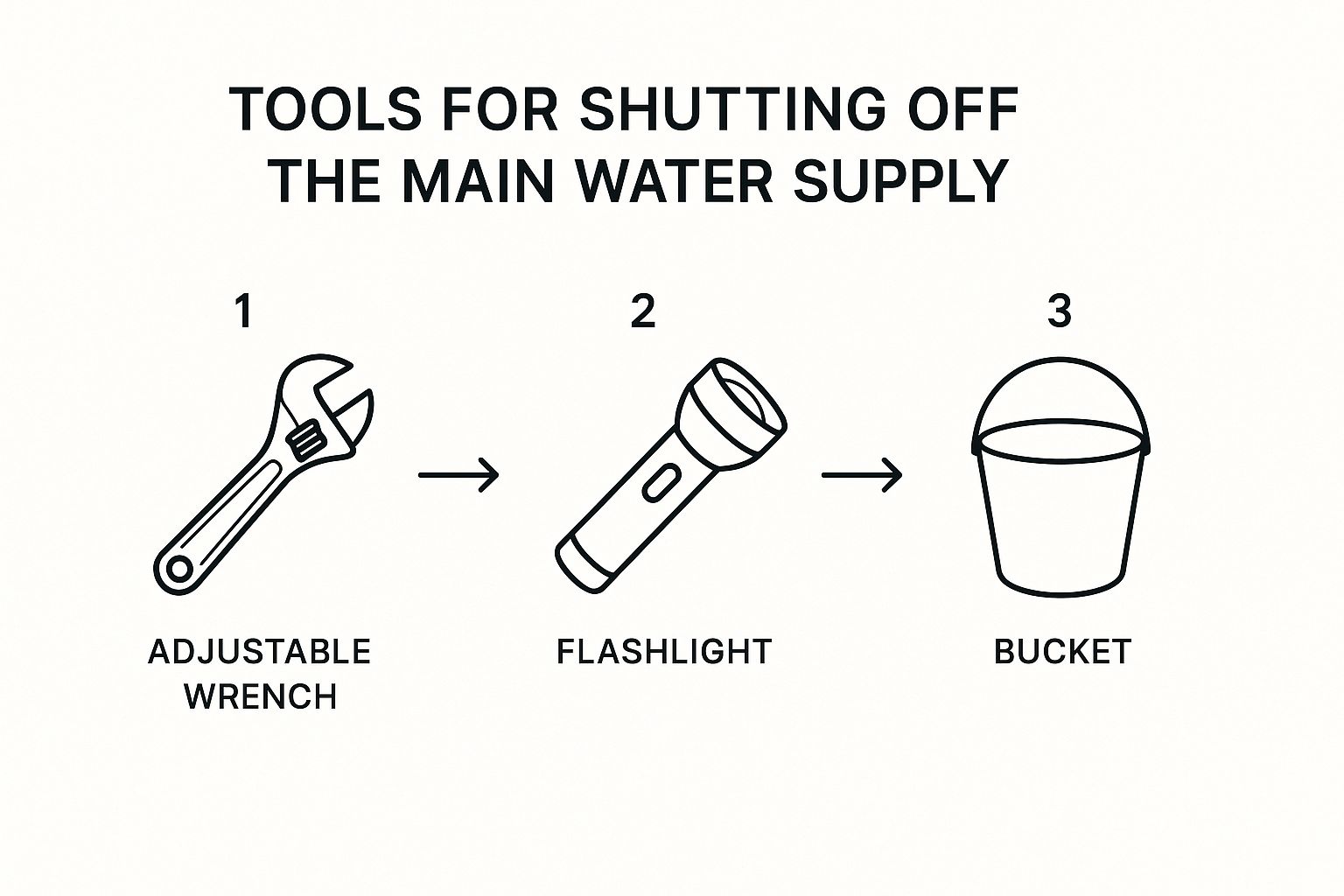
What Tools Do I Need to Shut Off the Main Water Valve?
For most modern lever-style valves, you won't need any tools at all—just a firm grip. For older, round gate valves (like a small spigot wheel), you might need an adjustable wrench for a little extra leverage. They can get pretty stiff.
If your shutoff is underground at the street meter, common in cities like Salinas and Watsonville, you may need a special water meter key. It's a long T-shaped wrench designed for that purpose. But here’s our friendly advice: if any valve refuses to turn with a reasonable amount of force, stop. Don't risk breaking it. That's when you call us immediately.
Will Shutting Off the Water Drain My Water Heater?
No, shutting off the main supply simply stops new water from coming into your house. Your water heater tank will stay full.
However, this is critical: if you suspect the leak is coming from the water heater itself, you must also shut off its gas or electrical supply for safety. That's a job for a professional to diagnose and repair.
Knowing the answers to these questions helps you take the right steps in an emergency. Acting quickly and correctly can save you a ton of money and stress.
You can also check out more great advice in our guide that explains how to save on plumbing repairs.
When you need a professional to handle a stubborn valve or find the source of a tricky leak, trust the team that's been serving Monterey County since 1988. Call Alvarez Plumbing for reliable, 24/7 emergency service. You can learn more at https://alvarezplumbingsalinas.com.