When you're staring at gushing water or a drain that’s backing up fast, what you do in the first five minutes can make all the difference. While our emergency services plumbing team is all about getting professional help to your door ASAP, your first moves—like shutting off the water—can turn a full-blown catastrophe into a manageable problem.
Here's your action plan for those critical moments before our expert team from Alvarez Plumbing arrives.
Your First Moves During a Plumbing Emergency
The sound of water spraying inside your walls or a toilet that just won't stop overflowing is enough to cause instant panic. It’s a nightmare scenario for homeowners everywhere, from Salinas to Pacific Grove. The key is to take a deep breath and follow a few crucial steps. Your goal isn't to fix the root problem yourself; it's to secure your home and stop the damage from getting worse.
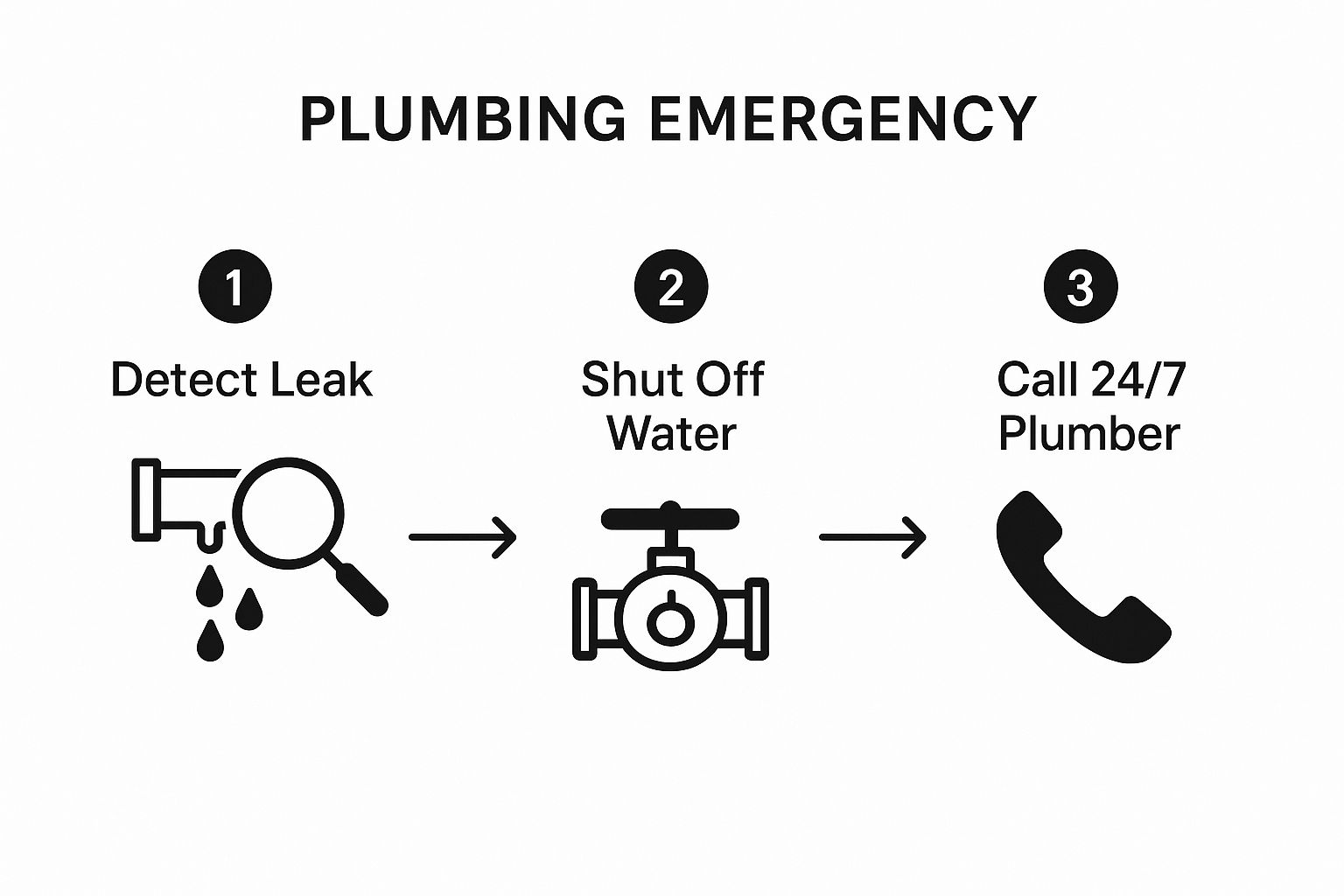
As you can see, it really boils down to three things: identify the source, stop the water, and call us for professional help.
Stop the Water, Stop the Damage
Without a doubt, the single most important thing you can do is shut off the water. This one step prevents a small leak from becoming a major flood that ruins drywall, flooring, and priceless belongings. We've seen it time and time again—whether in an older Carmel-by-the-Sea home or a newer build in Prunedale, many folks simply don't know where their main shut-off valve is located.
As a family business that's been serving Monterey County since 1988, we can tell you this: the homeowners who come out of an emergency in the best shape are the ones who knew exactly where to find their water main before they even had to call us.
Knowing this location is critical. It’s usually in the garage, a basement, or outside your home near the water meter. Taking just five minutes to find it now can literally save you thousands of dollars down the road. For a detailed walkthrough, check out our guide on how to shut off your main water supply.
To help you react quickly, here's a simple table for the most common issues we see.
Immediate Actions for Common Plumbing Emergencies
| Emergency Situation | Your First Step (Before Calling Us) | Why It Matters |
|---|---|---|
| Burst Pipe or Major Leak | Shut off the main water supply to the entire house immediately. | This completely stops the flow of water, preventing catastrophic flooding and structural damage. |
| Overflowing Toilet | Turn the small valve on the wall behind the toilet clockwise. Don't flush it again. | This isolates the problem to the toilet, stopping the overflow without cutting water to the rest of the house. |
| Sewer Backup | Stop using all water fixtures (sinks, showers, toilets, dishwasher). | Adding more water to the system will only make the backup worse, pushing more wastewater into your home. |
| Leaking Water Heater | Turn off the water supply valve on the pipe leading to the tank and shut off the power/gas. | This prevents more water from filling the leaking tank and eliminates the risk of electrical shock or gas issues. |
This quick reference can help you take the right first step in a moment of panic, minimizing damage before our technicians arrive.
Containing the Immediate Mess
Once the water is off, your next job is damage control. This is especially true if you’re dealing with a nasty sewer backup in a Castroville home or a burst washing machine hose in a Marina condo.
While you wait for our 24/7 team, here’s a brief summary of what you can do:
- Move Valuables: Get electronics, furniture, rugs, and any important documents up and away from the water.
- Soak It Up: Use towels, blankets, and buckets to mop up standing water. This stops it from spreading and seeping into your subfloors.
- Prioritize Safety: If water is anywhere near electrical outlets or appliances, shut off the power to that area using your circuit breaker. Nothing is more important than your safety.
Taking these steps helps you regain a sense of control over the situation. It turns a moment of crisis into a set of clear, purposeful actions while our expert plumbers are on their way to provide the professional emergency services plumbing you need.
Is It a True Emergency or Can It Wait?

It’s the middle of the night in your Marina home, and a strange gurgling sound from the bathroom jolts you awake. Is it just the house settling, or is it a pipe about to give way? That moment of uncertainty is something every homeowner dreads.
Not every drip or slow drain requires a frantic, 2 A.M. call for emergency services plumbing. Knowing the difference between a genuine crisis and a minor issue that can wait for business hours will save you a world of stress—and money. The key is learning to quickly assess the potential for immediate damage to your property or a threat to your family's health.
For context, a huge part of the plumbing industry, which is projected to be worth nearly $170 billion in the U.S. by 2025, involves emergency work. This is vital for preventing catastrophic water damage. You can explore more plumbing industry statistics and trends on workyard.com.
The Undeniable Signs of a True Emergency
Some situations simply can't wait. If you see any of the following, it's time to pick up the phone, no matter the hour. These are the clear signals that you need a professional plumber on-site, right now.
- Significant Water Flow: This is the most obvious one. A burst pipe, a ruptured water heater, or any situation where water is actively flooding your home is a code-red emergency. The structural damage from this kind of leak happens fast.
- Sewer Line Backup: When wastewater—raw sewage—starts coming back up through your drains, toilets, or showers, it’s more than just a mess. This is a serious health hazard that can contaminate your home and requires immediate, professional attention.
- No Water at All: If you suddenly lose water to your entire home in Seaside or Carmel Valley, first check if your neighbors are affected or if you missed a bill. If not, it could signal a major break in your main water line, a critical issue that needs a fast response.
Here's a real-world scenario we see often: A gurgling toilet in a Castroville home might seem like a small annoyance. But frequently, it's the first warning sign of a major blockage forming deep in your sewer line—an issue common in our area's older homes. Ignoring it can lead to a full-blown backup just hours later.
When It Can Probably Wait Until Morning
On the other hand, plenty of plumbing problems feel urgent but don't pose an immediate threat. These are issues you absolutely need to get fixed, but you can likely schedule a regular service call instead of paying premium after-hours rates.
- A Dripping Faucet: Annoying? Yes. An emergency? Nope. A simple drip won't cause major damage overnight. Just place a towel or bucket underneath to catch the water and give us a call in the morning.
- A Slow Drain: Whether it's your kitchen sink or your shower, a slow drain means a clog is forming. It’s a problem that needs solving, but unless the drain is completely blocked and water is backing up, it's not an emergency.
- A Running Toilet: A toilet that constantly runs is certainly wasting water and driving up your bill, but it isn't actively damaging your home. You can usually shut off the water using the small valve on the wall behind the toilet until a plumber can take a look.
Making the right call protects both your home and your wallet. By understanding these key differences, you can act with confidence, knowing exactly when to call for immediate help and when it's perfectly safe to wait.
Local Causes of Plumbing Emergencies
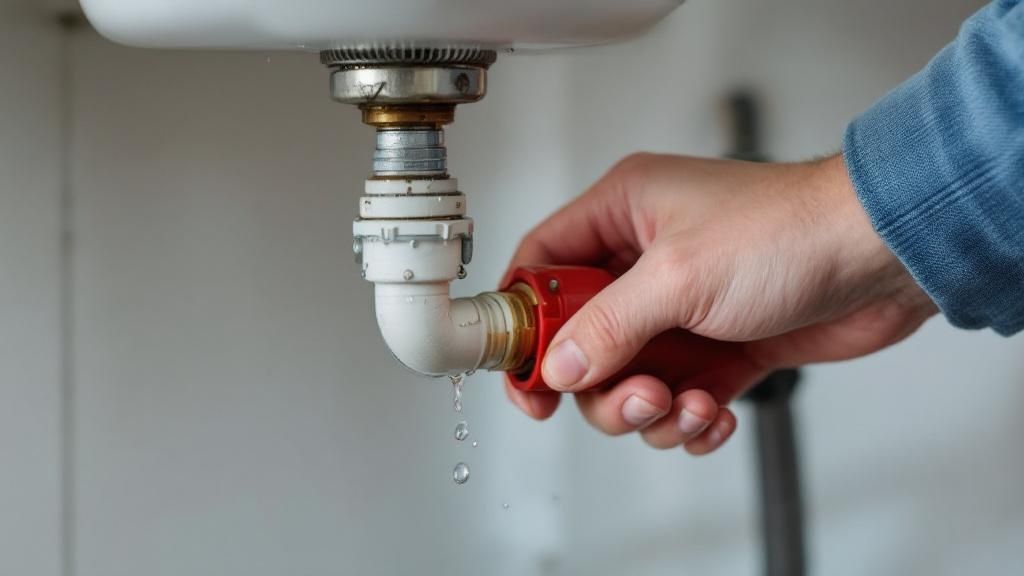
Here on the Central Coast, our homes face plumbing challenges you won't find just anywhere. After serving Monterey County homeowners since 1988, we've seen it all, and we've learned that local conditions—from the salty air in Pacific Grove to the seasonal downpours in Prunedale—are often the real culprits behind a frantic call for emergency services plumbing.
Knowing what makes our area unique is the first step in protecting your property. This isn't about being paranoid; it’s about being prepared for what we know happens right here. A lot of plumbing emergencies aren't just random bad luck—they’re predictable problems caused by our local environment.
The Impact of Our Coastal Climate
Living near the ocean in communities like Marina and Carmel-by-the-Sea is a dream, but the salt-laced, humid air is incredibly tough on your home's plumbing. That constant coastal fog accelerates the corrosion of metal pipes, especially the older galvanized steel pipes common in many of our established neighborhoods.
Over the years, this unseen corrosion slowly thins the pipe walls, making them dangerously susceptible to pinhole leaks or, worse, an outright burst. A pipe that seemed perfectly fine one day can suddenly fail, creating a massive water damage situation that needs an immediate response.
We've been on countless late-night calls for burst pipes where the root cause was simply years of quiet corrosion, fueled by our salty coastal air. It's a silent threat until it becomes a very loud, very wet emergency.
Seasonal Rains and Aging Drains
We all look forward to our winter rainy season, but it can put an enormous strain on older drainage systems. In places like Prunedale and the unincorporated areas around Salinas, heavy rainfall can quickly overwhelm both the city storm drains and your home's own drainage lines.
This sudden rush of water can trigger a few serious issues:
- Sewer Main Backups: When public sewer lines get flooded with rainwater, the immense pressure can force raw sewage back up into your home’s drains. This isn't just a mess; it's a major health hazard.
- Landscape Flooding: Over-saturated soil can cause exterior drains to give up, potentially flooding your basement, crawl space, or other low-lying parts of your property.
- Increased Backflow Risk: This pressure reversal can also cause a backflow event, where contaminated water gets siphoned into your clean drinking water supply. We always suggest homeowners get familiar with local backflow prevention requirements to keep their water safe.
Tree Roots and Older Neighborhoods
Many of our beautiful, established communities in Pacific Grove, Monterey, and Carmel are famous for their gorgeous, mature trees. The downside? Those impressive trees have powerful root systems that are instinctively drawn to the moisture and nutrients found inside your sewer lines.
Tree roots are persistent. They can creep into the tiniest cracks in a pipe, and once they're inside, they expand and create a dense web that snags debris and eventually causes a complete blockage. A drain that was just a little slow last week can suddenly become a full-blown sewer backup with almost no warning—it's one of the most common emergencies we see in these lovely, tree-lined neighborhoods.
What Happens When You Call Us for Help
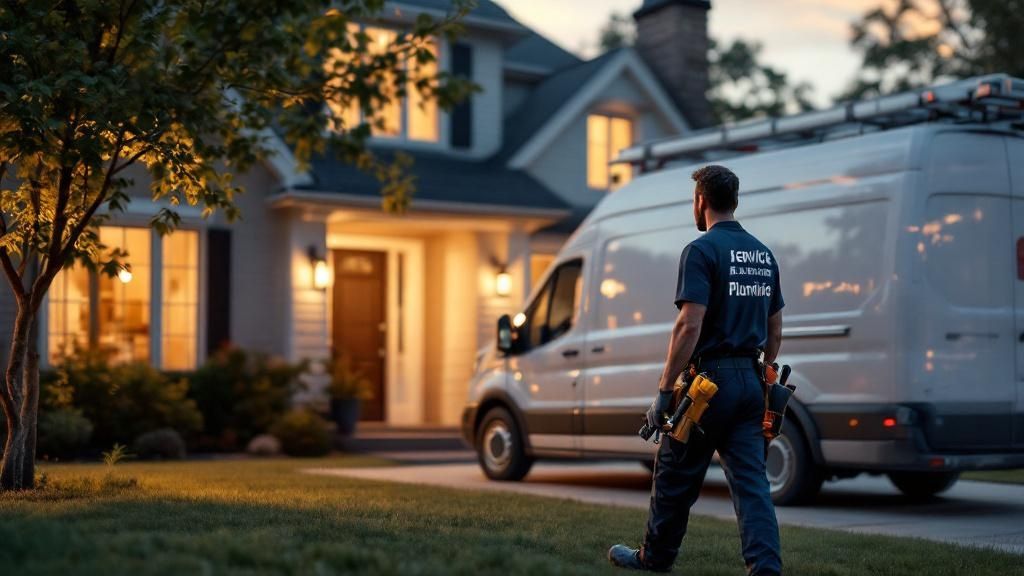
When you’re in the middle of a plumbing crisis—think a burst pipe in Carmel Valley or a backed-up main line in Salinas—the last thing you need is more uncertainty. You've done your part, maybe you’ve managed to shut off the water and contain the mess. Now you just need to know that a calm, competent expert is truly on the way.
Let’s pull back the curtain on our process. Knowing exactly what to expect can bring a little peace of mind when things feel chaotic. From the moment you dial our number, our only goal is to get the right help to your door as fast as humanly possible. You won't get a confusing automated menu; you'll speak directly with a real person who understands the stress you're under.
Our Dispatch and Triage System
Not all plumbing emergencies are created equal. A gushing water heater in a Watsonville garage, for example, needs a faster response than a persistently dripping faucet. Our team is trained to listen carefully and ask a few key questions to get a clear picture of what’s happening. This helps us ensure our technician arrives ready to solve the problem, not just diagnose it.
We'll typically ask for a few quick details:
- Your Name and Address: This lets us immediately map the fastest route, whether you're in Seaside or a more rural part of the county.
- The Nature of the Emergency: Are we dealing with a major leak, a sewer backup, or a total loss of water? Your description helps us prioritize your call correctly.
- What You’ve Done So Far: Telling us you’ve already shut off the main water valve is crucial information that helps us hit the ground running.
This quick triage allows us to dispatch the closest available plumber and give them the essential information before they even start their truck.
We treat every emergency call with urgency because we know your home and peace of mind are on the line. As a family business serving this community since 1988, we see a fast response as more than just good service—it’s our responsibility to our neighbors.
Arriving Prepared to Solve the Problem
One of our biggest commitments is keeping our service trucks fully stocked. We've seen firsthand how frustrating it is for a homeowner when a plumber has to leave mid-job just to pick up a common part. That’s a waste of your time and money.
We invest heavily in keeping our vehicles loaded with the tools and components needed for the most frequent emergencies we encounter across Monterey County. This preparation means that for most calls—from a failed sump pump in Castroville to a broken fixture in Pacific Grove—we can complete the repair in a single visit.
Our goal is simple: resolve your crisis efficiently, get your home back to normal, and minimize the disruption to your life. When you reach out to us, you're not just getting a plumber; you're activating a professional and organized response system. You can find more details about our approach to emergency plumbing services on our website.
Preventing Future Plumbing Crises
The only thing better than fixing a plumbing emergency is preventing one from ever happening. After the stress of a sudden pipe burst or sewer backup, the smartest move you can make is shifting your focus to prevention. We've been local plumbers here since 1988, and we've seen time and again how a little proactive care goes a long way in protecting a home from future chaos.
This isn't about getting tangled up in complex DIY projects. It's about developing some simple, smart habits and knowing when to call in a professional. Think of it as a small investment to dodge the massive cost and headache of another emergency call. A bit of foresight can keep your system humming along for years.
Drought-Smart Upgrades and Modern Tech
Living here in Monterey County, we all know how important it is to be mindful of water usage. The great thing is, water-wise habits also happen to be great for your plumbing. When you upgrade to high-efficiency fixtures like low-flow toilets or modern showerheads, you're not just aligning with California's conservation goals—you're also reducing the daily wear and tear on your entire system.
Modern plumbing is also getting much smarter. The global smart plumbing market is on track to blow past $8 billion by 2028. This boom is fueled by demand for tech like automatic leak detectors and smart water meters that can shut down a disaster before it even starts.
You see these newer technologies popping up in homes from Carmel Valley to Watsonville because they offer genuine peace of mind. A simple sensor that automatically shuts off your water main the moment it detects a leak can be the difference between a small puddle on the floor and a full-blown flood.
The Power of Preventative Maintenance
You wouldn't drive your car for years without an oil change, right? Your plumbing system needs the same kind of regular attention to perform at its best. Just waiting for something to break is a reactive strategy, and from our experience, it almost always costs you more in the long run.
A proactive approach is pretty straightforward and includes things like:
- Annual Water Heater Inspections: We can spot the sediment buildup or corrosion that cuts a heater's life short and leads to those ice-cold shower surprises.
- Regular Drain Cleaning: Don't wait for a drain to stop completely. Professional cleaning clears out the gunk—grease, soap, hair—that causes slow drains and nasty backups.
- Visual Pipe Inspections: This is especially critical for older homes, like many in Pacific Grove. Just checking the accessible pipes for signs of corrosion or tiny drips can catch a big problem in its infancy.
Beyond just the basics, incorporating comprehensive disaster preparedness strategies into your home maintenance plan can significantly shield you from unexpected plumbing crises.
The real key is consistency. Setting up a simple, regular schedule is the best way to keep your system reliable. We break down how to create a schedule that works for you in our guide to plumbing preventative maintenance. A simple partnership like this helps you avoid that dreaded middle-of-the-night phone call to an emergency plumber.
Your Emergency Plumbing Questions Answered
When you’re staring down a plumbing crisis, your mind tends to race with questions. As a family-owned business serving Monterey County since 1988, we've heard just about all of them. We've gathered some of the most common questions we get from stressed-out homeowners in places like Salinas and Monterey to give you some clarity when you need it most.
Having the right answers helps you stay calm and make smart, fast decisions.
What Should I Do First if a Pipe Bursts?
Your first, and most important, job is to stop the water. Before you even think about calling us, find your home's main water shut-off valve and turn it off completely.
In most homes around here, you'll find it either in the garage or on an outside wall where the city's main water line enters your house. Taking this one step is the single most powerful thing you can do to prevent catastrophic water damage while you wait for our team to arrive. Once the water is off, that's your cue to call for emergency services plumbing.
Is a Constantly Running Toilet a Real Emergency?
This one's a classic. While it's incredibly wasteful and definitely annoying, a toilet that just keeps running isn't usually an emergency that requires a middle-of-the-night call. The key difference is that it isn't causing immediate, active damage to your home.
You can almost always stop the water by turning the small, oval-shaped valve on the wall right behind the toilet. A clockwise turn will shut the water off just to that toilet. Then, you can just schedule a regular repair during business hours. Now, if that toilet is actively overflowing onto the floor, that is an emergency.
If you're ever on the fence about what constitutes a true crisis, we put together a handy guide that breaks down what qualifies as a plumbing emergency.
How Can I Be Sure a Plumber Is Licensed and Insured?
This is a fantastic and critical question. The safety of your home and family really depends on hiring qualified, legitimate professionals. Here in California, you can easily check any plumber's license status online through the Contractors State License Board (CSLB) website.
A reputable, long-standing company will always be upfront with their license number—ours is #533261. You should never, ever hesitate to ask a contractor for proof of both their license and their insurance before any work starts. It’s a simple step that protects you from liability and gives you peace of mind that the technician in your home is qualified and accountable. For us, it’s a non-negotiable part of doing business, whether we're in Carmel-by-the-Sea, Prunedale, or anywhere in between.
When a plumbing disaster strikes, you need a team you can trust. Alvarez Plumbing has been providing fast, reliable, and expert emergency plumbing services to our neighbors across Monterey County for over 35 years. Don't wait—call us now for immediate help. https://alvarezplumbingsalinas.com