For every property owner in Salinas, Carmel, and across the Monterey Peninsula, protecting our shared water supply is a community-wide responsibility. The core of this responsibility lies in backflow prevention requirements: installing and annually testing a specialized device to guarantee contaminated water never reverses course and flows into the public drinking water system. This isn't just a good idea; it's a critical health and safety mandate.
Why Backflow Prevention Matters in Monterey Bay
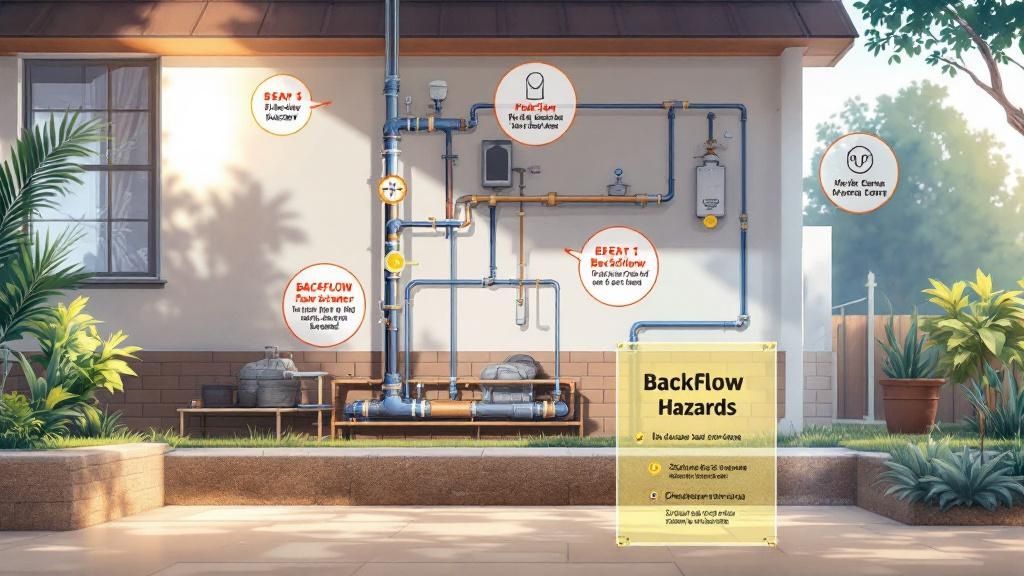
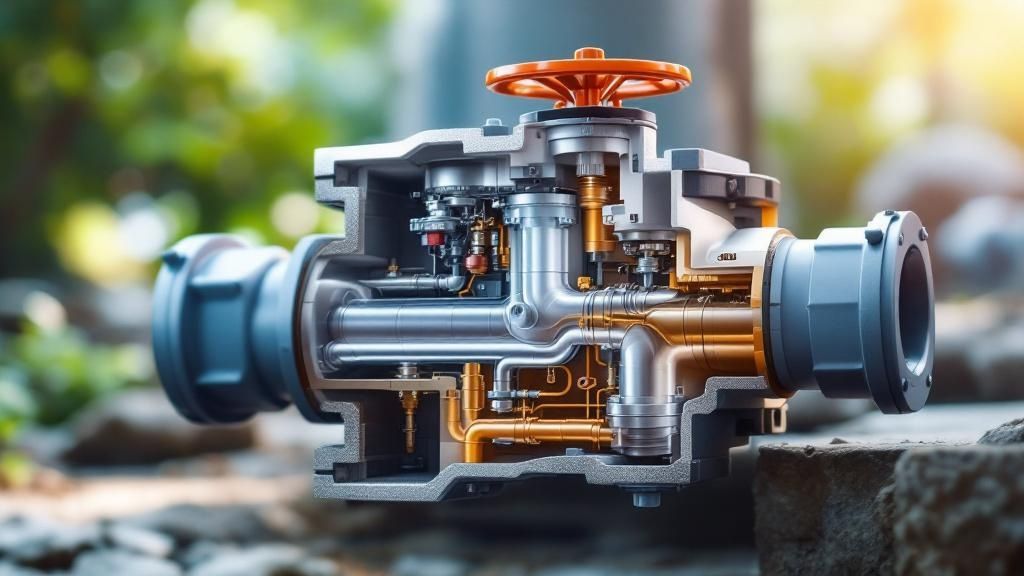
Think of a backflow preventer as a high-tech, one-way security gate for your plumbing. It has one job and one job only: to stop water from flowing backward.
This backward flow can happen suddenly, often when there's a big pressure drop in the city's water mains. Imagine a water main breaking down the street in Seaside or firefighters opening a hydrant in Watsonville—these events can create a powerful suction effect.
Without a backflow device, this suction could siphon water from your property right back into the clean municipal supply. That's a huge health risk, as this "backflow" could be carrying all sorts of dangerous contaminants with it.
Common Contamination Risks in Our Area
Here in communities like Marina, Castroville, and Carmel Valley, certain everyday situations create a serious need for robust backflow prevention. These are places where a property's private water system is directly connected to potential pollutants.
To put it in perspective, let's look at a few local examples of contamination sources and how a simple device protects all of us.
Local Backflow Risks and Your Protection
Here's a quick overview of common backflow hazards in our area and how the right device keeps our water safe.
| Common Contamination Source | Type of Public Health Risk | How a Backflow Preventer Protects You |
|---|---|---|
| Residential Irrigation Systems (In-ground sprinklers) | Fertilizers, pesticides, animal waste from lawns | Creates a physical barrier, preventing lawn runoff from being siphoned back into your home's or the city's water. |
| Commercial Kitchens (Restaurants in Pacific Grove) | Soapy water, grease, cleaning chemicals from mop sinks & dishwashers | Stops caustic detergents and contaminated water from reversing flow and mixing with the fresh water supply. |
| Agricultural Operations (Salinas Valley farms) | Fertilizers, herbicides, and pesticides used in irrigation | Isolates the agricultural water system, ensuring chemicals used for crops never enter the public drinking water. |
| Swimming Pools & Hot Tubs (Homes with auto-fillers) | Pool chemicals (chlorine, bromine), bacteria, algae | Blocks pool water from flowing back into the potable water lines during pressure changes, keeping treated water separate. |
| Simple Garden Hoses (Left in a bucket of soapy water) | Soaps, detergents, bacteria | Even a simple hose can cause back-siphonage. The preventer ensures nothing from the bucket gets pulled into the system. |
This table shows just how many potential cross-connections exist in our daily lives.
Local water authorities, including the Marina Coast Water District and California American Water (Cal-Am), are tasked with enforcing these regulations to protect every single resident. It only takes one unprotected property to compromise the water safety of an entire neighborhood.
As a family-owned business serving Monterey County since 1988, we've seen firsthand how a properly installed and tested backflow device provides total peace of mind. It’s a small piece of equipment that plays a huge role in community health.
At the end of the day, meeting backflow prevention requirements is about being a good neighbor. It’s a shared duty that keeps our water clean and safe for everyone, from families in Prunedale to businesses in downtown Monterey. Understanding these rules is the first step toward protecting both your property and our community.
Understanding Your Legal Compliance Obligations
Backflow prevention isn’t just a good idea for your plumbing—it’s a legal requirement. These rules didn't just appear out of thin air; they’re grounded in major public health laws, like the federal Safe Drinking Water Act and our own California Plumbing Code. Think of these big laws as setting the "why," while our local water providers handle the "how."
Here in Monterey County, from the coastlines of Seaside to the agricultural fields of Watsonville, it's the local water authorities who take those state-level codes and put them into practice. They tailor the rules to fit our unique local challenges, like protecting our fragile coastal ecosystem or making sure the water system stays stable during heavy winter rains that can stress water pressure.
For many properties, compliance is non-negotiable. These rules are absolutely vital for protecting public health and the economic backbone of our region. Think about it: our renowned hospitality industry in Carmel-by-the-Sea and the vast farms in Prunedale all depend on one thing—a clean, safe, and reliable water supply.
Who Enforces Backflow Rules In Monterey County
Every property owner gets their water from a specific local provider, and that’s the agency in charge of setting and enforcing the backflow prevention requirements for your home or business. While they all share the same goal of ensuring safe drinking water for everyone, their specific regulations and how they notify you can differ slightly.
The key local players you’ll deal with include:
- California American Water (Cal-Am), which serves a huge part of the Monterey Peninsula.
- Marina Coast Water District (MCWD), managing water for the city of Marina.
- City of Salinas and City of Watsonville water departments.
These organizations are legally required to run a "cross-connection control program." It’s a formal name for a simple job: identifying potential contamination risks, making sure the right backflow preventers are installed, and managing the annual testing schedules. Playing your part in this program is the surest way to steer clear of fines and potential water service interruptions.
Your Role As A Property Owner
When it comes to compliance, it helps to see yourself not just as a property owner, but as a partner in keeping our entire community’s water safe. That annual testing notice you get in the mail isn’t just another bill—it’s a call to action to do your part.
At its core, a property owner's responsibility is simple: have a certified pro install the right backflow device for your property's risk level and get it tested every year. Failing to do so can lead to penalties, but more importantly, it creates a weak link in our community's public health defense.
For local business owners, these rules are one piece of a much larger puzzle of legal duties. If you want to get a better handle on the bigger picture, this guide on essential small business legal requirements and compliance tips is a fantastic resource that covers compliance beyond just plumbing.
Ultimately, staying compliant doesn't have to be a headache. With the right professional team, it’s a straightforward process. At Alvarez Plumbing, we've spent decades working with every single local water authority in the area. We know their specific codes and paperwork inside and out, which makes the whole process simple for you. To see exactly how we handle this, check out our professional backflow services and learn how we help property owners stay compliant year after year.
Does Your Property Need a Backflow Device?
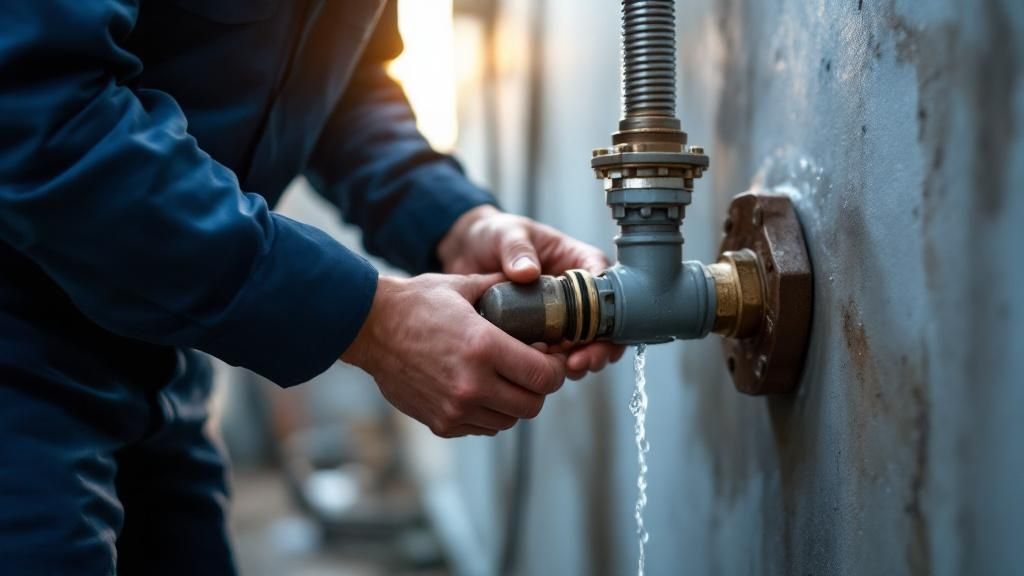
It’s a question we hear all the time from property owners across Monterey County: “Do I really need one of those?” The answer isn’t a simple yes or no. Instead, backflow prevention requirements hinge on the specific risks your property might pose to the public water supply. It’s not just for big industrial plants; a surprising number of homes and businesses right here in our community are required by law to have one.
The fundamental idea is straightforward. If your plumbing system has any point where contaminated water could potentially mix with the clean city water—what the code calls a cross-connection—you need a backflow prevention assembly. This applies to a wide range of properties, from restaurants in Monterey to homes in Carmel Valley.
Let's walk through the most common situations that call for this critical safety device.
Commercial Properties With Clear Risks
For businesses, the need for a backflow preventer is usually pretty cut-and-dried. If your commercial property includes any of the following, a device is almost certainly mandatory:
- Fire Sprinkler Systems: These systems hold stagnant, non-potable water that absolutely must be kept separate from the drinking water supply.
- Boiler Systems: Many boilers rely on anti-corrosion chemicals that are toxic if ingested, creating what's known as a high-hazard cross-connection.
- Commercial Kitchens: Restaurants along Cannery Row or in downtown Salinas use equipment like chemical dispensers for dishwashers and dedicated mop sinks, which can pose a significant contamination risk.
- Agricultural Operations: Local farms in Castroville or the Salinas Valley that use "fertigation" (injecting fertilizer into irrigation lines) create a direct pathway for chemicals to flow backward into the water supply.
These are just a handful of examples. Any commercial site with specialized equipment tied into the main water line is likely to fall under these regulations.
Common Residential Triggers for Backflow Prevention
This is where many homeowners get surprised. While not every house needs a backflow device on its main line, certain common features can trigger the requirement. You are legally obligated to install a backflow preventer if your home in Seaside, Marina, or Pacific Grove has:
- An In-Ground Irrigation System: This is the number one reason a home needs a backflow device. Sprinkler systems live underground, where they are exposed to fertilizers, pesticides, and animal waste. If water pressure drops in the main line, a siphoning effect could pull that contaminated water straight into your home's clean water pipes.
- A Swimming Pool or Hot Tub with an Auto-Filler: That handy auto-fill line is a direct cross-connection. It creates a clear risk of pool chemicals and bacteria flowing back into your drinking water.
- A Secondary Water Source: If your property, perhaps out in Carmel Valley, has a private well in addition to city water, a backflow device is mandatory to ensure well water can never enter the municipal system.
The rule of thumb is this: if you've introduced a system that could contaminate your own plumbing, you've created a risk to the public water supply. A backflow preventer is the non-negotiable solution to eliminate that risk.
Figuring out if your specific setup needs a device can be confusing. The most reliable way to know for sure is to get a professional assessment from a team that understands the local codes inside and out. If you're wondering about your property, our guide on understanding backflow plumbing systems in Salinas and Watsonville offers even more detail.
Since we first opened our doors back in 1988, Alvarez Plumbing has helped thousands of your neighbors navigate these rules. A quick inspection by one of our certified plumbers can confirm your compliance status and give you complete peace of mind.
Choosing the Right Backflow Preventer
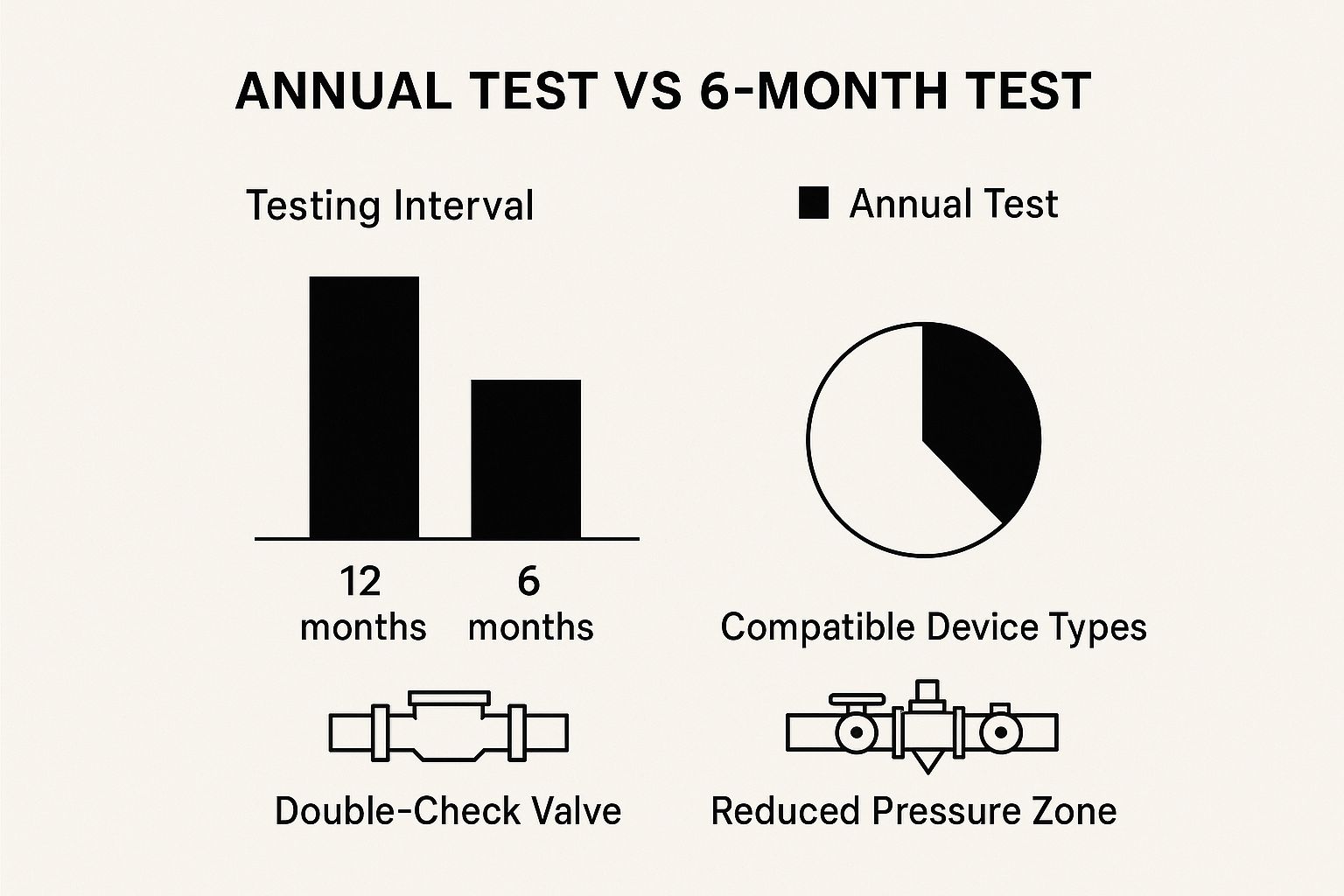
Picking the right backflow prevention device isn't a "one-size-fits-all" situation. The correct device for your property depends entirely on the level of hazard it could pose to the public water system. Getting this wrong is a common mistake that often leads to failed tests and costly replacements down the line. It's about more than passing an inspection—it's about genuinely protecting our community's water supply.
The type of backflow preventer you need is engineered for a specific risk level, and local codes in places like Salinas and Carmel-by-the-Sea are very clear about what’s required where.
Let’s walk through the most common types you'll see in Monterey County, using some real-world examples to make it click.
High-Hazard vs. Low-Hazard Situations
First things first, you need to understand the "degree of hazard." This is the official term plumbing codes use to classify the potential risk your property's plumbing system poses.
- High-Hazard: This is serious business. A backflow incident here could introduce chemicals or contaminants that would cause severe illness or even death if they got into the public water. These situations demand the absolute highest level of protection.
- Low-Hazard: This refers to scenarios where a backflow incident might mess with the water's taste or color but wouldn't pose a direct threat to public health.
The specific device required for your property, whether it's in Pacific Grove or Prunedale, is dictated entirely by this hazard level.
Common Backflow Devices and Local Monterey Bay Uses
| Device Type | Hazard Level Protected | Typical Local Application Example | Primary Feature |
|---|---|---|---|
| Reduced Pressure Zone (RPZ) | High-Hazard | A car wash in Seaside using detergents, or a medical clinic in Monterey with specialized equipment. | A relief valve that dumps water to create a fail-safe air gap, offering maximum protection. |
| Double Check Valve (DCVA) | Low-Hazard | A commercial fire sprinkler system or the main water line for an apartment complex in Watsonville. | Two independent, redundant check valves that provide reliable but basic backflow prevention. |
| Pressure Vacuum Breaker (PVB) | Low-Hazard (Back-Siphonage Only) | Residential irrigation and sprinkler systems at homes in Marina. | An air inlet that opens to break a siphon, preventing lawn chemicals from being pulled into pipes. |
As you can see, the device type is directly tied to the specific job it needs to do. Installing a DCVA where the Marina Coast Water District requires an RPZ, for instance, will get you an immediate compliance failure.
Why You Need a Pro to Choose the Right Device
Choosing between these is absolutely not a DIY decision. This is exactly why bringing in a certified professional is so critical. As a family-owned business serving this area since 1988, our team knows the specific backflow prevention requirements for every single municipality. We make sure the correct device is selected from the get-go, saving you time, money, and a lot of headaches. If you're planning a project that might need one, learn more about our professional new installations to ensure you’re compliant from day one.
A Reduced Pressure Zone (RPZ) Assembly is the top dog, mandatory for high-hazard sites like a car wash in Seaside or a medical clinic in Monterey. A Double Check Valve Assembly (DCVA) is reliable for low-hazard situations, like a commercial fire sprinkler system in an office building. For residential irrigation systems in Marina or Pacific Grove, a Pressure Vacuum Breaker (PVB) is typically required to prevent back-siphonage of lawn chemicals. A certified plumber will know exactly which one your property needs to pass inspection.
Navigating the Annual Testing and Certification
Getting a backflow preventer installed is a great first step, but it's not the end of the story. Protecting our shared water supply is an ongoing responsibility, and that includes mandatory annual testing. For property owners, this part can sometimes feel a bit confusing.
This isn't just a friendly suggestion; it's a legal requirement across Monterey County. Every single local water authority, whether it's the City of Salinas Water Department or Cal-Am serving Pacific Grove, requires every backflow device to be professionally tested and certified once a year.
Think of it like the annual safety inspection for your car. The device might look perfectly fine sitting there, but only a certified test can confirm that its internal springs, seals, and check valves are working exactly as they should. Over time, these parts wear down, and a device that looks okay on the outside could easily fail when it's needed most. This yearly check ensures your device is always ready to do its job.
The process is designed to be pretty straightforward, keeping you in full compliance with local backflow prevention requirements without causing you a major headache.
The Annual Compliance Process Step-By-Step
So, what does this actually look like for a property owner in Carmel, Marina, or Seaside? It follows a predictable pattern, and since we've been helping our neighbors with this since 1988, we have it down to a science.
Here’s a brief summary of what you can expect:
- You Get an Official Notice: Your local water purveyor (like the Marina Coast Water District) will mail you a letter when it's time for your annual test.
- You Call a Certified Tester: This is where we come in. The law is very clear that the test must be done by a state-certified backflow assembly tester. You just give a licensed plumber like Alvarez Plumbing a call.
- We Perform the Test: One of our certified technicians will stop by your property. The test itself is quick, usually taking less than 30 minutes, and we use specialized equipment to check the device's function.
- We Handle the Paperwork: Once your device passes, we take care of all the official compliance forms. We submit them directly to your water authority for you, so you don't have to deal with any of the bureaucracy.
Our whole goal is to make this annual certification a seamless, set-it-and-forget-it experience. This is not a DIY job; it requires a certified pro to ensure it's done right.
What Happens If My Device Fails the Test?
It’s a fair question: what if my backflow preventer doesn't pass its annual inspection? The good news is, a failed test rarely means you have to shell out for a whole new, expensive device. More often than not, it's just a sign of simple wear and tear.
A failed test is usually a sign that internal components like rubber seals, O-rings, or springs have worn out after a year of service. In over 90% of cases, these parts can be replaced on-site with a standard repair kit, which is far more affordable than a full replacement.
If your device fails, our technician will immediately figure out the specific problem and clearly explain your options. We can usually perform the needed repairs right then and there, re-test the device to confirm it passes, and then submit the successful certification paperwork. It's a straightforward, problem-solution approach that gets you back into compliance quickly and cost-effectively.
This annual testing is an essential service that keeps the water safe for everyone, from businesses in Prunedale to homes in Carmel Valley. For more on how our certified technicians handle all kinds of plumbing needs across the area, you can learn more about our general plumbing services in Monterey and see how we help keep our community safe.
The Real Cost of Ignoring Backflow Rules
Putting off backflow prevention requirements might feel like a way to save a few bucks now, but trust us, it’s a gamble with seriously high stakes. This isn’t a corner you can afford to cut, especially here in Monterey County. The fallout from non-compliance isn't just a "what if" scenario; it’s a series of real, escalating problems that can throw your life and your budget into chaos.
Think of it like this: staying compliant is a small, predictable expense. Kicking the can down the road opens you up to unpredictable and almost always much larger costs. For any home or business owner in Salinas, Carmel, or anywhere on the peninsula, understanding what's at stake makes the choice pretty clear.
The Financial and Logistical Penalties
When that backflow testing notice from your local water district shows up in the mail, it’s not a friendly suggestion—it’s a legal deadline. Failing to get your device professionally tested and certified by that date kicks off a chain reaction of frustrating and expensive events.
First, you’ll get an official violation notice. This is your final warning. If you ignore that, the penalties really start to pile up:
- Escalating Fines: Local water authorities will start hitting you with fines for non-compliance. These aren't one-and-done fees; they often grow the longer the violation sits, quickly turning a minor oversight into a major financial headache.
- Water Service Shut-Off: This is the ultimate consequence. Your water gets shut off completely. For a family in Marina or Seaside, that means no showers, no laundry, no flushing toilets. For a restaurant in downtown Monterey, it's a catastrophe that shuts down business entirely.
- Reconnection Hassles: Getting your water turned back on isn't as simple as making a phone call. You’ll first have to pay all the outstanding fines, schedule an emergency backflow test, and likely pay extra reconnection fees. The whole process is a stressful and costly ordeal.
The Value of Proactive Prevention
Now, let's contrast that nightmare scenario with the simple, sane alternative: proactive compliance. An annual backflow test is a small, predictable investment in protecting your property and keeping the water on. It’s a routine check-up that prevents a full-blown emergency.
With over 35 years of local experience as a family-owned business, we can state with confidence that proactive compliance with a trusted partner is always the smartest financial decision. The cost of one emergency call-out after your water is shut off will almost always be more than several years' worth of routine annual tests.
This small annual service protects more than just your wallet. It guards the health of your family or employees by making sure your own plumbing isn't getting contaminated. It also fulfills your duty as a responsible member of the community by protecting our shared water supply from dangerous pollutants. Even systems you don’t think about often, like your water heater, depend on a clean, stable water supply. Neglecting one part of your plumbing can easily put stress on another. To learn more about common issues, you can review our guide on water heater repair in Monterey, which shows just how interconnected these systems are.
Choosing to stay ahead of backflow prevention requirements isn't just another bill to pay; it’s an investment in stability, safety, and peace of mind. When you partner with a certified, local expert like Alvarez Plumbing, compliance becomes a simple, seamless part of owning your property.
Your Questions About Backflow Rules Answered
We’ve been the go-to plumbers for Monterey County since 1988, so believe us when we say we’ve heard just about every question there is about backflow rules. It can all seem a little confusing at first. That's why we’ve put together some clear, neighborly answers to the things our certified technicians hear most often from homeowners and business managers just like you.
Think of this as your personal FAQ for clearing up any confusion and getting straight to the point.
I Got a Backflow Testing Notice—What Should I Do?
First off, don't panic. Seeing an official letter from your water purveyor is completely normal. It’s not a penalty; it's just a standard compliance notice to ensure the community's water stays safe.
Your first step is simple: call a licensed plumbing company that has a Certified Backflow Assembly Tester on staff, like us here at Alvarez Plumbing. We’ll get you on the schedule, pop over to perform the quick inspection, and then we handle all the annoying paperwork with your local water authority, whether you're in Salinas, Carmel, or a nearby community. We make the whole process a breeze.
Can I Test My Own Backflow Device to Save Money?
We absolutely admire the DIY spirit, but this is one of those jobs that you have to leave to a certified professional. California law is very clear on this: both the installation and the annual testing of backflow prevention devices must be done by a licensed plumber who holds a specific, state-issued certification for backflow assembly testing.
This isn't just bureaucratic red tape. The rule exists to make sure the test is performed correctly with precisely calibrated equipment and that the results are officially logged with your water department in places like Marina or Pacific Grove. It’s a critical step for both legal compliance and public health.
My Device Failed the Test. Do I Need an Expensive Replacement?
A failed test is a pretty common hiccup, and it rarely means you're looking at a full, costly replacement. More often than not, it just means that some of the internal components—like rubber seals and springs—have worn out after a year of doing their job under constant pressure.
In the vast majority of cases, our certified technicians can simply repair and rebuild your existing device right on-site, which costs just a fraction of a brand-new unit. We always diagnose the exact problem first and walk you through all of your options so you can make an informed choice.
Navigating backflow prevention requirements doesn’t have to be a headache. For fast, certified testing and expert repairs anywhere in Monterey County, you can trust the team that's been keeping our community’s water safe for over 35 years. Contact Alvarez Plumbing today for prompt, professional service at https://alvarezplumbingsalinas.com.