Protecting your family from contaminated drinking water starts with understanding a crucial, but often overlooked, part of your home’s plumbing: backflow prevention. It's a term for stopping the dangerous reversal of water flow, which can pull pollutants from your garden or irrigation system directly into your clean water supply. This guide will walk you through the basics of how it happens and why it’s a real concern for homeowners across Salinas, Monterey, and the surrounding areas.
What Is Backflow and Why It Matters in Monterey County
Ever sipped a drink through a straw? When you stop sipping, the liquid falls back into the glass. Now, picture that happening in your home’s plumbing, but instead of iced tea, it’s water contaminated with fertilizers from your garden in Carmel Valley or pesticides from a nearby agricultural area in Salinas.
That’s backflow in a nutshell. It’s the unwanted reversal of water flow where non-potable (unsafe) water is siphoned back into your potable (safe) drinking water pipes. This isn't just a hypothetical problem; it's a serious health risk that can happen silently and without warning.
A Local Problem With A Simple Solution
Many homes in our area, from Seaside to Pacific Grove, have features that increase the risk of backflow. In the plumbing world, these potential hazards are called cross-connections—any point where your clean water supply could potentially meet a source of contamination.
Here on the Monterey Peninsula, some of the most common examples are things you probably see every day:
- Lawn Irrigation Systems: Many homes in Salinas and Carmel have sprinkler systems that are directly connected to the main water line but sit in soil treated with fertilizers and pesticides.
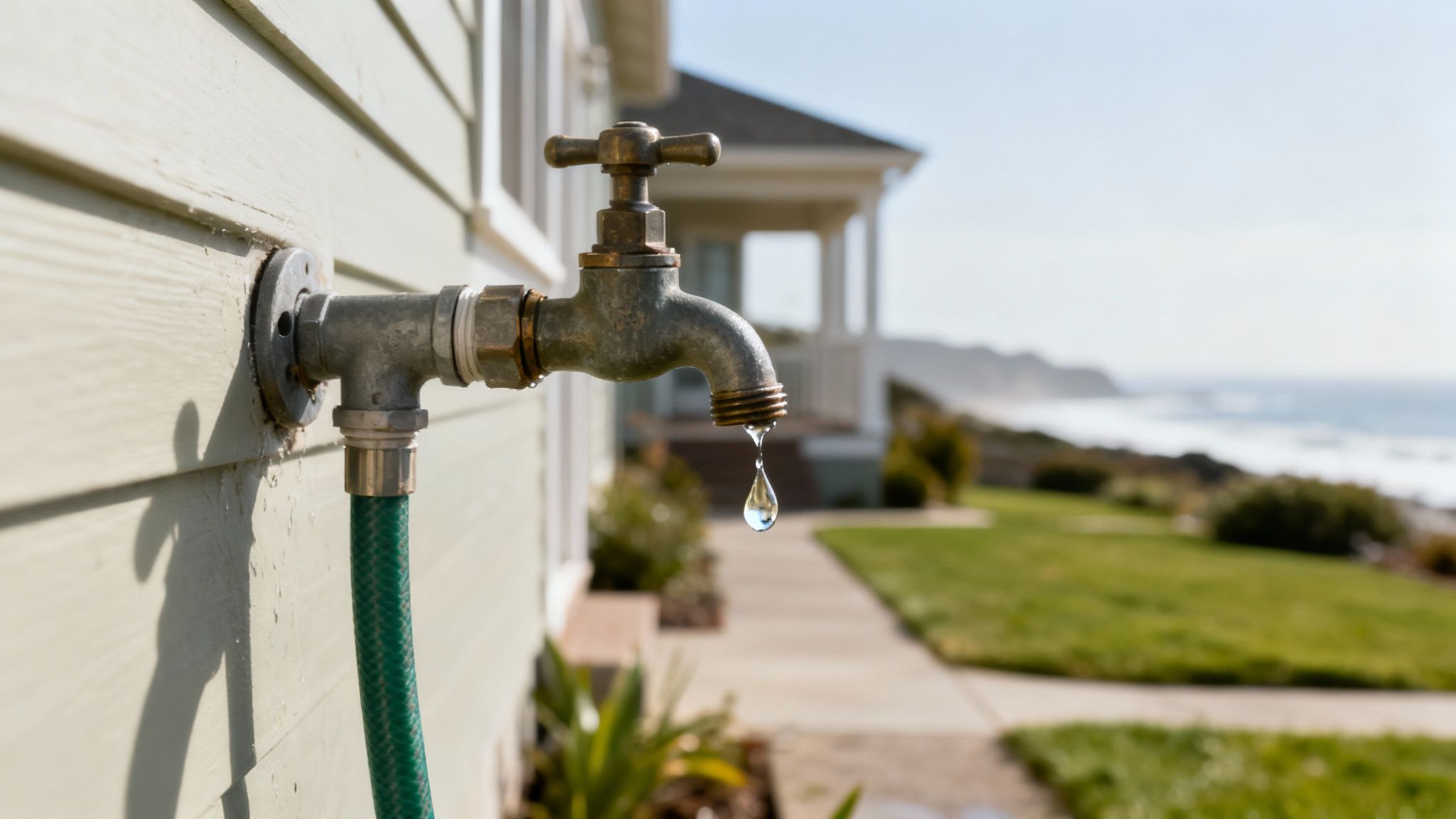
- Garden Hoses: A hose left submerged in a bucket of soapy water, a puddle, or a swimming pool can siphon that dirty water right back into your home.
- Boilers and HVAC Systems: These systems often contain chemicals and treated water that shouldn't mix with your drinking water.
- Wells and Auxiliary Water Sources: Homes in more rural areas like Prunedale or unincorporated communities might have secondary water sources that can create pressure imbalances.
A sudden change in water pressure—caused by anything from a water main break down the street in Marina to firefighters using a hydrant in Watsonville—can create a vacuum effect, pulling contaminants from these sources into your pipes. This is where professional backflow prevention becomes a necessity, not a luxury. For more details on this topic, you can learn more about how to determine if your drinking water is at risk in our related article.
The Real Risks of Contamination
The consequences of a backflow incident can range from unpleasant to severe. Depending on the source, your water could become contaminated with all sorts of things you don't want anywhere near your tap.
To give you a clearer picture, here are some common scenarios we see right here in Monterey County.
Common Backflow Risks in Your Monterey County Home
| Potential Contamination Source | Type of Contaminant | Common Scenario |
|---|---|---|
| Garden Hose | Chemicals, Bacteria | A hose left in a bucket of soapy car wash water or a puddle of muddy runoff. |
| Lawn Sprinklers | Fertilizers, Pesticides | An irrigation system sits directly in treated soil, posing a risk during pressure drops. |
| Swimming Pool Fill Line | Chlorine, Bacteria | A hose used to top off the pool can siphon pool water back into the house supply. |
| Boiler System | Anti-corrosion chemicals | These systems contain treated water that should never mix with your drinking water. |
These are just a few examples, but they show how easily a simple oversight can lead to a serious contamination event.
Protecting the public water supply is a shared responsibility. A properly installed and maintained backflow preventer is your first and best line of defense, ensuring that your home’s plumbing doesn’t accidentally contaminate the water for you or your neighbors. As a family-owned business serving Monterey County since 1988, we've seen firsthand how these simple devices provide essential peace of mind and protect our community's health.
Understanding the Two Main Causes of Backflow
Backflow isn't just some random plumbing glitch; it's a specific problem that happens when the pressure in your water lines goes haywire. Think of your plumbing as a one-way street, designed to bring fresh, clean water into your home. When something disrupts that normal flow, things can get reversed—and messy.
This reversal happens for two main reasons: back-siphonage and back-pressure. While the terms sound a bit technical, the ideas behind them are surprisingly simple. They can happen in any neighborhood, from the quiet streets of Carmel-by-the-Sea to the bustling communities in Watsonville. Figuring out how they work is the first step to protecting your water.
Back-Siphonage: The Vacuum Effect
Remember drinking from a straw? The suction you create pulls the liquid up. Back-siphonage is pretty much the same thing, just on a much bigger and more dangerous scale within your plumbing. It’s triggered by a sudden, sharp drop in pressure in the city’s water main.
That pressure drop creates a powerful vacuum that can literally suck water backward from your home’s plumbing and pull it into the public water supply.
Key Takeaway: Back-siphonage is a reversal of water flow caused by a negative pressure (a vacuum) in the public water system, which can pull contaminated water from a home back into the clean water supply.
This isn't as rare as you might think. Several everyday events can cause back-siphonage right here in our local communities:
- A water main break: If a major water line bursts under a street in Monterey, the sudden loss of pressure can create a siphon effect for all the homes connected to it.
- Firefighter activity: When firefighters in Marina or Seaside hook up to a hydrant, they draw a massive amount of water. This causes a temporary but significant pressure drop in the surrounding area.
- Major repairs: City crews working on the water system can also cause temporary pressure changes that lead to back-siphonage.
In those moments, if your garden hose happens to be sitting in a puddle or a bucket of fertilizer mix, that contaminated water could be siphoned right back into your home’s drinking water pipes.
Back-Pressure: The Overpowering Force
If back-siphonage is a "pull," then back-pressure is a "push." This happens when a system on your property—like a boiler or an irrigation pump—is operating at a higher pressure than the municipal water supply. This overpowering force can literally push contaminated water from your home back into the city's clean water lines.
This is a common concern for properties with specific kinds of equipment. For instance, a pressurized irrigation system, like those found in many Carmel Valley homes, can sometimes operate at a higher pressure than the incoming city water. Other potential sources include:
- Boilers and hydronic heating systems
- Wells or booster pumps
- Pressurized tanks or commercial equipment
When the pressure in one of these systems gets higher than the city’s supply pressure, it can overcome the normal flow and force used water back into your pipes. Managing your home's water pressure is a huge part of preventing this. If you're curious, you can learn more about why you might need a water pressure regulator in one of our other guides.
Whether it’s the pull of a vacuum or the push of an overpowered system, both back-siphonage and back-pressure pose a real threat to your family's water. Fortunately, as a family-owned company serving our neighbors since 1988, Alvarez Plumbing has the expertise to spot these risks and install the right protections to keep your water safe, clean, and flowing in the right direction.
Your Guide to Backflow Prevention Devices
Now that we know how backflow can happen, let's talk about the hardware that stops it dead in its tracks. Think of a backflow prevention device as a one-way gate for your water supply. Its only job is to make sure water flows into your home and never, ever backward.
These devices aren't one-size-fits-all, and the right one depends entirely on the level of risk involved. You don't need to be a plumbing expert to get the basics, but recognizing these crucial pieces of equipment is the first step toward keeping your family's water safe.
This diagram breaks down how a pressure imbalance can either "pull" water back (back-siphonage) or "push" it back (back-pressure)—both of which these devices are designed to prevent.
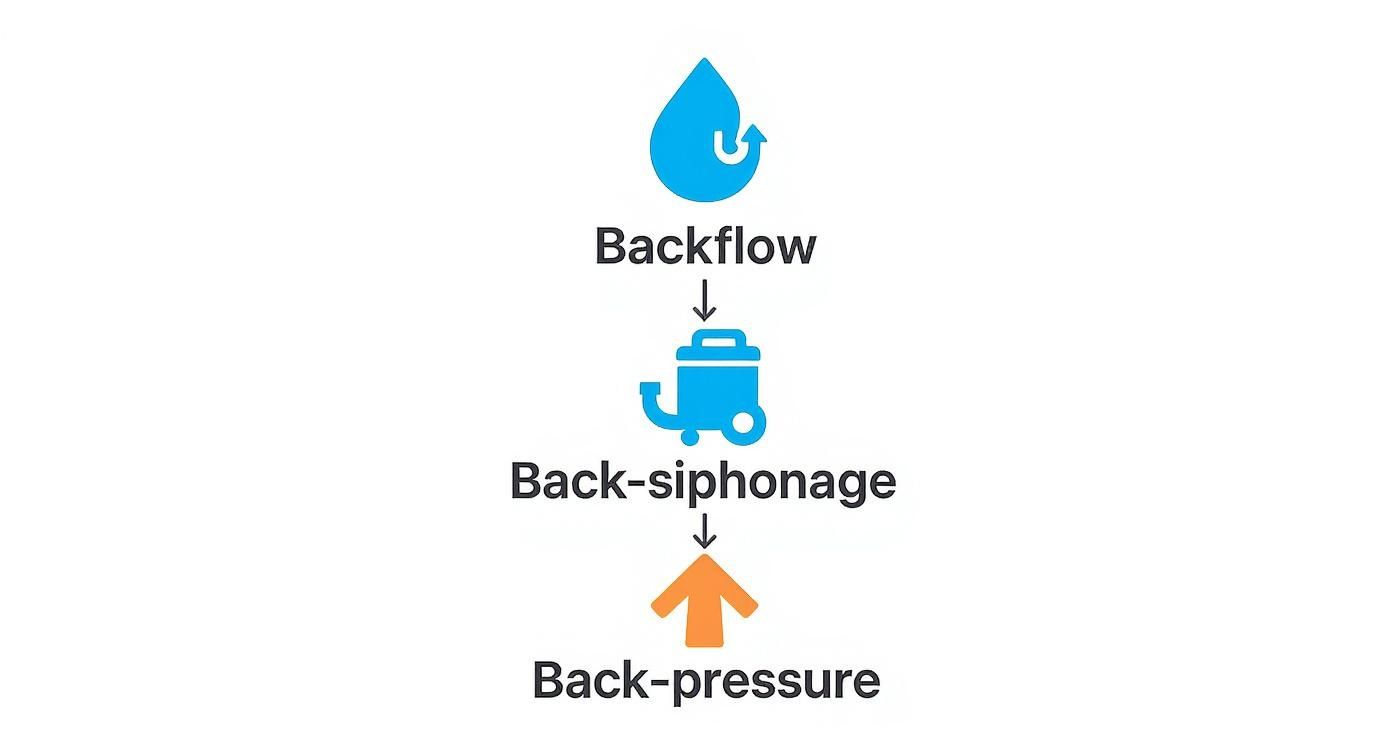
As you can see, both problems are caused by changes in pressure, which is why a mechanical barrier is absolutely essential for protecting your clean water.
Pressure Vacuum Breaker (PVB)
If you have an in-ground sprinkler system, especially in neighborhoods around Carmel-by-the-Sea or parts of Salinas, you’ve probably seen a Pressure Vacuum Breaker (PVB). This is one of the most common devices you'll find on residential irrigation systems.
A PVB is usually installed on the outside of your home and looks like an L-shaped brass valve with a couple of handles and a plastic cap on top. It must be installed at least 12 inches higher than the tallest sprinkler head to work. Its sole purpose is to stop back-siphonage, that "vacuum" effect we talked about earlier.
- Where you'll find it: Almost always on lawn irrigation systems.
- What it protects against: Back-siphonage of things like fertilizers and pesticides.
- Key feature: It only works if installed above ground.
This device is a real workhorse for keeping your landscape irrigation safe, but it's only built for low-hazard situations and offers no protection against back-pressure.
Double Check Valve Assembly (DCVA)
For a step up in protection, you have the Double Check Valve Assembly (DCVA). It's exactly what it sounds like: two one-way check valves working in a series. If the first valve fails, the second one is right there as a backup, making it much more reliable.
You’ll see DCVAs used to protect the water supply from low to medium-hazard pollutants. They're often installed on systems like fire sprinklers or large commercial boilers. Unlike a PVB, they can be installed below ground in a vault, which keeps them out of sight.
As a family-owned business serving Monterey County since 1988, we've seen how crucial it is to match the right device to the right risk. A DCVA is a solid choice for protecting against non-toxic pollutants but isn't suitable for high-hazard chemicals.
Reduced Pressure Zone Assembly (RPZ)
When you need the highest level of protection, you turn to the Reduced Pressure Zone (RPZ) assembly. This is the gold standard of backflow prevention, offering top-tier security against both back-siphonage and back-pressure. It’s mandatory for any situation considered high-hazard.
An RPZ is a more complex piece of equipment. It has two independent check valves, but it also features a pressure-differential relief valve nestled between them. If a valve fails or the pressure suddenly reverses, this relief valve opens up and dumps the potentially contaminated water safely onto the ground. This feature guarantees that contaminated water can never enter the clean water supply.
Because of this discharge feature, RPZs must be installed above ground where drainage won't cause any damage. They're required for connections where contaminants could pose a serious health risk, like:
- Commercial kitchens in Watsonville
- Medical facilities in Monterey
- Properties with chemical injection systems in Castroville
Each of these devices has a very specific job, and California's plumbing code is crystal clear about which one to use and when. Making sure your property is up to code requires professional expertise. If you have questions about your current setup or need an annual check-up, our team offers certified backflow prevention device inspection services to keep your system working perfectly.
Navigating Local Backflow Regulations and Testing
Knowing what a backflow device does is one thing, but understanding the local rules that apply to your property is just as important. For homeowners across Salinas, Monterey, and our neighboring communities, backflow prevention isn't just a smart move—it's often a legal requirement put in place to protect our public water supply from contamination.
These regulations aren't arbitrary. They're a critical part of a nationwide effort to keep our drinking water safe. In fact, the U.S. Environmental Protection Agency (EPA) requires certified backflow preventers on certain systems through its Cross-Connection Control Program.
This is exactly why local authorities like California Water Service (Cal Water), which serves many of our communities, take this so seriously. They're tasked with enforcing the rules that keep our shared water clean, and properly functioning backflow devices are a huge part of that.
Why Is Annual Testing Mandatory?
Installing a backflow preventer is the right first step, but it's not a "set it and forget it" piece of equipment. These are mechanical devices with internal seals, springs, and moving parts that can wear down, get stuck, or fail over time. A device that passed with flying colors last year could easily fail today without giving any obvious signs.
That’s why the California Plumbing Code and local water purveyors require most backflow prevention assemblies to be tested by a certified professional at least once a year. Think of it like a smog check for your plumbing—it's a routine inspection that verifies your system isn't unintentionally polluting the water supply for everyone else.
During the test, a certified plumber uses specialized gauges to make sure the internal check valves are sealing tightly and will do their job correctly under back-pressure or back-siphonage conditions.
As a family-owned business serving our neighbors since 1988, we know these regulations can feel a bit overwhelming. Our goal at Alvarez Plumbing is to make compliance simple and stress-free for you, ensuring your system is both safe and fully up to code.
Your Responsibilities as a Homeowner
If your property has a system that needs a testable backflow device—most often an in-ground irrigation system or a fire sprinkler system—you are responsible for ensuring it gets tested annually. Here’s how that usually plays out:
- You'll Get a Notice: Your local water company will typically mail you a letter when it's time for your annual backflow test.
- Schedule with a Certified Pro: It's up to you to hire a plumber who holds a specific certification for backflow assembly testing. Not every plumber has this credential.
- The Test is Completed: The certified tester performs the inspection and handles all the necessary paperwork.
- Results Are Submitted: The plumber then submits the test results directly to your water authority, which confirms your compliance for another year.
Failing to get this required testing done on time can lead to penalties, and in some cases, your water service could even be shut off until the issue is resolved.
This process is vital for protecting the water in our unique local environment, from the agricultural fields around Castroville to the beautiful residential landscapes of Carmel-by-the-Sea. Every properly functioning backflow preventer does its part to protect the health and safety of our entire community. If you need a hand understanding the specific rules for your property, our team has deep experience with local backflow prevention requirements and can walk you through every step.
When to Call a Certified Backflow Expert
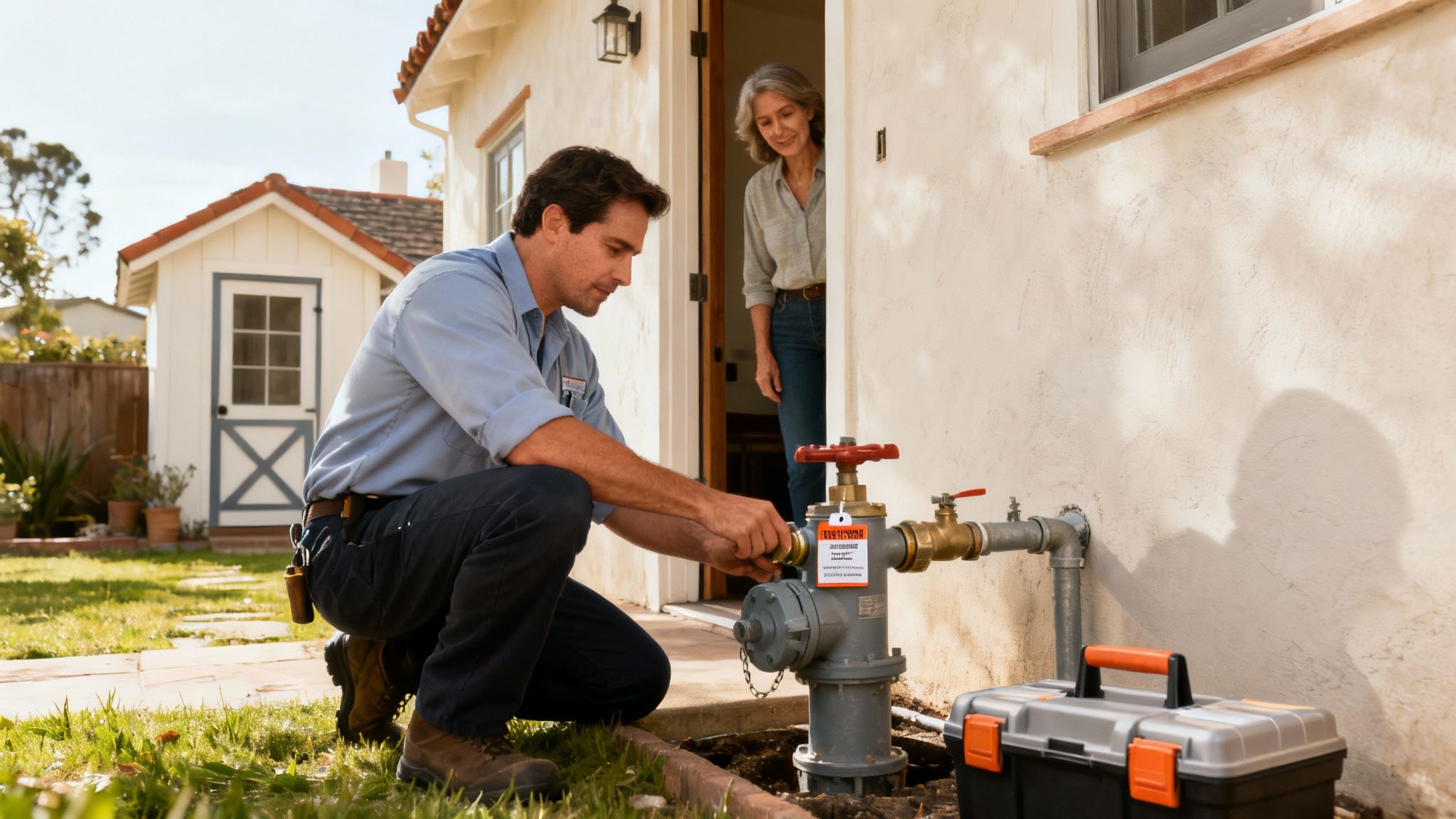
It’s one thing to understand what backflow is, but it's far more important to spot the warning signs and know exactly when to call for help. Your backflow prevention device is a silent guardian for your home’s water, but just like any other piece of hardworking equipment, it needs a professional's touch to keep doing its job right. Some problems are subtle, but others are screaming red flags that it’s time to bring in a certified expert.
This is definitely not a weekend DIY project. Backflow preventers are precision-engineered devices tied directly to your drinking water, and they’re regulated by strict local and state codes. Trying to fix one without the proper certification, training, and specialized tools can easily lead to device failure, fines for non-compliance, and—worst of all—a serious health risk for your family.
Clear Signals You Need a Professional
Keep an eye out for these definite red flags. If you notice any of them, your system needs an immediate, professional inspection from a team that serves communities from Castroville to Carmel Valley.
- You Receive an Official Testing Notice: If a letter from your local water authority shows up in the mail, that’s your official cue. These notices are mandatory, and a certified plumber must perform the test and submit the results to keep your property in compliance.
- Visible Leaks or Constant Dripping: Your backflow device should never leak. Any constant dripping or pooling water around it, especially from the relief valve on an RPZ assembly, means an internal seal or check valve has failed.
- Discolored or Foul-Tasting Water: If your tap water suddenly looks cloudy, brown, or has a strange taste or smell, stop using it immediately. This is a potential sign that a serious backflow event has already contaminated your water supply.
- Changes in Water Pressure: A sudden, noticeable drop in water pressure could be tied to a faulty backflow preventer. While other issues could be the cause, it absolutely warrants a professional diagnosis.
Why Certified Expertise Matters
Hiring a plumber with a specific backflow testing certification isn't just a good idea—it's non-negotiable. Here at Alvarez Plumbing, our team goes through rigorous training and certification to make sure we handle every test, repair, and new installation correctly. As a family-owned business serving the Monterey Bay area since 1988, we have decades of local experience.
Backflow prevention is a specialized field. A certified expert doesn't just check a box; they understand the hydraulics, the specific local codes for areas like Salinas and Prunedale, and how to protect the public water system from contamination.
Our certified professionals stay current with all the latest advancements to provide the best possible service. Whether you need a routine annual test, an emergency repair, or a brand-new installation, our team is ready to help. We offer specialized services in backflow preventer installation to ensure your home meets all safety standards and your family’s water remains pure.
Got Questions About Backflow? We’ve Got Answers.
We've gone over a lot, but it's completely normal to still have questions. After all, this is about the water your family drinks every day. To wrap things up, here are some of the most common questions we hear from homeowners across Salinas and the Monterey Peninsula. Our goal is to give you straightforward answers so you can feel confident about what to do next.
Do I Really Need a Backflow Preventer for My Garden Hose?
Yes, absolutely. It’s a simple, smart precaution that we recommend for every single home. Just think about all the things the end of your garden hose touches—puddles, buckets of soapy car wash water, or soil treated with lawn chemicals. Without protection, a sudden pressure drop in the city water main could suck those contaminants right back into your home's pipes.
A basic hose bibb vacuum breaker is an inexpensive device you can screw right onto your outdoor spigot. It’s a one-way gate that stops anything from being pulled backward from the hose. It's a tiny investment for a huge amount of peace of mind, especially since hoses are often left lying around yards from Pacific Grove to Prunedale.
How Often Does My Backflow Device Need to Be Tested?
Here in Salinas and throughout Monterey County, local regulations are very clear: testable backflow prevention assemblies must be inspected by a certified pro at least once a year. This isn't just a friendly suggestion; it's a mandatory rule to protect our entire public water supply.
Your local water utility, like Cal Water, will usually send you a notice when your annual test is due. This isn't a piece of mail to ignore. As certified testers, our team at Alvarez Plumbing can handle the whole thing for you, from performing the test to submitting the official paperwork to the water authority, making sure you stay compliant.
What Happens During a Backflow Test?
A professional backflow test is a precise, non-invasive check-up. It doesn’t involve any digging or major disruptions to your property. A certified technician will simply:
- Attach a specialized gauge to the test ports on your device.
- Carefully open and close the shutoff valves in a specific sequence to simulate backflow conditions.
- Check the gauge to measure whether the internal valves are sealing completely and working as designed.
The whole thing is quick and efficient, usually taking less than 30 minutes. It’s the only official way to verify that your device is providing the protection your family and community depend on.
My Backflow Device Is Leaking—Should I Be Worried?
A leaking or constantly dripping backflow device is a huge red flag. It means the device is not working correctly and needs immediate professional attention. Even a small, steady drip often means an internal seal, spring, or check valve has failed. That failure leaves your home’s water vulnerable to contamination because the device can no longer guarantee one-way flow.
Don't Wait: A leaking backflow preventer is more than just a plumbing nuisance—it's a failed safety system. The internal parts are compromised, which means it can no longer be trusted to protect your drinking water.
You should call a licensed plumber right away to get it inspected and repaired. As your local experts since 1988, we have the experience to diagnose the problem quickly, make the necessary repairs with the right parts, and re-test the device to certify that your system's safety is fully restored.
Can I Install or Repair a Backflow Preventer Myself?
We admire the DIY spirit, but this is one job that absolutely must be left to a licensed and certified professional. Briefly put, you can't. Here's why:
- Specialized Certification is Required: In California, only plumbers with a specific backflow prevention assembly tester certification are legally allowed to test, repair, or install these devices.
- Complex Codes and Regulations: The installation has to meet strict requirements set by the California Plumbing Code and local water authorities.
- Specialized Tools are Needed: Proper testing and repair require calibrated gauges and tools that you won't find at the local hardware store.
Trying to work on a backflow device yourself can lead to an improper installation, fines, and a false sense of security while your water remains at risk. It’s always best to rely on a trusted, certified professional.
Your family deserves safe, clean drinking water, and backflow prevention is a crucial line of defense. If you've received a testing notice, spotted a leak, or just want the peace of mind that comes with a professional inspection, our team at Alvarez Plumbing is here to help. With over 35 years of experience serving our neighbors from Watsonville to Carmel-by-the-Sea, we have the certified expertise to keep your water safe. Contact us today for your certified backflow testing or a consultation.