A backflow prevention device inspection is a required check-up for a critical piece of your plumbing system—the part that protects your drinking water. Think of it as a gatekeeper making absolutely sure that contaminated water never flows backward into the clean water supply for your home or business. A certified professional performs this test to confirm the device is working exactly as it should, keeping our community's water safe from Salinas to Carmel Valley.
Protecting Monterey County's Water Supply
Picture your home’s plumbing as a one-way street, designed to always deliver fresh, clean water from the main line right to your taps. It's a system we all count on every day in homes from Prunedale to Pacific Grove. But what happens if the pressure in that main line suddenly drops? This can happen for several reasons, like a nearby water main break in Seaside or even firefighting efforts down the street in Watsonville.
This sudden pressure change can trigger a dangerous traffic reversal—a problem known as backflow. When this happens, water from your property can get siphoned backward into the public water supply. If that water is coming from an irrigation system watering a Carmel-by-the-Sea garden, a commercial boiler in a Monterey business, or even a simple garden hose left in a puddle, it can pull dangerous contaminants right along with it.
Why Backflow Prevention Matters Here
A backflow prevention device is the guardian at the gate, a mechanical valve built specifically to stop this reverse flow dead in its tracks. It's an absolutely essential piece of equipment for maintaining public health across Monterey County. But just like any mechanical part, it can wear out or fail over time, especially with the hard water we sometimes see in the region.
This is exactly why a regular backflow prevention device inspection isn't just a suggestion—it's a critical safety measure. Local water authorities, like Cal Water, mandate these inspections to prevent contamination at what are called "cross-connections," which are any points where the clean, potable water supply links to a potentially unsafe source.
To give you a quick overview, here are the core ideas behind these inspections.
Quick Guide to Backflow Inspection Basics
| Concept | Why It Matters in Our Community |
|---|---|
| Backflow | The unwanted reverse flow of water, which can pull pollutants from a property in Marina into our clean drinking water. |
| Cross-Connection | Any point where the public water supply connects to a potential source of contamination (like a sprinkler system in Castroville). |
| Prevention Device | A mechanical valve that acts like a one-way gate, allowing water to flow in but not out. |
| Annual Inspection | A mandatory test to ensure the device is functioning correctly and hasn't worn out. |
These simple components work together to form a vital shield for our shared water.
As a family-owned business that has served our neighbors since 1988, we know that protecting our water is a community-wide effort. An annual inspection ensures your device is always on duty, safeguarding not just your property but the entire water system for everyone from Watsonville to Carmel-by-the-Sea. It's a small but vital part of keeping our water pristine, much like our efforts to help homeowners learn how to conserve water at home.
Common Backflow Risks Hiding in Plain Sight
You might not realize it, but the need for a backflow prevention device inspection comes from hidden risks you can find all over your property. Across Monterey County, from a busy restaurant kitchen in Monterey to a quiet backyard in Salinas, there are points where your clean water supply gets dangerously close to contaminated sources. We call these potential hazards cross-connections, and they're the weak spots where big problems can start.
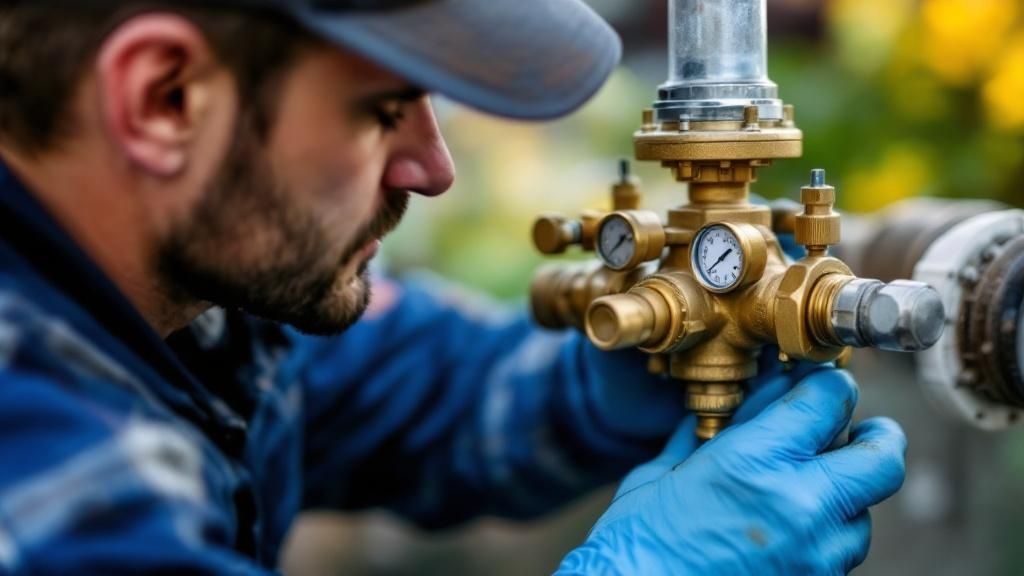
It’s surprisingly easy to overlook these risks because they look so ordinary. A garden hose left in a bucket of soapy water at a home in Marina? That’s a cross-connection. The vast irrigation systems watering the agricultural fields of the Salinas Valley, often mixing in fertilizers and pesticides? That’s a massive network of cross-connections. Even the plumbing in a Carmel-by-the-Sea restaurant or a fire sprinkler system in a commercial building creates a potential risk.
When Pressure Swings Turn Dangerous
The real trouble kicks in when there's a sudden, unexpected change in water pressure. This isn't some rare, freak event; it happens more often than you'd think for a few common reasons right here in our community. A water main break in Seaside, for example, can cause a massive drop in the city's water pressure. Likewise, when firefighters in Prunedale tap into several hydrants to fight a brush fire, the pressure in the entire surrounding system can plummet.
When this happens, it can trigger two types of backflow:
- Back-siphonage: Think of this like sipping through a straw. Low pressure in the city's main line creates a vacuum, pulling water backward from your property into the public supply.
- Back-pressure: This is the opposite. It happens when the water system on your property has a higher pressure than the city's supply, literally forcing contaminated water to flow in the wrong direction.
In either case, the outcome is the same: dirty water from your property could get sucked back into the same pipes that deliver drinking water to your family and your neighbors. This is exactly why having a properly working backflow preventer isn't just a good idea—it's absolutely essential.
Local Examples of Everyday Risks
Picture the beautiful landscaping at a home in Pacific Grove. That sprinkler system is a direct cross-connection where fertilizers, pesticides, and soil bacteria could easily find their way into the water supply. Or think about a car wash in Watsonville, where soaps and chemicals are used with high-pressure water lines. Without a reliable barrier, a sudden pressure drop could pull those contaminants right into the clean water system. It’s also important to think about systems designed to move water away from a property; you can explore the role of a sump pump to see how dedicated plumbing setups manage different kinds of water.
These everyday scenarios highlight an invisible but very real threat. Your backflow preventer acts as the crucial guard at the gate, protecting not just your household but our entire community. A thorough annual inspection makes sure that guard is always on duty, keeping our shared water supply safe and clean.
Understanding Monterey County's Backflow Regulations
Trying to make sense of local plumbing rules can feel like a chore, but it's the key to protecting our community's water supply. In places like Salinas and across the Monterey Peninsula, regulations for backflow prevention aren't just good suggestions—they're legal requirements set by water authorities like California Water Service (Cal Water). Their whole purpose is to keep our shared water safe and clean.
These rules aren't just for big industrial plants. They apply to most commercial, industrial, and multi-family properties throughout the county. Even some homes in communities from Marina to Carmel Valley need to comply, especially if they have systems that pose a higher risk, like fire sprinklers or complex irrigation setups.
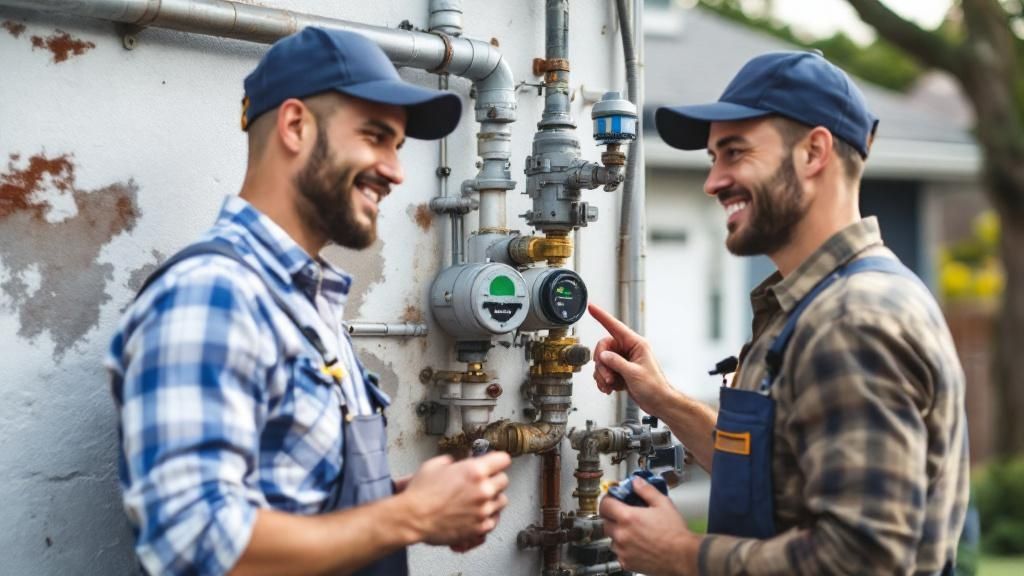
This focus on prevention is becoming more and more common. As awareness about water safety grows, local jurisdictions across the country are stepping up enforcement, mandating annual inspections to make sure these critical devices are working exactly as they should.
The Annual Inspection Mandate
For property owners from Watsonville to Castroville, the most important rule to remember is the annual testing schedule. Most water providers require a backflow prevention device inspection at least once every 12 months. You’ll usually get a notice in the mail when your test is coming up, giving you a clear deadline to get it done.
This yearly check-up is your proof of compliance. It’s a non-negotiable step to confirm your device is ready to stop a backflow event cold, protecting your property and the public water system.
Ignoring this deadline can lead to penalties, which might include fines or, in serious cases, having your water service shut off. Simply staying on schedule with a trusted, licensed plumber is the easiest way to avoid any headaches.
Using a Certified Tester Is a Must
This is definitely not a DIY job or something for a general handyman. Local rules are crystal clear on this: all backflow tests must be performed by a state-certified Backflow Prevention Assembly Tester.
These pros have gone through specialized training and use finely calibrated equipment to get accurate readings. After the inspection, the certified tester handles all the official paperwork, submitting the compliance forms directly to your water authority. At Alvarez Plumbing, our certified team has been taking care of this whole process for our neighbors since 1988, making it painless to stay compliant. For a closer look at what the local rules involve, you can read more about backflow prevention requirements right here on our site.
The Professional Backflow Testing Process
A lot of property owners in places like Carmel Valley and Pacific Grove get a little nervous thinking a backflow inspection will turn into a big, disruptive plumbing project. The good news? When a certified pro handles it, the whole thing is surprisingly fast, simple, and clean. Think of it as a precise diagnostic check-up, not a messy overhaul.
That said, this is one job you absolutely must leave to a professional. Local regulations are strict: only a state-certified tester is legally allowed to perform and sign off on the inspection. The process requires specialized, perfectly calibrated gauges to measure tiny pressure changes inside the device—equipment that’s definitely not in a standard toolbox. While some simple plumbing tasks can be handled on your own, a brief look at the steps involved in a backflow test shows why professional help is necessary.
What To Expect On Inspection Day
As your local plumbing experts, we believe in keeping you in the loop. Our certified technician will always let you know before they start the test. The first step is to briefly shut off the water supply feeding the backflow device. This usually just takes a few minutes and keeps any interruption to your home or business at an absolute minimum.
Once the device is isolated, our technician gets to work. The whole point of the test is to confirm that all the internal parts—the check valves, relief valves, and air ports—are functioning exactly as they should.
This graphic breaks down our three key steps for a solid inspection.
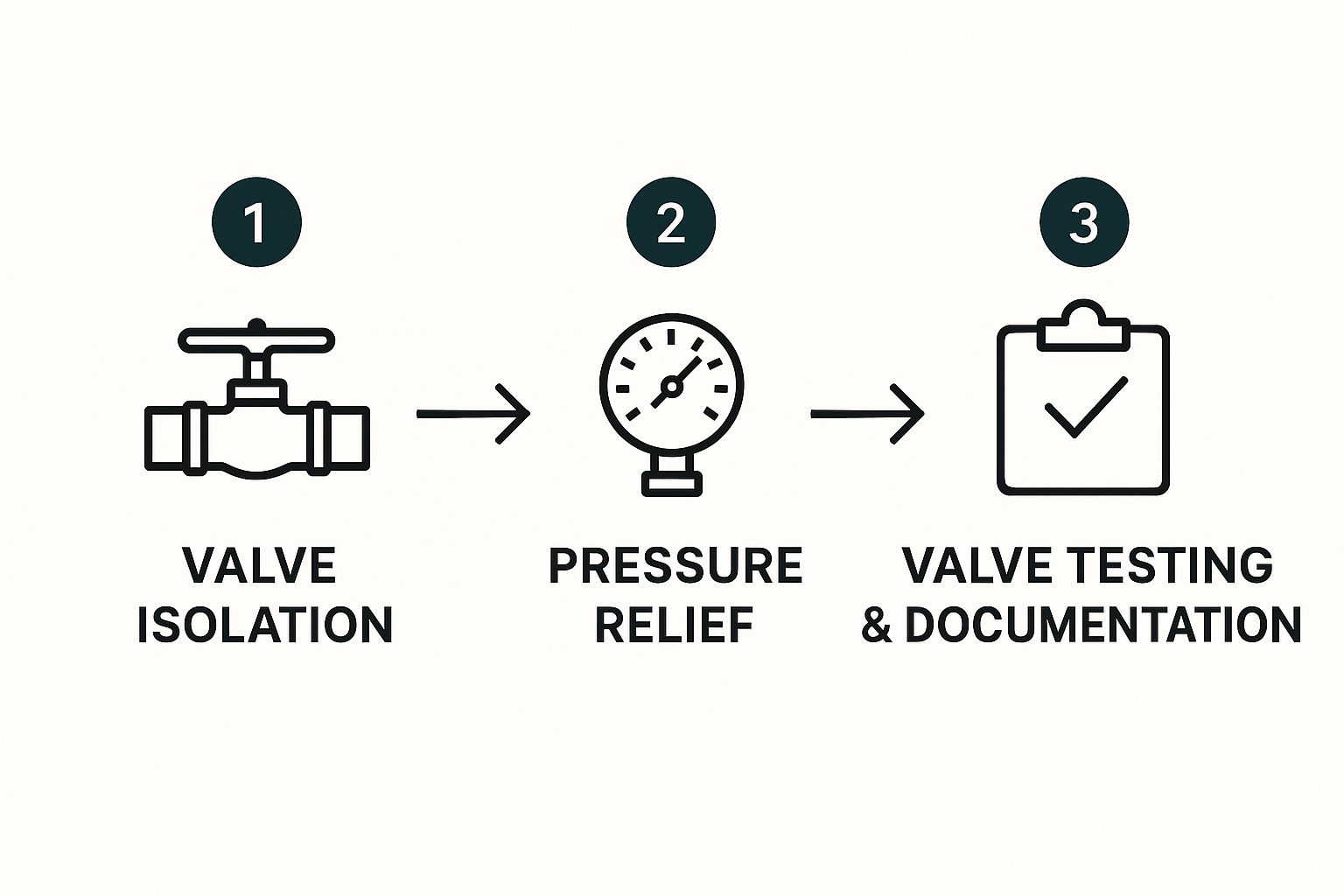
As you can see, the process is straightforward: we isolate the device, run the diagnostic tests on its core functions, and then handle all the official paperwork for you.
The Technical Checkup Explained
Using a specialized testing kit, we connect our gauges to the device’s test cocks (small nozzles built right in for this purpose). From there, we carefully adjust the water pressure to mimic the exact conditions of a real backflow event. This lets us measure how each internal part performs under pressure.
- Check Valve Test: We make sure the valves snap shut tightly, forming a solid seal to block any reverse flow.
- Relief Valve Test: For devices that have them, we verify the relief valve opens at the correct pressure to safely discharge any backflowing water.
- Air Port Test: We check that the air inlet opens correctly to break any vacuum created by back-siphonage.
Throughout this test, we’re looking for any sign of a leak, a worn-out seal, or a stuck spring. It’s a meticulous check-up that guarantees your device is ready to protect your water supply. As a family-owned business serving this community since 1988, we handle every test with the care you'd expect from a trusted neighbor. For those interested in the operational side of our industry, a comprehensive plumbing business guide can provide deeper insights into service standards and licensing.
After the test is complete, we turn your water service back on and give you a detailed report of the results. If you want to learn more or get your test scheduled, check out our professional backflow services.
Interpreting Your Inspection Results
Once your backflow prevention device inspection is finished, you’ll get a report spelling everything out. We believe in taking what looks like confusing technical data and turning it into a simple, clear action plan. For property owners here in Salinas and all over Monterey County, the test will end in one of three ways, and each one has a very clear next step.
First up is the result we always hope for: a Pass. This means your backflow preventer is doing its job perfectly, standing guard and providing reliable protection for our community’s water. When your device passes, we handle the final, critical step—submitting all the official certification paperwork directly to the local water authority so you remain fully compliant.
What Happens If a Device Fails
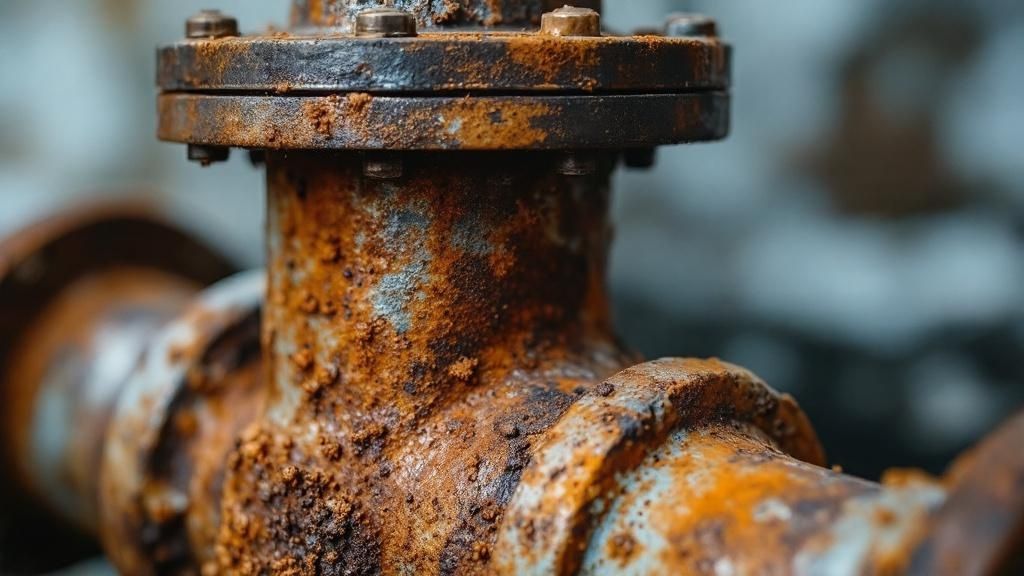
The second possible outcome is a Fail. Seeing that on your report can be a little alarming, but it’s important to understand this is usually a fixable issue, not a full-blown crisis. A failed test just tells us that one or more of the internal parts isn’t meeting the strict safety standards required, often due to simple wear and tear over time.
Some common culprits behind a failed inspection include:
- Worn-out seals or O-rings that have lost their ability to create a tight seal.
- Stuck check valves that can't close all the way because of mineral buildup or debris.
- A faulty relief valve that isn’t opening at the correct pressure.
A failed test is a clear signal that your device can’t be trusted to stop contaminated water from getting into the clean supply. This is also a good moment to check for other hidden problems; our team can provide expert water leak detection services to make sure your entire system is secure.
The Path from Fail to Fix
The final outcome is Repair Needed, which naturally follows a failed test. A failure isn't the end of the line; it’s really just the beginning of the solution. Our certified plumbers will pinpoint the exact cause of the problem.
A failed backflow test isn't a disaster—it's your system telling you exactly what it needs to stay effective. It's a routine maintenance alert that we are fully equipped to handle.
We use only manufacturer-approved parts to carry out precise repairs, whether that means replacing a simple rubber gasket or cleaning out a stubborn spring. Our goal is to get your device back into perfect working condition quickly and efficiently, then re-test it to confirm it passes. This whole process ensures your property, whether in Prunedale or Carmel-by-the-Sea, stays protected and compliant without any unnecessary stress on your part.
Your Questions on Backflow Prevention Answered
We get a lot of great questions from property owners across Salinas, Carmel, and our neighboring communities. To help clear things up, here are some straightforward answers to the questions we hear most often about backflow prevention.
How Often Do I Need a Backflow Inspection in Monterey County?
For most commercial properties, and even for many homes with systems like irrigation or fire sprinklers, local water authorities require a certified inspection at least once per year.
You'll usually get an official notice in the mail well before your deadline. We can help you figure out the specific rules for your property and set up a convenient annual schedule so you always stay compliant without any hassle.
Can I Perform My Own Backflow Test?
No, this is one plumbing job that absolutely requires a certified professional. Backflow testing has to be done by a licensed plumber who holds a specific Backflow Prevention Assembly Tester certification from the state.
The process uses specialized, calibrated equipment to measure tiny pressure changes, and your local water purveyor will only accept results submitted by a certified tester. Because of these strict legal and technical requirements, this is not a DIY-friendly job.
A leaking backflow preventer is a clear signal that it's not working correctly and can no longer be trusted to protect your water supply. It's a problem that requires prompt, professional attention.
What Does a Backflow Inspection Cost?
The cost can vary based on a few things, like the size, type, and accessibility of your device. However, investing in a routine annual inspection is always far more affordable than dealing with the fallout from a backflow event.
That could mean non-compliance fines from your water authority, expensive water contamination cleanup, or major emergency plumbing repairs. At Alvarez Plumbing, we always provide clear, upfront pricing for our inspection and repair services so there are no surprises.
My Backflow Device Is Leaking—Should I Be Worried?
Yes, a leaking or dripping backflow device is a definite sign of a problem. While it might not cause a major flood, a leak almost always means that internal parts like seals or check valves have failed.
An actively leaking device will not pass a certified inspection. It needs to be repaired by a licensed plumber to restore its protective function and keep your water safe.
Are you due for an inspection or concerned about your backflow device? The certified team at Alvarez Plumbing has been protecting Monterey County's water since 1988. Schedule your professional backflow prevention device inspection online today!