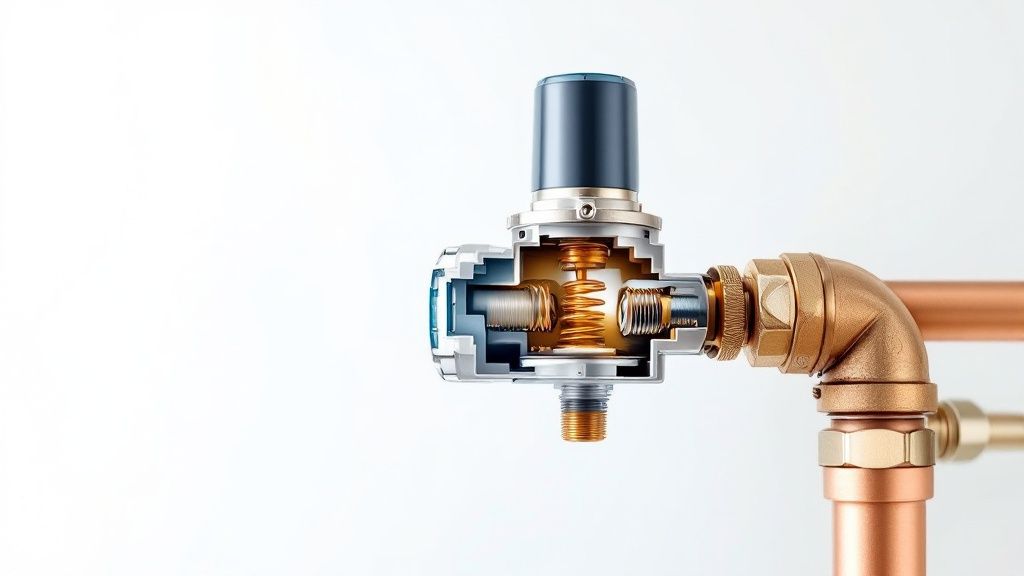
A water pressure regulator isn't just another piece of plumbing hardware; it's a key device protecting your home’s entire plumbing system. Think of it as a gatekeeper. It takes the powerful, often unpredictable water pressure from the city's main line and calms it down to a safe, steady flow before it ever enters your house.
For homeowners all over Monterey County, from Salinas to Monterey proper, this simple valve can be the difference between a healthy plumbing system and a series of expensive, frustrating repairs. It’s your first line of defense against costly leaks and it helps your pipes and appliances last longer.
Your Guide to Water Pressure in Monterey County
Ever feel like your shower is trying to peel your skin off? Or hear a loud thump in the walls right after you turn off the washing machine? Those are classic signs of high water pressure, a surprisingly common issue for homes from the flats of Salinas to the hillsides of Carmel Valley.
Water from the city has to travel at high pressure to serve everyone, especially in areas with hills and valleys like ours. That’s great for firefighters, but that same pressure—often blasting in at over 80 pounds per square inch (PSI)—is way too much for your home’s plumbing to handle day in and day out.
Why Local Pressure Matters
This is where a water pressure regulator, also known as a pressure-reducing valve (PRV), saves the day. We install it on your main water line right where it enters your house, and it acts like a permanent traffic cop for your water supply. It takes that high-pressure flow and dials it back to a safe and manageable level, usually somewhere between 50 and 60 PSI.
This is really important in our local communities. A home sitting high up in Carmel-by-the-Sea is going to see different city pressure than a property down in low-lying Castroville. Even seasonal changes, like heavy winter rains that affect our reservoirs, can change the supply pressure. A regulator makes sure that no matter what’s going on with the city’s system, the pressure inside your home stays constant and safe.
As a family-owned business serving this area since 1988, we've seen firsthand how an unregulated system can lead to early failure of water heaters in Watsonville or burst washing machine hoses in Seaside. A regulator is your home's best protection.
To give you a clearer picture, here’s a quick breakdown of what a PRV does for you.
Quick Look at Water Pressure Regulators
| Feature | What It Does for Your Home |
|---|---|
| Pressure Reduction | Lowers high incoming city water pressure (often 80+ PSI) to a safe 50-60 PSI. |
| System Protection | Prevents damage to pipes, seals, and gaskets in appliances like dishwashers and water heaters. |
| Leak Prevention | Reduces the constant stress on plumbing joints and fixtures, lowering the risk of leaks. |
| Water Conservation | Lowers overall water usage by preventing too much flow through faucets and showerheads. |
| Consistent Flow | Eliminates water hammer (banging pipes) and ensures a stable, predictable water flow. |
In short, protecting your pipes, fixtures, and expensive appliances is a smart investment. Before you can fix the problem, though, you need to know your numbers. You can learn exactly how to check your home's levels in our guide, which explains how to check water pressure safely. Trust us, this simple device is a must-have for safeguarding your property.
The Hidden Dangers of High Water Pressure
A powerful shower might feel like a luxury, but what if that same force is silently damaging your home’s plumbing? That’s the reality of high water pressure. Anything over 80 PSI puts your entire plumbing system under constant, invisible stress.
Think of it like overinflating a tire. Sure, it holds air, but every single part is strained to its limit. In your home, this means every pipe, joint, faucet, and appliance is stuck in a 24/7 stress test it was never designed to handle.
This constant force is a leading cause of sudden, expensive plumbing disasters. Imagine coming home from a day at the Monterey Bay Aquarium to find your Watsonville laundry room flooded because a washing machine hose burst. Or discovering your water heater in Pacific Grove has failed years early—all because of pressure it couldn't handle.
Beyond the Burst Pipes
The damage isn't always a dramatic flood. More often, high pressure causes slow, sneaky problems that add up over time, going unnoticed until the real trouble starts.
- Pinhole Leaks: Tiny leaks can pop up inside your walls, slowly rotting wood and creating the perfect environment for mold. This is a common cause of hidden foundation problems, which is why it's so important to know the signs of a slab leak.
- Wasted Water: Ever hear your toilet running for no reason? High pressure can force water past the fill valve, causing a "phantom flush" that wastes thousands of gallons a year. That’s a big deal for our drought-conscious communities like Prunedale and Carmel Valley.
- Higher Utility Bills: Every time you turn on a faucet, you're using more water than you actually need. This means higher water bills and higher energy bills, as your water heater works overtime to heat water that just goes down the drain.
This isn't just a local problem; it’s a global concern. The market for pressure-reducing valves is projected to hit $6.60 billion by 2032 simply because they are essential for preventing costly damage. A single pipe burst can easily cost a homeowner over $5,000 in repairs, which shows just how important pressure management is for your home and your wallet.
When you look at the list of common plumbing problems, you start to see how many of them trace back to this one root cause. The quiet, constant force of high pressure is one of the most destructive—and most preventable—threats to your home's plumbing.
Signs Your Home Needs a Pressure Regulator
So, how can you tell if your home’s water pressure is too high without a special gauge? Often, your plumbing system will start dropping some pretty obvious hints. If you're in an area like Marina or Seaside where the city water pressure can vary, learning to spot these symptoms is the key to preventing major damage.
High water pressure doesn't always show up with a burst pipe. Usually, it’s a series of smaller, nagging issues that point to a bigger problem lurking in your pipes. Paying attention to these clues now can save you thousands in repairs down the road.
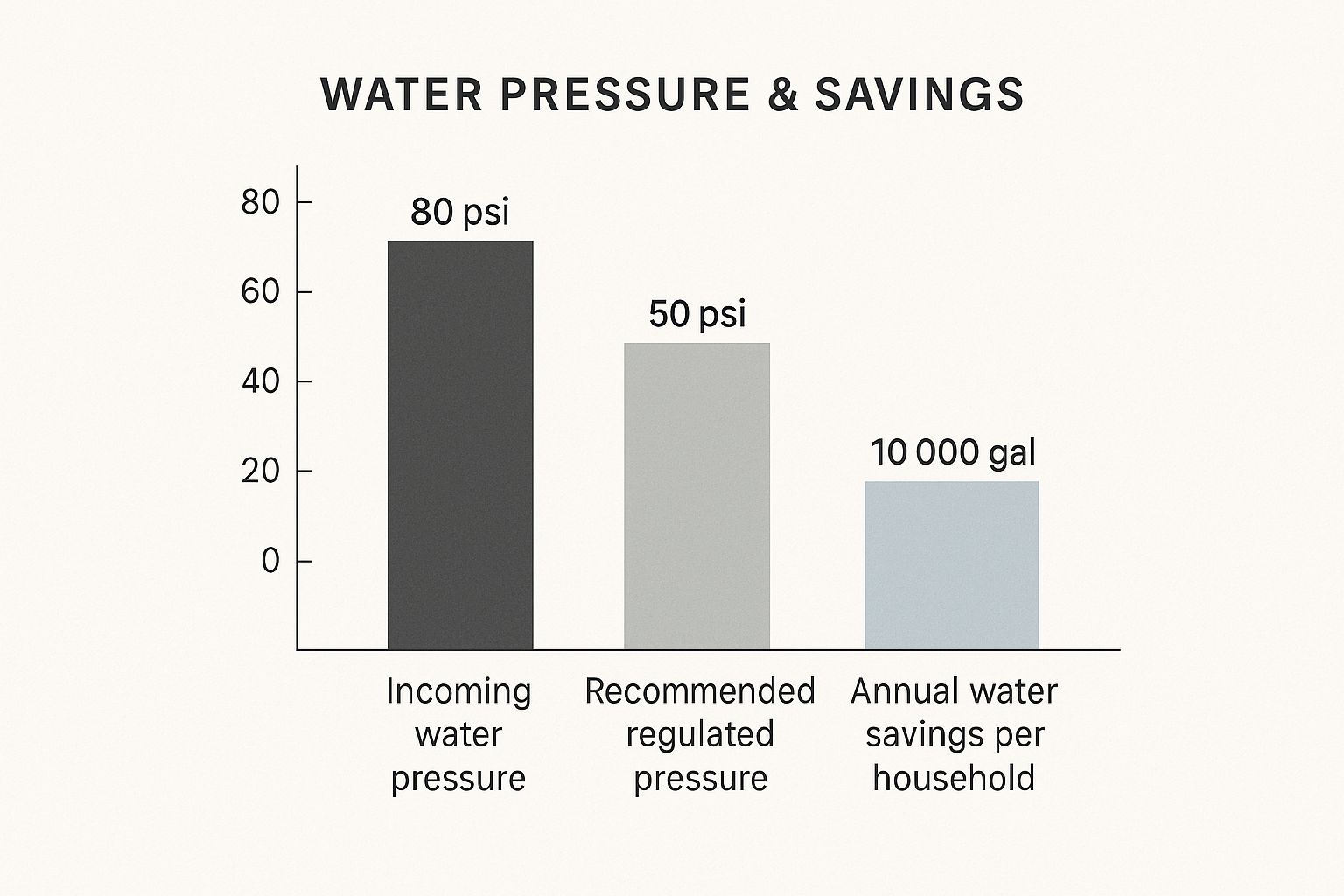
This chart gives you a great visual of how a regulator can tame dangerously high pressure. Just by dialing back the pressure from a high 80 PSI to a much safer 50 PSI, a family can save over 10,000 gallons of water every single year. That's a huge saving on your water bill.
High Water Pressure Symptom Checklist
Think your pressure might be too high? Run through this quick checklist. If you find yourself nodding along to two or more of these, it’s probably time to give us a call.
| Symptom | Why It Happens | Common Locations (e.g., kitchen, laundry room) |
|---|---|---|
| Banging Pipes (Water Hammer) | High-pressure water slams to a stop, sending a shockwave through the pipes. | Anywhere water is used: bathrooms, kitchen, laundry room. |
| Dripping Faucets | Excess pressure forces water past the faucet's internal seals and washers. | Kitchen and bathroom sinks, utility sinks. |
| Running Toilets | Pressure pushes water past the flapper valve, causing the tank to refill randomly. | All bathrooms in the house. |
| Leaking Appliances | Hoses and internal connections on appliances are strained and fail prematurely. | Laundry room (washing machine), kitchen (dishwasher, ice maker line). |
| Short Appliance Lifespan | The constant strain wears out pumps, valves, and motors much faster. | Anywhere you have a major water-using appliance. |
Spotting these signs early is the best defense you have against the slow, steady damage that high water pressure can cause to your home's plumbing and your wallet.
Noisy Pipes and Banging Sounds
One of the most common—and alarming—signs is a loud banging or hammering sound coming from your pipes right after you shut off a faucet or an appliance. Plumbers call this water hammer. It happens when a fast-moving stream of high-pressure water is forced to a sudden stop.
That sudden halt creates a shockwave that rattles your entire plumbing system. Over time, that violent shaking can loosen pipe joints and eventually cause serious leaks.
Frequently Dripping Faucets or Running Toilets
Is your kitchen faucet constantly dripping, no matter how hard you turn the handle? Or maybe you hear your toilet randomly refilling for a few seconds, long after anyone has flushed it. High pressure is a master at forcing water right past the seals and valves designed to hold it back, leading to those annoying drips and "phantom flushes."
They might seem like small problems, but they add up fast. A single dripping faucet can waste hundreds of gallons of water a month, needlessly raising your utility bills. If you think you might have a hidden issue, our guide can show you how to detect a water leak before it becomes a disaster.
Appliances Failing Sooner Than Expected
Your dishwasher, washing machine, and water heater weren't built to handle a constant blast of high pressure. They’re all designed to work best in a specific range, typically between 40-60 PSI. When the pressure is consistently higher than that, their internal parts are put under a ton of stress.
We see this all the time, especially in the beautiful, older homes in historic Pacific Grove. Their original plumbing is already more fragile. When you connect modern appliances to a system with brutally high pressure, those appliances can fail years before their time.
Think about it—if you've had to replace your washing machine or dishwasher more than once in the last ten years, high water pressure is a very likely culprit. The constant force just wears out seals, hoses, and valves, leading to breakdowns that always seem to happen at the worst possible time.
How a Regulator Protects Your Home and Wallet
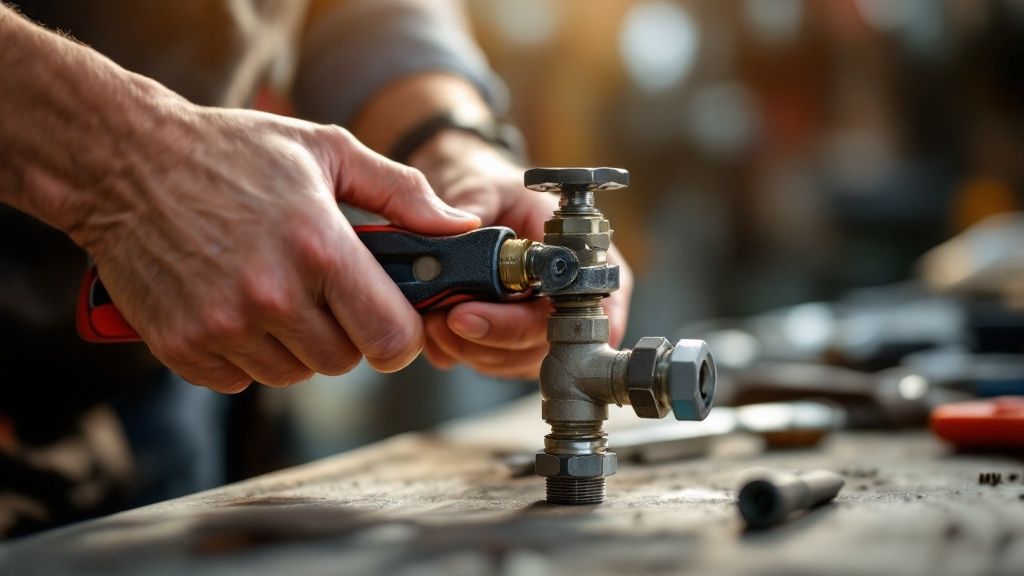
When you install a water pressure regulator—also known as a pressure reducing valve (PRV)—you’re making one of the smartest moves you can for your home's plumbing and your bank account. It’s best to think of it as a quiet bodyguard for your pipes and appliances, on guard 24/7 against the stress of high city water pressure.
This small device pays for itself by preventing two kinds of financial pain: the big, sudden plumbing disasters and the slow, sneaky drains on your wallet every single day.
Stopping Catastrophic Failures in Their Tracks
First, a regulator helps you avoid the massive expense and headache of a major plumbing emergency. High pressure is enemy number one for washing machine hoses, water heaters, and the pipes hidden behind your walls. It pushes them to their limits until something breaks.
We see it all the time. A family in Carmel Valley kept calling us for appliance repairs, replacing hoses on their dishwasher and washing machine way too often. We found the real problem: their city water pressure was consistently screaming at over 90 PSI. Our team installed a regulator, and just like that, the cycle of breakdowns stopped. They’ve saved thousands in emergency repair bills and water damage cleanup since then.
A water pressure regulator isn't just a part; it's peace of mind. It takes an unpredictable external force and makes it safe and predictable for your home's plumbing.
By keeping your home's pressure at a steady, safe 50-60 PSI, a regulator drastically cuts the risk of these expensive disasters.
Putting Everyday Savings Back in Your Pocket
Beyond stopping floods, a regulator also chips away at your monthly bills. When water pressure is too high, every faucet, showerhead, and toilet is forced to use far more water than needed. A regulator dials that back, ensuring your fixtures operate efficiently and cutting down on waste without you ever noticing a change.
This is a big deal, especially for our drought-conscious communities all over Monterey County. Over a year, that quiet efficiency adds up to thousands of gallons of saved water. That means lower water bills and lower energy bills, since your water heater isn't having to work overtime.
This focus on efficiency is why the global market for these valves is projected to hit USD 4.4 billion by 2033, as more communities invest in smarter ways to manage water. You can read more about the growing global demand for water pressure management on imarcgroup.com.
This one component is essential for a healthy plumbing system. To keep everything in top shape, you might want to learn about our plumbing preventative maintenance plans. A regulator works tirelessly behind the scenes, protecting everything from your pipes to your tankless water heater and helping them last longer.
What to Expect During Professional Installation
So, you’ve decided to get a water pressure regulator installed. Smart move. You might be picturing a complicated, all-day project, but having a pro handle it is actually a surprisingly quick and easy process. At Alvarez Plumbing, we've been doing this for over 35+ years across Salinas and Monterey County, so we have it down to a science.
Here’s a clear look at what happens when one of our certified technicians shows up at your door.
Assessment and Prep Work
First, we don't just start cutting pipes. The initial step is always a thorough assessment. We'll hook up a gauge to your outdoor spigot to test the water pressure coming directly from the city's main line. This gives us a starting number—we need to know what we're up against before we do anything else.
Once we have that number, our plumber will locate your home's main water shutoff valve and turn it off to safely start the work. By the way, if you ever have an emergency and need to shut the water off yourself, our guide on how to shut off your main water supply is a great resource to have handy.
The Installation and Calibration Process
With the water off, our technician gets to work installing the new regulator on your main water line. The best spot is right after the main shutoff valve. This ensures every drop of water entering your home is controlled before it reaches your pipes and appliances. A typical installation takes about 1-2 hours.
Now for the most important part: setting it correctly. This is where professional experience really matters. It’s not enough to just install the device; it has to be calibrated. We’ll carefully adjust the regulator to bring your home's internal pressure down to that sweet spot of 50 to 60 PSI.
After setting it, we turn the water back on. We then go inside and test the pressure at a few different faucets—kitchen, bathroom, you name it—to confirm everything is balanced and consistent.
Why This Is Not a DIY Project
I get the temptation to tackle home projects yourself. But this is one job you really want to leave to the pros. An improper installation can easily spring a leak at the connection points, which defeats the whole purpose of the device.
Even worse, if you don't calibrate it right, you could end up with pressure that's still too high, or you might accidentally create a new problem like annoyingly low water flow. There are a lot of details to get it right, which is why expert plumbing services are regulated and require extensive training.
Trusting a licensed and insured plumber from Alvarez Plumbing guarantees the job is done right the first time, protecting your home and giving you lasting peace of mind.
Got Questions About Water Pressure Regulators? We’ve Got Answers.
When it comes to plumbing, even a simple device like a water pressure regulator can bring up a few questions. As a family-owned plumbing company that's been serving Monterey County since 1988, we’ve pretty much heard them all. Here are straightforward answers to the most common questions we get from homeowners in Salinas, Carmel, and everywhere in between.
How Long Does a Water Pressure Regulator Last?
This is usually one of the first things people ask, and for a good reason—you want to know your investment will last. A high-quality water pressure regulator, when installed by a professional, should give you 10 to 15 years of reliable service. They’re built to be very durable, working behind the scenes for a long, long time.
But, like with most things, local conditions can play a part. Here in parts of the Salinas Valley, we sometimes deal with hard water. Over time, that mineral buildup can cause the internal parts of the regulator to wear out a bit faster. This is one of the reasons regular plumbing check-ups are so valuable—they help us spot signs of aging before the device fails.
It's not a "set it and forget it forever" device. Think of it like the tires on your car—they last a long time, but they do eventually wear out and need to be replaced to keep everything else safe.
Can a Bad Regulator Cause Low Water Pressure?
Absolutely. It’s one of the most common symptoms we see when a regulator is starting to fail. While we’ve been talking a lot about high pressure, a regulator that’s wearing out can actually create the opposite problem. Over the years, the internal spring or diaphragm can get worn out, clogged with sediment, or just get stuck in a nearly-closed position.
When that happens, you’ll start to notice a frustrating drop in water flow all over the house. Maybe your shower feels weak, or it takes forever to fill a pot at the kitchen sink. This isn't just a small annoyance; it’s a clear signal that the device designed to protect your plumbing isn't doing its job anymore.
If you suddenly experience low pressure in your Prunedale or Marina home, a failing regulator is one of the first things a professional plumber will check. It’s a frequent cause, though a proper diagnosis is needed since other issues can also cause low pressure.
Is a Regulator Required by Plumbing Code in Monterey County?
This is a critical question, especially if you’re building a new home or planning a major renovation. The short answer is yes, in many situations. The California Plumbing Code, which guides all construction in places like Pacific Grove and Carmel-by-the-Sea, requires a water pressure regulator if the incoming water pressure from the city main is over 80 PSI.
Since the pressure from the city can often be higher than that, especially in hilly areas, installing a regulator isn't just a smart move—it's often a legal requirement for safety. This rule exists for all the reasons we've discussed: to protect your pipes, fixtures, and appliances from the constant strain of high pressure. For our team, it’s a non-negotiable part of a quality, long-lasting plumbing installation that keeps your home safe.
If you're noticing any of the signs of high—or even low—water pressure, or if you just want the peace of mind that comes from protecting your home, Alvarez Plumbing is here to help. Our certified technicians can test your pressure and install a high-quality regulator to keep your home safe for years to come. Give us a call today or schedule your service online to get started.