
Let’s be honest—nobody wants to think about their plumbing. That is, until a pipe bursts or a toilet backs up, turning your peaceful home in Salinas or Monterey into a chaotic, water-logged nightmare. But what if you could sidestep those disasters altogether?
That’s where plumbing preventative maintenance comes in. It’s not about waiting for the worst to happen; it’s about regularly inspecting your plumbing to catch and fix small issues before they blow up into catastrophic (and expensive) failures. It’s a proactive game plan that saves you money, conserves our precious local water, and gives you invaluable peace of mind.
Why Proactive Plumbing Care Is a Must-Have

Waiting for a gushing pipe or a backed-up sewer line to demand your attention is a costly mistake. Proactive care isn’t just a nice-to-have; it’s an essential part of responsible homeownership, especially here in Monterey County. Our local environment, from the salt-laced air in Pacific Grove to the hard water found throughout Salinas, puts unique stresses on your plumbing system.
As a family-owned business serving this area since 1988, we've seen firsthand how small, ignored problems fester into full-blown emergencies. A slow drip isn't just an annoying sound—it’s often the first warning of a failing gasket or a corroded pipe that’s one bad day away from causing significant water damage. This is why we focus on a "problem awareness" approach rather than just reacting to last-minute calls.
How Our Local Climate Impacts Your Pipes
You might not realize it, but our coastal climate plays a huge role. The persistent fog and humidity can speed up corrosion on exposed pipes and fixtures in homes from Marina to Carmel-by-the-Sea. At the same time, the mineral-rich "hard water" common in areas like Prunedale and Watsonville leads to sediment buildup inside your water heater. This forces it to work harder, shortening its lifespan and driving up your energy bills.
Investing in annual plumbing preventative maintenance is one of the smartest financial decisions a homeowner can make. It transforms plumbing from a potential source of crisis into a reliable, efficient system that protects your property's value.
The benefits of getting ahead of these issues are clear and powerful:
- Fewer Emergency Repairs: Spotting a worn-out valve during a routine check is far cheaper and less stressful than dealing with the massive water damage from a burst supply line.
- Better Water Efficiency: Fixing hidden leaks, even tiny ones, can save hundreds of gallons of water each year—a critical benefit for our drought-conscious communities like Carmel Valley.
- Longer Appliance Lifespan: Simple maintenance, like flushing a water heater, removes the mineral scale that kills efficiency and extends the life of these expensive appliances.
- A Healthier Home: Preventing backups and leaks is the best way to stop mold and mildew growth before it starts, protecting your family’s indoor air quality.
To put it in perspective, let's look at the real-world costs of being proactive versus reactive here in the Monterey area.
Proactive Maintenance vs. Emergency Repair Costs
| Plumbing Issue | Preventative Maintenance Action (Annual Cost) | Emergency Repair Scenario (Potential Cost) |
|---|---|---|
| Leaky Faucet | Inspect & replace washers/gaskets during an annual check-up ($150-$300). | A persistent drip wastes thousands of gallons a year. If it leads to a cabinet or floor damage repair, costs can hit $800+. |
| Clogged Drain | Annual drain cleaning to remove minor buildup ($150-$350). | A fully blocked sewer line requires an emergency call-out, hydro-jetting, and potential cleanup, easily costing $600 – $1,500+. |
| Water Heater Failure | Annual flush to remove sediment & inspect anode rod ($150-$250). | Catastrophic failure leads to flooding, property damage, and emergency replacement, often exceeding $2,500 – $5,000. |
| Burst Washing Machine Hose | Inspect and replace worn rubber hoses with braided steel ones ($150). | A burst hose can dump 500 gallons of water per hour, causing extensive drywall, flooring, and structural damage. Restoration can cost $5,000 – $15,000+. |
As you can see, a small investment in planned maintenance pays for itself by helping you avoid the massive, unexpected costs of an emergency.
A Nationwide Shift Toward Prevention
This focus on preventative care isn't just a local trend; it's a movement happening across the country. The U.S. plumbing industry, with its 132,000 businesses, is on track to hit $169.8 billion in revenue by 2025. A significant part of that growth is driven by a smarter approach—using maintenance to manage costs and reduce emergencies. Learning more about the full range of professional plumbing industry services can give you a better understanding of how the pros protect homes like yours.
Ultimately, proactive care is about taking control. It’s about making sure your home, whether in Carmel-by-the-Sea or Seaside, is protected from the unexpected. It saves you thousands in potential damages and gives you the confidence of knowing your home's most vital system is in expert hands.
Your Year-Round Monterey Bay Maintenance Calendar
A generic, one-size-fits-all plumbing checklist just doesn’t work for homes here in Monterey County. The plumbing in a Pacific Grove home faces a different set of challenges—like damp, salty air—than a home baking in the Carmel Valley summer heat. The needs of your system shift right along with the seasons.
After more than 35 years in the trenches, we’ve learned to anticipate these seasonal shifts. Instead of a generic list, we’ve developed a calendar based on the real-world conditions we see every day. This approach helps you get ahead of predictable problems, protecting your home all year long. A little structured, seasonal care is the best way to prevent those costly, middle-of-the-night plumbing emergencies.
A few key maintenance steps, timed correctly, can deliver some pretty significant results.
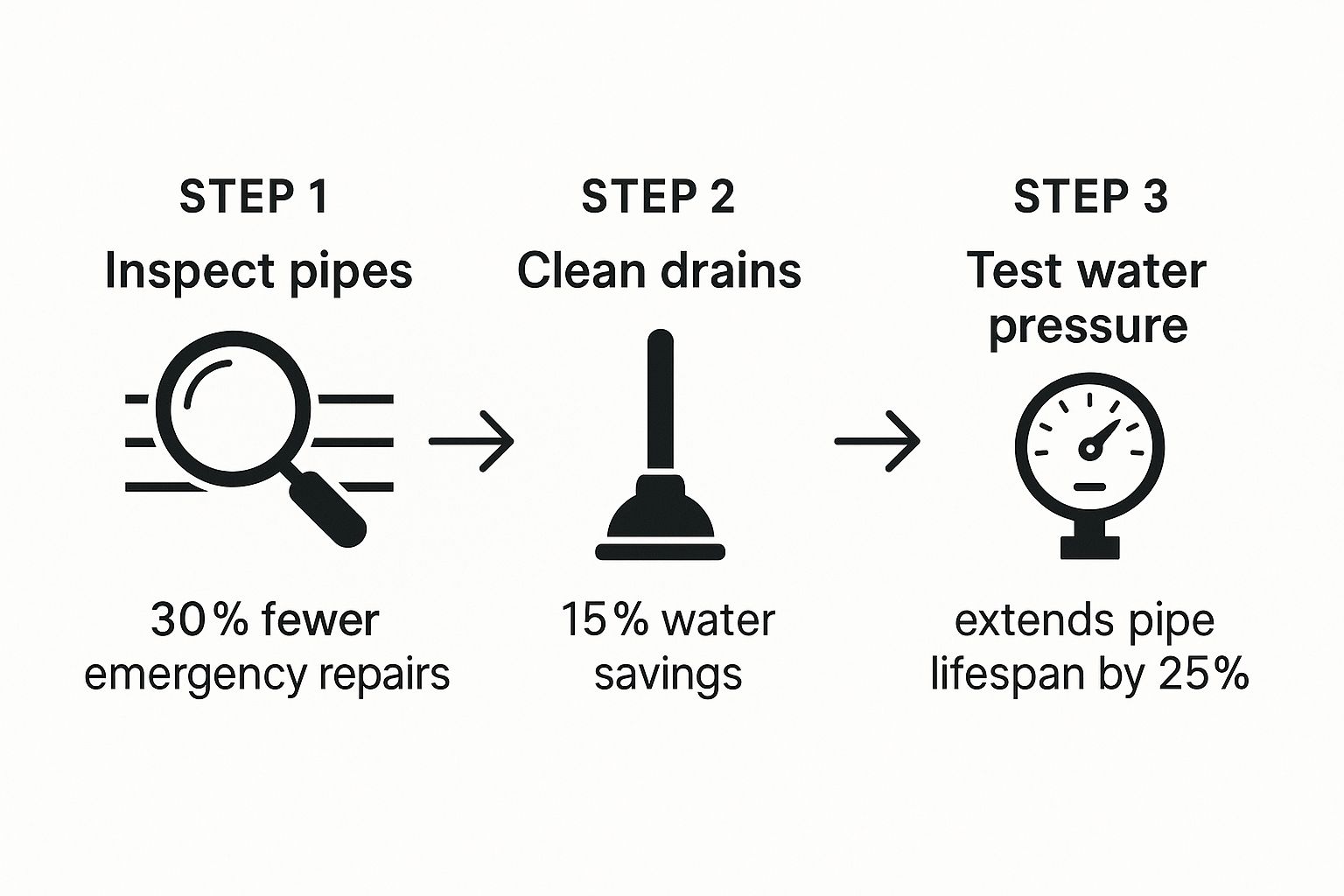
As you can see, professional inspections and timely cleanings directly translate to fewer emergencies, better water conservation, and a longer life for your entire plumbing system.
Winter Prep for the Coastal Chill
While we don't deal with the brutal freezes you see in other parts of the country, our damp, chilly winters create their own set of plumbing risks. Homes in places like Pacific Grove and Monterey are constantly bathed in that cool, salt-laced air, which can speed up corrosion on any exposed pipes and fixtures.
The main focus for winter is simple: insulation and leak prevention.
- Insulate Exposed Pipes: While a simple DIY step is to wrap pipes in your garage or crawl space with foam insulation, a professional can identify all at-risk areas and ensure they're properly protected from our damp chill.
- Hunt for Drips: Cold air makes seals and gaskets contract, which can turn a minor outdoor hose bibb leak into a major headache. A thorough inspection is key.
- Disconnect Your Hoses: Always disconnect, drain, and store your garden hoses. If water freezes inside an attached hose and spigot, it can crack the faucet, leading to a flood when things thaw. This is a critical step for every homeowner in our service area.
Spring Cleaning After the Rains
Once the winter rains finally let up, it’s the perfect time to address what they left behind. This is especially critical for homeowners in Watsonville and Seaside, where heavy downpours can really test a home's drainage systems.
Your goal here is to ensure your system can handle runoff and has recovered from winter.
- Test Your Sump Pump: If you have one, don't wait for a storm to discover it's not working. A professional can test the float switch, check the motor, and ensure it’s ready to protect your home.
- Inspect for Hidden Leaks: Shifting ground after heavy rains can stress underground pipes. Professional leak detection can spot these hidden issues before they cause serious foundation damage.
- Clean Gutters and Downspouts: While not technically plumbing, clogged gutters are a plumber’s enemy. When they overflow, water pools right at your foundation, potentially overwhelming perimeter drains and seeping into your basement or crawl space.
Summer Maintenance for High Use
Summer in Monterey County, especially in sunny spots like Salinas and Carmel Valley, means more water usage. The kids are home, gardens need constant watering, and the washing machine feels like it’s running 24/7. All this activity puts extra strain on your appliances.
For summer, your focus should be on efficiency and appliance health.
- Inspect Washing Machine Hoses: Standard rubber hoses are notorious for failing without warning. A burst hose can flood a laundry room in minutes. Have a pro inspect for bulges or cracks and recommend upgrading to braided steel hoses for ultimate peace of mind.
- Check Sprinklers and Irrigation: Leaks in your irrigation lines not only waste a tremendous amount of water but can also over-saturate the ground right next to your foundation, causing other issues.
- Watch for Slow Drains: With more people at home, you might notice things draining slower. That's usually the first sign of a clog building up. It’s much easier for a professional to clear it now than when it becomes a complete blockage.
Fall Prep for a Clear System
As the leaves start to pile up in Prunedale and Castroville, the mission becomes preventing clogs. Debris from trees and storm runoff can quickly overwhelm your drains and sewer lines if they aren't ready for the first autumn rains.
If you want a deeper look at what a full professional check-up covers, you can explore our detailed yearly plumbing checklist for homeowners to see how we keep your system running smoothly.
- Clear Debris from Drains: Make sure all your yard drains, storm drains, and window wells are free of leaves and dirt. A blockage here can cause localized flooding.
- Schedule a Drain Cleaning: Fall is the perfect time for a professional drain cleaning. Getting rid of the summer’s buildup of soap scum, hair, and grease makes sure your pipes are ready for the heavier loads that come with the holiday season.
- Final Outdoor Faucet Check: Before it gets cold again, have a professional do one last check of your outdoor spigots to make sure they are shut off completely and not dripping.
By following this seasonal calendar, preventative plumbing maintenance becomes a simple, logical routine instead of a forgotten chore. When you align your tasks with the specific challenges of our local climate, you can protect your home and avoid the stress of an unexpected plumbing disaster.
Keeping Drains and Sewer Lines Flowing Freely
There’s nothing that brings a household to a screeching halt quite like a backed-up drain or a gurgling toilet. These aren't just minor annoyances; they're often the first red flag of a bigger problem brewing deep within your pipes. Here in Monterey County, we see all kinds of culprits behind clogs.
Along the coast in places like Marina or Seaside, sand and fine grit constantly find their way into shower and floor drains, creating some seriously stubborn blockages. Head inland to agricultural areas like Castroville and Salinas, and the drains often struggle with sediment and organic matter. And in every home, the usual suspects—grease, hair, and soap scum—are always working to slow things down.
Your First Line of Defense: Simple Habits
The best way to keep your drains clear starts with small, consistent habits. While these are great first steps, they can't prevent every issue.
- Be Smart with the Garbage Disposal: It’s a workhorse, but it’s not invincible. Avoid putting fibrous veggies (like celery stalks), coffee grounds, eggshells, and—most importantly—grease down the disposal.
- Use Drain Screens: A simple mesh screen over your shower and sink drains is one of the most effective, low-cost tools you can use to catch hair and debris.
- Run Hot Water Regularly: Once a week, let hot water run down your kitchen sink for a minute or two to help flush away fresh grease buildup.
If you follow these habits and still experience slow drains, it’s a sign you need a professional inspection.
The Problem with Chemical Drain Cleaners
When a drain does slow down, it's tempting to reach for a bottle of liquid drain cleaner. We really advise against this. While they might seem like a quick fix, these harsh chemicals can cause significant long-term damage.
Those caustic chemicals don't just eat away at the clog; they eat away at your pipes, too. Over time, they can corrode metal pipes and soften PVC, leading to weak spots and eventual leaks—a far more expensive problem than the original clog.
Instead of a temporary, damaging solution, it's better to address the blockage safely. For a minor clog, a plunger or plumbing snake might help, but if a drain is consistently slow or clogs up again, that's a clear sign of a deeper issue that requires a licensed plumber. You can learn more about how we tackle these issues in our guide on how proper drain maintenance can help you avoid floods.
When to Call for Professional Help
Recurring clogs almost always point to a more serious problem further down the line. We often find issues like:
- Severe Buildup: Years of accumulated grease and sludge that simple home methods just can't touch.
- Pipe Damage: A sagging or "bellied" pipe where waste and water collect instead of flowing away.
- Root Intrusion: Tree roots from Monterey Pines or other local trees are notorious for cracking sewer lines in their search for water.
This is where professional diagnosis becomes essential. We use a specialized video camera to inspect your entire sewer line from the inside, pinpointing the exact cause and location of the problem without any guesswork. For the really tough blockages, we bring out the heavy-hitter: hydro-jetting. This process scours the inside of your pipes with high-pressure water, safely and effectively removing everything from thick sludge to invasive tree roots.
The global plumbing services market was valued at $105.2 billion in 2023 and is only expected to grow. This growth shows a greater understanding that professional maintenance is key to managing complex water systems and preventing major failures. This is true for commercial settings, too. Maintaining clear drains is vital for businesses like restaurants, and a detailed restaurant kitchen cleaning checklist can offer some great insights for keeping commercial lines flowing freely.
Ultimately, keeping your drains clear is a cornerstone of any good plumbing maintenance plan. By adopting good daily habits and calling in a pro for those stubborn, recurring issues, you can prevent a simple clog from escalating into a costly sewer line disaster.
Water Heater Care for Better Efficiency and Lifespan
Your water heater is one of the true workhorses in your home. You probably don't give it a second thought—until that dreaded morning you’re met with an ice-cold shower. Here on the Monterey Peninsula, from Carmel to Salinas, our water heaters are fighting a quiet battle against a specific local enemy: hard water.
The high mineral content in our water supply creates a nasty sediment buildup at the bottom of the tank. Picture a layer of grit and sand slowly accumulating over time. This sludge forces your water heater to burn extra energy just to heat the water above it, which means higher utility bills and a lot more stress on the unit itself. This is precisely why a professional, annual flush is a non-negotiable part of any solid plumbing maintenance plan.
Flushing for Efficiency and a Longer Lifespan
Having a trained plumber flush your tank once a year isn't just about cleaning things out; it’s a direct investment in energy savings and a longer-lasting appliance. When that insulating layer of sediment is gone, your heater can do its job much more efficiently, often leading to a noticeable drop in operating costs.
Even more importantly, it helps prevent the tank from overheating and corroding from the inside. A water heater that gets this regular TLC can easily last years longer than a neglected one, saving you the headache and expense of a premature replacement. While flushing might sound straightforward, this is definitely a job for the pros. It involves dealing with scalding hot water and requires a specific process to avoid damaging the unit or accidentally introducing air into your plumbing lines.
Tank vs. Tankless Water Heater Maintenance
The right maintenance really depends on what kind of water heater you have. Whether it's a classic tank-style unit in your Prunedale garage or a sleek tankless model in a newer Carmel Valley home, both need routine professional care to perform their best.
- Traditional Tank Heaters: These are the ones that absolutely need that annual flush. During the service, a pro will also check the anode rod. This is a vital, self-sacrificing part designed to corrode so the tank itself doesn't. Once that rod is depleted, your tank is left unprotected and starts to rust. Replacing it is a simple but critical maintenance task.
- Tankless Water Heaters: These "on-demand" units don't store water, so you won't get that same sludge buildup. However, their complex internal heat exchangers are prone to mineral scaling from our hard water. This scale chokes off water flow and kills efficiency. An annual professional descaling service is the key to keeping them running like new.
One of the most critical safety checks we perform involves the Temperature and Pressure (T&P) relief valve on tank water heaters. This small valve is designed to open and release water if the pressure or temperature inside the tank reaches dangerous levels. We test it on every visit to ensure it’s working correctly, as a functioning T&P valve is all that stands between you and a potential tank rupture.
Know the Warning Signs of a Failing Water Heater
Learning to spot trouble early can be the difference between a scheduled repair and a flooded basement. As a homeowner in Monterey or Seaside, keep an ear out and an eye open for these signs—if you notice any, it's time to call in a professional.
Here's a quick guide to help you know when your water heater is asking for help.
Signs Your Water Heater Needs Professional Attention
| Symptom | What It Could Mean | Recommended Action |
|---|---|---|
| Rumbling or Popping Noises | This is the sound of water boiling under a thick layer of sediment. The pockets of steam create a "popping" noise as they escape. It means the tank is under serious stress. | Call a professional immediately for an inspection and flush. This is a classic sign of severe sediment buildup. |
| Rusty or Discolored Hot Water | This usually means the inside of your tank is rusting away, which is often a sign that the anode rod is completely gone. | Schedule a professional check-up. The anode rod might need replacing, or it could mean the tank itself is at the end of its life. |
| Water Leaking Around the Base | A puddle at the bottom of the tank almost always points to a breach in the internal tank wall. This is a major failure. | This is an emergency. Shut off the water supply and the power (or gas) to the heater and call for professional service right away. |
| Lukewarm or Inconsistent Hot Water | For an electric model, this could be a bad heating element. For gas, it could be a faulty thermostat or a problem with the gas supply. | A pro can quickly diagnose which component has failed and recommend either a repair or replacement. |
Consistent, professional care is the secret to a dependable and long-lasting water heater. For a more detailed look at service timing, you can check out our guide on your water heater maintenance schedule. Our team has been keeping water heaters running safely and efficiently across Monterey County since 1988, and we know that a quick annual visit is the best way to make sure your hot water is always there when you need it.
Drought-Smart Plumbing and Water Conservation

When you live anywhere in California, and especially here in Monterey County, you know water conservation isn't just a suggestion—it's a way of life. It’s easy to think of plumbing maintenance as just a way to stop floods, but it’s so much more. A well-cared-for system is also an efficient one, making plumbing preventative maintenance one of your best tools for sustainability.
A tiny, hidden leak might not seem like a catastrophe, but those drips add up quicker than you'd think. A single faucet dripping once per second wastes over 3,000 gallons of water a year. That’s enough for almost 200 showers! Our professional inspections are designed to hunt down these silent water wasters, ensuring your home isn't contributing to the problem. This is critical for communities like Salinas and Watsonville that rely on carefully managed water resources.
Aligning Your Home with Local Water Goals
Fixing leaks is a great start, but true water efficiency comes from building a system that uses less water from the get-go. A big part of our maintenance inspections is looking for opportunities to make smart, water-saving upgrades. This often means recommending modern, low-flow fixtures that can slash your water use without you even noticing a difference in performance.
Most people are shocked to learn how much water their old toilets and showerheads are guzzling. Upgrading these is one of the single most effective ways to lower your water bill and get your home in line with local conservation goals. For example, replacing an old, inefficient toilet can save a family of four up to 16,000 gallons of water every single year.
It can feel a bit overwhelming trying to figure out all the different local water district rules and rebate programs. Whether you're in Carmel-by-the-Sea or Prunedale, we can help you choose the right fixtures that meet local standards and get you the most savings. For some quick tips you can use right away, check out our guide on 10 easy ways to conserve water at home.
A professional plumbing inspection isn't just a repair service; it's a water conservation audit. We help you build a drought-smart home that’s both cost-effective and environmentally responsible, protecting our shared resources here on the beautiful Monterey Peninsula.
Smart Upgrades for Maximum Impact
Choosing the right fixtures is where you can really make a difference. The technology has come a long way, and today's options are impressive.
Here are a few of the most impactful upgrades we recommend:
- Low-Flow Showerheads: Modern low-flow models can cut your shower's water use by 40% or more. They work by mixing air into the water stream, so you still get a strong, satisfying spray while using far less water.
- High-Efficiency Toilets: An old toilet can use up to 6 gallons with every flush. New WaterSense-labeled models use just 1.28 gallons or less, which is a massive reduction in your home's daily water use.
- Faucet Aerators: This is one of the easiest and most affordable upgrades out there. It’s a small, screw-in device that can reduce the water flow from your sinks by 30% or more, and you'll likely never notice a change in pressure.
To get a better idea of what's available, you can explore a comprehensive guide to low-flow shower heads and see how today's fixtures blend comfort with conservation.
This push for sustainability is happening on a global scale. The market for plumbing fixtures was valued at $89.8 billion in 2023 and is expected to grow, largely driven by the demand for water-saving technology. Regular maintenance makes sure these advanced fixtures keep working as they should, delivering the savings you expect. Ultimately, taking a proactive approach to your plumbing is a direct investment in a more sustainable future for our entire community.
Common Questions About Plumbing Maintenance
After more than 35 years of helping homeowners from Salinas to Carmel-by-the-Sea, we've heard just about every question you can imagine about plumbing maintenance. It's only natural to wonder about the cost, how often it's needed, and if it's really worth it. We're here to give you some clear, neighborly answers based on our decades of hands-on work right here in Monterey County.
Our philosophy is simple: professional care is the smartest investment you can make in your home. It’s all about being proactive, not reactive.
How Often Should I Schedule Professional Plumbing Maintenance?
For most homes in the Monterey Bay area, we stand by a comprehensive professional plumbing inspection once a year. An annual check-up is the gold standard for a reason—it lets our licensed plumbers spot small issues before they blow up into major, expensive disasters.
This is especially critical given our unique local conditions. The salty coastal air in places like Carmel-by-the-Sea can speed up fixture corrosion, while the agricultural water quality around Salinas can be hard on pipes. An annual visit is the most effective way to keep your pipes, drains, and water heater in top shape, which ultimately saves you a ton of money and stress.
Is a Plumbing Maintenance Plan Really Worth the Investment?
Absolutely. Thinking about a maintenance plan is a lot like deciding whether to change the oil in your car. A small, predictable investment in regular service prevents a catastrophic breakdown that could cost you thousands. The price of a burst pipe or a failed water heater—not to mention the water damage to your floors, walls, and cherished belongings—is far greater than the modest cost of a yearly visit.
A maintenance plan isn't just another bill; it's an investment in your home's health and your own peace of mind. It turns plumbing from a source of potential crisis into a reliable, efficient system you can count on.
What’s the Biggest Plumbing Mistake Homeowners Make?
By far, the most common and costly mistake we see is ignoring what seems like a "small" problem. That dripping faucet in your Monterey home, the slow-draining shower in your Seaside condo, or a toilet in Prunedale that runs constantly might just seem like minor annoyances you can put up with.
But these are often red flags for much bigger issues lurking out of sight. Those "small" leaks can waste hundreds, even thousands, of gallons of water a year. More importantly, they often signal that a fixture is about to fail completely. Calling a professional the moment you notice something is off is the single best thing you can do to prevent a full-blown plumbing disaster.
Before you even own the property, it’s wise to know what you're getting into. You can learn more about what plumbing features to check before you buy a new home in our detailed guide.
Are Chemical Drain Cleaners a Safe Alternative?
We strongly advise against using liquid chemical drain cleaners. While they might offer a quick, temporary fix by dissolving part of a clog, they can cause serious, permanent damage to your plumbing system over time.
Here's why they're a bad idea:
- Pipe Corrosion: The harsh, caustic chemicals in these products don't just eat away at the clog—they eat away at your pipes, too. This is true for both older metal pipes and modern PVC.
- Masking the Real Problem: Chemical cleaners rarely solve the root cause of recurring clogs, like invasive tree roots or heavy sludge buildup in your main sewer line.
- Safety Hazards: These chemicals are toxic. They can be dangerous if they splash back on you or mix with other cleaning agents, creating a hazardous reaction.
For any stubborn, recurring clog in areas like Watsonville or Castroville, a professional drain cleaning is a much smarter and more permanent solution. Methods like hydro-jetting are safe, incredibly effective, and protect your plumbing instead of destroying it.
Preventative maintenance is the key to a healthy, efficient, and worry-free plumbing system. If you have more questions or you're ready to protect your home with a professional inspection, the friendly experts at Alvarez Plumbing are here to help. With over 35 years of experience serving Monterey County, we have the expertise to keep your home’s plumbing in top condition.