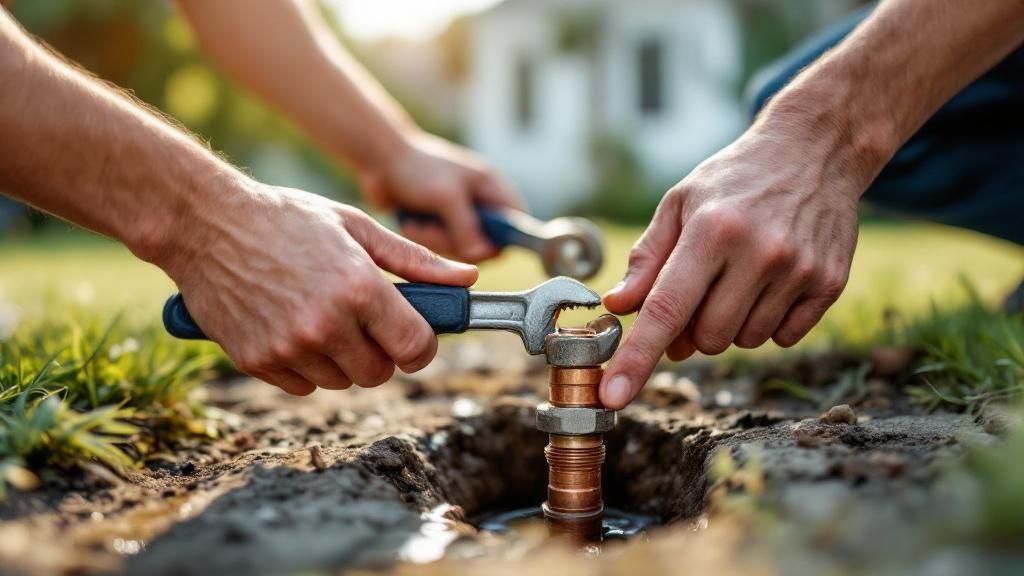
That random wet spot in your yard might not be from last night's rain. More often than not, the first sign of a failing main water line is something small and easy to dismiss. Learning to spot these clues is your best defense against a full-blown plumbing disaster and the massive water line repair bills that come with it.
Catching it early can be the difference between a manageable fix and a total nightmare.
How to Spot a Main Water Line Leak
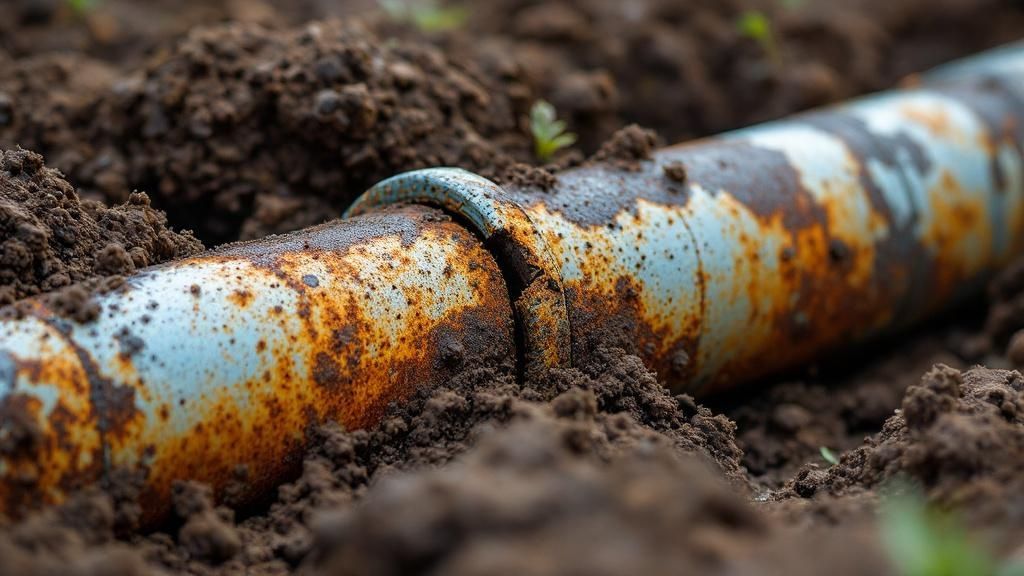
A hidden water line leak doesn't always show up as a geyser shooting out of your front lawn. The signs are usually far less dramatic, but they're just as telling if you know what to look for. Paying close attention can save you thousands in property damage.
Signs Inside Your Home
Many homeowners first realize something’s wrong from inside the house. A sudden, persistent drop in water pressure across all your faucets is a classic red flag. If your shower suddenly feels weak or it takes forever to fill the kitchen sink, a break somewhere between the street and your house could be the culprit.
Another dead giveaway is sputtering faucets. When a crack or break lets air into the water line, your fixtures will spit and sputter when you turn them on. You might also see discolored water coming out of the tap, which often happens when dirt and soil seep into the compromised pipe.
These indoor signs are your home's early warning system. If you notice these issues, it's crucial to understand what to do when a waterline breaks to prevent things from getting worse.
Outdoor and Less Obvious Clues
The evidence isn’t always indoors. Take a walk around your property. Is there a perpetually soggy patch in the yard, even when it hasn’t rained? That’s a major warning sign. Sometimes, one spot on your lawn might be suspiciously green and lush compared to everything around it—it's getting a constant, underground watering from the leak.
The most definitive DIY test you can do involves your water meter. First, make sure every single water-using appliance in your house is turned off. No dishwasher, no laundry, nothing. Then go look at your water meter. If the little dial or leak indicator is still spinning, water is flowing somewhere, and it's very likely a break in your main line.
This isn't a rare problem. Aging infrastructure is a huge concern across the country. In fact, proactive replacement is becoming the norm; about 70% of U.S. water utilities now have programs to replace their aging pipe systems. It’s a clear signal that homeowners need to be just as vigilant about the pipes on their own property.
Water Line Problem Detection Checklist
To make it easier, here's a quick checklist of common symptoms. Think of it as a cheat sheet for figuring out what your plumbing might be trying to tell you.
| Symptom | What It Could Mean | Immediate Action |
|---|---|---|
| Sudden Drop in Water Pressure | A significant break in the main line is reducing overall flow. | Check your water meter for movement with all taps off. |
| Sputtering Faucets | Air is getting into the system through a crack in the pipe. | Listen for hissing sounds near where the water line enters your home. |
| Discolored (Brown/Yellow) Water | Soil and other contaminants are entering the broken water line. | Avoid drinking the water until the source is identified. |
| Unexplained Spike in Water Bill | A constant leak is running, even when you're not using water. | Compare recent bills to spot the trend; perform the water meter test. |
| Soggy Spots in the Yard | Water is seeping up to the surface from an underground leak. | Look for unusually green grass or soft, muddy ground. |
| Sound of Running Water | A leak is active, even with all fixtures turned off. | Turn off the main shut-off valve; if the sound stops, the leak is in your house. |
Keep in mind, this checklist is a starting point. If you spot any of these signs, it's a good idea to investigate further or call in a professional before a small leak turns into a big, expensive mess.
Your First Moves in a Water Line Emergency
When you’re staring down a water line emergency, every second feels like an hour. A burst pipe can dump gallons of water into your home every minute, quickly turning a small leak into a full-blown flood. The immediate goal isn't to fix it—it's to stop the bleeding.
Your first, most critical move is to find and shut off your home’s main water valve. This is the choke point that cuts off the water supply from the street, and it will stop the leak in its tracks. You'll usually find this valve in a basement, crawl space, or on an exterior wall where the main water line enters your house.
Secure the Area and Document Everything
Once the water has stopped flowing, your next priority is safety. If you see water pooling anywhere near electrical outlets, appliances like your water heater, or especially your breaker box, you need to shut off the electricity to that part of the house immediately. Water and electricity are a deadly mix, and taking this step is absolutely non-negotiable.
Now is the time to pull out your phone and become a detective. Start taking clear photos and videos. Get shots of where the leak is coming from, how far the water has spread, and any property that's been damaged. This visual proof is worth its weight in gold when you file an insurance claim.
The image below shows a classic leak scenario under a kitchen sink—a spot where problems often start quietly before becoming a major issue.
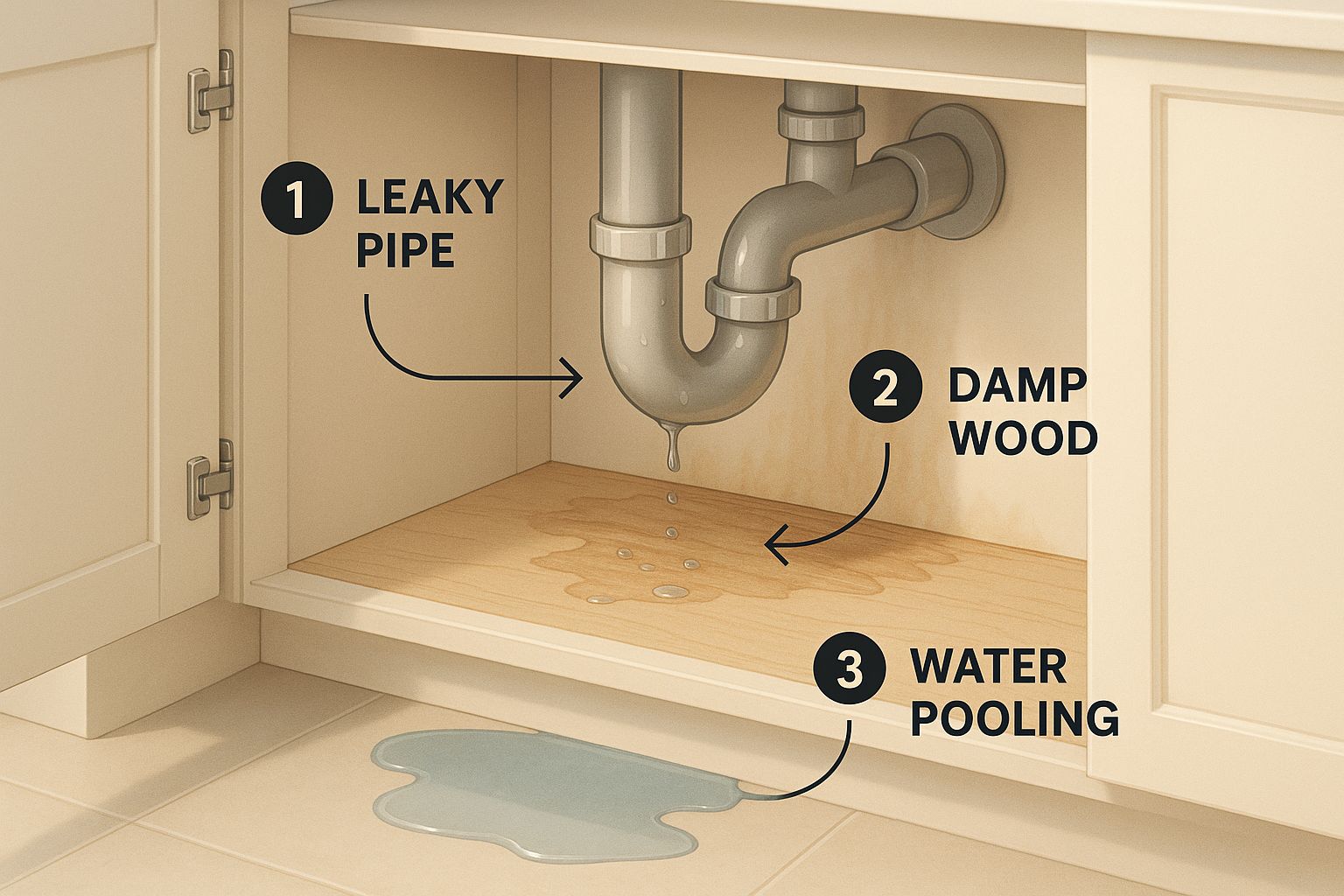
As you can see, even a seemingly minor drip from a fitting can cause immense damage over time. This is why acting fast is so important.
Get to Know Your Main Shutoff Valve
In a plumbing crisis, your main water shutoff valve is your best friend. There are two common types you're likely to have, and knowing which one is yours can save precious, frantic minutes.
Most homes have either a gate valve (which looks like a round spigot handle) or a ball valve (which has a straight lever handle).
- Gate Valve: You’ll need to turn this clockwise, probably several times, until it stops.
- Ball Valve: This one is much faster. A simple quarter-turn of the lever is all it takes to shut off the water.
Pro Tip: Don't wait for an emergency to find your shutoff valve. Go find it today. Once a year, turn it off and back on again. This simple task keeps it from seizing up from disuse and ensures it will work when you really need it to.
With the immediate danger contained, your final step is to call for backup. A serious water line repair is not a weekend DIY project. If the disaster strikes after hours, you’ll want to find a professional who offers 24-hour emergency plumbing services to get an expert to your door as quickly as possible.
Should You DIY or Call a Professional Plumber
https://www.youtube.com/embed/u8z4o5CdSKw
The temptation to tackle a home repair yourself can be powerful. A few minutes on YouTube, and suddenly, you feel like an expert. Saving a bit of cash is always a nice bonus, too. But let's be honest: when it comes to water line repair, the line between a simple fix and a full-blown disaster is razor-thin.
It's one thing to tighten a leaky fitting on an exposed pipe under the kitchen sink. Most handy homeowners can manage that with a couple of wrenches and some confidence. The game changes completely, however, when the problem is buried a few feet under your lawn.
The Real Risks of a DIY Water Line Repair
Going it alone on a major water line repair can backfire in spectacular fashion. You could easily turn a small, manageable drip into a geyser, saturating your yard and threatening your home's foundation. A botched repair is just a ticking time bomb waiting to cause major water damage.
Even if you think you've stopped the leak, you might be creating new, invisible problems. Cities and counties have strict building codes for a reason—to protect public health and the water supply.
- Code Violations: A repair that doesn't meet local codes could land you with hefty fines and an order to have it all redone by a licensed plumber. That’s paying for the same job twice.
- Wrong Materials: Grabbing the wrong type of pipe or fittings from the hardware store is a common mistake. Parts not rated for underground burial or for carrying potable water can fail prematurely or, worse, contaminate your drinking water.
- Insurance Nightmares: If your DIY fix fails and causes thousands of dollars in water damage, your homeowner's insurance policy will likely deny the claim, citing unpermitted or improper work. You'll be left holding the entire bill.
The decision to call a professional isn't just about convenience; it's about managing risk. A licensed plumber brings the right tools and years of experience, but more importantly, they carry the licenses and insurance that protect you from liability.
DIY Fix or Professional Call Comparison
Deciding when to grab your tools versus when to call for backup can be tricky. This table breaks down common scenarios to help you make a smarter, safer choice.
| Repair Scenario | DIY Feasibility | When to Call a Pro | Associated Risks |
|---|---|---|---|
| Leaky fitting under a sink | High. Often a simple tightening job. | If the leak persists after tightening or the pipe is corroded. | Over-tightening can crack fittings, making the leak worse. |
| Visible pipe leak (PEX, Copper) | Moderate. Requires specific tools and skills. | If you're not comfortable with soldering or crimping. | A bad connection will fail, causing a flood. |
| Unexplained high water bill | Low. This indicates a hidden leak. | Immediately. Pros use leak detection equipment. | Ignoring it leads to massive water waste and potential property damage. |
| Main water line break (in yard) | Very Low. Requires excavation and code knowledge. | Immediately. This is a major plumbing job. | City code violations, property damage, water contamination, personal injury. |
| Clogged fixture (toilet, sink) | High. A plunger or auger often works. | If multiple fixtures are clogged at once. | Using harsh chemical drain cleaners can damage pipes. |
| Sewer gas smell | Very Low. Suggests a break in a drain or vent line. | Immediately. Sewer gas is a health hazard. | Exposure to harmful bacteria and methane gas. |
Ultimately, while a small, visible leak might be within your skill set, anything involving hidden pipes, your main water line, or your sewer system is a job for a professional. The risks simply aren't worth the potential savings.
When to Immediately Call a Professional
Some situations are just not up for debate. If you suspect a problem with the main water line—the pipe that runs from the street meter to your house—put the shovel down and pick up the phone. This kind of work is serious business, often requiring trenching equipment or even modern trenchless repair methods that are far beyond any DIY scope.
The scale of this work is massive. Globally, the market for water infrastructure repair technologies hit $96.02 billion in 2022 and continues to grow. This shows just how much investment goes into professional, high-tech solutions. You can learn more about these technologies from BCC Research reports on water infrastructure.
If you’re dealing with a leak you can't see or any problem that requires digging, you need an expert. For urgent situations that can’t wait, your best bet is to find reliable emergency plumbing services in the Salinas and Monterey area. Getting a professional assessment isn't admitting defeat; it's making a smart decision to prevent a much costlier and more dangerous mistake.
Time for a New Water Line? Not So Fast.
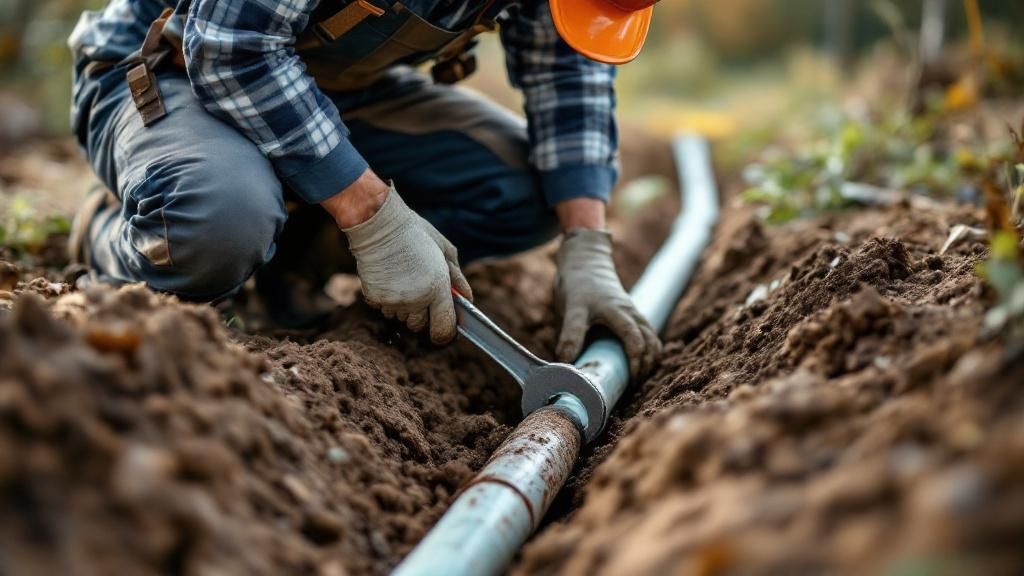
The very idea of a major water line repair probably conjures up some pretty destructive images. Backhoes tearing up your beautiful lawn, maybe a flower bed getting sacrificed, and definitely your driveway turning into a construction zone. For decades, that was just the reality of getting to buried pipes.
Thankfully, plumbing technology has come a long way. Today, we have much smarter, less invasive, and highly effective solutions that keep your landscape exactly where it belongs.
These modern techniques are often called trenchless water line repair. Instead of digging a long, ugly trench from the street to your house, plumbers can often fix the entire problem using just one or two small access points. It's a game-changer. This approach saves a ton of time, minimizes property damage, and is often cheaper when you remember you won't have to pay for a whole new yard.
Pipe Bursting: Out With the Old, In With the New
One of the most common trenchless methods is pipe bursting. It's just as clever as it sounds. Your plumber will dig a small access hole at each end of the damaged water line. That’s it. Then, a brand-new, high-density polyethylene (HDPE) pipe gets attached to a powerful, cone-shaped bursting head.
Using a hydraulic system, this bursting head is pulled right through the old, broken pipe. As it moves, it shatters—or "bursts"—the old pipe outward into the soil around it, pulling the brand-new pipe into place at the same time. You end up with a seamless new water line that can easily last for over 50 years.
This is the go-to method for lines that are toast—severely damaged, collapsed, or just too small for your home's needs—because it completely replaces the old pipe instead of just patching it up.
CIPP Lining: A Pipe Within a Pipe
Another fantastic trenchless option is Cured-in-Place Pipe (CIPP) lining. This method essentially builds a brand-new pipe inside of your old one. It's an excellent choice for pipes that have leaks or cracks but are still structurally okay overall.
Here’s a quick rundown of how CIPP works:
- A Quick Look: First, a camera goes down the line to check out the damage and make sure the pipe is clean of any roots or gunk.
- The Liner Goes In: A flexible felt tube, completely saturated with a special resin, is inserted into the existing pipe from a single access point.
- Time to Inflate: Once it’s in place, we use air or water pressure to inflate the liner, pressing it firmly against the inside walls of the old pipe.
- Making It Strong: Hot water or steam is then circulated through the liner to "cure" the resin. This process hardens it into a tough, smooth, and jointless new pipe.
The result is a fully restored water line with better flow and a life expectancy of several decades, all done with almost no digging on your property. CIPP lining is like giving your water line a brand-new, super-strong inner wall.
Understanding these modern repair options is a huge advantage. When you talk to a plumbing professional, knowing the difference between pipe bursting and CIPP lining means you can have a much more informed conversation. You'll be able to figure out which water line repair method is truly the best fit for your specific problem and budget.
How to Hire the Right Plumbing Professional
Picking the right professional for your water line repair is every bit as important as the repair itself. This one decision can mean the difference between a solid, lasting fix and a recurring plumbing nightmare that bleeds your wallet dry. You're not just looking for someone who can show up—you're vetting a true, qualified expert.
Your search should always start with a couple of non-negotiable items. Any plumber you even consider must be fully licensed in your state and carry comprehensive insurance. This isn't just a friendly tip; it's your first and best line of defense.
The Essential Vetting Checklist
Insurance, specifically, is a huge piece of the puzzle. The pro you hire needs two distinct types of coverage, and you need to know what they are.
- Liability Insurance: This is what protects your home and property from any accidental damage while they're working. If a mistake turns into a flooded basement, this is the policy that covers the cleanup and repair.
- Worker's Compensation: This covers the plumbing crew if one of them gets injured on your property. Without it, you could be on the hook for their medical bills, which is a situation no homeowner wants to be in.
Don't just take their word for it. You have every right to ask for physical proof of their license and their insurance certificates before you even think about signing a contract.
Red Flag Alert: Be very wary of any contractor who leans on high-pressure sales tactics. The classic one is the "today only" special price, designed to rush you into a decision. A reputable, confident professional will give you a detailed estimate and all the time you need to review it.
Getting and Comparing Estimates
Never, ever settle for the first quote you get. You should aim to get at least three detailed, written estimates from different, equally qualified plumbers. This process isn't just about hunting for the lowest price; it's about getting a feel for the project's scope and spotting any strange outliers.
A suspiciously low bid is often a major red flag. It can signal that a contractor is planning to cut corners, use inexperienced labor, or install cheap, low-quality materials that will fail sooner rather than later. A good, honest estimate will break everything down for you: labor costs, parts, and any permits that might be required. That kind of transparency is critical for choosing the right plumbing company for a job this important.
Verifying Experience and Reputation
When you're dealing with something as critical as your home's main water line, experience is everything. Ask potential plumbers directly about their background with these specific types of repairs. If you're considering a trenchless repair, ask how many they've successfully completed. A good plumber will have no problem providing local references you can actually call.
And of course, check their recent online reviews. While a single grumpy review isn't a deal-breaker (it happens), a clear pattern of complaints about poor communication, sloppy work, or surprise fees is a massive warning sign to stay away.
Finally, get the warranty details in writing. A solid warranty on both parts and labor shows that a company is confident in its work and stands behind it. This kind of dedication to maintaining infrastructure is a huge driver of local economies. For instance, in cities like Kirkland, Washington, contracting for water line repair and maintenance contributed over 37% of business sector growth, which really shows how vital this skilled work is. You can read more about these local economic impacts and infrastructure projects.
Of course. Here is the rewritten section, formatted to match the human-written style, tone, and structure of the provided examples.
Common Questions About Water Line Repair
Even after you've spotted a problem and made that first call to a plumber, a bunch of new questions usually start bubbling to the surface. Let's be honest, the world of water line repair can be pretty confusing.
Getting straight answers to the practical, real-world questions that come up after the initial panic has subsided is key. Knowing what to expect will help you feel much more in control as you navigate the repair process.
How Much Will This Cost Me?
This is always the number one question, and the frank answer is: it varies—a lot. A simple repair on a pipe that's easy to get to might only run a few hundred dollars. But if we're talking about replacing your main water line that’s buried deep under your concrete driveway? That’s a whole different ballgame.
The final bill for a water line repair hinges on a few big factors:
- Location of the Leak: Is the pipe exposed in a crawlspace, or is it six feet under your prize-winning rose garden?
- Extent of the Damage: Are we patching a tiny crack, or has the whole pipe collapsed?
- Repair Method: The cost for traditional trenching is very different from modern, less invasive methods like pipe bursting or CIPP lining.
- Accessibility: Digging through soft dirt is one thing. Breaking up and then repouring concrete or asphalt is another.
On average, you can expect to pay anywhere from $500 to over $5,000 for a major water line repair. The only way to get a solid number is to have a few licensed plumbers come out and give you a detailed estimate.
Will My Homeowner's Insurance Cover This?
Here's another tricky one where the answer is a firm "maybe." Most standard homeowner's insurance policies will cover the sudden and accidental damage caused by the water line break. Think ruined drywall, warped flooring, or damaged furniture.
What the policy often won't cover is the cost of repairing the actual pipe itself. Insurance carriers tend to see the broken pipe as a maintenance problem, which falls on you, the homeowner. There are always exceptions, though, so your best bet is to pull out your policy and talk directly with your insurance agent.
Who Is Responsible for the Water Line?
Knowing where your responsibility ends and the city's begins is absolutely critical. In most places, the local water utility is on the hook for the massive water main running under the street and the service line up to your property's edge.
You, the homeowner, are responsible for the pipe running from your property line (usually at the curb or near the water meter) all the way into your house. If the break is on your side of that meter, the repair bill lands in your lap. Figuring out exactly where that property line is can save you a world of headaches.
How Can I Prevent Future Water Line Problems?
You can't stop a pipe from aging, but you can definitely take steps to protect your water line and hopefully give it a longer, healthier life. One of the single most important things you can do is simply know what's buried in your yard.
Before you start any major digging project—even just planting a new tree—always call 811 to have all the utility lines marked. Hitting a water line with a shovel is a shockingly common (and completely avoidable) reason for a major break. On that note, be careful what you plant. Trees with aggressive roots can find, wrap around, and eventually crush water lines.
Beyond that, just being aware of the early warning signs is your best defense. Knowing what counts as an emergency plumbing situation means you can jump on a small leak before it turns into a catastrophic flood. A little proactivity goes a long, long way.