That jolt of ice-cold water hitting you mid-shower is never a welcome surprise. More than just a rude awakening, it’s a sure sign something’s not right with your plumbing. For most homes in Salinas and Monterey, the reason you’re not getting enough hot water in the shower is often a problem with the water heater.
Common Reasons for Running Out of Hot Water
When your shower won’t stay hot, it usually points to a few common issues. Figuring out what’s wrong is the first step to getting things fixed so you can go back to enjoying your morning routine. The problems typically boil down to one of these things: an issue inside the water heater, a problem in your plumbing lines, or simply using more hot water than your system can handle.
As a family-owned business serving the Monterey Bay area since 1988, we’ve seen and solved just about every hot water mystery you can imagine. We know how the hard water in communities from Prunedale to Watsonville can cause sediment to build up, which really drags down a water heater’s performance.
This infographic gives you a quick visual breakdown of where hot water problems usually start.
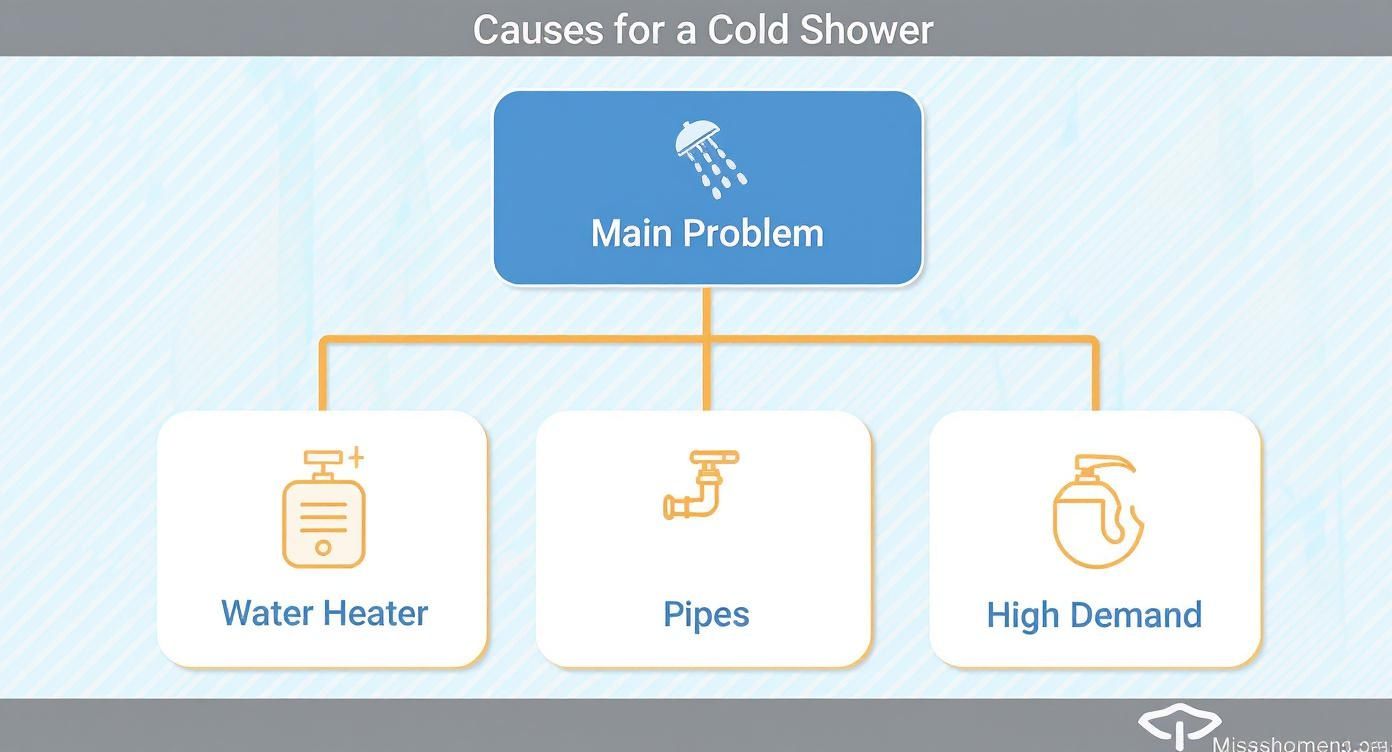
As you can see, we almost always start by looking at the water heater, but that’s not always the whole story. Sometimes, what feels like a hot water problem is actually a water pressure issue. If you’ve also noticed a weak spray, you might want to read our detailed guide on how to fix low water pressure.
Quick Guide to Common Hot Water Issues
To help you get a better idea of what might be going on, here’s a simple table of the most frequent symptoms we see and what they usually mean.
| Symptom | Most Likely Cause | What to Do Next |
|---|---|---|
| Hot water runs out fast | Sediment buildup in the tank, a failing heating element, or a water heater that’s too small for your family’s needs. | A professional tank flush might solve it. Otherwise, you may need a plumber to check the heating element or discuss a larger heater. |
| Water is only lukewarm | The thermostat on your water heater is set too low, or one of the two heating elements (in an electric heater) has failed. | Check the thermostat setting first. If that doesn’t help, it’s time to call a plumber to test the electrical components. |
| No hot water at all | This could be a tripped circuit breaker (for electric heaters) or a pilot light that’s gone out (for gas heaters). It could also be a complete unit failure. | You can safely check your breaker box or look at the pilot light. If those seem fine, you’ll need a professional diagnosis. |
| Hot water pressure is low | Mineral scale buildup in your pipes or showerhead, or a valve that is not fully open. | Try cleaning your showerhead first. If the problem is happening at other faucets, it’s likely a bigger plumbing issue. |
Think of this as a starting point. While these are the usual suspects, plumbing systems can be tricky. A thorough diagnosis from a licensed plumber is always the best way to make sure you’re fixing the right problem.
Diagnosing Your Water Heater
When that hot shower suddenly goes cold, the first place our plumbers look is your water heater. It’s the heart of your home’s hot water system, and a few common issues are usually to blame when it starts acting up.
A surprisingly common issue, especially if your household in Marina or Carmel Valley has grown, is simply having a water heater that’s too small. If your heater’s tank can’t keep up with the demand from multiple showers, the dishwasher, and the laundry, it will run out of hot water.
Age is another huge factor. A traditional tank water heater usually lasts about 8-12 years before it starts to lose steam. An older unit has to work much harder to heat the same amount of water, which means shorter hot showers for you. Knowing the 7 key signs of a failing water heater can help you decide if it’s time for a replacement.
The Impact of Sediment Buildup
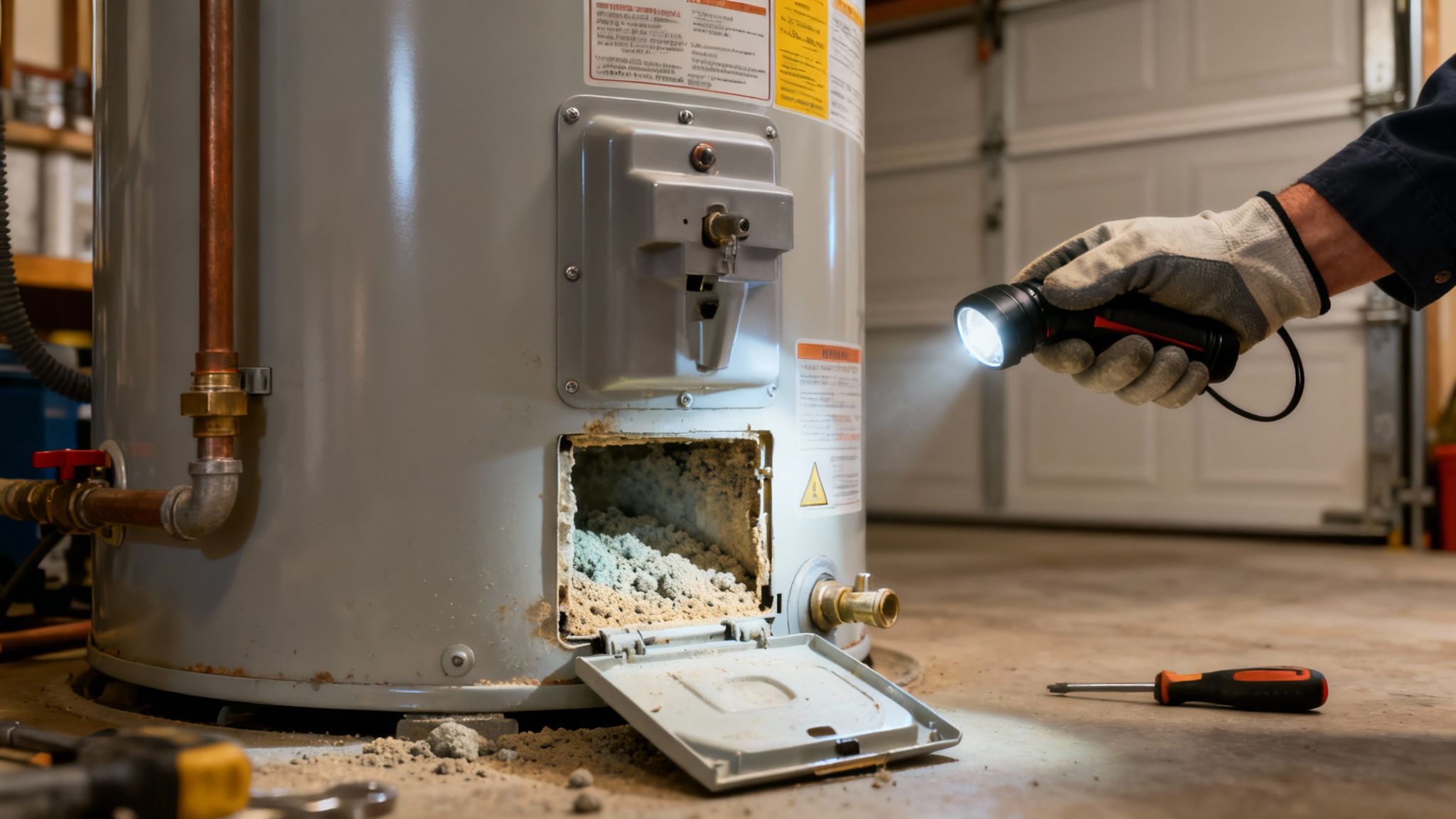
One of the biggest problems we see, especially in communities like Castroville, is sediment buildup. The minerals in our local water supply settle at the bottom of the tank over time, creating a thick layer of grit and scale.
This forces your heater to work much harder to heat the water, wasting energy and reducing the amount of hot water it can produce. It’s like trying to boil a kettle with a thick layer of sand at the bottom—it takes a lot longer and uses more fuel.
The good news is that regular maintenance can stop this from becoming a major issue. You can see what we recommend on our water heater maintenance schedule to keep your unit in top shape. A professional flush can often restore a heater’s performance.
When Internal Components Fail
Sometimes, even a properly sized and newer water heater can leave you shivering. The problem might not be the whole unit, but just one faulty part inside.
For homeowners with electric models, a common reason for a lukewarm shower is a burned-out heating element. Most electric heaters have two of these. When one stops working, the other one can’t heat the water fast enough to keep up with your shower. The result? A shower that starts hot but quickly turns cold.
Another common troublemaker is a faulty thermostat. This device tells the heating elements when to turn on and off. If it’s broken or set incorrectly, it won’t get the water to the right temperature.
Other Hidden Internal Problems
A less common but equally frustrating issue is a broken dip tube. This plastic tube pushes incoming cold water to the bottom of the tank to be heated. If that tube cracks or breaks, cold water mixes with the hot water at the top before it even gets to your shower. This is why you might get a quick blast of hot water that turns lukewarm in minutes.
Mineral deposits from our hard water can be tough on all these parts, causing them to wear out faster. If you think hard water is a problem, it’s worth looking into addressing scale buildup to protect your appliances.
Diagnosing and replacing internal water heater parts requires technical know-how and is best left to a professional plumber. If you’re tired of running out of hot water, it might also be a good time to learn about tankless water heater efficiency and how an upgrade could give you an endless supply.
Plumbing Problems Beyond the Heater
So, your water heater seems fine, but your shower is still lukewarm. What gives? Sometimes, the real problem isn’t the heater at all—it’s hiding somewhere in your home’s plumbing.
A failing mixing valve is one of those sneaky culprits. This is a safety device in your shower that blends hot and cold water to prevent scalding. But when it fails, it can let too much cold water into the mix, leaving you with a weak, lukewarm shower.
Crossover and Heat Loss Issues
Another tricky issue is something plumbers call “crossover.” This happens when a bad faucet cartridge somewhere else in your house—like a laundry room sink—lets cold water leak into the hot water lines. This cools down your hot water supply before it even gets to the shower. This can be tough to diagnose, and you can learn more about finding hidden issues in our guide on how to detect a water leak.
For folks in larger homes, especially in places like Pacific Grove with beautiful but often sprawling layouts, simple distance can be the enemy.
Long, uninsulated pipes running through a cold crawlspace will lose a lot of heat. By the time that hot water travels from the heater to your upstairs bathroom, it’s not so hot anymore.
Finally, think about your family’s routine. Are you trying to shower while the dishwasher and the washing machine are both running? This creates a huge demand for hot water that can easily overwhelm even a healthy heater, leaving very little left over for you.
What to Check Before Calling a Plumber
Before you pick up the phone, there are a few quick checks you can do yourself. Sometimes, the fix is surprisingly simple.
First, check the water heater’s thermostat. For safety and efficiency, it should be set around 120°F. Any higher is a scalding risk and wastes energy.
Next, think about your household’s routine. Does the shower turn cold when the dishwasher or washing machine is running? Those appliances use a lot of hot water. Try to stagger their use—run the dishwasher overnight instead of during the morning shower rush. This small change can make a big difference for families from Seaside to Watsonville.
Simple DIY Checks
Here are a few things you can safely check:
- Adjusting the thermostat: Head to your water heater and make sure the dial is set to 120°F.
- Checking usage habits: Try to avoid running multiple hot water appliances at the same time.
- Flushing the tank to remove sediment buildup: If you hear popping or rumbling from the tank, that’s a sign of sediment. While flushing the tank can help, it can be a tricky and messy job. If you’re not comfortable with the process, it’s a clear sign to call a professional.
While you’re thinking about your shower, you might also find our guide on how to increase water pressure in the shower useful. But if these quick checks don’t bring the heat back, it’s time to let an expert take a look.
How Alvarez Plumbing Can Help Fix Hot Water Problems Fast
When you’ve tried the simple fixes and the water still isn’t cooperating, you need a fast, reliable solution. Here at Alvarez Plumbing, we’ve been the trusted choice for families from Salinas to Carmel-by-the-Sea since 1988. Our licensed plumbers have the local experience to figure out exactly why your shower is running cold.
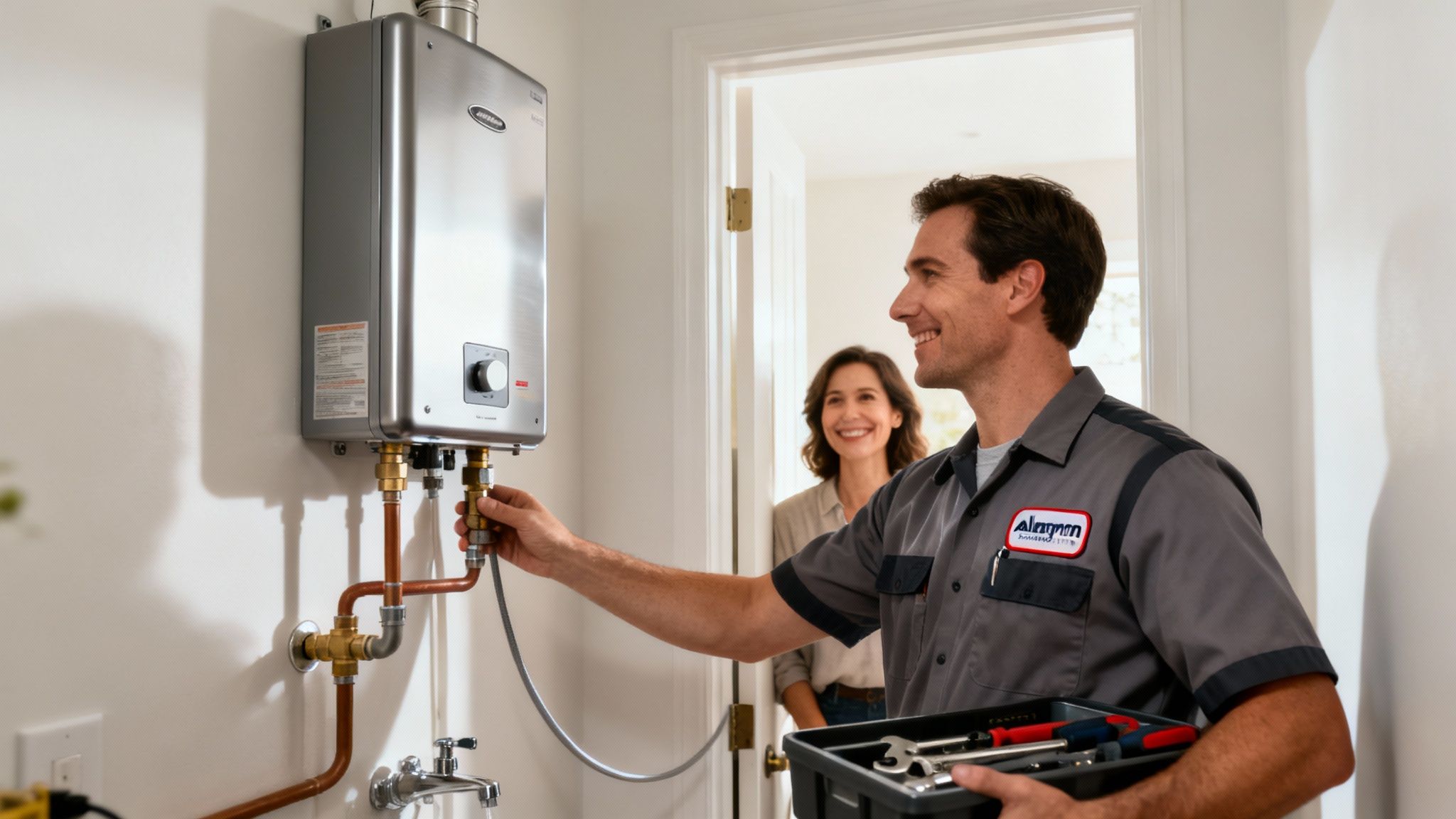
Whether it’s a thermostat fix, a bad heating element, or sediment buildup from our local water supply, we handle it all. We offer expert water heater inspections and repairs. If it’s time for a new unit, we can recommend and install a high-efficiency model that’s perfectly sized for your home.
Upgrades for Endless Hot Water
For families in Monterey and Carmel who are tired of scheduling their lives around a limited hot water supply, we also specialize in tankless upgrades. These modern systems heat water on demand, giving you an endless supply so you never have to worry about running out again. It’s a popular and practical solution for busy households.
With our 24/7 emergency service and over 35 years of hands-on experience right here in your community, you can count on us. We’re here to get your hot showers running again quickly and professionally.
Hot Water FAQs from Around Monterey Bay
We get a lot of questions from folks all over the Monterey Bay area when their shower suddenly turns chilly. Here are a few of the most common ones we hear.
How Often Does My Water Heater Need to Be Serviced?
You should have a pro come out for an inspection and flush at least once a year. This is especially important in places like Salinas and Castroville, where our hard water causes sediment to build up fast. Regular maintenance goes a long way in extending your heater’s lifespan and keeping it running efficiently.
Is a Tankless Water Heater Worth It for My Home in Carmel?
For a lot of families here, the answer is yes. Tankless water heaters are a great solution if you’re tired of running out of hot water. They give you endless hot water when you need it, they’re more energy-efficient, and they can last almost twice as long as a traditional tank. Our experts can help you decide if a tankless model is the right choice for your home.
Why Did My Hot Water Just Stop Working?
A sudden, total loss of hot water usually points to a single part failing. If you have an electric heater, it’s often a tripped circuit breaker or a burned-out heating element. For gas models, the most common issue is a pilot light that’s gone out. If you’ve checked these simple things and still have no hot water, it’s time to call a professional for a safe diagnosis.
If you’re still dealing with a cold shower, don’t wait. The friendly experts at Alvarez Plumbing have been providing fast, reliable solutions to your neighbors since 1988. Give us a call today for a professional inspection and get your hot water flowing again.