A slow-draining kitchen sink is a daily headache for families all over, from Salinas to Carmel Valley. Before you do anything else, it's worth trying a simple first step. Carefully pouring a pot of boiling water down the drain can sometimes be enough to melt a simple grease buildup and get things moving again.
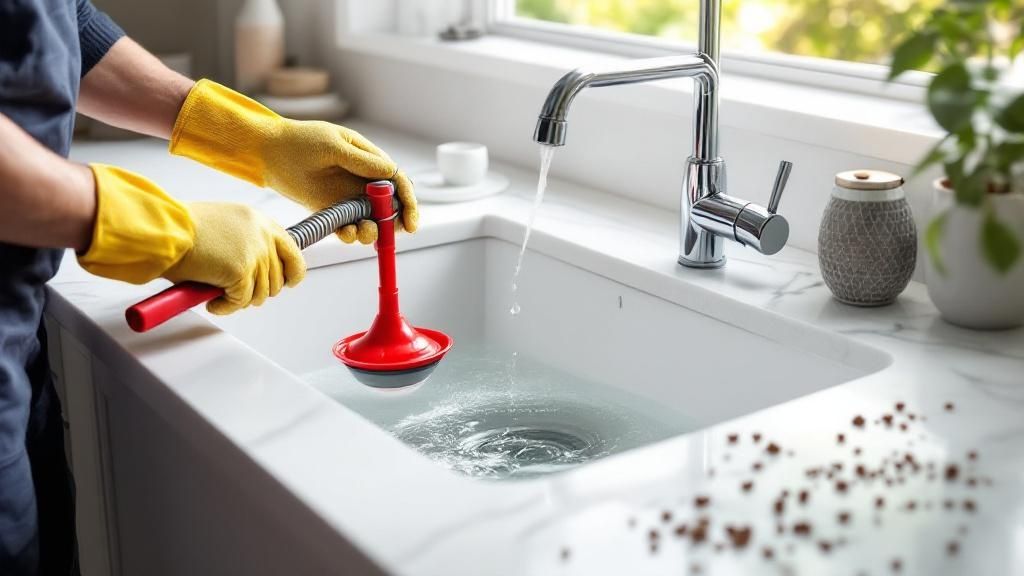
If that doesn't work, a plunger might dislodge a minor blockage. But if you've tried these simple fixes and the water is still backing up, that's a clear sign of a deeper issue that needs a professional's touch. It's best to stop and call for help rather than risk making the problem worse.
Understanding Your Kitchen Sink Clog
When your kitchen sink refuses to drain, it can bring your household to a standstill. It’s more than just a hassle; it’s a surprisingly common problem for homeowners.
For folks in Monterey and Seaside, the problem often starts small. You might notice water taking a little longer to disappear, or maybe there's a strange gurgling sound coming from the pipes. These are the early warning signs of a clog forming. Ignoring them usually leads to a complete blockage that requires professional attention.
The causes can vary in our coastal communities, but they usually come down to a slow buildup of everyday materials, such as:
- Grease and Oil: When poured down the drain, these fats cool and harden inside your pipes. This creates a sticky trap that catches every other bit of food and debris that follows.
- Food Scraps: Things like coffee grounds, eggshells, and starchy foods like rice and pasta are known for clumping together and creating stubborn blockages inside your plumbing.
- Soap Scum: Over time, the residue from dish soap builds up on the pipe walls, slowly narrowing the passage for water and making clogs more likely.
This visual guide helps map out your next steps based on what you're seeing at the sink.
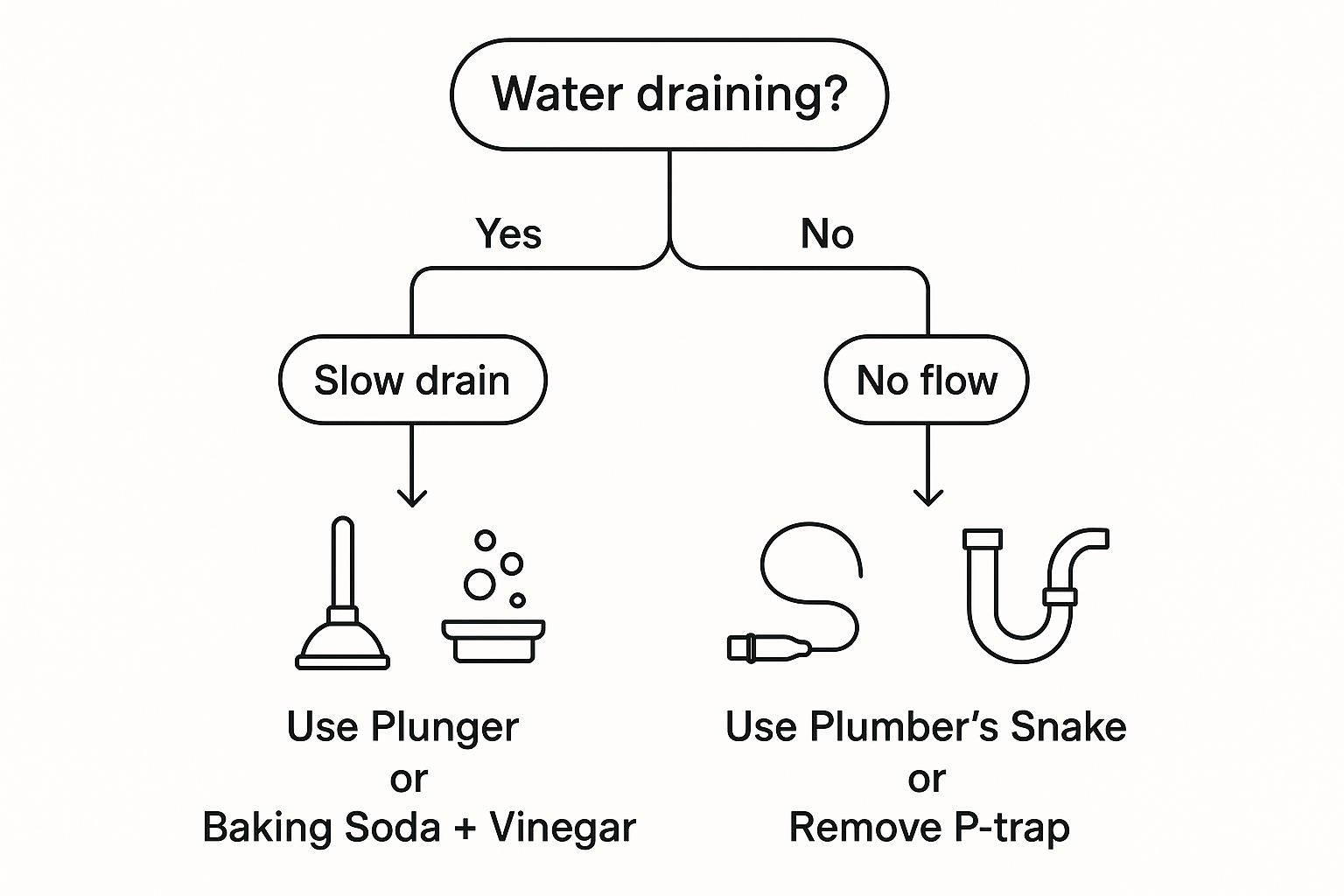
As the guide shows, a slow drain might respond to a simple trick like boiling water, but a complete blockage often points to a problem that requires a professional plumber.
Simple Clog or Professional Plumbing Job
Deciding whether to tackle a clog yourself or call in the pros can be tricky. This table is a quick guide for Monterey and Salinas homeowners to help diagnose the problem and choose the best next step.
| Symptom | Potential Cause | Recommended Action |
|---|---|---|
| Slow Draining Water | Early-stage buildup of grease or food particles. | Try a simple fix like boiling water. If that doesn't work, it's best to call a plumber. |
| Gurgling Sounds | Air is trapped in the pipes by a partial blockage. | This often means the clog is further down the line. It’s a good time to call for help. |
| Water Backs Up Immediately | A severe, complete blockage in the P-trap or main line. | DIY methods are unlikely to work. Call a professional to avoid a messy overflow. |
| Foul Odors from the Drain | Rotting food is trapped in a significant clog. | This indicates a well-established blockage that needs professional cleaning. |
| Multiple Drains Are Clogged | Blockage is likely in the main sewer line, not just one sink. | Stop using all water immediately and call a plumber. This is an urgent issue. |
| The Clog Keeps Coming Back | The underlying buildup is not being fully removed. | A professional camera inspection is needed to find and fix the root cause for good. |
Ultimately, if a simple first step doesn't solve the problem, or if you're facing a recurring issue, calling a licensed plumber is the smartest and safest move.
When Simple Fixes Aren't Enough
While a plunger is a common tool, it can’t solve everything. Stubborn clogs lodged deep in the plumbing system simply won't budge with basic household tools. This is especially true for those frustrating recurring issues that seem to clear up only to return a few days later.
For more than 35 years, our family-owned business has seen how small, persistent clogs can signal bigger problems down the line. A blockage that won't stay gone is your plumbing system’s way of asking for help before a minor issue becomes a major emergency.
Instead of repeatedly fighting the same clog, it’s far better to find and fix the root cause. Preventing future blockages is just as important as clearing the current one. You can learn more by following our preventative maintenance tips.
If you've tried the basics and your sink is still giving you trouble, it's time to call a professional.
Common Causes of Clogs in Salinas Homes
As a family-owned business serving the community since 1988, we’ve seen just about everything cause a kitchen sink backup in Salinas and Seaside homes. It's almost never a single event that causes the problem. Instead, clogs are the result of a slow, steady buildup of everyday gunk that gradually chokes your plumbing.
A frequent culprit we find is grease. Whether it's from cooking oil, bacon fat, or butter, pouring it down the drain seems harmless at first. But once it hits the cooler pipes, it hardens and creates a sticky trap, grabbing onto every other piece of debris that washes by until you have a stubborn blockage.
The Worst Offenders For Your Drain
Beyond grease, certain foods are notorious for creating plumbing headaches. We get calls all the time from homeowners in Prunedale and Marina who are shocked that their normal food prep is the source of the clog. Knowing what to keep out of your drain is your best first line of defense.
These are the items we most commonly pull out of clogged pipes:
- Coffee Grounds: They don't dissolve. Instead, they clump together and act like cement inside your pipes, creating dense blockages.
- Starchy Foods: Think pasta, rice, and potato peels. These foods expand when they absorb water, turning a few small pieces into a thick, flow-stopping paste.
- Eggshells: The membrane inside an eggshell can wrap around garbage disposal blades, and the gritty shell fragments stick easily to grease, building up clogs.
- Fibrous Vegetables: Celery, corn husks, and artichokes have stringy fibers that can tangle up your disposal's motor and create a net that catches other waste.
This buildup of gunk doesn't just stop your drain; it can also create foul odors and attract pests like drain flies. Learning how to eliminate flies in your house is another key part of keeping a clean kitchen.
Why Your Garbage Disposal Isn't a Trash Can
Many folks in Watsonville and Castroville treat their garbage disposal like it can handle anything. While disposals are powerful, they are only designed to break down small food particles—not grind up an entire meal's worth of leftovers. Overloading it or forcing the wrong things down will lead to a jam, guaranteed.
A key thing to remember is that most kitchen sink clogs come from putting the wrong things down the drain. User behavior is the most significant factor in keeping drains clear.
Even with perfect habits, clogs can still happen. The coastal hard water in places like Pacific Grove and Carmel-by-the-Sea causes mineral buildup, narrowing pipes over the years. When you combine that with a little bit of grease and food debris, you have a recipe for a stubborn backup. When you face a clog that just won't budge, it's a sign the problem needs a professional eye.
Why DIY Drain Cleaners Often Fail
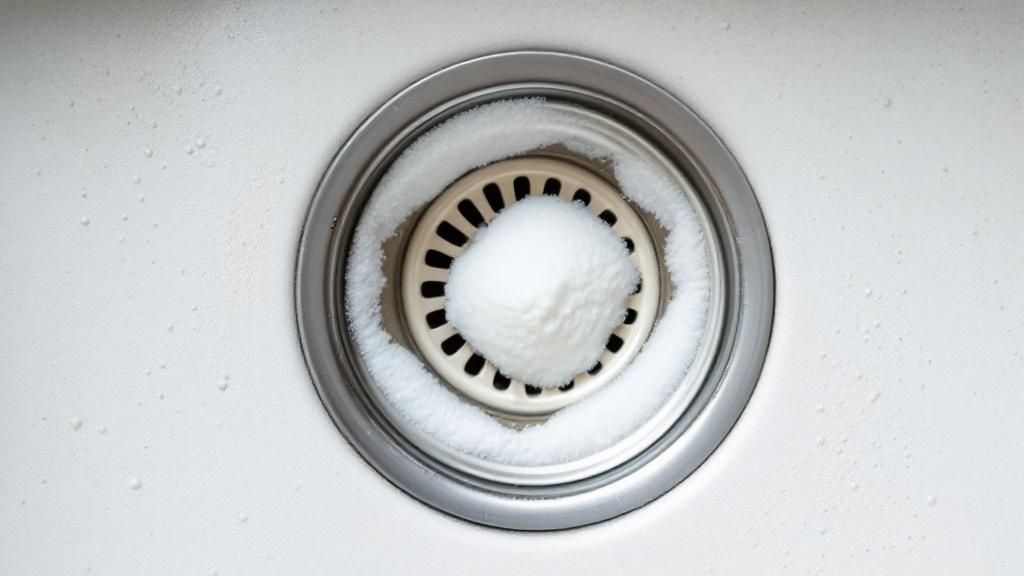
When your kitchen sink backs up, it’s tempting to grab that bottle of chemical drain cleaner. We see it all the time with homeowners in Pacific Grove and Carmel-by-the-Sea; it feels like a quick, simple fix. The promise of a clear drain in minutes is hard to resist, but these harsh chemicals often cause more problems than they solve.
The biggest issue is that these chemicals don't actually fix the root of the problem. They work by creating a chemical reaction to burn a small hole through the blockage. But that's usually all it does—create a tunnel through the gunk, leaving all the greasy, sticky buildup coating the pipe walls. The clog is almost guaranteed to come back.
The Hidden Dangers to Your Pipes
This approach is especially risky in the beautiful, older homes common throughout the Monterey Peninsula. If your house has older plumbing, like galvanized steel or cast iron pipes, these corrosive liquids can be a disaster waiting to happen.
The chemicals can literally eat away at the metal. Before you know it, a simple clog has turned into a costly, damaging leak hidden inside your walls. And while modern PVC pipes are tougher, they aren't immune to damage from repeated exposure.
The false sense of security a chemical cleaner provides is its biggest drawback. It might restore flow temporarily, but the clog almost always comes back because the underlying buildup lining your pipes was never actually removed.
If you're looking to move away from harsh chemicals, there are much safer alternatives for home maintenance. You can find some great guides on non-toxic cleaning products for your home that are better for your pipes and your family.
Why Professional Tools Are a Better Choice
Instead of trying to dissolve a clog with chemicals, a professional plumber uses mechanical tools to physically remove it. A brief attempt with a simple home tool is one thing, but for a real clog, you need professional-grade equipment.
Here’s how a professional plumber’s approach is different:
- Safety First: We never pour dangerous chemicals into your plumbing system, period.
- Thorough Removal: Our tools don't just poke a hole in the clog; they scrape the pipe walls clean, removing the entire blockage.
- Long-Term Solution: By clearing the pipe walls completely, we prevent that same clog from quickly reforming.
When you're up against a stubborn clog, especially in an older home in Carmel or Pacific Grove, just skip the chemicals. Calling a professional is the safest and most effective way to protect your plumbing for the long haul.
When Your Clog Signals a Bigger Problem
Sometimes, that stubborn kitchen sink clog isn’t just a kitchen sink problem. It can be the first warning sign of a much bigger issue brewing deep within your home's plumbing. While a simple blockage is an annoyance, these deeper problems can lead to serious water damage if they aren't handled by a professional.
Think of it like traffic on Highway 1. A single slow car is annoying, but when traffic backs up from Marina all the way to Monterey, you know the problem is much bigger. Your plumbing works the same way. A single slow drain is one thing, but multiple issues point to a system-wide problem.
Red Flags to Watch For
It’s crucial to know how to spot the difference between a minor clog and a major headache. If you notice any of these symptoms, your home is telling you it needs professional help right away.
These are serious warning signs:
- Recurring Clogs: Does your sink clog up every few weeks, no matter what you do? This usually means there's a larger blockage further down the line that simple fixes can't reach.
- Multiple Slow Drains: If your kitchen sink, bathroom sink, and shower are all draining slowly, the problem isn't in an individual pipe. The blockage is likely in your main sewer line.
- Strange Plumbing Reactions: Do you hear gurgling from your toilet when the washing machine drains? Does water back up into your shower when you run the dishwasher? This is a classic sign the main line is clogged, and wastewater has nowhere to go but back into your home.
- Foul Odors: Persistent sewer gas smells coming from multiple drains are a definite red flag. It’s a sign of a significant blockage preventing proper flow in your sewer system.
A Castroville Case Study
We recently got a call from a family in Castroville dealing with a kitchen sink that kept backing up. They’d tried everything, but the clog always came back. When we arrived, we noticed some of the other drains in the house were also a bit sluggish, which was a key detail.
Instead of just snaking the kitchen line, we performed a video camera inspection. The camera revealed the real culprit: early-stage tree root intrusion in their main sewer line. The recurring kitchen sink clog was just the first and most obvious symptom.
By catching it early, we were able to clear the roots and repair the pipe with minimal disruption. Had they ignored it, they would have eventually faced a full sewer backup—a much more destructive and costly emergency.
This situation highlights why a professional diagnosis is so important. When persistent clogs reveal deeper plumbing issues, some homeowners might even consider boosting your kitchen remodel's return on investment. But before any big projects, you have to solve the underlying plumbing problem first. If you’re seeing any of these warning signs, it’s important to understand what counts as a plumbing emergency and call for professional help immediately.
Our Professional Approach to Drain Cleaning
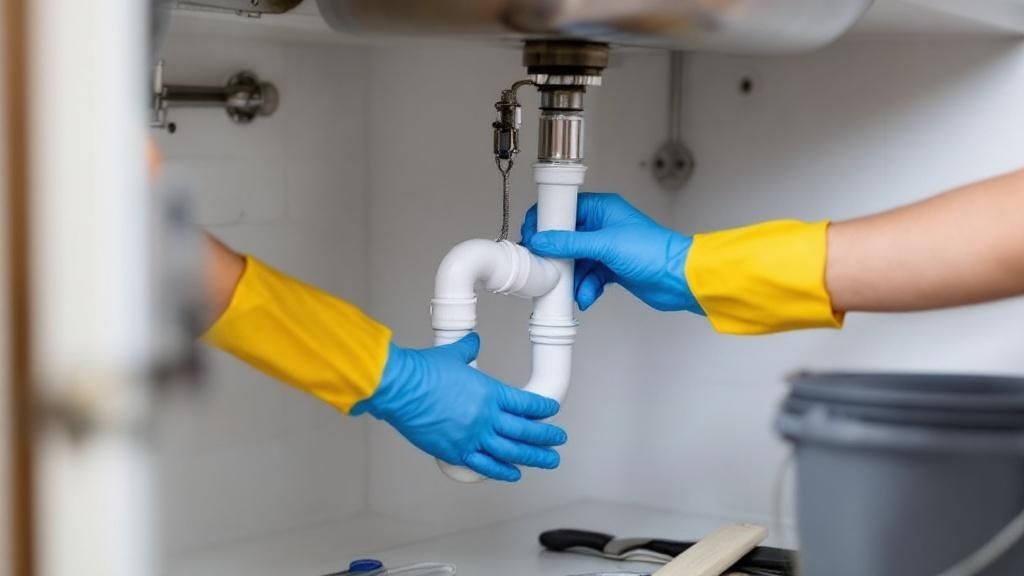
When simple fixes fail and your sink is still stubbornly clogged, it’s time to call in the pros.
At Alvarez Plumbing, we don’t mess around with temporary fixes or harsh chemicals that can do more harm than good. Our philosophy is simple: solve the problem for good. That means physically removing the blockage, safely and completely, with professional-grade tools.
Since 1988, our family has been helping homeowners from Watsonville to Monterey solve their toughest plumbing headaches. We've learned that a lasting solution isn’t about just poking a hole through a clog—it's about getting rid of the entire thing. And for that, you need the right equipment.
Using Professional Drain Augers
For most kitchen sink clogs, our go-to tool is a professional drain auger, also known as a plumber’s snake. This isn't the flimsy, handheld version you can buy at a hardware store. Our equipment is a different beast altogether, featuring a long, powerful cable with a specialized cutting head designed to destroy clogs.
This powerful tool lets us:
- Reach deep into your plumbing, well past the P-trap right under your sink.
- Break apart years of accumulated grease, food scraps, and mineral scale.
- Scrape the inside walls of the pipes clean, removing the sticky buildup that causes new clogs to form so quickly.
Running a drain auger is a skill that takes practice. In the wrong hands, it can easily damage pipes, especially in the beautiful older homes found throughout Pacific Grove. Our technicians are trained to navigate your plumbing system carefully, clearing the blockage without causing any collateral damage.
When Clogs Require More Power
Every now and then, we run into a clog that a standard snake just can't handle. This happens when years of grease have hardened and coated the entire pipe. For these monster clogs, we bring out the heavy artillery: hydro-jetting.
Hydro-jetting is essentially pressure washing for the inside of your pipes. It uses a high-pressure stream of water to blast away every last trace of grease, sludge, and debris. It restores your pipes to a nearly new condition.
It’s an extremely effective method that’s completely safe for your plumbing system when handled by a licensed professional. It's the ultimate fix for frustrating, recurring clogs. We often recommend it for homes in Salinas and Carmel Valley that struggle with constant backups. By giving the pipes a total cleanout, we’re not just clearing the clog; we’re addressing the root cause of the problem.
Choosing the right tool for the job is where our expertise really shines. We always diagnose the problem first, then use the safest and most effective solution to protect your home. For a closer look, you can learn more about our professional drain cleaning in Monterey. We're not in the business of quick fixes; we're here to deliver a thorough, lasting solution for our neighbors.
Your Monterey Bay Sink Questions Answered
After 35+ years of serving Monterey County, our family has heard just about every plumbing question you can imagine. From Salinas to Carmel-by-the-Sea, we've noticed homeowners often run into the same frustrations. So, we've gathered a few of the most common questions we get about clogged kitchen sinks.
How Can I Prevent My Kitchen Sink From Clogging?
Honestly, the best defense is a good offense. Being mindful of what you put down the drain is the single most powerful thing you can do. Always use a mesh strainer to catch food particles before they go down the pipes.
It’s crucial to make it a household rule: never pour grease, coffee grounds, or starchy waste from pasta and rice down the drain. For those living in areas with harder water, like parts of the Salinas Valley, mineral buildup can make pipes clog that much easier. In those situations, having a professional drain cleaning scheduled every couple of years is a fantastic preventative step.
We’ve seen firsthand how a little prevention goes a long way. A monthly flush with a pot of very hot water can also help dissolve minor grease buildup before it becomes a real problem, keeping your pipes flowing freely.
For a deeper dive, take a look at our guide on how to prevent clogged drains for more practical, everyday tips.
Are Chemical Drain Cleaners Safe For My Pipes?
In our professional opinion, we strongly advise against using them. While they might promise a quick fix, those harsh chemicals can do serious, long-term damage to your plumbing. We've seen it all—from eating away at the old metal pipes in historic Carmel homes to weakening modern PVC pipes with repeated use.
That kind of damage can turn a simple clog into a much more expensive leak hidden inside your walls. Plus, these products are a safety hazard, as they can splash back and cause serious burns. It’s always safer for both your plumbing and your family to call a licensed plumber.
How Do I Know if the Clog Is in the Main Sewer Line?
This is a critical distinction to make. If it's only your kitchen sink that’s backed up and every other drain in your house is working just fine, then the problem is most likely isolated to that specific drain line.
However, if you start noticing widespread symptoms, the issue is probably much more serious. Keep an eye out for these red flags:
- Water backing up into your shower when the dishwasher runs.
- Multiple toilets and sinks are all draining slowly at the same time.
- Hearing gurgling sounds coming from several different drains.
If you're experiencing any of these, you likely have a main sewer line clog. This is a true plumbing emergency that requires immediate professional help to prevent wastewater from backing up into your home.
When you're facing a stubborn clog or suspect a bigger issue, don't hesitate to reach out to the friendly experts at Alvarez Plumbing. As a family-owned business since 1988, we have the tools and knowledge to solve your plumbing problems safely and effectively. Visit us online or give us a call today.