When it comes to preventing clogged drains, it all boils down to one simple concept: be mindful of what goes down them. The best approach is always proactive prevention, which really just means stopping common troublemakers like grease, hair, and food scraps from getting into your pipes in the first place.
Your Guide to Keeping Drains Clear in Monterey County
Here at Alvarez Plumbing, we've been your neighbors and local plumbing experts since 1988. Living in Monterey County presents some unique plumbing challenges we know all too well. Whether it's the salty air and older pipes in coastal homes from Carmel-by-the-Sea to Seaside, or the demands of agricultural runoff in Salinas, our local environment can be tough on drains.
This guide isn't about scrambling to fix a clog after it's already backed up your sink. It’s about shifting your mindset to stop clogs before they ever start. We'll walk through the usual suspects—grease from the kitchen, hair in the shower drain, and even our area's notoriously hard water.
Understanding the Local Problem
Our goal is simple: to give you the practical knowledge you need to avoid the stress and expense of an emergency plumbing call. Think of this as a homeowner's field guide for our communities, from Watsonville to Monterey. We want you to understand your home's plumbing a little better so you know when a small change in habits is all you need—and when calling a licensed professional is the smartest, safest move.
As a family business that’s served this community for over 35 years, we’ve seen it all. The most reliable way to prevent clogged drains isn’t some magic chemical you pour down the sink. It’s understanding what causes them and building good habits to stop them.
Common Causes of Clogged Drains in Our Community
To get you started, it helps to see what we run into most often in homes just like yours. Below is a quick look at the most frequent culprits behind drain clogs we see in Salinas, Monterey, and the surrounding areas, along with simple ways to keep your pipes flowing freely.
| Clog Source | Affected Drains | Best Prevention Method |
|---|---|---|
| Grease, Fats, & Oils | Kitchen Sinks, Disposals | Pour cooled grease into a container and throw it in the trash, never down the sink. |
| Hair & Soap Scum | Shower, Bathtub, Bathroom Sinks | Use a mesh drain screen and clean it out weekly to catch hair before it causes a backup. |
| Food Waste | Kitchen Sinks, Disposals | Scrape plates into the trash or compost bin before you rinse them. Keep starchy and fibrous foods out of the disposal. |
| "Flushable" Wipes | Toilets, Main Sewer Line | Never flush any kind of wipe—not even the ones that say they're "flushable." All wipes, cotton swabs, and hygiene products go in the trash. |
Taking these small steps can make a huge difference in the health of your plumbing and save you from the headache of a major blockage down the road.
What Really Clogs Your Drains and Why
If you want to win the battle against clogs, you first have to know your enemy. It’s a common misconception that all clogs are created equal. The truth is, every drain in your home faces a different threat. What plagues your kitchen sink isn't the same gunk that’s slowing down your shower drain.
Understanding these specific culprits is the first real step in learning how to prevent clogged drains and keeping your plumbing flowing freely.
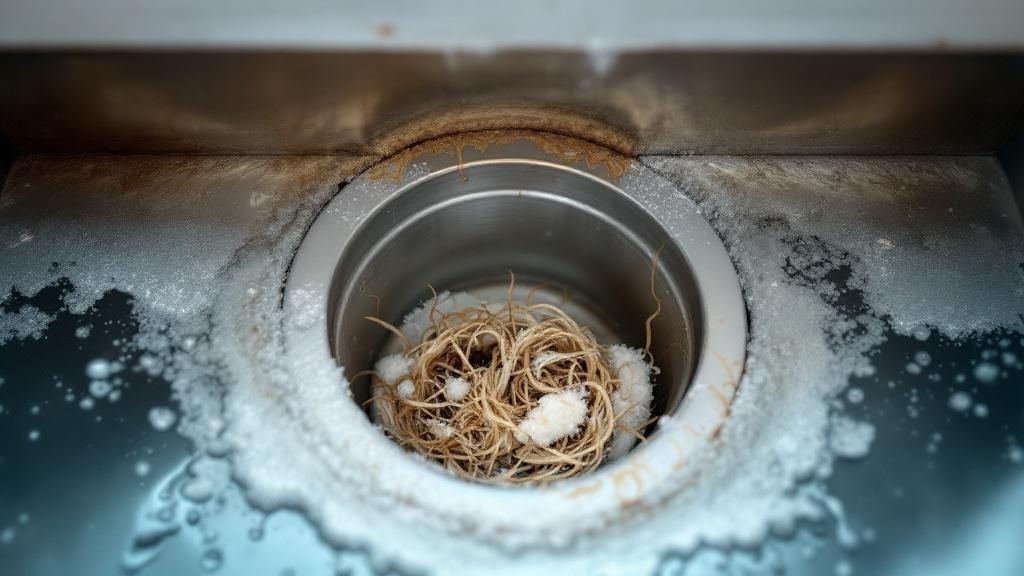
Across Monterey and Marina, the number one villain in kitchen sinks is FOG—an acronym we use for fats, oils, and grease. They might look harmless as a liquid when you're washing up, but they quickly cool and solidify inside your pipes. This creates a sticky, waxy coating that acts like flypaper for every bit of food scrap that follows.
In bathrooms, from the coastal homes in Pacific Grove to the quiet neighborhoods of Carmel Valley, the problem is usually a tangled combination of hair and soap scum. Soap residue is surprisingly sticky, binding loose strands of hair together into dense, stubborn knots that can completely block water flow over time.
The Less Obvious Clog Culprits
Beyond those usual suspects, we see other factors contributing to stubborn blockages all the time, some of which are unique to our region.
-
Hard Water Minerals: The local water supply here in Salinas and the surrounding communities is known for its high mineral content. Over the years, dissolved minerals like calcium and magnesium build up inside your pipes, creating a rock-hard scale that effectively narrows the passageway for water and waste. It’s a slow, silent process that makes clogs much more likely to happen.
-
"Flushable" Wipes: Don't believe the marketing. Despite their name, these wipes are a leading cause of serious sewer backups. Unlike toilet paper, they simply don't break down in water. We've seen firsthand how they snag in sewer lines, creating massive blockages that require professional hydro-jetting equipment to clear.
-
Foreign Objects: You'd be surprised how often this happens. Small items like dental floss, cotton swabs, and even tiny toy parts accidentally get washed down drains. They might seem insignificant, but they can easily get snagged and become the seed for a much larger clog to form around.
Understanding these root causes is crucial. A staggering number of residential plumbing issues stem from preventable blockages caused by improper disposal of things like grease and wipes.
As plumbers who have worked in this area since 1988, we can confidently say that awareness is your best tool. Knowing what not to put down your drain is more effective than any store-bought chemical.
Taking a moment to think about these specific threats is the foundation of a clog-free home. You can learn even more about the connection between proactive care and avoiding water damage with our guide on proper drain maintenance. It all starts with being mindful of what disappears down your drains each day.
Proactive Plumbing Habits for a Clog-Free Home
The most powerful way to prevent clogged drains isn’t a huge, complicated project. It's all about adopting a few simple, daily habits that protect your pipes from the constant barrage of grease, hair, and other junk. Think of it as small, consistent actions that make a huge difference.
In the kitchen, the absolute golden rule is to keep FOG (fats, oils, and grease) out of your sink. Before rinsing plates, always scrape food scraps into the trash or your compost bin. And that bacon grease? Instead of pouring it down the drain, let it cool and solidify in an old can or jar, then just toss it in the garbage. Problem solved.
The bathroom has its own set of villains, mainly hair and soap scum. One of the cheapest and most effective tools in your arsenal is a simple mesh drain catcher for your shower and tub drains. It literally stops the problem right at the source.
As a family-owned business serving this community since 1988, we’ve learned the best plumbing solutions are often the simplest. Cleaning a drain strainer once a week takes 30 seconds, but it can save you from an expensive emergency call down the road.
Gentle Monthly Maintenance
For all the drains in your Prunedale or Castroville home, a monthly flush with very hot water can work wonders, helping dissolve the early stages of sticky gunk before it turns into a stubborn blockage. But what happens when you need a bit more cleaning power?
Many people instinctively grab those harsh chemical drain cleaners, but these can cause serious corrosion, especially in the older pipes common in many local homes. A much better, and frankly smarter, approach is using enzyme-based cleaners. These products use natural, beneficial bacteria to literally eat away at organic waste without doing any harm to your plumbing.
This infographic lays out a simple, pipe-safe cleaning method you can easily do every month.
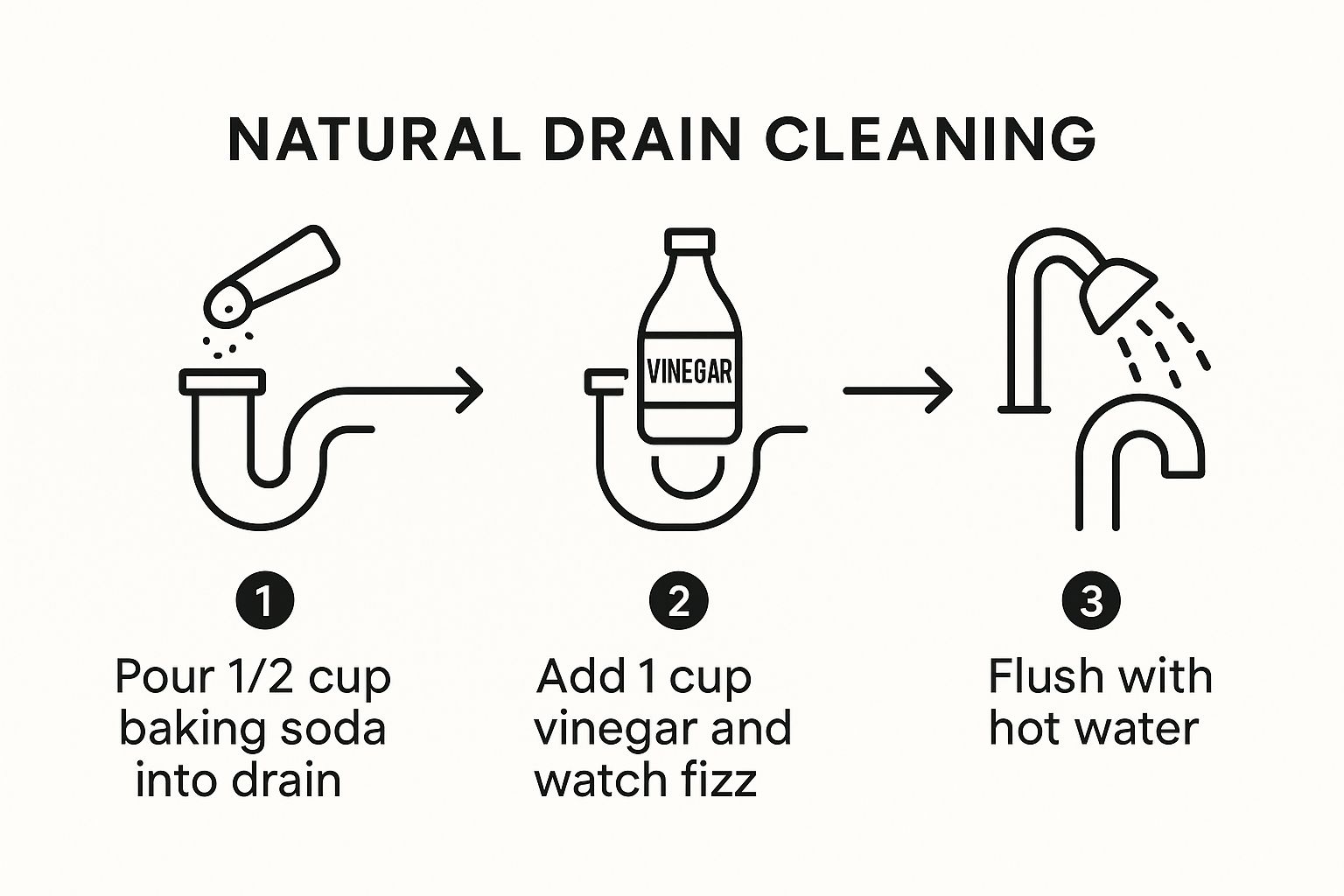
While this process can help with minor buildup, we always caution homeowners against relying on DIY solutions for recurring problems. If a drain is consistently slow, it’s a sign of a deeper issue that this method won’t solve.
The good news is that homeowners are starting to catch on, with a clear trend toward safer, less-damaging products. In fact, market forecasts show that biodegradable and eco-friendly cleaners will make up a significant portion of all drain product sales in the coming years.
Of course, these habits are fantastic for prevention, but they can't solve every single problem. For those deep, stubborn clogs or drains that just keep slowing down no matter what you do, you need a professional touch. If you're dealing with a persistent issue, expert drain cleaning in Monterey from our licensed team offers a definitive solution that DIY methods just can't match.
Choosing the Right Tools and Products for Drain Care

Walking into a hardware store's plumbing aisle can be dizzying. You're met with a wall of gadgets, chemicals, and gizmos all claiming to be the magic bullet for your drains. But after serving Monterey County for over 35 years, we’ve learned that the best approach to preventing clogs is usually the simplest one.
Every homeowner's basic toolkit should start with two things: a quality cup plunger for sinks and a flange plunger for toilets. Beyond that, the single most effective tool you can buy is a simple mesh drain screen for every shower and tub. This tiny, inexpensive device physically catches hair—the #1 enemy of bathroom pipes—before it has a chance to go down the drain and start a clog.
Smart Choices for Drain Cleaners
When it comes to chemical cleaners, we’re seeing a positive shift in the industry. More and more, the market is moving toward enzymatic and biodegradable options. These are far kinder to your pipes and to our local environment, from the Salinas River all the way to Monterey Bay.
These newer, enzyme-based cleaners work by using beneficial bacteria to slowly eat away at organic waste like grease and soap scum. Instead of a one-time blast, they prevent the sticky buildup that causes clogs in the first place. This proactive, gentle approach is much better for your plumbing's long-term health than repeatedly pouring harsh, corrosive chemicals down the drain.
Expert Insight: Liquid chemical drain cleaners are often just a band-aid. If you find yourself reaching for that bottle every few months, you don't just have a small clog. You have a recurring problem that needs a professional look.
You might be tempted to rent a powerful tool like an electric drain snake, but we strongly advise against it. In inexperienced hands, these machines can easily crack or even shatter a pipe, turning a slow drain into a full-blown plumbing emergency. If a plunger can’t handle a simple clog near the surface, it’s a job best left to a trained professional.
For those stubborn, persistent clogs, our team has the right equipment and experience to provide a safe and effective clogged drain repair in Monterey without putting your home's plumbing at risk.
When to Handle It and When to Call a Professional
We get it. When a drain starts to slow down, the first instinct for many homeowners in Salinas is to try and fix it themselves. It’s tempting to save a little time and money with a quick DIY solution, and honestly, sometimes that’s all you need.
For a minor clog located right near the drain opening, a simple cup plunger can sometimes do the trick. A little bit of elbow grease can be all it takes.
But it's absolutely crucial to know your limits. This is a key part of learning how to prevent clogged drains from turning into full-blown plumbing disasters. If a few attempts with a plunger don’t clear things up, forcing the issue can just push the blockage deeper into your plumbing system. You can easily turn a small problem into a much bigger, more expensive one.
The same goes for those aggressive chemical drain cleaners you see lining the store shelves. They might seem like an easy fix, but they rarely solve the underlying issue.
Our Pro-Tip: Never use liquid chemical drain cleaners. They're a temporary fix at best and can cause long-term corrosion and serious damage to your pipes. This is especially true in the older, charming homes common throughout Monterey and Pacific Grove.
Signs You Need an Expert
Recognizing when to put down the DIY tools and pick up the phone is the smartest move you can make. A stubborn clog isn't just an inconvenience; it's often a symptom of a much larger issue lurking deeper in your pipes.
Here are the clear warning signs that it’s time to call in a licensed professional.
-
Recurring Clogs: Does the same drain keep backing up every few weeks or months? This is a sure sign your efforts are only clearing a small part of a much bigger blockage.
-
Water Backing Up in Multiple Drains: Is your toilet gurgling when you run the shower? Does water appear in the bathtub when the washing machine drains? This is a classic sign of a main sewer line clog—a serious issue that requires professional equipment to resolve safely.
-
Foul Odors You Can't Get Rid Of: A persistent sewer-like smell coming from your drains is a major red flag. It could mean trapped waste is rotting in the pipes or, more seriously, point to a problem with your plumbing's vent system.
If you experience any of these issues in your Castroville or Watsonville home, that’s your cue to call the team at Alvarez Plumbing. We have the professional-grade tools and, more importantly, the expertise to solve the problem safely and effectively.
Sometimes, what seems like a simple clog is actually a sign of tree root intrusion or a damaged, collapsing pipe. We can get to the bottom of it with professional tools and even provide comprehensive drain inspections to see exactly what’s happening inside your pipes, protecting your property from further damage.
Why Professional Maintenance is a Non-Negotiable
Smart daily habits are a great first line of defense, but nothing can truly replace the eyes of a professional when it comes to protecting your plumbing for the long haul. Think of it as a routine check-up for the arteries of your home. While those small, proactive steps are fantastic, only an experienced plumber can spot the subtle warning signs of a major problem before it becomes a full-blown disaster.
Here at Alvarez Plumbing, we live by the old saying: an ounce of prevention is worth a pound of cure. This is especially true for your home’s plumbing. We’ve seen it countless times—a small, unnoticed issue spirals into catastrophic water damage and an expensive emergency call. That's why we always push for a proactive approach to your home's plumbing health.
Seeing What You Can't See
One of the most powerful tools in our arsenal is the professional video camera inspection. This service is particularly crucial for the beautiful, older homes you find all over Pacific Grove and parts of Monterey. We can guide a high-resolution camera deep into your sewer lines to get a real-time, inside look at their exact condition.
This technology reveals problems that are otherwise completely invisible. We can pinpoint things like:
- Tree Root Intrusion: A very common issue in our leafy communities. Roots are relentless in their search for water and can easily crack and invade older pipes.
- Pipe Corrosion: The salty coastal air can take its toll, speeding up the breakdown of old metal pipes from the inside out.
- Hidden Blockages: We can find the precise location where years of grease, wipes, and other debris have teamed up to form a serious clog.
A camera inspection takes all the guesswork out of the equation. Instead of just treating symptoms like a slow drain, you’re tackling the root cause head-on. This saves you an incredible amount of time, stress, and, ultimately, money.
The Power of Professional Hydro-Jetting
When you're dealing with stubborn, recurring slow drains or a serious blockage, no chemical you can buy at the store stands a chance against professional hydro-jetting. This is, without a doubt, the ultimate drain cleaning solution. Hydro-jetting uses an extremely high-pressure stream of water to blast away and scour the inside of your pipes, removing every last bit of accumulated sludge, grease, and mineral scale.
As a family business that’s been serving communities from Salinas to Carmel-by-the-Sea since 1988, we can tell you hydro-jetting is more than just a cleaning—it’s a full restoration. It basically returns your pipes to their original, full diameter, which dramatically improves flow and helps prevent future clogs from forming.
Making the decision to schedule an annual inspection—and a professional cleaning when it's needed—is one of the smartest investments you can make in your home. It's the most definitive way to prevent clogged drains and ensure your plumbing system stays dependable for years to come.
Common Questions About Drain Maintenance
We get a lot of the same questions from homeowners all over the Monterey Bay area. Honestly, it's great, because it means people are thinking ahead. Answering these questions is a huge part of knowing how to prevent clogged drains before they turn into a full-blown emergency.
How Often Should I Have My Drains Professionally Cleaned?
For a typical home around here, we usually suggest a professional drain inspection and cleaning every one to two years. Think of it as a check-up for your plumbing.
However, if you've got an older house, big beautiful trees near your sewer line, or a large family putting the pipes through their paces, an annual cleaning is a really smart move. It's a small investment that can prevent some major headaches and backups down the road.
Are So-Called "Flushable" Wipes Really Safe for My Plumbing?
In a word: no. We see more serious, stubborn clogs from these wipes than almost anything else here in Salinas and Monterey. They simply don't break down the way toilet paper does.
Instead, they snag on the inside of pipes, catch other debris, and eventually create a massive blockage in your home's plumbing or even the main city sewer. This is a major issue that local sanitation districts have been warning residents about for years.
Our Pro Tip: Wipes belong in the trash can, period. The same goes for things like cotton swabs, dental floss, and paper towels. Your plumbing is only built to handle three things: water, human waste, and toilet paper.
Why Do My Drains Smell Bad Even if They Aren’t Clogged?
That nasty smell is often coming from one of two places. It could be decaying food bits and bacteria festering in the P-trap (that U-shaped pipe under your sink), or it might point to a bigger issue with your drain's vent system.
In kitchens, it's almost always tiny food particles that got trapped and are now rotting away. We see this all the time with certain foods, which you can read more about in our guide on 10 things not to put down your garbage disposal.
While a good cleaning can fix it, a smell that just won't go away is a red flag. It could signal a dangerous sewer gas leak, and that's something you need a professional to look at right away.