
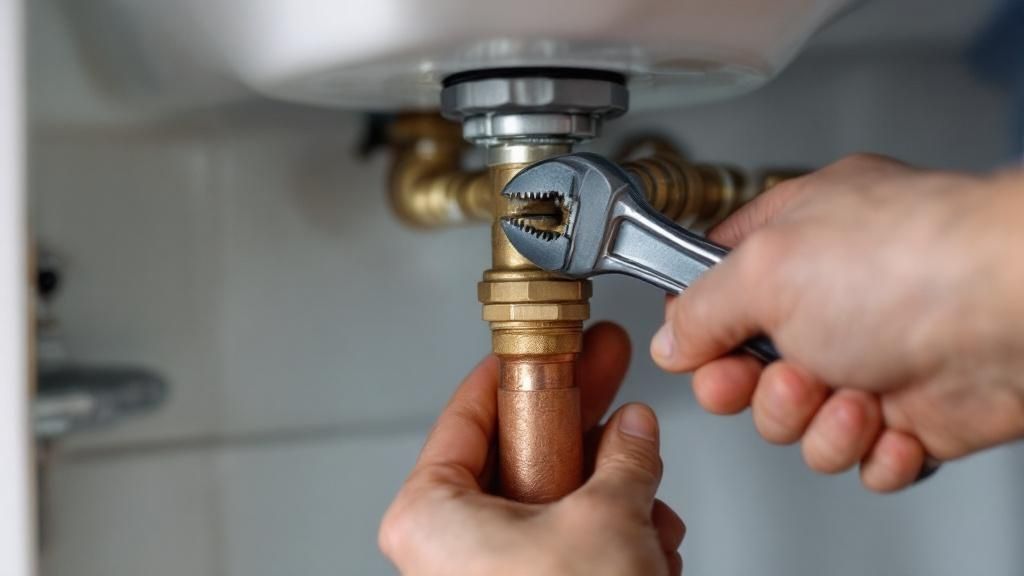
When a faucet starts dripping or a toilet won't stop running, your first thought might be to search for "how to install shut off valve" and tackle it yourself. But for homeowners here in Salinas and across Monterey County, what seems like a simple fix can quickly turn into a major headache. The process involves shutting off the main water supply, removing the old valve, and installing a new one, but the specific techniques for copper, PEX, or older galvanized pipes are very different. Honestly, to avoid a potential water damage nightmare, calling a licensed plumber is always the smartest and safest decision.
Why a Shut Off Valve Is Your First Line of Defense
That tiny, nagging drip from a faucet might not seem like a big deal, but for homeowners all over Salinas and Monterey, it's often the first whisper of a much bigger problem. It’s these small annoyances that really underscore the value of a working shut off valve—often called a "stop"—tucked away under your sinks, behind your toilets, and servicing your washing machine.
Think of them as the immediate control panel for your home's water flow.
Having a reliable shut off valve is what separates a minor inconvenience from a full-blown catastrophe. When a supply line finally gives out or a fixture fails spectacularly, the ability to kill the water flow to that specific spot is priceless. It stops widespread damage in its tracks. This is especially true during our wet winters in Monterey County, when any kind of water intrusion can quickly spiral into serious issues like mold growth and structural decay.
Modern Valves Versus Older Models
In our 35+ years serving this community, we’ve seen it all. The beautiful, historic homes in places like Carmel-by-the-Sea and Pacific Grove often have older, multi-turn valves. These rely on a simple rubber washer that, over time, can become brittle and fail. Or worse, they seize up from years of not being used.
Contrast that with the newer construction you see in Prunedale and Watsonville, which almost always features modern quarter-turn ball valves. These are far superior. They use a solid internal ball to create a much more dependable seal with a simple 90-degree turn of the handle. Not only are they more durable, but they also give you instant visual confirmation that the water is completely off.
To help you get familiar with what's in your own home, here’s a quick reference for the most common fixtures.
Common Household Fixtures and Their Shut Off Valves
| Fixture Location | Typical Valve Type | Why It's Important |
|---|---|---|
| Under Sinks | Quarter-Turn or Multi-Turn | Allows you to repair a leaky faucet or replace the entire fixture without shutting off water to the whole house. |
| Behind Toilets | Quarter-Turn Angle Stop | Essential for fixing a running toilet or replacing the fill valve, one of the most common home plumbing repairs. |
| Washing Machine | Two Valves (Hot & Cold) | Critical for stopping a burst hose, which can release a tremendous amount of water in a short time. |
| Water Heater | Gate Valve or Ball Valve | Lets you isolate the water heater for maintenance, repair, or replacement. |
Knowing where these are and confirming they work is a fundamental part of responsible homeownership. It’s the first step in being prepared for the unexpected.
Protecting Your Investment
For homeowners, a working shut off valve protects your property and buys you invaluable peace of mind. Just knowing where they are and that they'll turn when you need them to empowers you to act fast in an emergency.
This is even more critical for landlords and property managers. Proactive upkeep is non-negotiable. A comprehensive rental property maintenance checklist should always include verifying that every shut off valve is in good working order. It's a simple check that can save a fortune in repairs and prevent messy tenant disputes.
Ultimately, these small devices are a key part of smart homeownership and water management. They don't just prevent disasters; they're also what you need to handle simple repairs and upgrades. In a region where water is such a precious resource, every component in your plumbing system matters. In fact, if you want to learn more, you can check out our guide on how to conserve water at home to see how small actions can have a big impact.
A functional shut off valve is your first, and most powerful, tool in that effort.
Recognizing a Failing Shut Off Valve
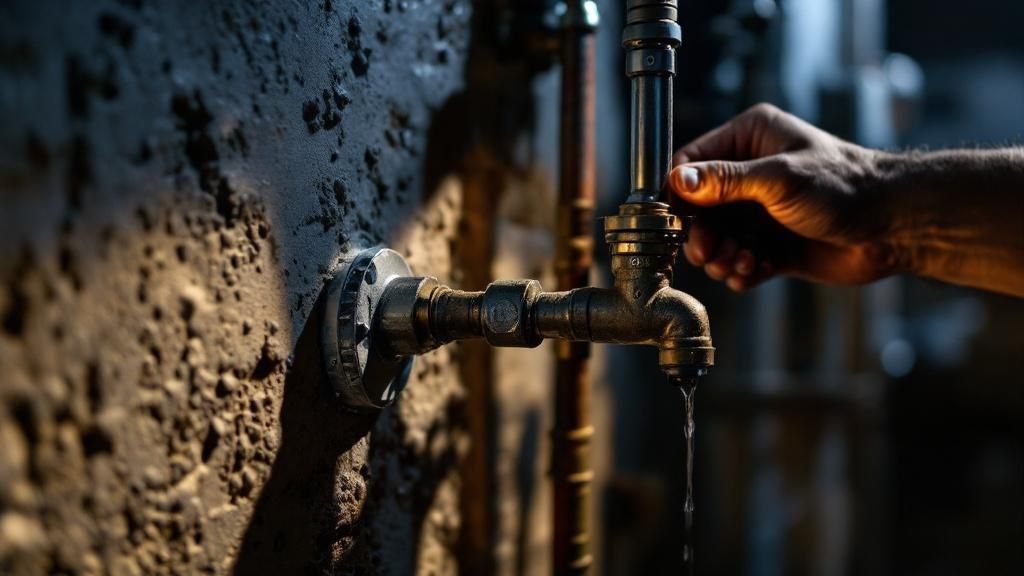
How do you know when a shut-off valve is on its last legs? For many homeowners we visit in Seaside and Marina, the unfortunate answer is they don't—not until water is already spraying everywhere under the sink. These little valves are crucial, but they don't last forever. The good news is they almost always give you a heads-up before they fail completely.
Learning to spot the warning signs is the key to stopping a minor headache from turning into a full-blown, expensive flood. Think of it like checking the air in your car's tires; a quick peek every now and then can save you from a major breakdown later.
Visible Signs of Trouble
Often, the biggest red flags are the ones you can see with your own eyes. The next time you're under the sink or behind the toilet, take a look for any of these tell-tale signs:
- Corrosion or Rust: Here in Monterey County, our salty coastal air is notoriously tough on metal. Look for any greenish or white, chalky buildup on brass or copper valves. On older iron parts, you’ll see reddish-brown rust flakes. This isn't just a surface-level problem; it's a clear signal the metal itself is breaking down.
- Slow Drips or Weeping: Check for even the smallest amount of moisture around the valve. A slow, persistent drip from the valve handle or where it connects to the pipe means the internal seals have given up. Don't brush this off—it’s the plumbing equivalent of a ticking time bomb.
A Real-World Example from Our Files: We got an emergency call from a family in Watsonville a while back. They were tackling a simple DIY faucet replacement, but when they tried to turn off the water, the old, corroded shut-off valve was completely seized. A little extra force and the handle snapped right off, turning their weekend project into a gusher that forced them to shut off water to the entire house.
When the Valve Fights Back
Sometimes the problem isn't what you see, but what you feel. A healthy shut-off valve should turn smoothly with just a little effort from your hand. If you have to fight with it, or it feels stiff and resistant, that's a huge warning sign.
Over the years, mineral deposits from our local water supply can build up inside the valve, causing it to freeze in place. Trying to force a stuck valve is one of the most common ways homeowners accidentally cause a major leak. If it won't turn easily, it has already failed its most important job.
Any of these issues—drips, rust, or a stubborn handle—means that valve can no longer be trusted in an emergency. Even a slow, hidden leak can cause serious damage over time. Being proactive and knowing how to detect a hidden water leak can save you a lot of trouble. Catching these signs early and calling in a professional is always the smartest move to protect your home.
The Hidden Risks of DIY Valve Installation
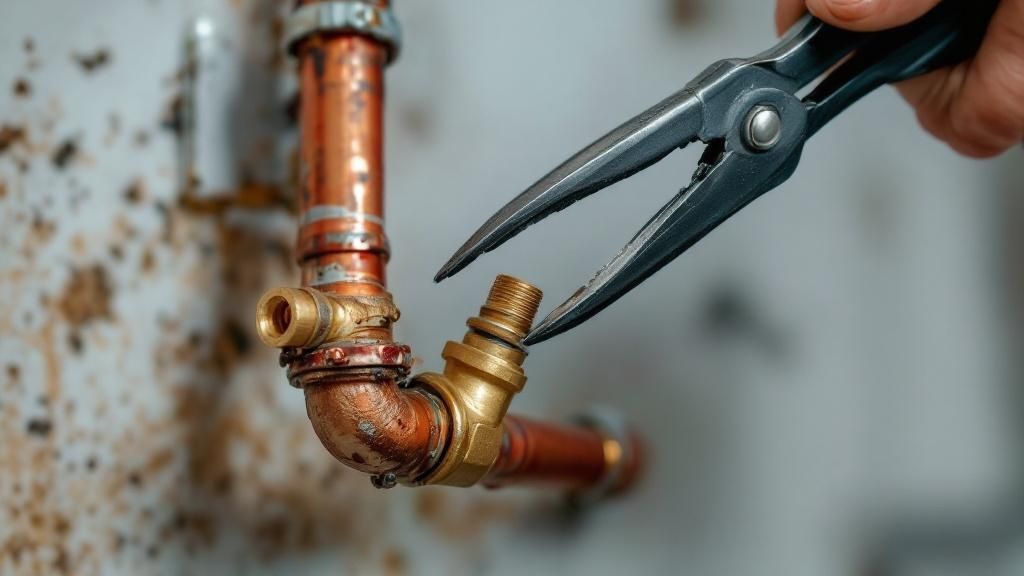
Watching a quick online video can make replacing a shut-off valve seem like a simple weekend task. We certainly admire the can-do spirit of our neighbors from Salinas to Carmel-by-the-Sea, but this is one job where a little bit of inexperience can lead to a whole lot of water damage. It’s not just about twisting a wrench; it’s about understanding the nuances of your home’s specific plumbing system.
The friendly exterior of a hardware store aisle hides a complex world of plumbing standards. Grabbing the wrong type of valve—like trying to use a compression fitting on a pipe that needs to be sweat-soldered—is a recipe for a slow, hidden leak inside your wall. These drips can go unnoticed for weeks, quietly feeding mold and rotting the structural wood behind your drywall.
Common DIY Mistakes We See in the Field
Even with what seems like the right valve, the potential for error is high. It's a classic case of what you don't know can hurt you. Here are a few frequent missteps we're called in to fix all the time:
- Over-tightening Fittings: It feels like tighter should be better, right? But cranking down on a fitting with too much force can cause a hairline crack in the valve body or the nut. This tiny fracture might not leak right away, but it creates a weak point that’s guaranteed to fail under normal water pressure.
- Improper Pipe Preparation: Whether you have copper, PEX, or PVC pipes, the end must be perfectly clean, smooth, and cut squarely. Any burrs, leftover grime, or debris will prevent the new valve from sealing correctly. This almost always leads to a persistent, frustrating drip.
- Mishandling Old Pipes: This is a major concern in the beautiful, historic homes you’ll find in places like Pacific Grove. Many still have old galvanized pipes that become incredibly brittle over time. They can literally crumble in your hands if you apply pressure incorrectly. What started as a simple valve swap can instantly become a much larger, more complex re-piping emergency.
Shut-off valves aren't one-size-fits-all; their installation varies dramatically based on materials and applications, from a simple home sink to large-scale industrial systems. In fact, the global market for manual shut-off valves is a massive industry, segmented by materials like brass and cast iron for everything from wastewater treatment to mining. As you can learn more about the global valve market, it becomes clear that specialized knowledge is the key to a leak-free installation.
As family-owned plumbers since 1988, we believe in doing the job right the first time. A professional installation isn't just about stopping a leak; it's about providing a secure, reliable connection that protects your home for years to come.
Ultimately, the real risks of a DIY valve installation aren't just a leaky fitting. They are the secondary consequences: catastrophic water damage, expensive mold remediation, and even failing a home inspection when you decide to sell. A mistake here could also compromise other critical systems. For instance, an improper valve installation could affect the integrity of your home's water purity safeguards, a system we cover in our guide to professional backflow preventer installation.
Hiring a licensed, insured plumber from Alvarez Plumbing is your guarantee of a stress-free, professional result. We have the right tools, the correct parts, and decades of local experience to handle any challenge your plumbing system throws at us. It’s the smart way to ensure your peace of mind.
Our Professional Shut Off Valve Installation Process
When you call Alvarez Plumbing for a shut-off valve installation in places like Carmel Valley or Castroville, you’re doing more than just getting a part fixed. You’re making an investment in your home's long-term safety and getting the kind of quality our family has stood for since 1988.
While a DIY approach might seem tempting, our professional process is designed to be meticulous, safe, and most importantly, built to last.
Our method is a careful, multi-step service, not just a quick part swap. It starts the second our licensed technician walks through your door. We don't just jump in and start cranking on pipes. The first thing we do is a full assessment of the situation. We look at the exact type of pipe, check the condition of the connections, and spot any potential challenges—like the cramped spaces so common in older Monterey County homes. This initial check is what tells us which tools and techniques are right for your specific job.
A Brief Summary of the Professional Method
The first and most critical safety step is always turning off the main water supply to the house. Our team knows exactly how to locate and operate the main valve, which is a vital skill, especially during an emergency. If you ever find yourself in a situation where you need to shut the water off fast, we've put together a guide on how to shut off your main water supply to help you protect your property from damage.
Once the water is off, we get to work carefully removing the old, faulty valve. This takes a delicate touch, particularly with older, more brittle pipes that can easily be damaged. We then meticulously prepare the end of the pipe, making sure it’s perfectly clean, smooth, and ready to form a flawless seal. Honestly, this prep work is where many DIY jobs go wrong, often leading to those slow, hidden leaks that cause so much trouble down the line.
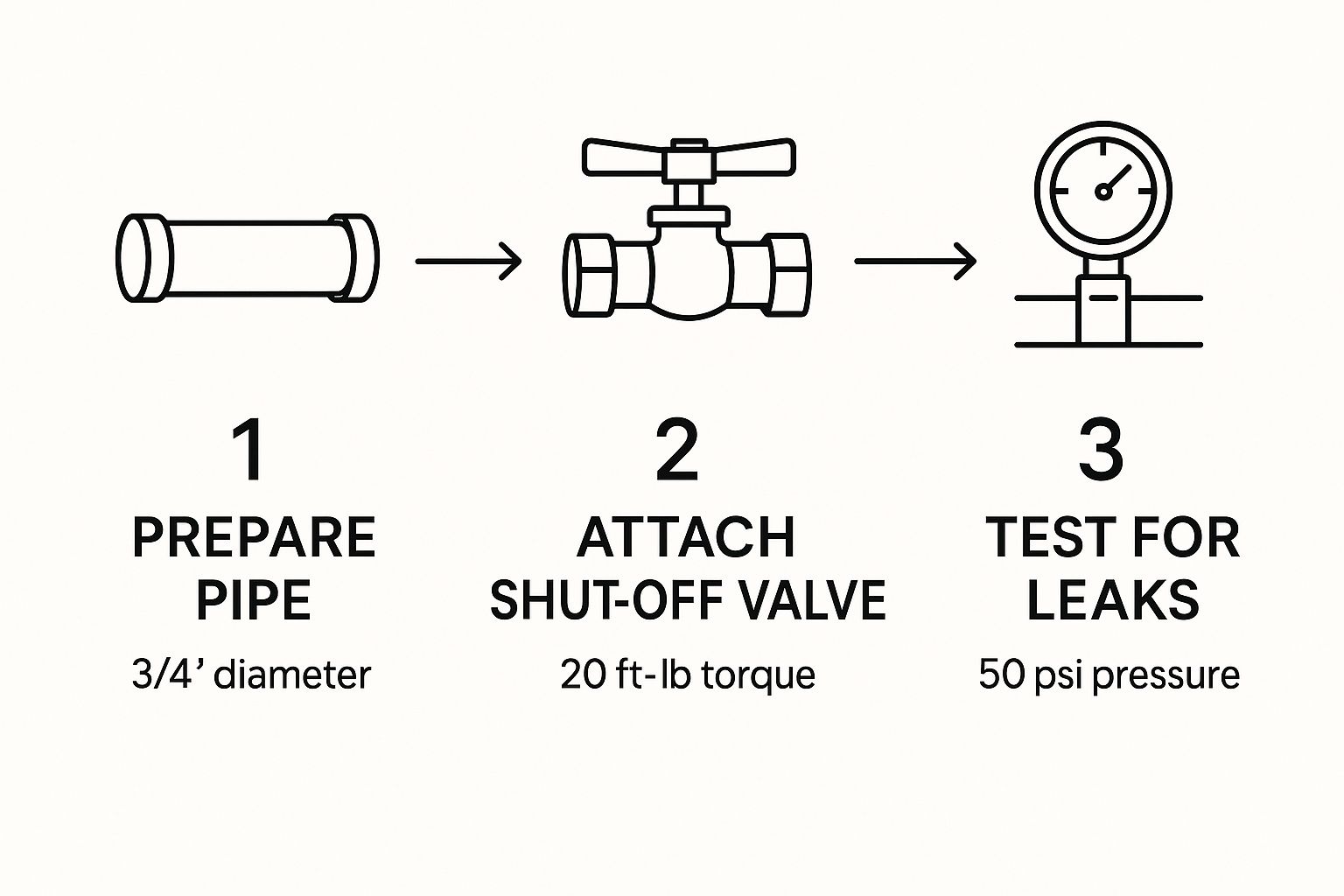
As you can see, every part of the installation has its own technical requirement. From applying just the right amount of torque to pressure testing the final connection, precision is key to a durable, leak-free result. The process concludes with a slow, careful restoration of water pressure and a thorough test of the new connection. We only consider the job complete when we are 100% confident in the leak-free seal.
We almost exclusively install high-quality, quarter-turn ball valves. The older style, known as gate valves, rely on a rubber washer that breaks down over time. A modern ball valve gives you a much more reliable seal that works instantly and, importantly, won't seize up from years of not being used—a perfect, dependable solution for local homes.
Because a mistake can lead to serious water damage, we always recommend calling a licensed professional for any valve installation. It’s the best way to ensure your home is protected.
Knowing Where Your Main Water Shut-Off Is
Knowing how to shut off the water at a specific sink or toilet is a great skill, but every single homeowner in Monterey County needs to know where the master switch is—the main water shut-off valve for the entire house. In an emergency like a burst pipe or during the seismic activity we all know is a risk here in California, this knowledge isn't just helpful. It’s absolutely critical for protecting your property.
Finding this valve is your first real step in taking control. In most homes around here, from the newer builds in Prunedale to the more established neighborhoods in Salinas, you’ll typically find it in one of two places.
First, take a walk around the perimeter of your house. The main water line usually comes into your home from the street, so start looking on the side of your house that faces the road. You're looking for either a large lever (that's a ball valve) or a round, wheel-like handle (a gate valve) attached to a pipe that comes out of the ground and goes into your siding.
If you don't spot it there, your next stop is the water meter box, sometimes called a "curb box." This is usually a concrete or plastic box set right into the ground near the sidewalk or curb at the edge of your property.
- Lifting the Lid: You might need a screwdriver or a special water meter key to pop the lid open. A word of caution: be careful, as spiders and other critters love to make a home in these dark, damp spaces!
- Identifying the Valve: Inside, you'll see the water meter itself and two valves—one on the street side and one on the house side. The one on the house side is your shut-off valve. That's the one you're responsible for.
A Pro Tip from the Field: We always recommend homeowners test this valve at least once a year. If it’s stiff or you just can't get it to turn, don't force it! Many older valves in Carmel-by-the-Sea and Pacific Grove homes can seize up from lack of use. Forcing it can break the valve, causing the very emergency you’re trying to prevent.
Local building codes in cities like Salinas and Seaside directly impact where these main valves are placed and what type is used, all to ensure safety and easy access. Modern regulations often require reliable, quarter-turn ball valves that are simple to operate. This is part of a larger trend across North America, where safety standards are driving the adoption of better, more dependable plumbing technology.
In fact, a growing number of new installations now feature automatic shut-off valves that can detect a leak and close all on their own. You can find more insights on these kinds of residential safety advancements on Verified Market Research.
Being proactive is about more than just knowing where the valve is. It’s about making sure it works and understanding that sometimes, the main valve itself can be the source of other household plumbing issues. For instance, a partially closed or failing main valve is a common culprit we find when customers ask us how to fix low water pressure throughout their entire home.
When you're in doubt, a quick inspection from a professional is the smartest way to ensure your home’s main water shut-off is ready for action when you need it most.
Your Shut Off Valve Questions Answered
We get a lot of questions from homeowners across the Monterey Bay area about these small but mighty plumbing components. As a family-owned business that's been serving our neighbors since 1988, we believe in empowering you with clear, honest answers. Here are a few of the most common questions we hear.
How Often Should I Test My Shut Off Valves?
We recommend giving the shut-off valves under your sinks and toilets a gentle test every six months. It's a simple habit that pays off. Just turn the handle all the way to the closed position, then turn it back to fully open.
This simple action helps prevent the valve from seizing up due to mineral deposits, which can be a real issue with the water we have here. If a valve feels stuck or won't turn, don't force it. That's a clear sign it’s at the end of its life and needs a professional replacement. Applying too much muscle is how a lot of homeowners accidentally snap the valve and cause a flood.
What Is a Quarter-Turn Versus a Multi-Turn Valve?
You can usually tell the age of a home's plumbing by its shut-off valves. Older homes often have multi-turn valves, which rely on an internal rubber washer that gets compressed to stop the water. Over time, that washer inevitably hardens, cracks, and fails. It's not a matter of if, but when.
A modern quarter-turn ball valve is a far superior design. It uses a solid internal ball with a hole through it. A simple 90-degree turn of the handle aligns the hole to instantly stop the water flow. They are significantly more durable, far less likely to leak, and you can see at a glance whether they are on or off. It's why we almost exclusively install quarter-turn valves for our clients in Salinas and the surrounding communities.
Why Is My Shut Off Valve Leaking from the Handle?
A steady drip coming directly from the valve’s handle or stem is a classic sign of failure. It usually means an internal packing washer or O-ring has worn out. While you might find advice online about tightening the "packing nut" on top of the valve, this is really just a temporary band-aid.
A leak from the handle is a definitive sign that the valve is on its last legs. Continuing to rely on it is a gamble you don't want to take. The only safe and reliable solution is to have a licensed plumber replace the entire valve assembly. This is a very common service we perform in older homes throughout Marina and Seaside to ensure a secure, long-lasting seal.
Our Professional View: We believe every homeowner should be informed about their plumbing. But actually installing a shut off valve correctly is a professional skill. It involves specific tools, knowledge of local codes, and experience with different pipe materials like copper and PEX. A single mistake can lead to serious consequences.
Can I Install a Shut Off Valve Myself?
It might look like a straightforward weekend task, but installing a shut-off valve is more complex than it appears. A simple mistake—like over-tightening a connection or using the wrong type of valve for your piping—can create a slow, hidden leak inside your walls.
That kind of leak can go unnoticed for weeks or months, leading to extensive water damage, mold growth, and expensive structural repairs down the road. For a secure, code-compliant installation that protects your home and gives you true peace of mind, we always recommend hiring a licensed and insured plumber. It ensures the job is done right the first time.
When it comes to the plumbing in your Monterey County home, don't leave things to chance. For a professional, leak-free installation and peace of mind, trust the experts at Alvarez Plumbing. Contact us today for a reliable solution to all your plumbing needs!