
Direct Answer: A bathtub leak through the ceiling downstairs almost always comes from a failed tub drain gasket, broken caulk around the tub, or a weeping supply line inside the wall.
You walk into the downstairs bedroom and there it is. A brown ring on the ceiling, maybe a soft spot in the drywall, maybe an actual drip landing on the carpet. Directly above it is the upstairs bathroom.
We get this call regularly in Salinas. One homeowner described it to us almost word for word: the bathtub from upstairs was leaking water into the downstairs ceiling. It looks alarming, and the damage on the ceiling usually looks worse than whatever is actually broken upstairs.
The good news is that the source is almost always findable and fixable. The part that matters is how you find it. Cutting open the ceiling first and looking second is how people end up with a much bigger repair bill than they needed.
Why the Stain Downstairs Isn’t Always Under the Leak
Water leaving a tub area doesn’t drop straight down. It hits the subfloor, then follows the path of least resistance across plywood seams and along the sides of floor joists until it finds a low spot or a gap.
That means the wet patch on your downstairs ceiling can sit several feet away from the actual failure point. It often shows up near a can light, a ceiling fan box, or a drywall seam, because those are the easiest places for water to escape.
This matters a lot in Salinas, CA. Much of our two-story housing stock in north Salinas and out toward the Creekbridge and Harden Ranch areas was built between the 1970s and the 1990s. Those homes have:
- Original tub drain assemblies with rubber gaskets that harden over decades
- Caulk and grout at the tub surround that has been redone by three different owners
- Galvanized or early copper supply lines that thin out over time
- Hard water deposits that build up at every threaded joint and shutoff
So the honest first step is not demolition. It is figuring out when the water shows up, because the timing tells you almost everything.
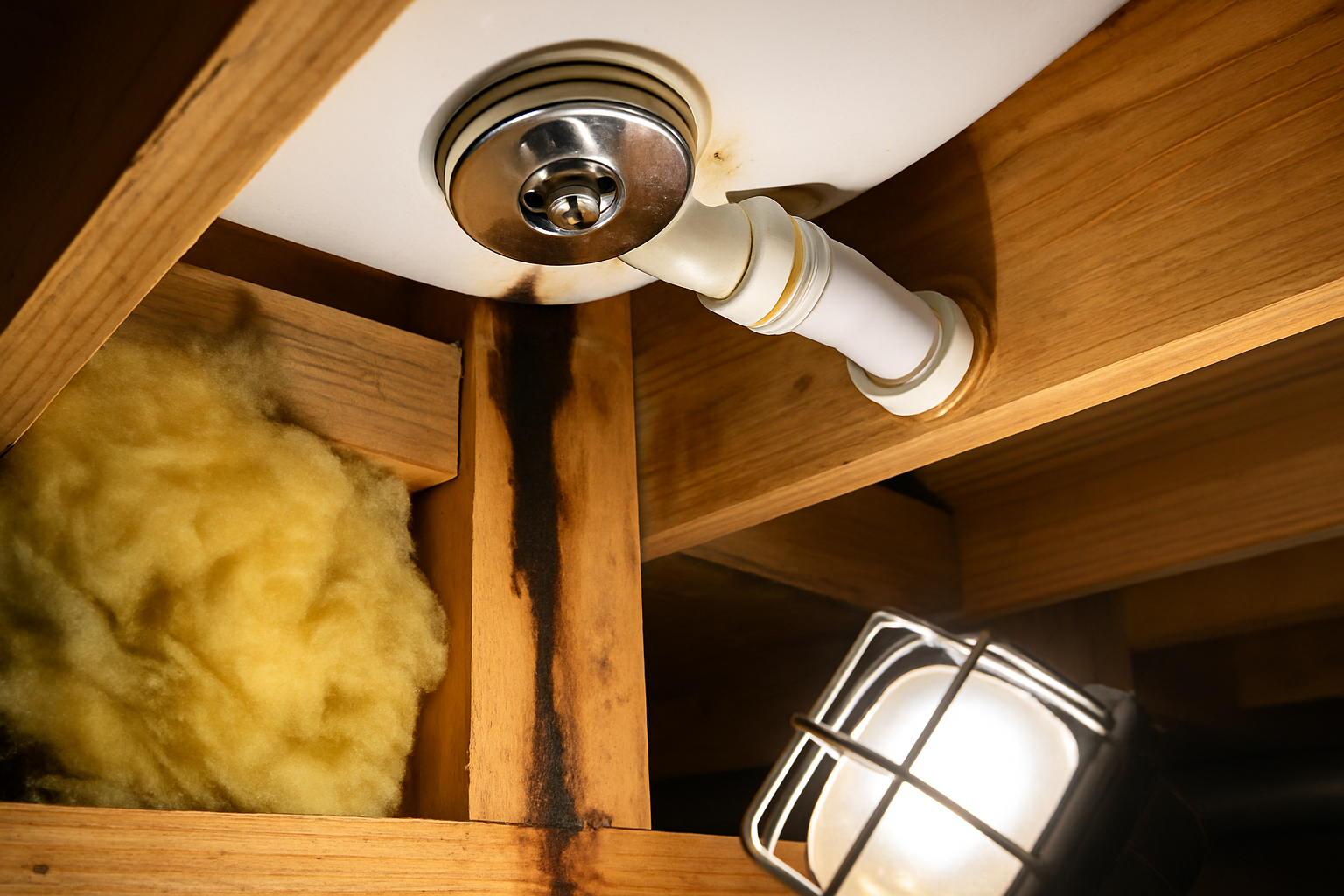
The Three Usual Causes of a Bathtub Leak Through the Ceiling Downstairs
In our experience, upstairs tub leaks trace back to one of three things. Each one behaves differently, and you can narrow it down without any tools.
1. A failed tub drain or overflow gasket. Where the tub drain connects to the drain pipe, there’s a rubber gasket. When it hardens and cracks, water escapes only while the tub is draining or while the shower runs and water passes the overflow plate. This is the most common cause we find, and it’s also the sneakiest, because it stops as soon as the tub empties.
2. Failed caulk or grout at the tub surround. Splash water gets behind the tile or the fiberglass lip, soaks into the wall base, and runs down into the floor structure. Symptom: the ceiling gets wet after showers, but not when you fill the tub and drain it without spraying the walls.
3. A supply line or shutoff weeping inside the wall. These lines are under pressure all the time, so the leak doesn’t care whether anyone is using the bathroom. Symptom: a steady, constant damp spot that grows even if nobody has showered in two days.
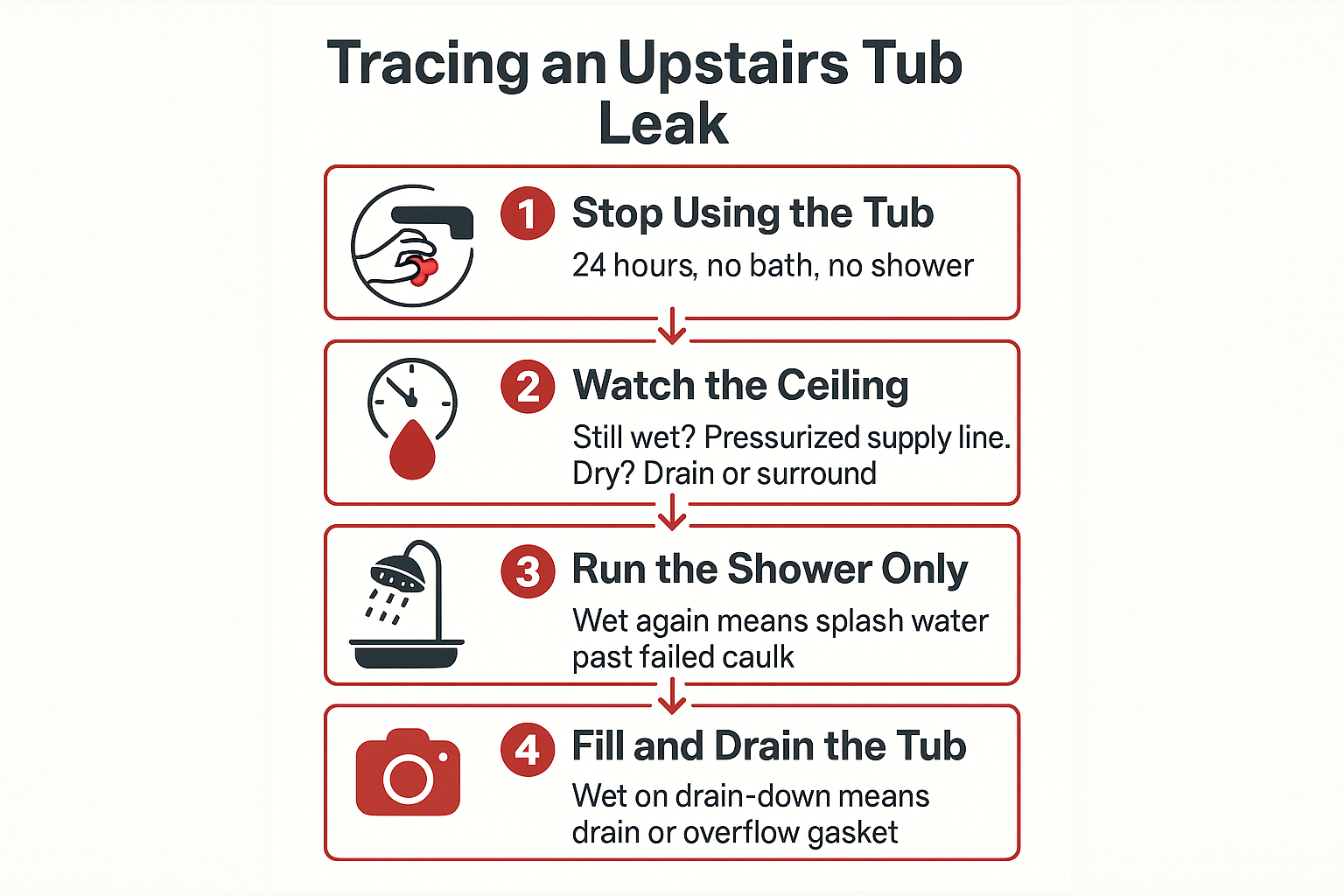
A quick rule of thumb: if the water shows up only during or right after a bath or shower, look at the drain or the surround. If it’s there all the time, look at the pressurized side. Constant supply-side leaks also get worse when household water pressure runs high, which is why how long a pressure regulator lasts is worth understanding if you’ve had repeat pinhole leaks.
Matching the Symptom to the Source
Use this to narrow things down before anyone opens a wall or ceiling. It won’t replace a diagnosis, but it tells a plumber where to start.
| What You Notice | Most Likely Source | What the Repair Usually Involves |
|---|---|---|
| Ceiling drips only while the tub drains | Tub drain shoe or overflow gasket | Access from below or through the tub access panel, gasket and drain assembly replacement |
| Wet only after someone showers, not after a bath | Failed caulk, grout, or surround seal | Resealing the tub perimeter, sometimes tile or surround repair by a contractor |
| Damp spot present constantly, grows daily | Supply line or angle stop weeping in the wall | Locating the line, opening a small section of wall, replacing the failed section or valve |
| Stain appeared once, now looks dry | Intermittent drain gasket leak | Still needs diagnosis, it will return every time the tub drains |
| Ceiling sagging or bulging | Standing water trapped above the drywall | Stop the water first, then structural and drywall repair by a restoration contractor |
A Simple Way to Narrow It Down
This flow walks through the same questions we ask over the phone when someone calls about water coming through a ceiling from upstairs.
Why a Camera Saves You Ceiling
Here is where the money is either saved or wasted. Without a diagnosis, the common approach is to cut a hole in the ceiling, look, guess, and cut another hole. Each hole becomes drywall repair, texture matching, and paint later.
We had a customer whose upstairs plumbing was leaking down into the ceiling below. Before opening anything, the technician ran a camera inspection to confirm the failure in the drain line, then made the repair in the space between the downstairs ceiling and the upstairs floor. One targeted opening instead of a long exploratory demolition.
A video camera inspection feeds a waterproof HD camera through the pipe, and a locator pinpoints the depth and position of the problem. Camera work in the Salinas and Monterey County area commonly runs in the low-to-mid hundreds depending on access and length of line, though the only accurate number comes from a look at your specific setup.
When the leak is on the pressurized side instead, the tools are different. Pressure testing and leak detection methods narrow the location down before a wall gets opened. The same approach applies when a hidden leak shows up as a water bill that jumped for no obvious reason.
What That Stain Is Doing While You Wait
Water damage is one of the largest homeowners insurance claim categories tracked by the Insurance Information Institute, and slow leaks are a big part of that. A drip that only runs for 90 seconds a day still soaks the same square foot of subfloor every single day.
By the time it shows on the ceiling below, water has usually been in the floor structure for a while. Plywood subfloor delaminates. Joist edges stay damp. Drywall loses its strength from the top side where you can’t see it.
A few things worth knowing:
- A stain that looks dry is not proof the leak stopped. Intermittent drain gasket leaks reappear every time the tub drains.
- In our mild, damp Monterey Bay climate, a wet cavity that stays damp for 24 to 72 hours creates conditions for mold growth.
- Insurance carriers generally treat sudden damage differently than long-term seepage, so documenting when you first noticed it helps.
One more thing that seems to put people at ease: a plumber’s job is to stop the water. Diagnosing the leak, repairing the pipe, gasket, or valve, and verifying it’s dry. The drywall, insulation, flooring, and any structural repair afterward is handled by a general contractor or a restoration company. Two different trades, two different scopes, and knowing that in advance makes the whole thing less overwhelming.
One Note on Timing Before the Rainy Season
Ceiling leaks from a tub have nothing to do with weather. But we see a real spike in leak calls once the rains start in Salinas, because homeowners are suddenly paying attention to ceilings and noticing stains that have been forming for months.
If you’re already looking up, that’s a reasonable time to walk the rest of the house. A pre-storm plumbing preparedness check covers drains, cleanouts, and low-lying areas around the property before the ground saturates.
Older Salinas Valley homes with mature trees also see root intrusion in sewer lines this time of year. Different problem, same principle. Finding it in October beats finding it in January.
Frequently Asked Questions About Ceiling Leaks From an Upstairs Tub
Is water coming through the ceiling an emergency?
It depends on how fast it’s moving. A sagging or bulging ceiling with active dripping is urgent, because trapped water can bring the drywall down. A small stain with no active drip can usually wait for a normal appointment, though it still needs to be looked at soon. Emergency plumbing service is available 24 hours a day in Salinas and the Monterey Bay Area if the water won’t stop.
Should I shut off the water to the whole house?
If the ceiling is wet constantly with nobody using the bathroom, yes, shut off the main and see if it slows down. That also confirms you’re dealing with a pressurized supply leak. If the water only appears when the tub drains, shutting the main off won’t change anything, just stop using that bathroom until it’s diagnosed.
Can you fix it without tearing out my whole ceiling?
Usually, yes. That’s the entire point of camera inspection and leak location work. Most upstairs tub leaks can be reached through a targeted opening in the ceiling below or through an existing tub access panel, rather than removing a whole ceiling section.
How much does this kind of repair cost?
There’s no honest flat answer, because the range is wide. A drain gasket replacement with easy access is a very different job than a supply line failure inside a finished wall. Costs move based on access, what failed, and whether the drain assembly needs replacing. The realistic path is a look at the actual situation and a free estimate before any work starts.
Does the plumber repair the drywall too?
No, and that’s normal. Plumbing work covers finding and stopping the leak. Ceiling patching, texture, paint, and any subfloor or joist repair goes to a general contractor or a restoration company after the water is stopped and the area has dried out.
Still Not Sure Where the Water Is Coming From?
If there’s a stain on your downstairs ceiling and the upstairs bathroom is the prime suspect, a diagnosis first and drywall second is almost always the cheaper path. Alvarez Plumbing has been working on Salinas and Monterey Bay Area homes since 1988, with camera inspection and leak location as part of how we approach these calls, and we answer the phone at (831) 757-5465 around the clock. Service can also be scheduled at alvarezplumbingsalinas.com whenever that’s easier.