
Direct Answer: Under AB 2313, by January 1, 2028 California gas utilities must offer homeowners scheduled for a gas service line replacement a voluntary cash incentive to go all electric instead. Emergency replacements are exempt.
A notice from PG&E saying your gas service line is scheduled for replacement has always meant the same thing: a crew, a trench across the front yard, and a new pipe feeding your meter. Starting in 2028, it means something else. It means a choice.
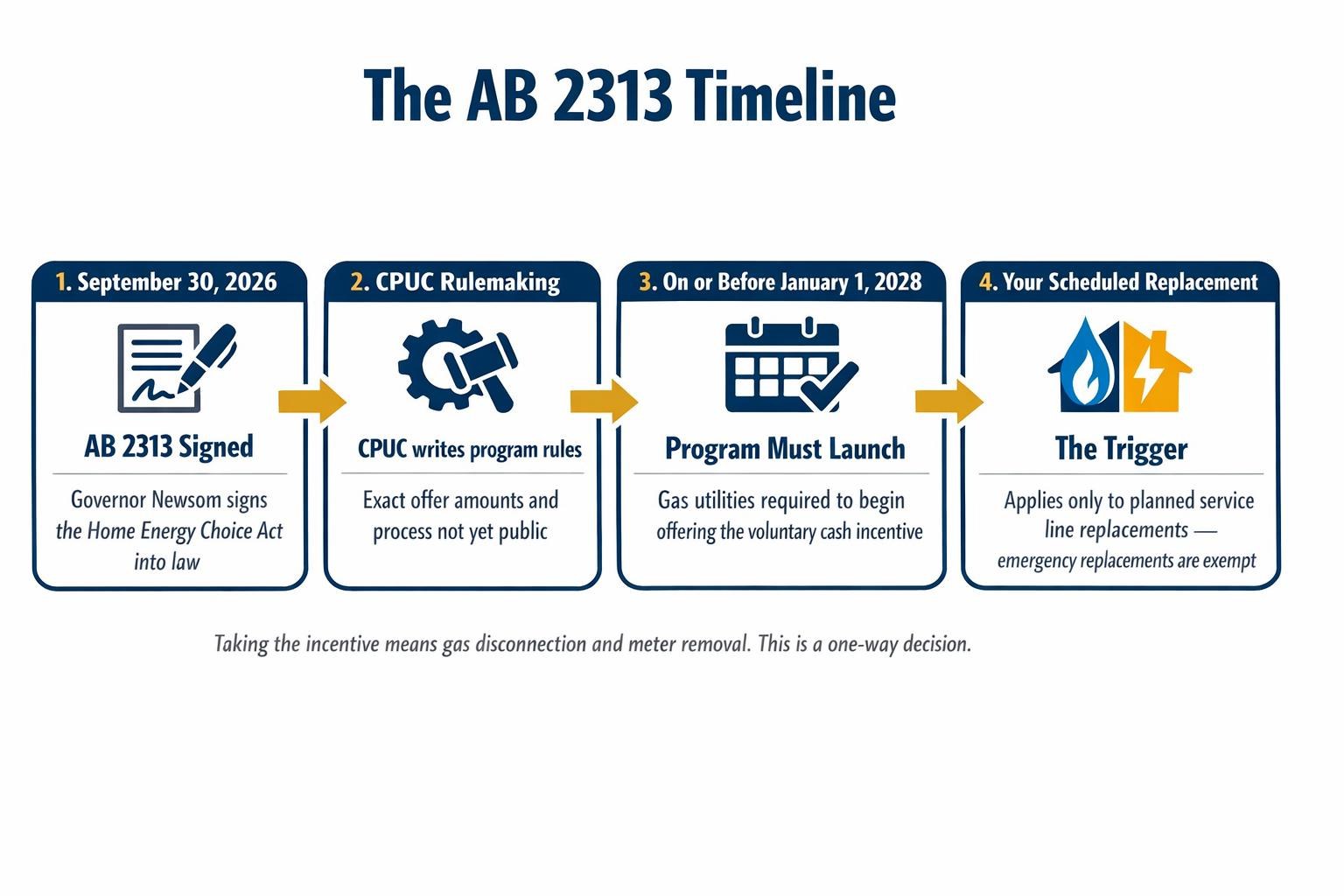
Governor Newsom signed the Home Energy Choice Act (AB 2313) on September 30, 2026. It tells gas utilities to offer homeowners a voluntary cash incentive to go all electric and disconnect gas, instead of taking the new service line.
A lot of the housing around Salinas and the Monterey Peninsula was built decades ago, and the pipe running from the main to the meter is often as old as the house. So this is going to land in a lot of mailboxes here. Below is what the law actually says, what it would mean for your water heater, and the questions to answer before you decide.
What AB 2313 Says, and the Date That Matters
The law was authored by Assemblymember Marc Berman (D-Menlo Park). It directs the California Public Utilities Commission to require gas utilities to offer the choice. Per Earthjustice’s announcement of the signing, when a gas service line, which is the pipe connecting a home to the gas main line, is due for replacement, utilities will offer a voluntary incentive to electrify instead.
The key points for a Salinas homeowner:
- The program must be offered on or before January 1, 2028.
- It applies when your gas service line is scheduled for replacement, not to gas service generally.
- Emergency replacements are exempt. If the line fails and has to be replaced right now, this choice does not apply.
- The incentive is voluntary. Nobody is forcing you off gas.
- Reporting from Grist describes the incentive as potentially worth several thousand dollars toward all electric equipment such as a heat pump, induction range, and heat pump water heater.
The tradeoff is the part people skim past. Taking the money means disconnecting gas and removing the meter. That is not a pause. That is the end of gas at that address unless you go back and pay to have service reestablished later.
So the real question is not whether a few thousand dollars sounds good. It is whether your house is actually set up to run without gas.
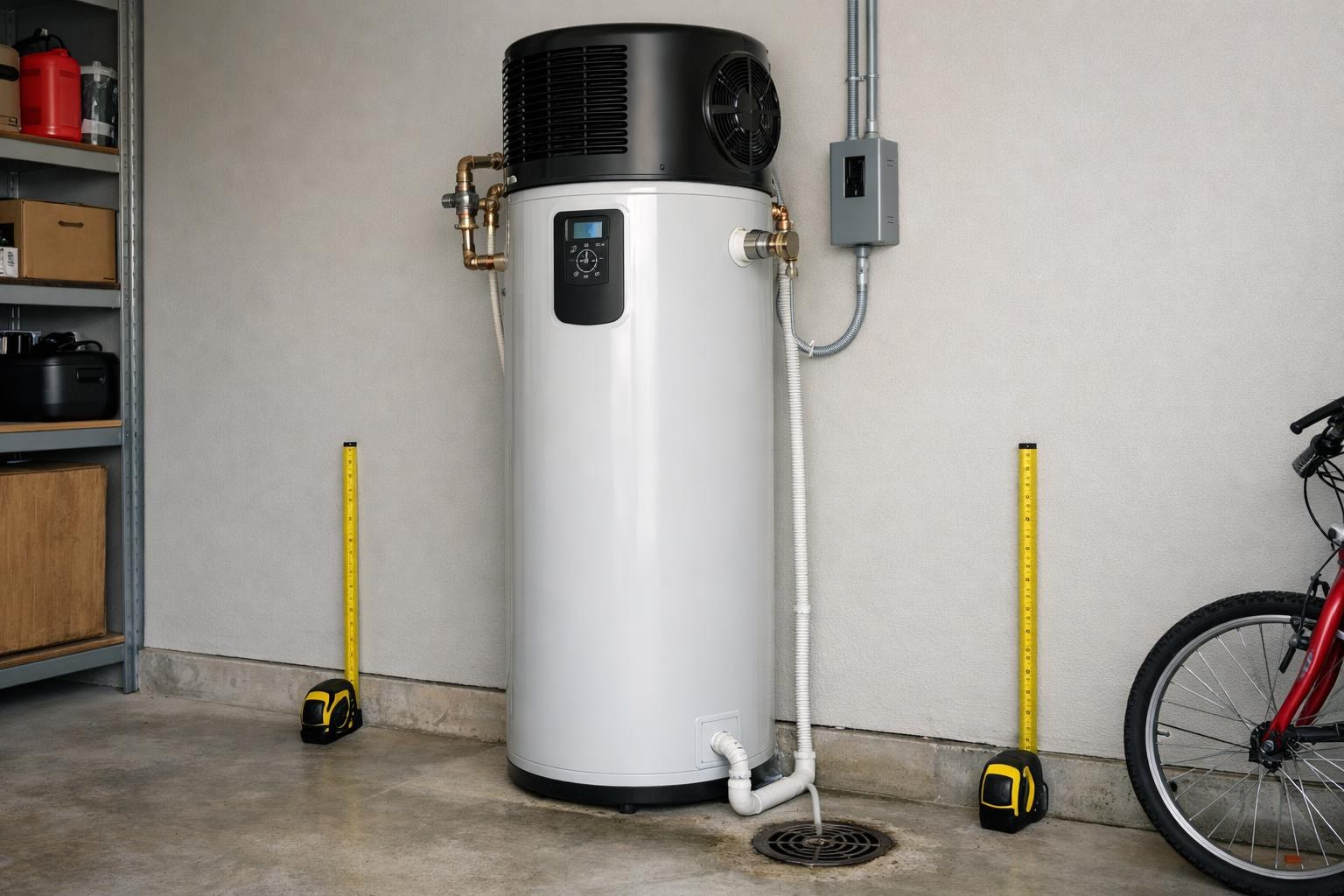
The Water Heater Is the Piece We Get Asked About Most
Of all the gas appliances in a typical Salinas home, the water heater is the one that drives this decision. It runs every day, and it is usually the oldest gas appliance in the garage.
Going all electric here almost always means a heat pump water heater. It is a different animal than a gas tank, and the install details matter:
- Space and air. Heat pump units pull heat out of the surrounding air, so they need room around them. A tight closet that fit a 40 gallon gas tank often will not work.
- Condensate drain. These units produce condensate that has to go somewhere, which means a drain line that a standard gas tank never needed.
- Electrical capacity. Many need a dedicated circuit. That is electrical work, handled by a licensed electrician, and it is a real cost line in the project.
- Recovery time. They heat more slowly than gas. For a full house in Salinas with back to back morning showers, tank size matters more than it used to.
One more local wrinkle: hard water. Mineral content around the Salinas Valley builds sediment fast, which shortens tank life and hurts efficiency no matter what fuel heats the water. Annual flushing is not optional maintenance here, it is the thing that gets you to year ten.
And every water heater changeout in the City of Salinas needs a permit through Community Development, electric or gas. That has not changed, and California is also moving toward remote video inspections for water heater permits, which should shorten the wait for sign off.
Taking the New Gas Line vs. Taking the Incentive
Here is how the two paths compare on the points homeowners actually ask about. Costs move with the size of your home, your panel, and your equipment, so treat these as general context rather than a quote.
| Consideration | Keep gas, take the new service line | Take the incentive and electrify |
|---|---|---|
| Out of pocket at the time | Generally handled by the utility as a system replacement | You receive an incentive, but equipment and install costs are usually higher than the incentive alone |
| Water heater | Gas tank or tankless, swap on failure | Heat pump water heater, with space, drain, and circuit requirements |
| Other gas appliances | Range, dryer, furnace, fireplace all keep working | Every gas appliance must be replaced with an electric version |
| Permits | Permit required for water heater and gas line work | Permit required for water heater work, plus electrical permits |
| Reversibility | Gas stays available | Meter is removed; restoring gas later means a new application and new cost |
| Best fit for | Homes with multiple gas appliances or a tight electrical panel | Homes already mostly electric, or planning a remodel anyway |
The AB 2313 Timeline at a Glance
Four dates and conditions that decide whether this law ever touches your property.
Walk the Whole House Before You Answer
The incentive is tied to the service line, but the consequence is tied to every gas appliance you own. Before you decide, go count them.
Most homes we work in around Salinas, Seaside, and Watsonville have more gas than the owner remembers:
- Water heater
- Furnace
- Range or cooktop
- Clothes dryer
- Fireplace log set
- Outdoor grill stub, pool heater, or patio heater
Each one becomes a replacement project the day that meter comes off. Some of that is plumbing and gas line work. Some of it is HVAC and electrical, handled by other licensed trades.
There is also the pipe already in the walls. If your interior gas piping is old black iron with questionable joints, electrifying ends that problem permanently. If it was recently replaced, you are walking away from a system that still has decades left. These are signs of a gas line problem worth a look either way.
It helps to know how PG&E handles the gas side of things. We have written about what happens after a PG&E gas shutoff in Salinas, and the relight and inspection process is a fair preview of the paperwork involved in any meter change.
What Landlords and Rental Operators Should Think About
Property managers and short term rental operators in the Salinas and Monterey corridor have a different math problem. You are not choosing based on your own shower schedule.
Three things to weigh:
- Downtime. Swapping a gas tank for a heat pump unit is a bigger job than a like for like changeout. Plan for more than a morning.
- Documentation. Permits and final inspection records follow the property. If you sell, a buyer’s inspector will ask.
- Guest expectations. A lot of short term rental guests expect a gas range. That is a small thing until it shows up in a review.
If you are already planning an ADU or a remodel that touches the plumbing, lining that work up with an electrification decision is the cheapest way to do both. Doing them two years apart means opening the same walls twice.
Frequently Asked Questions About the California Electrify Incentive
When can I actually take this incentive?
The program must be offered on or before January 1, 2028. The law was signed September 30, 2026, and the CPUC still has to write the rules, so the exact offer amounts and process are not public yet. If your service line is scheduled before then, the choice may not be available to you.
Does this apply if my gas line breaks and needs an emergency replacement?
No. Emergency replacements are exempt. If the line fails and the utility has to replace it right away, you get the new line, not the choice.
How much will a heat pump water heater cost me after the incentive?
It depends on the unit, where it goes, your panel capacity, and whether a condensate drain has to be run. The incentive is described as potentially worth several thousand dollars, but a full install often runs higher than that once electrical work is included. For reference, a standard tank water heater replacement in our service area typically falls in the range of about $1,895 to $2,500 installed, and a heat pump install is usually a bigger project than that. We give an accurate number after someone looks at the space, not over the phone.
Can I get gas back later if I change my mind?
Practically, no, not without real cost. The incentive requires gas disconnection and meter removal. Reestablishing service later means a new application with the utility and new charges. Treat it as a one way door.
Do I still need a permit if I switch from gas to electric water heating?
Yes. A water heater changeout in Salinas needs a residential plumbing replacement permit through City of Salinas Community Development, and an electric unit will usually need an electrical permit as well. We file and manage the plumbing permit and inspection on the jobs we do.
Thinking Through a Water Heater Decision in Salinas?
If you have a notice about your gas service line, or you are just weighing what an all electric water heater would mean for your garage, it helps to have someone look at the actual space before you commit. Alvarez Plumbing has been working on water heaters and gas lines in Salinas and across the Monterey Bay Area since 1988, and we handle City of Salinas permitting in house. We are reachable at (831) 757-5465, and 24/7 when something cannot wait until morning.
