
Direct Answer: A leaking recirculation pump may be the pump itself, a bypass valve, a check valve, or a loose fitting, a licensed plumber should diagnose the source before any repair quote is given.
You noticed water around the base of your water heater, or maybe directly on the pump sitting on top of it, and now you’re not sure what you’re dealing with. That moment of uncertainty is exactly what makes recirculation pump leaks frustrating: the source isn’t always obvious, and the repair cost can range from minor to significant depending on where the problem actually is.
This is a pattern we see regularly from homeowners and condo owners across Salinas, Seaside, and the Monterey Peninsula. One homeowner in Salinas submitted a service request describing a leaking recirculation pump at her condo and noted she simply needed an estimate before committing to anything. That hesitation is completely reasonable, and it’s why understanding the likely failure points before you call a plumber can help you describe the problem accurately and set realistic expectations.
This article walks through what a recirculation pump actually does, the most common places it fails, how Salinas hard water factors into the timeline, and how to think about whether the repair is worth it given the age of your system.
What a Recirculation Pump Does, and Why It Matters When It Fails
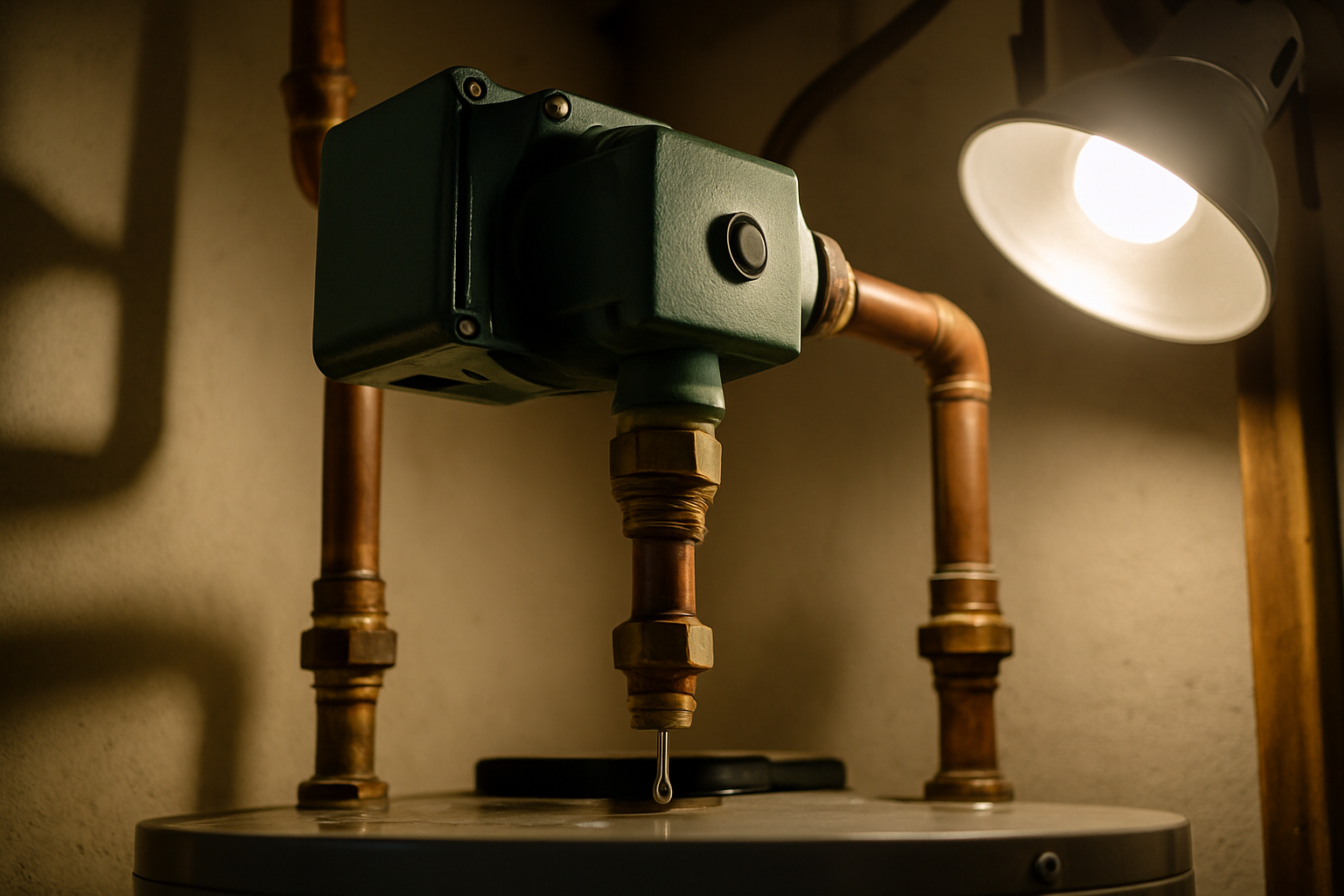
A recirculation pump keeps hot water circulating continuously through your plumbing loop so that hot water arrives at the tap almost immediately instead of after a 30-second wait. The pump sits on or very near the water heater, typically on top of the tank, and runs on a timer or a sensor, depending on the system.
These systems are common in Salinas condos, newer single-family homes in areas like South Salinas, and rental units where long pipe runs make the wait for hot water genuinely annoying for tenants. If you manage rental property, a failed recirculation pump will generate tenant complaints quickly, the wait time at the faucet becomes noticeably longer, and in a unit where residents have come to expect instant hot water, that gap gets reported fast.
When the pump starts leaking, the system’s value flips from convenience to liability. Water dripping near your water heater, even slowly, can damage flooring, drywall, and adjacent cabinetry. The hidden damage that happens before you call an emergency plumber is often far more expensive than the plumbing repair itself, which is why a slow drip at the pump deserves attention sooner rather than later.
Where the Leak Is Actually Coming From, The Four Most Common Failure Points
This is the part that matters most before you call. A leaking recirculation pump is not always a pump replacement, the leak can originate from several different components, each with a different repair cost and complexity. Knowing the difference helps you describe what you’re seeing and understand the estimate you receive.
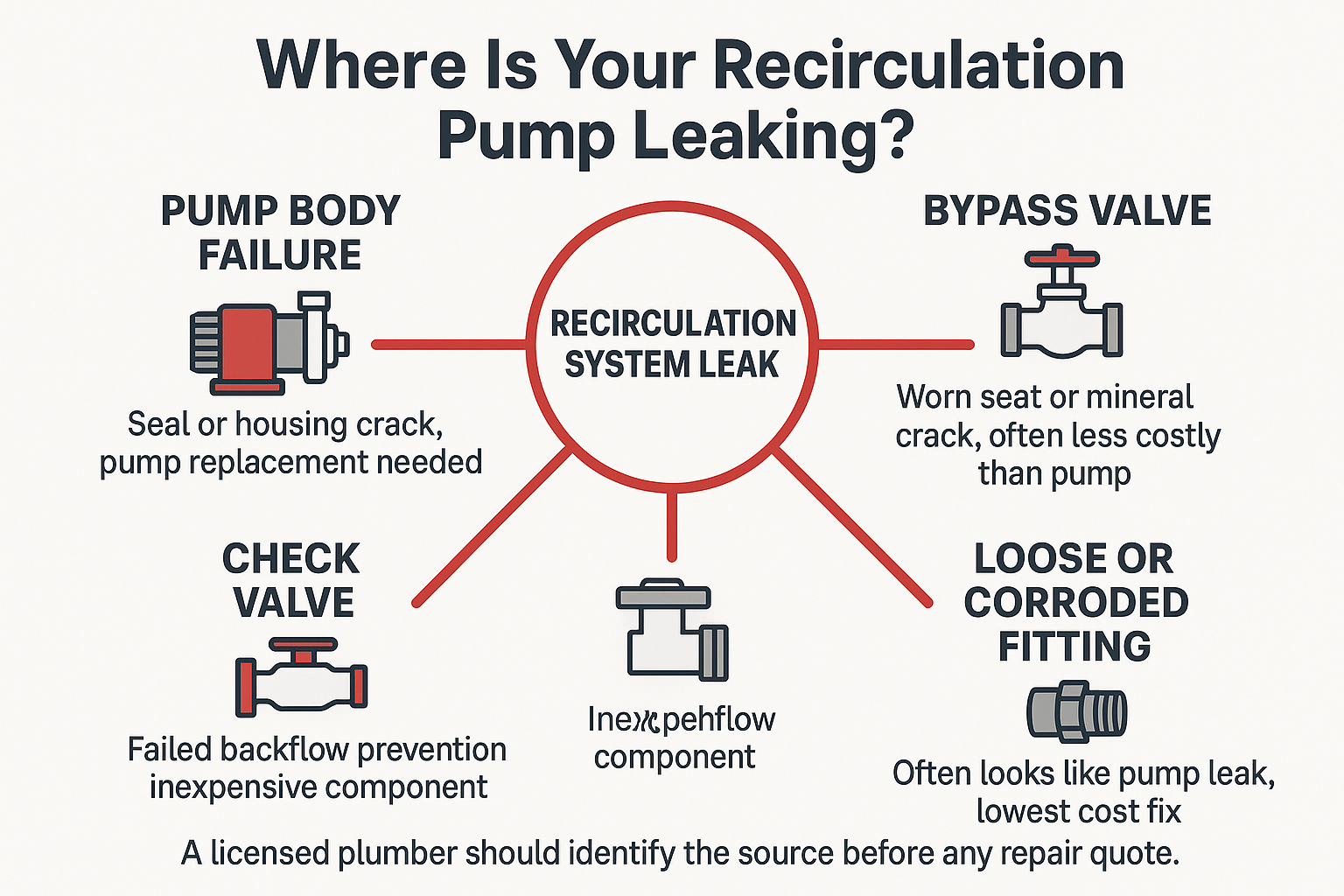
The four most common sources:
- The pump body itself, A crack or seal failure inside the pump housing means the pump motor needs to be replaced. This is the most expensive of the four scenarios.
- The bypass valve, Many recirculation setups use a thermostatic bypass valve mounted near the pump. When the internal seat wears out or the valve body cracks from mineral buildup, it drips at the valve connection. This is often less costly than a full pump replacement.
- The check valve, A failed check valve can allow water to push backward through the system and leak at connection points. Check valves are relatively inexpensive components, and replacing one is a much smaller job than swapping the pump.
- Loose or corroded fittings, Sometimes the leak isn’t in any valve or pump at all. A fitting that has worked loose or a threaded connection that has corroded can drip in a way that looks like the pump is failing when it isn’t.
A licensed plumber should trace the leak to its source before any quote is finalized. The repair scope changes significantly based on where the leak originates, and an estimate given without that diagnosis is not a reliable number.
Recirculation Pump Leak: What You Might Be Dealing With
This overview shows the four most common failure points in a recirculation system and what each one typically means for the repair.
How Salinas Hard Water Factors Into the Timeline
Salinas sits in one of the harder water zones in California. California Water Service data reflects hardness levels averaging around 271 ppm in this service area, well into the range where mineral scale builds up quickly inside valves, pump housings, and tank components.
That matters here because hard water accelerates wear on every part of a recirculation system. The bypass valve seat, the check valve internals, and the pump’s seals all take on mineral deposits over time, and those deposits create the kind of irregular surface that causes leaks even before a component has reached its rated lifespan.
If your water heater is seven years old or more, a failing pump or valve is worth treating as a system signal, not just an isolated component failure. We cover the real relationship between hard water and water heater wear in more detail at Hard Water Is Quietly Shortening the Life of Your Water Heater. And if you’re already wondering whether repair or replacement makes more sense at this stage of your heater’s life, Repair or Replace Your Water Heater? A Realistic Way to Think It Through walks through that decision with the kind of local context that actually applies here.
Is the Repair Worth It? A Quick Reference by System Age
Age is one of the most important factors in deciding whether to repair a recirculation component or start thinking about the broader system. Here’s a general reference, keep in mind these are guidelines, not rules, and a licensed plumber’s on-site assessment should always take priority.
| Water Heater Age | Likely Recommendation | Notes |
|---|---|---|
| Under 5 years | Repair the component | System is young, isolate the failure point and fix it |
| 5-7 years | Repair, but assess the full system | Hard water wear may be showing elsewhere, ask for a full look |
| 7-10 years | Weigh repair against replacement | Pump repair on an aging tank may not be the best long-term spend |
| 10+ years | Replacement is likely the better value | Most tank water heaters in Salinas show significant wear by this point |
What Running a Recirculation System Costs Over Time, and Whether Yours Is Worth Keeping
A recirculation pump draws a small but continuous amount of electricity. A typical residential pump running on a timer costs somewhere in the range of $3 to $8 per month in electricity, depending on run hours and local rates, though actual costs vary and your utility bill is the most accurate source for your situation.
Maintenance is minimal when the system is working correctly, but in Salinas the hard water reality means valves and pump components benefit from inspection every few years. A plumber who’s already at your home for a water heater service can check the pump and valve fittings in the same visit.
The convenience benefit, no waiting for hot water, is real, particularly in homes with long pipe runs or in rental units where tenant satisfaction matters. Whether the system is worth preserving after a leak depends on the repair cost, the age of the heater underneath it, and whether the components are in good enough shape to last another several years. That’s a conversation best had with a licensed plumber who has actually seen the system, not one based on a phone estimate alone.
For context on what California requires before touching water heater system components: any work on the water heater itself, including recirculation system components directly tied to it, falls under the licensed contractor requirement in California. This is not a system a homeowner should take apart and reassemble on their own, and in Salinas, replacement work on the water heater also triggers a permit requirement. We explain how that process works at Yes, You Need a Permit to Replace Your Water Heater in Salinas.
A Realistic Timeline for Property Managers and Landlords
If you manage a rental unit in Salinas or along the Monterey corridor, a leaking recirculation pump creates a specific coordination problem. The repair is not typically an emergency in the sense of active flooding, but it does affect tenant comfort, and that means it shouldn’t sit on a callback list for a week.
For a non-emergency repair like this, a realistic timeline after initial contact looks like:
- Day 1: Confirm the service request and get a plumber to assess within 1-2 business days
- Day 2-3: Diagnosis visit to identify the failure point and provide a repair scope
- Day 3-5: Parts sourced and repair completed (pump availability varies, some models require ordering)
The practical challenge is coordinating access between the tenant and the plumber. Giving tenants at least 24 hours’ notice before a scheduled repair visit is required under California law for non-emergency entry. Building that into your timeline from the start prevents the back-and-forth that drags a simple repair into a two-week ordeal.
If the leak worsens or water is actively pooling, the timeline compresses, what counts as a plumbing emergency and what can wait is a useful reference for making that call quickly.
Frequently Asked Questions About Recirculation Pump Leaks
Can I just turn off the recirculation pump and use hot water normally while I wait for a repair?
In most cases, yes, switching the pump off at the timer or disconnect will stop the leak from worsening while you schedule service. You’ll notice a longer wait for hot water at the tap, but the water heater itself will still function. If the leak is coming from a fitting directly on the water heater rather than the pump, that’s a different situation and worth a call before you wait.
How much does it cost to repair a leaking recirculation pump in Salinas?
It depends heavily on which component is actually failing. A loose fitting repair will cost far less than a full pump replacement. Many Salinas homeowners see somewhere in the range of $150 to $500 for component-level repairs, while a full pump replacement can run higher depending on the unit and access. Get a diagnosis first, the estimate changes significantly based on what the plumber finds.
My water heater is about 8 years old and the pump is leaking. Should I just replace the whole system?
That’s exactly the right question to ask, and the honest answer is: it depends on the condition of the tank itself. In Salinas, where hard water at around 271 ppm accelerates sediment buildup, an 8-year-old tank may be showing wear that makes a pump repair a short-term fix on a system that’s heading toward replacement anyway. A plumber who inspects both the pump and the tank can give you a clearer picture of whether the repair is a good investment or just delaying the inevitable.
Is a recirculation pump leak covered by homeowner’s insurance?
Generally, insurance covers water damage caused by a sudden and unexpected leak, but not the cost of the plumbing repair itself. Slow leaks that have been building over time are typically excluded. Check your specific policy and document the issue as soon as you notice it.
Do I need a permit for recirculation pump repair in Salinas?
A straightforward pump or valve repair typically does not trigger a permit requirement on its own. However, if the repair involves replacing the water heater itself, a City of Salinas permit is required. We handle all City of Salinas permitting in-house, so that process doesn’t fall on the homeowner.
Ready to Get a Diagnosis Before Committing to Anything?
If your recirculation pump is leaking and you want to know what you’re actually dealing with before you agree to any repair, that’s a reasonable place to start. Alvarez Plumbing has been serving Salinas and the Monterey Bay Area since 1988, and we handle water heater system repairs, diagnostics, and City of Salinas permitting all in-house. Give us a call at (831) 757-5465, we’re available 24 hours a day, 7 days a week, or schedule a service visit at alvarezplumbingsalinas.com.