Direct Answer: A plumbing emergency is anything that risks immediate water damage, health hazards, or loss of basic function. Burst pipes, sewage backups, and gas leaks can’t wait. A slow drain or dripping faucet can.
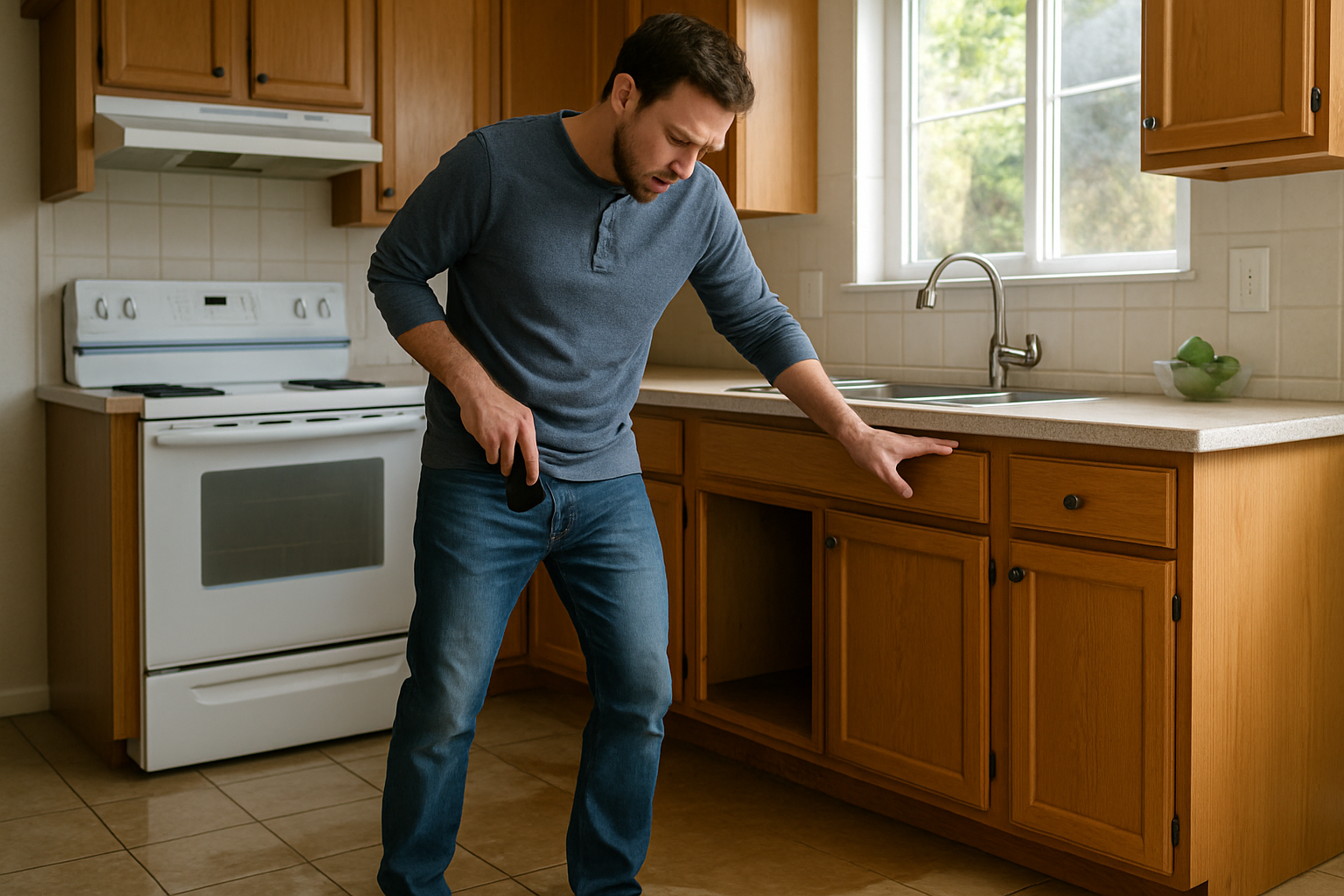
It’s 11pm on a Tuesday and water is running across your kitchen floor. Is this a call-right-now situation — or can it wait until morning? That’s the question most Salinas homeowners freeze on, and making the wrong call in either direction costs money.
Waiting too long on a real emergency can mean thousands of dollars in water damage to drywall, flooring, and cabinets. Calling for 24-hour service on something that could have waited until 8am means you’re paying emergency rates when you didn’t need to.
We’ve been answering calls like this in Salinas and the Monterey Bay Area since 1988. Here’s the honest breakdown — what’s a true plumbing emergency, what can reasonably wait, and how to tell the difference when you’re stressed and standing in water at midnight.
What Makes Something a Plumbing Emergency
A plumbing emergency has one of three things going on: active water damage, a health or safety risk, or a complete loss of basic function. If any of those boxes are checked, it’s a same-day call — or a 2am call if needed.
Active water damage means water is going somewhere it shouldn’t, right now, and it won’t stop on its own. A burst pipe under your house in Salinas’s older housing stock — a lot of which dates back to the 1970s and earlier — can dump 50 to 100 gallons per hour into a crawlspace before you even notice.
Health and safety risks include sewage backing up into your home, gas smells near water heaters or gas lines, and water contamination from a backflow event. These aren’t “inconvenient” — they’re hazardous.
Loss of basic function means your only toilet isn’t working, you have no running water at all, or your water heater failed in the middle of winter when overnight temps in the Salinas Valley drop into the low 40s.
If any of these fit your situation, don’t wait. Call a licensed plumber immediately.
True Emergencies: Don’t Wait on These
Some situations look scary but aren’t urgent. Others look minor and can spiral fast. Here are the scenarios that genuinely cannot wait:
- Burst or ruptured pipe — water actively flowing where it shouldn’t, and you can’t stop it at the shutoff
- Sewage backup into the home — any drain backing up with sewage, especially tubs and floor drains
- No water at all — complete loss of water to the whole house
- Gas line leak near plumbing — gas smell near a water heater, boiler, or gas-fed appliance
- Water heater flooding — tank failure with water pooling around the base
- Toilet overflow that won’t stop — especially in a single-bathroom home
- Visible water damage progressing — ceiling bubbling, walls soaking, water running through light fixtures
For any of these, shut off your main water supply immediately if you can do so safely. Then call a licensed plumber. We cover how to tell if a plumbing problem needs immediate help in more detail if you want a deeper breakdown.
Don’t wait to see if it gets better. With active water damage in a Salinas home, every hour matters.
Problems That Can Wait — But Still Need Attention
Not every plumbing problem is a middle-of-the-night call. Some things are genuinely annoying but won’t cause damage if you schedule a repair within the next day or two.
These situations can usually wait for a regular business-hours appointment:
- Slow drain in one sink — inconvenient, not urgent, unless it’s getting worse fast
- Dripping faucet — wastes water over time, but not an emergency
- Running toilet — can waste 200 gallons per day, so schedule it soon, but it’s not a crisis
- Low water pressure in one fixture — worth checking, not urgent
- Water heater making noise — popping or rumbling usually means sediment buildup; get it looked at within the week
- Minor leak under a sink with a bucket catching it — manageable short-term, but don’t let it sit more than a day
The key word here is stable. If the problem is stable — not getting worse, not causing damage, not a health risk — you can wait for a scheduled appointment during normal hours.
But “can wait” doesn’t mean “ignore it.” A slow drain today can become a full sewer line blockage in two weeks, especially in homes with older clay or cast iron pipes common in Salinas’s pre-1980s neighborhoods.
Plumbing Emergency vs. Can It Wait — Quick Reference
Use this table as a fast gut-check when something goes wrong. When in doubt, call — a 60-second phone call with a licensed plumber costs nothing and can save you from a costly mistake.
| Problem | Emergency? | Why |
|---|---|---|
| Burst pipe with active flow | Yes — call now | Water damage compounds by the hour |
| Sewage backing into drains | Yes — call now | Health hazard, potential sewer line failure |
| Gas smell near water heater | Yes — call now | Safety risk; leave the building first |
| Water heater flooding | Yes — call now | Tank failure, active water damage |
| No water to the whole house | Yes — call now | Basic function loss |
| Running toilet | No — schedule soon | Wasteful but not damaging immediately |
| Dripping faucet | No — schedule soon | Minor waste, no damage risk |
| Slow single drain | No — schedule soon | Inconvenient, not dangerous |
| Water heater making noise | No — schedule this week | Likely sediment buildup, not failure yet |
| Low pressure in one faucet | No — schedule when convenient | Localized, not a system failure |
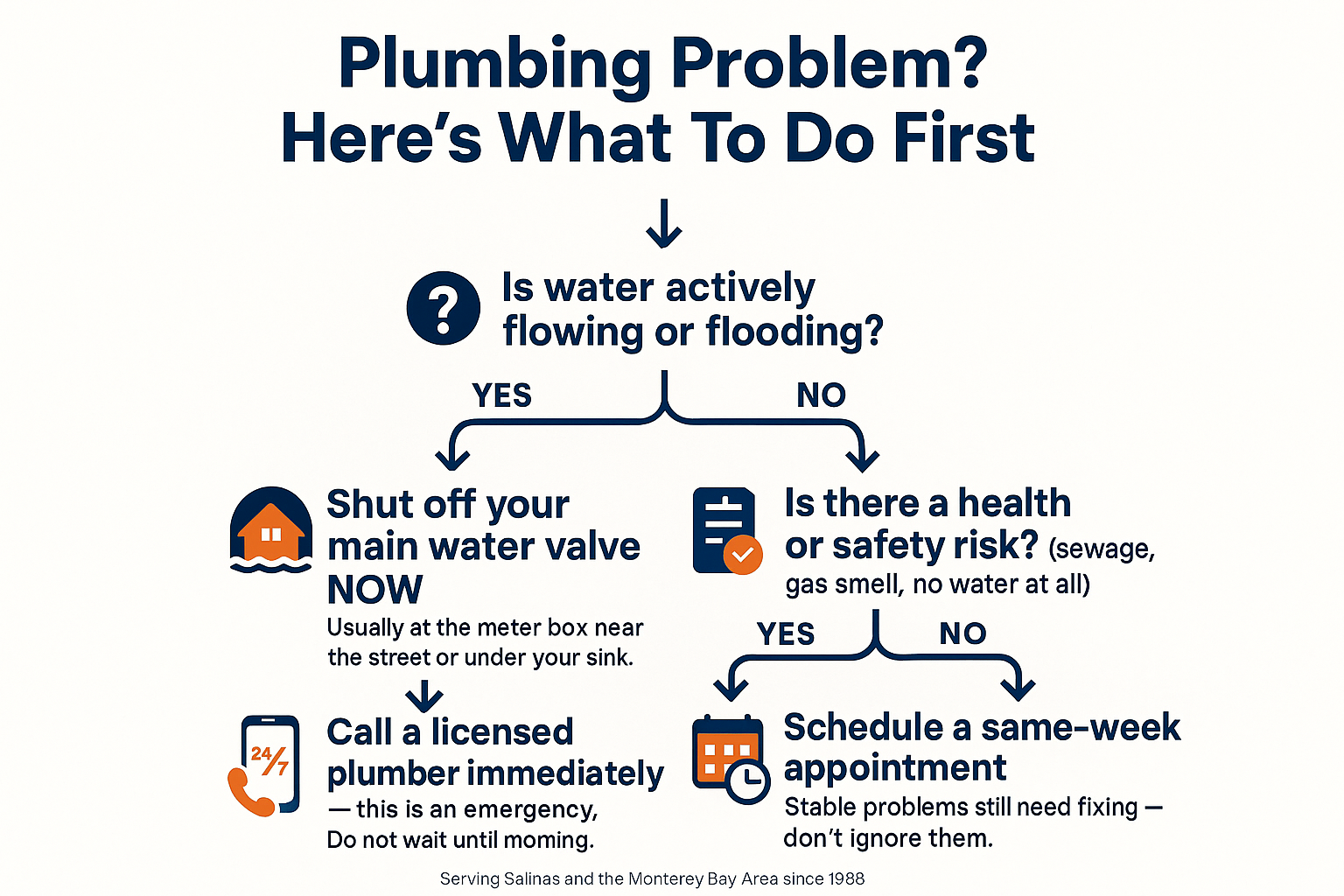
The Emergency Decision Flow: What to Do in the First 5 Minutes
When something goes wrong with your plumbing, the first five minutes matter most. This flow walks you through the right steps — fast.
The Gray Zone: Problems That Can Turn Into Emergencies Fast
Some plumbing situations start as a “can wait” and become a full emergency within 24 to 48 hours. These are the ones that fool people.
Slow sewer drains throughout the house — not just one sink, but multiple fixtures draining slowly at the same time — is often the early warning of a main line blockage. In Salinas, homes built before 1985 frequently have older clay or Orangeburg sewer lines that are already compromised. One good rain during our wet season, or one bad flush, can push a slow drain into a full emergency drain backup overnight.
A water heater that’s older than 10 years and starting to show rust-colored water or a small puddle at the base is not a “can wait” situation for more than a day or two. Water heaters don’t usually fail gradually — they fail suddenly. And a failed 50-gallon tank in a utility closet or garage can cause serious water damage before anyone notices.
Similarly, a leak under a slab often starts as a damp spot or slightly warm floor. Left alone, slab leaks can undermine foundations and go completely undetected for months. If you notice warm or wet patches on your floors without explanation, that warrants a call sooner rather than later — video inspection tools can confirm it quickly. New diagnostic tools have made slab leak detection far faster and less invasive than it used to be.
What to Do While You Wait for a Plumber
Whether you’re waiting an hour for an emergency call or a day for a scheduled appointment, there are steps you can take right now to limit damage and make the repair easier.
If it’s an active leak or flood:
– Shut off the main water supply — the shutoff is typically at the street-side meter box or at the main valve inside the house
– Turn off the water heater if you’re shutting off main water (this protects the tank from running dry)
– Move rugs, furniture, and valuables out of the wet area
– Take photos of the damage before any cleanup — important for insurance claims
– Open cabinet doors under sinks to help things dry out faster
If it’s a sewer backup:
– Stop using all drains and toilets until a plumber clears the line
– Do not use drain chemicals — they won’t fix a sewer line blockage and can damage pipes further
– Keep people and pets away from the affected area
If you smell gas near a water heater or gas line:
– Leave the building immediately — do not flip light switches or use any electronics
– Call your gas company (SoCalGas or PG&E depending on your area) first, then a licensed plumber
– Do not re-enter until the gas company has cleared the building
Knowing your main shutoff location before an emergency happens is one of the most practical things a Salinas homeowner can do. If you don’t know where yours is, find out today.
How Emergency Plumbing Pricing Works in Salinas
One reason people hesitate to call at night is worry about the bill. That’s fair — after-hours plumbing does cost more. But understanding what drives the price helps you make a smarter call.
Most licensed plumbers in the Salinas and Monterey area charge an after-hours service call fee that typically ranges from $150 to $300 just to show up, on top of labor. Standard daytime service calls usually run $75 to $150 for the call itself.
Hourly labor rates in this area generally run $100 to $175 per hour during regular hours. After-hours rates typically run 1.5x to 2x that, depending on the contractor.
But here’s the real math: if a slow leak soaks your subfloor overnight and you need flooring and drywall repair on top of the plumbing fix, you’re easily looking at $3,000 to $8,000 in remediation — compared to a $400 to $600 emergency call. The after-hours premium almost always makes sense for a true emergency.
For problems that genuinely can wait, scheduling a daytime appointment is the smarter move. A good licensed plumber will tell you honestly which category your problem falls into — and that answer should never feel like an upsell.
Frequently Asked Questions About Plumbing Emergencies
Is a clogged toilet a plumbing emergency?
It depends. If it’s one toilet in a home with multiple bathrooms and a plunger isn’t making things worse, it can usually wait until morning. But if it’s your only toilet, or if the toilet is overflowing and won’t stop, that’s an emergency call.
What should I do if my water heater is leaking?
A leaking water heater warrants a same-day call, not a “schedule next week” situation. Turn off the cold water supply to the tank and switch the unit to pilot mode or off while you wait. A small drip at a fitting is different from water pooling at the base — the latter usually means the tank itself has failed. You can read more about water heater problems and warning signs to know what you’re dealing with.
Can a dripping faucet cause real damage if I ignore it?
A dripping faucet won’t flood your house, but it wastes more water than most people realize — a faucet dripping once per second wastes over 3,000 gallons per year. In Monterey County, where water rates are among the highest in California, that shows up on your bill. Get it fixed, just not at 2am.
How do I know if slow drains are a sign of a bigger problem?
One slow drain is usually a localized clog — hair, grease, or buildup near the fixture. Multiple slow drains throughout the house at the same time point to a main sewer line issue, which is more serious. If you’re in a Salinas home built before 1980, aging sewer pipes make this worth checking sooner rather than later.
Is it safe to use chemical drain cleaners while waiting for a plumber?
We don’t recommend it. Chemical drain cleaners can damage older pipes, particularly the galvanized steel and clay lines common in Salinas’s aging housing stock. They also create a hazardous situation for the plumber who shows up afterward. A drain snake or hot water flush is a safer short-term option while you wait.
Not Sure If Your Problem Can Wait?
When you’re unsure, the fastest answer is a quick call to a licensed plumber who knows the area. Alvarez Plumbing has been serving Salinas and the Monterey Bay Area since 1988, and we answer 24 hours a day, every day — not an answering service, but an actual plumber. Call us at (831) 757-5465 any time, or schedule a visit at alvarezplumbingsalinas.com.