Direct Answer: Most plumbing problems in the Monterey Bay Area follow predictable patterns tied to local water quality, aging pipes, and the region’s climate. Your situation is probably one we’ve seen dozens of times.
When a drain backs up or a water heater stops working at 10 p.m., it feels like a crisis specific to you and your house. But after more than 35 years of plumbing work across Salinas, Monterey, and the surrounding valley, we can tell you honestly — most of what we see follows a short list of patterns.
The Monterey Bay Area has a set of conditions that push homes toward the same problems over and over: hard water from the Salinas Valley aquifer, housing stock built largely between the 1940s and 1980s, and a coastal climate that’s not extreme enough to make pipe issues obvious until they’re already serious.
If you’re dealing with a plumbing issue right now and wondering what’s actually going on — and what it might cost you — this guide walks through the two problems we see most often and what the decision-making process actually looks like.
Why Salinas and Monterey Homes Keep Having the Same Problems
Most plumbing problems aren’t random. They’re the result of the same materials meeting the same water conditions over the same number of decades.
A huge portion of homes in Salinas and the Monterey Peninsula were built between 1945 and 1985. That means the original plumbing — whether galvanized steel, copper, or early PVC — is anywhere from 40 to 80 years old. At that age, pipes don’t fail because of bad luck. They fail because that’s what old pipes do.
The other constant here is water quality. The Salinas Valley draws from groundwater sources that run hard — meaning high in dissolved calcium and magnesium. Hard water accelerates scale buildup inside pipes and water heaters, shortens fixture lifespans, and makes drain lines more prone to stubborn blockages. If you’ve ever noticed white chalky residue around your faucet heads or shower, that’s the same stuff building up where you can’t see it.
These two factors — aging infrastructure and hard water — explain why we see the same calls come in from the same neighborhoods, year after year. It’s not bad luck on the homeowner’s part. It’s just the math of older homes in this specific region.
If you’re new to the area, Moving to Monterey? Here’s What to Know About Local Plumbing covers a lot of this context in detail.
The Water Heater Pattern: What’s Actually Happening and What It Costs
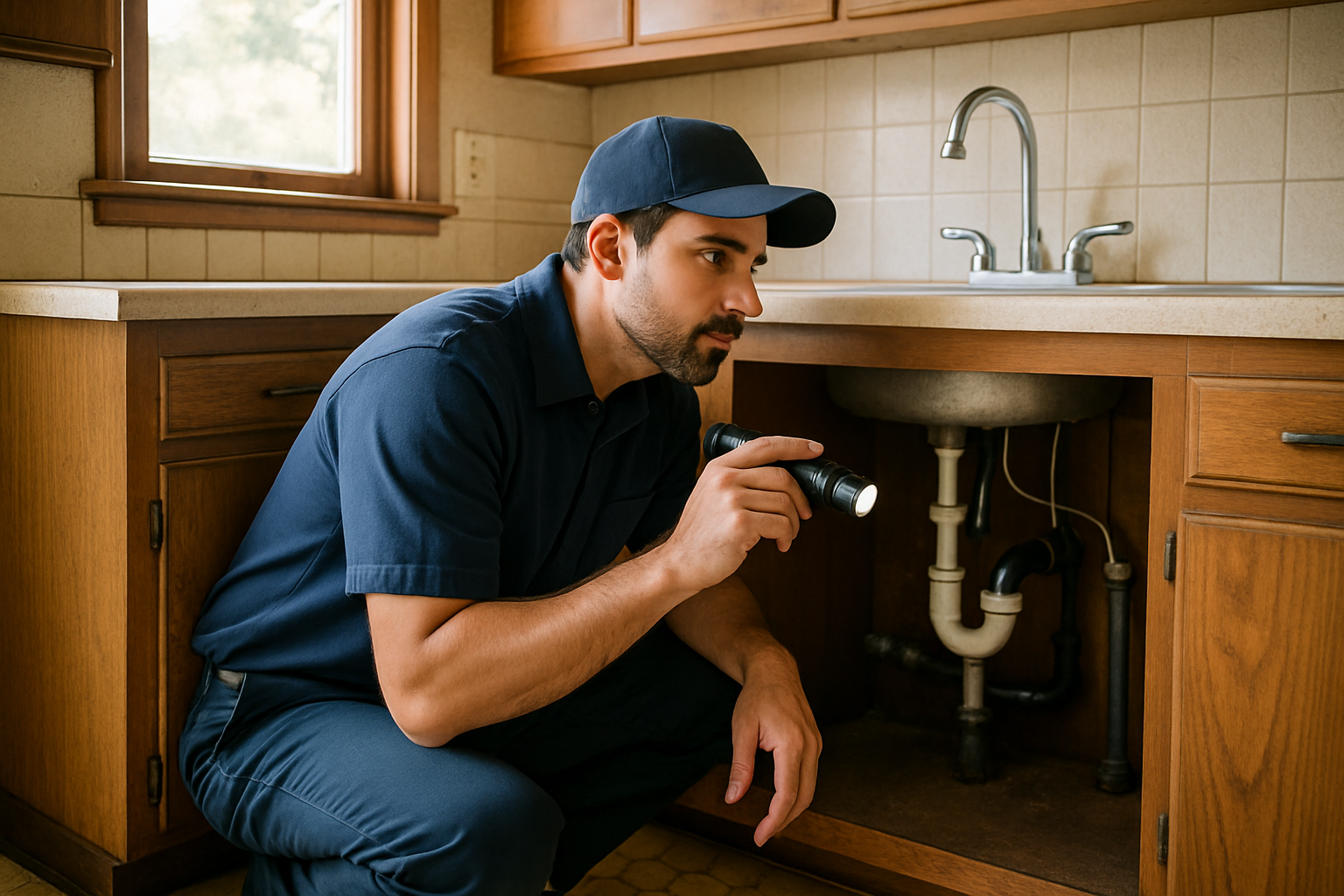
Water heater failures are the single most common call we get across the region. And the pattern is almost always the same: the homeowner has had no hot water issues, then suddenly the unit either stops heating, starts leaking from the base, or both.
In most cases, this isn’t a surprise failure. It’s a predictable end-of-life event. Tank-style water heaters in the Monterey Bay Area typically last 8 to 12 years — often on the shorter end of that range because of hard water sediment buildup. If your unit is past the 10-year mark, what you’re dealing with is almost certainly a replacement, not a repair.
Here’s what the cost breakdown looks like for a standard residential tank replacement in the Salinas area in 2025:
- 40-gallon natural gas unit: $900–$1,300 installed
- 50-gallon natural gas unit: $1,100–$1,600 installed
- Tankless gas unit: $2,500–$4,500 installed, depending on venting requirements
- Permit from the City of Salinas: required by California law for any new water heater installation; typically adds $150–$250 to the project
The permit piece matters. California’s 2025 Building Energy Efficiency Standards require specific equipment ratings, and the City of Salinas requires a residential plumbing replacement permit for every water heater installation. A contractor who skips the permit is putting you at risk — especially if you ever sell the home or file an insurance claim.
If your water heater is making rumbling sounds or running out of hot water faster than it used to, Your Water Heater Is Telling You Something — Are You Listening? walks through what those signs actually mean.
Water Heater Replacement Cost Ranges — Salinas, CA (2025)
These ranges reflect typical installed costs in the Salinas and Monterey area, including labor and the required City of Salinas permit. Tankless pricing varies based on venting configuration and gas line capacity.
| Unit Type | Estimated Installed Cost | Typical Lifespan in This Region |
|---|---|---|
| 40-gal natural gas tank | $900 – $1,300 | 8–12 years |
| 50-gal natural gas tank | $1,100 – $1,600 | 8–12 years |
| Electric tank (40–50 gal) | $950 – $1,450 | 9–13 years |
| Tankless gas (whole-home) | $2,500 – $4,500 | 15–20 years |
| City of Salinas permit | $150 – $250 | Required by CA law |
The Drain Pattern: When a Slow Drain Is Telling You More Than You Think
The second most predictable call we get starts with a slow drain. Usually a homeowner has been dealing with it for a few weeks, maybe used a store-bought drain cleaner, and is now calling because it’s completely backed up.
Slow drains in older Salinas and Monterey homes are rarely just grease or hair. In homes built before 1980, the most common culprit is root intrusion or scale-narrowed sewer lines — sometimes both. Clay and cast-iron sewer lines from that era crack over time, and tree roots find those cracks. Once roots are inside, the drain doesn’t stay slow for long before it stops working entirely.
A standard drain cleaning with a mechanical snake can run $150–$350 for a basic blockage. But if the real issue is roots or collapsed pipe, snaking only buys a few weeks of relief. The problem comes right back.
The more informative step — and the one that saves money long-term — is a video camera pipe inspection. A camera run through the line shows exactly what’s in there and where. It typically costs $200–$450 and is often recommended before any hydro jetting or sewer repair so you’re not guessing. How new diagnostic tools are changing the way plumbers find pipe damage explains how camera inspections work in more detail.
For drains that are repeatedly clogging or have heavy grease or root buildup, hydro jetting — high-pressure water clearing at 3,000–4,000 PSI — is often the only thing that actually solves it. A hydro jet service typically runs $400–$800 depending on line length and access.
If you’ve already had a slow drain turn into a full backup and water damage, The Hidden Damage That Happens Before You Call an Emergency Plumber is worth reading.
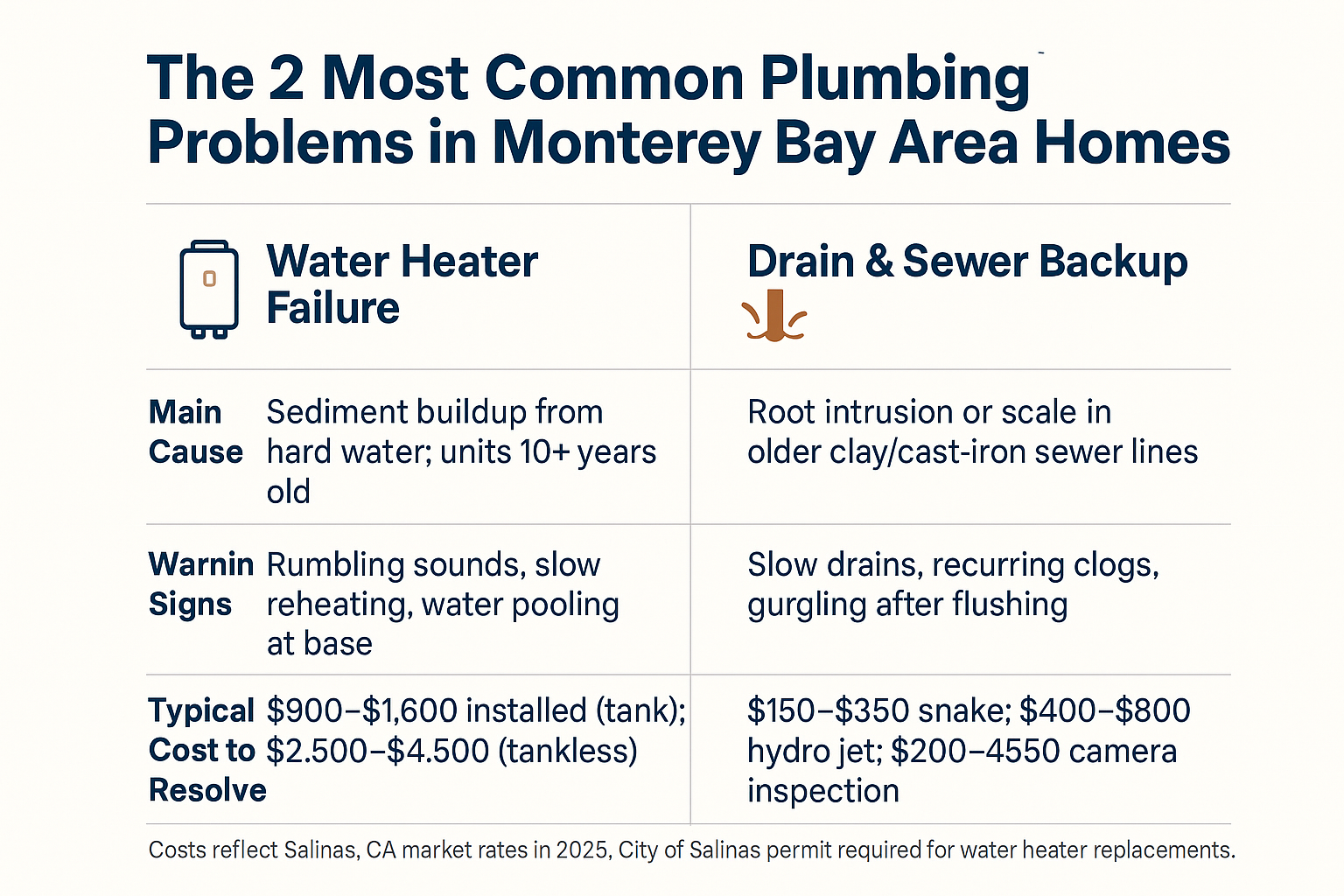
The Two Most Common Plumbing Problems in Monterey Bay Area Homes
This infographic breaks down the two patterns we see most often — water heater failure and drain issues — including what causes them, what the warning signs look like, and what a realistic resolution costs.
Frequently Asked Questions About Monterey Area Plumbing Problems
How do I know if my slow drain is a simple clog or something bigger?
If one drain is slow, it’s usually a localized clog — hair, grease, or soap buildup near the drain opening. But if multiple drains in the house are slow, or if you hear gurgling in one drain when you flush a toilet on the other side of the house, that points to a main sewer line issue. That distinction matters a lot in terms of what it costs to fix and how urgently you need to deal with it. A camera inspection removes the guesswork entirely.
Can I skip the permit for a water heater replacement to save money?
We don’t recommend it, and we won’t do it. California law requires a permit for residential water heater installations, and the City of Salinas enforces this. If you sell your home and an unpermitted installation shows up during escrow inspection, it can delay or kill the sale. And if a water heater installed without a permit causes a fire or flood, your homeowner’s insurance has grounds to deny the claim.
Why does my water heater keep running out of hot water faster than it used to?
In most cases, it’s sediment. Hard water deposits settle on the bottom of the tank over time and act as insulation between the burner and the water. The unit works harder, heats slower, and effectively has less usable capacity. Flushing the tank annually can slow this down, but once significant sediment has built up, the efficiency loss is hard to reverse. Why Does My Water Heater Run Out of Hot Water So Quickly? has more detail on what’s going on inside the tank.
Is hydro jetting safe for older pipes?
It depends on the pipe condition. For pipes that are already cracked or heavily corroded — common in Salinas homes built before 1970 — high-pressure jetting can make things worse. A camera inspection before jetting tells us whether the line can handle it. We won’t jet a line that’s already structurally compromised.
What plumbing problems are most common in rental properties in this area?
Landlords and property managers in Salinas and the Monterey corridor call us most often for water heater failures, sewer backups, and toilet repairs. High-turnover rentals also tend to have more drain issues simply due to usage volume. 24-hour response matters in rental situations — a tenant without hot water at night needs a real answer, not a voicemail.
Have a Plumbing Problem You’re Trying to Figure Out?
Alvarez Plumbing has been serving Salinas, Monterey, and the surrounding Monterey Bay Area since 1988. Whether you’re looking at a water heater that’s past its prime or a drain that keeps coming back, we can tell you honestly what you’re dealing with and what it will take to fix it. Call us anytime at (831) 757-5465 — we’re available 24 hours a day, 7 days a week — or schedule service online at alvarezplumbingsalinas.com.