
Direct Answer: Most water heaters give clear warning signs — strange noises, rusty water, inconsistent heat, or visible leaks — weeks before they fail completely. Knowing what to watch for can save you from a flooded garage.
Most water heaters don’t just die without warning. They talk. They pop, rumble, and discolor your water for weeks — sometimes months — before the tank gives out entirely. The problem is, most homeowners don’t know what they’re hearing.
In Salinas and across the Monterey Bay Area, we see this play out constantly. A homeowner ignores a quiet knocking sound for six months. Then one morning there’s standing water in the garage and a 40-gallon tank that’s been quietly leaking at the base. What could have been a $200–$400 repair turns into an emergency replacement, water damage cleanup, and a very bad Tuesday.
This guide covers the three warning signs that matter most, what each one actually means, and how to figure out whether your water heater needs a repair or a full replacement. We’re not going to bury you in every possible scenario — just the ones we see most often after 35+ years of plumbing work in this area.
The Noises Your Water Heater Makes — and What They Mean
Sediment buildup is one of the most common problems we find in water heaters throughout Salinas. The water here carries hard minerals — calcium and magnesium in particular — and over time those minerals settle at the bottom of your tank and harden into a crusty layer.
When your burner fires up, it has to push heat through that sediment layer before it can heat the water above it. That’s what causes the rumbling, popping, or cracking sounds you hear. It’s not dangerous on its own, but it tells you a few things:
- The sediment is reducing your tank’s efficiency, which raises your gas or electric bill
- The tank bottom is being exposed to higher heat than it was designed for
- If the sound has been going on for a year or more, the tank floor may already be weakened
A sediment flush can sometimes buy you more time — especially on a tank that’s under 8 years old. On an older unit, flushing can actually loosen deposits that were acting as a seal over small pits in the steel. A plumber can tell you whether flushing makes sense or whether you’re past that point.
If you hear a high-pitched whining or a popping that sounds like it’s coming from the pipes rather than the tank itself, that’s usually a different issue — often a partially closed valve or a pressure problem. Diagnosing water heater problems early almost always gives you more options.
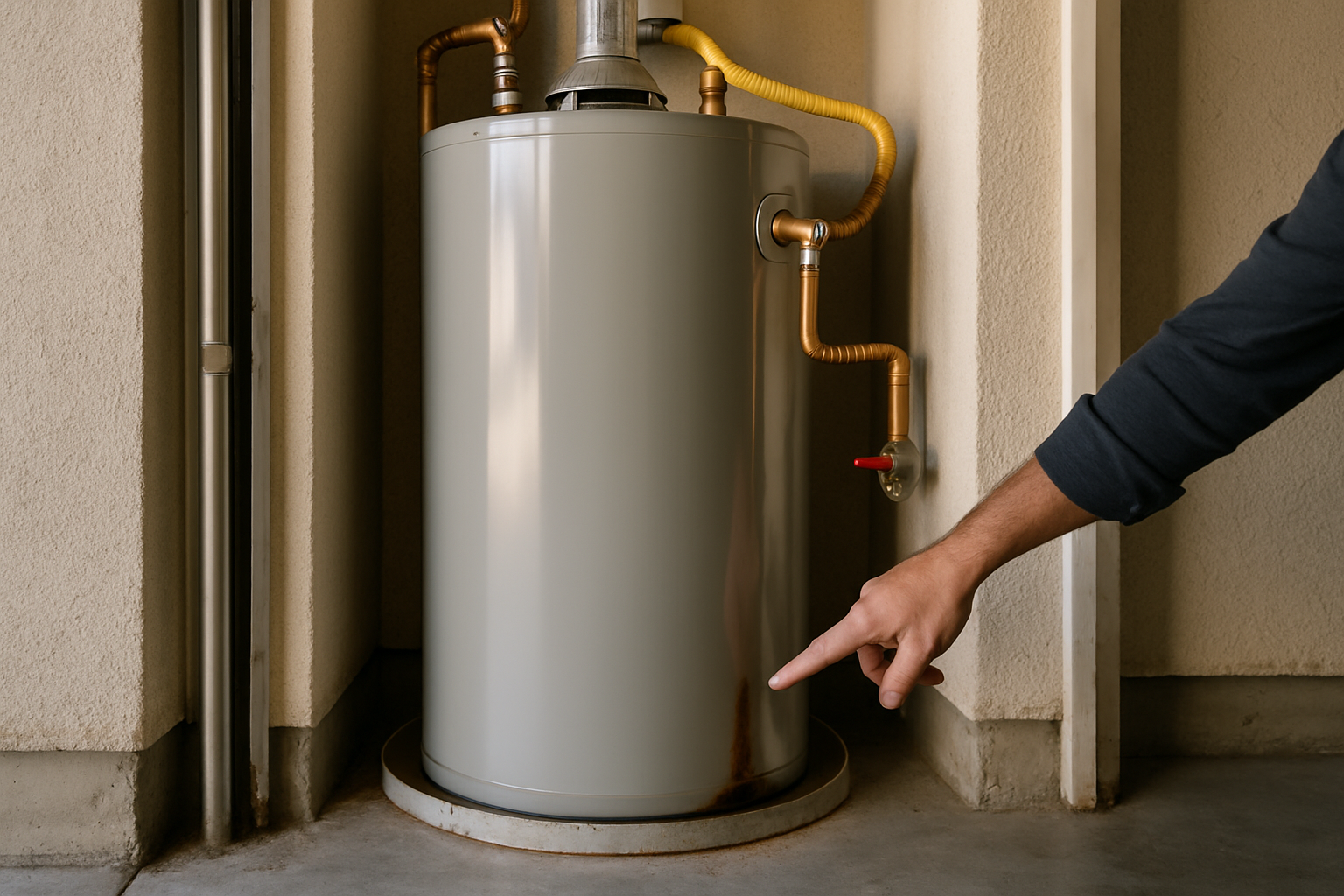
Rust-Colored Water and What It’s Actually Telling You
Brown or reddish water coming from your hot tap is one of the clearest signals a water heater can send — but it can mean two different things, and they matter.
If the discoloration only comes from hot water, the problem is almost certainly inside your tank. The anode rod — a sacrificial metal rod designed to corrode before the tank wall does — has been depleted. Without it, the steel lining starts rusting. Once the lining is corroding, the tank usually has 12 to 18 months before it starts failing.
If the discoloration affects both hot and cold water, the problem is in your supply lines, not your water heater. Older homes in Salinas built before the mid-1980s commonly have galvanized steel pipes, and those pipes rust from the inside out. That’s a repiping issue, not a water heater issue — though they sometimes show up together in older properties. If you’re dealing with that situation, repiping in California homes involves a few factors most homeowners don’t expect.
When it comes to rusty hot water specifically, a plumber can replace the anode rod on some tanks for $150–$250, which extends the life of the unit. But if there’s already visible pitting or rust staining on the tank exterior, or if the unit is over 10 years old, you’re usually better off replacing the whole unit rather than investing in repairs.
Repair vs. Replace: Quick Decision Guide for Salinas Homeowners
This isn’t a hard rule for every situation, but it’s a practical framework based on what we see in the field. A plumber should confirm any decision before you commit.
| Symptom | Tank Age | Likely Call |
|---|---|---|
| Rumbling / sediment noise | Under 8 years | Flush — may repair |
| Rumbling / sediment noise | 8–12 years | Evaluate condition, lean toward replace |
| Rusty hot water only | Under 8 years | Anode rod replacement — $150–$250 |
| Rusty hot water only | Over 10 years | Replace tank |
| Water pooling at base | Any age | Replace — tank wall failure |
| Running out of hot water fast | Under 8 years | Likely repair (thermostat, element) |
| Running out of hot water fast | Over 12 years | Replace — often efficiency/capacity issue |
| Pilot light keeps going out | Any age | Thermocouple repair — $100–$200 |
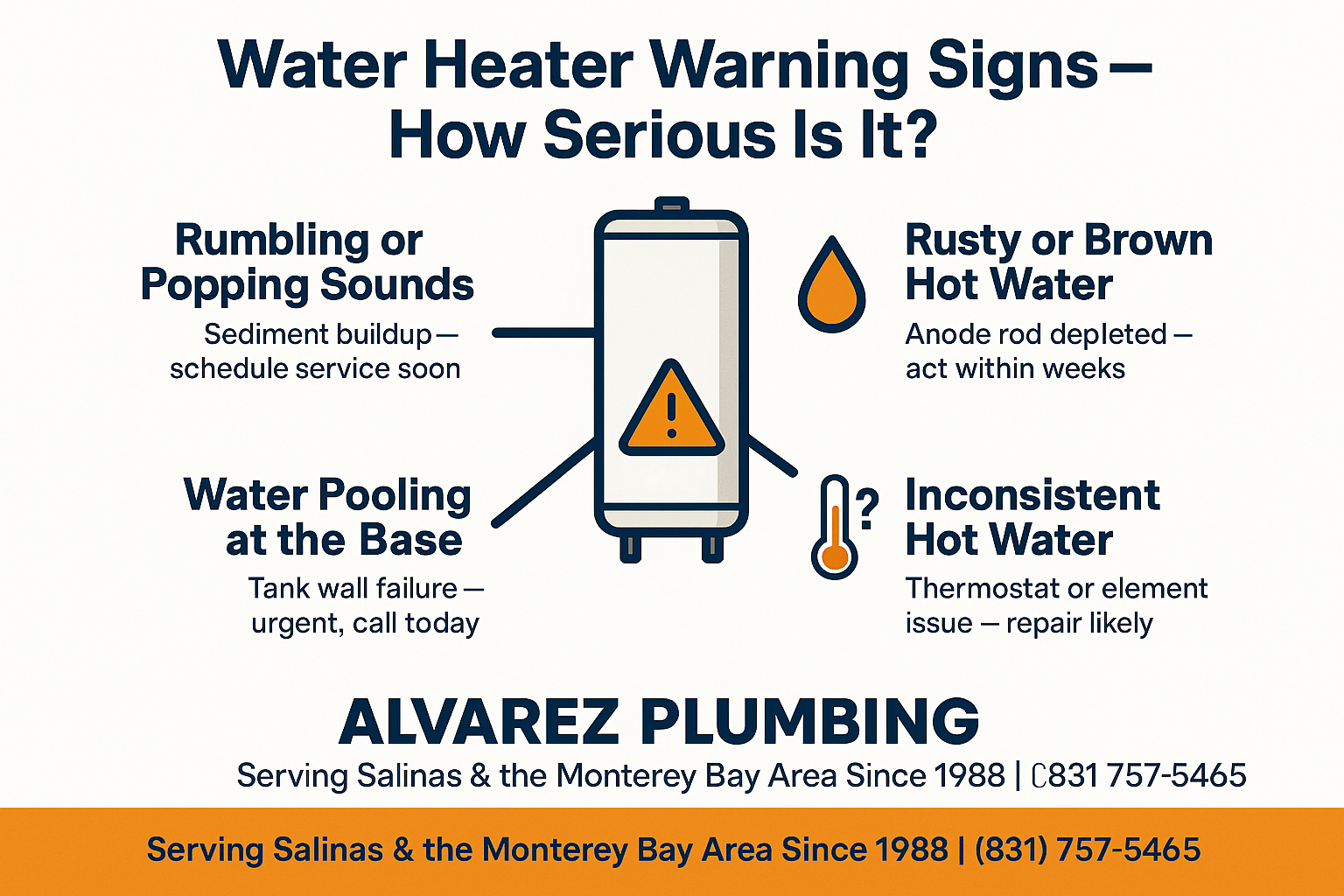
The 4 Warning Signs You Shouldn’t Ignore
These are the four water heater symptoms we see most often in Salinas homes before a failure. Each one has a different urgency level.
When a Repair Is the Right Call — and When It Isn’t
There’s a rough rule of thumb that’s been around the trade for a long time: if a repair costs more than 50% of what a replacement would cost, and the unit is more than 7–8 years old, replacement is usually the smarter financial move. A new 40-gallon gas water heater installed in Salinas typically runs $900–$1,400 depending on the model and any permit or code upgrade requirements.
That last part matters. California updated its building energy efficiency standards in 2025, and any new water heater installation — whether it’s a straight swap or a full upgrade to a tankless unit — now requires a permit in Salinas. The City of Salinas pulls these permits through the building department, and the inspection covers the installation itself as well as venting, seismic strapping, and the temperature/pressure relief valve.
Some plumbing contractors leave that permitting process to the homeowner. That’s a real inconvenience and adds time to the project. We handle all City of Salinas permitting in-house, which is one less thing to manage when you’re already dealing with a failed appliance.
If your unit is under 6 years old and the issue is a thermostat, a bad element, or a faulty thermocouple, a repair is almost always worth doing. These are common fixes in the $100–$350 range and don’t affect the long-term life of the tank. You can get more detail on why water heaters run out of hot water quickly and what’s usually behind it.
Tankless vs. Tank: Is an Upgrade Worth It Right Now?
When a tank-style water heater fails, a lot of homeowners ask whether it’s worth switching to tankless. It’s a fair question — but the honest answer depends on your situation, not a blanket recommendation.
Tankless units cost significantly more upfront. A gas tankless water heater installed in a Salinas home typically runs $2,000–$3,500, compared to $900–$1,400 for a traditional tank. The long-term energy savings are real — tankless systems only heat water on demand, which reduces standby energy loss — but the payback period is usually 8–12 years depending on household usage.
Where tankless makes clear sense:
– Households with 3 or more people who regularly run out of hot water
– Homeowners planning to stay in the property for 10+ years
– Properties where floor or garage space is tight
– Short-term rental operators in the Monterey corridor who need reliable, consistent hot water for guests
Where a replacement tank often makes more sense:
– Emergency situations where you need hot water back fast — tankless installations take longer
– Older homes that would need gas line upgrades to handle the higher BTU demand of a tankless unit
– Homeowners on a tighter budget who need a practical fix, not a premium upgrade
Either way, you’ll want to read through the steps involved in turning on a new water heater before your installer leaves — knowing what to expect makes the startup process a lot less confusing.
Frequently Asked Questions About Water Heater Warning Signs
How long does a water heater last in Salinas?
Most tank-style water heaters last 8–12 years. In the Salinas area, hard water can shorten that lifespan because mineral deposits build up faster inside the tank. If yours is pushing 10 years, it’s worth having it looked at even if it seems to be working fine — the most expensive failures happen when homeowners are caught off guard.
My water heater is leaking at the bottom. Can it be repaired?
Almost never. A leak at the base of the tank means the steel lining has corroded through. That’s not a fixable problem — it’s a replacement. Shut off the cold water supply to the tank, turn the thermostat to ‘pilot’ or the lowest setting, and call a plumber. The longer water sits under the unit, the more likely you’ll have a hidden water damage situation underneath the flooring or drywall.
Do I need a permit to replace my water heater in Salinas?
Yes. Any water heater replacement in Salinas requires a permit through the City of Salinas building department, and this became even more standardized under the 2025 California Building Energy Efficiency Standards. The permit covers the installation, venting, seismic strapping, and the T&P relief valve. A licensed contractor should be pulling this permit — not you.
My hot water smells like rotten eggs. Is that the water heater?
Usually yes. That sulfur smell is caused by a reaction between a depleted anode rod and sulfate-reducing bacteria in the water. It’s more common with water heaters that sit unused for a period of time, or in homes on well water. A plumber can flush the tank, replace the anode rod, and in some cases treat the tank with a hydrogen peroxide solution. If the smell persists, it may be worth having your water tested.
Is it safe to keep using a water heater that’s making noise?
Generally yes, in the short term. Rumbling or popping from sediment buildup isn’t an immediate safety hazard, but it does mean your tank is working harder than it should be. Schedule a service call within a few weeks — don’t ignore it for months. And if you ever hear a loud bang, notice the pressure relief valve discharging, or see any signs of a gas leak near the unit, that’s an emergency plumbing situation that warrants a same-day call.
Not Sure What Your Water Heater Is Telling You?
Alvarez Plumbing has been diagnosing and replacing water heaters in Salinas and across the Monterey Bay Area since 1988. If you’re hearing something unfamiliar, seeing discolored water, or just want a straight answer before something fails, give us a call at (831) 757-5465 — we’re available 24 hours a day, every day of the week. You can also schedule service online at alvarezplumbingsalinas.com.