When your hot water gives out, the first question is always the same: should you repair it or replace the whole thing? Homeowners often wonder whether it’s smarter to repair or replace an older water heater—especially when it starts underperforming. With limited hot water, strange noises, or leaks, it’s hard to know what’s normal wear and tear versus a warning sign of failure.
For homeowners in Salinas and across Monterey County, the decision usually boils down to two things: how old the unit is and how much the repair is going to cost. It’s a simple rule of thumb, but if your water heater is over ten years old, a full replacement is almost always the smarter long-term investment.
Your Quick Answer To The Repair Or Replace Question
Trying to decide between a quick fix and a full upgrade can be stressful, especially when all you want is a hot shower. Many homeowners spend hundreds on piecemeal repairs (like replacing a heating element) without realizing they’re just delaying the inevitable. Others assume they need a full replacement when a simple flush or part swap could extend the unit’s life. After 35+ years of serving communities like Marina and Seaside, we’ve learned that getting an honest assessment is the key.
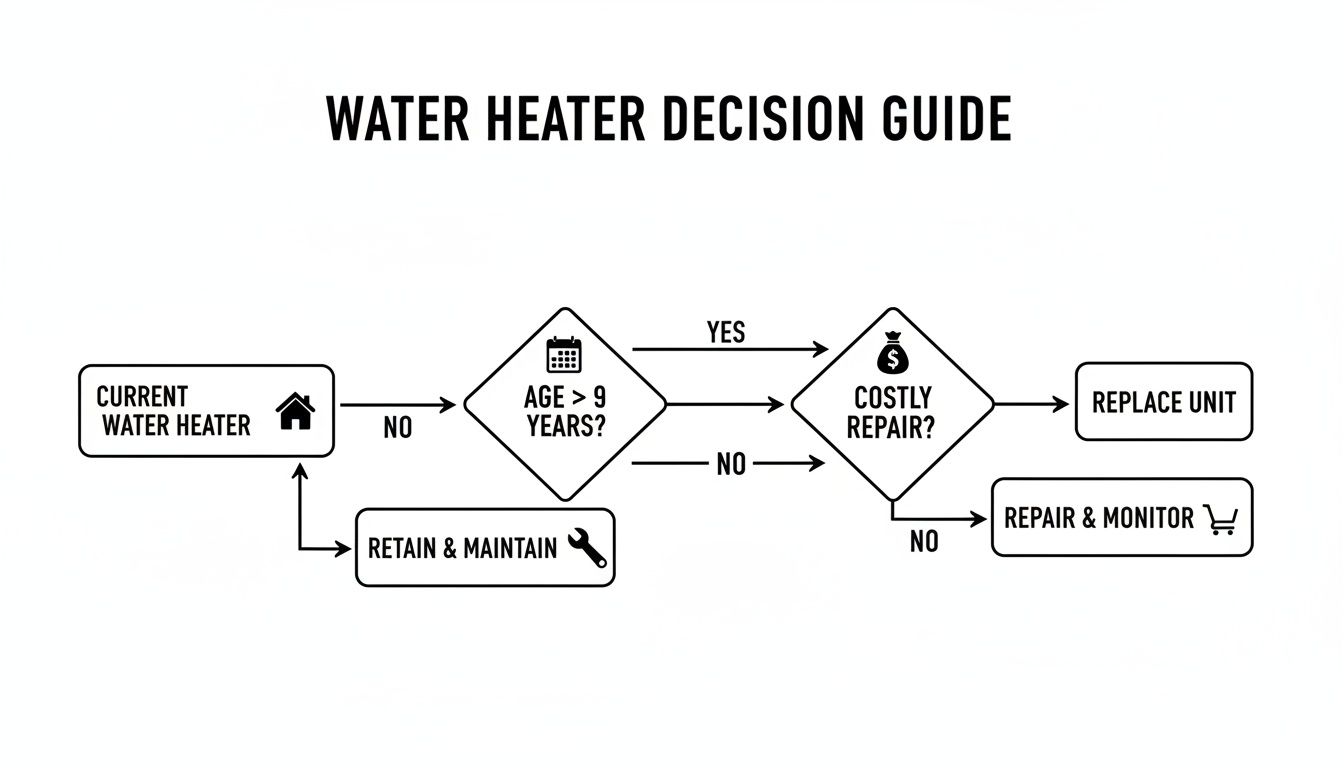
This simple decision tree can help you figure out your next move. It’s a great visual for weighing the age of your unit against the potential repair costs.
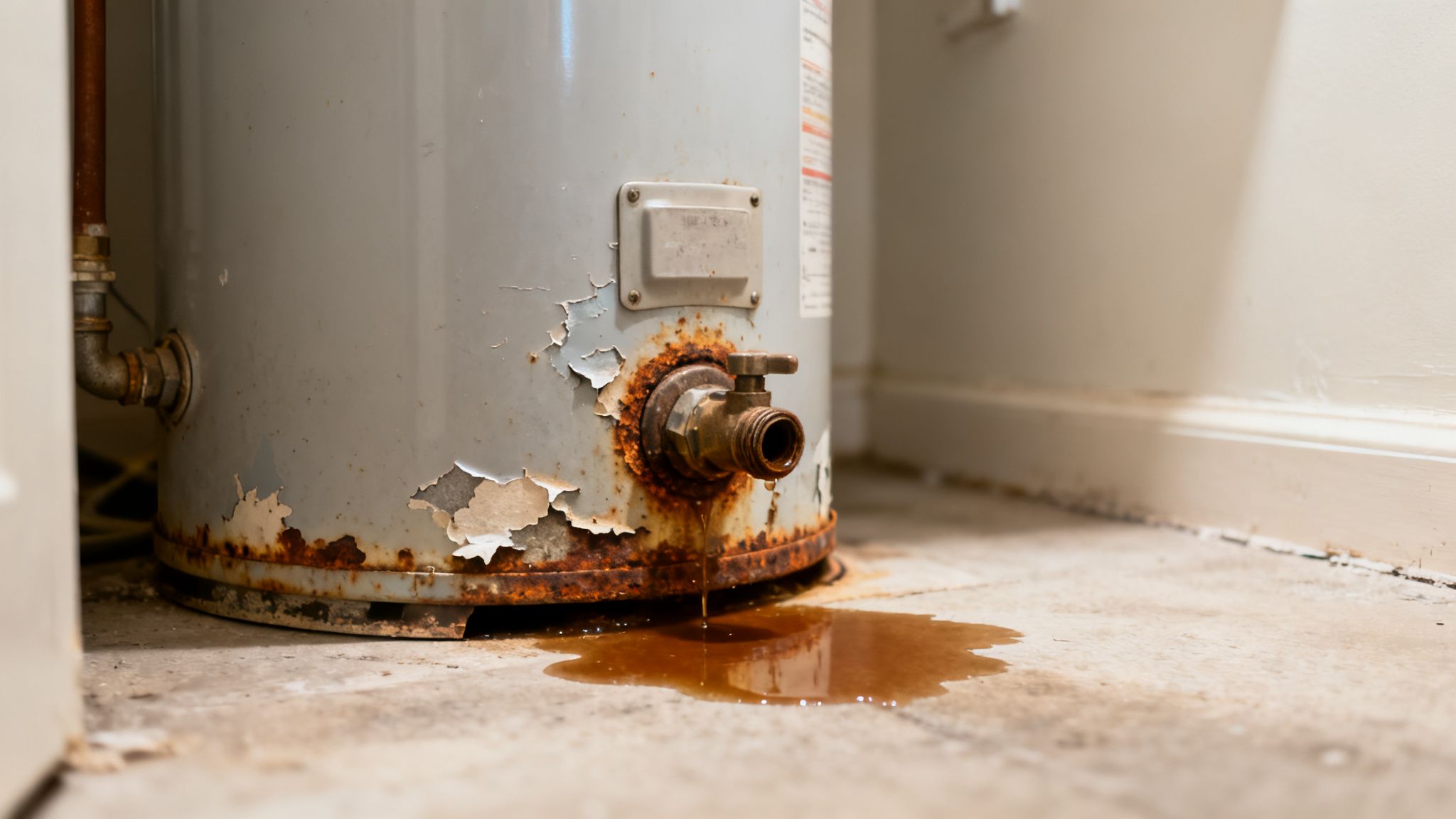
According to a 2024 California study, 75% of water heater replacements happen due to unexpected breakdowns—not planned upgrades. Waiting too long can lead to costly water damage, especially if the tank fails suddenly.
At-A-Glance Repair Vs Replace Checklist
To make things even clearer, here’s a quick checklist to help you size up your situation. If you check multiple boxes, it’s likely time for a replacement. When you’re at this crossroads, getting advice from experts who offer professional water heater services can provide the clarity you need.
| Check If This Applies | Consider Repair If… | Lean Towards Replacement If… |
|---|---|---|
| Age of Unit | The water heater is less than 8 years old and has been well-maintained. | The unit is 10+ years old, nearing the end of its typical lifespan. |
| Rust-Colored Water | Not applicable. This is a major warning sign. | Hot water is brownish or has a metallic smell, indicating internal corrosion. |
| Strange Noises | A flush might solve a minor sediment issue. | You hear constant rumbling or banging, a sign of heavy sediment buildup. |
| Inconsistent Hot Water | It's a single issue like a faulty thermostat. | You have frequent issues with water temperature (a failing dip tube or other parts). |
It's crucial to understand the cost-benefit equation here. Sinking a big repair chunk into an old, inefficient unit often just doesn't add up financially. For a deeper dive into making smart plumbing decisions, check out our guide on why local expertise matters when hiring Monterey plumbers.
Key Warning Signs Your Water Heater Is Failing
A water heater almost never dies without a fight. It usually sends out plenty of distress signals first, giving you a chance to act before you’re hit with an ice-cold shower or, worse, a flooded garage. For homeowners in communities like Prunedale or Carmel Valley, knowing what to look for is everything.
The most obvious sign is no hot water at all, but the clues are often far more subtle. Paying attention to these smaller changes can help you decide if it's time for a simple repair or a full replacement. It’s all about catching the problem before it becomes an emergency.
Strange Noises and Discolored Water
Have you started noticing a popping, rumbling, or banging sound coming from your water heater closet? That's not the sound of a healthy appliance. Those noises are usually caused by sediment—minerals from our local water supply that have cooked into a hard, crusty layer at the bottom of the tank.
As the burner kicks on, it has to heat the water through that layer of mineral buildup, which creates those strange sounds. This process kills your heater's efficiency and puts a tremendous strain on the metal, which can eventually lead to cracks and leaks. This is a common problem here in Monterey County thanks to our hard water.
Another huge red flag is rusty or discolored water coming from your hot water taps. If you turn on the hot water and it comes out brownish or has a metallic smell, it’s a strong sign the inside of your tank is corroding. The anode rod, a part designed to sacrifice itself to prevent rust, has probably been eaten away, and now the tank itself is rusting from the inside out.
Expert Insight: Once you see rust-colored water, the tank's structural integrity is already shot. At this point, a repair isn't really on the table—a full replacement is the only way to prevent a catastrophic tank failure and serious water damage.
Inconsistent Performance and Visible Leaks
Is your hot water supply completely unreliable? If you're getting fluctuating temperatures—where the water goes from scalding to lukewarm without warning—it could point to a failing thermostat or a broken dip tube. While these parts can sometimes be replaced, in an older unit, it’s often just the first of many components about to fail.
Constantly having to relight the pilot light on your gas water heater is another symptom you can't ignore. A strong draft can be the culprit sometimes, but if it keeps happening, it often points to a faulty thermocouple or gas control valve. These are absolutely not DIY fixes and require a professional plumber to diagnose safely.
But perhaps the most urgent warning sign is seeing any water pooling around the base of your unit.
- Small Puddles: Even a little moisture can signal a slow leak from a fitting, a valve, or the tank itself.
- Constant Dripping: A steady drip from the pressure relief valve could mean the pressure inside the tank is dangerously high.
- Corrosion on Fittings: Check the pipes connected to the top of your heater. Any rust or white, crusty buildup means water is escaping where it shouldn't.
If you spot any of these signs, it's time to take action. Understanding these symptoms is the first step, and you can dig deeper by exploring these seven surefire signs your water heater is about to fail. When you start seeing multiple red flags, your water heater is telling you it's on borrowed time. Calling a professional for an inspection will help you understand how serious the problem is so you can make an informed decision.
How Age Impacts Your Water Heater Decision
When you're staring down a broken water heater, its age is the single most important clue you have. Like any major appliance in your home, it has a predictable lifespan. Trying to push it too far past its prime is a gamble that rarely pays off—especially when a surprise failure can mean a flooded garage or basement.
For homeowners in the Monterey Bay area, knowing your unit's age helps you make a smart financial decision instead of just kicking the can down the road with a quick fix. A newer unit with a minor hiccup is often a clear candidate for repair. But if your water heater is old enough to have seen a decade of holiday seasons, pouring more money into it is often a losing game.
The 10-Year Rule for Traditional Heaters
A standard gas tank water heater—the kind you’ll find in most homes—has a typical life expectancy of about 8 to 12 years. If your unit is approaching the 10-year mark, it’s officially entered its golden years. At this stage, even a seemingly small repair can be a warning shot that more expensive parts are about to fail.
Think of it like this: spending a few hundred dollars to fix the thermostat on an 11-year-old unit is like putting a brand-new tire on a car with a dying engine. Sure, it might get you a little farther down the road, but a bigger, more expensive breakdown is almost certainly just around the corner.
How Local Factors Accelerate Aging
Here in the Salinas Valley and across Monterey County, our local water conditions can actually shorten that 8-to-12-year lifespan. The biggest culprit is our notoriously hard water, which is full of minerals like calcium and magnesium.
Over the years, these minerals settle at the bottom of the tank, forming a thick, crusty layer of sediment. This buildup forces your heater to work much harder just to heat the water, putting constant stress on the tank and leading to those rumbling sounds we mentioned earlier. It’s a strain that can cause the tank to fail years ahead of schedule.
A Pro's Perspective: "We see it all the time in Salinas and Castroville—a seven or eight-year-old water heater that's completely shot because of sediment buildup. Regular flushing helps, but once the damage is done, it’s irreversible. The hard water really does a number on these units."
For those with older properties, it’s also smart to consider the plumbing systems themselves. You can learn more about the unique challenges by reading our article on plumbing upgrades for aging homes in Monterey.
The Longevity of Modern Tankless Models
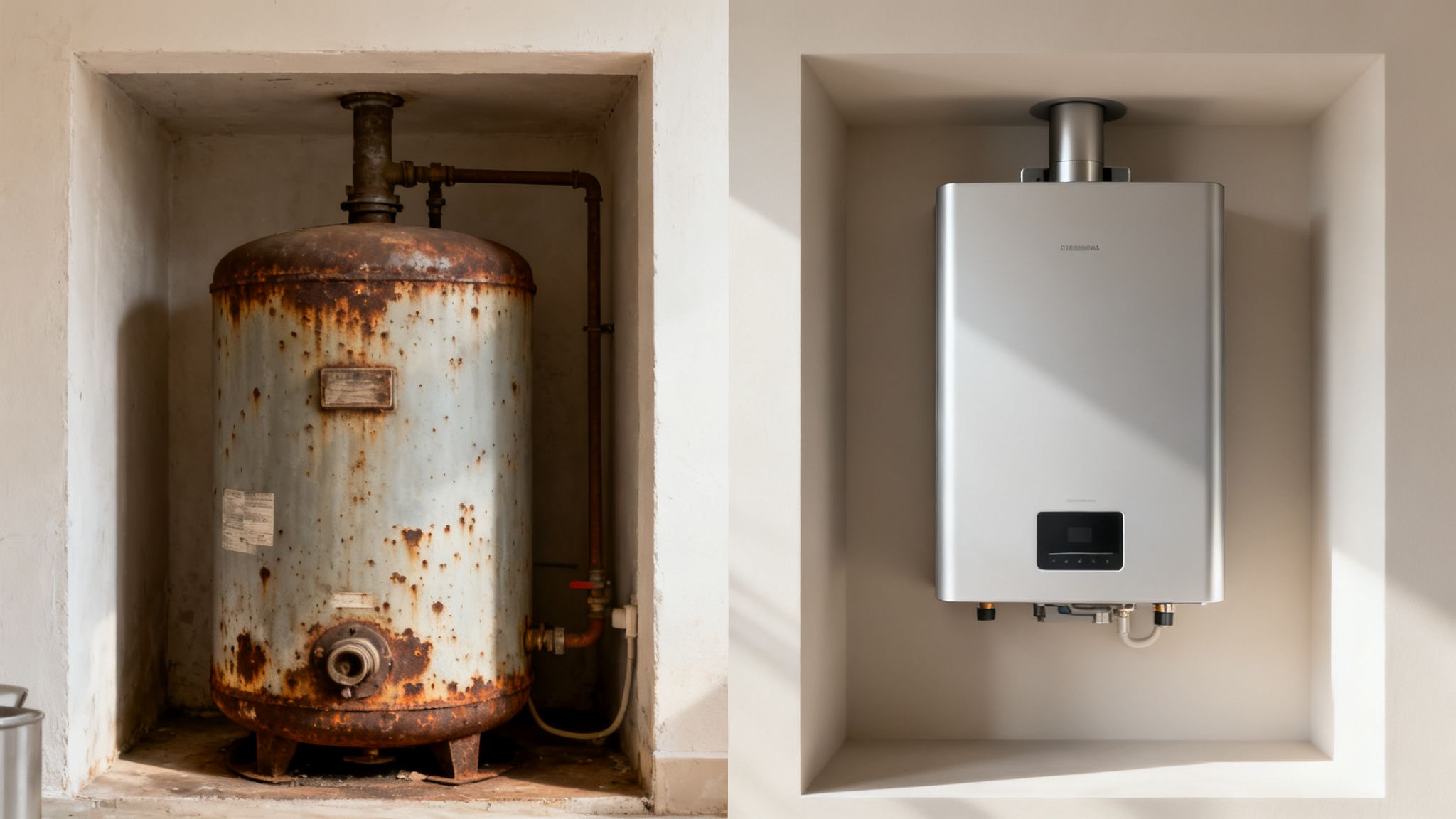
If you’re leaning toward a replacement, it's worth looking at modern alternatives. While a traditional tank heater might last you a decade, a tankless water heater can last 20 years or more.
Here’s a quick comparison:
- Traditional Tank Heater: Lasts 8-12 years. It holds and constantly heats a large volume of water, which leads to steady wear and tear over time.
- Tankless Water Heater: Lasts 20+ years. It heats water on demand, so there's no tank sitting around to corrode and eventually fail. This design not only extends its lifespan but also makes it far more energy-efficient.
Although the upfront cost is higher, the much longer lifespan and energy savings often make a tankless unit a better long-term investment. At Alvarez Plumbing, we can help you figure out if this upgrade makes sense for your home and budget.
A Realistic Look At Repair Bills Vs Installation Costs
When your water heater starts acting up, the first decision you face usually comes down to simple math. It’s tempting to go for what seems like a cheap repair just to get the hot water flowing again, but is that really the best move for your wallet in the long run? For homeowners from Watsonville to Marina, understanding the full financial picture is the key to making a smart investment.
A single, minor repair might feel affordable at first. The problem is, when an older unit starts to fail, it’s rarely a one-and-done event. One fix often just leads to another, and those "small" repair bills can pile up fast—sometimes costing you more than a brand-new, efficient water heater would have.
Breaking Down Common Repair Costs
So, what can you expect to pay for common fixes here in the Monterey Bay area? These are ballpark figures, of course, but they give you a realistic idea of what a plumber’s bill might look like for a specific issue.
- Thermostat Replacement: If your water is lukewarm or way too hot, a faulty thermostat is often the culprit. This repair will typically run between $150 and $300.
- Heating Element Swap: For electric heaters, a burned-out heating element is a common reason for no hot water. Swapping it out usually costs anywhere from $200 to $450.
- Pressure Relief Valve: This is a critical safety part. If it’s leaking or stuck, replacement is a must and generally costs between $100 and $250.
While none of these are budget-breakers on their own, they become a huge financial red flag when your unit is over a decade old. Sinking $400 into a heater that’s already on its last legs is often just throwing good money after bad.
The True Cost of a New Installation
Thinking about a replacement means looking beyond the sticker price of the heater itself. A full installation involves more than just the unit—there are labor costs, permits, and other factors that add up. A standard tank water heater might only cost $500 to $1,500, but the total bill for a professional replacement—including labor, parts, and disposal—usually lands between $1,200 and $3,500. In fact, installation labor often accounts for 30% to 50% of that final price. You can get a deeper dive into these expenses in our detailed guide to water heater replacement costs.
Here in our area, there are a few other "hidden costs" to be aware of:
- Permits: Monterey County and cities like Salinas require permits for water heater installations to make sure everything is up to current safety codes.
- Haul-Away Fees: Your old, heavy unit needs to be disposed of correctly, and that usually comes with a small fee.
- Plumbing Upgrades: If your home's plumbing isn't up to code, a few minor adjustments might be needed for a safe and proper installation.
Local Insight: A planned replacement is almost always cheaper than an emergency one. When your tank finally gives out on a holiday weekend, you’re not just paying for a new unit—you’re paying premium, after-hours labor rates that can seriously inflate the total cost.
Weighing the Financials: A Quick Comparison
To help you see the numbers clearly, we've put together a breakdown of typical costs associated with water heater issues in the Monterey Bay area. This should help you weigh the financial impact of your decision.
Cost Analysis: Common Repairs Vs. Full Replacement
| Service Type | Typical Cost Range (Monterey County) | Best For… | Financial Red Flag |
|---|---|---|---|
| Minor Repair | $150 – $450 | A newer unit (under 8 years old) with its first-ever mechanical issue. | Spending this amount on a unit that is 10+ years old. |
| Major Repair | $450 – $900 | A mid-life unit where the repair cost is less than half the price of a replacement. | When this repair won't solve underlying issues like tank corrosion. |
| Full Replacement | $1,200 – $3,500+ | An older unit (10+ years), a leaking tank, or when repairs become frequent. | Opting for repair when the unit is already living on borrowed time. |
This table makes the decision a bit more black-and-white. When you start facing frequent or costly repairs on an older unit, the scale quickly tips in favor of replacement.
By planning ahead with Alvarez Plumbing, you can avoid the sticker shock of an emergency and make a calm, informed decision that benefits both your wallet and your peace of mind.
Benefits Of Upgrading To A Modern Water Heater
Making the call to replace your old water heater isn't just about getting the hot water running again. It's an opportunity to seriously upgrade your home's safety, slash your energy bills, and improve your daily comfort. While nobody loves the upfront cost of a new appliance, the long-term perks of a modern unit almost always outweigh the risks and costs of keeping an old one limping along.
An aging water heater can be a ticking time bomb. The older they get, the higher the risk of a catastrophic tank failure, which can flood your garage or home and lead to thousands of dollars in water damage. Older gas models also carry a risk of carbon monoxide leaks if their venting systems start to fail. A new unit, on the other hand, is built with modern safety standards that provide genuine peace of mind.
Enhanced Safety And Peace Of Mind
Frankly, one of the most important reasons to upgrade is safety. A failing water heater isn't just an inconvenience; it can be a real danger to your home and family.
Modern water heaters are engineered from the ground up with advanced safety features that prevent the most common—and most dangerous—types of failure.
- Improved Tank Integrity: Newer tanks are built with superior materials and corrosion-resistant linings, which dramatically cuts down on the risk of a sudden, disastrous burst.
- Reliable Pressure Relief Valves: Today's valves are far more durable, offering a critical safeguard against the excessive pressure buildup that can cause a tank to rupture.
- Safer Gas Combustion: For gas models, new units feature enclosed combustion chambers and improved venting systems that all but eliminate the risk of dangerous carbon monoxide leaks.
For homeowners in Salinas and Monterey County, where water heaters are often tucked away in closets or garages, these safety upgrades are absolutely essential. You can't put a price on knowing your new unit is protecting your home from water damage and your family from harmful gases.
A Leap Forward In Efficiency And Savings
Beyond the safety net, the biggest win with a modern water heater is the incredible jump in energy efficiency. Old heaters are notorious energy hogs, constantly burning fuel to keep a big tank of water hot 24/7, even when you're asleep or at work. That technology is completely outdated.
A recent California study found that 75% of water heater replacements happen because of an unexpected breakdown, not a planned upgrade. Waiting for a failure means you miss out on years of potential energy savings and valuable rebates.
Just look at the two main types of high-efficiency models available today:
- Heat Pump Water Heaters (Hybrid): These clever units don't create heat—they move it. By pulling warmth from the surrounding air and transferring it to the water in the tank, they become two to three times more efficient than a standard electric water heater. The result is major savings on your utility bills.
- Tankless On-Demand Heaters: Instead of storing hot water, tankless models heat it instantly right when you need it. This completely eliminates "standby heat loss," the energy wasted keeping a tank hot all day. To learn more, you can explore the pros and cons of tankless water heaters in our detailed guide.
For environmentally conscious residents in places like Carmel-by-the-Sea, these upgrades are a perfect way to lower your home's carbon footprint while putting money back in your pocket every single month. Best of all, Alvarez Plumbing can help you navigate and secure local and federal rebates—sometimes totaling up to $1,750—that make these eco-friendly upgrades far more affordable than most people realize. It’s an investment that truly starts paying you back from day one.
Getting An Honest Assessment From A Local Pro
After you've checked the signs, considered the age, and weighed the potential costs, the final step is to get a professional evaluation. While you can definitely spot the symptoms of a failing water heater, only a licensed plumber can accurately diagnose the real root of the problem. This is a crucial step—it’s just too easy to misjudge the situation on your own.
We’ve seen it time and again. Homeowners spend hundreds on piecemeal repairs, like swapping out a heating element, not realizing they’re just kicking the can down the road on an inevitable replacement. On the flip side, others assume they need a brand-new unit when a simple tank flush or a minor part swap could safely get them a few more years of service. An expert opinion cuts right through the guesswork.
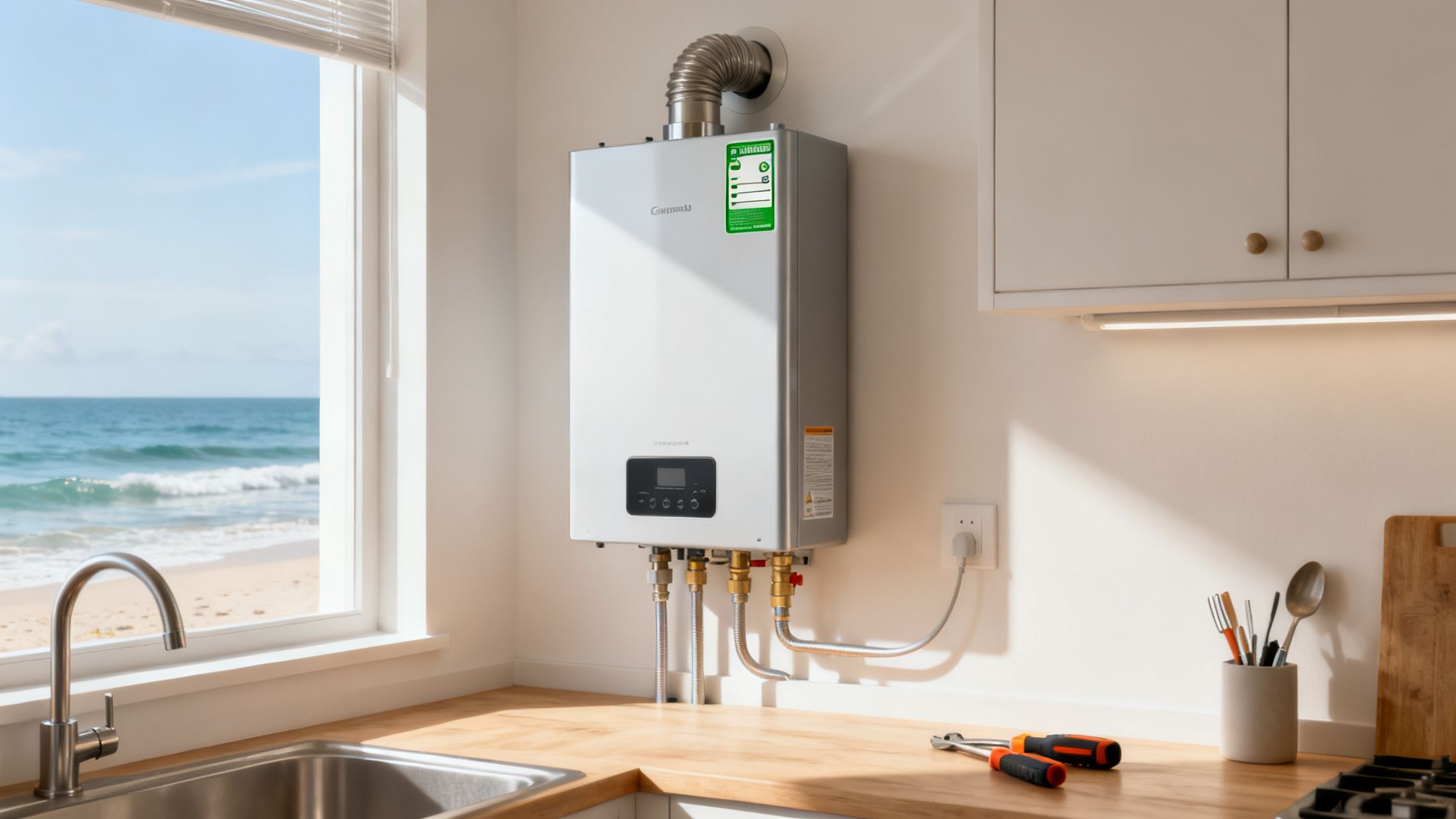
Our No-Pressure Promise
At Alvarez Plumbing, we’ve built our reputation on providing honest, no-pressure assessments since 1988. As a family-owned business serving the Monterey Bay area, our priority is helping you make an informed choice that’s right for your home and budget, not just making a sale. We believe in being a trusted local expert and making sure you get the right solution without the upsell.
Our process is straightforward and transparent. When you call us, we’ll:
- Perform a thorough inspection of your entire water heater system.
- Identify the exact cause of the problem and explain it in plain language.
- Present clear, honest options, whether it’s a simple repair or a same-day replacement.
- Discuss the long-term value of each choice so you can see the full picture.
When you're trying to decide whether to repair or replace your old water heater, it's vital to get an unbiased opinion from a qualified professional. You can learn more about essential tips for finding the right plumber or heating engineer to ensure you get trustworthy advice.
A Note on Local Conditions: Here in Salinas and the Monterey Bay area, older homes and our notoriously hard water can accelerate wear and tear on water heaters. It’s always wise to stay ahead of heater issues. Waiting too long can lead to catastrophic (and expensive) water damage, especially if the tank fails suddenly over a holiday weekend.
Upgrading to a More Efficient Future
If a replacement turns out to be the best path forward, we’ll also guide you through modern, energy-efficient options. We specialize in heat pump water heater installations for homeowners planning ahead.
Our licensed technicians can help you access up to $1,750 in rebates for making an eco-friendly upgrade, which often makes a new, high-efficiency system more affordable than you might think. Contact Alvarez Plumbing today for a no-pressure evaluation and avoid getting stuck with cold showers.
Water Heater Questions We Hear All the Time
As a family-owned business serving the Monterey Bay area for over 35 years, we've heard just about every question you can imagine about failing water heaters. Here are straightforward answers to the questions our customers in Salinas, Carmel, and Pacific Grove ask us most frequently.
How Do I Know If My Water Heater Needs Repair Or Replacement?
The easiest way to tell is to look for a few key warning signs. If your water heater is already over 10 years old, you're seeing rust-colored water coming from the tap, or you hear strange rumbling or popping noises from the tank, those are all strong signals that it's on its last legs.
Think of it this way: a single issue in a newer unit might just call for a simple repair. But when an older heater starts showing multiple problems at once, you're almost always better off putting your money toward a replacement.
What Is The Average Lifespan Of A Water Heater?
For a classic tank-style water heater, you can generally expect it to last about 8 to 12 years. Here in places like Salinas and Castroville, our hard water can be tough on appliances, causing sediment to build up and potentially shortening that lifespan.
While regular maintenance definitely helps, once a tank heater passes that decade mark, it’s living on borrowed time.
A 2024 California study found that a staggering 75% of water heater replacements happen because of a sudden, unexpected breakdown—not as a planned upgrade. Waiting too long often turns a manageable project into a weekend emergency with much higher costs.
Can I Just Keep Repairing My Old Unit?
You certainly can, but it’s rarely a smart financial move in the long run. We often see homeowners spend hundreds on piecemeal repairs—like swapping out a heating element one year and a thermostat the next—without realizing they’re just kicking a much bigger expense down the road.
A good rule of thumb is if any single repair costs more than 50% of what a new unit would cost, replacement is the wiser choice.
Are There Rebates For New Water Heaters?
Yes, absolutely! This is one of the best reasons to consider an upgrade. If you decide to replace your old, inefficient water heater, you may qualify for some significant savings. Alvarez Plumbing can help you access up to $1,750 in rebates for installing new, high-efficiency models like heat pump water heaters.
These programs make an eco-friendly upgrade far more affordable for homeowners in communities from Carmel-by-the-Sea to Pacific Grove.
In Salinas and the Monterey Bay area, where older homes and hard water accelerate wear, it’s wise to stay ahead of heater issues. Contact Alvarez Plumbing for a no-pressure evaluation and avoid getting stuck with cold showers over a holiday weekend.
If you're still on the fence about whether to repair or replace your old water heater, let the experts at Alvarez Plumbing take a look. With over 35 years of local experience, we provide honest assessments and clear solutions without the upsell. Contact us today for a professional evaluation!