As the Salinas Valley gets its first hint of chill and the marine layer over Monterey becomes a bit crisper, homeowners rightly start thinking about furnace checks. But there's a silent threat many overlook: your plumbing. For the charming, older homes found from Pacific Grove to Watsonville, the shift in seasons poses a significant risk to aging pipes, water heaters, and outdoor fixtures. A small leak or a slow drain might seem like a minor annoyance now, but colder temperatures can quickly escalate these into major emergencies. This is especially true when winter rains arrive, testing your home's entire protective shell. Just as learning the benefits of regular roof inspections can prevent major water damage from above, focusing on your pipes prevents it from within.
At Alvarez Plumbing, a family-owned business serving this community since 1988, we know that preventative maintenance is the key to a worry-free winter. This guide provides essential seasonal maintenance tips to help you avoid winter plumbing disasters in your older home. Following these steps can get you ahead of problems before they become expensive, stressful emergencies when the temperature drops. We'll outline how to protect your property and ensure your plumbing system runs smoothly all season long.
1. Insulate Your Vulnerable Pipes Before the First Frost
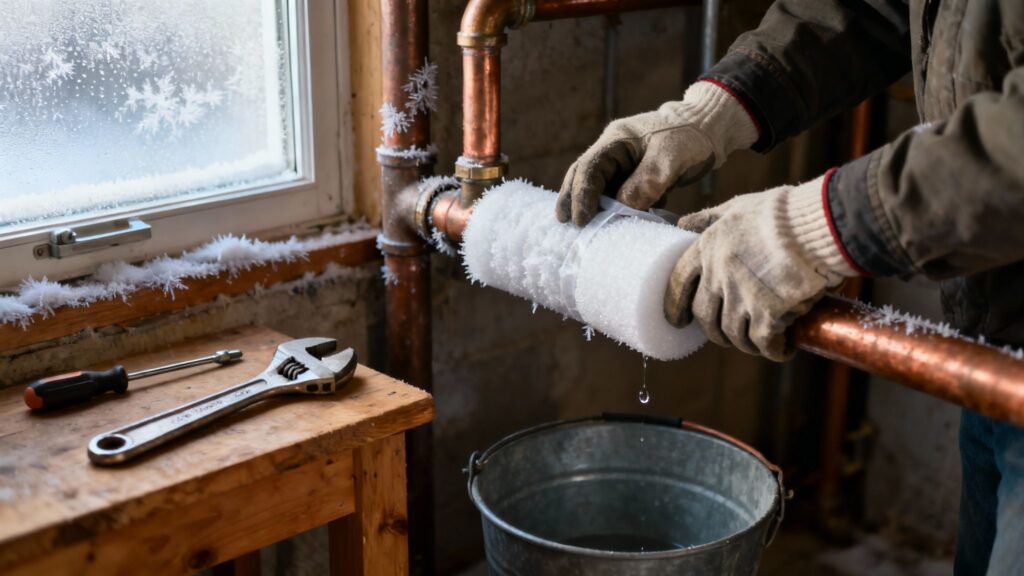
In the unheated crawl spaces of a classic Prunedale ranch home or the exposed basement pipes of a vintage Seaside bungalow, dropping temperatures are a major threat. Water inside an uninsulated pipe can freeze, expand, and cause a burst, leading to devastating water damage. This is one of the most common and costly winter plumbing disasters, but thankfully, it's also one of the most preventable.
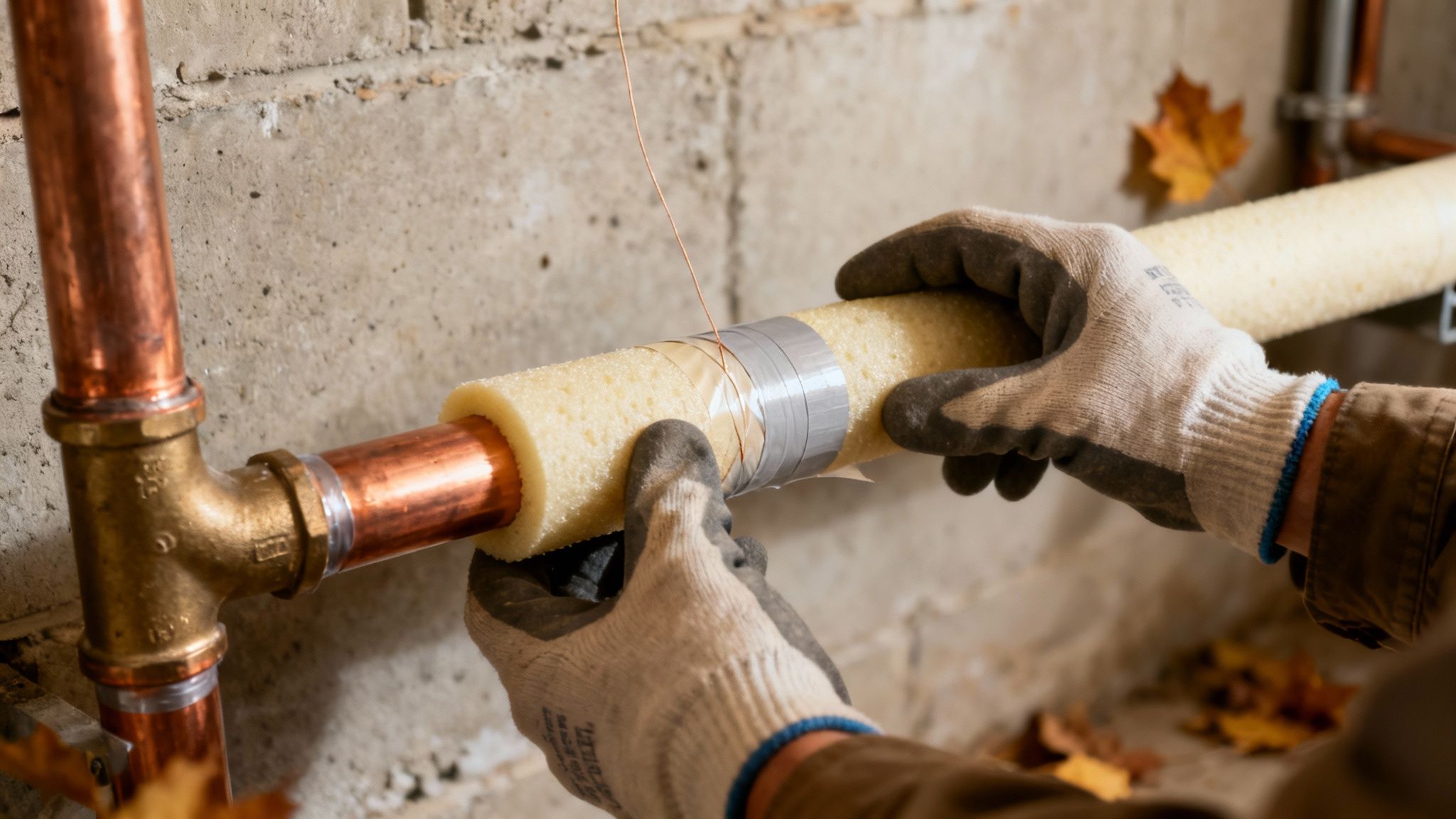
Wrapping exposed pipes, especially those on exterior walls or in unconditioned spaces like garages, is a simple, effective first line of defense. It's a small investment that protects against thousands in potential repairs, a lesson many learn the hard way during an unexpected Monterey Bay cold snap. The goal is to create a thermal barrier that keeps the water inside the pipes from reaching freezing temperatures.
Why Insulation is a Must for Older Salinas Homes
Older homes, particularly those built before modern insulation standards, often have plumbing routed through areas highly susceptible to cold. This includes pipes in attics, crawl spaces, and along the foundation. These vulnerable spots are where a freeze is most likely to occur, turning a simple pipe into a major liability.
Key Insight: Even in the moderate climate of Salinas or Monterey, a single night of freezing temperatures can be enough to burst an unprotected pipe in an older home, leading to extensive water damage and costly emergency repairs.
Getting It Done Right
While DIY kits are available, ensuring complete and proper coverage is key to preventing a disaster. A professional can identify all high-risk zones and use the right materials for the job.
- Act Early: We recommend insulating pipes in the fall, well before the first frost arrives.
- Identify High-Risk Zones: We focus on pipes in unheated areas like basements, crawl spaces, garages, and near exterior walls.
- Use the Right Materials: Closed-cell foam insulation is excellent for its moisture resistance. For areas with extreme exposure, we can combine insulation with heat cables for active warming.
Insulating your pipes is a fundamental step to avoid winter plumbing disasters. To ensure your home is fully protected with the right materials and techniques, exploring professional advice is a smart move. Learn more about the best way to insulate pipes to safeguard your property this winter.
2. Drain and Disconnect Outdoor Hoses
One of the most overlooked fall chores can lead to one of the most destructive winter plumbing disasters. A garden hose left connected to an outdoor spigot in a Carmel Valley home is a ticking time bomb. When water trapped inside the hose freezes, it expands with incredible force, not only ruining the hose but also potentially cracking the faucet and the pipe inside your home's exterior wall.
This simple act of disconnecting and draining is a critical piece of seasonal maintenance, especially for older homes in places like Pacific Grove or Watsonville. Many of these properties have original brass or cast iron hose bibs that are particularly susceptible to cracking under pressure from frozen water, leading to expensive and invasive repairs.
Why Disconnecting is Crucial for Older Monterey Homes
The original plumbing in many charming, older Monterey Bay homes wasn't designed with modern freeze protection in mind. The pipe supplying the outdoor faucet often extends straight through the wall without the anti-freeze features of modern spigots. When a connected hose freezes, the ice expansion has nowhere to go but back into the pipe, creating a burst inside the wall where it can cause significant hidden water damage.
Key Insight: A forgotten $30 garden hose can easily cause thousands of dollars in damage. The ice pressure can crack the hose bib, fracture the supply pipe within the wall, and lead to a major leak that might not be discovered until spring.
A Simple but Critical Task
While our technicians can assess your outdoor fixtures and recommend upgrades like frost-proof faucets, every homeowner should perform this basic task. The steps are simple:
- Set a Reminder: Schedule this task for early October, before the first significant temperature drop.
- Disconnect and Drain: Carefully unscrew the hose from the spigot. To ensure it's completely empty, stretch the hose out on a sloped surface to drain.
- Inspect the Faucet: After the hose is removed, turn the spigot on for a moment to let any remaining water out, then turn it off tightly. Check for any drips, which could signal a faulty washer that needs replacing.
Properly winterizing your outdoor faucets is a non-negotiable step to avoid winter plumbing disasters. If you notice persistent dripping or want the peace of mind that comes with a modern, frost-proof spigot, our team can provide a professional plumbing inspection to ensure your home is secure.
3. Shut Off Exterior Water Supply Lines
A forgotten garden hose bib or an exposed irrigation line is a common point of failure in older homes across Monterey County. When temperatures drop, any water left in these exterior pipes can freeze solid, expand with immense force, and crack the pipe or its fittings. Shutting off the dedicated exterior water supply lines is a critical step to drain these vulnerable pipes and prevent a costly rupture.
Many older homes in communities like Prunedale or Watsonville have separate shutoff valves for outdoor spigots, but homeowners often don't know where they are or that they even exist. Simply closing this valve and opening the spigot allows the line to drain completely, removing the risk of freezing. This simple action is one of the most effective ways to avoid winter plumbing disasters that start outside the house.
Why Locating Your Shutoff Valve is Crucial
The plumbing layouts in vintage homes can be unpredictable. Valves might be in basements, crawl spaces, or utility closets. Knowing the precise location of your exterior shutoff valve before an emergency is essential. This knowledge transforms a potential winter disaster into a simple, preventative maintenance task.
Key Insight: The difference between a peaceful winter and an emergency call to a plumber often comes down to one simple action: locating and closing the exterior water shutoff valve before the first cold snap hits the Salinas Valley.
Preparing Your Exterior Lines
While our team is happy to locate and service these valves for you, it's important for every homeowner to know where they are.
- Locate It Early: Take the time in September or October to find your exterior water shutoff valve. Check in basements, crawl spaces, or near your main water meter.
- Mark the Spot: Once you find it, mark the valve clearly with bright paint or flagging tape.
- Test and Drain: After shutting off the valve, open all your outdoor faucets to let them drain completely. If the valve is stuck or difficult to turn, it's best to call a professional who can safely loosen it without causing damage.
Knowing how to control your home's water supply is fundamental to protecting your property. For a detailed guide on finding and operating your valves, it's wise to get professional guidance. Learn more about how to shut off your main water supply to ensure you're prepared for any situation.
4. Clear Gutters and Downspouts
For older homes in Watsonville or a classic bungalow in Pacific Grove, the connection between your roof and your foundation is critical. Clogged gutters filled with autumn leaves and debris can become a major liability when winter rains arrive. The trapped water can freeze, creating heavy ice dams that damage your roof and gutters. More importantly, overflowing water cascades directly down to your home's foundation, creating the perfect conditions for water intrusion and basement flooding.
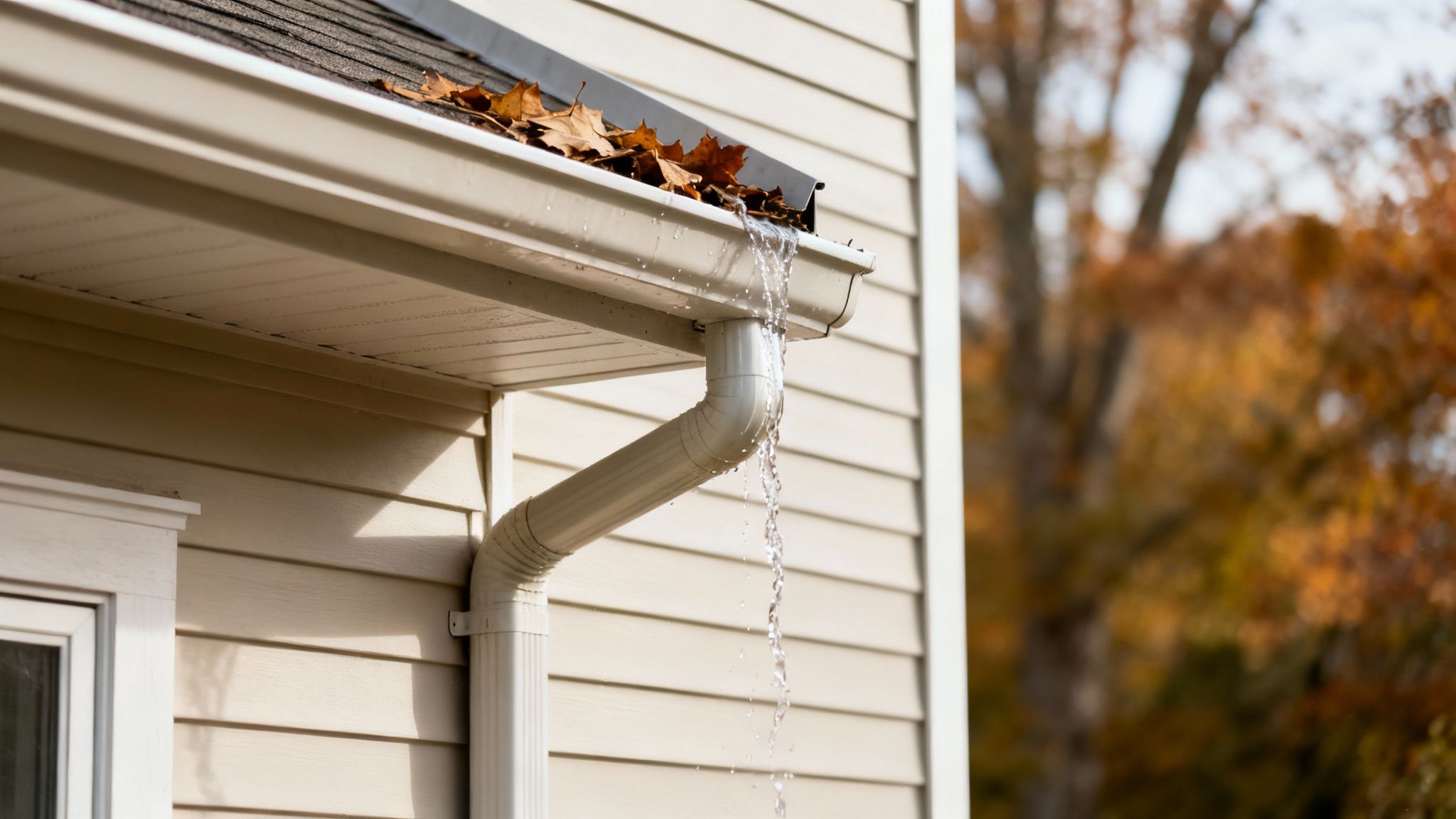
Clearing your gutters is a fundamental piece of seasonal maintenance that protects your entire property. It ensures that rainwater is channeled safely away from your home's structure, preventing soil erosion, foundation cracks, and costly water damage. This simple chore is a powerful way to avoid winter plumbing disasters by keeping exterior drainage systems functioning as they should.
Why Gutter Cleaning is Crucial for Older Monterey Homes
Many vintage homes in Monterey and the surrounding communities have foundations that have settled over decades, potentially creating small vulnerabilities. When clogged gutters dump water directly against these older foundations, the pressure can force moisture through tiny cracks, leading to damp basements, mold growth, and compromised structural integrity. A clean drainage system is your first line of defense against this pervasive threat.
Key Insight: In an older home, a clogged gutter is more than a minor inconvenience; it's a direct threat to your foundation. Ensuring water is properly diverted away from the base of your home is one of the most effective ways to prevent catastrophic water damage.
The Importance of Proper Drainage
Climbing ladders can be risky, and we always recommend professional help for safety. A professional service will ensure your gutters and downspouts are completely clear and functional.
- Time It Right: Gutters should be cleaned after most leaves have fallen, typically in late October or early November, before the heavy winter rains begin in Salinas.
- Check Downspouts: It's vital to ensure downspouts are clear and extend at least four to six feet from your foundation to direct water away from vulnerable areas.
- Inspect for Damage: A professional cleaning includes looking for rust, holes, or sections pulling away from the house. These minor issues can be repaired before they cause major leaks.
Proper drainage is essential for a healthy home. To ensure your home's exterior is ready for winter and to protect your foundation, proper gutter maintenance is essential. You may find further advice from roofing specialists. Explore comprehensive strategies to avoid floods with proper drain maintenance to fully safeguard your property.
5. Winterize Sump Pumps and Foundation Drainage
In many older Salinas and Prunedale homes, the basement or crawl space is the first line of defense against groundwater. During winter, as the ground freezes and thaws, a functioning sump pump is essential to prevent this moisture from seeping in and causing foundation damage or flooding. A failed pump during a heavy winter rainstorm can quickly turn a dry space into a costly disaster.
Winterizing your sump pump and drainage system ensures it's ready to handle the increased load from winter precipitation. Forgetting this crucial step can lead to significant water damage, mold growth, and expensive emergency repairs, particularly in historic properties that may have outdated or underpowered systems. This preventative measure is a key part of avoiding winter plumbing disasters.
Why Sump Pump Maintenance is Critical for Older Homes
Older homes in communities like Watsonville and Marina often have basements that weren't originally built with modern waterproofing standards. They rely heavily on sump pumps to manage water that would otherwise compromise the foundation. During a winter storm or rapid thaw, these systems are put under immense stress, and a clog or power failure can have immediate, devastating consequences.
Key Insight: A common mistake is assuming a sump pump will work just because it's there. Power outages during winter storms are frequent, and a pump without a battery backup offers no protection when it's needed most, leaving your property vulnerable to flooding.
How to Ensure Your Sump Pump is Ready
A thorough inspection by a licensed plumber is the best way to guarantee performance. Our professional service includes these key steps:
- Test and Clean: We test the pump by pouring water into the pit to ensure the float switch activates properly. We also clear the intake screen of any debris that could cause a clog.
- Ensure Proper Drainage: The discharge line must be clear of obstructions like leaves or ice and directed at least 10-20 feet away from the foundation to prevent water from cycling back into the system.
- Install a Battery Backup: This is a non-negotiable for older homes. A battery backup system ensures your pump keeps working during a power outage, providing crucial protection against flooding.
Proper sump pump care is a critical element of seasonal preparation. To ensure your system is winter-ready and can protect your home, understanding professional sump pump maintenance is a vital step.
6. Inspect and Repair Basement Cracks
During the winter, the freeze-thaw cycle can be particularly brutal on the foundations of older homes in communities like Watsonville and Castroville. Water seeps into tiny, unnoticed cracks, freezes, expands, and exerts immense pressure. This process gradually widens the cracks, compromising your home's structural integrity and creating a direct path for water to enter your basement, putting pipes and appliances at risk.
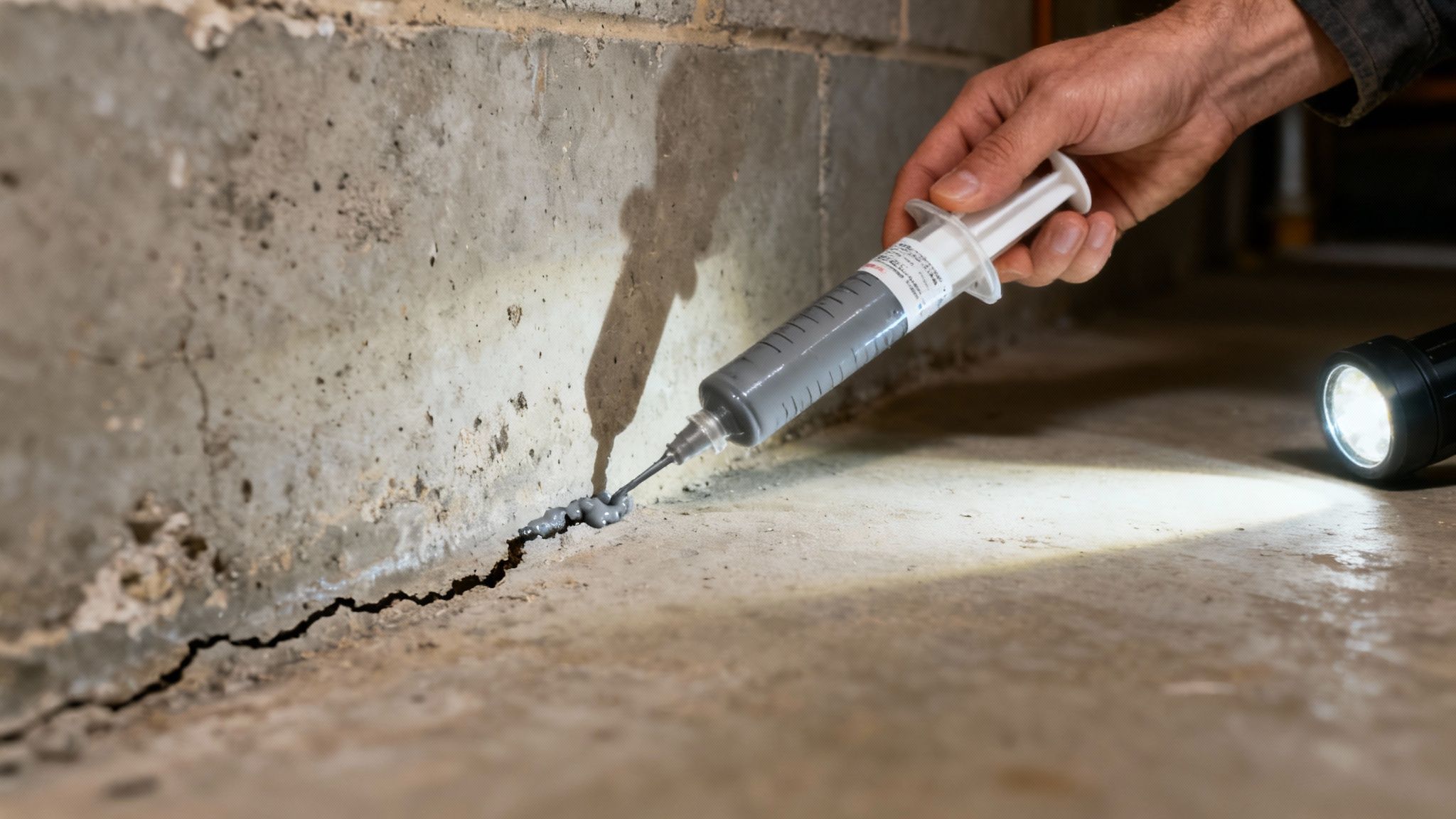
This water infiltration is more than just a nuisance; it's a foundational threat that can lead to mold growth, damaged belongings, and expensive structural repairs. Sealing these entry points before the wet, cold weather sets in is a critical step to avoid winter plumbing disasters and protect the value of your property. Addressing a small crack today can prevent a catastrophic failure tomorrow.
Why Foundation Integrity is Crucial for Plumbing Protection
The plumbing systems in older Carmel-by-the-Sea or Pacific Grove homes are often routed through or near the foundation. When water enters through cracks, it increases humidity and can accelerate the corrosion of pipes, especially older galvanized or cast-iron lines. This constant moisture creates a perfect environment for leaks to develop, often in hidden areas that go unnoticed until significant damage has occurred.
Key Insight: Ignoring a small foundation crack can lead to a domino effect. The initial water intrusion can cause mold, which is followed by pipe corrosion and eventually a major leak or burst, turning a simple masonry issue into a complex and costly plumbing emergency.
Professional Foundation Assessment
While homeowners can visually inspect for cracks, significant foundation issues require a specialist. A professional can properly diagnose the cause and recommend the right solution.
- Regular Inspections: We recommend walking the interior and exterior of your foundation each season, especially in the fall before the rainy season begins.
- Look for Warning Signs: Hairline cracks, water stains, or a white, powdery substance called efflorescence are all signs of moisture intrusion that need to be addressed.
- Seal Small Cracks: For minor cracks, an epoxy injection can provide an effective seal. However, this only treats the symptom. A professional can determine if there's a larger underlying issue causing the cracks.
Protecting your home from water intrusion is fundamental to safeguarding your entire plumbing system. If you discover cracks wider than a quarter-inch or notice that smaller cracks are expanding, it's time to seek professional advice to ensure your home is secure for the winter ahead.
7. Test and Maintain Water Shutoff Valves
When a pipe bursts inside a historic Pacific Grove home or a water heater fails in a Castroville property, your first line of defense is the water shutoff valve. Yet, in many older homes, these critical components sit untouched for years, corroding and seizing up. An inoperable valve turns a manageable leak into a catastrophic flood, making a bad situation significantly worse.
Knowing your shutoff valves work before an emergency is a non-negotiable part of winter plumbing preparedness. Regularly testing these valves ensures you can stop water flow instantly, dramatically limiting damage and giving you control when you need it most. This simple check can be the difference between a quick repair and a full-scale home restoration.
Why Functional Valves Are Your Best Defense
Older homes often have original gate or globe valves that are prone to corrosion, especially in the coastal air of Marina or Monterey. If a valve is stuck open, it's useless. If it breaks when you try to force it closed, you've just created a second plumbing emergency. Proactive testing identifies these failures before they can cause harm.
Key Insight: A homeowner who can quickly shut off the water to a burst pipe can prevent thousands of dollars in water damage. Testing your shutoff valves is a crucial step to avoid winter plumbing disasters and ensure you are prepared for the unexpected.
The Professional Approach to Valve Maintenance
We strongly advise a professional inspection to avoid breaking a brittle valve. An experienced plumber knows how to safely test and maintain these critical components.
- Schedule Biannual Checks: We recommend testing all shutoff valves in early fall and again in the spring.
- Locate Every Valve: A pro can identify and gently test the valves for each toilet, sink, washing machine, and your main water heater.
- Address Stuck Valves Safely: If a valve meets significant resistance, we have the tools and expertise to free it or replace it without causing a leak.
- Label Everything: As part of our service, we use waterproof tags to clearly label each valve so you can find the right one quickly during a crisis.
A valve that won't turn or leaks when operated is a ticking time bomb. Addressing these issues with a planned, professional repair is far better than discovering the problem during a winter emergency. Learn more about how our seasonal inspections can ensure your entire system is winter-ready.
8. Flush Hot Water Heater and Inspect for Leaks
Your water heater works tirelessly, but over time, mineral sediment from the hard water common in Castroville and Salinas settles at the bottom of the tank. This layer of grit and scale forces the unit to work harder to heat the water, reduces its efficiency, and can accelerate internal corrosion. In an older home with an aging water heater, this buildup is a ticking time bomb for a mid-winter failure.
An annual flush is a critical maintenance task that removes this destructive sediment, improving performance and extending the life of your unit. It's a proactive step to avoid the shock of waking up to a cold shower and a flooded garage in January, a scenario that often leads to paying premium prices for an emergency replacement.
Why Flushing is Essential for Older Water Heaters
Older homes in communities like Pacific Grove often have water heaters that are ten years old or more. These units are highly susceptible to sediment-related problems. As the sediment layer grows, it can mask pinhole leaks, cause loud popping noises, and lead to premature tank failure. A simple flush allows for a thorough inspection to catch these issues early.
Key Insight: Flushing your water heater annually can reduce heating costs by improving efficiency and helps identify early signs of corrosion, preventing a catastrophic leak that could damage your floors, walls, and foundation.
Professional Water Heater Maintenance
A full inspection and flush are best performed by a licensed plumber to ensure safety and thoroughness. Here are the key steps we take to protect your system:
- Schedule an Annual Flush: We recommend flushing your heater in the fall, ideally in October, before it comes under heavy use during the colder months.
- Clear the Sediment: The process involves draining the tank until the water runs clear, which effectively removes the insulating layer of mineral buildup.
- Inspect Key Components: We check the drain valve for corrosion, test the temperature and pressure relief (T&P) valve, and inspect the anode rod, replacing it if necessary to prevent tank rust.
- Set for Safety and Efficiency: We ensure the thermostat is set to a safe and efficient 120°F to prevent scalding and save energy.
Regular maintenance is the best way to avoid winter plumbing disasters related to your water heater. To ensure your unit is ready for the season, it's wise to follow a professional checklist. Learn more about our comprehensive water heater maintenance schedule to keep your home safe and warm all winter.
8-Item Winter Plumbing Maintenance Comparison
| Action | Implementation Complexity 🔄 | Resources & Cost ⚡ | Expected Outcome ⭐📊 | Ideal Use Cases | Key Advantages 💡 |
|---|---|---|---|---|---|
| Insulate Exposed Pipes | Low — simple wrap or heat tape; DIY-friendly | Low materials ($0.50–$2/ft for foam); heat tape adds energy cost | ⭐⭐⭐⭐ — Prevents freezing, reduces heat loss and burst risk | Unheated basements, attics, crawl spaces; older homes with vulnerable routing | Inexpensive year-round protection; start in October, use closed-cell foam |
| Drain and Disconnect Outdoor Hoses | Very low — quick manual task (15 min) | Minimal — no tools; optional frost-proof faucet $50–$100 | ⭐⭐⭐ — Prevents spigot/hose freeze damage and exterior leaks | Homes with outdoor hoses, original brass/cast-iron spigots, rural properties | Fast, low-cost prevention; schedule in Sept and hang hoses vertical to drain |
| Shut Off Exterior Water Supply Lines | Moderate — locate/test valve; may require service if stuck | Low to moderate — diagnostic or valve replacement ($50–$150) if needed | ⭐⭐⭐⭐ — Stops water to exterior lines and limits freeze damage | Homes in cold climates, pre-1950s houses, properties with outdoor lines | Critical for winterization; mark and test valve, upgrade lever-style if stiff |
| Clear Gutters and Downspouts | Moderate — ladder work and debris removal; safety needed | Moderate — DIY time or pro service $150–$300; gutter guards optional | ⭐⭐⭐⭐ — Prevents ice dams, foundation water intrusion, and mold | Tree-lined lots, older homes with settled foundations, heavy-leaf seasons | Protects foundation and roofs; clean in late Oct and extend downspouts 4–6 ft |
| Winterize Sump Pumps & Foundation Drainage | Moderate–High — testing, cleaning, install backup | Moderate–High — battery backups $300–$800; pro testing $100–$200 | ⭐⭐⭐⭐ — Prevents basement flooding and preserves equipment during outages | Basements in flood-prone or freeze-thaw regions; older homes with weak drainage | Test monthly Sep–May; install battery backup and secure discharge away from foundation |
| Inspect & Repair Basement Cracks | Moderate–High — inspection, diagnosis; some repairs DIY, major fixes professional | Variable — DIY caulk small cracks; professional repairs $1,000–$5,000+ | ⭐⭐⭐⭐ — Stops water intrusion, mold growth, and structural progression if done early | Older foundations, visible cracking, homes with efflorescence or seepage | Early sealing much cheaper than major repair; monitor and mark new cracks |
| Test & Maintain Interior Shutoff Valves | Low — turn and inspect valves; simple maintenance | Low — time and penetrating oil; replacement $50–$150 per valve if needed | ⭐⭐⭐ — Ensures emergency control and reduces damage window | Homes with aging/corroded valves, preemptive emergency preparedness | Test Sept & Mar, label valves, apply penetrating oil to sticky stems |
| Flush Hot Water Heater & Inspect | Moderate — drain/flush and inspect T&P/anode; some scald risk | Moderate — DIY or pro $100–$200; anode $200–$400; replacement $1,000+ | ⭐⭐⭐⭐ — Extends heater life, improves efficiency, detects leaks early | Aging heaters, homes with sediment-prone water, units 10+ years old | Flush annually (Oct), check anode rod, set 120°F and inspect drain valve |
Partner with a Local Expert to Winter-Proof Your Plumbing
As the days get shorter and a chill settles over Monterey Bay, the last thing any homeowner wants is a sudden, catastrophic plumbing failure. This guide has walked you through the essential steps to avoid winter plumbing disasters, from insulating pipes in your Carmel Valley home to ensuring your sump pump in Watsonville is ready for the rainy season. By taking these proactive measures, you're not just performing routine maintenance; you're building a formidable defense against the costly and stressful emergencies that cold, wet weather can trigger in older homes.
The key takeaways from our seasonal checklist are clear: proactive prevention is always better than reactive repair.
- Insulating exposed pipes is your first line of defense against freezing.
- Securing your outdoor plumbing, like hoses and spigots, prevents cracks and bursts.
- Maintaining clear drainage, from gutters to foundation drains, protects your home's very structure from water damage.
- Inspecting key systems, like your water heater and shutoff valves, ensures they are reliable when you need them most.
These tips provide a strong foundation for any homeowner. However, the unique character of older homes in Salinas, Prunedale, and Pacific Grove often hides complex issues invisible to the untrained eye. Decades-old plumbing materials, shifting soil affecting underground lines, and outdated pressure regulators are common local problems that require professional expertise. Simply put, while these tips raise awareness, they can't replace the trained eye of an experienced plumber who understands the specific challenges of our region's housing stock.
This is where true peace of mind comes from. Partnering with a local expert transforms your winter preparation from a guessing game into a strategic plan. A professional inspection doesn't just check off boxes; it provides a comprehensive assessment tailored to your property. Technicians can spot subtle signs of corrosion, test for backflow prevention compliance, and identify weak points in your system before they fail under winter stress.
For over 35 years, our family-owned business has helped residents from Marina to Seaside protect their properties. We’ve seen firsthand how a simple, affordable fall inspection can prevent a multi-thousand-dollar emergency in the middle of a January cold snap. Taking control of your home’s plumbing health before the season turns is the single most valuable step you can take to ensure a warm, dry, and worry-free winter. Don't wait for a frantic, late-night call; empower yourself with professional support today.
Ready to ensure your older home is truly prepared for the coming season? Let the trusted, local experts at Alvarez Plumbing provide a comprehensive seasonal inspection. Schedule your appointment today by visiting Alvarez Plumbing and gain the confidence that your home is protected all winter long.