Imagine waking up on a chilly Monterey morning to a cold shower. It’s a frustrating experience many Salinas and Carmel Valley homeowners face when their water heater fails without warning. For over 35 years, our family-owned team at Alvarez Plumbing has seen it all, from the rumbling heaters in Prunedale to the rust-stained water in Pacific Grove. A sudden breakdown isn't just a pain; it can lead to a flooded garage, costly water damage, and an unexpected, expensive emergency call.
The good news is that most water heaters give clear clues before they give out completely. Based on thousands of service calls right here in Monterey County, we’ve learned exactly what to look for. In this guide, we'll walk you through the 7 surefire signs your water heater is about to fail. We’ll explain why our local water in areas like Salinas and Monterey, which is heavy with minerals, can be especially tough on these appliances. This isn't about guesswork; it's about knowing what to look for so you can act before you're left in the cold.
1. Rusty or Discolored Water (A Telltale Sign of Internal Decay)
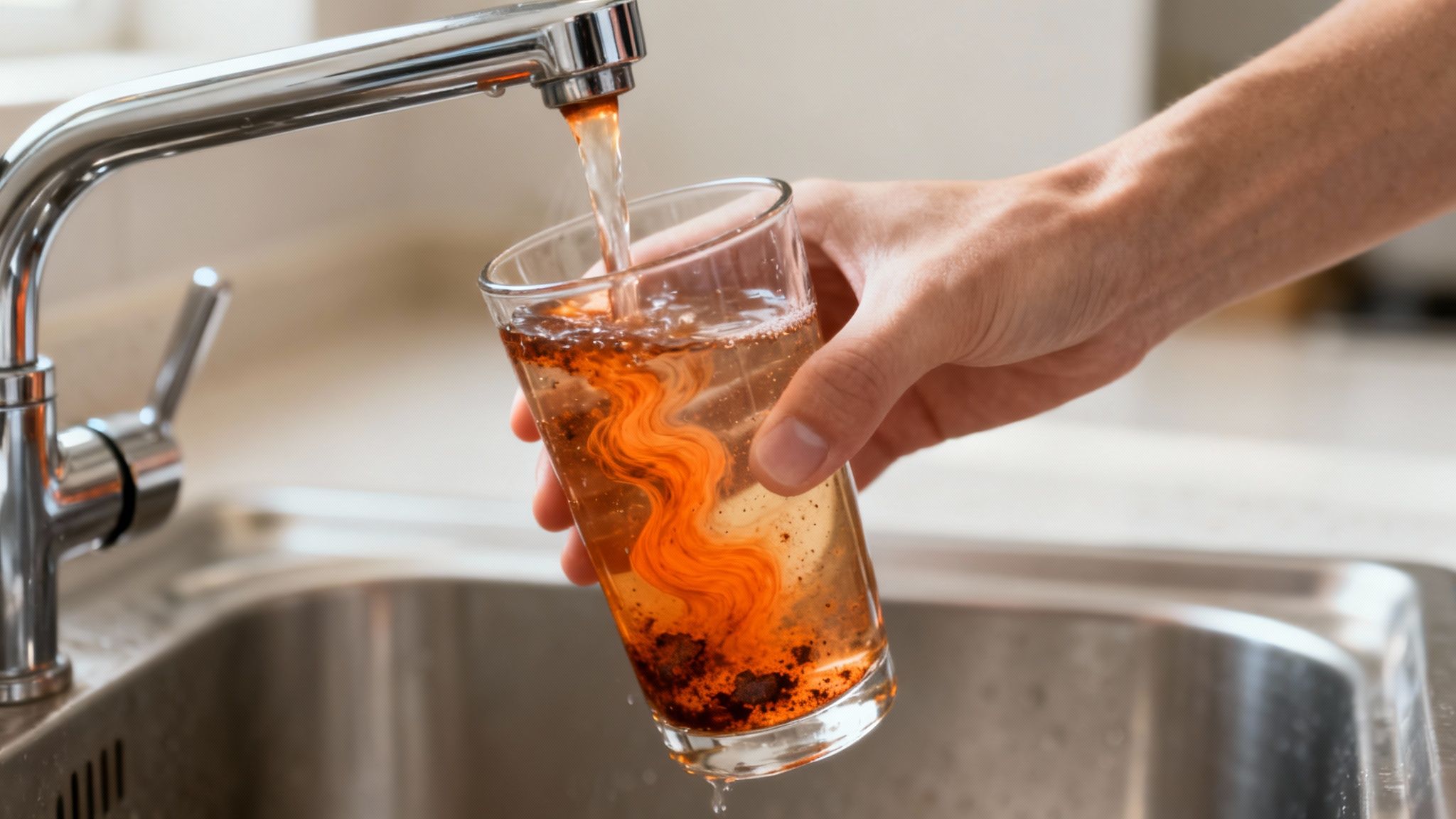
When you turn on a hot water tap in your Salinas home and see brown or orange-tinted water, it’s a major red flag. This isn't just ugly; it's one of the clearest signs your water heater is about to fail. It means the inside of your water heater tank is rusting away, sending those rust particles to your faucets.
The steel tank of your water heater has a special lining and a part called an anode rod to prevent rust. Over time, this protection wears out. This happens even faster with the hard water we have throughout Monterey County, from Marina to Castroville. The minerals in our water speed up the rusting process. Once rust takes hold, the tank is much weaker, putting you at risk of a major leak or a complete burst.
How to Confirm the Water Heater Is the Problem
Before you assume the worst, it’s smart to check where the rusty water is coming from.
- The Hot vs. Cold Test: Run only the hot water in a sink or bathtub. If the water is rusty, turn it off and run only the cold water. If the cold water is clear, the problem is almost certainly inside your water heater.
- Check Multiple Faucets: Does rusty water appear at every hot water tap? If it's just one faucet, the issue might be with that pipe. If it's everywhere, the heater is the likely cause.
- For Homes with Wells: For homeowners in areas like Prunedale or Carmel Valley with private wells, minerals like iron can also cause discoloration. If both hot and cold water are affected, it may be your water quality. You can find out more about well water testing to be sure.
If your tests show the water heater is rusting from the inside, it's not a matter of if it will fail, but when. Contact a licensed plumber to schedule an inspection and avoid a costly, water-damaging emergency.
2. Loud Rumbling, Popping, or Banging Noises (The Sound of Internal Stress)
If your water heater starts making noises like popcorn popping or a pot of boiling water rumbling, it’s not just annoying. These sounds are a clear warning that your unit is under a lot of stress. This is a big sign your water heater is about to fail. The cause is almost always sediment buildup at the bottom of the tank, a common problem for homeowners from Seaside to Watsonville because of the mineral-rich hard water in our region.
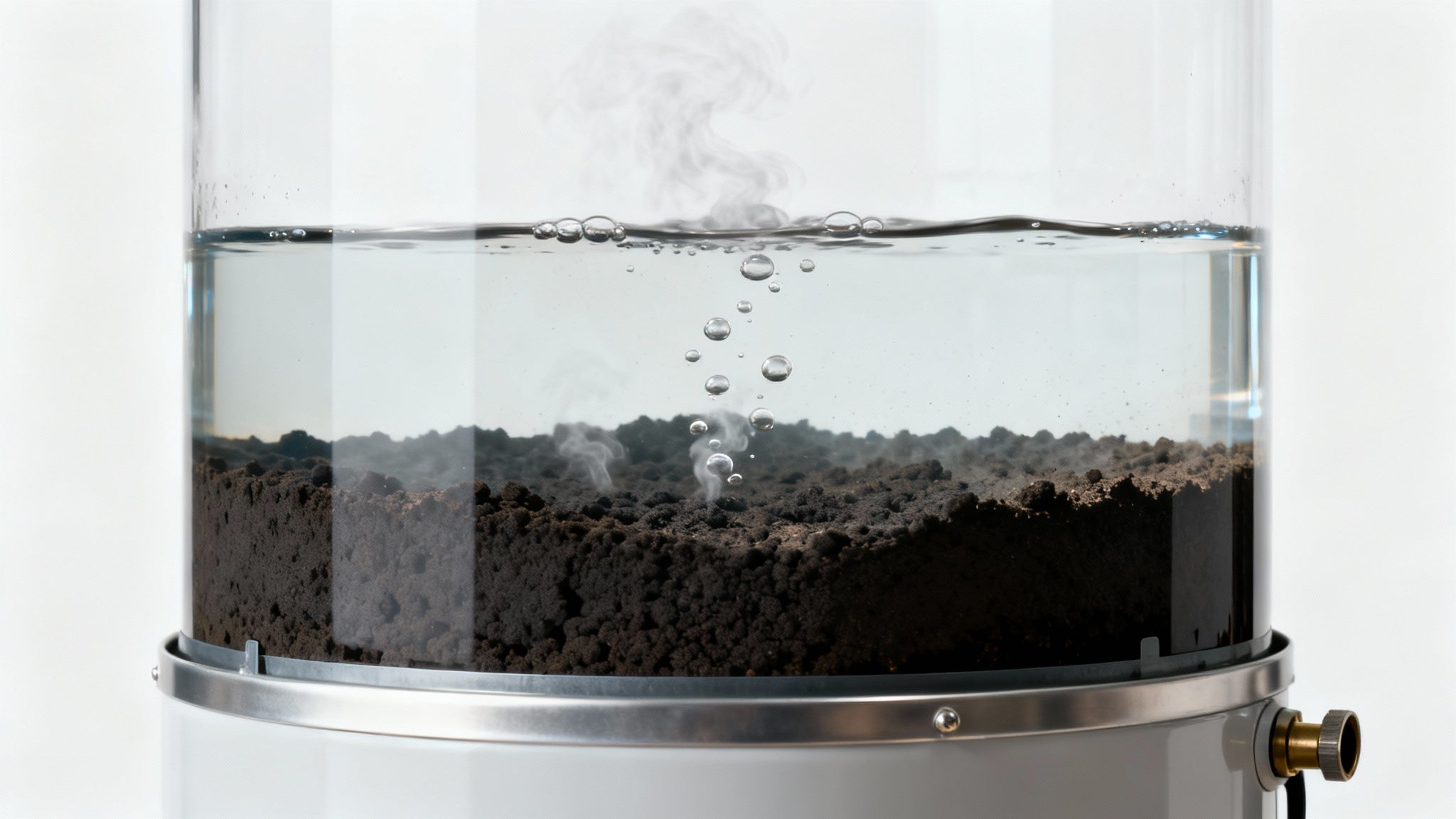
Over the years, minerals like calcium and magnesium settle at the bottom of the tank, forming a thick, hard layer. This layer traps water underneath it. When the heater turns on, it superheats this trapped water, creating steam bubbles that burst through the sediment. That’s what causes the popping and banging noises. This process not only wastes energy but also physically damages the tank's inside lining, leading to cracks, leaks, and eventual failure.
What to Do About Water Heater Noises
Don't ignore these sounds. Here are a few simple steps to understand the problem.
- Listen Closely: Stand near the water heater when it's actively heating water (like after a shower). If the rumbling coincides with the heating cycle, sediment is the cause.
- Try to Get a Video: Recording a short video of the noise on your phone can be very helpful for our technicians when they arrive at your Marina or Pacific Grove home.
- A Professional Flush Can Help: For minor buildup, a professional tank flush can quiet the unit down. However, if sediment has been building up for years, the damage may already be done. This is a job for a professional, as DIY flushing can sometimes cause more problems.
- Prevent Future Buildup: Regular maintenance is the best way to extend your heater’s life. Following a proper water heater maintenance schedule can prevent this problem from happening in the first place, especially with our hard Monterey water.
Loud noises are your water heater's cry for help. Ignoring them often leads to a sudden tank failure. If your unit is rumbling, contact Alvarez Plumbing for a professional inspection.
3. Lack of Hot Water or Insufficient Temperature (A Sign of Internal Failure)
One of the most annoying signs your water heater is about to fail is when it just can't keep up. You might notice your shower turning lukewarm, or you run out of hot water after just one load of laundry. This is a clear signal that important parts inside the heater are failing.
This problem often comes from sediment buildup, a big issue in Salinas and Marina because of our hard water. A thick layer of mineral scale can form at the bottom of the tank, creating a barrier between the heating element and the water. This forces the unit to work much harder and longer, leading to worn-out parts. Other causes could be a failing thermostat or a burned-out heating element.
How to Figure Out the Hot Water Shortage
Before assuming the worst, a few simple checks can help identify the cause.
- Check the Thermostat: Make sure your water heater’s thermostat is set correctly, usually around 120°F. Sometimes a setting gets bumped or a circuit breaker trips (for electric models). If changing it doesn't help, the thermostat itself may be broken.
- Time Your Hot Water: Pay attention to how fast the hot water runs out. If a tank that used to last an hour in your Pacific Grove home now only lasts 15 minutes, it’s a strong sign of a serious problem.
- Consider Your Needs: Has your family grown? It's possible your unit is just too small. If your water heater is old and struggling, it might be the perfect time to explore a modern, high-efficiency unit. You can discover the advantages of tankless water heater efficiency to see if an upgrade makes sense for your family.
If your hot water supply keeps getting worse, don't wait for a completely cold shower. Contact Alvarez Plumbing to have an expert diagnose the issue and recommend the best solution.
4. Water Leaks and Pooling Around the Tank (An Unmistakable Cry for Help)
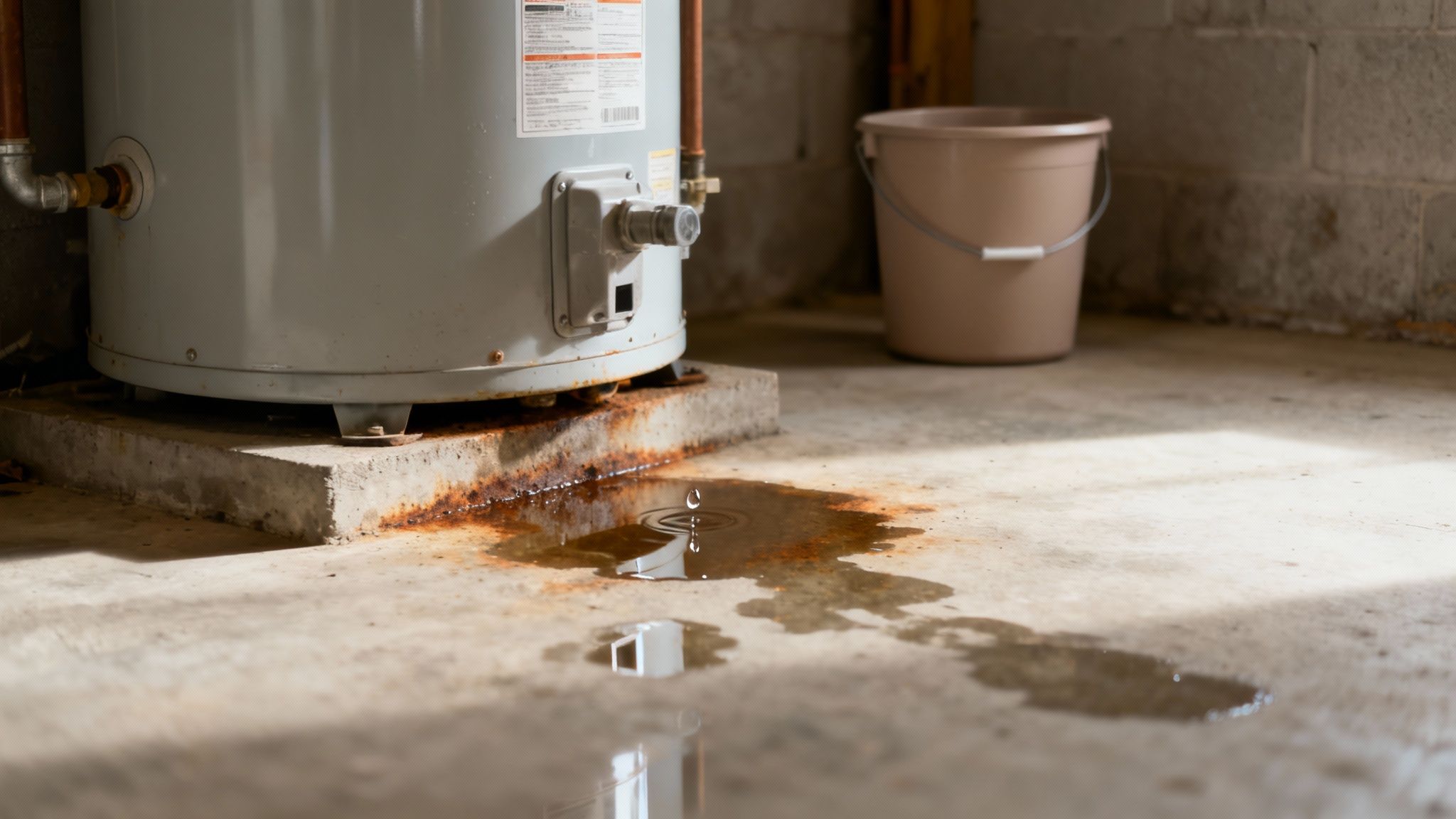
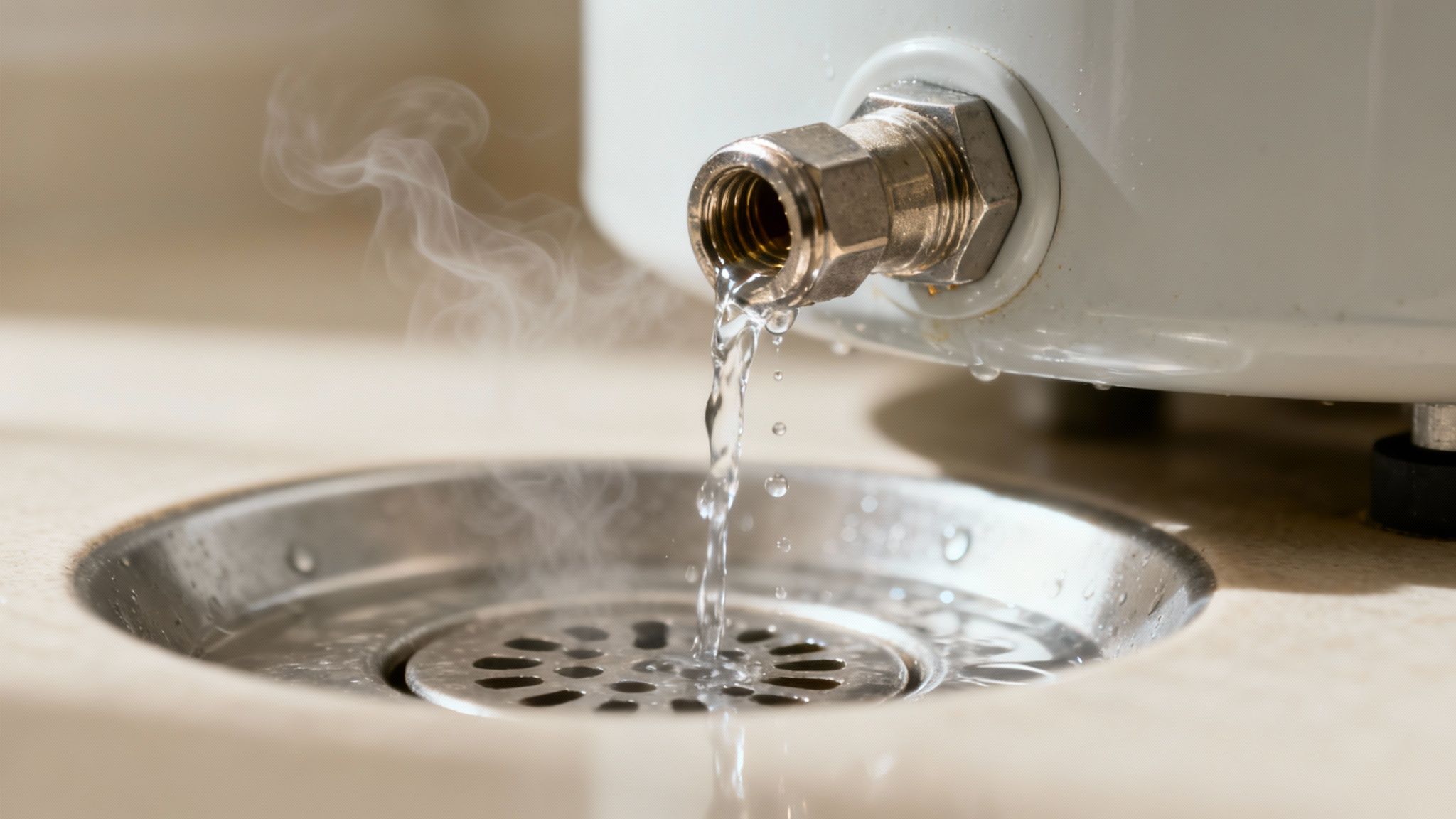
Finding a puddle of water around your water heater is one of the most urgent signs your water heater is about to fail. A visible leak is a clear sign that the unit's tank has been damaged, often from internal rust.
A small drip might not seem like a big deal, but it’s a ticking time bomb. The pressure inside the tank can cause a tiny leak to turn into a major flood without warning, damaging floors and walls. From garages in Marina to utility closets in Pacific Grove, water damage from a failed heater is a common and expensive emergency. That's why you need to call a pro right away.
What to Do If You See a Leak
While a puddle is a clear sign of trouble, doing a quick check can help our technicians diagnose the issue faster.
- Inspect All Connections: Carefully check the water pipes at the top of the tank. Sometimes a leak is just a loose fitting that can be tightened by a plumber. Also, look at the temperature and pressure (T&P) relief valve, as it can leak if pressure is too high.
- Trace the Drip: Try to find where the water is coming from. If it’s dripping from the bottom of the tank itself, it's a sure sign of internal failure, and the unit must be replaced.
- Rule Out Condensation: On cool, damp days, like during our coastal fog season in Carmel-by-the-Sea, condensation can form on the tank. Wipe the tank dry and check back later. If the water returns, it’s a true leak.
If you find any leak, it's a critical warning. You can learn more about professional leak detection methods that pinpoint the source. For your safety, the best thing to do is to call the experienced team at Alvarez Plumbing immediately for an emergency inspection.
5. Your Water Heater's Age (The Unavoidable Factor)
Of all the signs your water heater is about to fail, its age is the most reliable. A standard tank-style water heater usually lasts 8 to 12 years. If your unit is older than that, it's living on borrowed time, and a sudden failure could happen any day.
This timeline is often shorter for us here in Monterey County. The hard water from Seaside to Pacific Grove forces the unit to work harder and speeds up internal rust and sediment buildup. A heater that might last 12 years somewhere else could fail in just 8 or 9 years here. This makes age a very important factor to watch.
How to Find Your Water Heater's Age
Finding out how old your unit is takes just a few minutes and is the first step toward preventing a disaster.
- Look for the Sticker: On the side of your water heater, you will find a large label. Look for an "installation date" or "mfg. date."
- Decode the Serial Number: If there's no clear date, the serial number has the answer. Most companies hide the year and month of production in this number. For example, a serial number starting with "G08…" often means it was made in the 7th letter (G) month, July, of 2008. You can search online for your brand's serial number format to be sure.
- Plan Ahead: If your water heater is over 10 years old, you should start planning for its replacement now, even if it's working fine. Budgeting ahead lets you choose a modern, energy-efficient model without the stress of an emergency. You can get a better understanding of water heater replacement costs to prepare.
If your heater is getting old, don't wait for a flood. Contact Alvarez Plumbing to discuss your options for a modern, reliable, and energy-efficient replacement.
6. Pressure Relief Valve Leaking (A Critical Safety Warning)
Your water heater’s Temperature and Pressure (T&P) relief valve is its most important safety feature. This small valve is designed to open and release water if the pressure inside the tank gets dangerously high, preventing an explosion. If you notice it leaking or dripping, it's not a small problem; it's a critical sign your water heater is about to fail.
A leaking T&P valve means one of two serious things: either the valve itself is broken, or there's an extreme pressure problem inside the tank. Ignoring this is one of the most dangerous things a homeowner can do, as it removes the only safety net preventing a catastrophic tank failure.
How to Check the T&P Valve
Because this is a safety issue, you should be careful. Here’s what homeowners from Pacific Grove to Watsonville can look for before calling a professional.
- Listen for Hissing: A hissing or whistling sound often means steam or hot water is escaping through the valve.
- Check the Pipe: The T&P valve has a pipe that directs water away from the unit, usually toward the floor. If you see constant dripping or a puddle below this pipe, the valve is not working right.
- Do Not Try to Fix This Yourself: This is not a DIY job. A problem with the T&P valve means your system is under dangerous pressure. Never try to plug or cap the discharge pipe.
A leaking T&P valve is a clear signal that your water heater is operating under dangerous conditions. Contact Alvarez Plumbing immediately to have a licensed technician safely find the cause and protect your home and family.
7. Visible Rust and Crusty Deposits (External Signs of Internal Failure)
While some water heater problems are hidden, others are in plain sight. Obvious rust or crusty buildup on the outside of your heater is a major sign it's about to fail. If you see rust streaks on the tank, green staining around copper pipes, or a chalky white crust on connections, your unit is screaming for help.
The hard water across Monterey County is full of minerals. These minerals don't just build up inside the tank; they can also create crusty deposits around valves and pipes, which shows a slow, constant leak. Rust on the tank's exterior often means the steel is rusting from the inside out and is close to bursting.
How to Inspect for External Problems
A quick visual check can tell you a lot about your water heater's health.
- Check the Connections: Look closely at the hot and cold water pipes on top of the tank. Do you see a white, chalky substance (limescale) or a blue-green crust (copper corrosion)? Both point to a slow leak.
- Examine the Tank: Scan the sides of the tank for any rust streaks. This often means the tank's inner lining has failed.
- Inspect the Base: Check around the bottom of the water heater for rust or moisture. Rust at the base is very dangerous, as this is where the tank needs to be strongest. For homeowners in coastal areas like Marina or Seaside, the salty ocean air can make this happen even faster.
If you spot significant rust or crusty deposits, the tank's failure is likely very soon. Don't wait for a flood. Contact Alvarez Plumbing immediately to have one of our experts look at the damage and recommend a safe replacement.
Don't Wait for a Cold Shower: Your Next Steps
Knowing the 7 surefire signs your water heater is about to fail is about protecting your home and your budget. From rusty water to a rumbling tank, each of these warnings is a chance to act before a small issue becomes a big disaster. Ignoring them can lead to major water damage, wasted energy, and a stressful emergency replacement.
From Warning Signs to Wise Decisions
Being proactive is the key. The best course of action depends on what you've noticed.
- For Minor Signs: If you hear occasional noises or your water isn't quite as hot, this is the perfect time for professional maintenance. For example, a simple tank flush performed by a licensed plumber can remove the mineral sediment that causes rumbling and inefficiency. This simple step can add years to your heater's life.
- For Serious Signs: If your heater is over 10 years old, is actively leaking, and has visible rust, it's time to talk about replacement. This is a great opportunity to upgrade to a modern, energy-efficient model that can lower your utility bills and provide reliable hot water for years. We can help you choose the best option, from traditional tanks to new tankless systems that are perfect for your home and our local Monterey water.
As a family-owned business serving our neighbors from Carmel-by-the-Sea to Watsonville since 1988, we know that a little foresight prevents a lot of headaches. Don't let a failing water heater ruin your day.
Have you spotted one or more of these seven signs? Don't leave it to chance. Contact the trusted local experts at Alvarez Plumbing for an honest inspection and professional recommendation. We're here to provide the peace of mind that comes from knowing your home's plumbing is in reliable hands.