Choosing the right size water heater is hands-down the most critical part of the process. It's the key to getting consistent hot water without getting hammered by your energy bills, especially with our unique coastal climate in Monterey County. A professional will look at two main metrics: the First Hour Rating (FHR) for traditional tank heaters and Gallons Per Minute (GPM) for the newer tankless models. This is about so much more than just counting bathrooms; it's about matching a unit to your family's actual lifestyle and our local conditions.
Why Generic Sizing Fails in Monterey County
When you’re trying to pick a water heater, those generic online sizing charts just don't work for a home here in Monterey County. Why? A chart made for the national average can't possibly account for the realities we face—from the chilly, foggy mornings that roll into Pacific Grove off the bay to the hot water demands of a big, busy family in Salinas. A one-size-fits-all approach is a surefire recipe for either ice-cold showers or a ridiculously high utility bill.
Since our family business started back in 1988, we've seen firsthand what happens when sizing goes wrong. We’ve had to replace undersized units in Carmel-by-the-Sea that couldn't keep up with weekend guests and oversized tanks in Seaside that were just burning money every single day. The core issue is simple: national averages completely ignore our local environment.
Our Local Climate Matters
One huge factor those online calculators miss is our groundwater temperature. The water coming into your pipes from the Monterey Bay area is a lot colder than in warmer, inland parts of the country. This means your water heater has to work much, much harder just to get that water up to a comfortable 120°F.
A unit that works perfectly fine in a warmer climate might really struggle here, leaving you with lukewarm water—especially during those brisk fall and winter months in Prunedale or Carmel Valley. This is exactly why a local, on-site assessment by a licensed plumber is so important.
This need for a greater "temperature rise" directly impacts which model is right for your home. A tankless unit, for example, needs a higher GPM rating here than it would somewhere else to deliver the same amount of hot water. For a tank-style heater, its recovery rate—how fast it can heat a new batch of water—becomes one of the most vital stats for families in Watsonville or Castroville.
It's About Your Lifestyle, Not Just Your House
Beyond our local climate, getting the right size is deeply personal. Your family's daily habits are the real test of your hot water needs. Think about a typical morning in your house:
- Is someone showering at the same time the dishwasher is running?
- Do you have a couple of teenagers who love taking long, back-to-back showers?
- Do you often have family or friends stay over, temporarily increasing your peak demand?
Simply counting the number of bathrooms and bedrooms doesn't capture that reality. A retired couple living in a four-bedroom home in Marina has completely different hot water needs than a family of five in a three-bedroom house in Salinas. This guide will help you understand the problem, but the best solution is always a professional assessment.
Calculating Your Home's Peak Hot Water Demand
Before a plumber can recommend a specific water heater model, they need to nail down one critical number: your home's peak hot water demand. This isn't just a technical term; it's the most important piece of the puzzle. It represents the absolute maximum amount of hot water your household uses during the busiest hour of the day.
Getting this right helps you avoid the two classic water heater mistakes. One is buying a unit that’s too small, leading to surprise cold showers. The other is getting a system that’s way too big, forcing you to pay to heat water you never use.
Imagine a typical weekday morning in a Prunedale home. Someone's in the shower, and the dishwasher is running after breakfast. That overlap, that moment of maximum use, is exactly what a professional needs to calculate.
A Brief Look at Finding Your Peak Demand
While a licensed plumber will do this with precision, you can get a rough idea yourself. The goal is to estimate your peak demand in Gallons Per Minute (GPM) by adding up the fixtures running at the same time.
First, think about that single busiest hour. What hot water appliances and fixtures are likely running at the same time? That's the key.
Estimating Peak Hot Water Use in Your Home
You can get a rough estimate by adding up the GPM for all the fixtures you might be using simultaneously during that busiest hour.
| Appliance or Fixture | Average Flow Rate (Gallons Per Minute – GPM) |
|---|---|
| Standard Showerhead | 2.0 – 2.5 GPM |
| High-Efficiency Showerhead | 1.5 – 2.0 GPM |
| Bathroom Faucet | 1.0 – 1.5 GPM |
| Dishwasher | 1.5 – 2.5 GPM |
| Washing Machine (Hot Water Cycle) | 2.0 – 3.0 GPM |
| Kitchen Faucet | 1.5 – 2.0 GPM |
Let's see this in action. A family in Marina getting ready for the day might have a shower going (2.5 GPM) while the dishwasher is on (2.0 GPM). Their peak demand is around 4.5 GPM. A home in Castroville with two teenagers might have two showers running at once, pushing their demand to nearly 5.0 GPM.
This is just an estimate. A professional assessment is needed for an accurate figure, but it helps you understand the problem.
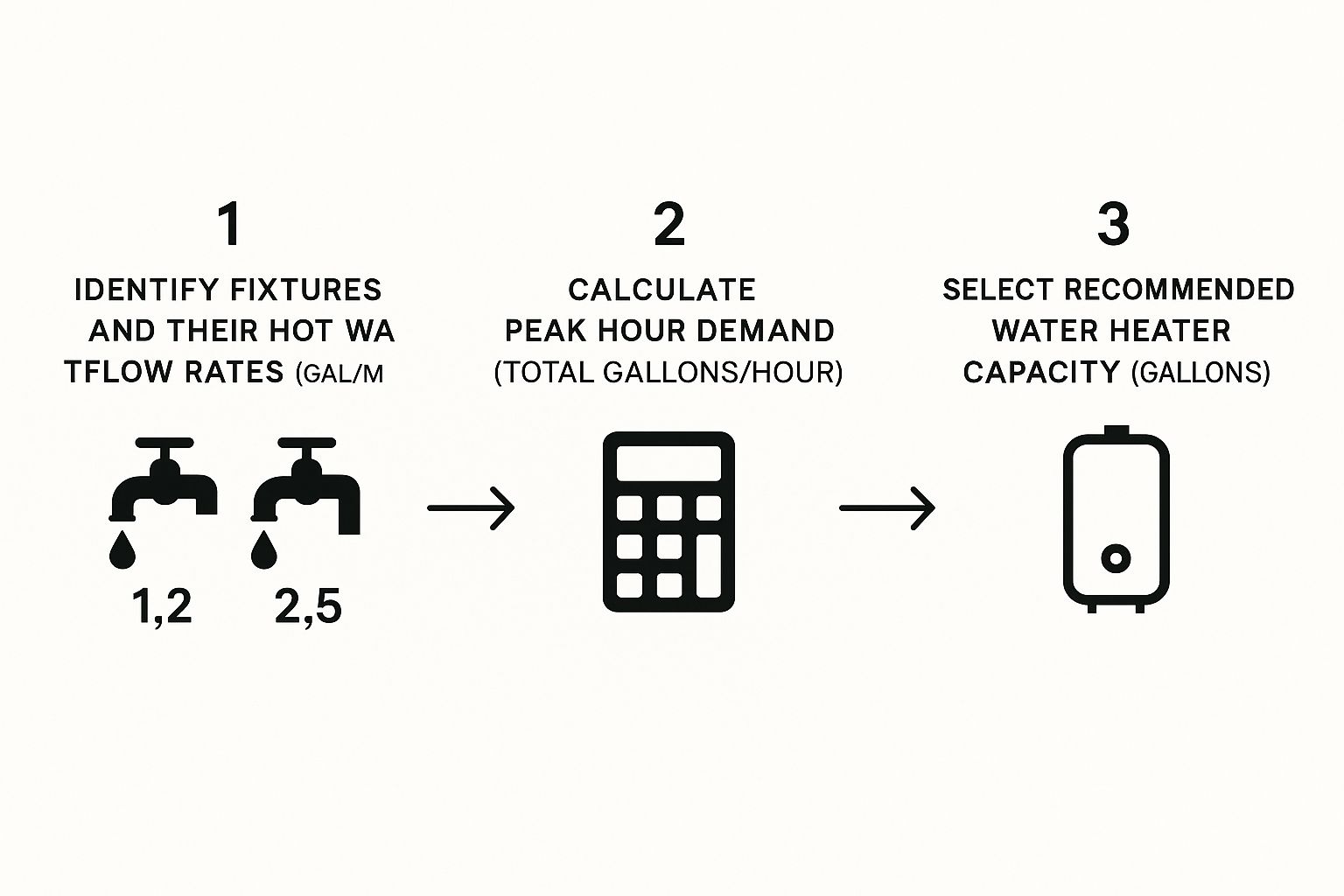
As you can see, figuring out your total GPM is the essential link between understanding your home's unique needs and choosing the right equipment for the job.
Why This Number Matters So Much
Your GPM figure is the language that water heaters understand. For a tankless unit, this number directly tells you what size you need. A home with several bathrooms and a busy family in Monterey might require a tankless heater with a 7 to 10 GPM capacity to keep up.
For a traditional tank-style heater, the equivalent metric is the First Hour Rating (FHR), which tells you how many gallons of hot water the unit can deliver in that first busy hour of use.
Knowing your demand is what ensures you get a system that actually works for your lifestyle without wasting energy and money.
Our Pro Tip: When talking to a plumber, be honest about your usage. We've seen countless homeowners underestimate their needs, only to end up with a system that can't keep up. If you've got a big spa-style tub or high-flow "rain" showerheads, make sure you mention it.
Water conservation plays a big role here, too. Switching to high-efficiency fixtures doesn't just lower your GPM demand; it also helps you save water, which is crucial during our dry seasons. A lower peak demand might mean you can install a smaller, less expensive water heater that still meets your needs perfectly.
Ultimately, this guide is about making you aware of the problem. When you call a professional knowing your peak demand is the key, you're in the driver's seat, ensuring you get a system that's just right for your home, whether you live in Salinas or Carmel-by-the-Sea.
Sizing A Tank vs. Tankless For Our Coastal Climate
Alright, now that you have a rough idea of your home's peak hot water demand, let's look at how that number informs the choice between the two main types of water heaters: traditional tank models and their modern tankless cousins.
This isn't just about picking what looks best. Here in Monterey County, the right choice is deeply connected to our unique coastal environment. A heater that works just fine in a warmer, inland city can seriously underperform here, leaving you with a chilly shower on a classic foggy morning in Pacific Grove.
As a family business serving this area since 1988, we’ve seen it all. We know which models can stand up to our local conditions and which ones just can't hack it.
Sizing A Traditional Tank Heater
When you're looking at a classic storage tank water heater, your peak demand number points a professional to one crucial metric: the First Hour Rating (FHR). This is the single most important number on a tank heater's spec sheet. It tells you exactly how many gallons of hot water the unit can push out in one continuous hour, starting from a full, hot tank.
So, if your household needs 30 gallons of hot water during that chaotic morning rush, a plumber will look for a tank heater with an FHR of at least 30.
But wait, there's a catch, especially for our area. A pro also considers the recovery rate. This is all about how fast the heater can bring a fresh batch of cold water up to temperature after the initial supply is gone. For a big family in Watsonville with back-to-back showers, a high recovery rate is the secret weapon that prevents the last person from getting a cold surprise.
Our Pro Tip: Don't get fixated on just the gallon size of the tank. We've seen 40-gallon models with a fast recovery rate run circles around sluggish 50-gallon units. A professional considers the one-two punch of FHR and recovery speed to deliver consistent comfort.
The Big Challenge For Tankless Heaters: Our Cold Water
With tankless, or "on-demand," water heaters, the sizing calculation is different. It comes down to two things: your peak GPM and a concept called temperature rise. This is where our local geography throws a curveball.
Temperature rise is simply the amount of work a tankless unit has to do to heat our chilly groundwater up to your target hot water temp, which is usually around 120°F. The water coming out of the ground in Seaside or Carmel-by-the-Sea is a lot colder than in other parts of the country, often hovering in the low 50s.
Let's do the quick math for a typical Carmel Valley home:
- Your desired hot water: 120°F
- Cold water from the tap: 55°F
- Required Temperature Rise: 120°F – 55°F = 65°F
This means your tankless heater has to be powerful enough to lift the water temperature by a whopping 65 degrees while keeping up with your GPM demand. A unit that claims it can deliver 5 GPM in a warmer climate might only manage 3 GPM here because it's working so much harder just to overcome our cold groundwater.
This is a critical detail that national sizing charts almost always miss. In fact, our climate often requires tankless units with 10-20% more power to make up for this difference. This is why a professional assessment is vital. It’s an expensive mistake to get the wrong unit.
Before you make a move, you really need to understand the trade-offs. We’ve put together a guide to help you weigh the benefits of tankless water heaters in our area. It's well worth the read to make sure you get a system that's built for the realities of our beautiful, but chilly, coastline.
Common Sizing Mistakes Local Homeowners Make
Choosing the right size water heater is easily one of the most critical decisions you'll make for your home. It's also where we see the most frustrating and costly mistakes. One little sizing error can lead to years of high energy bills, surprise cold showers, and even cause your brand-new unit to fail way too soon.
With over 35+ years serving communities from Salinas to Carmel-by-the-Sea, we've seen it all. Think of this as a collection of cautionary tales from your neighbors—learning from them can save you a world of trouble.
The "Just In Case" Oversized Tank
We hear this line of thinking a lot, especially in larger homes in Carmel Valley or growing neighborhoods in Prunedale: "Bigger is always better, right? Let's get the huge one just in case." While it seems like a safe bet, oversizing a traditional tank water heater is a classic mistake that's incredibly wasteful.
A massive tank you don't actually need is constantly burning gas or electricity to keep dozens of gallons of water hot, 24/7. This is called standby heat loss, and it means you're paying to heat water that just sits there, cools off, and then gets heated all over again. It’s like leaving your oven on all day just in case you feel like baking cookies later.
Undersizing a Tankless Heater for Our Area
On the flip side, we often see people undersize their tankless water heaters. This usually happens when a homeowner buys a unit based on national averages or misleading online specs, failing to account for Monterey Bay's colder groundwater temperatures.
A tankless heater that's too small for our climate just can't keep up with the temperature rise we talked about earlier. The result? You get frustratingly lukewarm water or see a big drop in pressure when more than one faucet is running. We get calls about this all the time from folks in Seaside and Pacific Grove who bought a "one-size-fits-all" unit online, only to find it can't handle a shower and the kitchen sink at the same time.
An undersized tankless unit isn't just an inconvenience; it's a sign the system is constantly being pushed beyond its limits. This kind of strain can cause premature wear on internal components, leading to more frequent repairs and a shorter overall lifespan for the unit.
Forgetting About Future Plans and Fixtures
Another common oversight is failing to think about the future. So many families in Watsonville or Marina simply replace their old, broken water heater with the exact same size, never stopping to think about what's changed.
- Are you planning a bathroom addition or remodel in the next five years? A whole new bathroom will dramatically increase your hot water needs.
- Have you recently installed high-flow fixtures? That beautiful new spa-style tub or rain showerhead in your Monterey home uses a lot more water than the old fixtures did.
- Has your family grown? The water heater that was perfect for two people might be completely inadequate for a family of four.
Just swapping out the old unit without considering these changes is a recipe for disappointment. A professional assessment isn't just about what you need today; it's about making sure your investment serves you well tomorrow. An improperly sized unit is also more likely to fail prematurely. If you see signs of trouble, you need to act fast. Discovering your water heater is leaking from the bottom is a serious warning that you may need an immediate replacement, which makes a proper sizing assessment even more critical.
Navigating Local Codes and Fuel Types
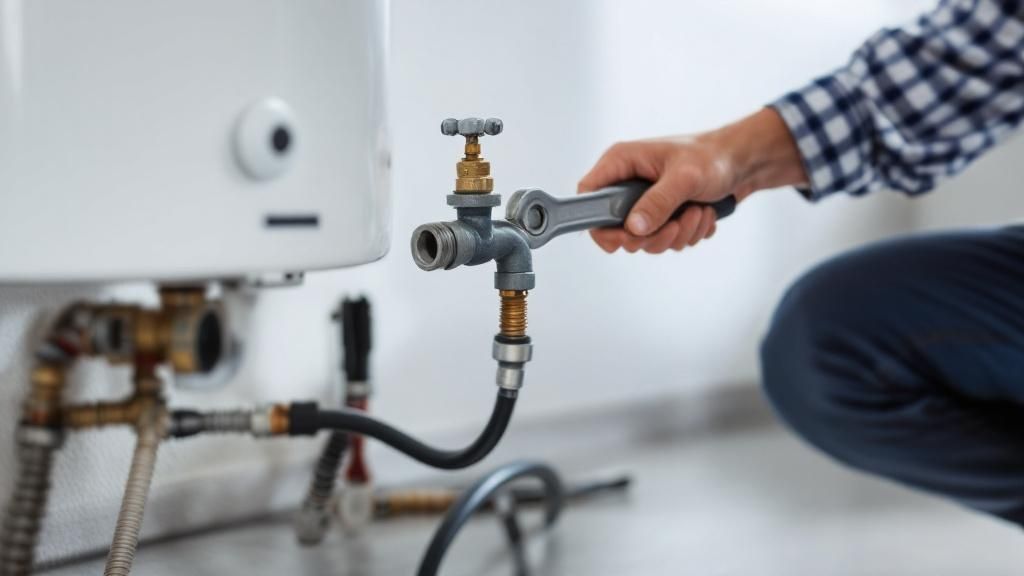
Choosing the right size water heater is a huge step, but the job isn't done yet. A professional installation also involves navigating your local building codes and fuel source. Honestly, these details are where a professional really sets themselves apart from a risky, and potentially costly, mistake.
We've been plumbing here in Salinas and Monterey County since 1988, so we know the local regulations like the back of our hand. An installer from out of the area might not be up to speed on the specific rules that keep our homes safe, especially given our seismic activity.
Monterey County's Non-Negotiable Rules
Here on the Central Coast, every water heater installation comes with a strict set of safety codes. One of the most critical for our area is the requirement for seismic strapping. Any tank-style water heater has to be strapped securely in two spots—one on the upper third and one on the lower third of the tank. This prevents it from tipping over during an earthquake, which is a real concern around here.
Proper venting is another big one, especially for gas heaters.
- Safety First: If a gas heater isn't vented correctly, it can lead to a dangerous buildup of carbon monoxide inside your home.
- Code Compliance: We make sure every single installation meets or exceeds the local codes for vent pipe materials and sizing. It’s about your family’s safety, period.
- Location Matters: The rules can shift slightly depending on where you are. A condo in Carmel-by-the-Sea might have different venting needs than a single-family house out in Prunedale.
These aren't just good ideas; they are absolute requirements for a safe, legal installation. A licensed local plumber makes sure your new unit isn't just the right size, but is fully compliant, protecting your family and your property.
Choosing Your Fuel: Gas vs. Electric
The next piece of the puzzle is figuring out your energy source. Most homes around here run on either natural gas or electricity, and a professional can help you decide on the best bet for your property, budget, and hot water needs.
Natural Gas Heaters
For many folks in Salinas, natural gas is easy to get and is usually cheaper for heating water. Gas models are known for their fast recovery rate, meaning they heat a fresh tank of water much quicker than most electric units. This makes them a great pick for larger families who go through a lot of hot water.
Electric Heaters
Electric water heaters offer more installation flexibility. Since they don't need to be vented, they can be a good solution for apartments, condos, or spots in a home where running a vent pipe just isn't feasible. We install them often in Carmel condos where gas lines aren't available. While they can cost more to run, modern electric models are incredibly efficient. For those looking into green energy, you can even view available solar products that can work with or replace a standard electric heater.
The water heater market is definitely moving toward more efficient systems. On-demand tankless heaters, for example, are seeing an annual growth rate of about 4.6%. This trend is all about getting a system that's precisely matched to a home's specific needs.
Ultimately, local codes and safety devices are all part of a larger system designed to protect your home's entire water supply. Our expertise doesn't stop at the heater itself; it extends to making sure every part of your plumbing, including your backflow prevention requirements, is up to code.
Why a Professional Sizing Assessment Is Essential
You've done your homework and now you understand the difference between FHR and GPM. While this guide makes you a much more informed homeowner, it’s not a substitute for having a licensed plumber actually lay eyes on your home's setup. An online calculator just can't see the specific quirks of your plumbing.
An expert from Alvarez Plumbing can spot the critical details you might miss. We check for things that don't show up on a worksheet, like hidden pipe restrictions that could be limiting your flow, the actual water pressure at your home, and the precise temperature of the groundwater coming into your pipes—a huge factor here on the coast. For those in Monterey County seeking expert assistance, exploring local professional sizing assessment services can be a smart move.
Tying It All Together
Our goal is to pull all the pieces together for you. We’ll verify your peak demand calculations, factor in our chilly coastal climate, and physically inspect your existing plumbing. This is the only way to ensure the system we recommend is perfectly suited for your family, whether you live in Prunedale or Pacific Grove.
This isn't just about selling you a new unit; it's our neighborly commitment to protecting your home and your budget. Since 1988, our family-owned business has been dedicated to finding the right solution, not just the most expensive one.
Getting the size right from the start is the best way to guarantee reliable, efficient hot water for years to come. It also prevents the premature wear and tear that comes from an undersized unit struggling to keep up or an oversized one constantly short-cycling. This professional touch prevents costly future repairs and makes sure your investment is a sound one.
The right sizing, combined with proper upkeep, is the key to a long-lasting and efficient system. After a professional assessment, you can learn more about a comprehensive water heater maintenance schedule to keep your new unit running smoothly. It's the final step in securing your home’s comfort.
Sizing Questions We Hear All the Time
Once homeowners start digging into the details of sizing a new water heater, a few common questions always seem to pop up. Here are the answers we give our neighbors right here in the Monterey and Salinas area.
My Old Water Heater Was 40 Gallons. Can't I Just Get Another One?
You could, but we almost always advise against it. Think about it—your family's hot water habits have likely changed since that old unit was installed. Maybe you have more people in the house, a new high-efficiency dishwasher, or a teenager who loves long showers.
Beyond that, it’s incredibly common for the original water heater to have been sized incorrectly from the very beginning. A fresh look at your current needs is the only way to guarantee your new system won’t leave you in the cold or waste energy.
Are Tankless Heaters More Expensive Because of Our Cold Carmel Valley Water?
That's a sharp observation, and the short answer is yes, the initial equipment cost can be higher. Our groundwater here is pretty chilly, which means a tankless heater needs more power—a higher BTU (for gas) or kW (for electric) rating—to heat that water instantly as it flows through. This beefier heating element makes the unit itself more expensive than one you might buy in a warmer state.
But here's the other side of the coin: that upfront cost is often balanced out by significant long-term energy savings. Since you're not paying to keep a tank of water hot 24/7, the month-to-month operational cost is much lower. A professional can run the numbers for your specific home to see exactly where that breakeven point is.
Can I Save a Few Bucks by Installing a Water Heater Myself?
We get why people ask this, but our professional advice is a firm "no." This is one of those jobs where the risks just aren't worth the potential savings. A proper installation involves tricky plumbing, high-voltage electrical or natural gas lines, and very specific local codes for things like seismic strapping and exhaust venting.
These rules aren't just red tape; they are essential for your family's safety. A small mistake during a DIY install can lead to a gas leak, a fire, or serious water damage. It will also almost certainly void your manufacturer's warranty. The peace of mind you get from having a licensed, insured professional handle the job is the best investment you can make. It ensures your new heater is safe, efficient, and installed correctly the first time.
Don't leave your family's comfort to guesswork. For a precise, professional sizing assessment and installation, you can trust the local experts at Alvarez Plumbing. Schedule your consultation today by visiting us at https://alvarezplumbingsalinas.com.