Is your shower more of a trickle than a torrent? Does your washing machine take forever to fill up? For homeowners from Salinas to Carmel-by-the-Sea, the answer often lies in your home's water pressure. The most reliable way to understand what's happening is with a pressure gauge, but knowing the reading is just the first step. Understanding what that number means for your local plumbing system is where the real work begins.
Why Water Pressure Is a Big Deal in Our Area
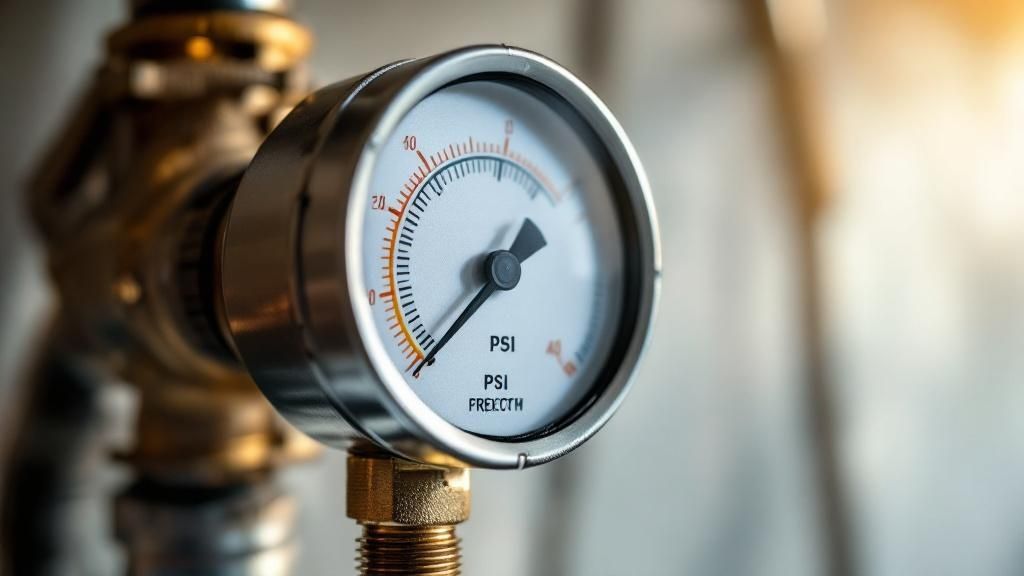
Do your showers feel disappointingly weak? Does the dishwasher seem to take forever to run a cycle? From the classic homes in Pacific Grove to the newer developments in Prunedale, your home's water pressure is often the hidden cause behind these frustrations. Keeping that pressure balanced is the secret to a happy, long-lasting plumbing system, especially with our local water conditions.
The sweet spot for most households is between 40 and 60 PSI. If your pressure dips below that, everyday tasks can become a slow, aggravating chore. But if it creeps too high—we're talking over 80 PSI—you’re setting the stage for silent but significant damage to your pipes, fixtures, and expensive appliances.
A Homeowner's Guide to Water Pressure Readings
To make it even easier, here’s a quick reference table to help you understand what your pressure gauge is telling you.
| PSI Reading | What It Means for Your Home | Our Professional Recommendation |
|---|---|---|
| Below 40 PSI | Low Pressure. Weak showers, slow-filling appliances, and poor water flow. | This indicates an underlying issue. It's time to call a professional to diagnose the cause, whether it's a failing regulator or a hidden leak. |
| 40 – 60 PSI | Ideal Pressure. The "Goldilocks zone." Strong enough for all your needs without straining your plumbing. | Perfect! Keep an eye on it annually, but no action is needed. This is the goal for a healthy system. |
| 60 – 80 PSI | Borderline High. It might feel great in the shower, but it's starting to stress your system. | This is a warning sign. We recommend a professional evaluation to see if a pressure-reducing valve (PRV) is needed to prevent future damage. |
| Over 80 PSI | Dangerously High. Puts immense strain on pipes, seals, and appliances, leading to leaks and premature failure. | A PRV is essential to protect your home. This is a priority fix that requires a licensed plumber immediately. |
Think of this chart as a quick diagnostic tool. A simple reading can tell you if your plumbing is safe or at risk.
The Real Risks of Ignoring Your Pressure
High water pressure is a problem we see all the time here in Monterey County. Our region’s notoriously hard water already causes mineral buildup inside pipes. When you combine that with excessive pressure, you create a perfect storm that puts immense strain on your entire plumbing system.
This can lead directly to big-ticket problems:
- Appliance Failure: Your water heater, washing machine, and dishwasher are all built to operate within a specific pressure range. Too much force wears them out fast.
- Pipe Damage: Constant high pressure can weaken pipe joints, cause "water hammer" banging noises, and eventually lead to catastrophic bursts.
- Wasted Water & Money: The tiny, hidden leaks caused by excess pressure can go unnoticed for months, steadily driving up your water bill.
Nationally, about 10% to 15% of homes have pressure issues, and our local water conditions can make that number even higher around here.
As a family business that’s been serving this community since 1988, we've seen it all. A simple, five-minute pressure check is one of the most powerful and cost-effective ways to prevent a small issue from turning into a major disaster.
Performing these checks regularly should be part of any smart home care routine. When you know your numbers, you can protect your investment and ensure everything from your faucets to your sprinklers runs exactly as it should. It's a key part of our recommended plumbing preventative maintenance plan for a reason.
How Professionals Test Your Water Pressure
Ever wonder how our team figures out pressure problems in homes all over Monterey County? While some homeowners might grab a gauge from the hardware store, our professional process is all about getting an accurate reading and, more importantly, knowing what it means. A quick check is simple, but it only tells part of the story.
It all starts with a professional-grade water pressure gauge. We hook it onto an outdoor hose spigot, preferably the one closest to your main water supply. Then we open the tap fully to measure the static pressure in your system. The test itself takes less than a minute.
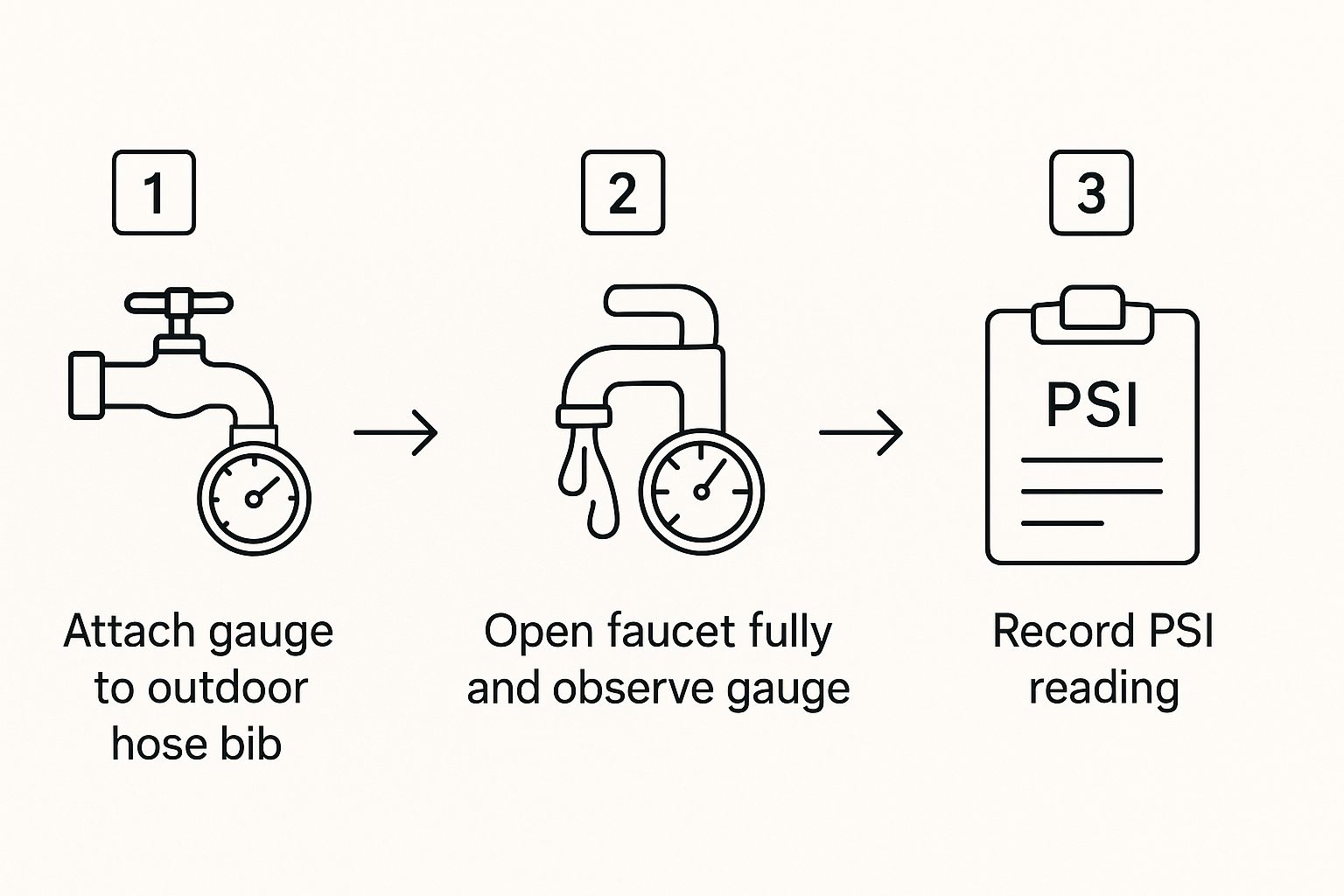
While you can perform this basic test yourself, the real value isn't just in the test—it's in understanding what the results mean for your specific home and finding the root cause.
Interpreting the Results Like a Pro
Getting a number is the easy part. It’s figuring out the why behind that number where our 35+ years of experience really comes into play. A reading from the gauge tells us what the pressure is, but our deep knowledge of homes in communities like Marina and Seaside helps us pinpoint the true cause of the problem.
Is the pressure low because of a problem with the city's supply, a sneaky hidden leak somewhere, or maybe mineral buildup from our area's hard water? Or is it dangerously high due to a broken pressure-reducing valve? These are the questions we answer.
While a gauge gives you a snapshot, a professional diagnosis from Alvarez Plumbing gives you the full picture. We don’t just read the dial; we interpret the story it tells about your home’s plumbing health.
So, even though the test itself is straightforward, making sense of the results and recommending the right long-term fix is a job for a licensed plumber. Instead of playing a guessing game, let our family figure it out for you.
Uncovering the Causes of Low Water Pressure
If your home in Watsonville or Prunedale is plagued by weak, frustrating water flow, you're not alone. Figuring out why is the first step toward getting your showers back to normal, and the problem often hides in one of a few usual spots. A surprisingly common culprit is a partially closed main water valve, which can easily happen by accident during other work around the house.
Other times, the issue is a bit more involved. The pressure regulator—that crucial device that tames the high pressure coming from the city's main line—can fail. When it gets stuck or simply wears out, you're left with just a trickle.
Local Factors Affecting Your Flow
Here in Monterey County, we have notoriously hard water. Over many years, this leads to significant mineral buildup inside your pipes. Think of it like a "hardening of the arteries" for your plumbing. This scale can slowly choke off the water supply, a problem we see all the time in older homes from Monterey to Castroville.
It's also worth considering that the issue might not even be inside your property lines. From time to time, there are temporary pressure drops or ongoing issues with the municipal supply in a specific neighborhood.
The real challenge isn't just knowing how to check water pressure, but understanding what the reading means for your specific home. A low PSI reading tells you there's a problem, but it doesn't tell you where that problem is hiding.
Our diagnostic process is all about finding that hiding spot, fast. We look for patterns:
- Is it just a single weak faucet? The problem is likely right there—a clogged aerator or a kinked supply line.
- Only weak hot water? This almost always points to sediment buildup inside your water heater, a common issue during our wet winter seasons when sediment gets stirred up.
- The whole house is affected? This is our cue to investigate the main line, check the pressure regulator, or hunt for hidden leaks that are stealing your pressure.
Once we pinpoint the root cause, we can walk you through the best options for a permanent fix. Our team has helped countless local homeowners get to the bottom of these exact issues. If you want to learn more about potential solutions, check out our guide on how to fix low water pressure.
The Hidden Dangers of High Water Pressure
That powerful, blasting shower might feel great in the morning, but high water pressure is a silent saboteur working against your home’s plumbing in Carmel Valley and beyond. Any reading over 80 PSI is putting constant, excessive strain on every pipe, joint, and fixture in your house.
Don’t mistake intense pressure for a luxury—it’s more like a ticking time bomb for your plumbing system.
The constant force is often the root cause of some seriously disruptive and noisy problems. It's the number one reason for that loud 'water hammer' banging you might hear when the dishwasher shifts cycles or you turn off a faucet too quickly. That isn't just an annoying sound; it's the sound of a violent shockwave slamming through your pipes.
More Than Just Annoying Noises
Over time, this intense pressure will wear down the delicate seals and washers inside your faucets and toilets. This leads to those persistent drips and leaks that drive up your water bill and waste precious resources, a major concern for our drought-conscious region.
It also forces your water heater to operate under stressful conditions it was never built for, which can dramatically shorten its lifespan and lead to a premature, costly replacement.
The most severe risk? A burst pipe. When high pressure consistently weakens pipe joints and fittings, it can eventually lead to a catastrophic failure, causing thousands of dollars in water damage behind your walls or under your foundation.
For homes across Monterey County, the proven solution is a professionally installed Pressure Reducing Valve (PRV). This is the only truly safe and reliable way to tame dangerously high pressure before it ever enters your home's plumbing.
Even utility companies across the globe use PRVs to manage pressure and cut down on system-wide leakage rates, which can soar above 30% in North America. These numbers really drive home why checking your home's water pressure is so important. You can dig into more data on global water management in this insightful report from the World Resources Institute.
While high pressure is a major concern, it's only one side of the coin. It's helpful to understand all the different reasons for water pressure issues. Just remember, installing or adjusting a PRV is not a weekend DIY project. It requires a licensed plumber to make sure it’s set correctly and meets all local building codes, keeping your home and family safe.
Knowing When to Call a Plumber in Salinas
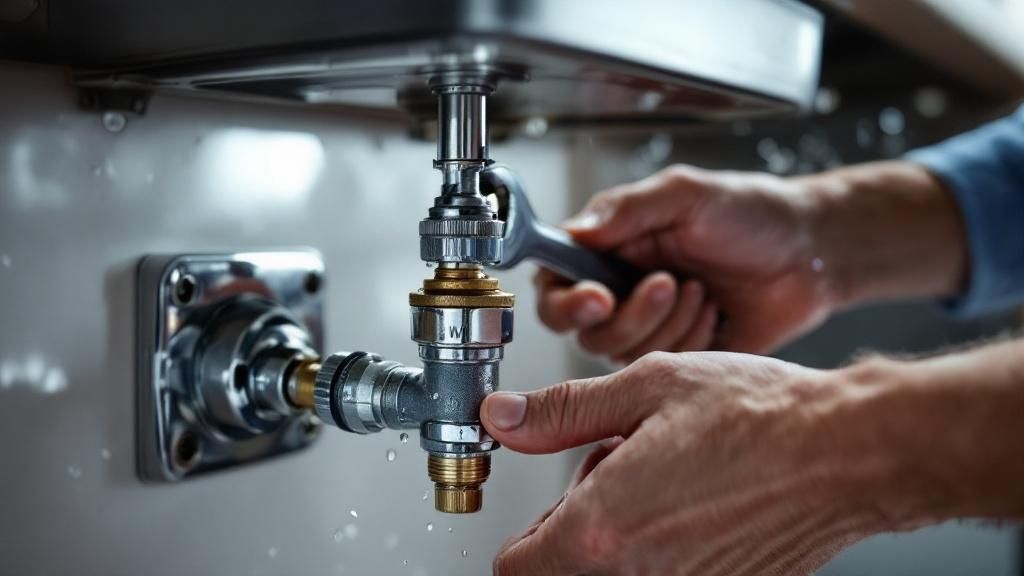
So, you've checked your water pressure. Now what? That number on the gauge is useful, but interpreting it correctly is the real key to protecting your home. It’s about knowing when a simple check becomes a situation that needs professional backup.
If your pressure gauge shows a reading outside the safe 40-80 PSI range, that’s a pretty clear signal. It's time to pick up the phone. But the gauge's number isn't the only red flag. Some of the most sneaky plumbing problems don't show up as just a high or low reading—you have to pay attention to how your water behaves.
Beyond the PSI Reading
Your home’s plumbing system has its own way of sending out distress signals. These symptoms often point to deeper issues that a simple pressure gauge can't diagnose on its own.
Keep an eye (and an ear) out for these other warning signs:
- Inconsistent Pressure: Does your shower suddenly turn into a weak drizzle the moment the washing machine kicks on? This suggests your system is struggling to keep up with your family's daily water demands.
- Strange Noises: Are you hearing loud banging, whistling, or groaning sounds coming from your pipes? This is often a sign of "water hammer" or other problems directly caused by high, uncontrolled pressure.
- A Sudden Spike in Your Water Bill: If your water habits haven't changed but your bill from Cal-Am Water suddenly shoots up, you could have a hidden issue that's wasting water and money.
An unexplained jump in your water bill is one of the most common indicators of a hidden leak. This is where professional expertise becomes invaluable. Our team can perform advanced water leak detection services to pinpoint the source without tearing up your property.
Don't Let a Small Problem Become an Emergency
Ignoring these signs is a gamble you don't want to take. A pressure problem left unaddressed can quickly escalate into a full-blown plumbing emergency, leading to costly water damage in your home, whether you're in Castroville or Carmel-by-the-Sea.
For anyone undertaking a big job, understanding your plumbing's health is a crucial part of good home renovation project management. It ensures everything goes smoothly from the start.
Calling a professional plumber isn't admitting defeat; it’s the smartest, safest, and most cost-effective way to protect your home. Since 1988, our family at Alvarez Plumbing has been the trusted solution for your neighbors across Monterey County. We bring the right tools and decades of local expertise to find the root of the problem and fix it correctly the first time.
Common Questions About Home Water Pressure
After serving families here in Monterey County since 1988, we've gotten a lot of the same questions about water pressure. It's a common concern, and a little bit of knowledge can go a long way. Here are the answers to some of the questions we hear most often.
What Is the Ideal Water Pressure for a Home?
For most homes, especially here in the Salinas area, the sweet spot for water pressure is between 40 and 60 PSI.
This range is strong enough to give you a satisfying shower and run your appliances efficiently, but it's not so high that it puts a ton of unnecessary strain on your pipes, fixtures, and water heater.
Can I Install a Pressure Regulator Myself?
We get this one a lot, and our answer is always the same: we strongly advise against it. Installing a Pressure Reducing Valve (PRV) isn't a simple swap-out. It requires cutting into your main water line, which is a job that demands professional tools and expertise, including precise soldering and calibration.
A licensed plumber ensures the installation is not only safe but also up to local codes in places like Carmel-by-the-Sea.
A faulty PRV installation can lead to slow leaks, major pipe bursts, and a world of headaches you just don't need. It's a job best left to the pros. You want to have total confidence that everything is secure, especially if you ever have an emergency and need to shut off the main water supply to your house.
Why Does My Pressure Drop When a Toilet Flushes?
This is a classic plumbing mystery for many homeowners. If your shower suddenly weakens when someone flushes a toilet, it's a tell-tale sign that your home's water pressure is already on the low side.
It could also mean your home's pipes are too small to handle the demand. A flushing toilet uses a large volume of water all at once, effectively "stealing" that pressure from other fixtures that are running at the same time.
How Often Should I Check My Water Pressure?
It's a great idea to have your water pressure checked at least once a year. Think of it as a quick, preventative health screening for your plumbing.
A professional can do this as part of a routine plumbing inspection. This simple check can catch high-pressure issues before they cause silent, costly damage to your home.
If you're noticing any of these issues or just feel unsure about your home's water pressure, don't wait for a small problem to become a big one. The team at Alvarez Plumbing has the local experience to diagnose the problem correctly and give you a solution that lasts. Contact us today for some peace of mind.