Direct Answer: A drain that clogs repeatedly after being cleared usually has an underlying cause — grease buildup, root intrusion, pipe belly, or pet hair at a line transition — that a standard snake doesn’t address.
You’ve tried everything. Drano, baking soda and vinegar, dish soap, a drain snake, even pulling the pipes apart to clean them by hand — and a few weeks later, the drain is slow again. That’s not bad luck, and it’s not a coincidence.
When a drain clogs repeatedly after being cleared, it’s telling you something. The blockage you keep removing is a symptom. The underlying cause is still there, and it’s not going anywhere until someone figures out what it actually is.
We see this pattern constantly in Salinas, CA and across the Monterey Bay Area — especially in older homes built in the 1950s through 1970s, where the original pipes have had decades to degrade. Here’s how to read what your drain is actually telling you.
The Four Reasons a Drain Keeps Clogging After It’s Cleared
Most recurring clogs fall into one of four categories. The right fix depends on which one you’re dealing with — and you can’t know that without looking inside the pipe.
1. Grease and food debris coating the pipe walls
Every time you run hot water and dish soap down a kitchen drain, a thin film of grease stays behind on the pipe wall. Over months and years, that coating thickens. A snake punches a hole through the blockage, but the coating that caused it is still there — ready to catch the next round of debris. One homeowner in Salinas submitted a service request recently after trying Drano, baking soda, dish soap, a snake, and manually removing and cleaning the pipes — and still couldn’t get the drain to run freely. When every DIY method has been exhausted and the problem persists, the buildup is typically further down the line than any of those tools can reach.
2. Pet hair and lint at line transitions
This is the classic garage sink problem. Many homes in Salinas have washing machines that drain into a garage utility sink. At the bend or transition where the machine drain hose meets the sink drain, hair and lint accumulate fast — especially if you’re washing anything related to a large dog. One customer who had used our services before for this exact issue wrote in asking whether we could re-plumb the area or add a filter to catch dog hair before it hits the drain. Both are real options worth discussing with a plumber.
3. Root intrusion in exterior sewer lines
Tree and shrub roots follow moisture, and aging sewer lines are full of it. A partial root obstruction can be snaked clear, but the root structure itself remains in the pipe. It regrows — often within weeks — and the clog returns. This is especially common in neighborhoods with mature landscaping, which describes a lot of Salinas, CA’s older residential streets.
4. Pipe belly — a low spot where debris pools
Over time, pipes settle. When a section of drain line sags below the proper slope, water slows down and debris drops out of suspension instead of flushing through. No amount of snaking fixes a belly — the water will always pool there. You can clear what’s sitting in it, but it fills back up because the drainage physics are wrong.
How a Plumber Actually Diagnoses a Recurring Clog
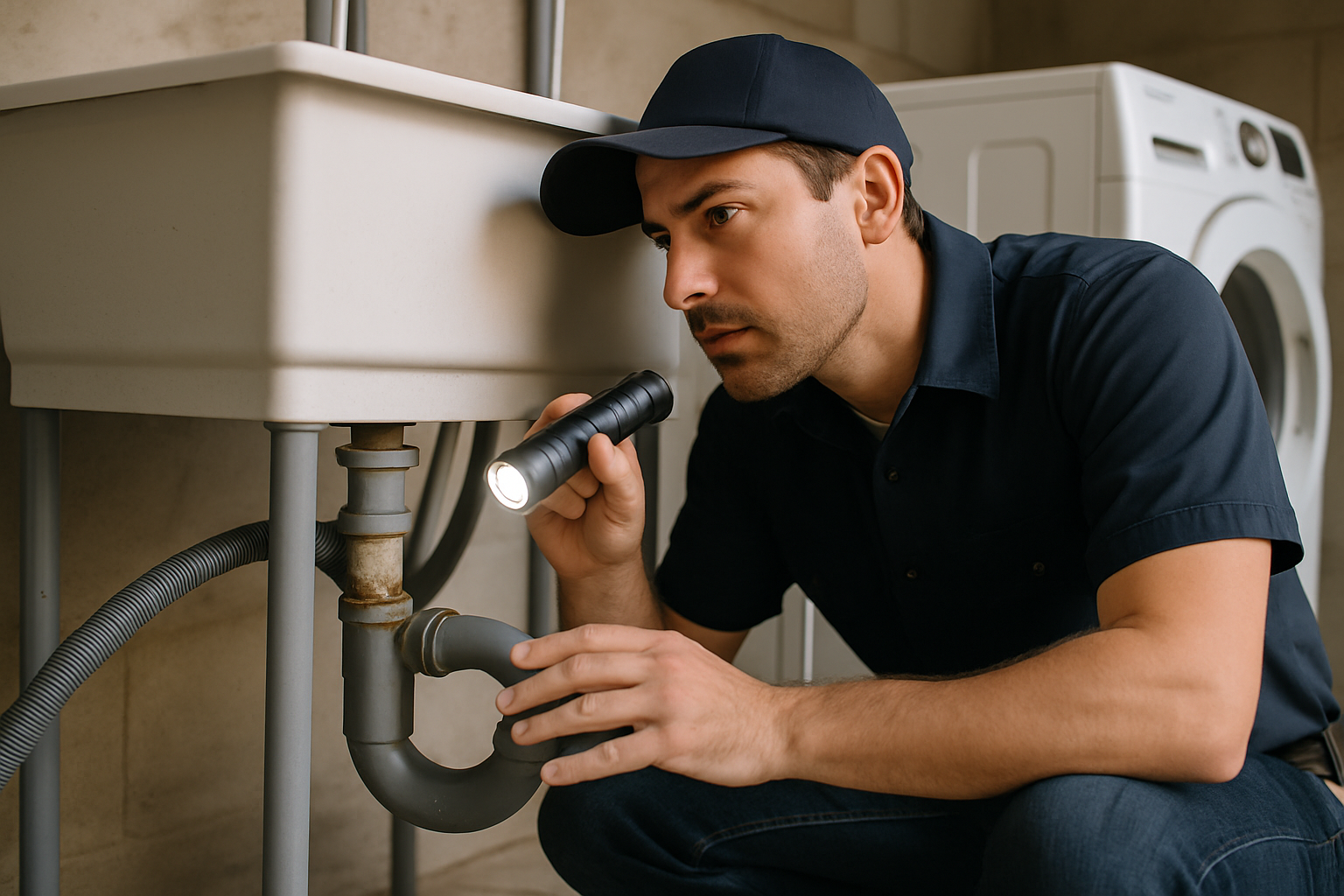
The diagnostic process matters here. Running a snake again without knowing why the drain is clogging is just kicking the problem a few weeks down the road.
Here’s the logic we work through when a drain keeps coming back:
- Is it a pipe-wall issue? If the buildup is grease, soap, or debris stuck to the interior of the pipe, hydro jetting is the right call. A jetter uses high-pressure water to scour the walls clean — not just punch through the clog. The difference between snaking and jetting is significant when wall coating is involved.
- Is it roots? A sewer camera inspection will show root intrusion clearly. Depending on how far the roots have grown in, the fix could be jetting, chemical root treatment, or in serious cases, a section of pipe repair or replacement.
- Is it a pipe belly or slope problem? This one also requires a camera. If the line has settled and lost its proper pitch, you’ll see water pooling inside the pipe on the camera feed. Fixing a belly means repairing or replacing that section of pipe — there’s no shortcut.
- Is it a fixture trap issue? Sometimes the clog is right at the drain fitting itself — hair, soap, or debris caught in or just below the trap. This is the simplest fix, and a plumber can usually resolve it at the drain without any further investigation.
The point is that the right solution is only visible with the right equipment. A camera inspection doesn’t always cost what people expect — for a genuinely recurring problem, it often saves money compared to paying for the same snake job three or four more times. What a sewer camera inspection actually tells you goes deeper on what that process looks like and when it makes sense.
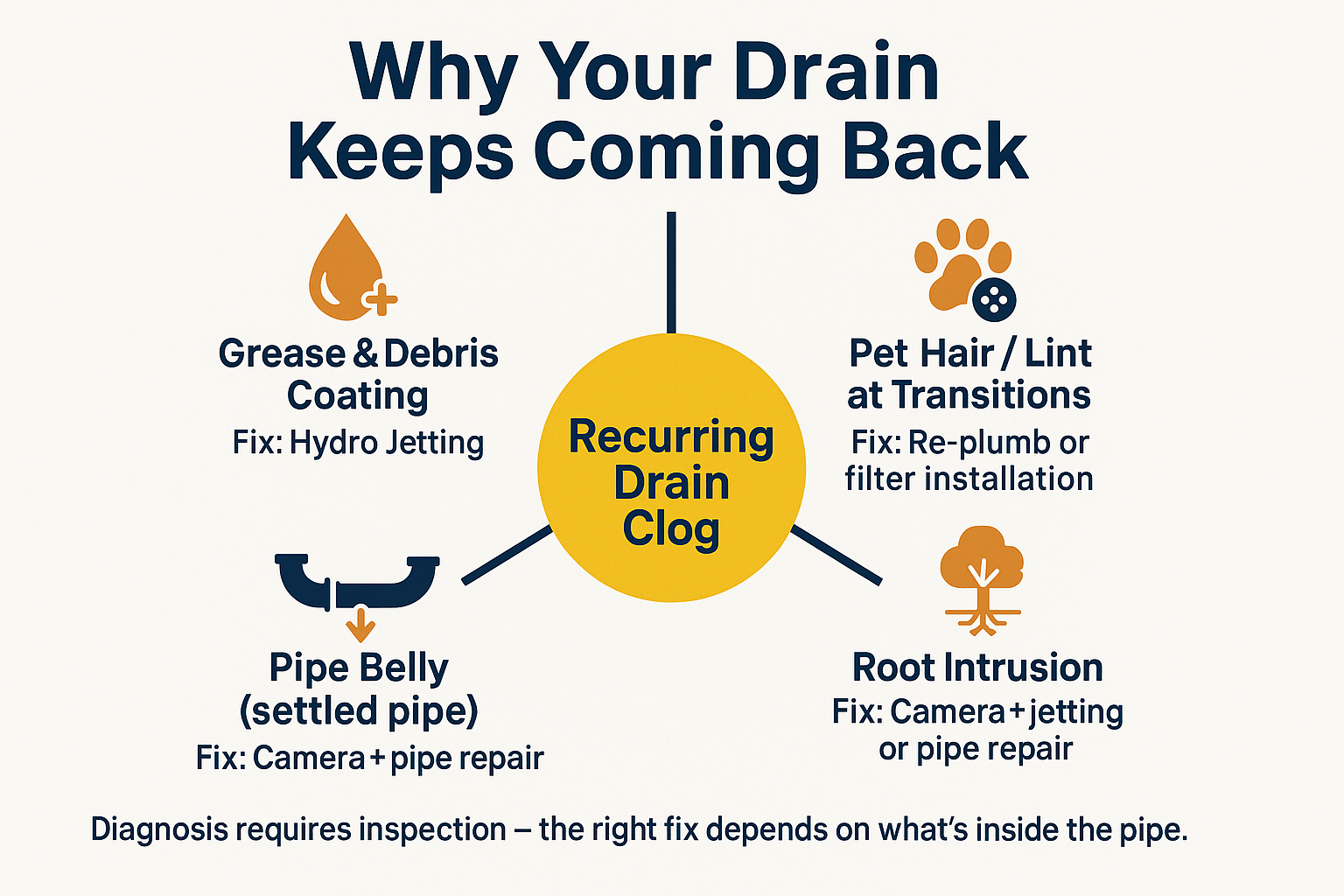
Recurring Drain Clog: What’s Actually Happening
This infographic shows the four most common causes of recurring drain clogs and the diagnostic step that identifies each one.
Why Older Salinas Homes Have It Worse
A lot of homes in Salinas were built between the 1950s and 1970s, and many of them still have their original drain lines — cast iron or clay pipe that’s now 50 to 70 years old.
Both materials degrade in ways that make clogs worse over time. Cast iron corrodes and develops rough interior surfaces that catch debris more easily than smooth newer pipe. Clay tile joints shift and crack, letting roots in and creating spots where flow slows down. A house that drained perfectly for its first 30 years may start having recurring clog problems as the pipe interior becomes less hospitable to moving water.
This is why some homeowners find that a drain problem that never existed before suddenly becomes a regular nuisance. The pipes haven’t failed yet — they’re just old enough to work against you. Understanding that context helps explain why the same snake job that worked fine five years ago isn’t cutting it anymore.
If you’re dealing with plumbing problems that show up in a pattern — same drain, same symptom, same time of year — that’s usually a sign the pipe itself needs attention, not just the clog.
Recurring Drain Clog Causes at a Glance
Here’s a quick reference for the most common recurring clog scenarios, what typically causes them, and what the appropriate fix usually looks like.
| Clog Scenario | Most Likely Cause | Typical Fix |
|---|---|---|
| Kitchen sink clogs repeatedly | Grease and food debris coating pipe walls | Hydro jetting to scour walls clean |
| Garage sink backs up when washer runs | Pet hair / lint at line transition | Hydro jet + filter or re-plumb drain line |
| Exterior cleanout backs up seasonally | Root intrusion in sewer line | Camera inspection + jetting or pipe repair |
| Slow drain that never fully clears | Pipe belly (settled low spot in line) | Camera to confirm + section repair |
| DIY methods work briefly, then fail | Buildup deeper in line than tools reach | Professional camera + hydro jetting |
When Every DIY Fix Has Already Been Tried
There’s a point where it’s worth stepping back and acknowledging that the problem is deeper than what any homeowner can reach.
Chemical drain cleaners — including both caustic products and the baking soda and vinegar approach — work on surface blockages close to the drain opening. A handheld snake typically reaches 15 to 25 feet into a drain line. For most household clogs, that’s enough. But when the cause is pipe-wall coating 40 feet into the line, root intrusion in the main sewer lateral, or a belly in the pipe beneath your yard, none of those tools will touch it.
If you’ve already removed and cleaned the pipes by hand and the drain still isn’t running right, that’s a signal worth taking seriously. The problem almost certainly isn’t at the fixture — it’s deeper in the system. At that point, continuing with the same short-term fixes just delays a diagnosis that’s going to happen eventually anyway.
And the longer a partial obstruction sits unaddressed, the more opportunity there is for a small plumbing issue to grow into a bigger repair bill.
The California State Water Resources Control Board notes that residential sewer line conditions affect not just your home but the municipal system downstream — another reason consistent drain problems in older homes are worth diagnosing properly rather than treating repeatedly with quick fixes.
Frequently Asked Questions About Recurring Drain Clogs
My garage sink backs up every few weeks when the washing machine drains into it. What are my options?
A few things could be happening here. If you have a large dog, pet hair accumulating at the drain transition is one of the most common causes — and one of the easiest to address with a filter on the washer drain hose. If hair isn’t the main issue, grease or soap buildup on the pipe walls is likely the culprit, and hydro jetting is the most effective way to clear that. Re-plumbing the washing machine to drain into a dedicated standpipe rather than the utility sink is also an option worth discussing if the problem keeps coming back despite cleaning.
Is hydro jetting worth it, or will the drain just clog again?
Hydro jetting is the right tool when the problem is buildup on pipe walls — grease, soap, or debris coating that a snake can’t remove. It’s not a permanent fix for every situation. If the drain keeps clogging because of root intrusion or a pipe belly, jetting addresses the symptom but not the cause. That’s why camera inspection before or during the jetting process matters — it tells you whether jetting is the right solution or whether there’s a structural issue that also needs to be addressed.
How much does a camera inspection cost in Salinas?
Costs vary based on the length of line being inspected and the complexity of access. For context, many homeowners in the Salinas area find that a camera inspection runs somewhere in the range that makes it worthwhile when weighed against paying for repeat snake jobs over months or years. For an accurate estimate specific to your drain and your home, it’s worth calling a licensed plumber directly rather than relying on a general figure.
My drain was snaked by another plumber and it clogged again within two weeks. Does that mean the work was done wrong?
Not necessarily. A snake is designed to clear a blockage, not to treat the cause of it. If the underlying problem is pipe-wall buildup, root intrusion, or a belly in the line, a snake will provide temporary relief — and then the clog returns. It doesn’t mean the work was shoddy; it means the snake addressed the symptom but the root cause is still in place. A second look with a camera usually clarifies what’s actually going on.
At what point should I consider repiping rather than keep clearing the same drain?
If a camera inspection shows that pipe material has deteriorated significantly — cracked clay, heavily corroded cast iron, or a badly settled line — repeated cleaning stops being cost-effective. In Salinas homes built before 1975, that’s a realistic possibility. A licensed plumber can review the camera footage with you and give you an honest read on whether repair or replacement makes more sense for your specific situation. There’s no universal threshold; it depends on what the pipe actually looks like inside.
Ready to Find Out What’s Actually Causing Your Drain to Back Up?
If your drain keeps clogging after being cleared, a camera inspection is usually the fastest way to stop guessing and start fixing the right thing. We serve Salinas, CA and the greater Monterey Bay Area — including Monterey, Seaside, Pacific Grove, and Carmel — and we’re available 24 hours a day, every day of the week for drain issues that can’t wait. Call Alvarez Plumbing at (831) 757-5465 or schedule service at alvarezplumbingsalinas.com.