Direct Answer: Snaking breaks through a clog. Hydro jetting scrubs the pipe walls clean. If the clog keeps coming back, snaking isn’t enough — the pipe needs to be cleaned, not just opened.
You had the drain snaked. It ran fine for a few weeks. Then it backed up again. We hear this constantly — homeowners in Salinas, CA and across the Monterey Bay Area who have already tried snaking themselves, or already paid someone to do it, and want to know if there’s a way to actually fix the problem.
The honest answer is: yes, but only if you understand what snaking does and doesn’t do. These are not the same service at two different price points. They work completely differently, and they solve different problems.
This article breaks down how each method works, when one is the right call over the other, and what the recurring-clog pattern usually means about the condition of your pipe.
What a Drain Snake Actually Does — and Where It Falls Short
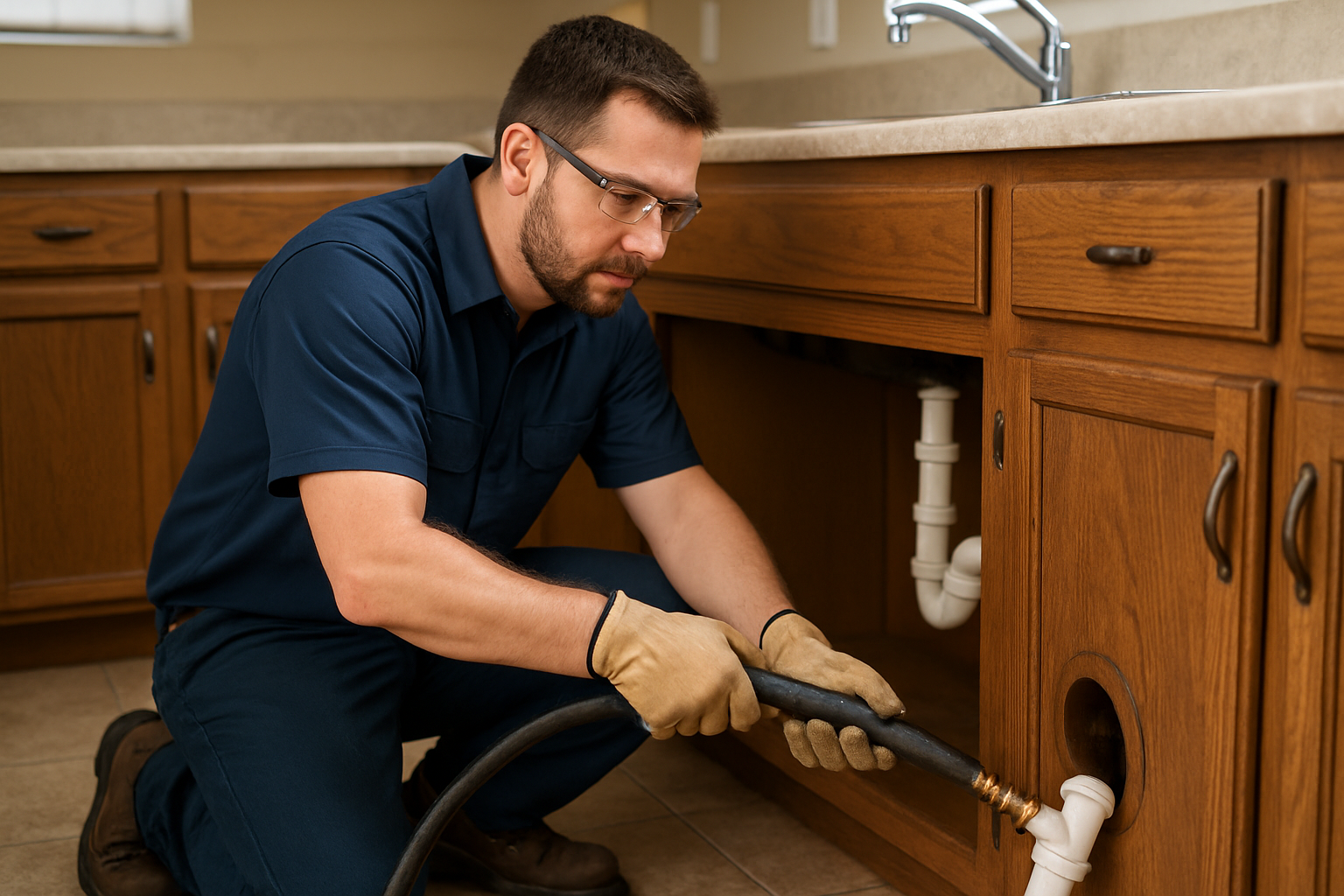
A drain snake — also called an auger — is a metal cable that a plumber feeds into your drain line. It either punches through a blockage or hooks and pulls it out. When it works, flow is restored pretty quickly.
That’s the good news. The limitation is that a snake only clears the path. It doesn’t touch the pipe walls. So if grease has been coating the inside of your kitchen drain line for years, or if mineral scale has been slowly narrowing the pipe, snaking will open a channel through the buildup — but the buildup stays.
That’s why the clog comes back. Within a few weeks, the leftover material catches debris again and you’re back where you started. One homeowner who contacted us put it plainly: they had already tried snaking themselves and wanted to know if a professional could actually fix it. That’s the right question to be asking.
Snaking is not a bad tool — it’s the right first response to a single, acute clog. It’s fast, relatively low-cost, and works well for straightforward blockages. But if the clog is recurring, snaking is treating the symptom, not the cause. The Sewer Line Clean Out guide covers the mechanics in more detail if you want to go deeper on what’s happening inside the line.
How Hydro Jetting Works — and What It Fixes That Snaking Can’t
Hydro jetting uses a specialized nozzle connected to a high-pressure water system — typically delivering water at 3,000 to 4,000 PSI — to scour the interior walls of the pipe. It doesn’t just punch a hole through a clog. It strips grease, mineral scale, and debris off the pipe walls and flushes everything downstream.
The difference is visible on a camera after the job is done. A snaked line still shows buildup coating the walls. A hydro-jetted line looks like a different pipe.
The lines that benefit most from hydro jetting tend to be:
- Kitchen drain lines — where grease and soap accumulate steadily over time
- Main sewer lines — especially where root intrusion is beginning or where years of buildup have reduced flow
- Washing machine drains and garage sinks — high-volume lines that catch a lot of sediment
- Commercial lines in restaurants, hotels, and care facilities — where heavy daily use accelerates buildup faster than residential lines
Several commercial callers we’ve spoken with — restaurants, care facilities, property management accounts — have needed hydro jetting for exactly this reason. The volume of material moving through a commercial kitchen line is in a completely different category than a home kitchen, and snaking simply can’t keep up with that pace of buildup.
For a residential homeowner, the logic is the same: if your washing machine drain or garage sink backs up every month or two, the pipe needs to be cleaned, not just temporarily opened. That pattern is the line telling you something. When a small plumbing issue turns into a big repair bill is worth reading if you’re wondering whether ignoring recurring clogs has real downstream consequences.
One Important Caveat: Is Hydro Jetting Safe for Your Pipes?
This is a question we get asked — and it deserves a straight answer. Hydro jetting is safe for most pipes in good condition, including clay, cast iron, and ABS. But it is not a blanket solution for every line.
Severely deteriorated pipes are a different story. If a line has cracking, significant joint separation, or sections that are partially collapsed, high-pressure jetting can make things worse. This is a real consideration for older homes in Salinas, where the lateral — the pipe running from your house to the city main — may be original clay pipe from the 1950s or 1960s. Many of the neighborhoods built during Salinas’s postwar growth in the Alisal and North Salinas areas were plumbed in that era, and those laterals are now 60 to 70 years old.
This is exactly why a camera inspection before hydro jetting makes sense on an older home. The camera tells you what you’re working with before any pressure goes into the line. A good plumber will tell you honestly if your pipe isn’t a good candidate for jetting — and will recommend repair or lining instead.
If you’re not sure what condition your lateral is in, what a sewer camera inspection actually tells you walks through what the camera actually shows and what those findings mean for your next step.
Hydro Jetting vs. Drain Snaking: How They Compare
This breakdown covers the practical differences between the two methods — what each one does, when it makes sense, and what it doesn’t fix.
| Drain Snaking | Hydro Jetting | |
|---|---|---|
| How it works | Cable breaks through or pulls out a blockage | High-pressure water scours pipe walls clean |
| What it removes | Acute blockages — hair, paper, solid debris | Grease, mineral scale, root intrusion, accumulated buildup |
| Pipe wall cleaning | No — buildup stays on walls | Yes — walls are stripped and flushed |
| Best for | Single-event, first-time clogs | Recurring clogs, grease lines, root intrusion, commercial lines |
| Older pipes | Safe for most conditions | Camera inspection recommended first |
| Typical result timeline | Immediate flow restoration | Longer-lasting clean — weeks to months before any reaccumulation |
| When it’s not enough | When clog returns within weeks | When pipe is severely deteriorated |
How to Know Which Service You Actually Need
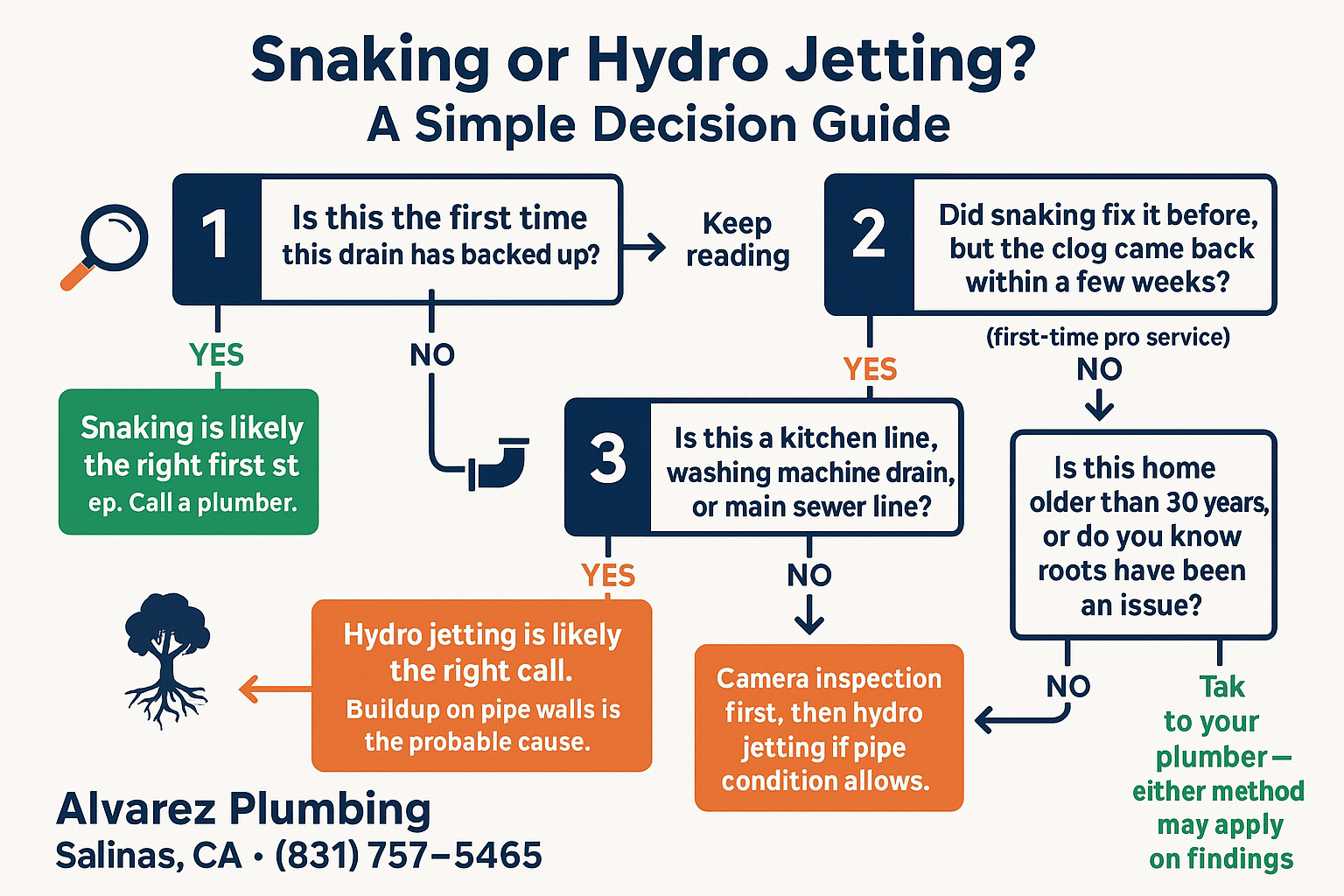
This decision framework walks through the questions that determine whether snaking is the right call — or whether you’re looking at a job for hydro jetting.
The Mental Framework Worth Keeping
When we get calls about recurring drain problems, the pattern is almost always the same: snaking bought some time, but the underlying condition wasn’t addressed. Here’s a simple way to think about which service fits your situation.
Snaking is the right first step when:
– It’s a single, one-time clog that hasn’t happened before
– The blockage is likely a specific object or debris — not buildup
– The line is relatively new or has been maintained
Hydro jetting is the right call when:
– The clog has come back after snaking — more than once
– The line serves a kitchen, restaurant, or commercial facility
– There’s known or suspected root intrusion in a sewer lateral
– It’s been several years since the drain line was properly cleaned
– A camera inspection shows significant wall buildup
And when you’re not sure which situation you’re actually in, a camera inspection answers the question before any money is spent on the wrong service. How new diagnostic tools are changing the way plumbers find pipe damage covers how that inspection process works and what it reveals.
One more thing worth knowing about cost: hydro jetting generally runs higher than a standard drain snaking, and the gap can be meaningful. Costs vary based on the line length, access, and what the camera shows beforehand. For most Salinas homeowners, the better question isn’t which one costs less — it’s which one actually solves the problem. Paying to snake a line twice or three times often ends up costing more than one hydro jetting job would have from the start.
Frequently Asked Questions About Hydro Jetting vs. Drain Snaking
I snaked my drain myself and it worked, but the clog came back two weeks later. Does that mean I need hydro jetting?
Probably yes. When snaking clears a line temporarily but flow slows down again within weeks, it almost always means there’s buildup on the pipe walls that the snake left behind. Snaking opened a channel, but the grease or scale coating the pipe walls kept accumulating until the channel closed again. A professional camera inspection can confirm it, but the recurring pattern is a strong indicator that the pipe needs to be cleaned — not just poked through.
Is hydro jetting safe for the pipes in an older Salinas home?
It depends on pipe condition. Clay, cast iron, and older ABS can handle hydro jetting fine when the pipe is structurally sound. The concern is severely deteriorated lines — cracked sections, partial collapses, significant joint separation. A lot of homes in Salinas built in the 1950s and 1960s have original clay laterals, and those deserve a camera look before anyone puts high-pressure water into them. A responsible plumber will tell you upfront if your line isn’t a good candidate.
Can hydro jetting remove tree roots from a sewer line?
Hydro jetting can cut through early-stage root intrusion and flush root material out of the line. It works well as a maintenance step when roots are beginning to work in through joints. However, if root intrusion is severe or the pipe itself is cracked or displaced by roots, jetting addresses the symptom but not the cause — and a repair or pipe lining may be needed to actually fix the problem. A camera inspection before jetting will tell you which situation you’re in.
How often should a kitchen drain line be hydro jetted?
For a typical residential kitchen, a thorough hydro jetting job can keep the line clean for one to three years, depending on how much grease and food waste goes down the drain and whether there are any partial obstructions. Commercial kitchens — restaurants, food service facilities — typically need more frequent service because the volume of grease is much higher. Your plumber can give you a realistic maintenance interval after seeing the camera footage.
Does hydro jetting work on main sewer lines, not just individual drains?
Yes — and it’s one of the most effective uses for it. Main sewer lines that serve the whole house accumulate grease, sediment, and root material over time, and snaking a main line is often just a temporary measure. Hydro jetting a main line, especially with a camera inspection before and after, gives you a clear picture of the line’s condition and leaves it genuinely clean.
Still Not Sure What Your Drain Actually Needs?
If you’re dealing with a drain that keeps backing up in Salinas or anywhere in the Monterey Bay Area, we can take a look and tell you honestly what’s going on — and whether snaking, hydro jetting, or a camera inspection is the right starting point. Alvarez Plumbing is available 24 hours a day, 7 days a week for drain and sewer issues, and we can be reached at (831) 757-5465 or through the schedule form at alvarezplumbingsalinas.com.