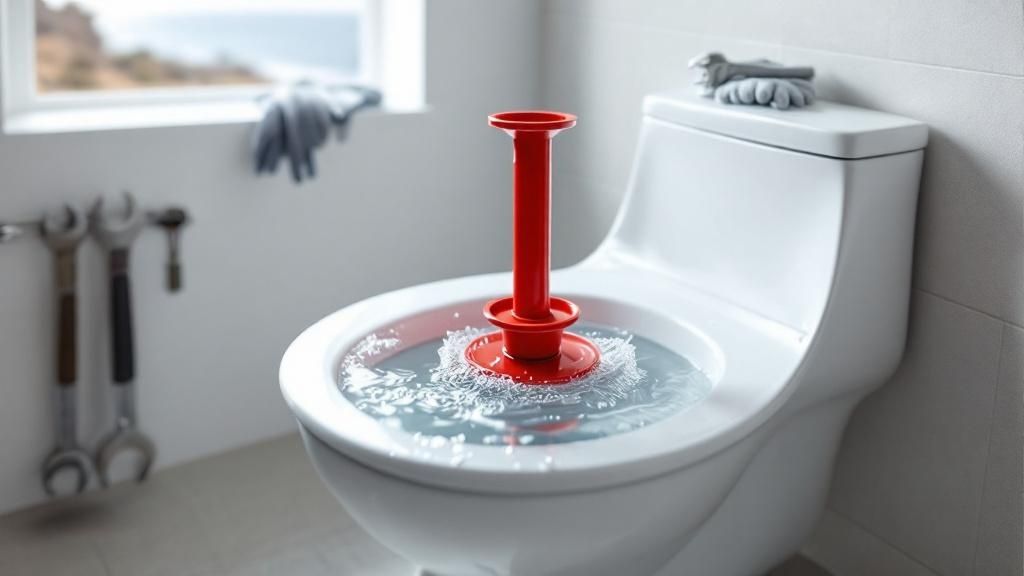
We’ve all been there. You flush the toilet, and instead of the familiar whoosh of water draining away, it starts to creep upwards. It’s that heart-sinking moment every homeowner from Salinas to Carmel Valley dreads, turning a perfectly normal day into a frantic, stressful mess.
A blocked toilet doesn't care if you live in a historic Pacific Grove home with old pipes or a newer build in Marina. It’s one of the most common plumbing headaches out there.
Here in Monterey County, we see clogs caused by everything from heavy winter rains overwhelming older Seaside drainage systems to a child's toy taking an unfortunate dive. Whatever the reason, what you do in the first 60 seconds is absolutely critical to preventing a disgusting overflow.
Your First Response Checklist for a Blocked Toilet
Before you panic, your first job is to stop more water from making a mess. Acting fast can save your floors, your sanity, and a lot of money on cleanup. These first few moves buy you precious time to figure out what's really going on.
| Step | Action | Why It's Important |
|---|---|---|
| 1 | Don't Flush Again! | This is the golden rule. A second flush will almost certainly cause an overflow. |
| 2 | Lift the Tank Lid | Quickly and carefully remove the ceramic lid from the back of the toilet tank. |
| 3 | Close the Flapper | Reach into the clean tank water and push down the circular rubber flapper at the bottom. This stops more water from entering the bowl. |
| 4 | Turn Off the Water | Find the small valve behind the toilet (usually on the wall) and turn it clockwise until it stops. |
Taking these steps right away contains the problem. Once you've stopped the water, you've managed the crisis and can breathe a little easier.
As a family-owned business serving this community since 1988, we know that quick, calm thinking is your best defense against water damage. Taking these simple steps first gives you time to assess the situation without the threat of an overflow.
Now, with the immediate danger of a flood out of the way, you can safely decide on your next move—whether it's a simple fix or time to call in a professional.
A Quick Fix to Try Before Calling a Plumber
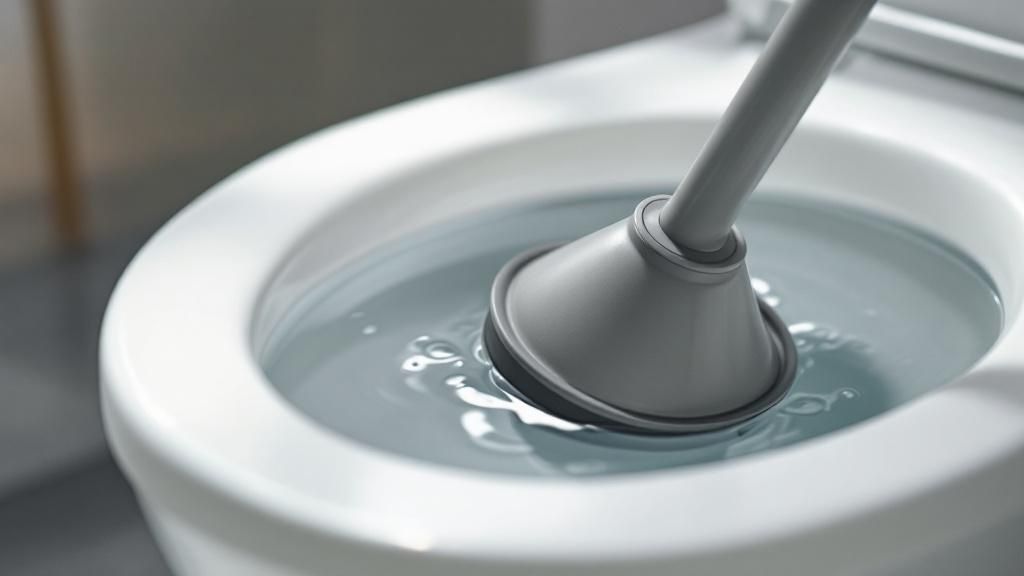
Before you search for an emergency plumber, there's one simple tool that clears up most toilet clogs: the flange plunger. This isn't your standard sink plunger. A proper toilet plunger has a bell shape with an extra flap that folds out from the bottom, creating a tight seal for a toilet drain.
Make sure there’s enough water in the bowl to cover the plunger's cup. Then, fit the flange into the drain opening and give it a series of firm pushes and pulls for about 20 seconds. This action forces water down the pipe, which can break up the blockage.
When Plunging Isn't Enough
For most homeowners in Prunedale or Watsonville, a plunger is the best first move for minor issues, like too much toilet paper. It can fix a lot of common clogs.
But if the water level doesn't go down after a few tries, it’s time to stop. This is a sign that the clog is deeper or tougher than a plunger can handle. Continuing to plunge with all your might won't help and could damage your toilet's seal or the pipes.
A stubborn clog that resists a plunger often points to a problem further down the drain line. Forcing it is like trying to open a locked door by pushing harder—it won't work and might just break something.
If you find yourself in this spot, it’s a clear sign you need professional help. While some people might try a plumber's auger, often called a toilet snake (handheld snake for your drain), these tools can easily scratch the porcelain or even get stuck if used incorrectly. A quick call to a licensed plumber is a much safer bet. After all, a professional can handle this while you tackle other home projects, like learning to address other common DIY plumbing issues like a leaky shower faucet.
Why You Should Avoid Chemical Drain Cleaners
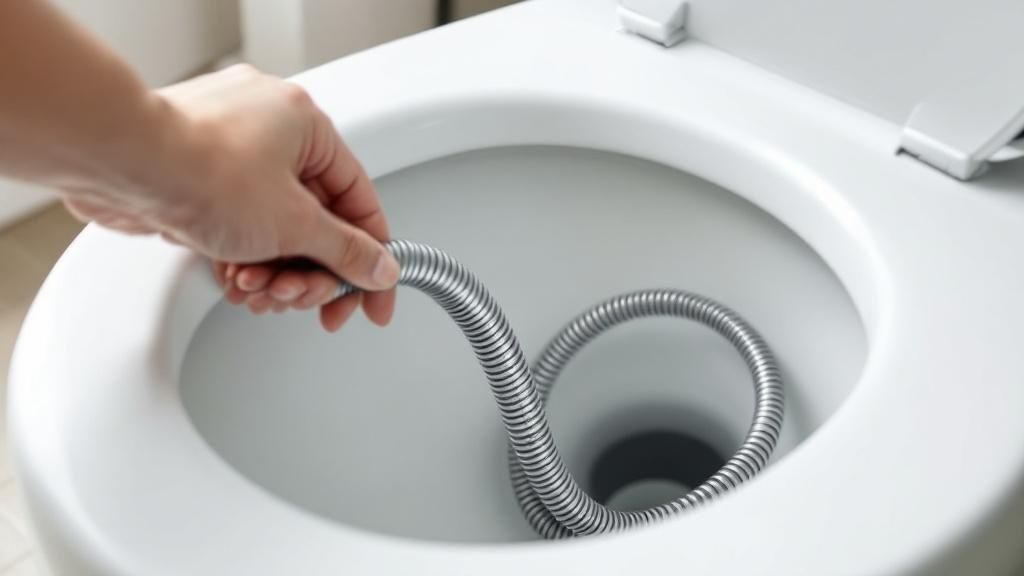
When your toilet is clogged, grabbing a bottle of chemical drain cleaner from a Castroville hardware store feels like an easy fix. But as plumbers with over 35 years of experience here in Monterey County, we can tell you this often leads to a bigger, more expensive disaster.
Those harsh chemicals rarely solve the real problem. They usually just burn a small tunnel through the clog. This lets water drain slowly for a bit, but the clog always comes back. The real issue is the silent damage these chemicals are doing to your pipes.
The Hidden Damage to Your Pipes
So many homes across the Monterey Peninsula, from historic houses in Pacific Grove to established neighborhoods in Salinas, have older pipes. These pipes are often cast iron or galvanized steel, and they are especially vulnerable to the powerful acids in chemical cleaners.
- Pipe Damage: The chemicals don't just eat the clog; they eat away at the inside of your pipes, making them thin and weak over time.
- Costly Leaks: This slow damage can lead to tiny leaks or even a burst pipe, turning a simple clog into a massive repiping project.
- Making the Clog Worse: The heat from the chemical reaction can actually harden certain materials, making the clog even tougher for a professional to remove.
Pouring chemical drain cleaner down a blocked toilet is like using a sledgehammer to hang a picture frame. It’s the wrong tool for the job and will likely cause damage that costs you far more in the long run.
Beyond the damage inside your home, these chemicals are bad for our environment. In coastal communities like Carmel-by-the-Sea and Monterey, whatever goes down your drain can eventually impact our local water and marine life. Plus, if we get called out after you've used a chemical cleaner, it creates a hazardous situation for our technicians.
The best approach is always prevention. You can learn more about how to stop clogs before they start by reading our guide on how to prevent clogged drains. If you’re already facing a tough blockage, just skip the chemicals and call a professional. It’s safer for your pipes and our community.
Red Flags That Signal a Deeper Plumbing Issue
Sometimes, a blocked toilet isn't just a simple clog. It's your plumbing system’s way of warning you about a more serious problem. While a single, easily plunged clog is one thing, a recurring issue is a major red flag that needs a professional diagnosis.
So, how can you tell the difference? If you're constantly fighting with the same blocked toilet, or if flushing it causes strange gurgling sounds in your shower or sink, the blockage is likely in your main sewer line—not just the toilet.
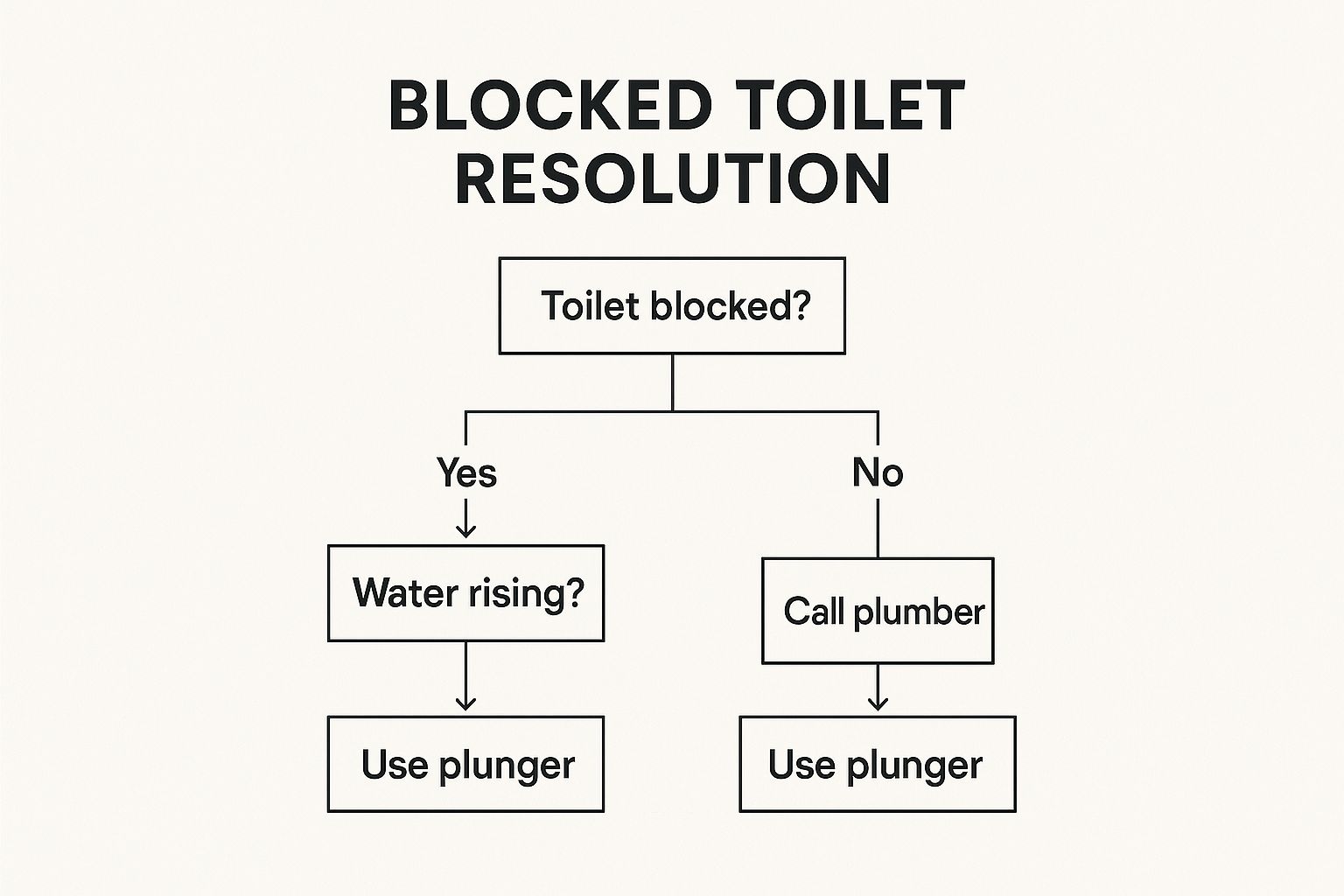
A rising water level is an immediate sign to stop everything and call for help to avoid a messy and damaging overflow.
When to Suspect a Main Line Blockage
The most alarming red flag is seeing water from a flushed toilet back up into your bathtub or shower. This is a dead giveaway that the wastewater has nowhere to go, meaning there's a serious block in your main sewer line. Another symptom you should never ignore is a persistent, foul sewer gas odor in or around your home.
We recently helped a family in Castroville who was dealing with this exact problem. They faced weekly toilet backups that a plunger just couldn't solve. Our camera inspection revealed that invasive tree roots—a very common problem here in Monterey County—had cracked and blocked their main sewer line. That’s something a DIY approach would have never found or fixed.
For homes with more complex wastewater systems, persistent issues might even trace back to components like aerobic treatment units, which require specialized knowledge to service properly.
These red flags mean the issue is beyond a simple fix. Ignoring them can lead to serious water damage and costly repairs. Instead of reaching for harsh chemicals, call a professional.
When to DIY vs When to Call a Pro
Not sure if your clog is a quick fix or a sign of a bigger problem? Use this table to decide whether it's time to bring in an expert.
| Symptom | Likely Cause | Recommended Action |
|---|---|---|
| One toilet is clogged and drains slowly. | A simple clog in the toilet trap. | Try a plunger first. If that doesn't work, it's best to call a professional to avoid damaging the toilet. |
| Flushing the toilet makes other drains gurgle. | A blockage in the main sewer line. | Call a Pro: This indicates a problem deeper in your plumbing system. |
| Water backs up into the shower/tub after flushing. | A severe main line clog. | Call a Pro Immediately: This is a serious blockage that requires professional tools. |
| Multiple fixtures (sinks, showers) are draining slowly. | Widespread issue, likely a clog in the main drain or sewer line. | Call a Pro: A single clog wouldn't affect multiple fixtures. |
| There's a persistent sewer gas smell. | A crack in a vent line or a dry P-trap, but could be a sewer line breach. | Call a Pro: Sewer gas can be hazardous and indicates a system failure. |
| You frequently have to plunge the same toilet. | An object stuck in the trap or early signs of a main line issue. | Call a Pro: If plunging is a regular chore, an expert needs to investigate the root cause. |
Recognizing these serious symptoms and calling a professional early can save you from a much bigger headache and a more expensive repair later on.
Our Professional Approach to Clearing Clogs
When you call Alvarez Plumbing, you’re not just getting a temporary fix. You're getting over 35 years of hands-on, local experience. We’ve been a family-owned business serving homeowners from Salinas to Carmel-by-the-Sea since 1988, and we've seen it all.
We know that a stubborn clog needs more than a plunger. That’s why we show up with professional-grade tools. Our powerful toilet augers can reach deep into the line to break up tough clogs without leaving a single scratch on your porcelain bowl.
For more serious blockages in the main line, we often use hydro-jetting. This process uses high-pressure water to scrub the inside of your pipes clean, blasting away years of buildup from things like grease or tree roots.
Diagnosis Before Action
We believe in doing the job right the first time, which means no guesswork. Our process always starts with a thorough diagnosis to find the real cause of the clog. We don't just clear the symptom; we figure out why your toilet is blocking up in the first place. This often involves a camera inspection to see exactly what's going on inside your pipes.
Once we know what we're dealing with, we’ll explain the problem in plain English and give you clear, upfront pricing before we start any work.
Tackling a recurring clog without a proper diagnosis is like trying to navigate the Monterey Bay fog without a compass. You might move a little, but you won't get to the right destination. We find the source so you don’t have to call us again for the same issue next month.
It's interesting to see how plumbing technology is evolving. The smart toilet market has grown to over USD 10 billion, with many new models designed to prevent blockages. You can learn more about these sanitation technology trends.
When you’re facing a clog that just won’t quit, our expert drain cleaning services in Monterey provide a real solution. One call to us saves you the time, mess, and frustration of a problem that keeps coming back.
Common Questions About Blocked Toilets
Over the years, we've heard just about every question you can imagine from homeowners across Monterey County. Here are a few of the most common ones, along with some straightforward advice.
What Items Should I Never Flush Down the Toilet?
This is the big one. To keep your pipes clear, the only things that should ever be flushed are human waste and toilet paper. That’s it.
We see the same culprits over and over again when clearing drains in Salinas and Monterey homes: so-called "flushable" wipes, paper towels, feminine hygiene products, cotton balls, and dental floss. None of these break down properly and are a primary cause of stubborn clogs.
Even a small toy can bring your entire plumbing system to a stop. A single non-flushable item can create a massive backup, causing a ton of frustration and unnecessary expense.
Can a Blocked Toilet Fix Itself?
It’s incredibly rare. A very minor clog made of organic material might dissolve on its own after several hours, but waiting is a huge gamble. More often than not, the problem just gets worse, leading to an overflow and potential water damage.
If a plunger doesn't do the trick within a couple of tries, it’s much safer to call a professional than to cross your fingers and hope for the best.
Letting a blocked toilet sit is more than just an inconvenience. Delays can lead to sewage overflows, which pose a genuine risk to community health and the local environment. Basic sanitation is crucial, as you can learn more about in this UNICEF USA report on global sanitation standards.
How Can I Prevent My Toilet from Clogging Again?
Prevention is all about being mindful of what goes down the drain. Besides avoiding the items listed above, try to use a reasonable amount of toilet paper. It's also a great idea to teach everyone in the house the "Three Ps" rule: only flush pee, poo, and (toilet) paper.
If you have an older, low-flow toilet that seems to clog all the time, it might be time for an upgrade. We can recommend modern, efficient models that have the flushing power needed for any home, from historic Carmel-by-the-Sea properties to newer constructions.
Is My Whole Plumbing System at Risk If One Toilet Is Blocked?
It depends. If it’s just one toilet acting up and all your other sinks and showers are draining fine, the clog is almost certainly just in that toilet's trap.
However, if you're noticing slow drains all over the house, or you hear strange gurgling sounds from other fixtures when you flush the toilet, that could signal a much bigger problem—a blockage in your main sewer line. This is something that requires immediate professional help. When facing these symptoms, you need to seek out clogged drain repair in Monterey from licensed plumbers who can properly diagnose and fix the root cause.
Don't let a blocked toilet ruin your day. For fast, reliable, and professional plumbing solutions backed by over 35 years of local experience, trust the team at Alvarez Plumbing. Contact us 24/7 for emergency service at https://alvarezplumbingsalinas.com.