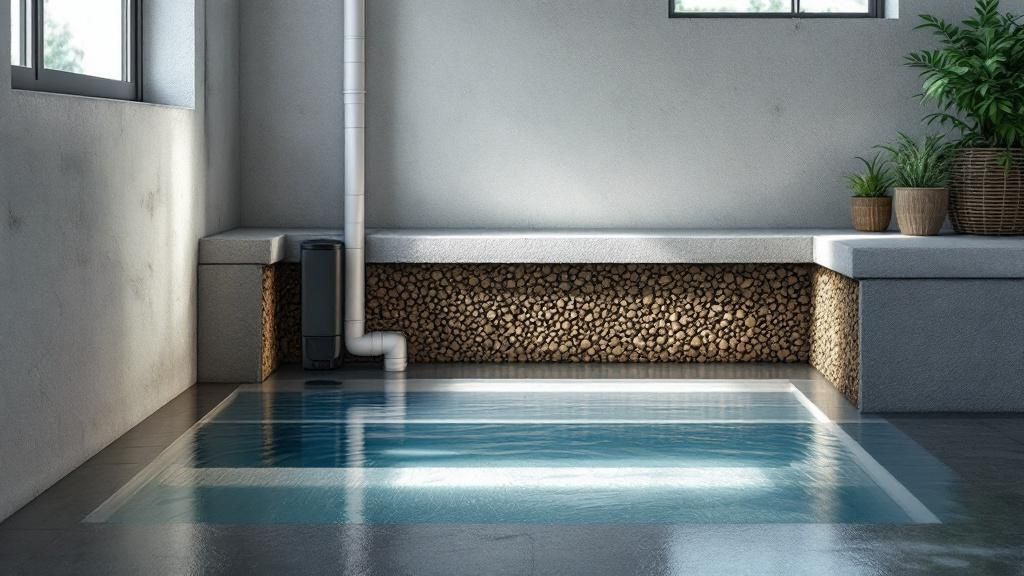
When you see a damp spot spreading across your basement wall, that feeling of dread is universal, especially when the Central Coast's unpredictable rainy seasons hit. So, what is a sump pump? Think of it as your home's unsung hero—a specialized pump tucked away in your basement or crawlspace that kicks into action to remove groundwater before it can cause a world of expensive headaches.
Your Home's First Defense Against Basement Flooding
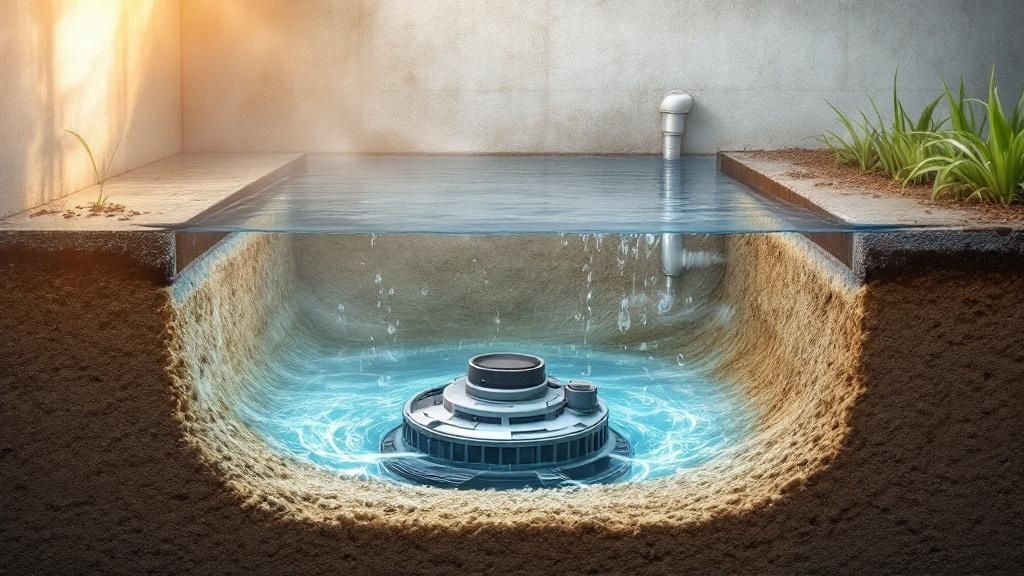
It’s easiest to imagine a sump pump as an automatic bilge pump for your house—a concept most people in coastal towns like Pacific Grove or Marina understand well. It sits quietly in a specially constructed basin, called a "sump pit," which is installed at the lowest point of your foundation.
When heavy rains cause groundwater levels to rise, water flows into the pit. Once it hits a certain level, the pump activates and pushes that water safely away from your home, protecting its very structure from damage.
This little system is your primary defense against something called hydrostatic pressure—the sheer force of water pressing against your foundation walls. During the intense winter storms and atmospheric rivers we see in Monterey County, the soil gets completely saturated and can exert immense pressure, leading to cracks, leaks, and seriously expensive water damage.
To put it simply, a sump pump is a key piece of equipment for keeping a local home safe and dry. Here's a quick rundown of the problem-solution it offers:
Sump Pump at a Glance
| Key Aspect | Simple Explanation |
|---|---|
| What It Is | An automatic pump in your basement or crawlspace. |
| Main Job | Removes groundwater that collects around your foundation. |
| How It Works | A float switch activates the pump when water reaches a set level. |
| Primary Benefit | Prevents basement flooding and protects the foundation's integrity. |
| When It's Critical | During heavy rain, especially in areas with poor drainage like the Salinas Valley. |
Essentially, it's a proactive solution that stands guard 24/7.
The Problem Facing Salinas Valley Homeowners
In communities from Salinas to Castroville, our local soil composition can turn water intrusion into a major risk. Homes here have some unique challenges that often make a sump pump a necessity, not just a nice-to-have.
- Saturated Ground: During our rainy season, the ground can get so waterlogged that excess water has nowhere else to go but right into your basement or crawlspace.
- Foundation Protection: Constant moisture is the enemy of your home's foundation. Over time, it can weaken the concrete, leading to expensive and dangerous structural issues.
- Property Damage: It only takes one flooding incident to destroy flooring, drywall, furniture, and all those irreplaceable personal items you have stored downstairs.
A professionally installed sump pump is the most reliable way to guard your foundation against the persistent threat of water intrusion. It works tirelessly behind the scenes to keep your home dry, safe, and secure, especially when you need it most.
Since 1988, our family business has seen firsthand the devastation basement flooding causes for families from Watsonville to Carmel Valley. A sump pump is a powerful tool, but it's important to remember it's just one piece of a complete moisture-control strategy. For total protection, other measures like professional damp proofing solutions are often essential.
Of course, a pump is only good if it works. To make sure your system is ready for the next downpour, we always recommend regular professional check-ups. You can learn more about what that involves in our guide to sump pump maintenance. Investing in a quality sump pump system installed by an experienced local plumber isn't just another home repair—it’s peace of mind.
How a Sump Pump Keeps Your Foundation Dry
Think of a sump pump system as a dedicated, around-the-clock security guard for your home’s foundation. It doesn't rely on complex technology; instead, it uses simple physics and a clever design to protect your biggest investment. The whole process begins with a specially designed basin.
This basin, known as a sump pit, is installed at the lowest point of your basement or crawlspace. The reasoning is simple: water always follows gravity. As groundwater rises around your home—especially during the heavy winter rains we see in Monterey County—it naturally finds its way into this pit. This collects all the threatening water in one manageable spot.
The Automatic Activation Process
Inside the pit is the heart of the system: a powerful pump attached to a float switch. This little switch is the brains of the whole operation. It works just like the float inside your toilet tank—as water fills the pit, it lifts the float.
Once the water hits a preset level, the rising float triggers the switch, instantly kicking the pump's motor into action. This automatic function is what makes a sump pump so reliable. You don't have to watch over it or remember to flip a switch; it stands ready 24/7 to deal with rising water.
The image below gives you a great look at this critical moment, where the water lifts the float and tells the pump it's time to get to work.
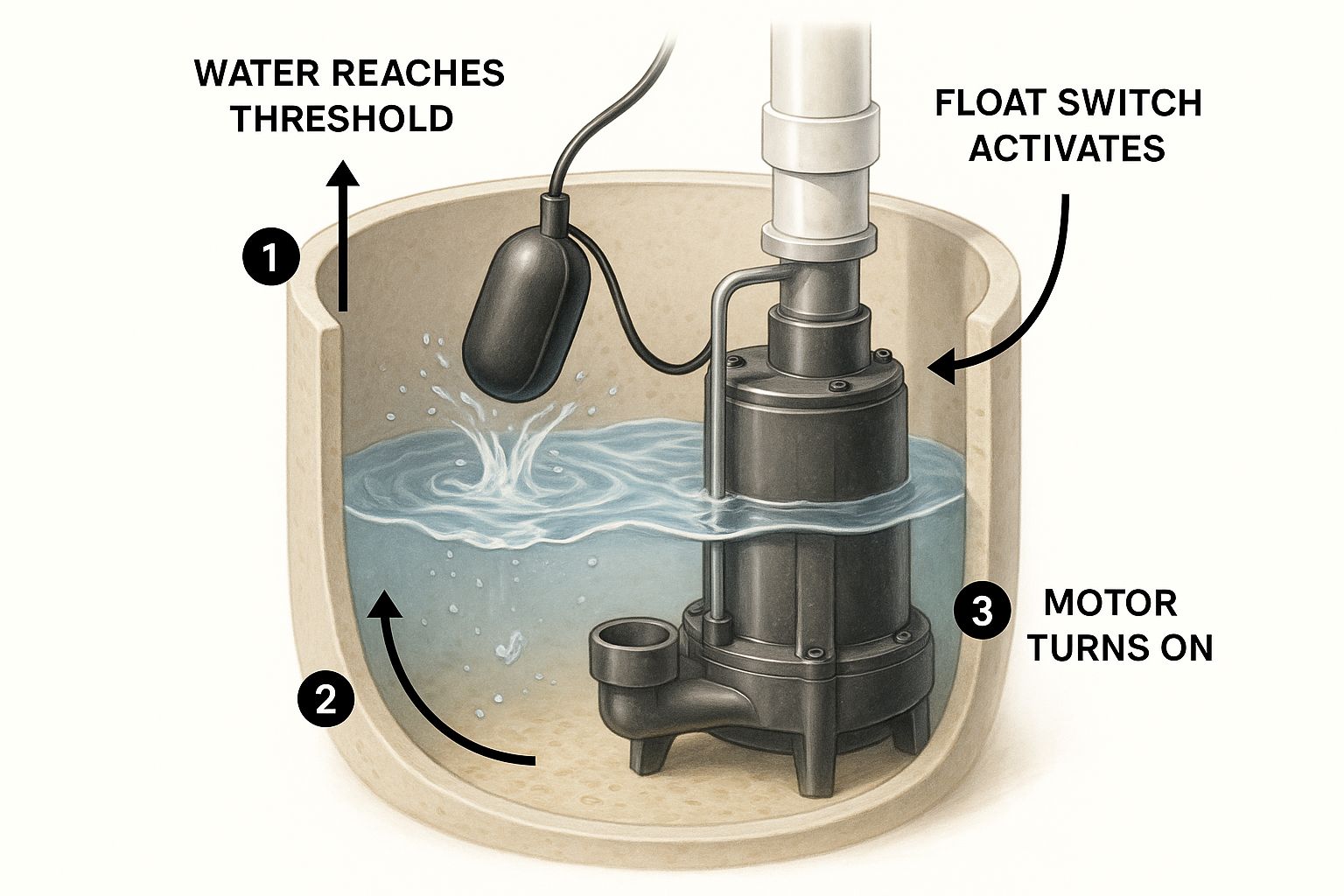
This perfectly captures the smooth handoff from passively collecting water to actively removing it, which is the key to preventing damaging pressure from building up against your foundation.
Safe and Proper Water Discharge
With the pump activated, its job is to get that collected water up and away from your house. It powerfully pushes the water through a discharge pipe, which leads out of your basement and a safe distance from your foundation. But where that water ends up is critically important.
Improperly discharging the water can create a swamp in your yard or cause issues for your neighbors. If it's dumped too close to the house, it will just seep back into the soil and end up right back in the pit, forcing the pump to work endlessly. This is where professional installation really proves its worth.
In cities like Salinas and Seaside, local regulations often dictate where sump pump water can be discharged. The goal is to prevent erosion, property disputes, or overwhelming the city's storm drains. A professional plumber makes sure your system is both effective and compliant.
As a family-owned business serving this community since 1988, we know these local rules inside and out and design systems that solve your water problems without creating new ones.
Finally, a check valve on the discharge pipe acts as a one-way gate, preventing water from flowing back into the pit after the pump turns off. This small but essential component ensures that once the water is out, it stays out. The pump runs until the float drops back down, then it shuts off, ready for the next time it’s needed.
It's a simple, effective cycle that shields your home from the constant threat of water intrusion. Sometimes, a sudden spike in your water bill can point to a hidden leak that contributes to this cycle; our expertise in water leak detection can uncover these issues before they can overwhelm your sump pump system.
Finding the Right Type of Sump Pump for Your Home
Once you’ve wrapped your head around what a sump pump does, the next thing to realize is they aren't all created equal. Picking the right one is absolutely crucial for protecting your home, and the best choice really boils down to your specific property and needs. For homeowners here in Monterey County, that means weighing things like your basement layout, how much noise you can tolerate, and long-term serviceability.
The two main players you'll come across are submersible and pedestal pumps. Each one has its own distinct personality and advantages.
The Quiet and Discreet Submersible Pump
A submersible pump is built to sit right inside the sump pit, completely underwater. Because its motor is submerged, the water keeps it cool and, more importantly, keeps it quiet. The operation is significantly quieter than its pedestal counterpart.
This makes it the perfect choice for finished basements or any living space where noise is a real concern. Think of a beautifully finished basement in a Carmel-by-the-Sea home—a submersible pump works its magic completely out of sight and out of mind.
The Serviceable Pedestal Pump
On the other hand, a pedestal pump is designed differently. Its motor sits on top of a column, keeping it high and dry above the sump pit. Only an inlet hose reaches down into the pit to pull the water out. This design has a couple of solid perks.
First, since the motor is exposed, it’s much easier for a plumber to get to for service and repairs. Second, they can sometimes last longer simply because the motor isn't constantly sitting in water. While they do make more noise, they are a fantastic, heavy-duty option for large, unfinished basements or crawlspaces, like you'd find in many properties around Prunedale and the Salinas Valley.
These pumps are a huge part of the global submersible pump industry, a market valued at a massive $16.32 billion in 2024. The U.S. market alone is expected to hit about $3.72 billion by 2032, which just shows how vital these systems are. You can get a closer look at this growing market from these industry business insights.
The Non-Negotiable Battery Backup System
Whether you lean towards a submersible or a pedestal model, there's one component we at Alvarez Plumbing believe is absolutely essential: a battery backup system. This isn't just some fancy add-on; it's critical insurance for your home. Think about it—the biggest storms that knock out the power are the very moments you need your sump pump the most.
A battery backup system is a secondary, smaller pump that kicks on automatically if your main pump loses power or fails. It provides true peace of mind, ensuring your basement stays dry even during the fierce winter storms and power outages we see along the Central Coast.
A battery backup makes sure your home stays protected when it's most vulnerable. When you consider the staggering cost of water damage, this investment pays for itself by preventing just one flood. The final price tag will depend on your home's unique setup, but you can get a better idea of what to expect by checking out our guide on sump pump installation costs.
Why Your Monterey County Home Needs a Sump Pump
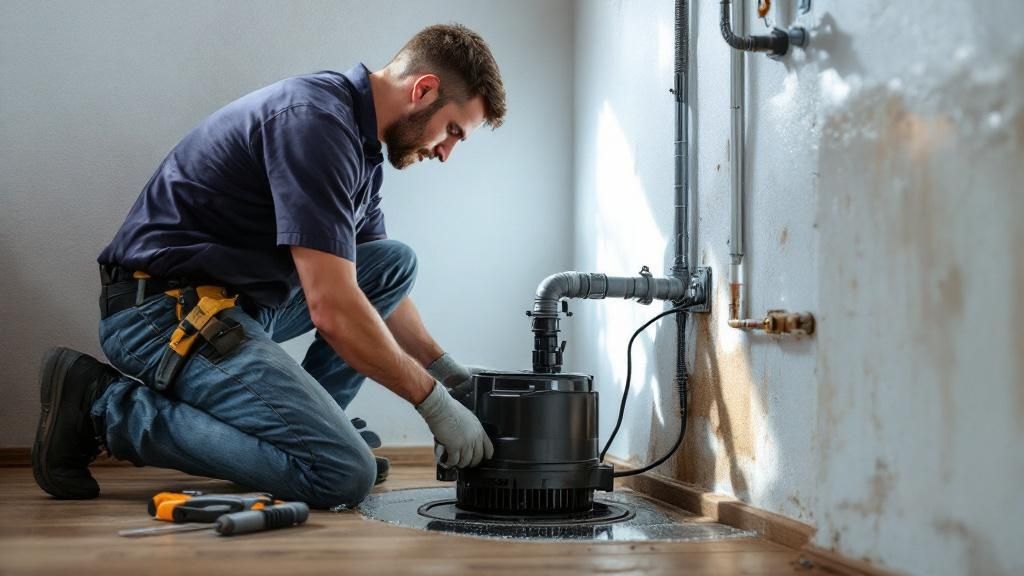
Here on the Central Coast, from the farm fields of Castroville to the coastal bluffs in Seaside, the question isn’t just about what a sump pump is. It’s about why your home needs one. The answer is often right under your feet. Our region’s specific geography and weather patterns create the perfect conditions for water problems in basements.
Many houses, particularly those in low-lying areas or places with a high water table, face a constant threat. When the winter rains finally show up, the ground gets completely soaked, and all that water has to go somewhere. Unfortunately, the path of least resistance is often through tiny cracks in your foundation.
This isn't some generic risk; it's a real local issue. The heavy, clay-rich soil found across parts of the Salinas Valley is known for draining poorly. Once this soil is waterlogged, it exerts tremendous hydrostatic pressure against your foundation, which can turn a small leak into a serious flood risk.
Protecting Your Property and Peace of Mind
For any homeowner who has a finished basement or stores anything valuable below ground, a sump pump isn't just a nice-to-have—it’s a critical investment. Think of it as your first line of defense against the kind of water damage that ruins flooring, drywall, and family heirlooms. A single flood can cause thousands of dollars in damage and turn your life upside down for weeks.
Since 1988, our family-owned business has seen the heartbreak that water intrusion causes for local families. We don't see a sump pump as just another piece of plumbing equipment; it's an essential tool that protects your property value and prevents devastating loss.
Putting in a sump pump is a proactive measure that protects your biggest investment. It works silently in the background, standing guard against the next atmospheric river. It gives you peace of mind that your home is safe, even when you aren't thinking about it.
More Than Just a Pump—It's a System
It's important to realize that a sump pump is just one piece of a bigger strategy for keeping your home dry. Good drainage around your property is also essential. In fact, clogged or poorly maintained drains can put a lot of extra stress on your sump pump. Making sure you avoid floods with proper drain maintenance is another vital part of a complete water management plan for your home.
The need for these systems is growing everywhere. The global sump pump market was valued at around $14.17 billion in 2024 and is projected to hit $15.83 billion in 2025, pushed by new construction and an increase in flooding events. This trend shows just how vital these devices have become for modern homes. You can review the complete market analysis and find more details about this growth on OpenPR.
At Alvarez Plumbing, we pull from decades of experience solving water issues for thousands of families in communities like Monterey, Prunedale, and Carmel-by-the-Sea. We know the specific challenges your home faces and can design a system that gives you reliable, long-term protection.
Choosing the Right Sump Pump with Professional Guidance
Picking out a new sump pump isn’t like choosing a new kitchen faucet. It's a critical decision that has a direct impact on protecting your home's foundation from water damage. It's tempting to just grab the first one you see at the hardware store, but when it comes to the unique homes and geography here in Monterey County, a one-size-fits-all approach just doesn't cut it.
A proper installation always starts with a site-specific assessment by a seasoned pro. The choice you make will have consequences for years to come, so getting it right the first time is essential. An experienced plumber looks at factors that go way beyond a simple basement measurement, making sure your investment provides reliable protection when you need it most.
Matching Power to Your Property's Needs
One of the first things you'll see on the box is the horsepower (HP). Many homes do just fine with a standard 1/3 HP pump, which is powerful enough for average water removal. But this is far from a universal solution.
Specifics about your property can change the equation in a heartbeat:
- High Water Table: If your home in a low-lying area of Watsonville or near a local creek sits on a high water table, your pump is going to need more muscle to keep up.
- Basement Size: It’s simple physics—a larger basement needs a pump that can move a higher volume of water, and fast.
- Vertical Lift: The height the pump has to push water to get it out of your home (we call this the "head height") also dictates how much power is needed.
In these situations, a 1/2 HP or even a 3/4 HP model might be the right call. An expert from Alvarez Plumbing can analyze the unique conditions of your Pacific Grove home—from its foundation type to the local soil—to recommend a system with the perfect amount of power.
Pump Materials and Durability
Beyond horsepower, the materials the pump is made from are a huge factor. The two most common options you’ll find are cast iron and thermoplastic, and each has its own set of advantages.
- Cast Iron: Think of these as the heavy-duty workhorses of the industry. They are incredibly durable and are great at dissipating heat away from the motor, which can significantly extend the pump's lifespan.
- Thermoplastic: These modern pumps are highly resistant to corrosion and rust. They're also lighter and often more budget-friendly, making them a solid choice for many homes.
The decision really comes down to balancing raw durability against corrosion resistance, based on what the environment inside your specific sump pit is like.
The core message here is simple: professional guidance is non-negotiable for getting the right fit. A licensed plumber doesn't just sell you a pump; they evaluate your home's unique situation to design a system that is safe, effective, and compliant with all local codes.
The Dangers of DIY Sump Pump Installation
While we all love the satisfaction of a good DIY project, installing a sump pump is a job best left to the pros. The risks that come with an improper installation are massive and can lead to catastrophic failure right when you need the pump the most. This is a complex job that involves plumbing, some light excavation, and critical electrical work.
Briefly, a proper installation involves digging the pit, placing the pump, and connecting discharge and electrical lines. However, a single mistake can have disastrous consequences. Some of the most common DIY errors we see are:
- Incorrect Pit Placement: Digging the pit in the wrong spot can make the entire system useless.
- Improper Discharge: Failing to route the discharge pipe correctly can send all that water right back to your foundation or cause problems with your neighbors and local ordinances.
- Electrical Hazards: Let's be blunt: incorrectly wiring the pump is a major fire and safety risk.
This is where calling a licensed professional makes all the difference. For a reliable installation, professional electrical guidance is crucial for safety and performance. You can Request Professional Electrical Services to ensure every connection is safe and up to code. And to keep your pump running perfectly after it's installed, you can learn about our professional tune-ups in our guide to sump pump maintenance.
The sump pump market is closely tied to the construction industry. As new homes and communities are built, the demand for effective water management solutions like sump pumps naturally rises. In fact, a 5.6% growth in UK construction output in 2023 directly correlated with an increase in sump pump installations. As a family-owned business serving this community since 1988, we’re here to make sure your system is installed right the first time, protecting your biggest investment.
Frequently Asked Questions from Monterey County Homeowners
Of all the plumbing questions we get, sump pumps seem to cause the most confusion. As a family-owned business serving Monterey County since 1988, we've heard it all. Whether it's a frantic call from a Salinas homeowner during a surprise storm or a new Carmel Valley resident just trying to figure out their new home, a few key questions always pop up.
We believe in giving you clear, honest answers so you can protect your home and feel confident in your decisions. Here are the straightforward answers to the most common questions our plumbers hear from your neighbors right here on the Central Coast.
How Often Should I Get My Sump Pump Serviced?
This is, without a doubt, the most critical question we hear. Our answer is firm and consistent: at least once a year. We can't stress this enough. An annual check-up from a licensed plumber, preferably in the late summer or early fall, is your best defense against a flooded basement.
Why that timing? It gets your pump ready for action right before the Monterey Bay rainy season kicks off.
During a professional service call, an Alvarez Plumbing technician will run through a full checklist:
- Test the float switch to make sure it’s activating the pump at the right water level.
- Inspect the check valve, which is vital for stopping water from flowing back into the pit.
- Clean out any silt, gravel, or other gunk from the sump pit that could jam the pump.
- Confirm the discharge line is clear and sending water far away from your foundation.
This simple bit of preventative maintenance is the single best way to know your pump will do its job when that first big winter storm rolls into Salinas or Carmel. A little care now prevents a huge headache later.
I Live on a Hill, So I Don’t Need a Sump Pump, Right?
It’s a logical assumption—if you're on a hill, water should just run away from your house. We hear this a lot from folks in Pacific Grove or Carmel-by-the-Sea. While elevation definitely helps with surface water, it doesn't make a home invincible to groundwater problems. We’ve seen plenty of hillside homes with wet basements.
Several other factors can lead to water pooling around and seeping into your foundation:
- Poorly Draining Soil: Our region is known for heavy clay soil. It can trap water right up against your foundation, creating immense hydrostatic pressure, no matter how steep your lot is.
- High Groundwater Tables: Some areas just naturally have high groundwater levels that can affect homes, even those on a slope.
- Landscaping Issues: A poorly graded yard or a misdirected sprinkler system can funnel water straight to your house, overwhelming the natural drainage.
We have installed plenty of sump pumps in hillside homes across Monterey County that were dealing with foundation leaks caused by hydrostatic pressure. The only way to know for sure if your property is at risk is to have a qualified plumber take a look.
What’s That Awful Smell Coming From My Sump Pit?
A nasty odor from your sump pit is a major red flag that you shouldn't ignore. If you’re smelling something musty or like mildew, it usually means there's stagnant water in the pit where mold is starting to grow. This can happen if the pump isn't running often or if the lid isn't sealed correctly.
But if the smell is more like sewage, you could have a much more serious problem on your hands. This often points to a clog in your main sewer line, which is causing raw sewage to back up into your home’s drain system and flow into the sump pit. That’s a serious health hazard for you and your family. If you notice any persistent bad smell, call a professional plumber immediately to find the source before it turns into a dangerous and expensive mess.
How Long Does a Sump Pump Typically Last?
For a quality sump pump that’s been installed professionally, you can generally expect a lifespan of about 7 to 10 years. Of course, that number can change based on a few key things. The pump's durability is a big one—cast iron models tend to outlast thermoplastic ones. How often it has to run and whether it gets regular maintenance also play huge roles.
A pump in a Watsonville home that gets pounded by rain will run far more often than one in a drier spot, and that extra work can shorten its life. This is exactly why those annual inspections we recommend are so valuable. They don't just keep the pump running well; they let our technicians monitor its health over time, so you can plan for a replacement before it fails in the middle of a storm. It’s one less thing to worry about.
When you have more questions or need expert service you can trust, Alvarez Plumbing is here to help. For everything from a simple inspection to a full sump pump installation, our family has been the go-to choice for homeowners across Monterey County for over 35 years. Contact us today for a consultation or to schedule a service call