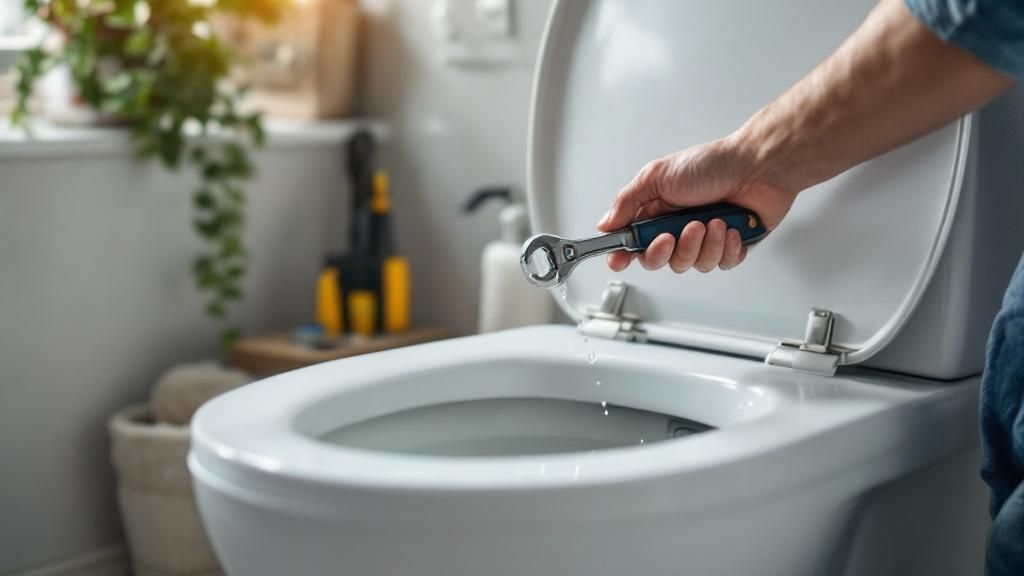
That constant hissing sound from your bathroom isn't just annoying—it's the sound of your toilet won't stop running, and it's wasting water and money. Most of the time, this common household headache is caused by a simple, worn-out part inside the toilet tank. It could be a bad flapper or a fill valve that's out of adjustment. But ignoring it can lead to a surprisingly high water bill.
The Real Cost of a Running Toilet in Salinas
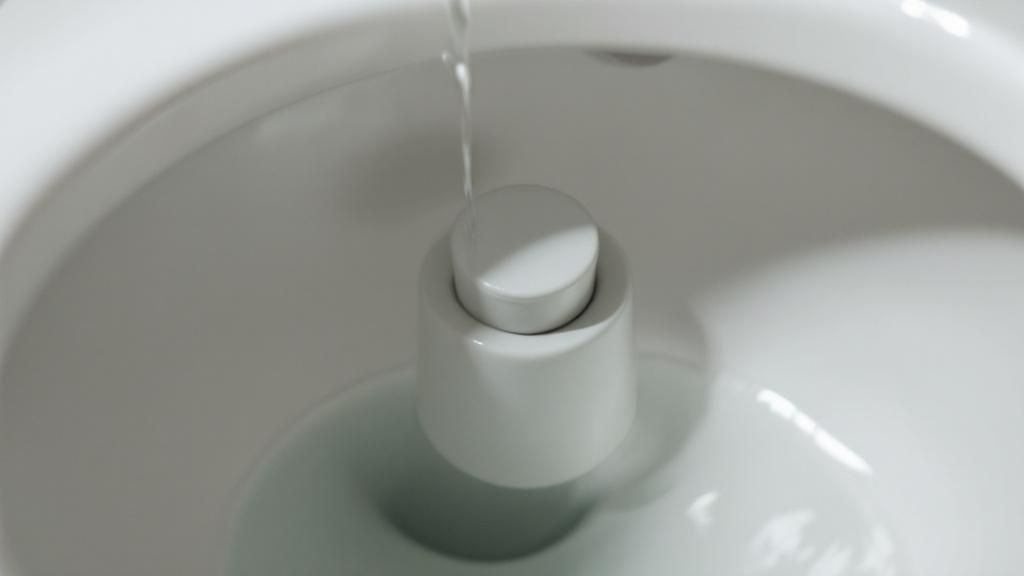
Here in Monterey County, from the agricultural fields of Salinas to the coastal homes in Carmel-by-the-Sea, we all know how important it is to save water. A running toilet works against those efforts, creating a steady stream of waste that hurts our community and your wallet. It’s one of the most common reasons people call us at Alvarez Plumbing, and for good reason—the hidden costs add up fast.
What might sound like a tiny trickle can be a major leak. A constantly running toilet can silently dump hundreds of gallons of water down the drain every day. That kind of waste is a serious problem, especially during our dry seasons when every drop counts across the Monterey Peninsula.
Understanding the Financial and Environmental Drain
The financial hit from a running toilet often surprises homeowners. A single running toilet can waste thousands of gallons a month, causing a sudden spike in your water bill. A leaky toilet can waste about 5,000 to 7,000 gallons of water per month if it's not fixed. That can easily add up to hundreds of dollars in extra costs over a year. When you read more about global water and sanitation challenges, you'll see why even small, local leaks matter on a bigger scale.
As a family-owned business serving this community since 1988, we’ve seen firsthand how a $15 part can cause a $150 water bill. It's a frustrating but completely preventable expense for homeowners in areas from Prunedale to Pacific Grove.
What’s Happening Inside Your Toilet Tank
So, what's actually making your toilet run all the time? The parts inside the tank are pretty simple, but they all have to work together perfectly. When just one part fails, the whole system gets thrown off.
To help you understand the problem, here’s a quick summary of the common issues our plumbers find. This isn't a DIY guide, but it will help you know what to look for before calling a professional.
Quick Guide to Running Toilet Causes
Here are the most common reasons a toilet keeps running. A licensed plumber can diagnose and fix these issues quickly and correctly.
| What You See or Hear | The Likely Cause Inside the Tank | The Professional Solution |
|---|---|---|
| The toilet runs for a few seconds every few minutes ("ghost flushing"). | The flapper is warped or worn out, letting water leak from the tank into the bowl. | Replace the flapper with a new, high-quality one that fits the toilet model correctly. |
| The toilet runs constantly, and you see water spilling into the overflow tube. | The fill valve float is set too high, overfilling the tank. | Adjust the float mechanism down so the water level stops about an inch below the top of the overflow tube. |
| The toilet runs constantly, but the water level is below the overflow tube. | The fill valve itself is faulty or clogged with sediment and isn't shutting off completely. | Replace the entire fill valve assembly. |
| You hear a hissing sound, but the flapper and fill valve seem okay. | The refill tube is pushed too far down into the overflow pipe, siphoning water out of the tank. | Reposition the refill tube so it's clipped to the top of the overflow pipe, not inserted into it. |
While you might be able to spot one of these problems, a lasting repair often requires a professional touch. The most common culprits are:
- A Worn-Out Flapper: This rubber seal is the number one cause. Over time, the hard water we often see in Marina and Castroville can make the flapper brittle or warped, so it can't create a tight seal.
- An Incorrectly Set Fill Valve: The fill valve and its float control the water level. If the float is too high, water will constantly spill into the overflow tube, making the valve run nonstop.
- A Faulty Fill Valve: Sometimes, the fill valve itself just wears out or gets clogged with sediment. This stops it from shutting off properly, even when the tank is full.
Diagnosing the Three Main Causes of a Running Toilet
When your toilet won't stop running, it’s almost always a problem with one of three key parts inside the tank. Think of the tank as a small machine where everything has to work together. When one piece fails, you get that constant, money-wasting hissing sound.
Lifting the lid off the tank can help you see what's going on. You don't need to be a plumber to understand the basics. Let's walk through the main parts so you can feel more confident about what's happening.
This simple flowchart shows the quick checks you can make to get to the root of the problem.
This visual guide helps you quickly see if the issue is the water level, the flapper, or the float, which are by far the most common failure points we see in homes around Monterey County.
The Leaky Flapper
First, let's look at the flapper. It's the rubber stopper at the bottom of your tank. When you flush, a chain lifts it up to let water into the bowl. Its only job is to create a perfect seal when it closes.
Over time, this seal can fail. Our local water can be tough on rubber parts, causing them to get brittle, warped, or covered in mineral buildup. When the flapper can't seal right, water constantly trickles from the tank into the bowl. This is often the cause of "ghost flushing"—when the toilet refills on its own every few minutes.
A quick look can often show if a flapper is worn out. If it looks cracked or doesn't sit flat, it's likely the source of your leak. You can learn more about how to find even the quietest toilet leaks in your home.
An Improperly Set Fill Valve Float
Next, check the fill valve, which is the tall column that refills the tank. Attached to it is a float—either a big ball or a cup—that rises with the water level. When the float reaches a certain height, it tells the fill valve to shut off.
But if the float is set too high, the tank will overfill. The extra water then spills down the overflow tube (the open pipe in the middle) and into the bowl. The fill valve never gets the signal to stop, so it just keeps running.
A correctly set water level should stop about one inch below the top of the overflow tube. If you see water pouring into that tube, your float is almost certainly set too high.
A Faulty Fill Valve Assembly
Finally, the fill valve itself can just wear out. It’s a mechanical part that sits in water 24/7, and its internal seals can fail after years of use. When this happens, it won't shut off completely, even when the float is at the right height.
This leads to a slow, continuous trickle of water entering the tank and draining down the overflow tube. It's a less obvious problem than a bad flapper but just as wasteful.
While you might be able to spot these issues, getting the repair right often takes experience. Using the wrong size part or a small adjustment mistake can make the problem worse. For a lasting solution, it's always best to call a trusted professional from Alvarez Plumbing who can diagnose it correctly the first time.
How a Small Leak Becomes a Major Water Bill
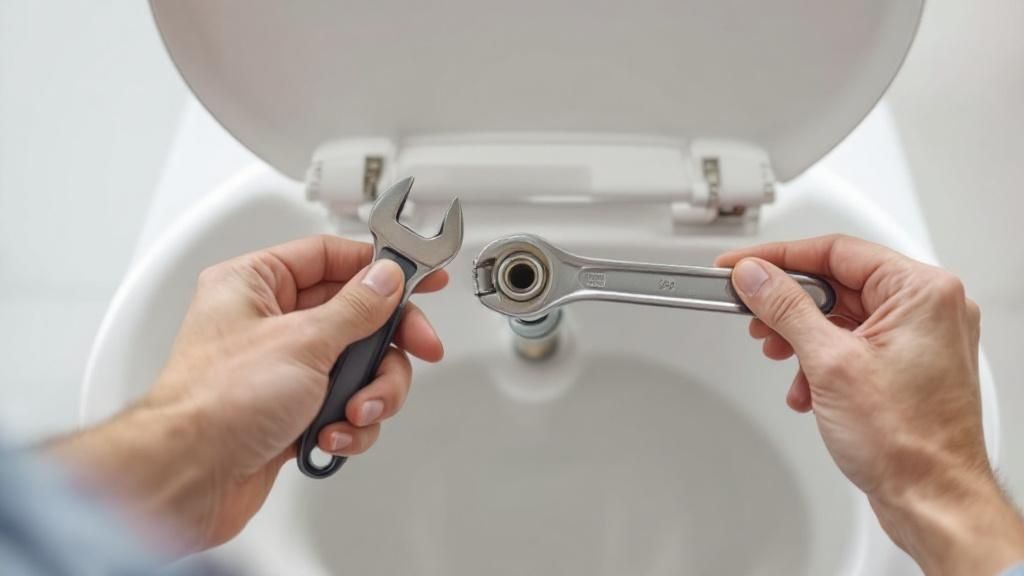
It’s an easy sound to get used to—that faint, constant hiss from the toilet. But that quiet sound is the noise of money going right down the drain. It’s a small annoyance that can quickly become a serious drain on your wallet and our local water supply. For a family in Prunedale or a small business in Seaside, the numbers can be shocking.
One of the most common issues we fix is a running toilet, and it almost always comes down to a single faulty part. Since toilets account for about 30% of a home's water use, a single leaky one can waste an incredible 200 gallons of water every day. When you do the math, you see why it’s a problem you can't afford to ignore. For a global perspective, the World Health Organization's sanitation data offers some eye-opening insights.
The Real-World Impact on Your Water Bill
So, what does 200 gallons a day actually mean? Imagine filling your bathtub to the very top, draining it, and then doing it two more times. That’s how much water you could be wasting every single day.
Over a month, that adds up to 6,000 gallons. For a homeowner in Watsonville or Pacific Grove, this can easily make your water bill double or even triple what it should be.
We’ve seen it happen time and again since we started serving this community in 1988. A client calls us about a high bill, and we trace it back to a single running toilet they hadn't even noticed. Fixing it not only brings them peace of mind but provides immediate savings.
Our Community's Water is a Shared Resource
Beyond your own finances, this water waste puts a strain on Monterey County's resources. When you think about thousands of homes across our area—from Carmel Valley to Castroville—having even a tiny toilet leak, the total effect is massive. It adds up to millions of gallons of treated drinking water needlessly flowing into the sewer system.
- Environmental Strain: Every drop is precious, especially during our dry seasons. Wasting water impacts our local reservoirs and groundwater levels, which affects all of us.
- Infrastructure Stress: Constant, unnecessary flow puts extra wear and tear on the municipal water treatment and sewer systems we all rely on.
Fixing a running toilet is about more than saving money. It's about being a responsible homeowner and a good neighbor. By fixing these leaks quickly, you’re doing your part to protect our shared water supply. Being mindful of usage is key, and you can find more great advice in our guide on how to conserve water at home.
The Hidden Damage of a Constantly Running Toilet
That endless hissing sound is more than just an annoyance that keeps you up at night. While a sky-high water bill is the most obvious problem, the damage you can't see is often much more destructive and expensive in the long run.
Most people think the leaking water is harmless because it's clean water going from the tank into the bowl. But that constant overflow can eventually work its way past the wax ring that seals the toilet to the floor. This slow, hidden leak seeps into your flooring, causing materials to swell, warp, and rot from the inside out.
Beyond the Bathroom Floor
This hidden water damage is a huge concern in the beautiful, older homes we see all over our area, from Pacific Grove to Carmel-by-the-Sea. What starts as a simple running toilet can, over months, completely ruin the subfloor. You might eventually notice spongy spots under your feet, but by then, you've also created a perfect environment for mold and mildew to grow.
Ignoring that sound can lead to major structural repairs that go way beyond a simple plumbing fix. Some of the hidden risks are serious:
- Subfloor Damage: Plywood and particleboard subfloors lose their strength when they're constantly damp. They can fall apart and basically turn to mush.
- Finish Flooring Ruin: Hardwood will warp, vinyl can start to peel up, and the grout between your tiles can discolor and crumble.
- Mold and Mildew Growth: The dark, damp space under your toilet is an ideal breeding ground for mold, which can harm your home's air quality.
Masking a Bigger Problem
Sometimes, a running toilet is a symptom of a much larger issue. It might not be just a worn-out flapper. It could be a red flag for high water pressure in your home's plumbing system, which puts stress on all your appliances and fixtures.
As a family-owned business serving Salinas since 1988, we've seen countless times how a small issue points to bigger trouble. A professional diagnosis doesn't just fix the noise; it protects your home's long-term value by making sure we address the root cause correctly.
Getting a proper diagnosis from a licensed plumber ensures the repair is done right the first time. Think of it as preventative care. We can check your home's water pressure and inspect the toilet's parts to make sure there isn't an underlying issue that will cause more headaches down the road. You can learn more about common plumbing problems homeowners face and see how these systems are all connected.
Don't let a minor annoyance spiral into a major restoration project. Tackling it quickly saves you stress, money, and protects the structure of your home.
When to Call a Professional Plumber for Your Toilet
That trip to the hardware store for a "universal" flapper seems so simple. Many homeowners in Salinas think a toilet that won't stop running is a quick DIY fix, but it's amazing how fast a ten-minute job can turn into a frustrating afternoon of leaks.
What starts as a simple part swap can quickly show a more complex problem. You might find the flapper you bought doesn't create a perfect seal, or that the overflow tube is cracked. Maybe the real issue isn't the flapper at all, but a faulty fill valve that needs special tools to install correctly.
Suddenly, you're looking at a much bigger project than you planned for.
The Value of Professional Experience
When our technicians arrive at a home in Marina or Castroville, they bring more than just parts. They bring the experience that comes from our family-owned business serving this community since 1988. We've seen every type of toilet issue, from modern low-flow models to the older ones in historic Carmel-by-the-Sea homes.
This expertise means we can find the true source of the problem in minutes, not hours.
- Correct Parts, Every Time: We carry a wide variety of professional-grade parts to ensure we have the exact match for your toilet model, preventing leaks from "close enough" solutions.
- Specialized Tools: We have the right equipment to handle tricky installations and stubborn mineral buildup without damaging your toilet.
- Comprehensive Diagnostics: We don't just fix the symptom. We check for underlying issues like high water pressure that could be causing your fixtures to fail early.
A professional plumber's goal isn't just to stop the toilet from running today, but to make sure it doesn't start running again for a different reason next month. It’s about providing a reliable, long-term solution.
Modern Toilets and Complex Fixes
Plumbing technology is always changing. Toilets now use advanced, water-efficient designs to reduce water use and prevent common problems like running. These new mechanisms have cut down on leaks, but they've also made repairs more complex for the average homeowner. Learn more about the evolution of toilet technology and see how these systems have improved.
Our team stays current with these newer systems, so we can service everything from a simple flapper to a complex dual-flush mechanism. While a running toilet might seem small, it's often linked to the overall health of your home's plumbing. Sometimes the first sign of trouble with a water heater is a change in pressure that affects your toilet. You can learn more with our resources on professional water heater repair services.
Don't let a simple problem become a major headache. If you've tried a quick fix and your toilet won't stop running, or if you'd just rather have it handled right the first time, give us a call. We're your expert neighbors, ready to help.
Common Questions About Running Toilets
Even after looking inside the tank, it's normal to have a few questions about that running toilet. We get calls about this all the time from homeowners across the Monterey Peninsula, from Watsonville to Carmel Valley. Here are some of the most common questions we answer.
I Jiggled the Handle and It Stopped. Is It Fixed?
Jiggling the handle is the classic trick, isn't it? It often works because it forces a worn or misaligned flapper to temporarily reseat itself. But you should see this as a big warning sign.
Think of it like a tire that’s slowly losing air. A quick patch might get you a few more miles down the road, but the real problem is still there.
That quick fix won’t last. The next time someone flushes, the flapper will likely fail to seal properly again, and you'll be right back to wasting water. It's much smarter to have a professional from Alvarez Plumbing take a look, especially before you leave for vacation or even a long weekend.
How Can I Check for a Silent Toilet Leak?
Sometimes a toilet that won't stop running is almost silent. These "silent leaks" are sneaky and often go unnoticed until you get a surprisingly high water bill. The best way to find one is with a simple food coloring test.
Here’s what you do:
- Lift the lid off your toilet tank.
- Add a few drops of dark food coloring into the tank water.
- Do not flush the toilet.
- Walk away and wait about 15-20 minutes.
Now, go back and look inside the toilet bowl. If you see any color has seeped from the tank into the bowl, you have a leak. This is a common issue we find in homes from Salinas to Pacific Grove, and it's clear proof that your flapper isn't making a tight seal.
Even if you don't hear a thing, a colored bowl means you're losing water and money. It's a clear sign that a professional repair is needed.
Is It Expensive to Have a Plumber Fix a Running Toilet?
Honestly, fixing a running toilet is one of the most common and affordable plumbing repairs there is.
When you think about how a single running toilet can waste over $100 in water per month, the professional repair often pays for itself very quickly. In almost every case, the cost of delaying the fix is much higher than the cost of the repair itself.
Our family-owned business has been providing fair, upfront pricing since 1988, so you can be sure you're getting a reliable solution without any surprises. And if that annoying trickle turns into a middle-of-the-night emergency, you can learn more about our 24/7 emergency plumbing services and how we can help.
Don't let a running toilet drain your budget any longer. For a fast, reliable, and affordable fix, trust the local experts who have been serving Monterey County for over 35 years. Call Alvarez Plumbing today or book your service online at https://alvarezplumbingsalinas.com.