If you’re like most homeowners in Salinas or Carmel, your water heater is probably tucked away in a closet, out of sight and out of mind. But a quiet revolution is underway in utility closets across the Monterey Bay, and the shift to electric water heaters is moving faster than most homeowners expect. This isn't some far-off trend; it’s happening right now, pushed forward by new California regulations and some serious financial incentives.
The Hidden Deadline in Your Utility Closet
For decades, the standard advice for water heaters was simple: "wait until it breaks." That mindset is quickly becoming a costly mistake. California will ban new gas water heaters by 2030, and some Bay Area rules start as soon as 2027—just a few years away. That means the gas water heater you've always relied on might not be an option the next time you need a replacement.
This isn’t just about a new appliance; it’s a big change in how our homes get hot water. Planning ahead is no longer just a good idea—it’s the only way to avoid the stress and high costs that come with an emergency replacement in a rapidly changing market.
Why This Shift Matters in the Monterey Bay Area
This transition directly impacts homeowners from Seaside to Pacific Grove. State regulations are setting firm deadlines to phase out natural gas appliances, and the Bay Area's push for enforcement in 2027 shows what’s coming for our region.
At the same time, generous financial incentives make it a smart move to upgrade early.
Homeowners who delay may face last-minute installation bottlenecks, increased prices, and limited equipment availability. Worse, many won’t qualify for rebates once demand spikes, leaving them with a non-compliant system and the full replacement bill.
Upgrading in 2026 means less stress, bigger savings, and a system that complies with future rules. You can:
- Secure real savings with federal rebates of up to $1,750.
- Avoid the emergency price tag that always comes with a sudden system failure.
- Future-proof your home with a system that meets all upcoming regulations.
Think about it: about 75% of water heater replacements already happen during an emergency. A sudden leak on a foggy Monterey morning is the worst time to make a major decision. You're often forced to take whatever a plumber has on the truck, with no time to research efficient models or apply for money-saving rebates. Our guide to heat pump water heater installation in Monterey explains how planning ahead can prevent this.
As a family-owned business serving this community since 1988, Alvarez Plumbing wants to help our neighbors get ahead of the curve. This guide breaks down what's happening and why planning your upgrade now is the smartest move you can make.
Why California's Deadlines Affect You Now
If you live in Prunedale or Watsonville, a 2030 ban on new gas water heaters might sound far away. But in reality, the shift to electric water heaters is moving faster than most homeowners expect, and the deadlines that matter are closer than you think.
This isn't just a state goal. Local rules are hitting fast-forward on the timeline. Influential regulations from the Bay Area will start phasing out gas heaters as early as 2027. That’s a strong signal of what's coming for the Monterey Bay Air Resources District, which sets our local air quality rules.
The logic is simple: improve indoor air quality by removing gas appliances and help California hit its climate goals. For homeowners from Seaside to Pacific Grove, the message is urgent: the window to replace your old gas water heater with another gas model is closing fast.
The Problem With Waiting
Many people assume they can "wait until it breaks," but this is becoming a serious financial gamble. Delaying until the last minute could push you right into an installation bottleneck.
As these deadlines get closer, the demand for qualified plumbers and electric heat pump water heaters will spike. This kind of surge almost always leads to:
- Higher installation prices because of the scramble for limited labor.
- Longer wait times to get a licensed plumber to your home.
- Limited equipment availability, forcing you to settle for whatever model is left.
By the time your old unit fails, the generous rebates available today might be long gone, leaving you to cover the full bill for a mandatory upgrade.
This timeline lays out the transition pretty clearly.
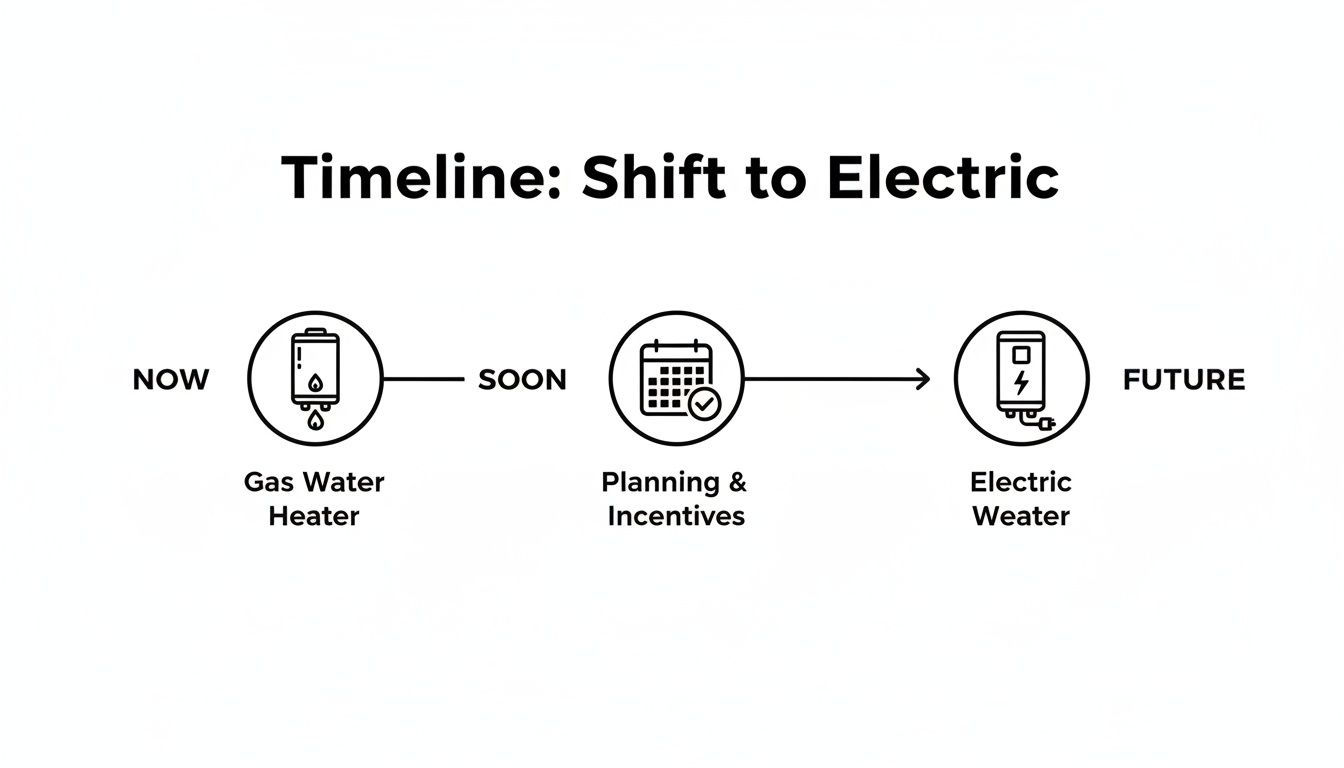
As you can see, the time for smart planning is now, before incentives dry up and the deadlines are right on top of us.
National Standards and Local Impact
These changes aren't just happening in California. The U.S. Department of Energy finalized new national efficiency standards that heavily favor heat pump technology. These rules are expected to save American families around $7.6 billion a year on their utility bills. Compliance for many of these models will be required starting in 2029—well within the replacement cycle for a typical water heater.
As a family-owned business serving this community since 1988, Alvarez Plumbing wants to help our neighbors get ahead of the curve. We see these deadlines not as a burden, but as an opportunity for homeowners to make a smart, long-term investment.
California is also investing in broader projects, like California’s CERRI Grants for sustainable community microgrids. These programs show how serious the state is about an all-electric future, reinforcing why homeowners in places like Carmel-by-the-Sea and Marina should start planning now. A little planning today helps you avoid the stress and high cost of a forced, last-minute replacement.
How Modern Electric Water Heaters Work
When you hear "electric water heater," you might picture an old model that sends your energy bill soaring. But today’s technology is a world away from those systems. Understanding the difference is key, because the shift to electric water heaters is moving faster than most homeowners expect.
The biggest reason for this shift is the Heat Pump Water Heater (HPWH). It's a total game-changer.
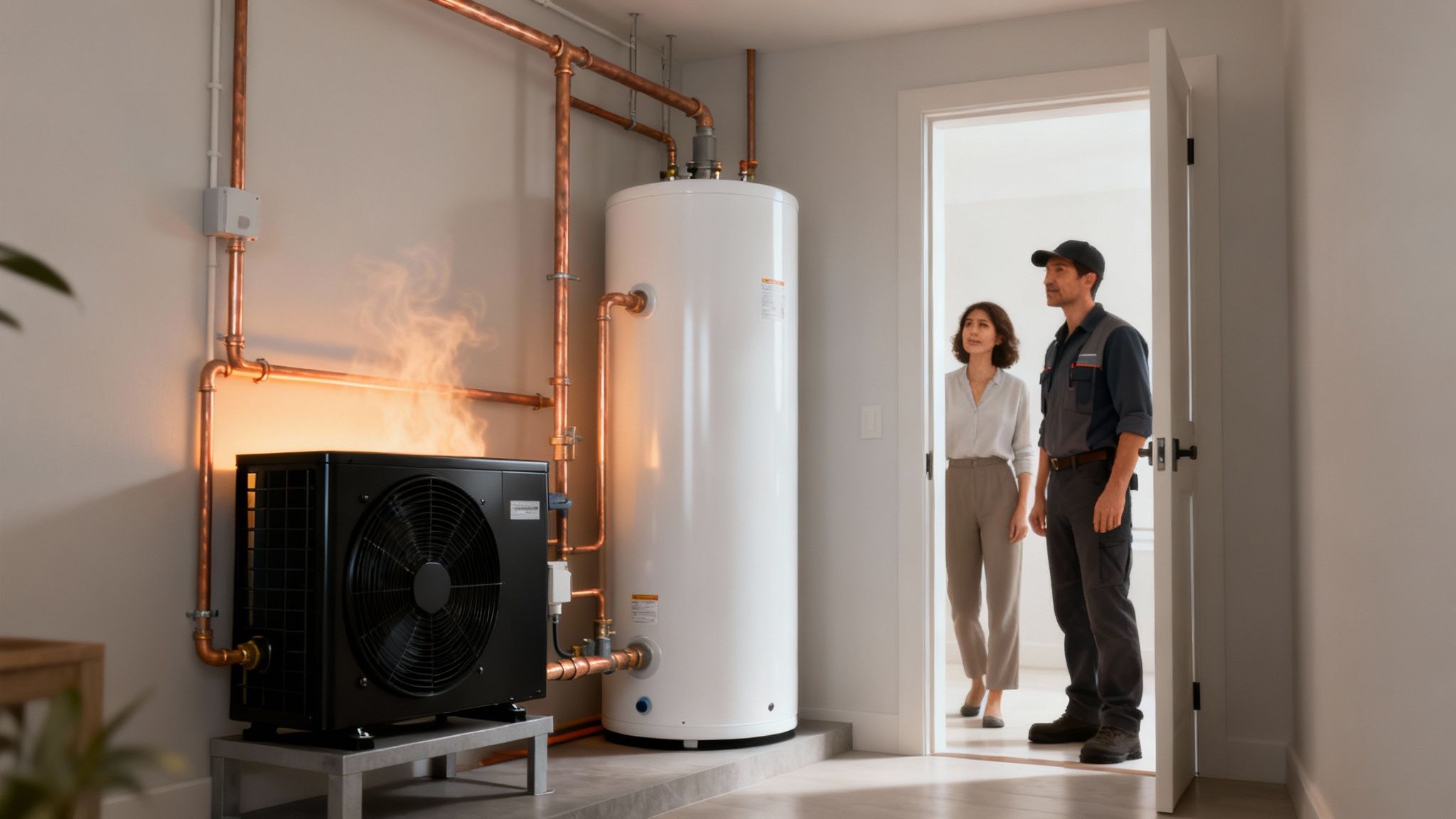
Think of an HPWH as a refrigerator working in reverse. Your fridge pulls heat out of its interior and releases that warmth into your kitchen. An HPWH does the opposite: it pulls warmth from the surrounding air—like in your garage in Salinas or Carmel—and transfers it into the water inside the tank.
This process is incredibly efficient. Instead of burning fuel or using huge electric coils to create heat from scratch, it simply moves existing heat from one place to another. This makes a modern HPWH two to three times more efficient than a standard electric water heater.
The Key Difference: Efficiency and Cost
That great efficiency translates directly into lower monthly utility bills for residents across Monterey County. While traditional water heaters generate heat, HPWHs move it. It’s a small distinction that makes a huge difference in your wallet.
To see the potential savings, it helps to understand where your energy dollars are going now. Taking a moment to figure out how to calculate energy consumption in your home can be a real eye-opener. It shows just how much an old, inefficient appliance costs you each month.
For the average family, water heating accounts for nearly 20% of the home's total energy bill. Switching to an ENERGY STAR® certified heat pump water heater can save a family of four approximately $350 per year on their electric bills.
This is a big deal here in our local area, from Prunedale to Pacific Grove, where utility rates are a big part of any family’s budget. The upfront cost of an HPWH might be higher than a basic gas model, but with long-term energy savings and available rebates, it almost always ends up being the smarter financial choice.
Comparing Your Options
Seeing how different water heaters stack up can make the choice clearer. Most of us know about gas and standard electric models, but the heat pump option brings a new level of savings.
For those curious about on-demand heating, it's also worth looking into the pros and cons of tankless water heaters, as they offer another efficient alternative to traditional tanks.
To keep things simple, here’s a quick comparison.
Gas vs. Electric vs. Heat Pump Water Heaters At a Glance
| Feature | Gas Tank Water Heater | Standard Electric Water Heater | Heat Pump Water Heater (HPWH) |
|---|---|---|---|
| How It Works | Burns natural gas to heat water in a storage tank. | Uses electric heating elements (like coils in an oven) to heat water. | Pulls heat from the surrounding air and transfers it to the water. |
| Energy Efficiency | Lower efficiency due to heat loss through the flue. | Moderately efficient but can be costly to run. | 2-3x more efficient than standard electric models. |
| Installation Needs | Requires gas lines and venting for exhaust fumes. | Needs a dedicated high-voltage electrical circuit. | Needs a dedicated circuit and good airflow (ideal for garages). |
| Long-Term Cost | Moderate, but subject to fluctuating natural gas prices. | Can be high due to electricity consumption. | Lowest operating cost, saving hundreds per year on bills. |
At the end of the day, the science is simple: by moving heat instead of making it, a heat pump water heater uses far less energy. For homeowners in the Monterey Bay area, this technology is a powerful way to lower monthly costs and get ahead of upcoming regulations.
Unlocking Thousands in Rebates and Tax Credits
If there’s one reason to plan your water heater upgrade now, it's the money on the table. Federal, state, and local programs are offering thousands of dollars to homeowners who adopt energy-efficient heat pump technology. The shift to electric water heaters is moving faster than most homeowners expect, and these incentives are a huge reason why.

We're not talking about a small discount. For homeowners in places like Salinas and Carmel Valley, it’s a golden opportunity to make a smart investment that pays you back on day one.
How These Incentives Work for You
Navigating rebates can feel overwhelming, but the savings are very real. These programs were designed to make high-efficiency heat pump water heaters more affordable than their traditional gas counterparts.
Here’s a simple breakdown of what’s available:
- Federal Tax Credits: The federal government is offering a tax credit that covers 30% of the project cost, up to $2,000. This is a direct, dollar-for-dollar reduction in what you owe on your taxes.
- Inflation Reduction Act (IRA) Rebates: For households that qualify, the IRA offers an upfront rebate of up to $1,750 for a new heat pump water heater. This is a point-of-sale discount that makes the technology much more accessible from the start.
When you stack these programs, the savings can be huge. It often brings the cost of a modern heat pump water heater down to a level that’s very competitive with a standard gas model. The trick is to act before these programs change or the funding runs out.
The biggest risk in waiting is that these rebate programs operate on limited budgets. As regulatory deadlines get closer, demand will surge, and these funds will inevitably run out, leaving late adopters to cover the full cost.
The Hidden Cost of Delay
Many homeowners assume these incentives will stick around forever, but that's a risky bet. As we get closer to the 2027 and 2030 deadlines, hundreds of thousands of California homeowners will be scrambling to make the switch. That massive spike in demand will put enormous pressure on the limited rebate money.
Waiting until your old water heater fails could mean you miss out on these savings completely. You’ll be stuck with the stress of an emergency replacement and the frustration of knowing you could have saved thousands by planning ahead.
Beyond the savings on the appliance, upgrading to an efficient model is one of the smartest ways to save water and energy in your home. It's a win for your wallet and a solid step toward a more sustainable household.
At Alvarez Plumbing, we have over 35 years of experience helping homeowners in Castroville, Marina, and the surrounding communities make smart, cost-effective decisions. We don't just install water heaters; we help you navigate the paperwork and claim every dollar you’re entitled to.
The High Cost of an Emergency Replacement
It’s a classic Monterey Bay scene: a foggy morning, a hot shower to start the day, and then… ice-cold water. For most homeowners, that jarring moment is the first time they think about their water heater. In fact, research shows a staggering 75% of water heater replacements happen during an emergency—a sudden leak or a total system failure.
This is, without a doubt, the worst time to make a major home decision.
When your old tank gives out, you're not in control. You're stuck in a rush, forced to choose whatever the plumber has on their truck, not what's best for your family or your budget. You’ll pay a premium for urgent service and have no time to research efficient models or apply for the thousands of dollars in rebates available right now.
The Danger of the "Wait Until It Breaks" Mindset
For years, letting a water heater run until it failed was a common strategy. But with regulations changing fast, that old approach has become incredibly risky. An emergency replacement now comes with new and expensive consequences.
Imagine this: a few years from now, after new rules are in effect, your old gas heater springs a major leak. You won't just be dealing with a plumbing emergency; you could be legally required to switch to an electric model on the spot. This forces you into an unplanned, expensive upgrade with no time to prepare.
An emergency replacement often means paying more for less. You lose the power to choose the right model, miss out on thousands in rebates, and are forced to accept whatever is available at that moment—often at a much higher price.
This isn't just an inconvenience; it's a big financial setback. For a detailed look at what to do when disaster strikes, check out our guide on handling 24-hour plumbing emergencies.
Why Proactive Planning Is the Smartest Move
The alternative to a panicked, high-cost emergency is simple: plan ahead. By thinking about your replacement before it fails, you flip the script entirely. You get to make a calm, informed decision that saves you money and stress.
Here’s what planning your upgrade with a professional looks like:
- Time to Research: You can carefully compare models, like a super-efficient heat pump water heater, to find the perfect fit for your household's daily hot water use.
- Access to Savings: You have plenty of time to apply for and lock in federal rebates of up to $1,750 and tax credits.
- No Emergency Fees: You schedule the installation on your terms, avoiding the premium rates that come with after-hours or weekend emergency calls.
- Peace of Mind: You get a reliable, future-proof system installed correctly, ensuring your home in Salinas or Carmel-by-the-Sea is ready for all upcoming regulations.
As a family-owned business serving our neighbors since 1988, we've seen how a little foresight can prevent a huge headache. Planning your water heater replacement is no longer just about avoiding a cold shower—it's about protecting your wallet from the high cost of a forced upgrade.
Your Proactive Upgrade with Alvarez Plumbing
Making the switch to a modern heat pump water heater is a smart upgrade, but it's not a simple DIY project. This is a serious installation involving high-voltage electrical work and tricky plumbing connections. Getting ahead of it with a professional is key.
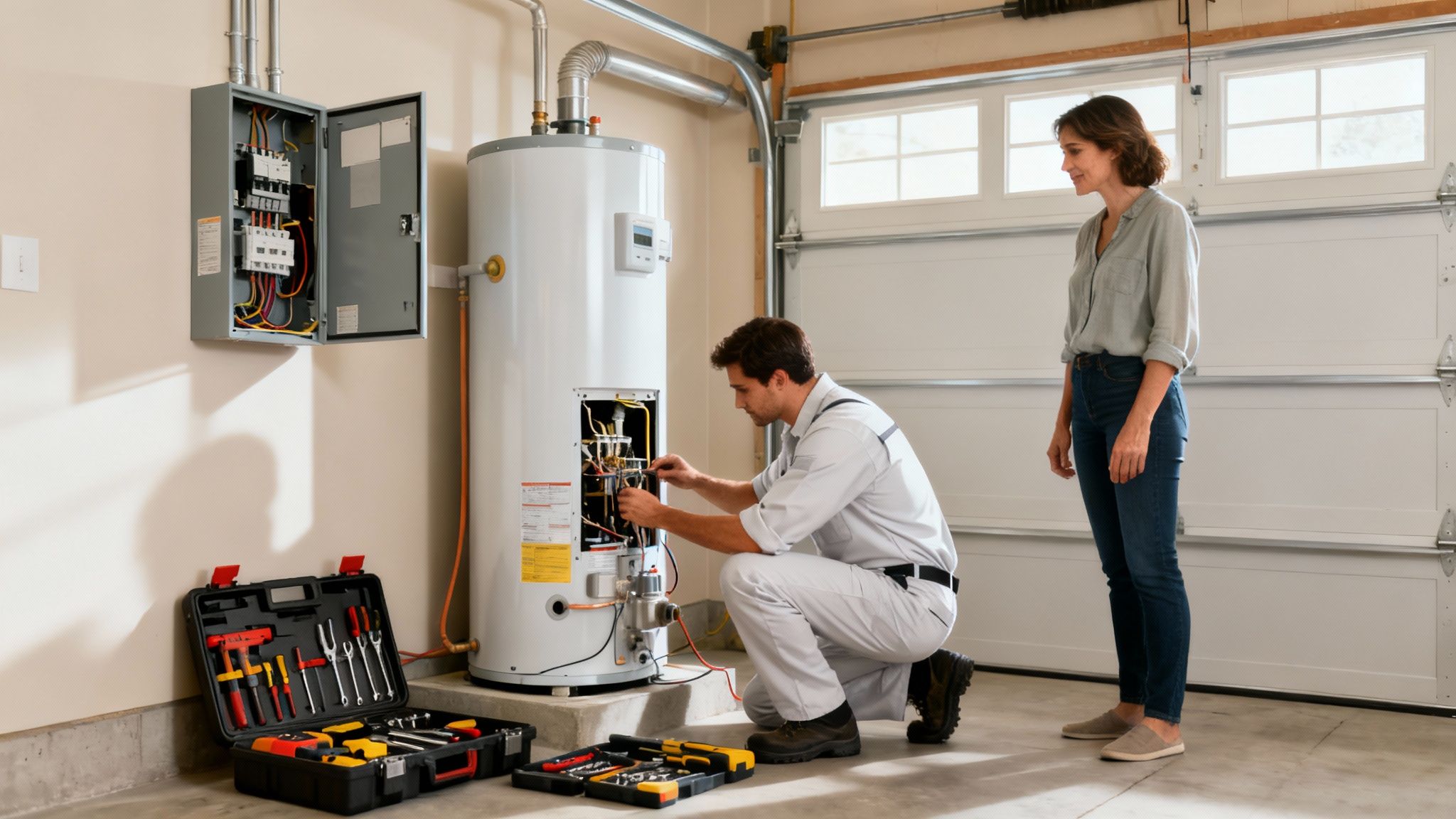
Here at Alvarez Plumbing, we have a seamless process to help homeowners in Marina, Pacific Grove, and across the Monterey Bay area future-proof their homes. We don’t just install an appliance; we offer expert guidance on choosing the right system and help you claim available rebates.
Our Proven Installation Process
Our goal is to make your transition to a high-efficiency water heater smooth and stress-free. We handle the technical details so you can focus on the savings and comfort ahead.
- Personalized Home Assessment: It starts with an evaluation of your home. We'll visit your property, whether you're in Castroville or Prunedale, to check your current setup, measure the space, and understand your family’s hot water needs.
- Electrical Panel Inspection: Heat pump water heaters need a dedicated electrical circuit. We’ll look at your home's electrical panel to make sure it can handle the new system. Many older homes need a small panel upgrade, and we can coordinate that for you.
- Expert Installation & Code Compliance: Our certified technicians handle the entire installation, from removing your old unit to connecting the new HPWH. We make sure every step meets local building codes, protecting your home.
- Rebate and Incentive Guidance: After the job is done, we provide the documentation you need to claim every available rebate and tax credit to ensure you maximize your savings.
This isn't just connecting pipes; it's about integrating a sophisticated piece of equipment into your home's most critical systems.
Trusting a licensed and insured plumber protects your home from the risks of improper wiring and plumbing leaks. As a family-owned business since 1988, our top priority is the safety and satisfaction of our neighbors.
The Global Trend Hits Home
This shift toward electric isn't just happening here. Globally, electric water heaters are already the leading technology, with the market expected to jump from $27.4 billion to nearly $45 billion by 2032. That trend is getting a serious push right here in California, where new building codes are steering homeowners toward all-electric solutions as their old gas heaters hit the end of their 8–12 year lifespan. You can read the full research about the water heater market to see how this worldwide shift is playing out.
Ultimately, a proactive upgrade with Alvarez Plumbing means you get the right system for your home, installed correctly, with every available dollar in savings secured. It’s the smart, stress-free way to embrace the future of hot water.
Common Questions About Electric Water Heaters
Making a big home upgrade always comes with questions. As a family-owned business serving the Monterey Bay area since 1988, we've heard them all. Here are straightforward answers to the most common concerns we hear from our neighbors in Salinas, Monterey, and the surrounding communities.
Will a Heat Pump Water Heater Provide Enough Hot Water for My Family?
Yes, absolutely. This is the number one worry, but modern Heat Pump Water Heaters (HPWHs) are designed to keep up with busy households. We start by professionally sizing the unit based on your family's daily usage, ensuring you have a steady supply for showers, laundry, and dishes.
For those rare times of unusually high demand—like when you have holiday guests—most models also include a standard electric heating element as a backup. This feature kicks in to heat water quickly, so you're never left in the cold.
The key is proper sizing and professional installation. A correctly chosen HPWH will meet your family’s needs just as well as your old gas model, all while using less energy.
Do Heat Pump Water Heaters Need More Space?
HPWHs are often a bit taller than gas models, and they need good air circulation to work. Remember, they pull warmth from the surrounding air, so they can’t be crammed into a tiny, sealed-off closet.
For most homes in Salinas and Monterey County, a garage or a spacious utility closet is the perfect spot. The first step in our consultation is always a space assessment. We’ll confirm that an HPWH will fit properly and recommend the best location for peak efficiency.
Is the Upfront Cost of an HPWH Worth It?
While the initial purchase price is higher than a traditional gas unit, the total cost of ownership is often much lower. It’s a case of investing a little more now to save a lot more later.
When you combine the thousands of dollars available in rebates and federal tax credits with the long-term savings from lower monthly utility bills, an HPWH becomes an incredibly smart investment. It pays for itself over time and ensures your home complies with future regulations. Planning ahead also helps you avoid the high cost of an emergency replacement, especially when you know the signs that your water heater is about to fail.
Ready to plan your upgrade before the deadlines hit? If you’re in Salinas or the Monterey Bay Area, now is the time to schedule a consultation. The team at Alvarez Plumbing has over 35 years of experience helping homeowners make smart, cost-effective plumbing decisions.