When you hear that dreaded sound of rushing water where it shouldn't be, every second counts. A burst pipe isn't just a small leak; it's a full-blown emergency. Your first actions can save you thousands of dollars in repairs. The top priority is to stop the flow of water. After that, you need to cut the power to any wet areas. Only then should you call for professional help.
Your Immediate Action Plan for a Burst Pipe
That sudden flood of water is a homeowner's worst nightmare, whether you're in a historic Salinas home or a newer build in Carmel-by-the-Sea. The first 15 minutes are the most important. Acting fast can be the difference between a simple fix and a huge repair project that turns your life upside down for weeks. As a family-owned business serving Monterey County since 1988, we've seen it all. This is the advice our on-call technicians give every single time.
First, Shut Off the Main Water Supply
Before you do anything else, you must stop the water. Don't waste precious time trying to find where the leak is coming from. Go straight to your main water shut-off valve. Letting gallons of water pour into your house while you search will only cause more damage to floors, drywall, and even your home's foundation.
Next, Cut the Electricity
Once the water is off, your next move is to deal with the electrical danger. Water and electricity are a deadly mix. Head straight to your home's breaker panel and shut off the power to every room and appliance that got wet. Never, ever touch wet outlets, switches, or any electrical device.
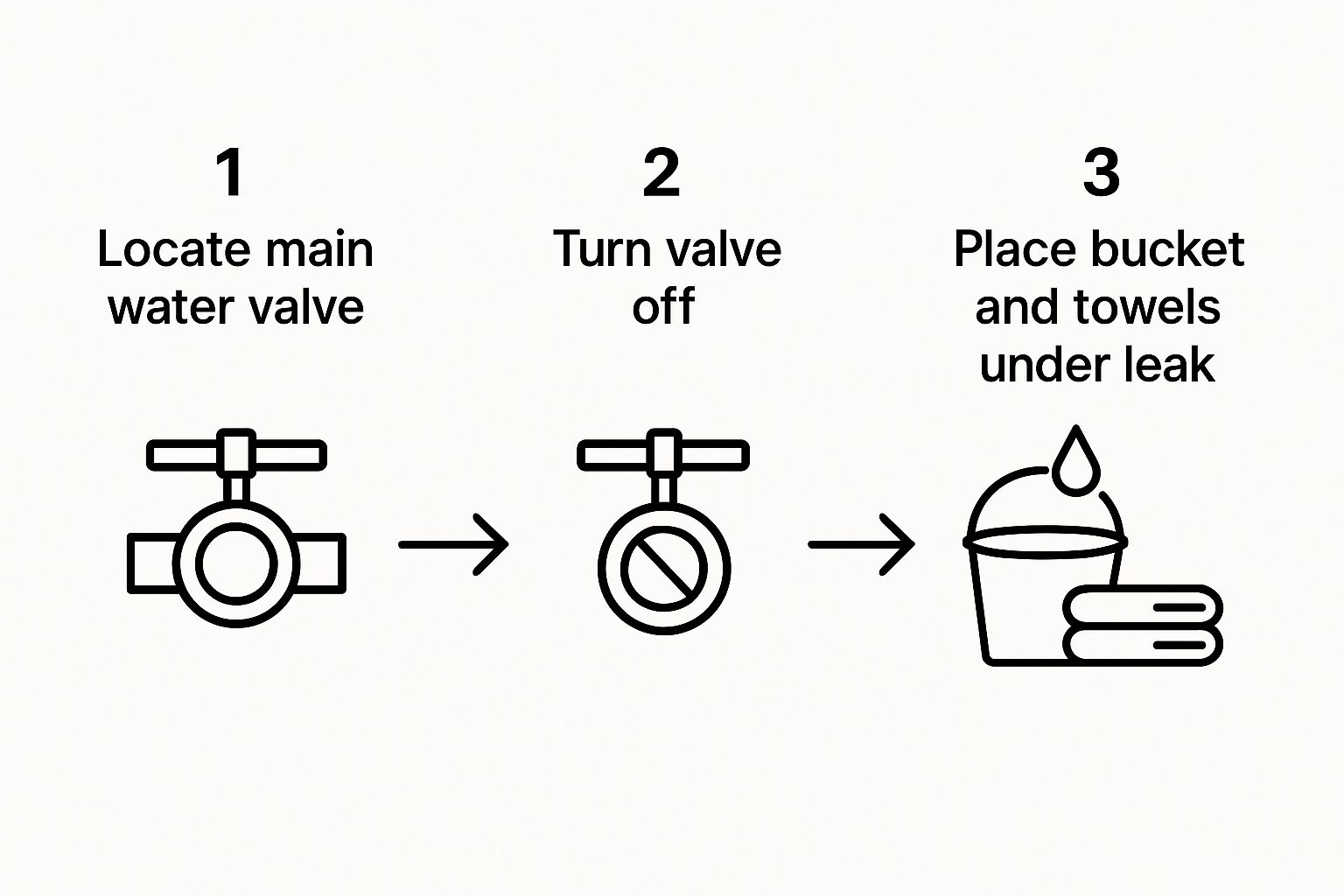
Following this order—water first, then power—is the safest and best way to get the situation under control.
Finally, Call a Professional Plumber
With the immediate dangers of flooding and electrocution handled, it's time to call the experts. We can't say this enough: don't try to fix a pressurized water line yourself. A temporary patch can easily fail under pressure, leading to a second, often worse, flood. A professional plumber has the right tools and experience to make sure the fix is safe and permanent.
For a quick reference, here's a checklist to use the moment you find a problem.
Quick Emergency Response Checklist
| Priority | Action Step | Why It Matters |
|---|---|---|
| Highest | Find and turn off the main water shut-off valve. | Instantly stops the flooding and prevents more damage to your home. |
| High | Go to the breaker box and cut power to all wet areas. | Removes the serious risk of electrical shock or a fire. |
| Medium | Place buckets and towels to catch any leftover drips. | Helps contain the mess and protects your floors and subfloors. |
| Essential | Call a licensed, 24/7 emergency plumber. | Ensures a safe, reliable repair that prevents future bursts. |
Following these steps will help you manage the crisis until help arrives.
If you're dealing with a plumbing emergency right now, our team is on standby 24/7 to help. You can learn more about our emergency plumbing services and get the help you need right away.
How to Find and Shut Off Your Main Water Valve
When a pipe bursts and water is pouring into your home, every second matters. The last thing you want is to be frantically searching for the main water shut-off valve. Knowing where it is before an emergency is one of the most important things you can do to prevent major damage. This is especially true during the colder, rainy seasons we get here in Carmel Valley, which can put extra stress on your pipes.
Every single home in Seaside, Marina, and Pacific Grove has a main water shut-off valve. Your job is to find the one valve that stops all water from entering your house with a single turn.
Where to Look for Your Shut-Off Valve
Let's start the hunt. Most of the time, you'll find the valve in one of a few common spots.
- Outside Near the Water Meter: Look for a box in the ground, often with a metal or plastic lid, near the street. The shut-off is usually right there next to your water meter.
- In the Garage: Check the walls of your garage. Pay close attention to the wall that's closest to the street, as that's often where the main water line enters the house.
- In a Crawl Space or Basement: If your home has one, the valve is almost always on a wall near the foundation, right where the main supply pipe comes through.
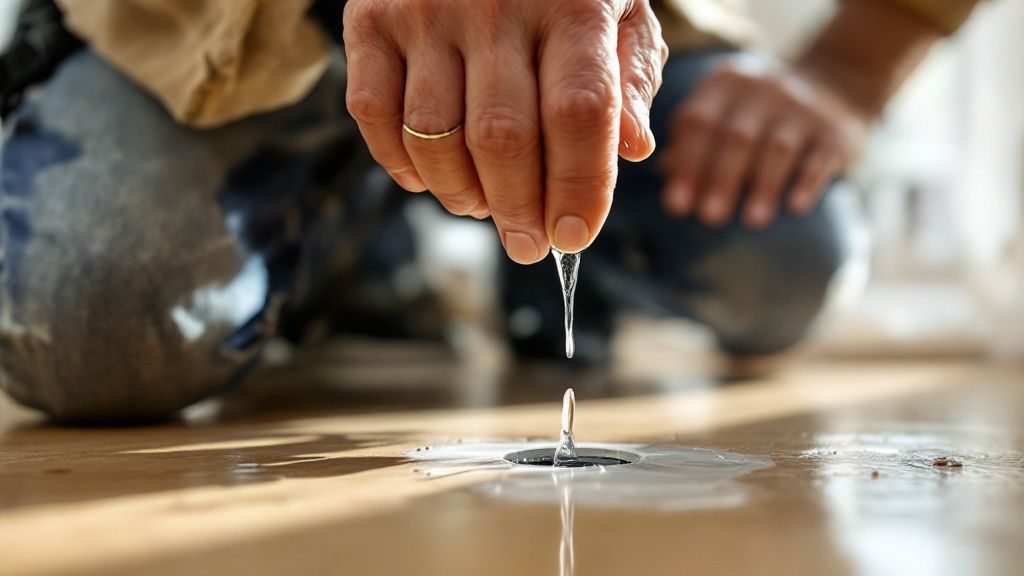
What You're Looking For
Once you find it, you need to know what you're dealing with. There are two main types of valves, and they work differently.
Here's a pro tip from our 35+ years of experience: once you find your valve, tie a bright, waterproof tag to it. It sounds simple, but this five-minute job can save you critical time and a lot of stress when you're in a panic.
You’ll likely see either a gate valve (it looks like a round spigot handle) or a ball valve (it has a straight lever handle).
A gate valve needs to be turned clockwise several times to close all the way. A ball valve, on the other hand, is much faster—just give the lever a quarter-turn until it's pointing across the pipe. That's it.
Knowing how to use the valve is just as important as finding it. If you'd like a more detailed guide, you can learn how to shut off your main water supply. When it comes to water damage, being prepared is your best defense.
Protecting Your Home While You Wait for Help
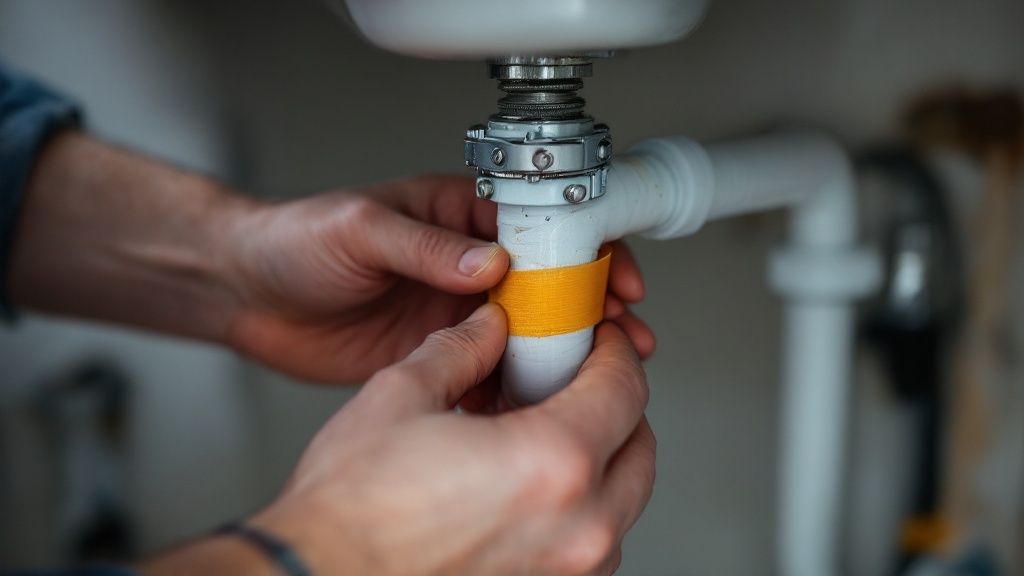
With the water and power shut down, you've stopped the immediate threat. Now, it's about damage control. This is not the time for a DIY repair—it's about making smart moves to protect your property while our team is on the way.
The very first thing you should do is pull out your phone. Take photos and videos of everything. Get wide shots of the room, close-ups of the standing water, and any damage to your walls, floors, and belongings. This proof is very important when you file an insurance claim.
Secure Your Valuables and Belongings
Once you have your photos, start moving things to safety.
- Electronics First: Unplug and move TVs, computers, and any other electronics to a dry room.
- Furniture Off the Floor: Get wooden furniture out of the water right away to stop the legs from swelling. Even lifting pieces onto small, dry blocks can make a big difference.
- Irreplaceable Items: Quickly gather important documents, family photos, and anything else you can't replace. Move it all to a high, dry shelf or another room.
A tip for those of us in older Castroville and Prunedale homes with classic plaster walls: get the air moving. Those walls can hold moisture, so open the windows (if it's not raining!) and turn on some fans. This helps start the drying process and can stop that musty smell that sets in so fast in our coastal climate.
After you've secured your things, the next job is getting rid of the water. Knowing the best ways to dry carpet after significant wetting can be a lifesaver for your floors and helps prevent mold.
If you have a lot of standing water, especially in a basement, you'll need more than a mop. This is where special equipment comes in. If you're not familiar with them, you can learn what a sump pump is and how it can be a homeowner's best friend in a flood.
Why Professional Diagnostics Are So Important

A burst pipe is rarely a random accident. It’s usually a sign of a bigger problem that’s been growing inside your plumbing for a long time. Just patching the break without figuring out why it happened is a recipe for another disaster. You're just waiting for the next one to burst.
Since 1988, we've helped countless homeowners in Watsonville and Salinas who've dealt with one pipe burst after another, all because the real cause was never found. This is why a professional diagnostic inspection is a must after a major plumbing failure.
Seeing What’s Really Going On Inside Your Pipes
We don't have to start tearing up your walls to find the problem. We use high-resolution video cameras to get a firsthand look deep inside your pipes. This lets us spot the hidden issues that led to the burst. With a camera inspection, we can find problems like:
- Hidden Corrosion: A common issue, especially in the older cast iron pipes found in many historic Salinas homes.
- Growing Blockages: Nasty clogs that are putting huge pressure on the entire system.
- Weak Spots and Cracks: The next potential disaster waiting to happen.
A Real Fix, Not Just a Quick Patch
Once we see the full picture, we can plan a real, long-term solution. Sometimes, a simple repair is all that's needed. More often, we find that a technique like hydro jetting is the answer. It uses high-pressure water to scour the pipe walls clean, removing years of buildup and restoring healthy water flow.
This approach does more than just fix the leak you can see; it gives you real peace of mind. By finding and fixing the underlying problem, we help make sure you won't be mopping up another flood in a few months. Wondering what it takes? You can learn what a sewer line camera inspection costs and why it's a smart investment for your home.
Navigating Insurance Claims and Professional Cleanup
Dealing with the aftermath of a burst pipe is stressful enough without having to figure out insurance paperwork. Once our emergency team has stopped the leak, the real recovery work begins. This is where your insurance company and a professional cleanup crew come in.
We’ve been serving the Monterey Bay area since 1988, so we know what your insurance company will need to process a claim quickly. Those photos and videos you took of the damage are very important. Your next call should be to your insurance agent to get the process started.
Partnering with Your Insurance and Restoration Team
Understanding Why Homeowners Insurance is Essential is never clearer than when you're standing in a water-damaged room. We make this part easier by giving you a detailed, professional report that explains what failed and how bad the plumbing damage is. It’s the exact paperwork your insurance adjuster needs.
We also work closely with trusted local water damage restoration experts. They are the specialists who will handle the heavy lifting of getting your home back to normal.
- Water Removal and Drying: They use special equipment to pull out standing water and dry everything from subfloors to wall cavities.
- Mold Prevention: This is critical. They'll treat the wet areas to stop mold before it can start.
- Repairs: They’ll restore the damaged parts of your home, from replacing soggy drywall and ruined flooring to a final coat of paint.
Our goal is simple: to make your recovery as smooth as possible. We’re with you from that first frantic phone call all the way through the final cleanup, making sure your home is safe and sound again.
Once the crisis is over, it’s smart to think about prevention. A major pipe burst can be a warning sign that other parts of your plumbing are getting old. A full system checkup can find other weak spots before they turn into another disaster. Our comprehensive plumbing inspection checklist is a great place to start.
Common Questions About Burst Pipes
After the shock of a burst pipe wears off, the questions start coming. As a family-owned company serving our neighbors in Monterey and Salinas since 1988, we've heard them all. Here are the answers to some of the most common concerns we hear from homeowners.
How Can I Tell If a Pipe Is About to Burst?
A major pipe failure rarely happens out of the blue. Your plumbing will usually give you a few warning signs if you know what to look for.
Keep an eye (and ear) out for these red flags:
- Damp spots or water stains appearing on walls or ceilings.
- A sudden, big drop in water pressure when you turn on a faucet.
- Strange noises coming from your walls, like banging, hissing, or dripping sounds.
Especially in places like Carmel-by-the-Sea during a cold spell, visible frost on a pipe is a serious warning. That pipe is likely frozen solid and under huge pressure. If you see this, call a plumber right away.
Is It Safe to Stay In My Home After a Burst?
Your safety always comes first. If the water has reached any electrical outlets, appliances, or your breaker panel, get everyone out of that area immediately. Water and electricity are a deadly combination.
Soaked drywall and ceilings are also a hidden danger. They can absorb a lot of weight from the water and could collapse. After you’ve shut off the water and power, it’s best to wait for a professional to say it's safe before going back into the damaged rooms.
A pipe burst isn't just a headache for you; it's a massive waste of water. According to the EPA, aging pipes in the U.S. lose about 6 billion gallons of treated water every single day. Learn how leaks impact our water supply and see the bigger picture.
Will My Homeowner's Insurance Cover This?
In most cases, yes. A standard homeowner's policy usually covers the damage from a sudden and accidental water event, like a burst pipe. This includes big costs like water removal, drying out your home, and repairing ruined floors and walls.
However, there's a catch. The policy usually will not cover the cost of the actual plumbing repair—the broken pipe itself. Also, if the damage came from a slow leak you ignored for months, your claim might be denied because of poor maintenance. Your best move is to call your insurance agent right away to understand exactly what your policy covers.
When a plumbing emergency hits, you need a team you can count on to show up fast and do the job right. For fast, reliable, and expert service, call Alvarez Plumbing today or visit us online at https://alvarezplumbingsalinas.com.