That sinking feeling when a powerful shower spray turns into a disappointing drizzle is all too common. It's incredibly frustrating, and more often than not, the culprit is hiding in plain sight. The most common low water pressure causes are often something as simple as a partially closed water valve, a failing pressure regulator, or even just clogs in your pipes or fixtures. Figuring out where the problem lies is always the first step to getting your flow back.
Why Is My Water Pressure Suddenly Low?
When your water flow takes a nosedive out of nowhere, it’s a sure sign that something has thrown a wrench in your home's plumbing system. I like to think of plumbing as a highway for water—a sudden drop in pressure means there's a roadblock somewhere. The key to fixing it is to play detective and determine if this "traffic jam" is affecting your entire house or just a single exit, like one shower or sink.
The Whole House vs. a Single Faucet
Your first diagnostic step is the easiest one. Just walk around your house and turn on a few different faucets.
- If only one faucet has low pressure: The problem is almost certainly stuck right there at that specific fixture. This is usually good news, as it often means a simple DIY fix like cleaning a clogged aerator.
- If every faucet is sputtering: The issue is much bigger, affecting your entire plumbing system. This points toward a more central problem, like your main shutoff valve, the water pressure regulator, or maybe even an issue with the city’s supply line.
This quick test saves you a ton of guesswork and immediately points you in the right direction. It's the difference between a five-minute fix and having to call in a professional.
Key Insight: Figuring out if the pressure drop is isolated or widespread is the single most important piece of information you can gather. It’s the starting point for any real diagnosis and stops you from wasting time chasing the wrong solutions.
This infographic is a great visual guide for walking through the diagnostic steps to nail down the source of your low water pressure.
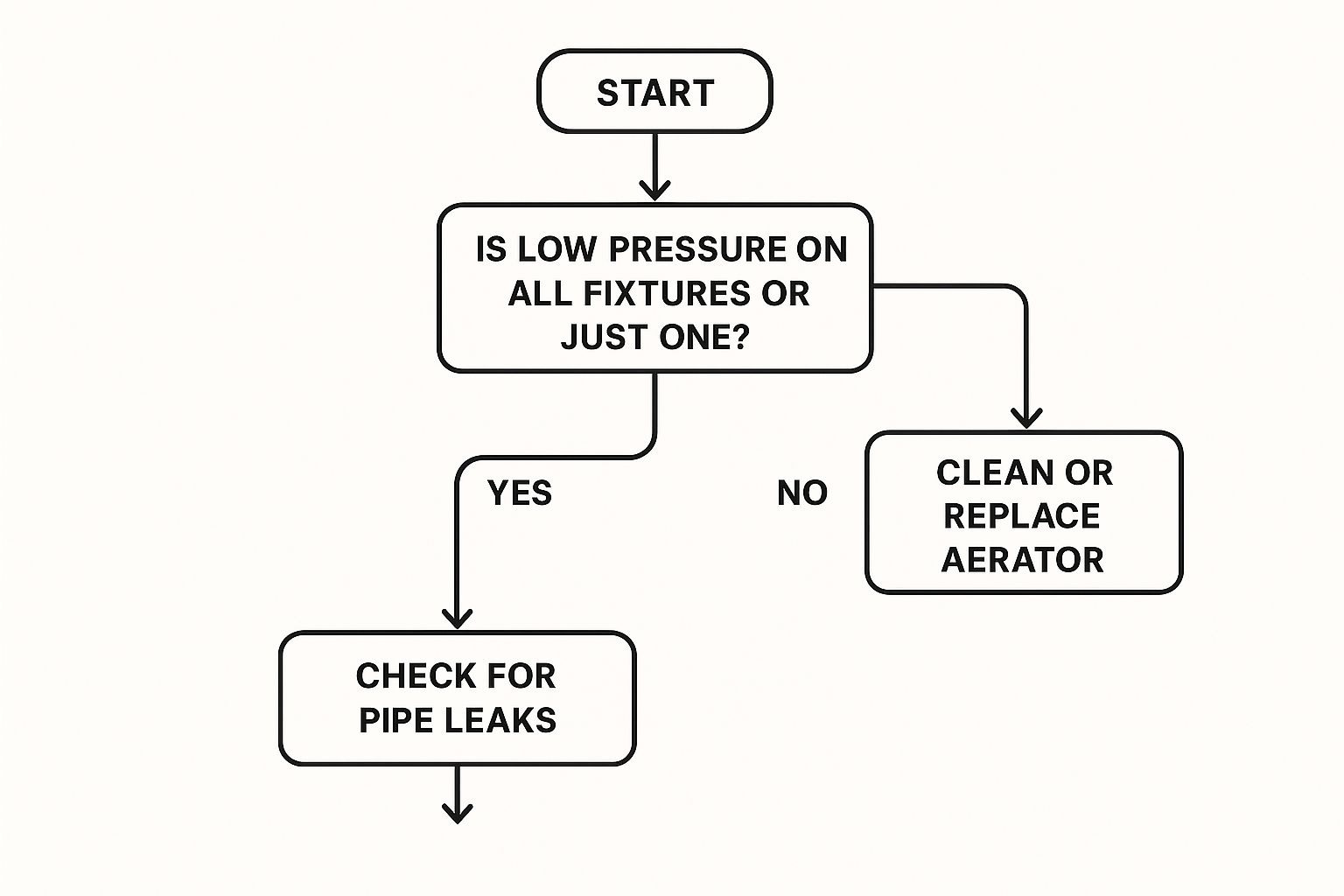
As you can see, following this logical path—from checking individual fixtures all the way up to system-wide components—is the most efficient way to solve the puzzle.
Checking Your Main Water Valves
Two critical valves control all the water coming into your house: the main shutoff valve and the water meter valve. It's surprisingly common for one of these to be partially closed, which will absolutely kill your water pressure. Sometimes they get bumped accidentally during other household projects.
Before you start worrying about more complex issues, find your main shutoff valve. It's usually in the basement, garage, or a utility closet. Check to make sure the handle is turned completely to the "on" position. If you have a lever-style valve, the handle should be running parallel with the pipe.
Common Plumbing Problems Inside Your Home
While it's easy to blame the city for a weak shower, the real culprit behind low water pressure is often lurking right inside your own walls. If you’ve already checked your main shut-off valves and they’re wide open, it’s time to play detective and investigate the issues silently choking your water flow from within.
Think of your home’s plumbing like its circulatory system. Over time, just like arteries can get clogged, your pipes can build up gunk that restricts water, leading to a weak, unsatisfying pulse at the faucet. Finding these blockages is the first step to getting your pressure back to normal.
Clogged and Corroded Pipes
Over many years, pipes can suffer from some serious internal buildup—especially older galvanized steel pipes. This isn't just a bit of grime; we're talking about a hardened combination of mineral deposits (limescale) and rust that slowly but surely shrinks the inside of the pipe.
What’s the result? Water has a much smaller tunnel to travel through, which kills the force and volume that reaches your showerheads and faucets. This is one of the most common reasons for low water pressure in homes built before the 1970s. You might notice the problem is worst at the fixtures farthest from where water enters your house.
Key Takeaway: Pipe corrosion is a slow-burn problem. If your water pressure has been getting progressively weaker for years and you live in an older home, mineral and rust buildup is a prime suspect.
Beyond gradual corrosion, problems can also pop up from faulty plumbing fittings, which sometimes break down even faster than the pipes they connect. For a broader look at what can go wrong with your plumbing, check out our guide on the most common plumbing problems homeowners run into.
A Failing Pressure Reducing Valve
Lots of homes have a Pressure Reducing Valve, or PRV. It’s a bell-shaped device usually installed right where the main water line comes into your house. Its one job is to act like a bouncer, taking the super-high pressure from the city supply and dialing it down to a safe level (typically 45-60 PSI) that your pipes and appliances can handle.
But these valves don't last forever. After about 10-15 years, they start to wear out and fail in a few distinct ways:
- Getting Stuck: The internal parts can seize up, permanently limiting water flow and causing consistently low pressure everywhere.
- Gradual Decline: More often, the components just get old and tired, leading to a slow, steady drop in water pressure over months.
- Sudden Failure: Sometimes, a PRV gives up the ghost all at once, resulting in a sudden, dramatic loss of water pressure that you can't miss.
If you have a PRV and the low pressure is affecting your entire house, that little bell-shaped valve is a very likely culprit.
Blockages in Your Water Heater
Have you noticed your low-pressure woes are exclusive to the hot water? If the cold water blasts out just fine but the hot water only manages a pathetic trickle, the problem is almost certainly living in your water heater.
Sediment buildup is the usual offender here. Minerals like calcium and magnesium naturally settle out of the water and pile up at the bottom of the tank. This sludge can eventually clog up the heater’s hot water outlet pipe, creating a bottleneck that only affects your hot water supply. It's a classic plumbing head-scratcher with a surprisingly simple cause.
How to Fix Low Pressure in a Single Faucet
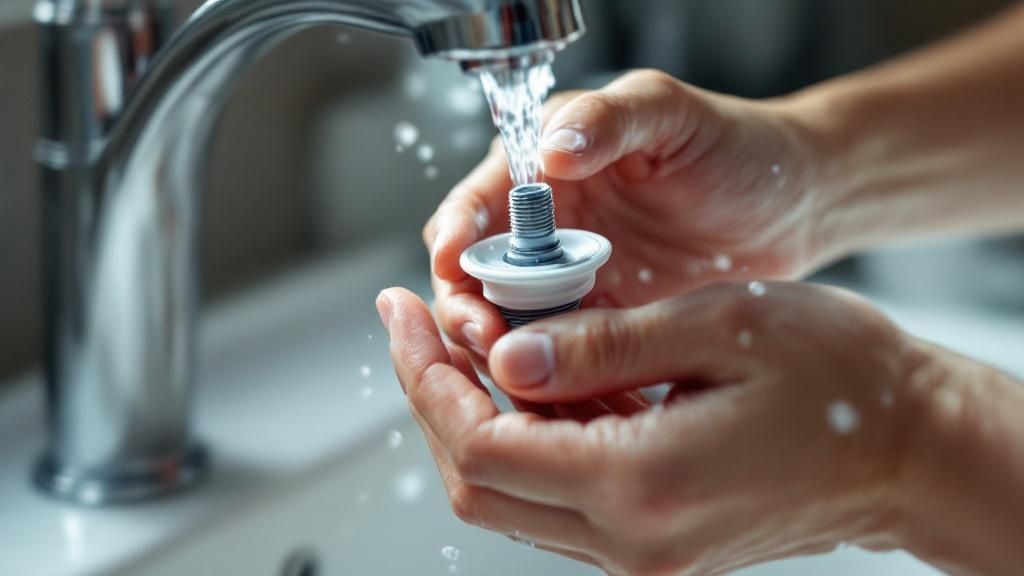
If you've noticed a weak, sputtering flow at just one showerhead or sink while every other fixture in the house works just fine, you can breathe a sigh of relief. This is usually the easiest low water pressure problem to fix and rarely requires calling a plumber. The issue is almost always localized right there at the faucet, meaning you can probably solve it in just a few minutes.
The number one culprit for a single-faucet slowdown is a clogged aerator or showerhead screen. Think of the aerator as a tiny mesh filter right at the tip of your faucet. Its job is to mix air into the water stream, but over time, it catches tiny bits of sediment and mineral deposits (like limescale) from the water. Eventually, this gunk builds up and chokes the flow, causing that frustrating trickle you're seeing.
Cleaning a Clogged Aerator or Showerhead
Getting your pressure back is usually as simple as giving that small part a good cleaning. Here’s a quick step-by-step guide to get it done.
- Unscrew the Part: For a sink faucet, the aerator is the small cap at the very end of the spout. You can typically unscrew it by hand. If it’s stuck, wrap a cloth around it to avoid scratching the finish and use pliers to gently turn it counter-clockwise. For a showerhead, you'll want to unscrew the entire head from the shower arm it's attached to.
- Disassemble and Inspect: Once you have it off, you’ll see one or more small screens and rubber gaskets inside. Carefully take these apart and check for any visible grit, sand, or a chalky white film.
- Soak in Vinegar: Place all the small components into a bowl and cover them with white vinegar. The acid in the vinegar does an excellent job of dissolving those stubborn mineral deposits. Let them soak for at least one hour, though you might want to leave them overnight if the buildup looks heavy.
- Scrub and Rinse: After the soak, grab an old toothbrush and gently scrub away any debris that's still hanging on. Rinse all the parts thoroughly with fresh water to wash away the vinegar and all the dislodged gunk.
- Reassemble and Test: Carefully put the aerator or showerhead back together and screw it back onto the fixture. Turn on the water and enjoy your restored water pressure!
Pro Tip: While you're cleaning, pay close attention to the type of debris you find. If you see a lot of sandy sediment, it might be a clue about a bigger issue, like buildup in your pipes or your water heater. Consistent sediment can be one of the signs you need water heater repair and replacement, particularly if you have an older unit.
If a deep cleaning doesn't solve the problem, the next thing to suspect is a faulty faucet cartridge. This is the internal valve that controls the water flow through the faucet's body. Replacing a cartridge is a more involved task, and if you’re not comfortable with it, that’s the perfect time to call in a professional for help.
Troubleshooting External Water Pressure Issues
So, you've checked all the usual suspects inside your house and everything seems fine, but your shower still feels more like a light drizzle than a refreshing downpour. What gives? It’s time to look outward. Sometimes, the low water pressure you're dealing with has nothing to do with your home's plumbing at all. The real culprit might be at your property line or even somewhere in the city's water grid.
Before you start budgeting for a major pipe replacement, let's investigate these external factors. It could save you a ton of time, money, and stress.
The first and easiest thing to check is your main water shutoff valve. This is the gatekeeper that controls all the water flowing from the city's supply into your home. You'll usually find it in a basement, garage, or tucked inside an underground box near the street. It’s surprisingly common for this valve to get partially closed by accident, which can choke off your water flow significantly.
Make sure the handle is all the way in the "on" position.
- For a wheel-style handle, turn it completely counter-clockwise until it stops.
- For a lever-style handle, it should be parallel with the pipe.
Checking for Municipal Supply Problems
If your shutoff valve is wide open and the pressure is still low, the problem might be bigger than just your property. In fact, your whole neighborhood could be in the same boat.
These issues often trace back to the city's water supply. Common causes include:
- A water main break: When one of the city's massive underground pipes breaks, it can cause a sudden, dramatic pressure drop for everyone connected to that line.
- Hydrant use: If you see the fire department using a nearby hydrant, know that they draw a huge amount of water. This will temporarily lower the pressure for all the homes in the immediate area.
- Scheduled maintenance: Your local water utility might be doing routine work on the system, which sometimes requires them to lower the pressure for a while.
The quickest way to figure this out is to just ask a neighbor if they're experiencing low pressure too. You can also check your local water utility's website or social media pages, as they usually post alerts about service disruptions. For a closer look at issues common in our area, our guide on plumbing problems in Monterey offers some great local insights.
It's also worth noting that wider, global water stress can lead to lower municipal pressure over time. Projections show that by 2050, roughly 31% of the global population will face high water stress, forcing some utilities to reduce overall flow.
For homes that use external storage, ensuring proper polyethylene tank installation is also crucial for maintaining good pressure. Flaws in the setup can create a bottleneck before water even gets a chance to enter your house.
If you’ve gone through these external checks and your neighbor has great pressure while yours is weak, the problem is almost certainly located somewhere back within your own plumbing system.
How Water Scarcity Affects Your Home's Pressure
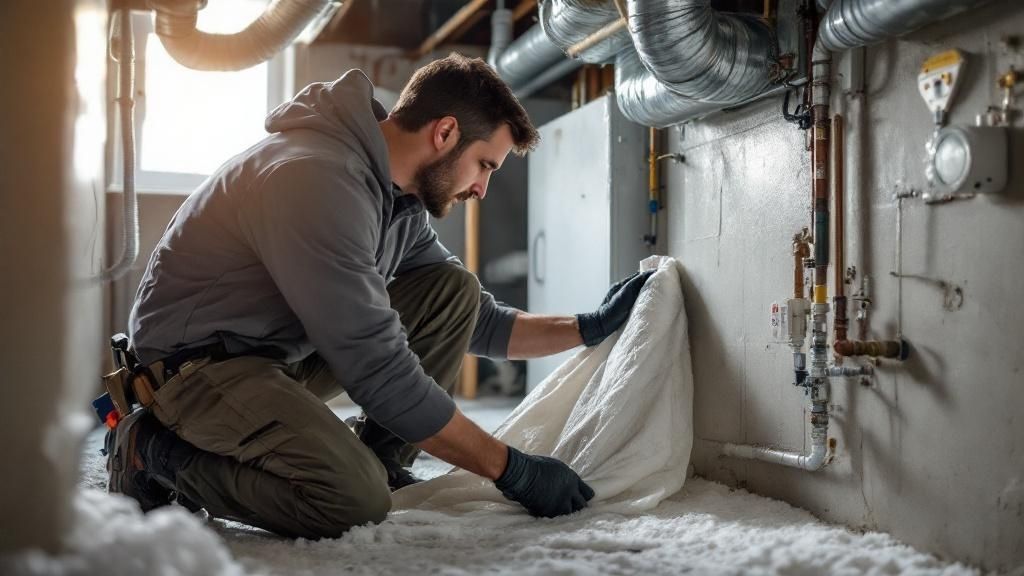
Sometimes, the culprit behind your weak shower isn't inside your home at all. The problem can be much bigger, starting with regional water scarcity that connects your annoying dribble of a faucet to a much larger story of supply and demand.
Think of your city's water supply like one giant, shared tank. When the tank is full, there's more than enough pressure for everyone. But during a drought or in areas where the population is booming, that tank level drops. There's simply less water and less pressure to go around.
When Utilities Intentionally Reduce Pressure
In places dealing with water shortages, the local utility company will often make a deliberate choice to lower the water pressure for the entire area. This isn't a mistake or a system failure; it's actually a conservation tactic. By dialing down the pressure, they dramatically reduce how much water is lost through tiny, unseen leaks in the miles and miles of city pipes.
It’s a strategy to protect a strained resource for the whole community. So, while it might mean a less-than-great shower for you, it helps ensure there's enough water for everyone's essential needs during a shortage. This is one of those frustrating low water pressure causes that is completely out of your hands as a homeowner.
The challenge of low water pressure isn't just local; it's a global issue tied to the growing gap between water demand and supply, made worse by climate change and population growth. It's estimated that by 2025, a staggering 1.8 billion people will live in areas with absolute water scarcity, which has a direct impact on the reliability of water pressure in homes around the world.
Knowing this context is key. If you've already checked for common plumbing issues inside your home, like sediment buildup in your water heater—something we often find during a water heater repair and installation—the real problem might be a city-wide adjustment. A quick look at your local utility's website for any drought alerts or conservation notices can usually tell you if this is what's happening in your neighborhood.
Knowing When to Call a Plumber
After you've done a little detective work on your own, you'll have a better idea of what might be causing your low water pressure. Now comes the big decision: is this a simple fix you can tackle yourself, or is it time to bring in a professional?
Some issues are genuinely perfect for a confident DIY-er. Knowing the difference is what separates a quick, satisfying repair from a much bigger, more expensive headache.
The DIY-Friendly Fixes
Many of the most common culprits behind a weak flow are surprisingly simple to handle on your own. If your investigation points to one of these, you can probably put your wallet away and solve it in an afternoon.
- Cleaning Aerators and Showerheads: This is the classic "it's only happening at one faucet" problem. If the pressure is low in just one spot, a clogged screen is almost always the reason. Just unscrew the aerator or showerhead, give it a good soak in vinegar, and you’re back in business. It's a safe and incredibly easy fix.
- Checking the Main Shutoff Valve: You’d be surprised how often we find a main valve that's been accidentally knocked partially closed. Maybe it happened during some other work, or someone brushed against it. A quick check to make sure it's fully open can instantly restore your home’s water pressure.
When to Bring in the Experts
While a successful DIY repair feels great, some plumbing problems demand specialized tools, years of experience, and a deep understanding of how the whole system works. Trying to fix these on your own can quickly turn a small issue into a catastrophe.
Key Insight: The biggest red flag is any problem that affects your entire home and isn't just a partially closed valve. These almost always signal a deeper issue that needs a professional eye.
Don’t hesitate to call a licensed plumber if you suspect any of the following:
- A Failing Pressure Reducing Valve (PRV): This isn't a part you want to guess with. Adjusting or replacing a PRV incorrectly can spike the pressure in your home to dangerously high levels, risking burst pipes and wrecked appliances. This job is 100% for a professional.
- Hidden Water Leaks: If your water meter is ticking away even when every faucet and appliance is off, you have a leak somewhere. Finding and fixing a leak hidden inside a wall, under your foundation, or in the yard is a complex job for an expert with the right detection tools.
- Widespread Pipe Corrosion: If you live in an older home and have noticed a gradual, system-wide drop in pressure, you're likely dealing with old, corroded pipes. The only real solution here is repiping, which is a major project that absolutely requires a pro.
- Sudden, Severe Pressure Drops: A sudden, dramatic loss of all water pressure is a plumbing emergency. It could mean a major break in your main water line or another critical failure. For these situations, you need immediate help from emergency plumbing services to prevent serious water damage and get your system back online safely.
A Few Lingering Questions About Low Water Pressure
Even after you've checked the usual suspects like the main shutoff valve and individual fixtures, you might still be scratching your head. Low water pressure is a sneaky problem, and it’s normal to have a few more questions. Let’s run through some of the most common ones we hear from homeowners.
Can a Hidden Leak Cause Low Pressure?
Yes, and it happens more often than you'd think. A hidden leak is one of the most frustrating low water pressure causes because you can't see it. Even a tiny, persistent drip from a pipe buried under your slab or tucked away behind a wall can siphon off a surprising amount of water, killing the pressure before it ever reaches your shower.
There’s a pretty simple trick to check for a hidden leak using your water meter.
- First, make absolutely sure everything that uses water in your house is turned off. That means every faucet, the dishwasher, the washing machine, everything.
- Next, find your water meter. It's usually in a covered box in your front yard, close to the curb.
- Take a look at the meter's dial. If that little triangle or dial is still spinning, even slowly, water is flowing somewhere. That's a classic sign you've sprung a leak.
Will a Water Booster Pump Help Me?
A water booster pump is a powerful tool, but it's not a magic bullet. This device gets installed where your main water line enters your home and, just like it sounds, it boosts the pressure of all incoming water. It's the perfect fix if the problem is with the city's supply—meaning the water arriving at your property line is already at a low PSI.
But here's the catch: a booster pump is not a solution for your home's internal plumbing problems. If you have clogged pipes or a hidden leak, a booster pump will just force more water into a system that's already struggling, potentially making the problem much worse.
How Can I Test My Home's Water Pressure?
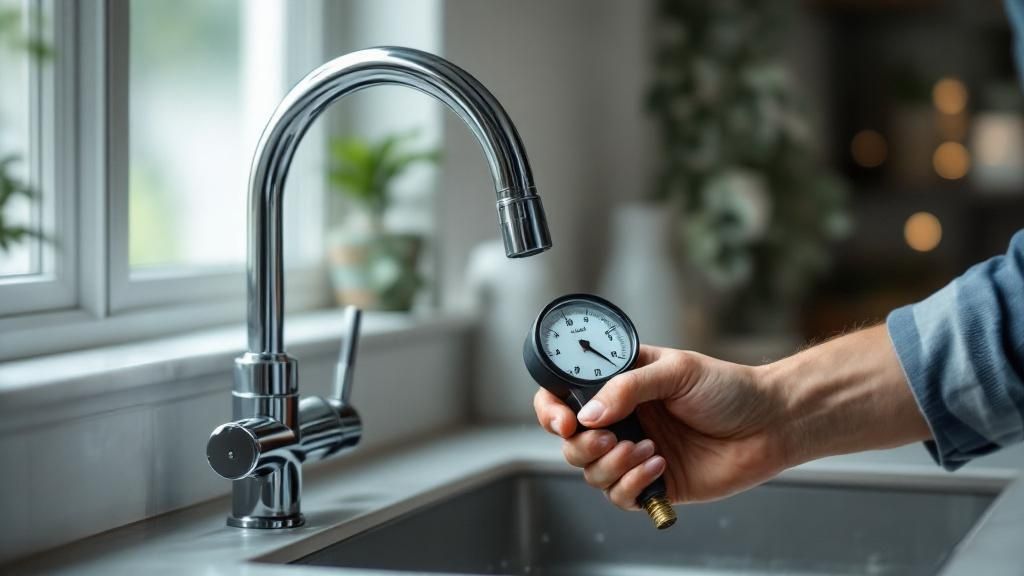
This is one of the easiest and most important diagnostic steps you can take. You can pick up a water pressure gauge at any hardware store, and they usually only cost about $10-$15. It's a small investment for a lot of peace of mind.
Using it is simple. Just screw the gauge onto an outdoor spigot (like where you'd connect a garden hose) and turn the faucet on all the way. The needle will give you an immediate reading in pounds per square inch (PSI).
In most homes, you want to see a pressure between 45 and 60 PSI. If your gauge reads below 40 PSI, you've officially got low water pressure and a good reason to investigate further.
If you've gone through these checks and are still stumped, don't keep guessing. It's time to bring in a professional. The team at Alvarez Plumbing has the right tools and years of experience to track down the true source of your low water pressure and get it fixed for good. Contact us today for a professional inspection.