If your home in Salinas, Monterey, or any of our nearby communities was built 40 years ago and still has its original pipes, there's a good chance your plumbing is not ready for 2025. It’s a reality we see every day. As a family-owned plumbing company serving this community since 1988, we've seen countless older homes from Pacific Grove to Watsonville where outdated galvanized pipes are at a high risk of failure.
This isn't a guess—it's based on decades of helping your neighbors with these exact problems.
Why 2025 Is a Tipping Point for Homes in Monterey County
We all love the charm of our region’s older houses, but that character comes with age. Much of the housing stock across Monterey County dates back 40 years or more, and many still rely on outdated galvanized pipes. Those systems were never built for the demands of a modern household.
Think about it. Today’s homes have high-efficiency washing machines, multiple bathrooms, dishwashers, and other appliances that put a far greater strain on the plumbing than families did decades ago. This increased demand wears down a system that’s already well past its prime. The constant strain from modern water usage means older infrastructure just can't keep up.
The Problem Lurking Inside Your Walls
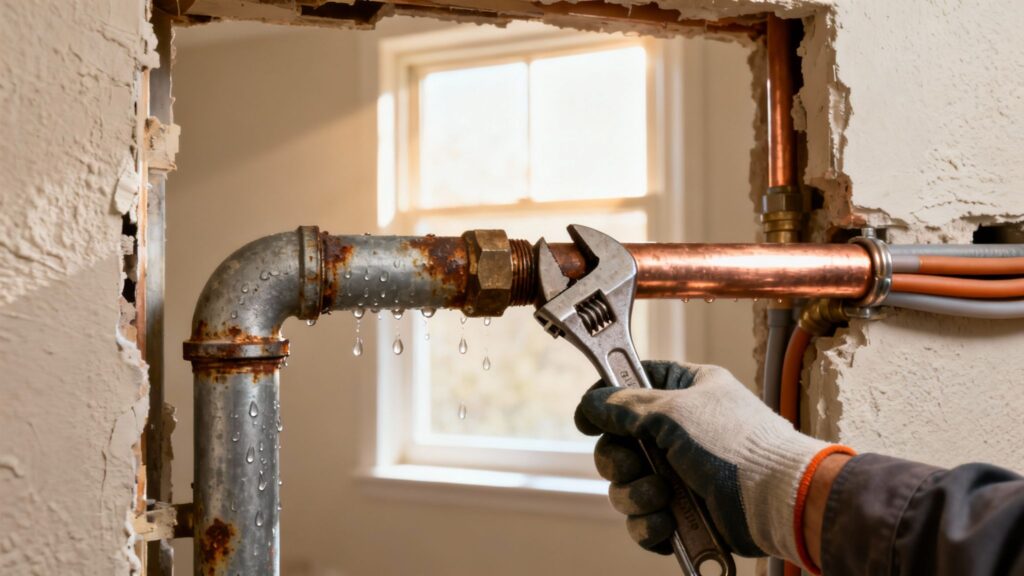
The real issue isn't just the age of your pipes; it's what’s happening on the inside. Our local water is rich in minerals, which unfortunately speeds up corrosion in those old galvanized pipes. It's a slow process that leads to a few common problems we see every week in homes from Marina to Carmel Valley.
- Discolored Water: If you turn on a tap and see a rusty or brownish tint, that’s a classic sign of pipe corrosion. It’s literally pieces of your pipe coming through the faucet and a sign of potential contamination.
- Low Water Pressure: Mineral buildup acts like plaque in an artery, slowly choking off water flow and leading to frustratingly weak showers.
- Hidden Leaks: Eventually, corrosion eats right through the pipe wall. This creates tiny leaks that can cause thousands of dollars in water damage behind your walls before you even know they're there.
For many homeowners in Salinas and Prunedale, the question isn't if their old plumbing will fail, but when. Don't wait for a major failure to act. A proactive inspection can help you avoid costly water damage or emergency repairs.
Quick Plumbing Readiness Checklist for Your Home
Recurring leaks, slow drains, and discolored water are all signs your plumbing may be nearing the end of its service life. This simple checklist can help you spot the early warnings.
| Symptom | What It Means for Your Plumbing | Recommended Action |
|---|---|---|
| Rusty or brown-tinted water | This is a direct sign that your galvanized pipes are corroding from the inside out. | This is a high-priority issue. A professional inspection is needed to assess the extent of the corrosion and discuss repiping options. |
| Weak or declining water pressure | Mineral buildup is likely constricting your pipes, reducing flow throughout the house. | A plumber can confirm if the issue is pipe-related or from a fixture. If it's the pipes, a repipe is often the only long-term solution. |
| Frequent or recurring clogs | Aging pipes with rough, corroded interiors are more likely to snag debris and cause backups. | While drain cleaning is a temporary fix, recurring clogs point to a systemic pipe problem that needs a camera inspection to diagnose properly. |
| A sudden spike in your water bill | This often indicates a hidden leak somewhere in the system, even a small one. | Don't ignore this. Call for professional leak detection services immediately to prevent costly water damage. |
If you're checking off any of these boxes, it's a good idea to have a professional take a closer look.
Upgrading is Smarter Than Relocating
With today’s high interest rates, many residents in our service area are renovating instead of relocating. If that’s you, upgrading your plumbing is a smart investment. A full repipe not only improves your water quality and pressure but also significantly boosts your home's value. When you bundle it with a kitchen or bathroom remodel, it's one of the best ways to protect your biggest asset.
Modernizing your system also helps with our community's water conservation goals, a topic we dive into in our guide on the smart way to save water in 2025. If your home is aging, a professional check-up is the best way to find out if your plumbing is ready for the years ahead.
Red Flags in Your Aging Plumbing System
The plumbing problems we see across Monterey County aren’t random; they’re often a direct result of our local environment and the age of our homes. Take the sandy soil common in Marina and Seaside. Over decades, it causes subtle ground shifts that put constant, unseen stress on the rigid, old pipes found in many of the area's classic homes.
These environmental factors, paired with materials that are simply wearing out, create predictable failure points. As a family-owned business serving this community since 1988, we’ve seen the same issues pop up time and again. Knowing what to look for is the key to acting before a small problem becomes a catastrophe.
Corroding Pipes and Hidden Leaks
The biggest troublemaker in older homes is, without a doubt, galvanized steel or cast iron pipes. From the outside, they might look fine, but inside, they're often a ticking time bomb. Decades of exposure to our mineral-rich water causes them to rust and corrode from the inside out.
This slow decay leads to two major headaches for homeowners:
- Low Water Pressure: As rust and mineral scale build up, the inside of the pipe gets narrower. Think of it like a clogged artery—it severely restricts water flow, leading to frustratingly weak showers and slow-filling appliances.
- Pinhole Leaks: Eventually, that corrosion can eat all the way through the pipe wall, creating tiny leaks. These are the worst because they're often hidden behind drywall or under your foundation, silently causing water damage and mold growth.
If you're hearing rattling or knocking sounds whenever you turn on a faucet, that’s a classic sign of loose pipes struggling with pressure changes from these internal blockages. Recognizing the signs of a slab leak is especially crucial for preventing major structural damage to your home's foundation.
Aging and Inefficient Water Heaters
Your water heater is one of the hardest-working appliances in your house, but it won’t last forever. In homes across Prunedale and Carmel Valley, we frequently find water heaters that are well past their expected 10-15 year lifespan. An older unit isn’t just inefficient—it’s a major risk.
An aging water heater that fails can leak dozens of gallons of water, causing extensive damage to your garage, floors, and belongings. Proactively replacing a unit that’s past its prime is always smarter and cheaper than cleaning up after a flood.
Keep an eye out for signs of rust or corrosion around the base of the tank or on the water connections. If your hot water looks discolored or you hear popping sounds from the tank, that's a clear signal that sediment has built up inside and the unit is nearing the end of its life.
Main Sewer Line Problems
Finally, the main sewer line connecting your home to the municipal system is a frequent point of failure. In areas of Salinas with beautiful, mature trees, those same tree roots are constantly seeking water and can be incredibly destructive.
Roots can work their way into tiny cracks in old clay or cast iron sewer lines, expanding over time and causing serious blockages or even collapsing the pipe entirely. The first clue is often slow drains throughout the entire house, not just in one sink.
If you hear gurgling sounds from your toilets or notice sewage odors, it’s a red flag that your main line needs immediate professional attention. A camera inspection is the only way to know for sure what's really going on down there.
Your Proactive Home Plumbing Inspection Checklist
You don’t have to be a professional plumber to spot the early warning signs of trouble. While a proper diagnosis always needs an expert eye, a simple visual check can help you catch problems long before they become weekend-wrecking emergencies. Taking just a few minutes to walk through your house can reveal clues your pipes are sending you.
What to Look and Listen For
A quick visual inspection is a safe and simple first step. Grab a flashlight and check these key areas, especially in the older homes we often see around Castroville and Prunedale. This isn't a DIY guide, but rather a way to build awareness of your home's health.
- Under Sinks: Look for any hint of moisture, active drips, or that tell-tale white or green corrosion on the pipes and fittings. Dark stains or warped wood on the cabinet floor are classic signs of a slow leak.
- Around the Toilet Base: Check for any water pooling on the floor or discolored flooring right at the base. A wobbly toilet is often a sign the wax seal underneath has failed.
- Water Heater Check: Your water heater, usually tucked away in the garage, gives off plenty of warnings before it fails. Look for rust spots on the tank or small puddles on the floor directly beneath it.
- Listen for Running Water: When every faucet is off, is your home completely silent? The sound of a toilet that constantly runs is a huge water-waster.
This simple decision tree can help you quickly identify some of the most common plumbing problems homeowners face.
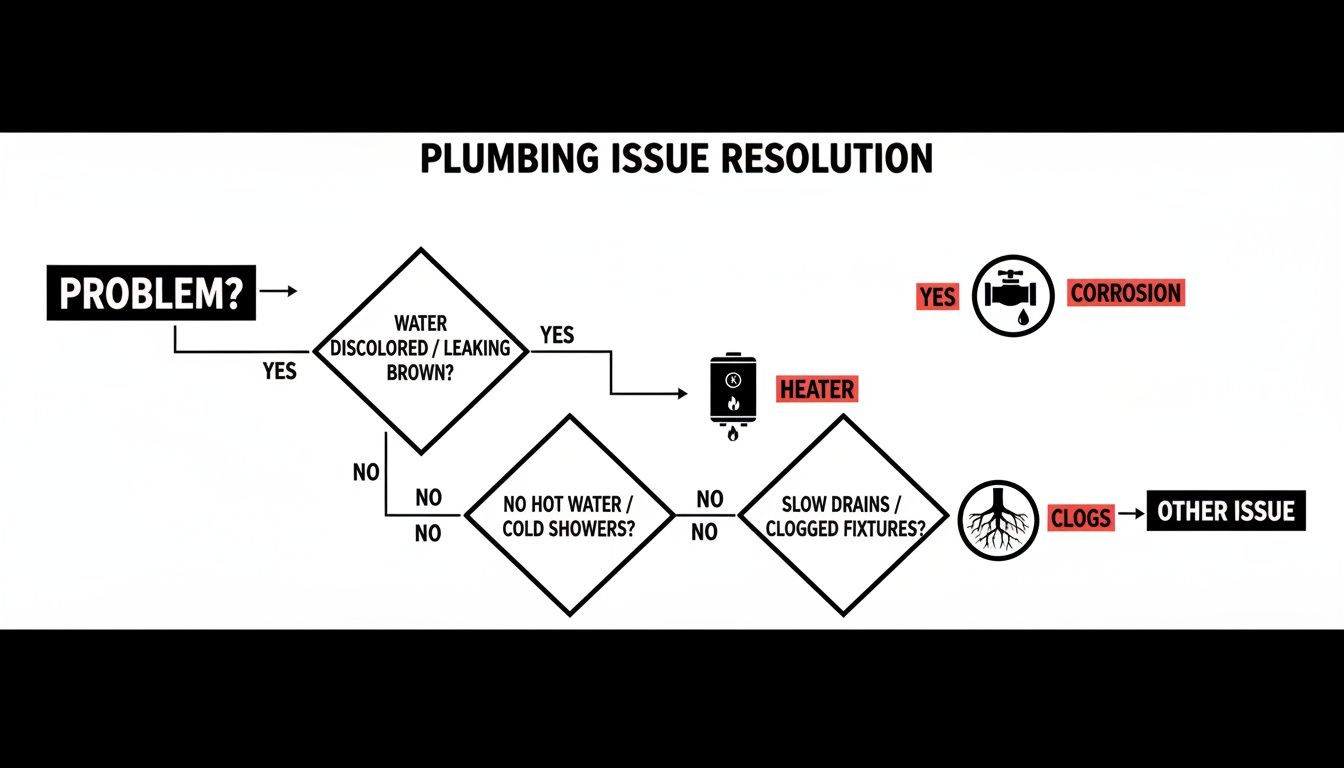
As the flowchart shows, what looks like a small issue—a bit of corrosion or a slow drain—can often point to a much bigger systemic problem that needs professional attention.
When to Call a Professional
If you spot any of these signs, it’s a clear signal to bring in an expert. A visual check can't see what’s happening inside your walls or under your foundation, but a professional inspection can. Our technicians can assess your system and recommend solutions. For a deeper dive into what our technicians look for during a service call, our detailed plumbing inspection checklist provides a lot more insight.
Remember, the goal isn't to fix these problems yourself. It's about recognizing that slow drains, discolored water, or recurring leaks are your home’s way of telling you its plumbing may be nearing the end of its life. A proactive call to Alvarez Plumbing can help you avoid costly water damage and emergency repairs down the road.
Repiping Your Home Is a Smart Investment
With interest rates where they are, it’s no surprise so many of our neighbors in Salinas and Carmel-by-the-Sea are choosing to renovate their current homes instead of moving. If you're in that boat, upgrading your plumbing is one of the smartest long-term moves you can make.
A full home repipe isn't just a repair—it's a foundational upgrade. It boosts your home's value, makes a huge difference in water quality and pressure, and delivers incredible peace of mind. It’s the difference between wondering when the next leak will spring and knowing your home is secure for decades.
Upgrading to Modern Plumbing Materials
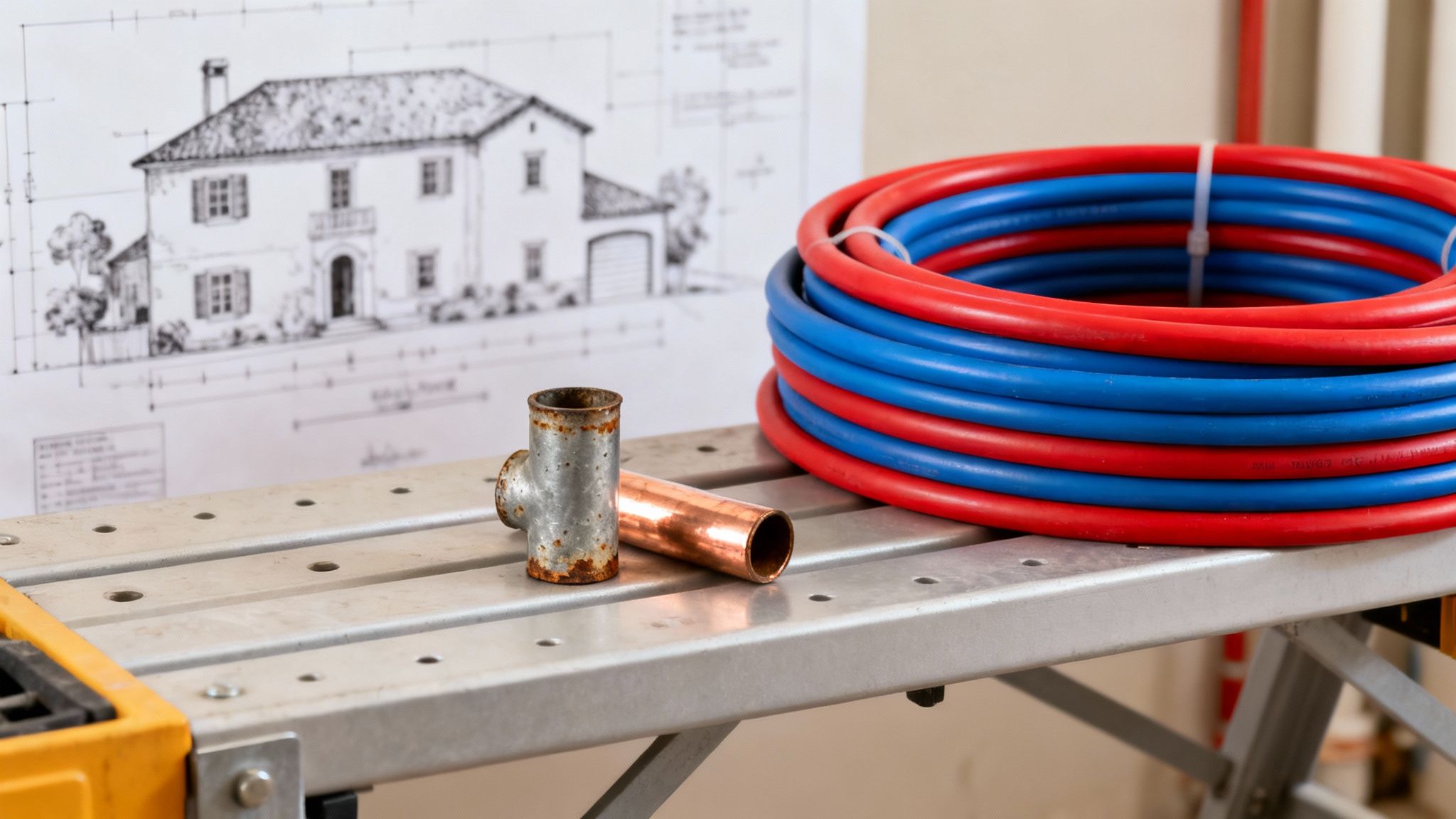
When we talk about repiping, we mean replacing those old, corroded galvanized pipes with modern, reliable materials like copper or PEX. Each one has its own strengths.
- Copper Pipes: This has been the gold standard for generations. Copper is naturally corrosion-resistant and has an incredibly long lifespan.
- PEX (Cross-Linked Polyethylene): A flexible, durable plastic piping that has become extremely popular. Its flexibility means we can install it with fewer fittings and connections, which translates to fewer potential leak points. It's also resistant to scale buildup, a major plus given our local water.
Alvarez Plumbing specializes in plumbing retrofits and repiping. Having served this community as a family-owned business since 1988, we've seen it all. With deep knowledge of local housing styles and system layouts, our team at Alvarez Plumbing is well-equipped to assess aging systems and provide tailored upgrades—minimizing disruption and maximizing long-term efficiency. You can learn more about our process for re-piping water, gas, and waste lines in Salinas.
Old Pipes vs. Modern Repiping Solutions
Choosing the right material is a big part of the process. The galvanized steel pipes found in so many older homes simply can't compare to the performance and longevity of modern PEX or copper.
| Feature | Galvanized Steel (Common in Older Homes) | Copper | PEX (Cross-Linked Polyethylene) |
|---|---|---|---|
| Lifespan | 40-50 years | 50-70+ years | 50+ years |
| Corrosion/Scale | Prone to rust and mineral buildup from the inside out | Highly resistant to corrosion; can develop scale | Resists corrosion, scale, and chlorine |
| Flexibility | Rigid, requires many fittings | Rigid, but can be bent with special tools | Highly flexible, fewer fittings needed |
| Installation | Labor-intensive and slow | Requires soldering, skilled labor | Faster installation, less invasive |
| Cost | Obsolete; no longer used for supply lines | Higher material cost | Lower material and labor costs |
Ultimately, both copper and PEX are excellent choices that will protect your home for decades to come. The right one for you often depends on your home’s specific layout and your budget.
The Cost of Waiting vs. Proactive Investment
Waiting for a plumbing emergency is a gamble you don't want to take. The numbers tell the story: plumbers' revenue is projected to hit $169.8 billion in 2025, driven partly by a spike in emergency calls. We're seeing pipe bursts in homes over 30 years old increase by 25%.
On top of that, volatile material costs are making reactive fixes 15-20% more expensive, while modern PEX can actually cut installation time by up to 50%.
Proactively replacing old pipes is far less stressful and significantly less expensive than dealing with the aftermath of a catastrophic flood from a burst pipe. The cost of a planned repipe is a fraction of the cost of water damage restoration, mold remediation, and emergency repairs combined.
Think about the value of your home and your peace of mind. Investing in a new plumbing system is like putting a new roof on your house—it’s a fundamental upgrade that protects everything else inside. For homeowners looking to stay put and improve their property, a repipe is an essential step to ensure your old plumbing is ready for 2025 and beyond.
Meeting Local Codes and Water Conservation Goals
Getting your plumbing ready for 2025 is about more than just dodging a leak; it's about being a smart, responsible homeowner here on the Central Coast. Plumbing codes are always evolving to make homes safer and more efficient. If you’re planning a renovation for your home in Salinas or Monterey, staying on top of these local rules is non-negotiable.
Even more critical, we all know that water conservation is a massive priority for everyone in Monterey County, especially with seasonal drought concerns. An old, leaky plumbing system can silently waste thousands of gallons of water every year, inflating your utility bills and putting a real strain on our community's resources.
Staying Compliant with Local Regulations
Local plumbing codes aren't just friendly suggestions—they're legal requirements designed to protect your family's health and safety. These regulations cover everything from the types of pipe materials allowed in your home to specific installation methods.
For instance, if you're replacing a water heater or remodeling a bathroom, you have to make sure the new work meets today's standards, which have almost certainly changed since your home was built.
A huge part of these codes revolves around safety measures like backflow prevention. This is especially important in our area to keep the public water supply clean and free from contamination. Understanding local backflow prevention requirements is an absolute must for any major plumbing job. A professional plumber makes sure every upgrade is done right, keeping your family safe and your property fully up to code.
The High Cost of Inefficient Plumbing
An outdated plumbing system doesn't just sit there waiting to fail; it's actively costing you money every single day. Take those old galvanized pipes you see in many homes across Pacific Grove and Castroville. After just 30 years, corrosion can choke off a pipe's internal diameter by as much as 50%. This forces you to run your faucets longer just to get decent pressure, wasting 10-20% more water in the process.
Modern plumbing regulations are finally moving away from outdated sizing formulas from the 1940s, which often led to oversized systems that could bloat costs by 25%. Today's codes focus on efficiency to match modern needs. Read more about these plumbing and pipeline industry shifts.
Upgrading to modern, water-wise fixtures and making sure your system is totally leak-free does more than just lower your monthly bills. It's a direct contribution to our region's drought resilience, helping preserve the beautiful Central Coast environment we all love for years to come.
If your Salinas-area home is aging, contact Alvarez Plumbing to schedule a system check-up and learn what upgrades could keep your plumbing safe and efficient for years to come.
As a family-owned business, we’ve been diagnosing and upgrading aging plumbing systems right here in Monterey County since 1988. We know the local homes—from the classic ranches in Prunedale to the beautiful coastal properties in Carmel-by-the-Sea. We’ve seen what works, what fails, and how to spot trouble long before it floods your living room. Of course, even with the best planning, the unexpected can happen, so it's always wise to know how to ensure a fair water damage claim settlement just in case.
Taking this step now gives you a clear roadmap for your home’s future. It's about ensuring your home, family, and finances are safe and sound for years to come.
Don't wait for a drip to turn into a downpour. Give us a call and let our team provide the peace of mind that comes from knowing your home’s plumbing is in expert hands.
Got Questions About Your Older Plumbing? We've Got Answers.
As a family-owned business serving Salinas and Monterey County for decades, we've heard just about every question you can imagine when it comes to aging pipes. Here are a few of the most common ones we get from homeowners just like you.
How Can I Tell What Kind of Pipes I Have?
The quickest way is to play detective. Find an exposed section of pipe—usually near your water heater or under a sink—and give it a look.
If a magnet sticks to it and a light scratch reveals a silver-gray metal, you’re almost certainly looking at galvanized steel. Copper pipes, on the other hand, will have that familiar penny-like color.
While this is a great starting point, the only way to be 100% sure about your entire system is to have a licensed plumber take a look. Our team at Alvarez Plumbing can give you a definitive assessment and get you on the right track for 2025.
Is Repiping My Entire House a Huge Mess?
It’s far less disruptive than most people imagine, especially with the modern materials and techniques we use today, like flexible PEX piping. At Alvarez Plumbing, we pride ourselves on minimizing the impact on your family and your home.
Instead of tearing down entire walls, we make small, precise openings in the drywall. Our team knows the homes in Monterey and Carmel Valley like the back of our hands, so we work efficiently to get your water back on as fast as possible.
Think of it this way: a planned repipe is a smooth, managed project. An emergency pipe burst is a chaotic, stressful, and far more expensive disaster that usually comes with a massive water damage cleanup bill.
What's the Typical Lifespan for Plumbing Around Here?
It really comes down to the material your pipes are made of. Galvanized steel, which was common in homes built before the 1970s, usually gives you about 40-50 years before serious corrosion becomes a problem. The mineral content in our local water can often speed that process up.
Copper can last 50+ years, and modern PEX piping can last even longer. If your Prunedale or Seaside home is over 40 years old and still has its original plumbing, you are squarely in the timeframe where a professional inspection is a very smart move.
If you have more questions or you're ready to get a professional set of eyes on your home's plumbing, our team at Alvarez Plumbing is here to help. Contact us today and get the peace of mind that comes from knowing your pipes are safe, reliable, and ready for the years ahead.