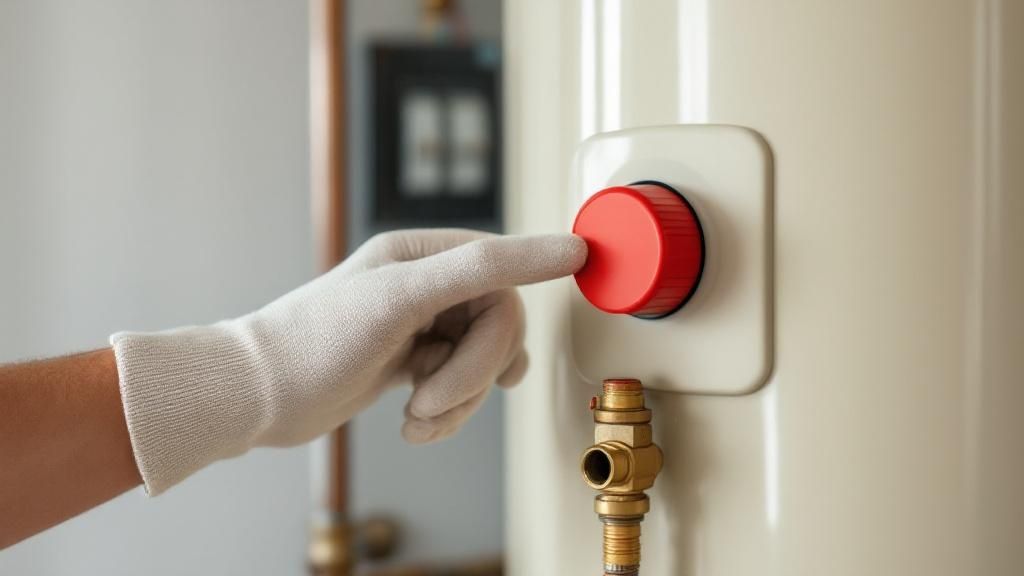
Knowing how to turn off your water heater is a fundamental skill for every homeowner, especially when you're facing a leak. It’s not just about a to-do list; it’s about being prepared for an emergency. The process itself is straightforward: first, you cut the power or gas, and second, you stop the water. For a gas heater, you'll turn a valve. For an electric one, you'll flip a breaker. Then, you close the cold water supply valve so no more water can get into the tank.
This simple two-step procedure is your first line of defense in a plumbing emergency, but it's important to remember that this guide is for emergency awareness. Any hands-on repairs or diagnostics should always be handled by a licensed plumber.
Why Every Homeowner Should Know This Skill
For all our neighbors here in Monterey County, from Salinas to Carmel-by-the-Sea, understanding this process can be the difference between a minor issue and a major disaster. When you can act fast, you take control of the situation.
Picture this: you walk into your garage in Marina and find a puddle spreading across the floor. Or maybe you're in your Pacific Grove home and hear a weird banging noise coming from the utility closet. Acting immediately can save you from thousands of dollars in water damage. But this knowledge isn't just for emergencies.
Scenarios Requiring a Shutdown
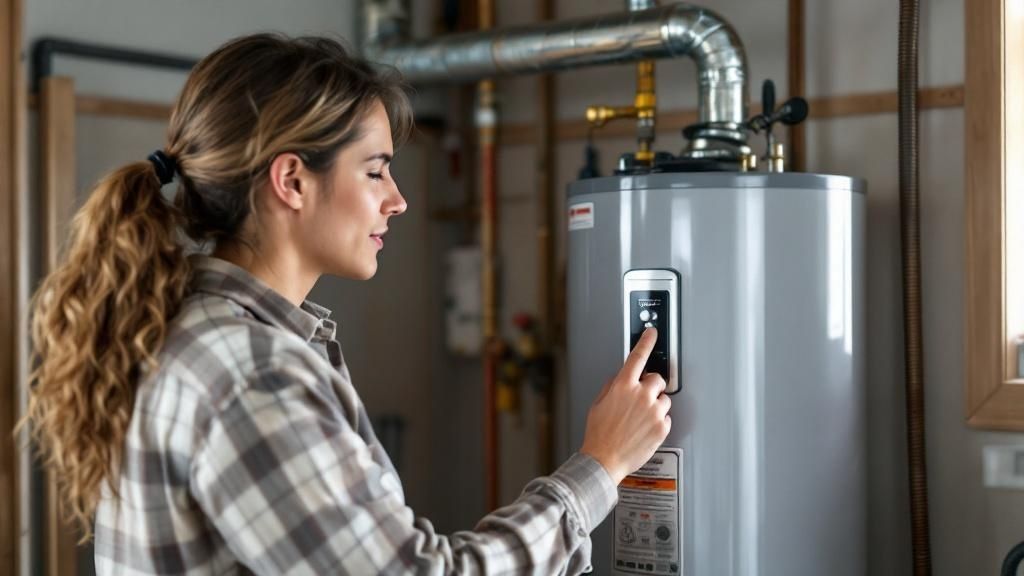
Several situations might require you to shut down your water heater. While we'll get into the specifics, here are a few common reasons you might need to act:
- Preventing Water Damage: If you see a leak—even a small one—the very first thing to do is shut off the unit and its water supply.
- Extended Vacations: Heading out of your Watsonville home for a couple of weeks? Turning off the water heater is a smart move. It saves energy and money, plus it removes the risk of a leak happening while you're gone.
- Preparing for Maintenance: Any professional service, like flushing out the sediment that’s common in our local water, always starts with a proper shutdown.
As a family-owned business that's been serving the Monterey Peninsula since 1988, we believe every homeowner should be prepared. Learning these shutdown basics puts you in control during a crisis. Just remember, this guide is for emergency awareness—actual repairs and maintenance are jobs for a licensed professional to ensure everything is done safely and up to code.
Safely Shutting Down an Electric Water Heater
If you live in Seaside or Prunedale, chances are you have an electric water heater. Knowing how to turn it off correctly is a must-have skill for any homeowner—not just for maintenance, but for safety. It’s crucial to understand this is a shutdown guide for problem awareness, not a DIY repair manual.
Your first move, before you do anything else, is to cut the power. Head to your home's main circuit breaker panel. It’s a good idea for every homeowner to have a basic understanding of circuit breakers and where their panel is located.
Look for the breaker dedicated to the water heater. It's almost always a double-pole breaker and should be clearly labeled. Once you find it, flip that switch to the "OFF" position. This isn't just a suggestion; it's a non-negotiable safety step that cuts all electricity to the unit.
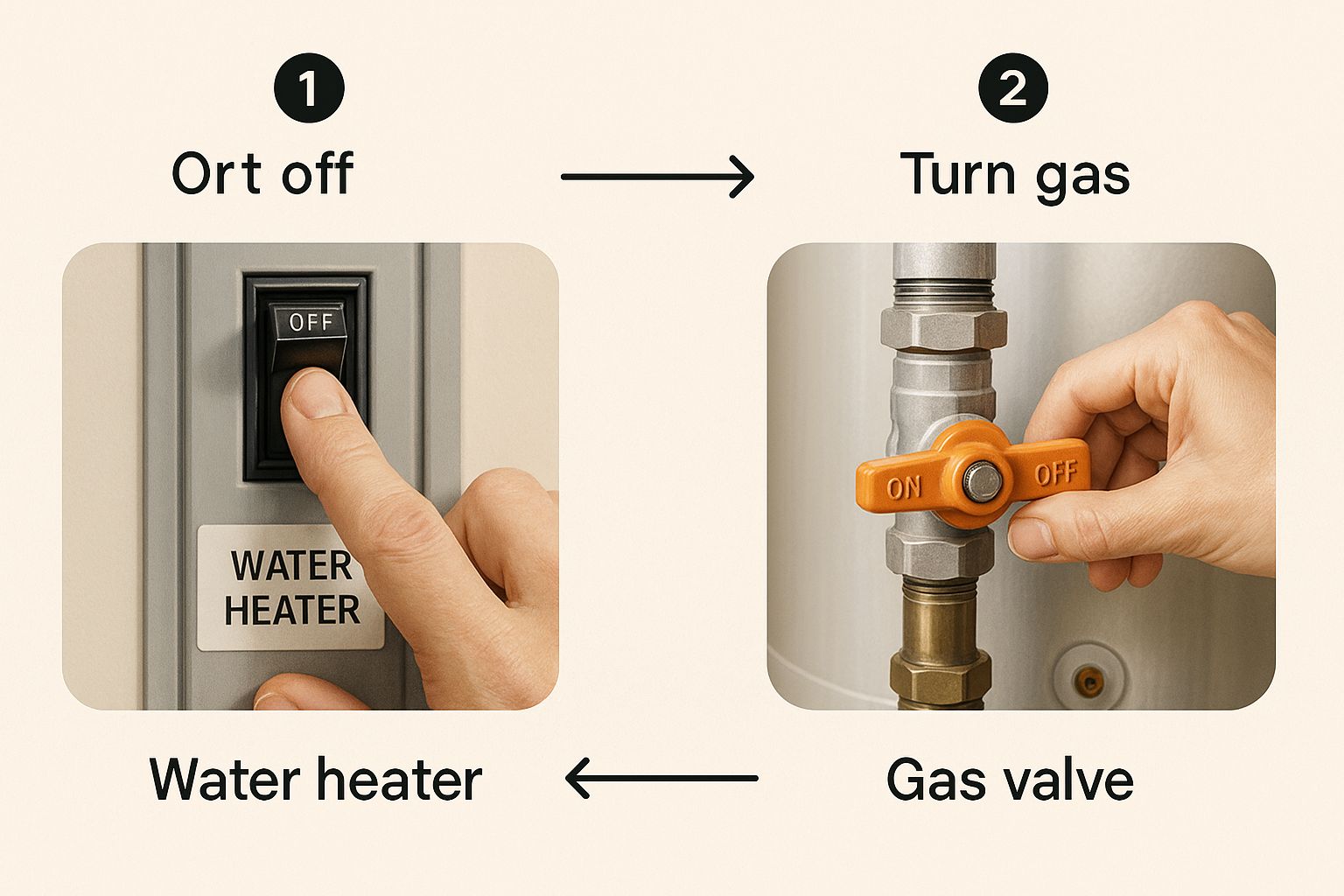
Disconnecting the power first is the most critical action you can take. It protects you from electric shock and prevents the heating elements inside the tank from burning out if the tank is drained.
What to Do Next
With the power safely off, your next step is to shut off the water supply. Find the cold-water inlet valve, which you'll usually see on a pipe going into the top of the heater. Turn the handle clockwise all the way until it stops. This simple turn prevents any more water from flowing into the tank.
These steps are your first line of defense in an emergency, like if you walk into your garage and find a puddle growing around the heater. But it's important to remember this is a shutdown guide, not a DIY repair manual. If the situation requires draining the tank or fixing a leak, it's time to bring in a professional.
For example, if you've cut the power and water but can see it's still leaking, you're likely dealing with something more serious than a simple drip. In that case, our team can help you diagnose what's happening if you find your water heater leaking from the bottom.
For any real maintenance, repairs, or if you're just not comfortable with these steps, give Alvarez Plumbing a call. As a family-owned business serving this community since 1988, we'll make sure the job is handled safely and correctly.
Handling a Gas Water Heater Shutdown
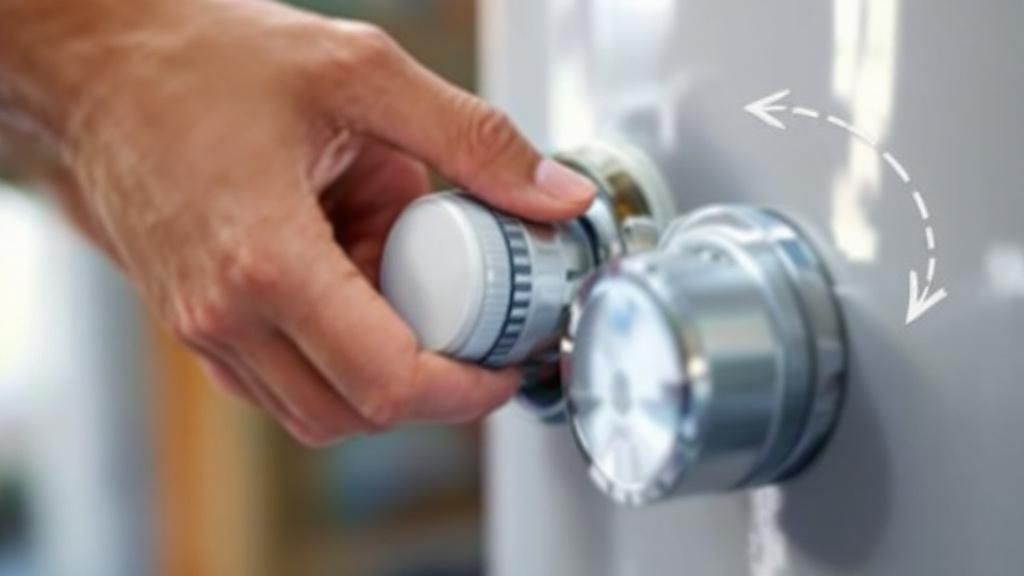
For homeowners in communities like Watsonville and Castroville, where gas appliances are common, knowing how to turn off your water heater is all about gas safety. This isn't just about flipping a switch; it's about following a few key steps to make sure your home is secure. The goal is to be aware of the problem so you can call a pro.
The process starts right at the unit itself. First, find the gas control valve. It’s almost always a prominent dial near the bottom of the tank with settings clearly marked as 'ON,' 'OFF,' and 'PILOT.' Turning this knob firmly to the 'OFF' position is your most important move, as it immediately cuts the flow of natural gas to the main burner.
Adding an Extra Layer of Safety
Once that main control knob is set to 'OFF,' you can take a second step for added peace of mind. Follow the flexible gas line that runs from the control valve back to the wall. You should see a separate shut-off handle there. Give this handle a quarter-turn so it's perpendicular to the pipe—this closes the main gas supply line running to the heater.
After the gas is secured, the last thing to do is shut off the water. Just like an electric model, you'll find the cold water inlet valve on top of the tank. Turn it clockwise until it stops. If you're having trouble figuring out which valve is which, our guide on how to shut off the main water supply can give you a clearer picture for your entire home.
A Pro Tip from 35+ Years of Experience: After you’ve turned off the gas, just wait. Give it at least 10-15 minutes. This simple pause allows any leftover gas fumes in the chamber to clear out completely before you touch anything else. If you ever smell gas, don't touch any switches—just leave the area immediately and call our 24/7 emergency service.
Remembering these steps is crucial for emergency awareness. This information is meant to prepare you for a crisis so you can safely shut the unit down before calling for professional help, not to guide you through DIY repairs.
When Should I Turn Off My Water Heater?
Knowing how to turn off your water heater is a great skill, but knowing when to do it is what really protects your home and wallet. As a homeowner in Carmel Valley or Pacific Grove, recognizing the signs that call for a shutdown can be the difference between a quick fix and a full-blown disaster.
The most critical time, of course, is a plumbing emergency. If you walk into your garage and find a puddle growing around the base of the tank, that’s an immediate shutdown situation. The same goes for loud, aggressive noises like banging, rumbling, or popping. These aren't just quirky sounds; they often signal serious internal failures that need to be addressed right away by a licensed plumber.
Planned Shutdowns for Maintenance and Travel
Emergencies aside, there are plenty of practical, non-urgent reasons to turn off your water heater.
One of the most common reasons we see for our neighbors in Salinas is for planned maintenance. Our local water supply can be notoriously hard, and that means sediment buildup is a real problem. Performing an annual tank flush is essential to get that gunk out, which improves efficiency and extends the life of your unit. Every professional flush starts with a safe and complete shutdown.
Another smart time to shut it down is before you leave for an extended vacation. If you'll be gone for more than 3-4 days, turning off the water heater is a wise move. It completely eliminates the risk of a leak springing while you're away and saves you money by preventing "standby heat loss"—that's when the heater keeps burning energy to keep a tank of water hot that nobody is even using.
A quick response can be the difference between a simple service call and a major home repair project. It’s about identifying the problem so you know exactly when to call in the professionals.
It's empowering to know when to shut down your unit, but figuring out why it was acting up is a job for an expert. For instance, if you're dealing with recurring noises or you can see water weeping from a fitting, that’s a clear sign you need professional water heater repair in Monterey, CA. Our team at Alvarez Plumbing has the experience to diagnose the root cause and ensure your system is repaired safely and up to all local Monterey County codes.
When to Turn Off Your Water Heater: A Quick Guide
To make it even simpler, here's a quick reference table for the most common situations that require a water heater shutdown.
| Situation | Reason for Shutdown | Recommended Action |
|---|---|---|
| Visible Leak or Puddle | Prevents major water damage and flooding. | Shut down immediately and call a plumber. |
| Loud Noises | Indicates potential pressure buildup or component failure. | Shut down immediately and schedule a professional inspection. |
| Extended Vacation | Saves energy and eliminates the risk of a leak while you're away. | Turn off the unit and close the main water supply valve to it. |
| Annual Maintenance | Necessary for safety and to perform tasks like flushing the tank. | Shut down the unit before your scheduled professional service. |
| Pilot Light Is Out (Gas) | Prevents unburned gas from accumulating. | Follow manufacturer instructions to relight; if it persists, call for service. |
Keeping this guide in mind will help you act confidently and protect your home from the most common water heater issues. When in doubt, a quick call to a professional is always the safest bet.
Why You Should Trust a Pro for Repairs and Maintenance
Knowing how to shut down your water heater is a great skill for any homeowner, but it's just as important to recognize where that knowledge should end and a professional's expertise should take over. While a basic shutdown is a smart first step, most other jobs involving your water heater are best left to a trained and licensed plumber.
Tasks that might sound simple, like relighting a pilot light, swapping out a corroded anode rod, or testing the temperature and pressure (T&P) valve, are more complex than they seem. They require specific tools and a real understanding of how these systems are designed to work safely. One small mistake could lead to a dangerous gas leak, serious water damage, or even voiding your unit's warranty.
The Value of Professional Expertise
Here in Monterey County, following local safety codes isn't just a good idea—it's a legal requirement put in place to protect your home and family. If you're looking for help, exploring professional plumbing services can give you a good sense of the skill required for these kinds of jobs.
As a family business that’s been part of the Salinas community since 1988, we've always seen our role as being your long-term partner in home safety. Our job is to take the guesswork and risk off your plate, making sure every repair is done right, the first time.
There are financial perks to professional maintenance, too. Following a proper water heater maintenance schedule and upgrading when it's time can lead to real savings on your utility bills. In fact, modern energy-efficient water heaters are expected to cut national energy use from water heating by about 10% between 2030 and 2059. You can read the full research on water heater market trends to learn more about how smart choices affect your costs.
At the end of the day, trusting a pro isn't just about fixing a problem. It’s an investment in your home’s safety, efficiency, and your own peace of mind.
Common Water Heater Questions From Local Homeowners
As a plumbing company that’s been serving this area since 1988, we hear a lot of the same great questions from our neighbors, from Salinas to Carmel-by-the-Sea. Getting familiar with your water heater is the first step to feeling confident when something seems off. While this advice is for your information, always call a licensed plumber for any hands-on work.
Should I Turn My Gas Heater To 'PILOT' or 'OFF' for Vacation?
This is a fantastic question we get all the time, especially from homeowners in Marina and Seaside getting ready for a trip. Setting the dial to 'PILOT' is a temporary measure. It keeps the pilot light lit but stops the main burner from firing up to heat water you aren't using.
But for any vacation longer than a few days—or any time you're having professional maintenance done—turning the control knob completely to 'OFF' is the safest and most energy-efficient move. If you're in an emergency situation, like smelling gas, switching to 'OFF' is non-negotiable.
How Do I Safely Turn My Water Heater Back On?
Restarting a water heater isn't just a matter of reversing the shutdown steps. Getting it wrong can be genuinely dangerous or cause serious damage to the unit. This is why we strongly advise against it as a DIY task.
With an electric model, the tank must be completely full of water before you flip the circuit breaker back on. If you restore power to an empty tank, you'll instantly burn out the heating elements.
For gas units, relighting the pilot involves a very specific, manufacturer-guided procedure to do it safely. Given the risks with both types, we strongly advise calling a professional to bring your system back online. It’s a critical part of any proper water heater repair and replacement service.
Why Do I Hear Noise After Turning My Water Heater Off?
So you've cut the gas or power, but you can still hear a hissing or the distinct sound of running water. This almost always points to a plumbing leak, either in the tank itself or a connected pipe.
This is an urgent problem. You need to head to your main water shut-off valve and close it immediately, then call a plumber. This situation is different from figuring out why you might not have hot water, which can have a variety of other, less critical causes.
When you're facing a water heater issue that goes beyond a simple shutdown, don't hesitate. The experienced, licensed team at Alvarez Plumbing is ready to help 24/7. Visit us online to schedule prompt, reliable service anywhere in Monterey County.