That unmistakable rotten egg smell is alarming, and for good reason. Sewer gas is a complex mix of gases that forms from decomposing waste inside your plumbing system. When everything's working as it should, you'll never smell it. So if that odor hits you, it’s a clear sign that something is wrong.
Why Your House Suddenly Smells Like Sewer Gas
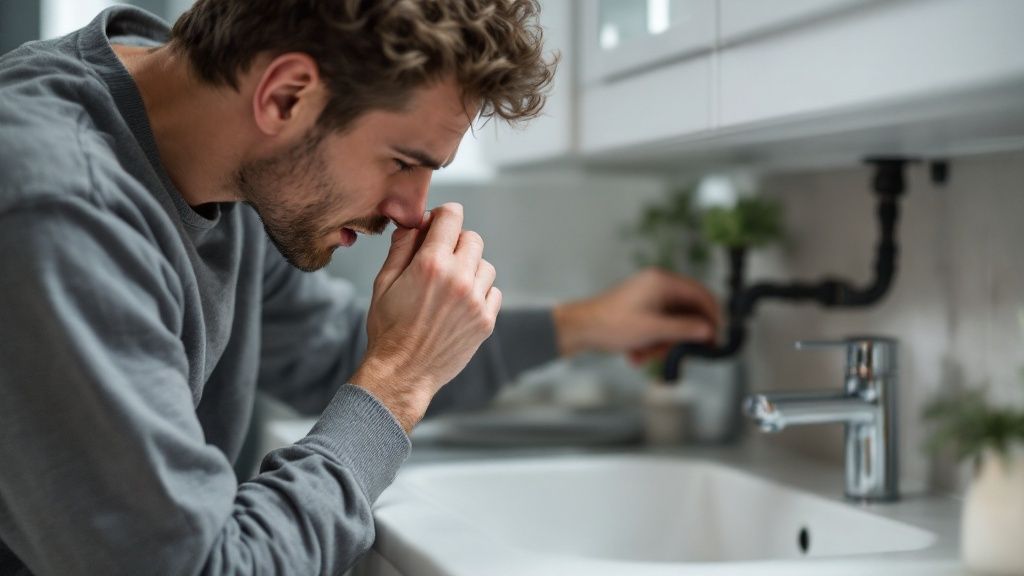
When you walk into your home in Salinas or Monterey and get hit with that foul odor, it’s not just unpleasant—it's a warning from your plumbing. Your system is designed with specific seals and vents that are supposed to contain these gases and push them safely outside.
The moment you smell sewage, it means one of those protective barriers has failed. For many homeowners from Prunedale to Pacific Grove, the cause can be surprisingly simple. But sometimes, it points to more serious issues that need a professional eye.
Common Culprits Behind the Odor
As a family-owned business serving Monterey County since 1988, we've seen just about everything. Most sewer gas problems boil down to just a few common issues that throw your plumbing's delicate balance out of whack.
Here are the most frequent causes we run into:
- Dried-Out P-Traps: This is far and away the most common—and easiest to fix—problem. The U-shaped pipe under your sinks and floor drains holds a small amount of water to create a seal. If a bathroom in your Carmel Valley home doesn't get much use, that water can evaporate, letting gas seep right in.
- Failing Toilet Seals: The wax ring at the base of your toilet is supposed to create an airtight seal with the drainpipe. If that ring cracks, wears out, or was installed wrong in the first place, it leaves a direct path for sewer gas to escape into your bathroom.
- Clogged or Damaged Vent Pipes: Your home has pipes that run through the walls and out the roof, letting sewer gas escape and allowing air into the system so drains flow smoothly. Here in Seaside, the coastal winds can sometimes cause leaves or debris to block these vents, forcing gas back down and into your home.
A persistent sewer gas smell is never normal. Even a faint odor points to a problem that needs to be solved. Ignoring it lets the issue get worse and can potentially expose your family to harmful gases like hydrogen sulfide and methane.
If the problem isn't a simple dry P-trap, it’s time for a more thorough investigation. Deeper issues like cracked sewer lines or improperly installed fixtures need professional tools and expertise to diagnose correctly. Understanding what goes into professional sewer drain inspections can help you know what to expect. Pinpointing the exact source is the first step toward getting rid of that sewer gas smell for good.
Finding the Source of Sewer Odors in Your Home
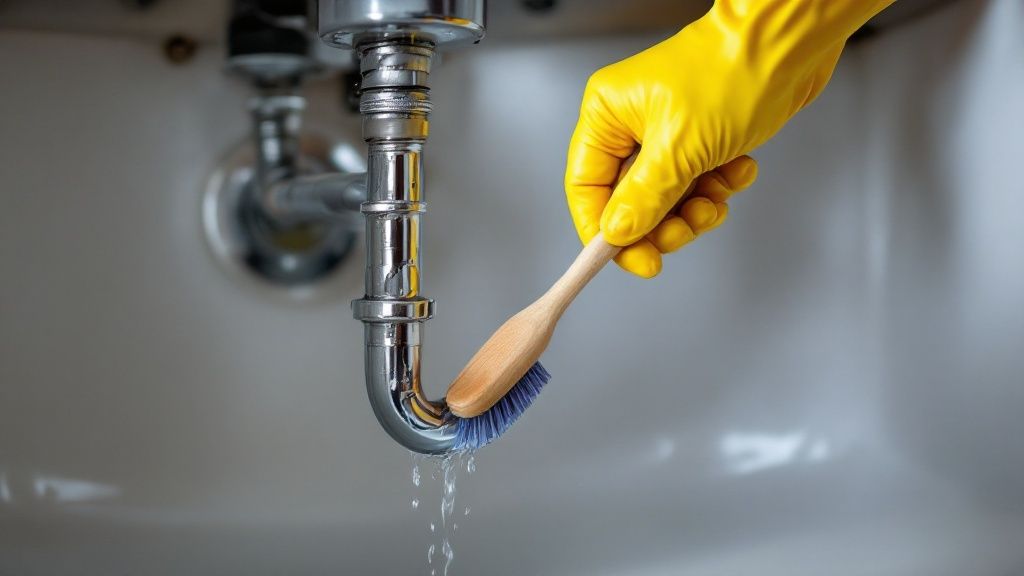
Let's play detective. When our team gets a call about a mysterious sewer gas smell in Marina or Pacific Grove, the culprit is almost always hiding in plain sight. Pinpointing where that rotten egg odor is coming from is the first, and most important, step toward understanding the problem.
The good news is you don't need special tools to start narrowing down the possibilities. Most of the time, the source is related to a few key parts of your plumbing system that aren't doing their job correctly. By knowing what to look for, you can get a solid idea of what’s happening before you even pick up the phone.
Checking for Dry P-Traps
The most common issue is a dry P-trap. This is that U-shaped pipe you see under every sink in your house. Its entire purpose is to hold a small amount of water, which creates a seal that blocks sewer gas from creeping up the drain and into your home. It's a surprisingly simple but effective design.
If you have a guest bathroom, a utility sink, or a floor drain that rarely gets used, this water barrier can evaporate. When it does, it leaves an open path for odors. This is an easy check: if a room you don't use often suddenly stinks, a dry trap is a likely suspect.
Inspecting Your Toilet's Seal
Another frequent offender is the wax ring at the base of your toilet. This ring creates an airtight seal between the bottom of the toilet and the drainpipe on the floor. But over time, these seals can dry out, crack, or get compressed.
If the sewer gas smell is strongest in your bathroom, give the toilet a gentle nudge. Does it rock or feel loose? A wobbly toilet is a classic sign that the wax ring has failed, allowing gas to seep out. You might not see a water leak, but the gas can still escape. Sometimes, a slow, hidden leak is the real problem, and our guide on how to detect a water leak can offer some helpful pointers.
Considering Your Plumbing Vents
Finally, it's worth thinking about your home's plumbing vents. These pipes run from your drains up through your roof. They serve two key purposes: allowing sewer gas to safely exit and letting air into the system so your drains flow freely.
Here along the coast, from Watsonville to Carmel-by-the-Sea, seasonal winds can clog these vents with leaves or debris. A blocked vent forces sewer gas back down the pipes and into your living space. While you're focused on the sewer gas smell, it's helpful to understand the causes of other household odors to better diagnose any strange smells you might encounter.
A quick rundown of where to look can save you worry.
Common Sewer Smell Sources at a Glance
| Symptom | Likely Source | What to Do |
|---|---|---|
| A rotten egg smell in a room that is not used often. | Dry P-Trap | Briefly run water in the sink or shower. Pour a gallon of water down any floor drains to refill the trap. |
| A persistent sewer odor around the base of a toilet. | Failed Toilet Wax Ring | This is a sign the seal is broken. Replacing it is a job best left to a licensed plumber to avoid leaks. |
| Gurgling sounds from drains and a general sewer smell. | Blocked Plumbing Vent | This is often caused by debris on your roof. For safety, this issue should be diagnosed by a professional. |
Identifying the likely source is half the battle. Once you know where the smell is coming from, you can call a professional with good information to get your home smelling fresh again.
The Hidden Dangers of Sewer Gas Exposure
That rotten egg smell is more than just unpleasant; it's your home’s way of telling you something is seriously wrong. While your first instinct might be to open a window, it's critical to understand why you shouldn't just ignore the odor. That smell is a mixture of gases coming directly from your sewer system, and it carries real health risks.
This isn't about scare tactics—it's about being informed. The gas you're smelling is a dangerous cocktail that includes compounds like hydrogen sulfide, ammonia, and methane. Knowing why you need to get this fixed is just as important as knowing how.
What You Are Actually Breathing In
When sewer gas finds its way into your home, you're being exposed to more than just a bad smell. Two of the main components are particularly concerning.
- Hydrogen Sulfide (H₂S): This is the gas that gives sewer gas its classic "rotten egg" smell. Even at low levels, prolonged exposure can trigger headaches, dizziness, and nausea.
- Methane: While you can't smell it, methane is a significant part of sewer gas. If it builds up in an enclosed space, it can become highly flammable, creating a serious fire hazard.
This is exactly why local plumbing codes in communities like Seaside and Watsonville are so strict about proper venting and drain traps. Those regulations aren't just for show; they're designed to protect you and your family from these exact dangers.
Sewer gas is primarily made up of hydrogen sulfide, methane, and ammonia, and they pose significant health risks. Hydrogen sulfide (H₂S) is so potent that humans can detect its rotten egg aroma at incredibly low concentrations—as little as 0.0005 parts per million (ppm). But here's the scary part: at much higher concentrations (above 100 ppm), it can dangerously paralyze your olfactory nerves. You literally stop being able to smell it, even as the danger skyrockets. You can learn more about the science behind sewer gas leakage on ASPE.org.
Why Masking the Smell Is Not a Solution
Using air fresheners might offer a moment of relief, but it’s like putting a bandage on a problem that needs stitches. You're just hiding the scent, which allows the underlying issue to persist and potentially get much worse.
The only real solution is to find and professionally repair the breach in your plumbing system. A faint smell today could be a sign of a larger problem tomorrow, and addressing it promptly is the smartest and safest choice for your home and family.
Ignoring the smell doesn't just put your family's health at risk; it can also lead to far more expensive repairs down the line. If you're dealing with this or other strange plumbing behaviors, understanding the signs of common plumbing problems can help you make an informed decision. Getting a professional to fix the root cause ensures your home is safe, secure, and—finally—odor-free.
Safe Checks You Can Perform Before Calling a Plumber
Before you pick up the phone, there is one simple and safe check you can do yourself that might solve the sewer gas mystery right away. We want to empower homeowners in Prunedale and Castroville, but it's absolutely crucial to remember that your safety always comes first. This is just a diagnostic step, not a plumbing repair.
The easiest place to start is with any plumbing fixtures you don't use very often. Think about that guest bathroom shower that hasn't been run in months or the floor drain in the laundry room. Just pour about a quart of water down any drain that sits unused. This simple action refills the P-trap, restoring the water barrier that's designed to block sewer gas.
Next, you can visually inspect your toilets. A persistent smell that seems to hang around the bathroom often points to a problem at the base of the toilet. Check for any subtle signs of water pooling on the floor around it. If it smells bad but everything looks dry, the wax seal may have failed.
This image highlights a couple of immediate steps, like ventilating the area, which can help while you're trying to figure out the source of the smell.
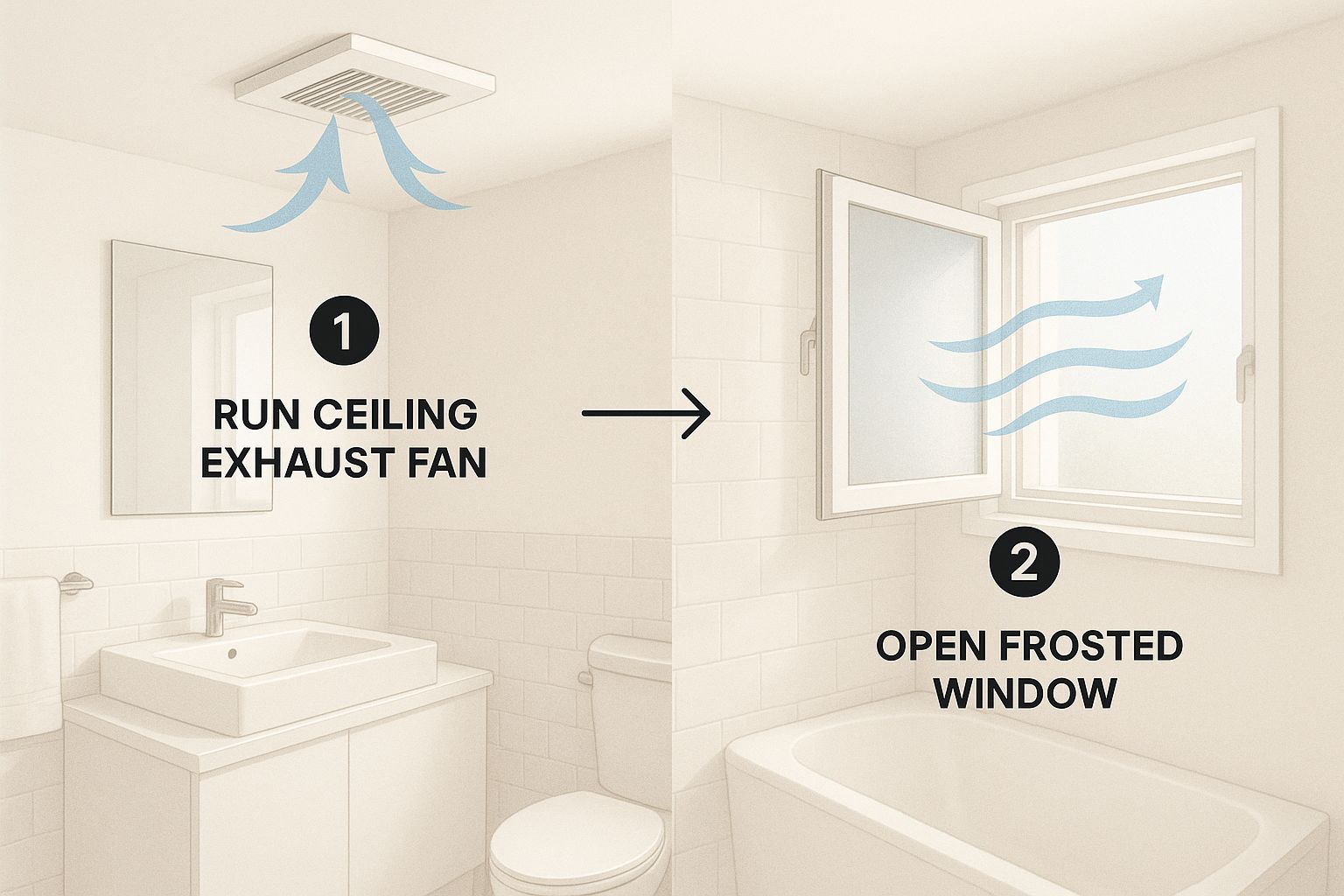
Keeping air circulating is a great first move for your comfort and safety, but remember, it won’t fix the actual plumbing issue that's causing the odor.
When Simple Checks Aren't Enough
After pouring water into your unused drains, give it an hour or two. If the smell goes away, you’ve likely found your culprit—a dry P-trap. But if that rotten-egg odor hangs around, or if you suspect a bad toilet seal, it’s a clear sign the issue is more complicated.
Key Takeaway: This check is fantastic for ruling out the most common and simple cause. If the smell persists after you've tried this step, the problem is likely deeper in your plumbing system and will require a professional plumber’s tools and expertise to locate and fix safely.
Trying to remove a toilet or investigate plumbing vents on your own can easily lead to much bigger headaches, like water damage or personal injury. If a quick check doesn’t reveal an obvious solution, it's time to bring in a professional. For those problems that always seem to pop up at the worst times, knowing your options for emergency plumbing services in Salinas and Monterey can provide some much-needed peace of mind.
When to Call a Professional for Sewer Gas Issues
You’ve poured water down every drain, but that nasty sewer gas smell just won’t quit. This is the moment where DIY checks end and a professional diagnosis becomes essential for the health of your home.
If that rotten egg odor sticks around, pops up in multiple rooms, or you’re hearing strange gurgling sounds from your drains, it’s a clear signal to call in the experts. For homeowners anywhere from Carmel-by-the-Sea to Salinas, a stubborn smell often points to a problem hidden deep within the plumbing—like a cracked vent pipe inside a wall or a blockage in the main sewer line. Ignoring these signs doesn't just mean living with the smell; it allows the problem to get worse, often leading to more costly repairs.
Advanced Diagnostics Without the Demolition
One of the biggest worries we hear from customers is the fear of a plumber tearing up their walls and floors just to find a leak. As a family-owned business serving Monterey County since 1988, we use modern techniques to avoid that. Our licensed plumbers come equipped with professional tools like sewer cameras and smoke testers to pinpoint the precise source of a sewer gas leak.
A smoke test is a clean and incredibly effective method we use to find these hidden leaks. Here’s a quick rundown of how it works:
- We gently pump a non-toxic, odorless smoke into your plumbing system.
- This smoke travels through your pipes and will find its way out of any crack, break, or bad seal.
- By watching where the smoke appears—whether it's from the base of a toilet, a wall, or even your yard—we can identify the exact location of the leak without guesswork.
This process is safe, efficient, and lets us provide an accurate solution that fixes the problem at its source. Sometimes, a persistent sewer gas smell can signal significant underlying damage, making it critical to know how to spot sewer line problems before they turn into a full-blown emergency.
Ensuring Safety and Code Compliance
Sewer gas isn't just about bad smells; it's a genuine safety concern. Plumbing codes exist for a reason—to prevent dangerous gas intrusion into your home. When you hire Alvarez Plumbing, you’re not just getting a repair. You’re getting the peace of mind that the work is done correctly and in full compliance with all local codes in Watsonville, Seaside, and every community we serve.
Making the call is the smartest and safest choice for your home. A professional plumber not only has the right tools for the job but also the expertise to ensure your entire plumbing system is functioning safely, protecting your family from the hidden dangers of sewer gas.
In some cases, persistent drain issues can actually be related to other systems in your home, like a sump pump struggling with excess groundwater. Proper sump pump maintenance can prevent backups that might be contributing to the stress on your sewer line. By taking a comprehensive look at your whole system, we make sure every part is working together the way it should.
Common Questions About Sewer Gas Smells
With over 35 years serving the Monterey Bay area, we’ve heard just about every question you can imagine about strange plumbing smells. We want to clear up a few common points of confusion and provide straightforward advice for homeowners from Salinas to Pacific Grove.
Here are the answers to some of the questions our customers ask us most frequently.
Could the Sewer Gas Smell Be from My Water Heater?
This is a common thought, but the smell is usually different. A rotten egg odor that only appears when you run hot water is typically caused by bacteria inside the water heater tank itself, not sewer gas coming up from your drains.
If the smell is constant and present with or without hot water running, it's almost certainly a plumbing drain or vent issue. Our technicians can help pinpoint the source for you.
Is a Faint Sewer Smell Normal Sometimes?
No, you should never smell sewer gas inside your home, not even a little bit. A properly sealed plumbing system is designed to be completely airtight.
Even a faint or occasional odor is a red flag that a water trap has gone dry or a seal is beginning to fail. Addressing it early is always easier and less expensive than waiting for the problem to get worse.
How Long Does a Sewer Gas Repair Usually Take?
The repair time really depends on the cause. Refilling a dry P-trap in an unused guest bathroom in your Carmel-by-the-Sea home takes just a few minutes. Replacing a toilet's wax ring can usually be done by a professional in under two hours.
But if the source is a cracked vent pipe hidden inside a wall, the repair is more involved. A professional diagnosis using tools like a smoke test is crucial to find the exact problem and fix it efficiently.
Will an Air Freshener or Candle Solve the Problem?
Air fresheners just mask the odor temporarily and do nothing to fix the actual source of the problem. Covering up the smell can even be risky, as it might prevent you from noticing if the gas concentration is getting stronger.
The only real solution is to find and repair the leak that's letting the sewer gas into your home. Understanding comprehensive strategies to improve indoor air quality at home can provide a broader context for addressing specific issues like sewer gas and keeping your family safe.
If you're tired of that rotten egg smell and want a permanent solution, don't wait. The experienced, licensed plumbers at Alvarez Plumbing have been solving sewer gas mysteries for families across Monterey County since 1988. Call us today or schedule an appointment online at https://alvarezplumbingsalinas.com for fast, reliable service.