Direct Answer: Heat pump water heaters use surrounding air to heat water, cutting energy use significantly, but they cost more upfront, require adequate space, and need a permit in Salinas, CA.
Heat pump water heaters have gone from a niche upgrade to a mainstream conversation in Salinas, and for good reason. The 2025 California Building Energy Efficiency Standards, effective January 1, 2026, are pushing the market hard toward high-efficiency electric units, and available rebates are making the higher upfront cost easier to swallow.
But a lot of homeowners are showing up to this decision with specific questions and not enough answers. We’ve had callers ask for labor and equipment broken out separately on a specific 40-gallon hybrid unit. That level of research is smart. This article is built to meet you at that point.
There are three things worth understanding before you commit: how the technology actually works, what it takes to install one correctly in a Salinas home, and whether the math makes sense for your situation. We’ll cover all three without the sales pitch.
How a Heat Pump Water Heater Actually Works
A standard electric water heater generates heat directly, it runs electricity through a resistance element, which warms the water. A heat pump water heater does something different. It pulls heat from the surrounding air and transfers that heat into the water, using a refrigerant cycle similar to what an air conditioner or refrigerator uses.
That process takes far less electricity than creating heat from scratch. The U.S. Department of Energy estimates that water heating accounts for roughly 18 percent of a home’s energy use, making it typically the second-largest energy expense. A heat pump unit can cut that portion of your bill significantly, most estimates point to meaningful payback within a few years, depending on how much hot water your household uses and what you pay for electricity locally.
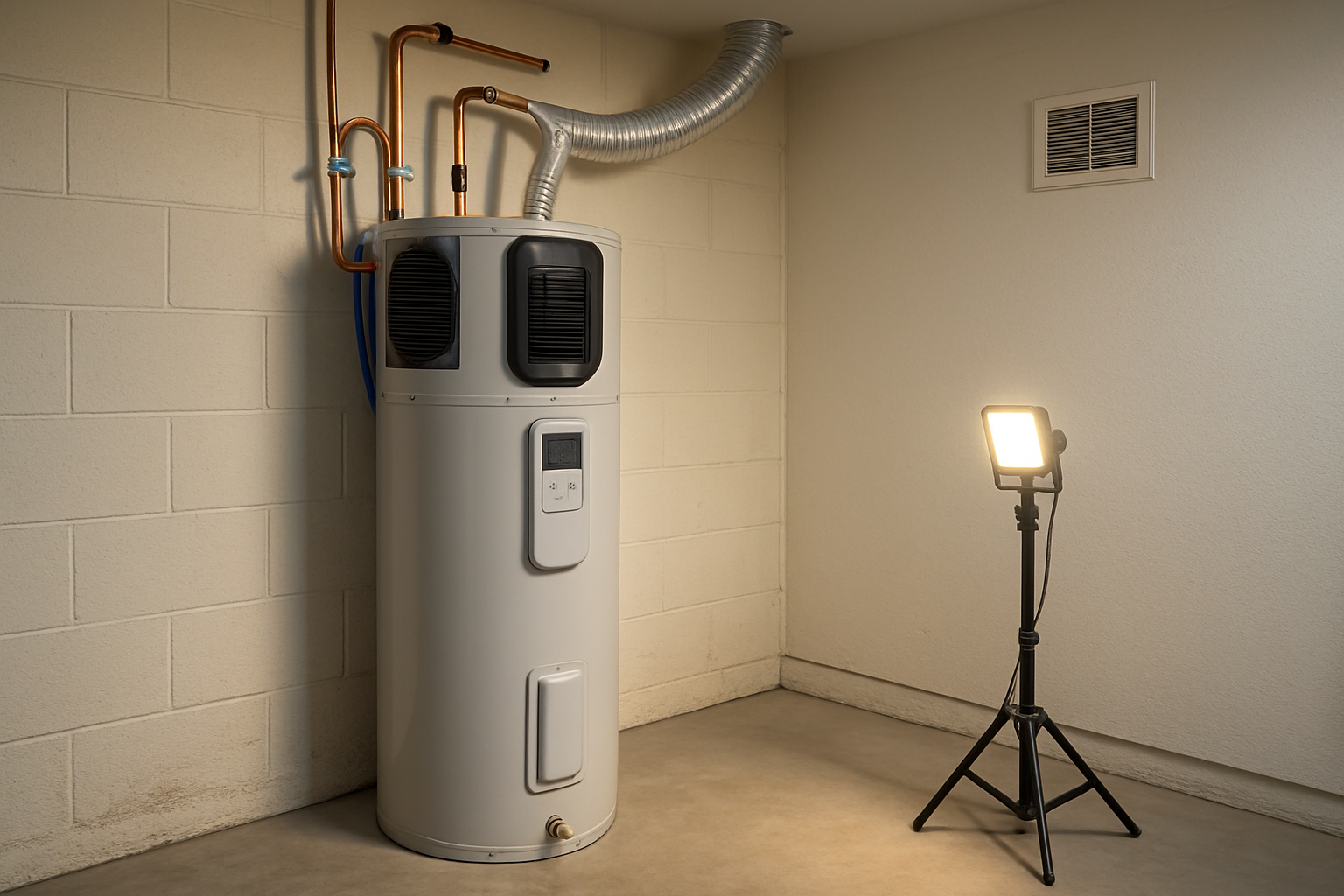
The tradeoff is physical. The unit needs to pull heat from somewhere, which means it needs adequate air space around it, generally at least 700 to 1,000 cubic feet of room. It also works best in spaces that stay above about 40 degrees Fahrenheit. This is where Salinas has a real advantage. Our mild coastal climate means garages and utility rooms stay in a workable temperature range year-round, unlike homes in colder inland areas where efficiency drops in winter. But a tight utility closet or a very small interior laundry space can still be a problem, and some homes need modifications before the unit will perform as expected.
What Installation Actually Involves in Salinas
This is where a lot of homeowners get caught off guard, not by the unit itself, but by everything around it.
Permits are required. In Salinas, water heater replacements go through City of Salinas Community Development under the residential plumbing replacement permit process. This has always been true for standard tank swaps, and it applies equally to heat pump units. We’ve heard from homeowners who didn’t know a permit was required and ended up with a notice from the fire inspector after the fact. That situation is more common than people expect, and it creates real headaches, failed inspections, fines, and sometimes work that has to be partially redone. If you want a deeper look at why this matters, this breakdown on water heater permits in Salinas covers the specifics.
If you’re converting from gas to electric, the installation scope expands. A heat pump water heater runs on 240 volts, and many older Salinas homes, especially those built in the 1960s and 1970s when a lot of the residential housing stock in this area was developed, may not have a dedicated 240-volt circuit anywhere near the water heater location. Adding or upgrading that circuit is electrical work, not plumbing, so it falls outside plumbing scope and requires a licensed electrician. This is a real cost to factor in before comparing quotes.
A straight swap from an existing electric tank to a heat pump unit is simpler, but still requires:
- A permit pulled through the City of Salinas
- Inspection of the space for adequate cubic footage
- Proper drain pan and pressure relief valve connections
- Exhaust ducting if the unit will be in a confined space
- Verification that the existing 240-volt circuit is properly sized
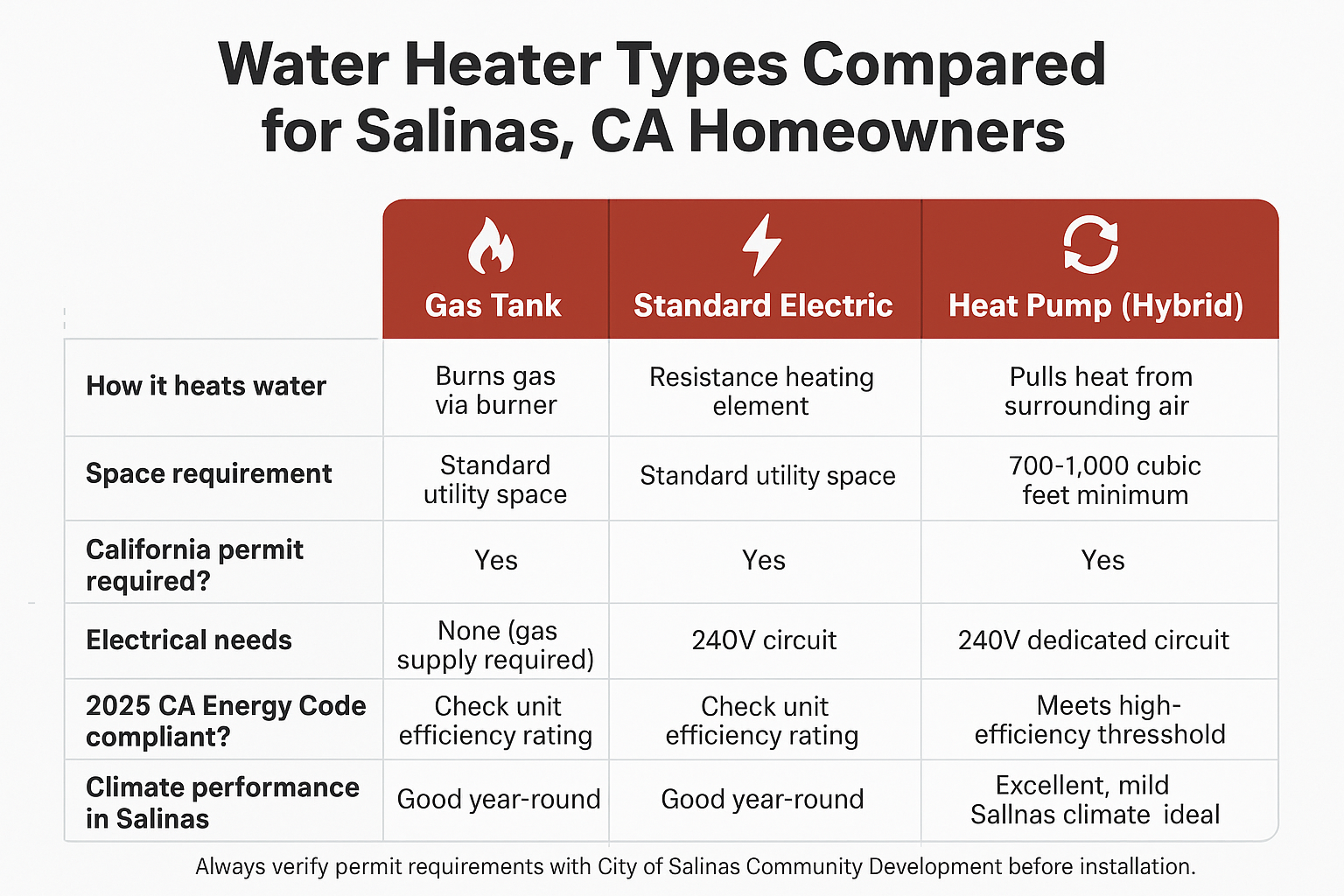
Gas Tank vs. Standard Electric vs. Heat Pump: At a Glance
This comparison covers the key differences across water heater types, technology, space needs, permit requirements, and efficiency.
Understanding the Cost, Without Getting Misled by a Single Number
Heat pump water heaters cost more upfront than conventional units. That’s simply true. But the cost structure is also more complicated, and a single number from a forum post or a competitor’s ad won’t tell you what your specific job will run.
Here’s what actually drives the final cost:
- Unit cost: Heat pump units are priced higher than comparable gas or standard electric tanks. The gap varies by brand and capacity, but it’s real.
- Labor: A straightforward swap in an accessible location takes less time than a job that requires rerouting plumbing, adding exhaust ducting, or working in a tight space.
- Electrical work: If a new or upgraded 240-volt circuit is needed, that’s a separate trade and a separate quote.
- Permit fees: City of Salinas permit fees are set by the Community Development department and apply to all water heater changeouts.
- Rebates: This is where the math can shift meaningfully. Programs through the California Energy Commission and local utility providers have offered rebates that reduce the net cost of high-efficiency units, sometimes by several hundred dollars. But rebate availability and amounts change, and we’ve seen programs run out of funding mid-year. Check current availability directly before building your budget around a specific rebate amount.
For context on how repair-versus-replace thinking applies to your current water heater before you commit to any new unit, this realistic framework for water heater decisions is a good starting point. And if sediment is already a factor in your current tank, hard water’s effect on water heater lifespan explains why Salinas homeowners often see shorter service life than the national averages suggest.
What Affects Your Heat Pump Water Heater Installation Cost
These are the main variables a plumber will look at when putting together a quote. No two jobs are identical.
| Cost Factor | Low Impact | High Impact |
|---|---|---|
| Unit size and brand | Basic 40-gallon hybrid model | Larger capacity or premium brand |
| Space modifications | Adequate space already exists | Needs ducting or room changes |
| Electrical work | Existing 240V circuit in place | New dedicated circuit required |
| Fuel type switch | Electric-to-electric swap | Gas-to-electric conversion |
| Permit and inspection | Standard City of Salinas permit | Additional inspections for complex installs |
| Rebate offset | No current rebate program | Active utility or state rebate applied |
Is the Long-Term Savings Real?
The honest answer is: yes, for most Salinas homeowners who have the right space, but the payback timeline depends on your specific situation.
Water heating is typically the second-largest energy expense in a home, and a heat pump unit uses roughly two to three times less electricity than a standard resistance heater to produce the same amount of hot water. If your household uses a lot of hot water, the savings add up faster. If you’re a two-person household with modest usage, the payback takes longer.
Local electricity rates matter too. PG&E rates on the Monterey Peninsula have trended upward, and that actually improves the payback math for heat pump units over time. A unit that looks borderline at today’s rates may look smarter in three years.
The California code shift is also worth keeping in mind. The 2025 Building Energy Efficiency Standards are designed to push the market away from gas water heaters for new installations. If you’re already planning a replacement, a heat pump unit positions you ahead of where the market is heading rather than behind it. For more on what those code changes mean specifically, California’s new water heater rules for Salinas homeowners goes into detail.
Frequently Asked Questions About Heat Pump Water Heater Installation in Salinas
Do I need a permit to install a heat pump water heater in Salinas?
Yes. Any water heater installation or replacement in Salinas requires a permit through City of Salinas Community Development. This is not optional and it applies to heat pump units the same way it applies to conventional tanks. A licensed plumber should pull that permit on your behalf, if a contractor offers to skip it, that’s a red flag.
My current water heater runs on gas. Can I switch to a heat pump unit?
You can, but a gas-to-electric conversion involves more than a plumbing swap. Heat pump water heaters run on 240 volts, and if your home doesn’t already have a properly sized circuit near the water heater location, a licensed electrician needs to add one before the unit can be installed. That electrical work is a separate cost from the plumbing. Make sure any quote you receive addresses both.
Will a heat pump water heater work in my garage or utility room?
Usually yes, but it depends on the space. The unit needs at least 700 to 1,000 cubic feet of air volume around it to pull heat effectively. A large open garage works well. A very small, enclosed utility closet may not. Salinas’s mild climate is actually favorable for heat pump performance since the technology works best when ambient temperatures stay above about 40 degrees, which they almost always do here.
Are rebates available for heat pump water heaters in Salinas right now?
Rebates have been available through programs tied to the California Energy Commission and local utility providers, and they can reduce the net cost meaningfully. But availability changes, and some programs run out of funding partway through the year. Before you build a rebate into your budget, check directly with PG&E and the California Energy Commission for current program status.
How long does a heat pump water heater installation take?
A straightforward swap in an accessible location can typically be completed in a few hours. If the job involves new electrical work, space modifications, or added ducting, the total timeline stretches across trades and scheduling. Plan for at least a day, and potentially more if electrical work needs to be coordinated separately.
What happens if I skip the permit and something goes wrong?
We’ve heard from homeowners who received fire inspector notices after an unpermitted water heater installation. In those situations, the homeowner can face fines, a failed inspection, and sometimes work that needs to be partially redone to bring it up to code. Beyond the legal exposure, an unpermitted installation can create complications when you sell the home. The permit process exists to protect you, it’s worth doing right.
Ready to Talk Through Whether a Heat Pump Unit Is Right for Your Home?
We’ve been installing water heaters in Salinas and across the Monterey Bay Area since 1988, and we handle all City of Salinas permitting in-house, so you don’t have to figure that part out on your own. If you’re comparing options or want to know what your specific installation would actually involve, call Alvarez Plumbing at (831) 757-5465 or schedule online at alvarezplumbingsalinas.com. We’re available 24 hours a day, 7 days a week.