
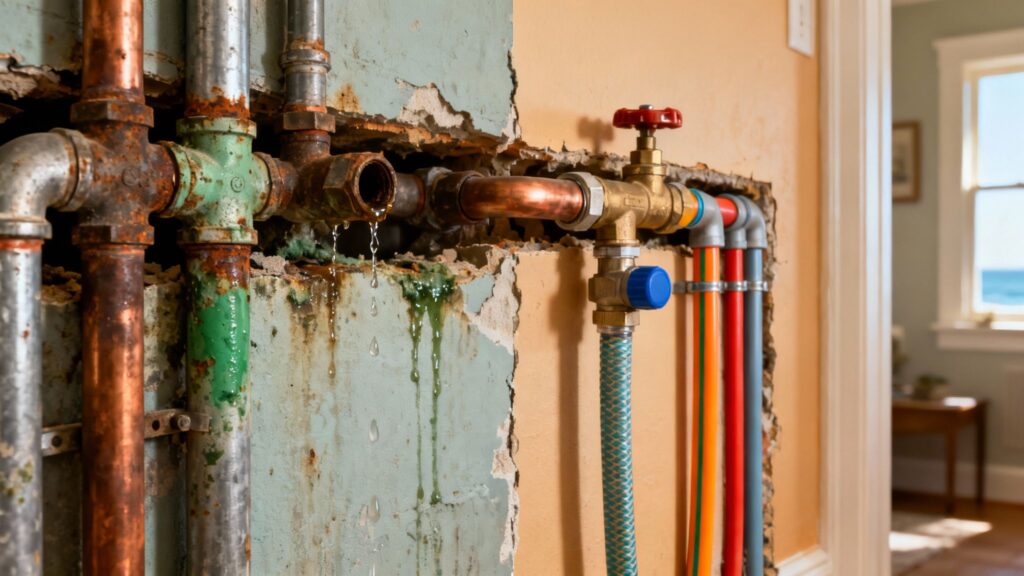
If your older Monterey home was built before 1980 and you’re caught in a cycle of recurring leaks, low water pressure, or rusty-looking water, a full re-pipe is often the smartest long-term solution. It can feel like a huge project, but it’s the only permanent fix that stops the endless loop of expensive, temporary repairs and protects your home’s value.
Why Your Home's Age Is a Critical Factor
If you live in one of Monterey’s charming, established neighborhoods—like Del Monte Beach, Pacific Grove, or Skyline Forest—chances are you own a home built between 30 and 60 years ago. Many homeowners with repeated leaks are left wondering: is repiping truly necessary, or are they being upsold?
The truth is, national data confirms that homes built before 1980 are now reaching the age where plumbing systems often fail. It's not just a guess; it's a predictable outcome based on the materials used during that era.
Local Conditions That Speed Up Pipe Failure
Here in Monterey County, our homes also face some unique challenges that can wear out pipes even faster. Two local factors play a big role:
- Water Hardness: Our local water supply is known for having high mineral content. Over many years, these minerals build up inside your pipes, causing corrosion and slowly choking off water flow—that’s why your water pressure might seem so low.
- Seismic Activity: Living near Monterey Bay means our homes are subject to minor but frequent ground shifts. This constant movement puts a lot of stress on aging, brittle pipes, which can eventually lead to cracks and leaks.
This decision tree gives you a simple way to think about the factors pointing toward a re-pipe.
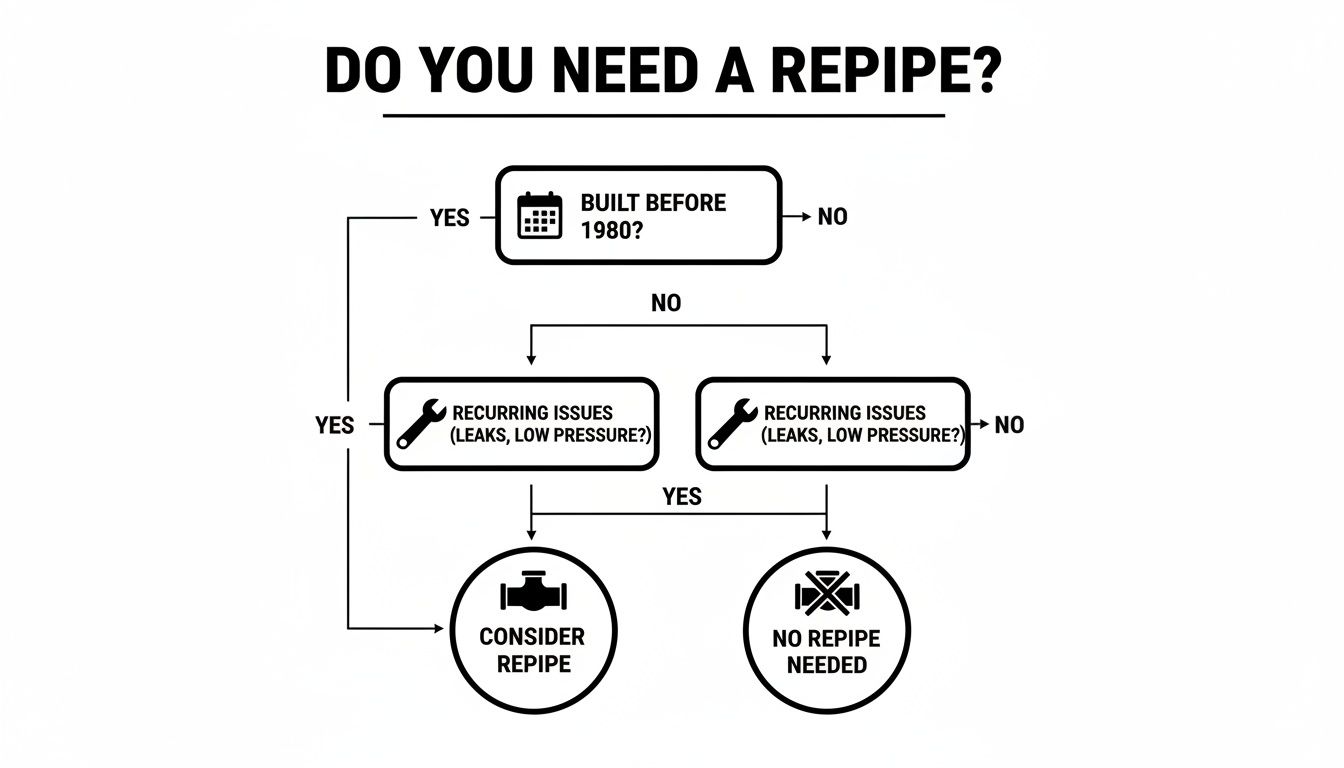
As the chart shows, the combination of your home's age and recurring plumbing problems is a strong sign that you should seriously consider a re-pipe.
Quick Checklist: Is It Time for a Repipe?
Not sure if what you're seeing is a minor issue or a sign of a bigger problem? This quick checklist can help you see if your home is showing the classic signs of system-wide pipe failure.
| Symptom in Your Home | What It Likely Means | Recommended Next Step |
|---|---|---|
| Low Water Pressure | Mineral buildup and corrosion are restricting the flow inside your pipes. | Ask for a pipe material assessment and water pressure test. |
| Rusty or Discolored Water | Galvanized steel pipes are corroding from the inside out, releasing rust. | Stop patching leaks and consider a full repipe with PEX or copper. |
| Multiple, Recurring Leaks | The entire plumbing system has become brittle and is failing in different spots. | Check for signs like discolored water, low flow, or frequent slab leaks. |
| Visible Corrosion | You can see rust, flaking, or green stains on exposed pipes. | This is a clear sign of advanced deterioration. Schedule an inspection right away. |
A common misstep homeowners make is assuming that a few isolated leaks don’t mean a bigger issue. But once pinhole leaks begin—especially under slabs—it’s often a sign that the entire system is deteriorating. Over time, the cost of patch jobs can add up to more than a full repipe. If your house still has galvanized or aging copper pipes, it may be smarter to replace the system now—especially before selling or doing major renovations.
The Hidden Dangers of Aging Pipes in Monterey County
Think of your home's plumbing as its circulatory system. When everything is new and healthy, water flows exactly where you need it. But just like anything else, pipes age. Over the years, they begin to break down from the inside out, creating hidden dangers that can lead to some seriously expensive headaches for homeowners in Monterey and Carmel.
Many of the charming older homes in our area were built with two main types of pipe: galvanized steel and early forms of copper. Both were considered great back in the day, but we now know they have a limited lifespan—one that’s often cut short by our local water and soil conditions.
The Problem with Galvanized Steel Pipes
If your home was built before the 1970s, there’s a good chance you’re living with galvanized steel pipes. These are steel pipes that were dipped in a zinc coating to stop them from rusting. For a few decades, it worked. But eventually, that zinc coating wears away, leaving the bare steel exposed to water.
The result is corrosion. Rust builds up on the inside walls of the pipes, layer by layer, which leads to a few tell-tale symptoms you might already be experiencing:
- Weak Water Pressure: As rust chokes the inside of the pipe, the opening gets smaller and smaller. This is why you get that frustratingly weak trickle from the shower head.
- Brown or Yellow Water: Ever turn on the faucet and see a burst of discolored water? That’s rust breaking free from the inside of your pipes.
- Hidden Leaks: Over many years, the corrosion can eat all the way through the pipe wall, creating tiny "pinhole leaks" that drip silently behind walls or under floors.
One of the biggest mistakes homeowners make is thinking, "If I don't see a leak, everything must be fine." With galvanized pipes, the real damage is happening silently. By the time the symptoms get bad, the entire system is usually on its last legs.
For a lot of homes in places like Pacific Grove or Seaside, these pipes are long past their expiration date. Patching one leak is just a band-aid, because another weak spot is almost guaranteed to fail right after. To get a better handle on these issues, our guide on when to upgrade your home’s plumbing system goes into even more detail.
Even Copper Pipes Have a Lifespan
Copper was the gold standard for plumbing for decades, and for good reason—it's a great material. However, the older copper pipes installed in homes from the mid-20th century aren't invincible, especially here in Monterey County. Our unique local water chemistry can be surprisingly tough on them.
Over decades, these early copper systems can develop their own version of pinhole leaks. These are tiny holes that might only let out a slow drip, but when they happen inside a wall or under a concrete slab, they can cause thousands of dollars in water damage before you ever know they’re there.
This isn't just a guess. National data confirms that homes built before 1980 are now reaching the age where plumbing systems often fail. In Monterey, local water hardness and seismic activity can further accelerate corrosion in copper and galvanized pipes. If your home in Carmel Valley or Salinas is approaching that 50-year mark, your plumbing system is statistically in a high-risk zone.
Spotting the Red Flags of Pipe Failure
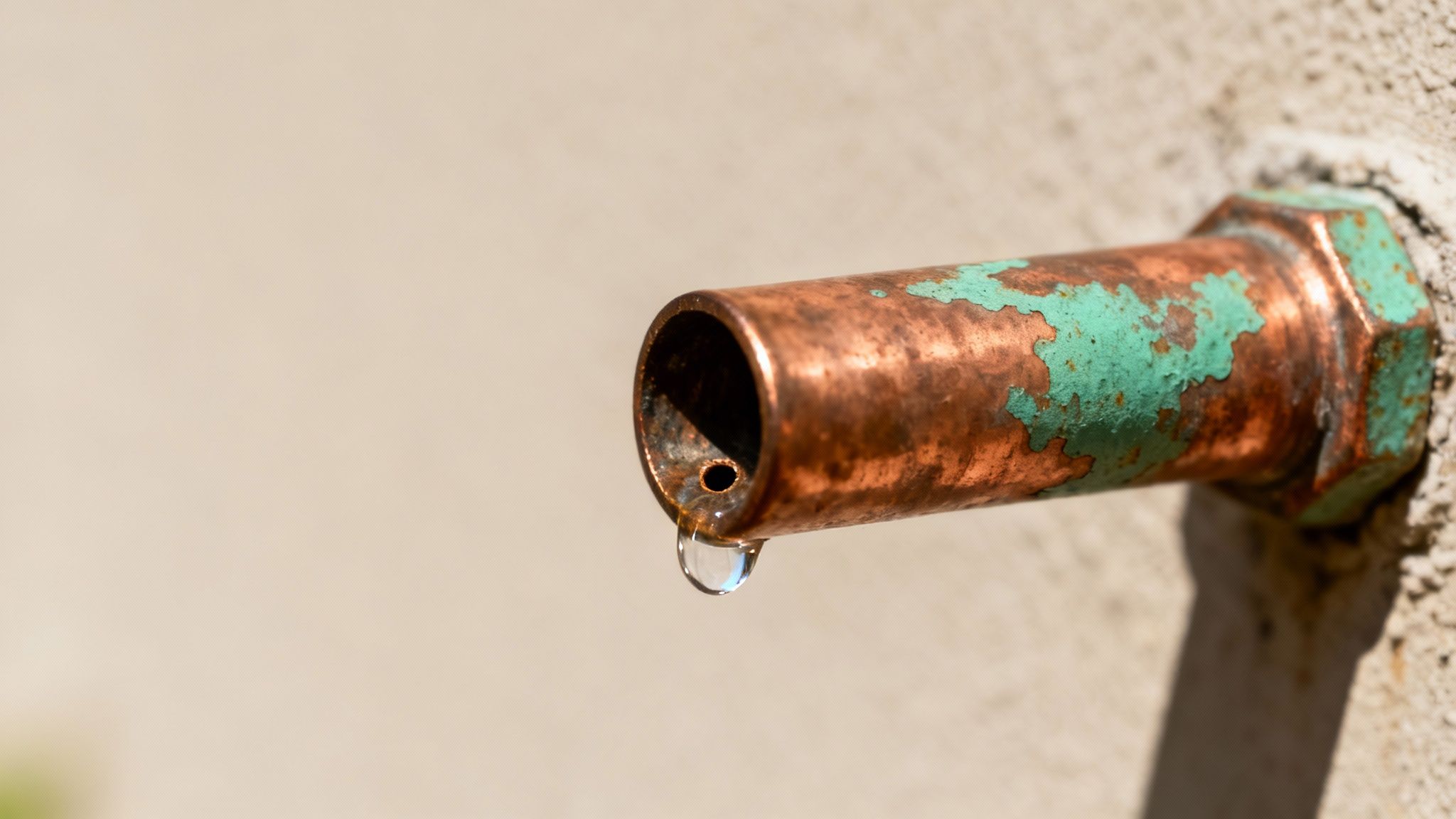
For homeowners in communities like Seaside or Marina, it’s tempting to treat a single small leak as just a one-off problem. You fix it, clean up, and move on. But in an older home, that first drip is often the first sign of a much bigger, system-wide problem that’s been brewing for years behind your walls.
Learning to recognize the early warning signs can save you from a catastrophic and expensive disaster. While a puddle on the floor is impossible to miss, most signs of failing pipes are far more subtle.
Beyond the Obvious Drip
Your home's plumbing will almost always give you hints before it completely gives out. These red flags go well beyond a visible leak and can tell you a lot about the health of your pipes.
- A Gradual Drop in Water Pressure: If your showers feel weaker than they used to, it's a classic sign that corrosion and mineral scale are slowly choking your pipes.
- Discolored or Metallic-Tasting Water: Seeing a burst of brown or rusty water when you first turn on a faucet means you're literally seeing tiny bits of the pipe itself flaking off. This is a dead giveaway for advanced corrosion.
- Banging or Knocking Sounds: Loud noises coming from inside your walls when you turn water on or off—often called "water hammer"—can mean pipe supports have failed or that pressure issues are putting stress on your aging plumbing.
- Recurring Clogs: If the same drains keep backing up, it could be from severe scale buildup inside the pipes that snags debris and creates constant blockages.
These symptoms are your home’s way of telling you that the entire system is struggling. When your older Monterey home's water pressure dips, it's not just an annoyance; it’s a data-backed warning sign.
The Threat of Slab Leaks in Monterey County
Many homes across Monterey County were built on concrete slab foundations, creating a unique and potentially destructive plumbing risk: slab leaks. A slab leak is when a water line running beneath your concrete foundation breaks. Because it’s buried under flooring and concrete, it can go unnoticed for weeks, silently causing damage.
The most critical red flag for a slab leak is hearing the sound of running water when all your taps and water-using appliances are turned off. If you hear this, it's a sign that water is escaping somewhere and requires immediate professional investigation.
Other subtle clues can point to trouble right under your feet. Pay close attention to these warnings, as they often signal a hidden problem that needs urgent attention.
Key Indicators of a Slab Leak:
- Warm or Hot Spots on the Floor: A leak in a hot water line will radiate heat up through the concrete, creating a noticeably warm spot on your floor.
- Unexplained Spikes in Your Water Bill: If your habits haven't changed but your bill suddenly skyrockets, an unseen leak is the most likely culprit.
- Damp Carpets or Warped Flooring: Moisture seeping up from the slab can cause flooring to buckle, stain, or feel damp.
- Visible Cracks in Your Foundation: While not always caused by leaks, new cracks can be a sign that escaping water is eroding the soil that supports your home’s foundation.
These leaks are particularly common in older homes with aging copper pipes, which can corrode over time due to our local soil conditions. Catching these red flags early is your best defense against the costly structural damage they can cause.
Patch Repairs Versus a Full Repipe: The Real Cost Over Time
When a new leak springs in your older Monterey home, the gut reaction is to call for a quick, targeted repair. It feels faster and cheaper. But is that patch job really saving you money? More often than not, it’s a costly illusion.
Patching a failing plumbing system is a lot like putting a single new shingle on a 40-year-old roof. You’ve fixed one tiny spot, but the rest of the system is just as old and just as likely to fail. For homeowners in the Salinas Valley, that next failure could happen next month—or even next week.
The True Cost of "Minor" Repairs
That single emergency plumbing call can be surprisingly expensive, and the cost goes far beyond just the pipe itself. Every time a plumber comes out to fix another pinhole leak, you're not just paying for their time and a small piece of copper.
The total bill piles up fast and often includes:
- Emergency Call-Out Fees: Problems have a knack for happening after business hours, and that after-hours service always comes at a premium.
- Drywall and Paint Repair: The plumber has to cut into your wall to get to the leak. Afterward, it’s on you to hire someone to patch, texture, and repaint the area.
- Water Damage Cleanup: Even a small, slow drip can saturate drywall, ruin insulation, and warp expensive flooring, possibly leading to mold growth.
Each one of these incidents can easily cost hundreds of dollars. After just two or three of these "minor" emergencies, you've likely spent a huge chunk of what a full, permanent solution would have cost.
The Vicious Cycle of Patching
The first leak in an old galvanized or copper system is almost never a one-off event. It’s a clear warning that the entire network of pipes has reached the end of its lifespan. Once one weak spot gives way, the pressure and stress on the rest of the aging system increase, making another failure inevitable.
This kicks off a frustrating and expensive cycle. You fix a leak under the kitchen sink, and a month later, a pipe in the laundry room wall starts dripping. It’s stressful, disruptive, and a serious drain on your finances. If you're caught in this loop, learning some expert Monterey plumbing repair tips can help you manage, but the underlying problem isn't going away.
Patching an aging plumbing system is like playing a high-stakes game of whack-a-mole. You might solve today's problem, but you're just waiting for the next one to pop up. A full repipe ends the game for good.
Comparing the Long-Term Financial Picture
To really see the whole story, you have to look beyond a single invoice. Let’s lay out the potential expenses over a five-year period for a typical older home in a community like Pacific Grove or Carmel. This shows how multiple emergency repairs can easily surpass the one-time investment of a full repipe.
Cost Analysis: Patch Repairs vs. Full Repipe Over 5 Years
| Expense Category | Multiple Patch Repairs (Estimated) | Full Repipe (Estimated) |
|---|---|---|
| Emergency Plumbing Calls | $1,500 – $3,000+ (Assuming 3-5 incidents) | $0 (New system under warranty) |
| Drywall/Paint/Floor Repair | $1,000 – $2,500+ | Minimal, planned repairs included in the project |
| Water Damage/Mold Cleanup | $500 – $5,000+ (Highly variable) | $0 |
| Homeowner Stress & Inconvenience | High and recurring | Low, confined to project timeline |
| Total 5-Year Cost | $3,000 – $10,500+ | A single, predictable investment |
As the numbers show, the unpredictable and escalating costs of repeated repairs can quickly blow past the one-time, planned investment of a full repipe. A new plumbing system isn't just a repair; it’s an investment in your home's value and your peace of mind.
How We Figure Out What's Really Going On With Your Pipes
Before anyone can honestly recommend a huge job like a full repipe, they need to do their homework. A true professional doesn't guess; they diagnose. Here at Alvarez Plumbing, we use a thorough, evidence-based approach to get a clear picture of your home's plumbing health. We want homeowners in communities like Prunedale and Castroville to feel confident, not pressured.
Our process is designed to show you exactly what’s happening inside your walls. We believe in arming you with the right information so you can choose the best solution for your home.
Starting with the Fundamentals
Our diagnostic process always kicks off with two simple but critical tests. These checks give us a baseline understanding of your system's condition.
- Pipe Material Assessment: First, we figure out what kind of pipes you have. Are they aging galvanized steel, early copper, or something else? Knowing the material tells us a lot about its likely age and how it tends to fail.
- Water Pressure Test: Next, we check your home's water pressure. Pressure that's too high or too low can be a symptom of problems like a failing pressure regulator, hidden leaks, or severe corrosion.
These initial steps are quick, non-invasive, and give us essential clues. They help us determine if the problems you're seeing are isolated incidents or signs of a system-wide issue.
Seeing is Believing with a Video Camera Inspection
The real game-changer in modern plumbing diagnostics is the video camera inspection. This technology removes the guesswork by letting us see the exact condition of your pipes from the inside—without cutting open a single wall.
We guide a high-resolution camera on a flexible cable directly into your pipes. This lets us take a visual tour of your plumbing system, identifying specific problems with pinpoint accuracy.
This isn't about guessing what might be wrong; it's about seeing the concrete evidence for ourselves. A camera inspection shows us the truth, whether it's heavy corrosion, cracks, or tree root intrusion, so you know exactly what you're dealing with.
With this camera, we can spot:
- Corrosion and Scale Buildup: We can see just how much the inside of your pipes has deteriorated.
- Cracks and Weak Spots: The camera can identify stress fractures that are waiting for the right moment to fail.
- Hidden Leaks: We can often spot the signs of a hidden leak long before it causes major water damage.
This level of detail is critical. You can learn more about our plumbing camera inspections in the Salinas area. It's the most effective way to make an informed decision about your home.
Because we believe in honest advice, Alvarez Plumbing offers free second opinions on repiping, including localized experience with Monterey’s aging homes and soil conditions. We use modern PEX piping to minimize wall damage, and we’ll walk you through options like partial vs. full repipes based on your home’s layout and budget.
What to Expect During a Modern Repiping Project
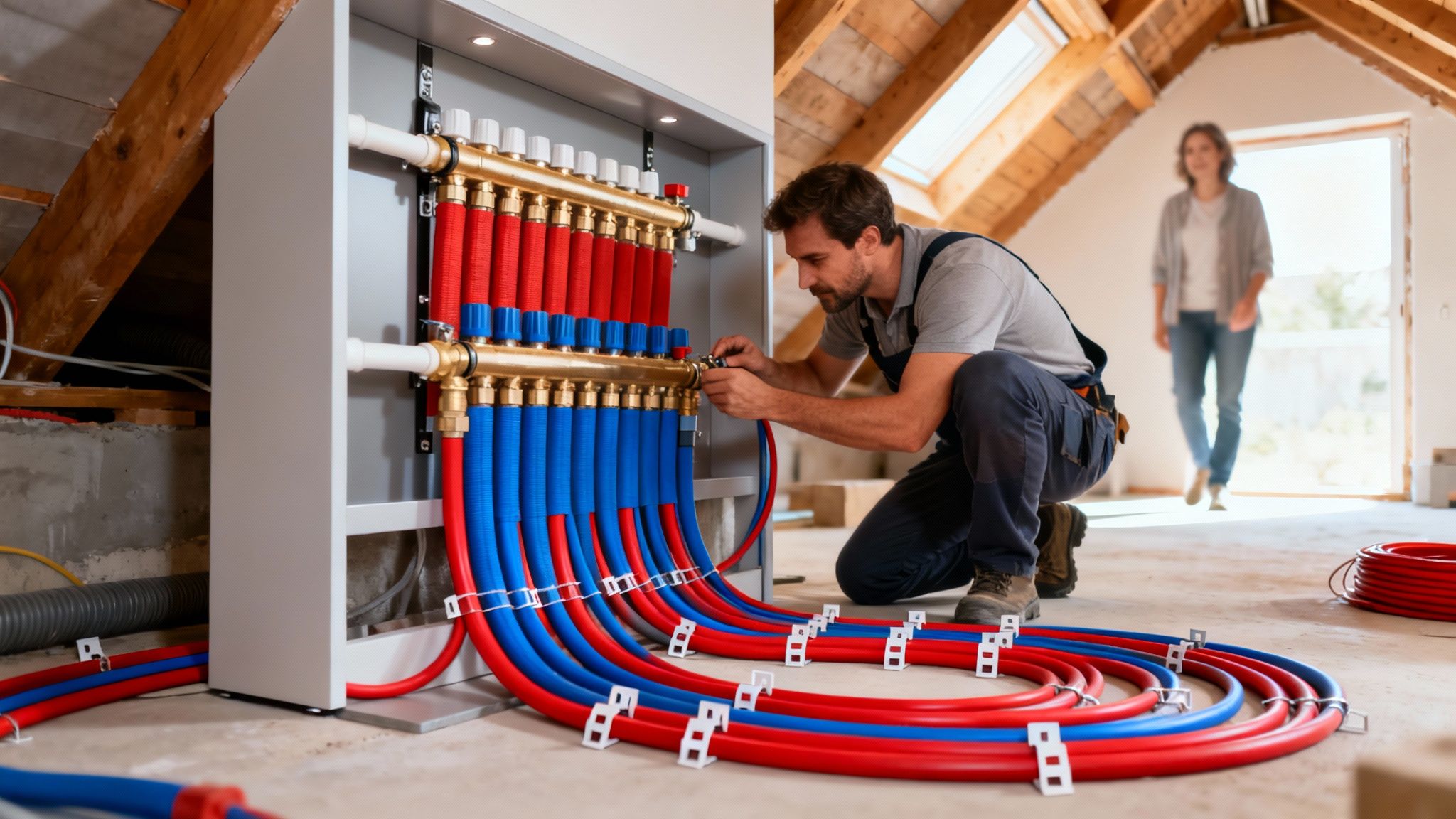
The idea of replacing all the pipes in your house sounds massive, doesn't it? Many homeowners in Watsonville and Carmel Valley picture weeks of chaos, dust, and demolished walls. The good news is that modern repiping is a far cleaner and more strategic process than most people think.
With smart planning and today’s materials, a full repipe is a manageable project that causes surprisingly little disruption to your daily life.
The PEX Piping Advantage
One of the biggest game-changers in modern plumbing is PEX (cross-linked polyethylene) piping. Forget the old rigid copper or steel pipes. PEX is a flexible tube that we can snake through walls and around corners, almost like running an electrical wire.
Because PEX is so flexible, we can dramatically reduce the amount of drywall we need to open up. Instead of cutting out huge sections of your wall, we can often work through small, carefully placed access points. For you, this means less mess, a faster job, and lower costs for patching things up afterward.
PEX is also incredibly tough. It stands up to the corrosion and scale buildup that’s the enemy of old pipes—a massive plus here in Monterey County with our hard water. It's a modern solution built to last for decades.
A Typical Project Timeline and Process
Every house is different, but a full repipe project follows a predictable path. As a family-owned business since 1988, we've refined our process working on homes from Carmel-by-the-Sea to Salinas.
Here’s a quick snapshot of how it usually goes:
- Initial Walk-Through and Planning: We start by mapping out your home's plumbing system. We find the most strategic spots to make small access holes to keep the disruption to a minimum.
- Protecting Your Home: Before we start, our crew carefully covers your floors, furniture, and any belongings in the work area. Protecting your home from dust is our top priority.
- Running New Lines: We run the new PEX lines throughout your home—usually through the attic, crawlspace, or behind walls. We keep your old system running until the very last moment.
- The Final Switchover: Once the new network of pipes is ready, we disconnect the old system and connect the new PEX lines to all your fixtures. This final changeover is usually done in just a few hours.
- Inspection and Restoration: We test the entire new system, checking for perfect pressure and zero leaks. Then we coordinate the required city or county inspection. Afterward, we patch and texture any drywall we opened, leaving your home clean.
In a typical single-family home, a complete repipe often takes just a few days, not weeks. To get a better feel for our approach, you can learn more about our professional re-piping services for water, gas, and waste lines.
Common Questions About Repiping an Older Home
Making the decision to repipe your home is a big one, and it's normal to have questions. Homeowners from Salinas to Carmel-by-the-Sea often ask us about the practical details before committing to a project. Here are straightforward answers to the questions we hear the most.
How Long Will a Repipe Project Take?
This is usually the first question people ask, and the answer is often shorter than they expect. For a typical single-family home in our area, a full repipe usually takes just 2 to 5 days. Our experienced team works efficiently to minimize disruption, ensuring you’re only without water for a few hours on the final day.
Will My Walls Be Destroyed?
This is a common fear, but modern repiping is surprisingly low-impact. By using flexible PEX piping, we can snake new lines through walls and attics with minimal cutting. We make small, precise access holes in the drywall, which are professionally patched and textured once the job is done. Our goal is to leave your home looking just as it did when we arrived.
Can I Live in My House During the Repipe?
Absolutely. We understand that you can’t just pack up and leave. Our process is designed to let you stay in your home comfortably. We make sure to clean up our work areas at the end of each day, and your water is only turned off for a very brief period during the final connection.
The most common feedback we get from homeowners in Pacific Grove and Seaside is how surprised they are by how clean and manageable the entire process was. Our crew treats your home with the same respect we’d show our own.
As you consider this decision, a common question is whether your insurance policy would cover potential damage from burst pipes. It's a valid concern. For California residents, learning what your homeowners insurance covers burst pipes in California can provide valuable peace of mind as you weigh your options. This helps you see a repipe not just as a repair, but as a proactive investment in preventing future claims.
Many Monterey homes—especially in older neighborhoods or near the coast—are reaching the end of their plumbing lifespan. If you're tired of band-aid repairs, Alvarez Plumbing can help you understand if it’s time to repipe—and how to do it efficiently and affordably. Schedule a local assessment here.