A burst water heater is a full-blown plumbing emergency. The first things you do are critical to stopping a flood and major property damage. You need to do two things right away: shut off the main water supply to the heater and cut the power or gas. Getting this done in the first few minutes can honestly save you thousands of dollars in repairs.
Your Immediate Action Plan
That sudden roar of gushing water from your garage or closet is enough to make any homeowner panic. It doesn't matter if you're in a new house in Marina or an older home in Pacific Grove; it's always an alarming sight. Water is spreading fast, threatening your walls, floors, and everything else. But you can get it under control. Your first moves are all about safety and stopping the damage.
This graphic shows the simple but essential first steps to take the moment you find a big leak.
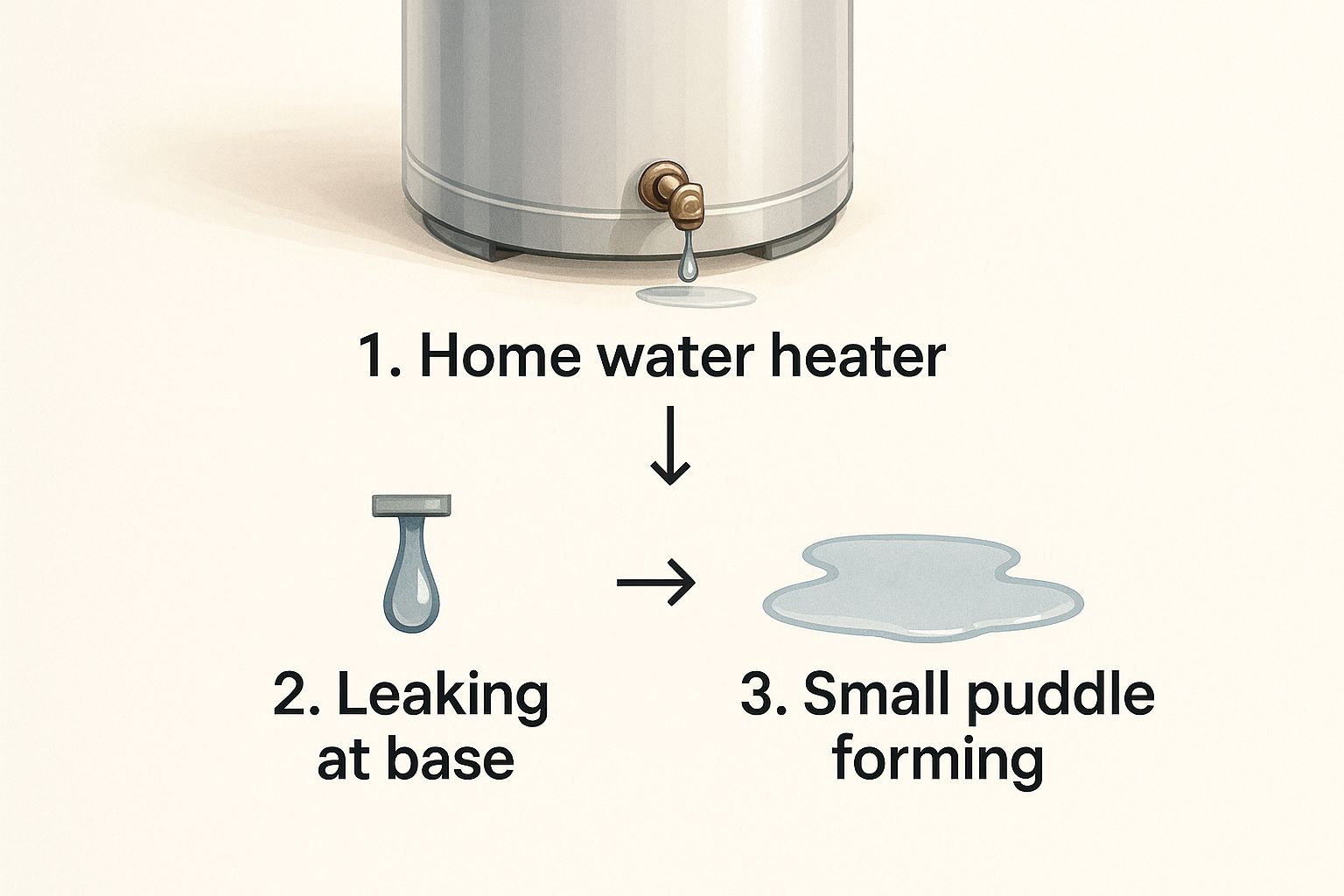
As you can see, the top priority is to stop the water and the power before you do anything else.
Finding Your Shut-Offs
First things first: you have to cut the water supply going to the heater. Look for a valve on the cold-water pipe, which almost always comes into the top of the tank. It will probably have a wheel-like handle or a lever. Turn it clockwise until it stops. This stops more water from pouring into a tank that has already failed.
Next, you absolutely must turn off the power source.
- For electric heaters: Go to your home's main circuit breaker panel. Find the breaker labeled "Water Heater" and flip it to the "OFF" position. This is a crucial step to prevent the terrifying risk of an electrical shock in a flooded area.
- For gas heaters: Find the gas line that runs to the bottom of the heater. There should be a small valve on that pipe. Turn it so the handle is at a right angle to the pipe. It’s also smart to turn the main thermostat dial on the heater itself to "OFF."
Pro Tip: Don't ever assume a small drip is a minor problem. A slow leak is often the first warning sign that the tank is about to fail completely. To get ahead of the problem, it's worth learning what it means when your water heater is leaking from the bottom before it becomes a disaster.
Your First 15 Minutes: An Emergency Checklist
When you find water pouring from your heater, your mind can go blank. Use this quick table to guide your actions in those first critical moments to keep the damage to a minimum.
| Action | Why It Matters | Quick How-To Guide |
|---|---|---|
| Cut the Power | Prevents electrocution risk in standing water. | Go to your breaker box and flip the switch for the "Water Heater." For gas, turn the valve handle perpendicular to the pipe. |
| Shut Off Water | Stops more water from entering the broken tank. | Find the cold water pipe (usually at the top) and turn the handle clockwise until it stops. |
| Start Removing Water | Reduces water damage to floors, walls, and belongings. | Use buckets, a wet/dry vac, mops, and towels. Open doors and windows to help air it out. |
| Call a Professional Plumber | A burst tank is a major failure and is not a DIY job. | Once the immediate threats are stopped, call a licensed plumber. This needs an expert. |
Once you've run through this checklist, you've handled the immediate crisis. The next step is to start cleaning up to prevent more damage and mold growth. Mold is a real concern with our coastal fog here in Monterey County.
As you're dealing with the mess, it's also a good time to find your insurance policy. For a helpful overview of what to look for, check out Your Essential Guide to Homeowners Insurance.
A burst tank is a serious failure. Once you’ve made the area safe, your very next call should be to a licensed plumber. Here at Alvarez Plumbing, we're a family-owned business that has been helping our neighbors from Watsonville to Carmel Valley with these exact emergencies since 1988. We've seen it all, and we're here to help.
Why Water Heaters Fail in Monterey County
After you've stopped the water and cut the power, the panic usually starts to fade. But then, one question almost always pops up: Why did this happen? A burst water heater can feel like a random disaster, but the problem was likely years in the making. Here in Monterey County, our local environment plays a big role.
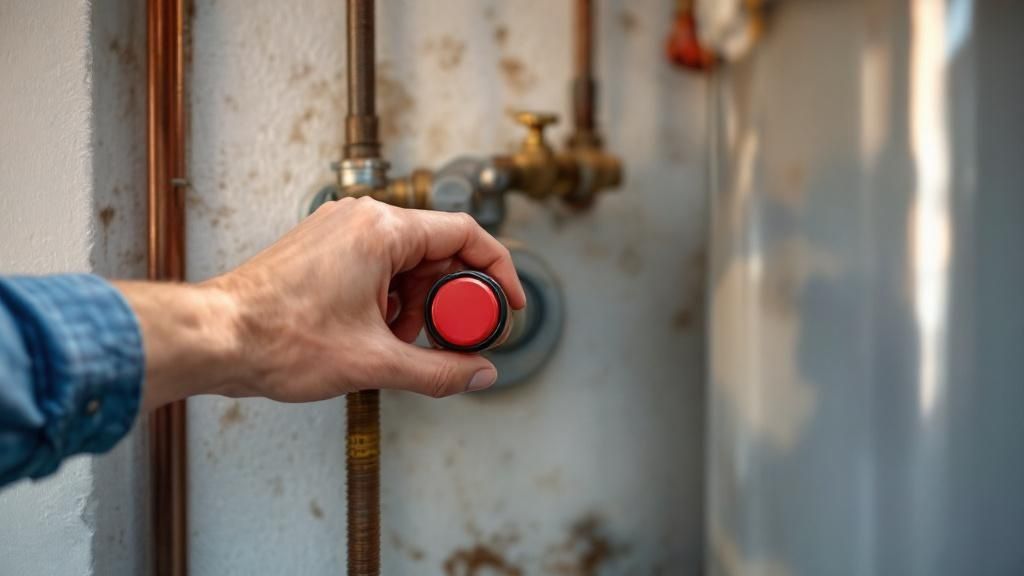
With over 35+ years of experience as a family-owned business, we've seen the same few problems cause chaos in local homes time and time again. Understanding them can help you make a smarter choice about what to do next.
The Hidden Damage of Our Hard Water
One of the most common reasons for a burst water heater in the Salinas Valley is something you can't even see—our water. The water here is "hard," which means it has a lot of minerals like calcium. While it's safe to drink, these minerals are tough on the inside of your water heater.
Over the years, these minerals settle at the bottom of the tank and bake into a thick, rocky layer of sediment. This buildup causes two big problems:
- It covers the heating element, forcing it to work much harder to heat your water.
- More importantly, it creates super-hot spots that eat through the tank's protective inner lining, leading to rust and, finally, a total failure.
By the time you see rusty water from your faucets or hear a rumbling sound from the tank (that’s water boiling through the sediment), the damage inside is already bad.
Pressure Problems and Old Age
Another common cause we see is too much pressure building up inside the tank. Every water heater has a Temperature and Pressure (T&P) relief valve. It's supposed to release water if the pressure gets dangerously high. The problem is, these valves can get stuck, especially if they haven't been tested in years. When that safety valve fails, the tank itself can burst.
Of course, simple old age is a huge factor. The average life for a standard tank water heater is only about 8 to 12 years. In some of the beautiful, historic homes from Pacific Grove to Carmel-by-the-Sea, it's not uncommon for us to find heaters that are well past their expiration date. An old tank has been fighting corrosion for years, making a burst much more likely.
A sudden pressure spike from the city water supply, which can happen in areas like Watsonville or Prunedale, can be the final straw for a weak tank. It’s a good reminder that your home's plumbing is one big system.
When to Suspect a Problem
Most water heaters give a few warning signs before they fail completely. If you learn to spot these clues, you have a good chance of preventing a flood. If you notice any of these, it’s time to get a professional opinion.
- Rumbling or Popping Noises: This is the classic sound of sediment boiling at the bottom of your tank.
- Rusty Hot Water: This is a clear sign that the inside of your tank is rusting and falling apart.
- Small Leaks or Puddles: Any water around the base of your heater is a major red flag. A tiny drip today can easily become a major flood tomorrow.
If you're dealing with any of these issues, please don't wait for a disaster. Our team at Alvarez Plumbing provides expert water heater repair in Salinas, CA, and we can quickly check the health of your unit. Finding out why your heater failed is the first step toward choosing the right replacement and making sure this never happens again.
Understanding the Risks of a Ruptured Tank
A burst water heater isn't just a plumbing problem; it’s a sudden event that can damage your entire home. It’s much more than a puddle to mop up. When 40 to 80 gallons of water suddenly flood your property, the damage starts right away and gets worse quickly.
For homeowners from Prunedale to Castroville, understanding all the risks is the first step to knowing why you can't just "wait and see." The results are just too serious.
The Domino Effect of Water Damage
The most immediate danger is severe water damage. Once water escapes the tank, it soaks everything it touches. This creates a chain of expensive problems.
Think about where your water heater is—often in a garage or a closet. The flood quickly soaks into:
- Drywall and Insulation: Walls act like sponges, pulling water up. This ruins the drywall and soaks the insulation inside, making it useless and creating a perfect spot for mold to grow.
- Flooring and Subflooring: Water seeps under carpets and hardwood, ruining the finish and warping the boards. More importantly, it gets into the subfloor, which can lead to rot and weaken the room's structure.
- Foundation: For homes in communities like Salinas with slab foundations, a long-term leak can be a serious issue. Water can seep into cracks and cause problems over time.
This isn't just about fixing the looks. We've seen how a big leak can easily cost thousands of dollars in restoration work, including tearing out walls, replacing floors, and hiring professional drying companies.
The Hidden Health Hazard of Mold
After the flood, another threat starts to grow, especially here on the Central Coast. Our famous coastal fog in places like Marina and Seaside creates the perfect damp environment for mold.
Mold can start to grow on wet surfaces in as little as 24 to 48 hours. What starts as a water problem quickly becomes a health problem. Mold releases spores into the air that can cause breathing issues and allergic reactions for your family.
Once mold takes root behind walls or under floors, you need a professional to get rid of it safely. This adds another expensive step to the recovery process, making a fast professional response very important.
Critical Safety Risks You Can't Ignore
Besides property damage, a burst water heater creates two immediate safety dangers. These are the exact reasons why shutting off the power and water is the first step, and why calling a professional plumber is the only safe next step.
First, there's the risk of electrical shock. If water reaches electrical outlets or appliances, the entire flooded area can become electrified. This creates a life-threatening hazard.
Second is the danger of scalding. The water gushing from a broken tank is extremely hot, often over 120°F. It can cause serious burns in seconds. This is another reason to keep a safe distance and let a trained professional handle it.
A burst water heater is a real emergency that needs an expert. The team at Alvarez Plumbing has been managing these crises for our neighbors since 1988, making sure the job is done safely. To learn more, you can explore our professional water heater repair and replacement services and see how we can get your home back to normal.
Deciding Between Repair and Replacement
Once our team has helped you handle the immediate mess of a burst water heater, you have a big decision to make. As you stand there in your Marina or Seaside home, looking at that old, failed unit, you have to ask: is it smarter to repair this, or is it time for a new one?
This isn't just about patching a leak. It’s a long-term choice that affects your home's bills, your family's comfort, and your peace of mind.
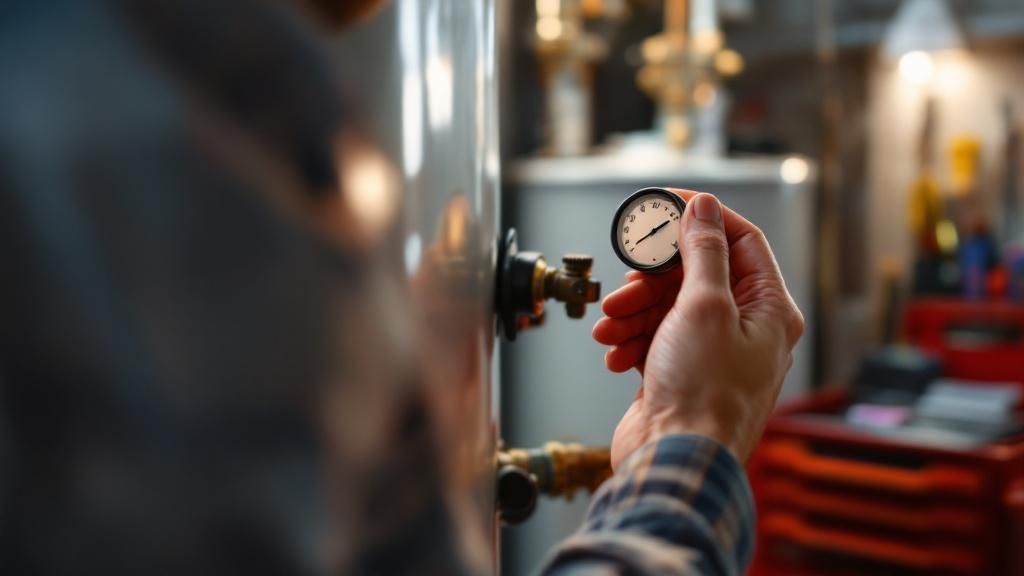
As a family-owned business serving Monterey County since 1988, our job isn't to sell you something. It’s to give you the same honest, neighborly advice we’d give our own family so you can make the right call. Let's look at the key factors.
Key Factors in Your Decision
The choice between fixing the old unit and getting a new one usually comes down to a few simple points.
-
The Age of Your Heater: A standard tank water heater lasts about 8 to 12 years. If your unit is getting close to that decade mark—or is already past it—spending a lot of money on a major repair is often a bad investment. You’re just waiting for the next thing to break.
-
How Bad the Damage Is: A burst tank is the worst-case scenario. It's a total structural failure. In almost every case of a ruptured tank, replacement is the only safe and realistic option.
-
The Cost of the Repair: Even for smaller problems, you have to look at the numbers. A good rule of thumb is if the repair bill is more than 50% of the cost of a new unit, replacement is almost always the smarter financial move.
When a major failure happens, getting advice from professional local heater repair services is a crucial first step. An expert can give you a clear diagnosis and an accurate quote so you can compare costs and make an informed decision.
The Long-Term Value of a New Heater
It’s understandable to want the cheapest, quickest fix. But a new water heater is an investment that pays you back over time. Modern units are much more energy-efficient.
Today's high-efficiency models can cut your water heating costs by 25% or more. Over the life of the heater, those savings can add up to hundreds of dollars, helping to offset the initial price. If you want to get a better handle on the investment, check out our guide on the water heater replacement cost.
As your local plumbing experts, we believe in being upfront. We'll always give you a clear, honest assessment of your old unit and provide straightforward pricing for both repair and replacement, so you can make a confident choice without sales pressure.
Exploring Modern Water Heater Options
Water heater technology has improved a lot. For many of our neighbors in Carmel Valley and Watsonville, a burst heater becomes a good chance to upgrade. One of the most popular choices we see is the tankless water heater.
- Endless Hot Water: Tankless units heat water as you need it. That means no more running out of hot water in the middle of a shower.
- Energy Savings: They are much more energy-efficient because they aren't keeping 40 or 50 gallons of water hot all day.
- Longer Lifespan: These units can last 20 years or more—nearly double the life of a traditional tank heater.
- Space Saving: Their small, wall-mounted design frees up valuable floor space.
Facing this decision after your water heater has failed can feel stressful, but you don't have to figure it out alone. The Alvarez Plumbing team is here to answer your questions and help you choose a solution that’s right for your home, your family, and your budget.
How Proactive Maintenance Prevents Disaster
There’s an old saying that an ounce of prevention is worth a pound of cure. It's never more true than with your water heater. The stress, mess, and expense of a burst water heater is a nightmare. The best way to handle it is to make sure it never happens in the first place.
This is where professional maintenance comes in. It’s a small investment that pays off big by extending the life of your heater, making it more efficient, and giving you peace of mind. Instead of waiting for a disaster, you’re taking control.
Taming Monterey County's Hard Water
As we've mentioned, the water throughout the Salinas Valley and the Monterey Peninsula is hard on plumbing. It’s full of minerals that settle in your tank, creating a thick layer of sediment. This buildup is the number one cause of rust and tank failure.
An annual professional flush is the only real solution. When our certified plumbers visit, we don't just drain the tank; we flush out all the grit and scale. This deep clean does a few important things:
- It removes gunk that is eating away at your tank’s inner lining.
- It boosts energy efficiency by letting the heater warm the water directly, not through a thick layer of sediment.
- It quiets the unit, getting rid of those popping and rumbling sounds.
For anyone in areas like Prunedale or Castroville with well water—which can be even harder—this annual service isn't just a good idea; it's essential.
The Anode Rod: Your Water Heater's Bodyguard
Inside every tank-style water heater is a simple but very important part called an anode rod. Its job is to sacrifice itself to protect your tank. It attracts the corrosive elements in the water to itself, so they attack the rod instead of your tank.
Think of the anode rod as a bodyguard for your water heater. It takes all the hits so the tank doesn't have to. But once the bodyguard is gone, the tank is left unprotected.
Over time, this rod gets completely eaten away. During a maintenance check, our plumbers will inspect it. If it’s nearly gone, usually after three to five years, we'll replace it. This one small, cheap step can literally double the life of your water heater.
A Small Valve That Prevents a Big Problem
Every water heater has a key safety feature: the temperature and pressure (T&P) relief valve. Its job is to open and release water if the pressure inside the tank gets too high, preventing a dangerous situation.
But here’s the problem: mineral buildup from our local water can cause these valves to get stuck. A stuck T&P valve is a ticking time bomb. As part of our service, we test this valve to make sure it works freely and can protect your home.
Annual Maintenance vs. Emergency Repair: A Cost Snapshot
Thinking a yearly check-up is just another expense? Let's compare that small cost to the price of an emergency replacement. The numbers make it pretty clear that taking care of your heater is the smartest financial move.
| Service | Typical Cost Range | Long-Term Financial Benefit |
|---|---|---|
| Annual Professional Maintenance | $150 – $300 | Extends heater life, improves efficiency, prevents total failure. |
| Emergency Water Heater Replacement | $1,500 – $4,000+ | A sudden, often unplanned major expense. |
| Water Damage Restoration | $3,000 – $10,000+ | Needed after a major leak or burst, not including the plumbing repair. |
The math is simple. A few hundred dollars spent on prevention over the years can save you from a five-figure disaster down the road.
While some of these tasks might seem like a weekend DIY project, it's a job for the pros. The team at Alvarez Plumbing has been providing expert maintenance for our neighbors since 1988. An annual check-up is the smartest, most cost-effective way to prevent the disaster of a burst water heater.
Common Questions About Burst Water Heaters
After the shock of a burst water heater wears off, the questions start coming. It’s a stressful time, and our customers in Salinas and Monterey often have the same worries. As your local, family-owned plumbing experts since 1988, we want to give you clear answers to give you some peace of mind.
Here are the most common questions we hear after a homeowner deals with a major water heater failure.
How Long Will It Take to Replace My Water Heater?
This is usually the first thing people ask. You want your life back to normal. For a standard replacement in a typical home in Seaside or Carmel-by-the-Sea, our plumbers can usually have the old unit out and a new one running in about 2 to 4 hours. Our goal is to always get your hot water back on as fast as we can.
Of course, some things can add time. If the heater is in a tight crawlspace, that takes longer. Also, if your old setup doesn't meet current safety codes, we may need to make upgrades. We’ll always check the situation first and give you a clear, honest timeline before we start.
Is the Water from the Burst Tank Dangerous?
While the water is from your home's main supply, it’s not clean. When a tank fails from rust—a very common cause—the water it releases is full of sediment and mineral deposits. Think of it as the dirty gunk from the bottom of the tank.
You shouldn't use it for anything. The top priority is cleaning it up as fast as possible. This isn't just about drying the area; it's about stopping mold from growing, which can happen quickly in our damp coastal climate.
Will My Homeowners Insurance Cover This Damage?
This is a big question. Most standard homeowners insurance policies will cover the resulting water damage—like replacing ruined carpets and repairing wet drywall.
However, the policy often does not cover the cost of the water heater itself, as its failure is usually seen as a maintenance issue.
Every insurance policy is different, so your first call after calling us should be to your insurance agent. They can explain your specific coverage. We will provide all the professional paperwork you need to support your claim and make the process as smooth as possible.
The Leak Is Small. Can I Just Turn the Water Back On?
We strongly advise against this. A small leak from the tank itself is almost always a sign that the heater's structure has failed. That tiny drip is the first warning of a complete burst.
Turning the main water supply back on puts pressure back in the tank. That pressure could easily turn that small weak spot into a massive failure, causing a huge flood in seconds. For your safety and to avoid much more damage, please leave the water turned off and call a professional right away. For a deeper dive into what different leaks mean, you can find helpful information on our page about water heater repair in Monterey.
When you're facing a plumbing emergency like a burst water heater, you need a team you can trust to respond quickly. Alvarez Plumbing has been that team for families across Monterey County for over 35 years. If you need immediate help, don't hesitate to call us. We're here for you 24/7.