Direct Answer: When two or more fixtures back up at once, the blockage is almost always in your main sewer line, not the individual drains. Snaking one toilet will not fix it.
You flush the toilet and the water climbs instead of going down. Then someone yells from the bathroom down the hall that the shower is filling up too.
That combination is not bad luck. When two or more fixtures fail at the same time, the trouble is usually past the fixtures entirely and sitting in your main sewer line.
We hear this exact call in Salinas constantly, often on a Sunday or right in the middle of a family gathering. Below is how to read the signs, what causes it in this part of the Monterey Bay Area, and what actually happens after you pick up the phone.
One Fixture Clogs. All of Them Means the Main Line.
Your home’s drains work like tree branches. Each sink, tub, and toilet has its own small branch line, and every branch feeds into one main line that carries everything out to the city sewer or your septic system.
When a single toilet clogs, the blockage is in that toilet or its branch. When the toilet and the shower quit together, the shared pipe they both drain into is the problem.
Signs that point at the main line instead of a single drain:
- Two or more fixtures slowing down or backing up within the same day
- Water rising in a tub or shower when you flush a toilet
- Gurgling from a nearby drain when the washing machine empties
- The lowest fixtures in the house flooding first, usually a downstairs shower, floor drain, or first-floor toilet
- A sewer smell near a cleanout, garage drain, or side yard
This distinction matters because it changes the whole repair. If the blockage is 20 or 30 feet out in the main line, plunging a toilet or running a small hand snake down a shower drain accomplishes nothing. You can spend an entire afternoon working on the wrong end of the pipe.
One homeowner who contacted us described it plainly: both the toilets and the showers stopped draining at once, and the main line needed to be cleared. That is the pattern, and it is worth trusting.
Branch Line Problem or Main Line Problem?
A quick way to sort what you are dealing with before anyone comes out.
| What You Notice | Likely Branch Line | Likely Main Line |
|---|---|---|
| Fixtures affected | One sink, tub, or toilet | Two or more, often on different sides of the house |
| Flushing a toilet | No effect elsewhere | Water rises in a tub or shower |
| Timing | Slowly worse over weeks | Often sudden, during heavy household use |
| Smell | Usually none | Sewer odor near cleanout or floor drain |
| Right next step | Clear the individual drain | Camera inspection of the main line |
Why Main Lines Give Out in Salinas Homes
Three causes account for most of the main line backups we see across Salinas, Seaside, and the older neighborhoods on the Monterey Peninsula.
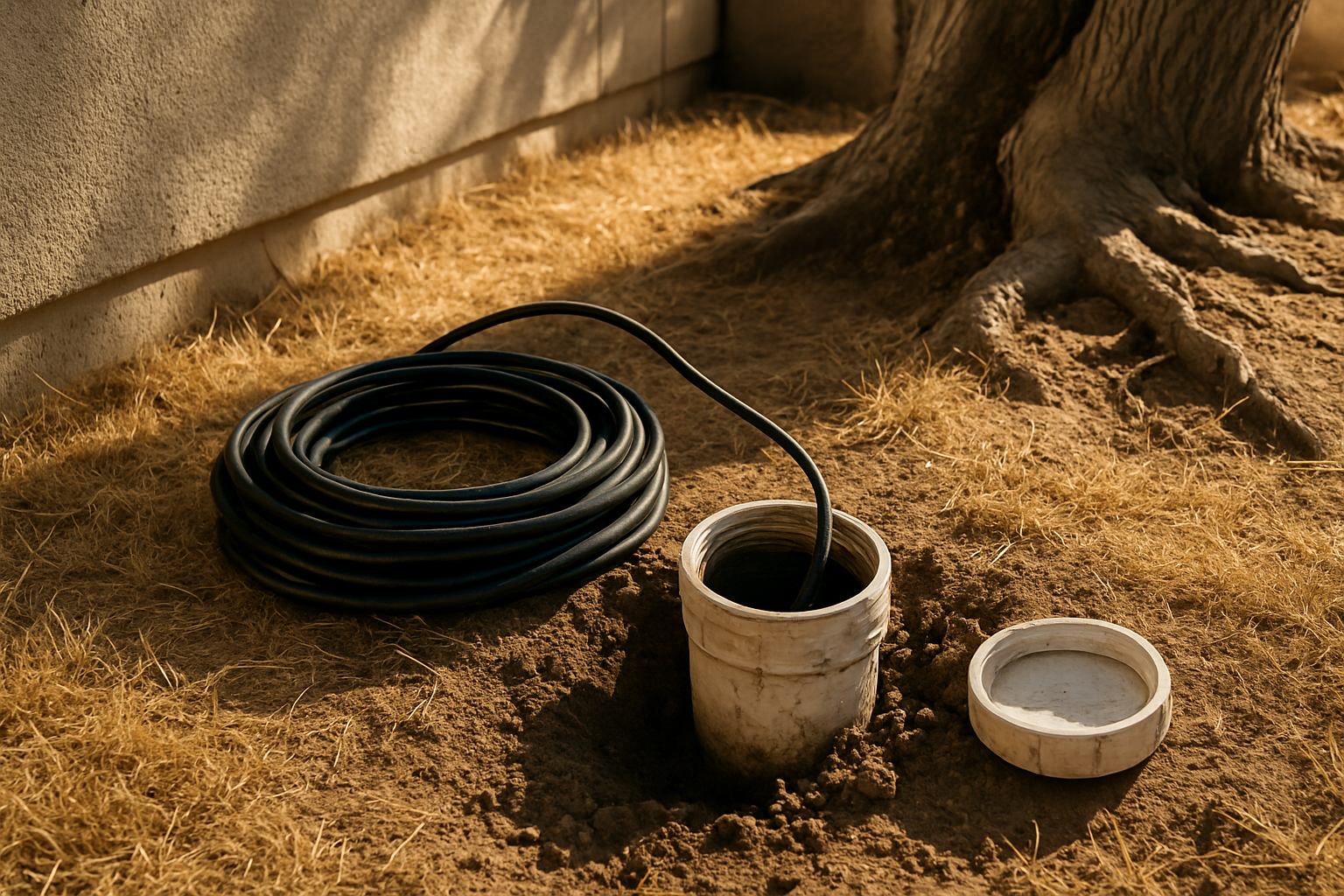
Tree roots. Much of Salinas was built decades ago, and the trees planted alongside those homes are now mature. Roots chase moisture, and the tiny bit of vapor escaping a clay or cast iron pipe joint is enough to draw them in. Once a root hair finds a joint, it thickens year after year until it works like a net, catching paper and grease until flow stops.
Grease and soap buildup. Cooking grease cools inside the line and sticks to the walls. Add laundry lint and soap scum and the pipe’s usable diameter shrinks steadily.
Hard water scale. The Salinas area has notably hard water, with the local district reporting average hardness well above what most of the country deals with. According to the USGS water science team, water above roughly 180 ppm is classified as very hard, and Salinas sits far past that line. That mineral content leaves scale inside pipes and speeds up sediment buildup.
Here is why it feels sudden. A root or grease restriction can sit at 70 percent blocked for years and you never notice. Then you have relatives over, four showers run back to back, the dishwasher and washing machine both cycle, and the line finally cannot keep up. The failure looks instant. The cause took a decade.
What Actually Happens After a Main Line Call
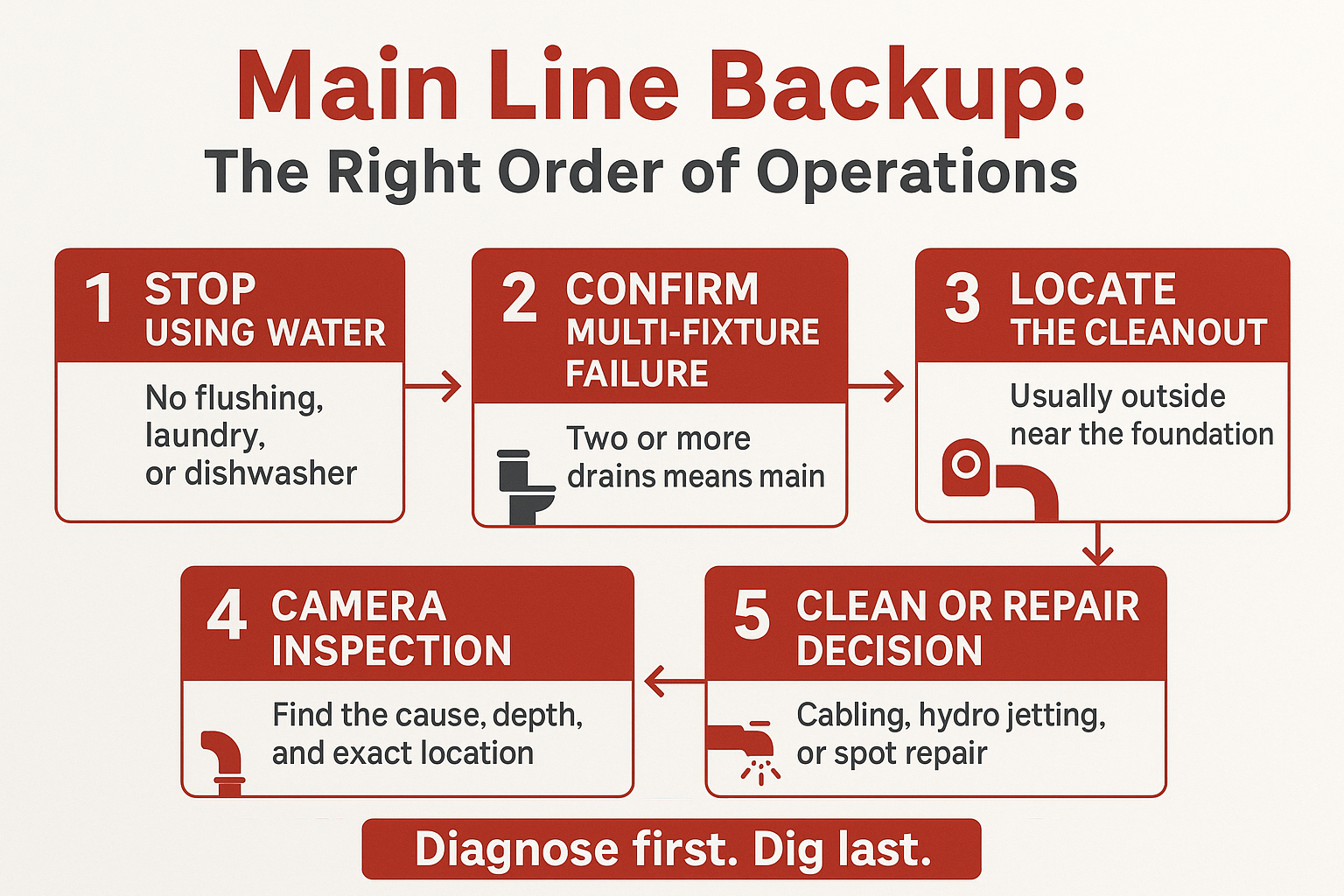
Most homeowners have never seen this process, so here is the order it should follow.
Why the Camera Comes Before the Decision
A video camera pipe inspection is the step most homeowners skip, and it is the one that saves the most money. A waterproof camera goes down the line through the cleanout and shows what is actually in there on a screen.
What that tells us:
- The cause. Roots, grease, a collapsed section, or a foreign object all look completely different on camera.
- The exact location and depth. A locator on the camera head marks the spot on the surface, so if digging is needed, it is a targeted hole rather than a guess across your whole front yard.
- The condition of the pipe. Old cast iron that is heavily scaled or cracked cannot take the same treatment as sound pipe.
That last point drives the repair decision. High-pressure hydro jetting at up to 4,000 PSI scours grease, scale, and root hair off the pipe walls and restores full diameter, which a cable snake cannot do. But it belongs in a pipe that can handle it, which is exactly why we look first.
On cost, expect real variation. Around Monterey County, drain and sewer camera inspections commonly land in the low-to-mid hundreds, and jetting a residential main often runs in the several-hundred-dollar range depending on pipe length, diameter, and how bad the blockage is. Ask for the number in writing before work begins, and if you are outside Salinas city limits, ask whether a travel fee applies. That question comes up on our phones almost daily.
If It Has Happened Before, Fall Is Your Deadline
A main line that backs up once will usually back up again. The root or the scale is still there.
One Salinas homeowner told us their house needs the tubs cleared and the main line jetted about every other year, and they know it is coming because of the trees in the yard. That kind of predictable cycle is common here, and it is worth understanding why the same drain keeps clogging after it has been cleared.
Timing matters. Salinas gets almost no rain through the summer, then rainfall picks up sharply in October and November. Those first real storms push groundwater into cracked joints and carry silt into the line, and a restriction that limped along all summer gives out fast.
If your drains have been slow, gurgling, or smelling off, that is the window. Getting a look at the line before the rain starts is a far easier week than dealing with a backup after the first storm.
Frequently Asked Questions About Main Line Backups
My toilet keeps clogging even though nothing unusual got flushed. Is that the main line?
Very possibly, especially if it is the lowest toilet in the house or if any other drain is slow. A toilet that clogs repeatedly with normal use is often the first fixture to feel a restriction further downstream.
Should I use a drain chemical while I wait for a plumber?
No. Chemical drain openers do not travel far enough to reach a main line blockage, and they sit in the standing water where they can damage older pipe and create a hazard for whoever opens the line up. Stop running water and wait.
Is a main line backup an emergency, or can it wait until Monday?
If sewage is coming up into the house or you cannot use a single toilet, treat it as an emergency. We run 24/7 emergency plumbing across Salinas and the Monterey Bay Area for exactly that reason. If you have one working bathroom, the line is holding, and nothing is overflowing, scheduling during regular hours is a reasonable call and usually costs less.
Who is responsible for the pipe, me or the city?
In most cases the property owner owns the sewer lateral from the house out to the connection at the city main. That makes the blockage and the repair a homeowner cost, which is why prevention on an older line pays off.
Does a sewer line repair need a permit in Salinas?
Cleaning a line does not, but replacement or excavation work often does, and requirements depend on scope and location. We handle City of Salinas permitting in-house when a job calls for it, so the paperwork does not land on you.
Dealing With More Than One Backed-Up Drain?
Multi-fixture backups do not sort themselves out, and the sooner someone gets eyes on the main line, the smaller the job usually is. Alvarez Plumbing has been working on Salinas sewer lines since 1988, we are licensed, insured, and bonded, and our phones are answered around the clock at (831) 757-5465. One customer put it simply after a morning call: “Definitely saved the day, had issues with my plumbing not draining.”
