
Direct Answer: A sewer camera inspection sends live video through your drain line to show root intrusion, cracks, buildup, or bellied pipe — giving your plumber a real diagnosis instead of a guess.
If your drain keeps backing up after being snaked, or you’re picking up a sewer smell that won’t go away no matter what you try, there’s a good chance you don’t have a clog — you have a structural problem. And the only way to know for sure is to look.
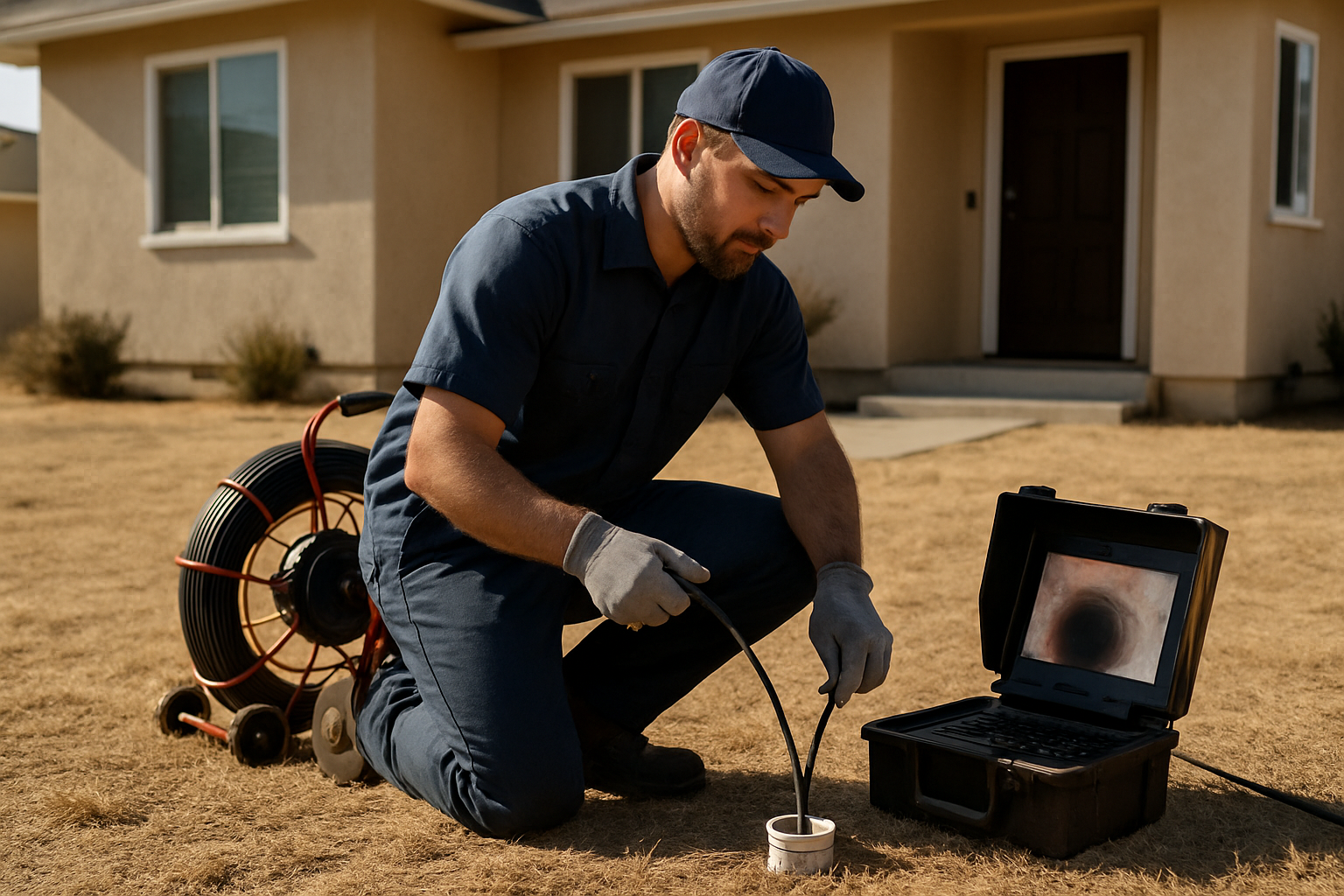
A sewer camera inspection sends a flexible cable with a camera mounted on the tip through your drain line. What comes back is live video of whatever is actually inside that pipe: root intrusion, grease buildup, cracks, offset joints, or a line that’s actually fine. Without it, a plumber is working from symptoms alone — which is a reasonable starting point, but not a diagnosis.
For homeowners in Salinas and across the Monterey Bay Area, where a lot of the housing stock dates back to the 1960s and 70s, older clay and cast iron laterals are common. Those materials have a lifespan, and a camera is often what confirms whether you’re managing a maintenance issue or heading toward a much bigger repair conversation.
What the Camera Actually Shows — and What It Doesn’t
The camera travels through the interior of your pipe and transmits live footage to a monitor. A plumber watching that feed can identify specific problems and, using a locating transmitter on the cable head, mark their precise location on the ground above.
Here’s what a camera inspection can show:
- Root intrusion — tree and shrub roots that have grown through joints or cracks in the pipe
- Grease and scale buildup — narrowed pipe interior from years of accumulation
- Bellied pipe — a section that has sagged and now holds standing water and debris
- Cracked or collapsed pipe — sections where the pipe wall has failed structurally
- Offset or separated joints — gaps at connection points, common in older clay pipe
- Foreign objects — items that don’t belong in the line at all
What the camera cannot show is the condition of the soil surrounding the pipe, which matters when assessing whether a failing section is isolated or part of a broader settlement issue. That kind of evaluation requires additional context — the camera gives you the interior picture only.
For a Salinas homeowner with a 40- or 50-year-old clay lateral, even a clean-looking line is useful information. It tells your plumber what you’re working with before recommending anything.
The Question Homeowners Ask Most: Do I Need the Camera Before Jetting?
This comes up constantly. The honest answer depends on the situation.
For a straightforward grease and buildup clog — especially in a kitchen line — hydro jetting without a camera first is often appropriate. If the line has a clear history of grease accumulation and no structural concerns, jetting it and moving on is a reasonable call.
But when you’re dealing with a recurring backup, the calculus changes. We hear from homeowners regularly who describe the same pattern: the line gets snaked, clears up, then backs up again within a few weeks. One caller described a main line that had been snaked twice already — the working suspicion was roots, but without a camera that’s still just a suspicion. Knowing the location and severity of root intrusion changes the entire repair conversation, because no amount of jetting permanently removes roots. It cuts them back, but they regrow.
A sewer smell that won’t clear is another signal that something beyond buildup may be going on. A persistent odor after cleaning usually points to a gap, crack, or offset joint — the kind of thing only a camera confirms.
If you’re not sure which situation you’re in, this breakdown of when small plumbing issues escalate is worth reading before you make the call.
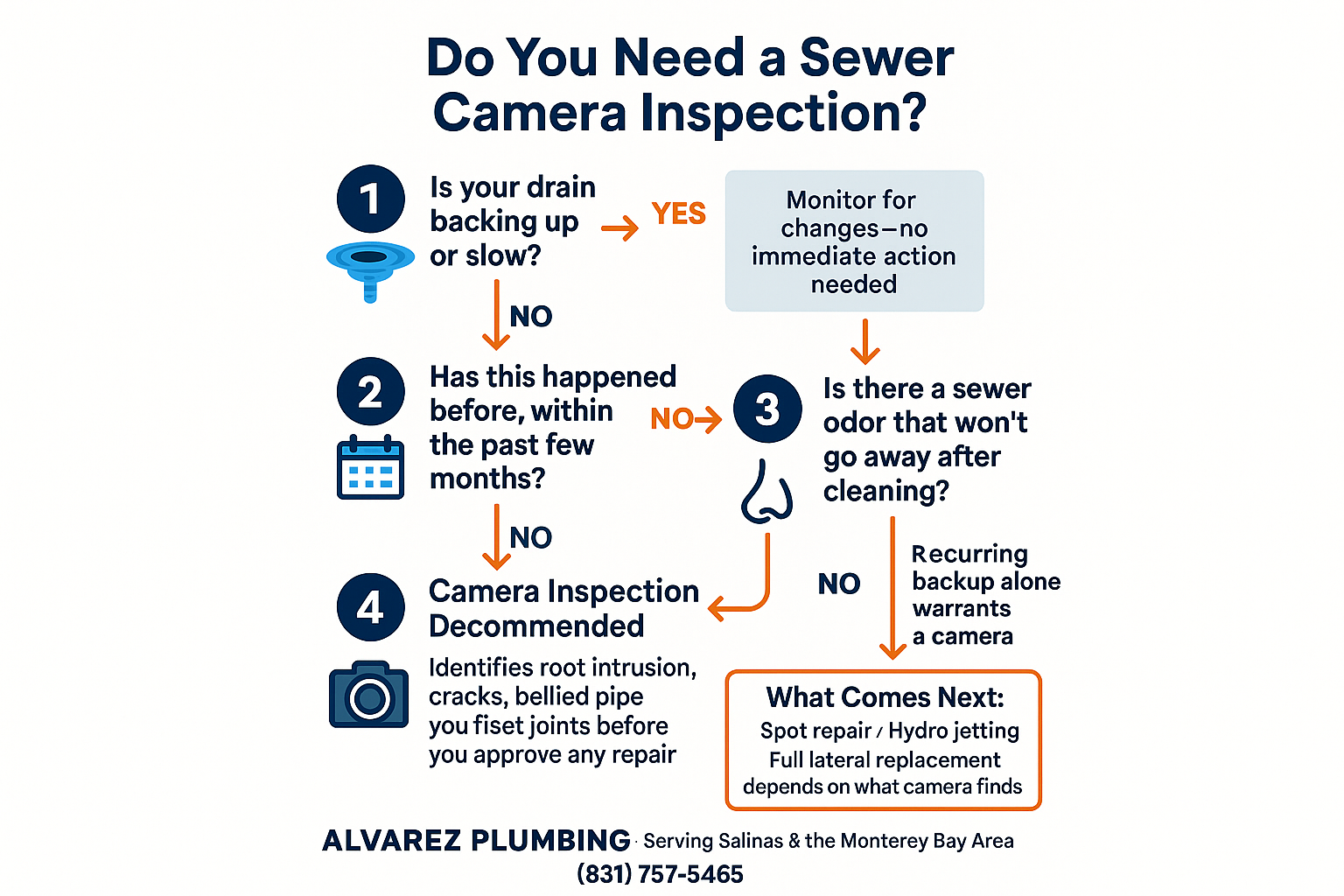
The Sewer Camera Inspection Decision Tree
Use this to figure out whether your situation calls for a camera inspection, jetting, or both.
Camera Inspections Before a Property Sale — Including Monterey’s Required Lateral Program
A sewer camera inspection isn’t only a diagnostic tool for active problems. It’s also a practical step for anyone buying or selling property — and in some parts of the Monterey Bay Area, it’s legally required.
The City of Monterey has had a mandatory Sanitary Sewer Lateral Inspection and Repair Program in effect since January 1, 2019. Sellers in Monterey are required to have the lateral inspected before transferring ownership. The Carmel Area Wastewater District has a similar ordinance. A camera inspection generates the documentation needed to satisfy that requirement — without it, the sale process can stall.
For buyers, a camera inspection is one of the more practical due diligence steps you can take on an older property. A home that looks solid from the surface can have a clay lateral that’s been slowly failing for years. Monterey-area homes carry some plumbing quirks worth understanding before you close, and the sewer lateral is one of the more expensive surprises you’d rather know about upfront.
One important note: the camera footage belongs to the homeowner. Always ask for a copy of the video and keep it on file, particularly on an older property or one with a documented history of backups. That footage is your baseline — it’s useful documentation if a problem develops later or if you ever sell the property.
What Happens After the Camera — A Look at the Repair Options
Once the camera finds something, the repair path depends on what it found and where. Here’s how the decision typically breaks down for a Salinas homeowner with an aging lateral.
| Finding | Likely Next Step | Notes |
|---|---|---|
| Grease / scale buildup, no structural damage | Hydro jetting | Camera confirms jetting is safe before high-pressure water goes in |
| Root intrusion at one or two joints | Jetting + spot repair or lining | Roots will regrow — root location matters for planning |
| Bellied pipe (sagging section) | Spot excavation and pipe replacement | Jetting won’t fix a belly — the sag is a grade problem |
| Cracked or collapsed section | Spot repair or trenchless lining | Severity and length determine which approach makes sense |
| Multiple failures across the lateral | Full lateral replacement | Common in Salinas homes with original 1960s–70s clay pipe |
| Clean line, no findings | No repair needed | Camera cost saves you from approving work that wasn’t necessary |
Commercial Properties and Recurring Maintenance
Restaurants, hotels, and larger residential buildings along the Salinas corridor have different sewer camera needs than a single-family home. Grease traps and main lines in commercial kitchens accumulate buildup at a much faster rate — and an unexpected backup at a restaurant during service hours is a very different kind of emergency than one at a residence.
We perform camera inspections as part of recurring maintenance programs for commercial accounts: restaurants, hotels, laundromats, and multi-unit buildings. For a property manager handling multiple units, a documented camera inspection on an aging main line is the kind of record that matters when deciding between ongoing maintenance and a capital repair.
If you manage property in the Salinas or Monterey area and want to understand what scheduled drain maintenance actually involves, this overview of diagnostic tools plumbers use today gives useful background on how camera technology fits into the broader picture.
Frequently Asked Questions About Sewer Camera Inspections
How much does a sewer camera inspection cost in Salinas, CA?
Costs vary depending on the length of the line, the type of access available, and whether the inspection is standalone or part of a larger service call. In the Salinas and Monterey Bay area, many homeowners see inspection costs somewhere in the range of $150 to $350 for a standard residential lateral — but that’s a general market estimate, not a quote. The best way to get an accurate number for your specific property is to call and describe your situation directly.
My drain was just snaked last month and it’s backing up again. Does that mean I need a camera?
Almost certainly yes. A line that clears briefly and backs up again within weeks is one of the clearest signals that the underlying cause wasn’t removed — it was temporarily pushed back. Roots are the most common reason for this pattern, and a camera is the only way to confirm that, find where the intrusion is, and decide what type of repair will actually hold.
I’m selling my home in Monterey — do I really need a lateral inspection?
If the property is within the City of Monterey, yes — the mandatory Sanitary Sewer Lateral Inspection and Repair Program has been in effect since January 1, 2019. The Carmel Area Wastewater District has a similar requirement. A camera inspection generates the documentation needed to satisfy that requirement before transfer of ownership.
Can a camera inspection tell me if I need to repipe?
It’s often one of the first steps in that conversation. If a camera shows widespread cracking, multiple failed joints, or a collapsing section in an older clay or cast iron lateral, that’s the kind of finding that shifts the discussion from spot repair to full replacement. It won’t give you a soil or structural assessment, but for what’s happening inside the pipe, the footage is definitive.
Do I get a copy of the footage?
You should — and you should ask for it specifically. The footage belongs to you. Keep it on file, especially on an older property or one with a history of drain problems. It’s your documentation of the pipe’s condition at a specific point in time, which is useful for future maintenance decisions and for buyers if you ever sell.
Is a sewer camera inspection the same as a video pipe inspection?
Yes — the terms are used interchangeably. Both describe the same process: a camera mounted on a flexible cable is fed through your drain or sewer line to transmit live interior video. Some plumbers also call it a pipe camera inspection or drain camera inspection.
Ready to Know What’s Actually in Your Drain Line?
If you’re dealing with a recurring backup, a persistent smell, or a property sale that requires documented lateral inspection in Salinas or anywhere in the Monterey Bay Area, we can help you get a clear answer. Alvarez Plumbing has been performing camera inspections for Salinas homeowners, landlords, and commercial accounts for decades — and we’re available 24 hours a day, seven days a week for situations that can’t wait. Call us at (831) 757-5465 or schedule online at alvarezplumbingsalinas.com.