Living in an older home in Salinas or Pacific Grove has a certain charm you can't find anywhere else, but that character often comes with hidden quirks. One of the biggest is the plumbing. It’s critical to know when those old pipes have reached the end of their life.
If your home is over 40 years old, it might be time for a plumbing check-up. But age is just a number—the real signs are things you see every day: frequent leaks, weak water pressure, or water that comes out looking rusty. These aren't just small annoyances; they're your home’s way of telling you its plumbing is failing.
Is It Time to Replace Your Home's Aging Pipes?
From the historic adobes in Monterey to the classic mid-century homes sprinkled across Prunedale, our local architecture tells a story. Unfortunately, a big part of that story often involves plumbing systems that are way past their prime. In places like Salinas and the Monterey Bay, the average home is decades old, and original plumbing often isn’t up to modern standards.
This leads directly to frustrating problems like frequent leaks, low water pressure, or discolored water. At Alvarez Plumbing, our family-owned team has helped local homeowners tackle these exact issues since 1988.
This isn't just about getting your shower to work right; it's about protecting your biggest investment. Old galvanized or corroded pipes are prone to leaks or bursts, which can result in structural damage and expensive repairs if not addressed in time. Trust us, the cost of fixing that kind of water damage is almost always higher than a planned repipe.
Red Flags That Signal Trouble
With today's high interest rates and limited housing supply, many homeowners in communities from Carmel Valley to Watsonville are choosing to renovate rather than move. Upgrading the plumbing is a smart—and essential—part of that process. If you’re noticing any of the following issues, it’s a strong sign your pipes need a professional look.
- Recurring Leaks: Are you calling a plumber every few months for pinhole leaks? This usually means the entire system is weak, not just one spot.
- Low Water Pressure: If your shower slows to a trickle when someone starts the dishwasher, it's a classic sign of mineral buildup choking your old pipes from the inside.
- Discolored or Rusty Water: Seeing brownish or yellow water is a clear sign of old galvanized steel pipes that are corroding and shedding rust into your water supply.
- Visible Corrosion: Take a peek at any exposed pipes in your basement or crawlspace. If you see flaking, weird discoloration, or rust spots, you're looking at a problem waiting to happen.
For over 35 years, our family-owned team at Alvarez Plumbing has helped homeowners diagnose these exact issues. We know the specific plumbing challenges that come with living here in Monterey County.
If these symptoms sound a little too familiar, don't wait for a small drip to turn into a full-blown flood. The first step toward peace of mind is getting a professional plumbing assessment. A licensed plumber can evaluate your system and help you figure out if it’s time to replace the pipes in your older home.
Quick Guide to Pipe Replacement Warning Signs
Sometimes the signs are subtle, and other times they're impossible to ignore. This quick guide breaks down the common red flags we see every day in older homes across the Monterey Bay area.
| Symptom | What It Looks Like | Potential Cause |
|---|---|---|
| Weak Water Pressure | Showers turn into a dribble when another appliance is running. | Mineral deposits and corrosion are constricting the inside of your old pipes. |
| Rusty or Brown Water | Water comes out of the tap with a yellow or brownish tint, especially in the morning. | Old galvanized steel pipes are rusting from the inside out, releasing iron into the water. |
| Frequent Drips & Leaks | You're constantly finding small puddles or dealing with pinhole leaks. | The pipe material itself is becoming thin and brittle with age, making it prone to failure. |
| Visible Pipe Corrosion | You see rust spots, flaking, or discoloration on exposed pipes in a basement or crawlspace. | The pipes are actively deteriorating and losing their structural integrity. |
Recognizing these issues early can save you from a much bigger headache down the road. If you're seeing one or more of these signs, it's a clear signal to have your plumbing professionally inspected.
Identifying the Pipe Materials in Your Monterey County Home
Knowing what your pipes are made of tells you a story about your home’s age, its weak spots, and how much life it has left. For older homes across Carmel Valley and Seaside, the plumbing materials used decades ago are often the direct cause of today's leaks and frustratingly low water pressure. Figuring out what’s in your walls is the first step.
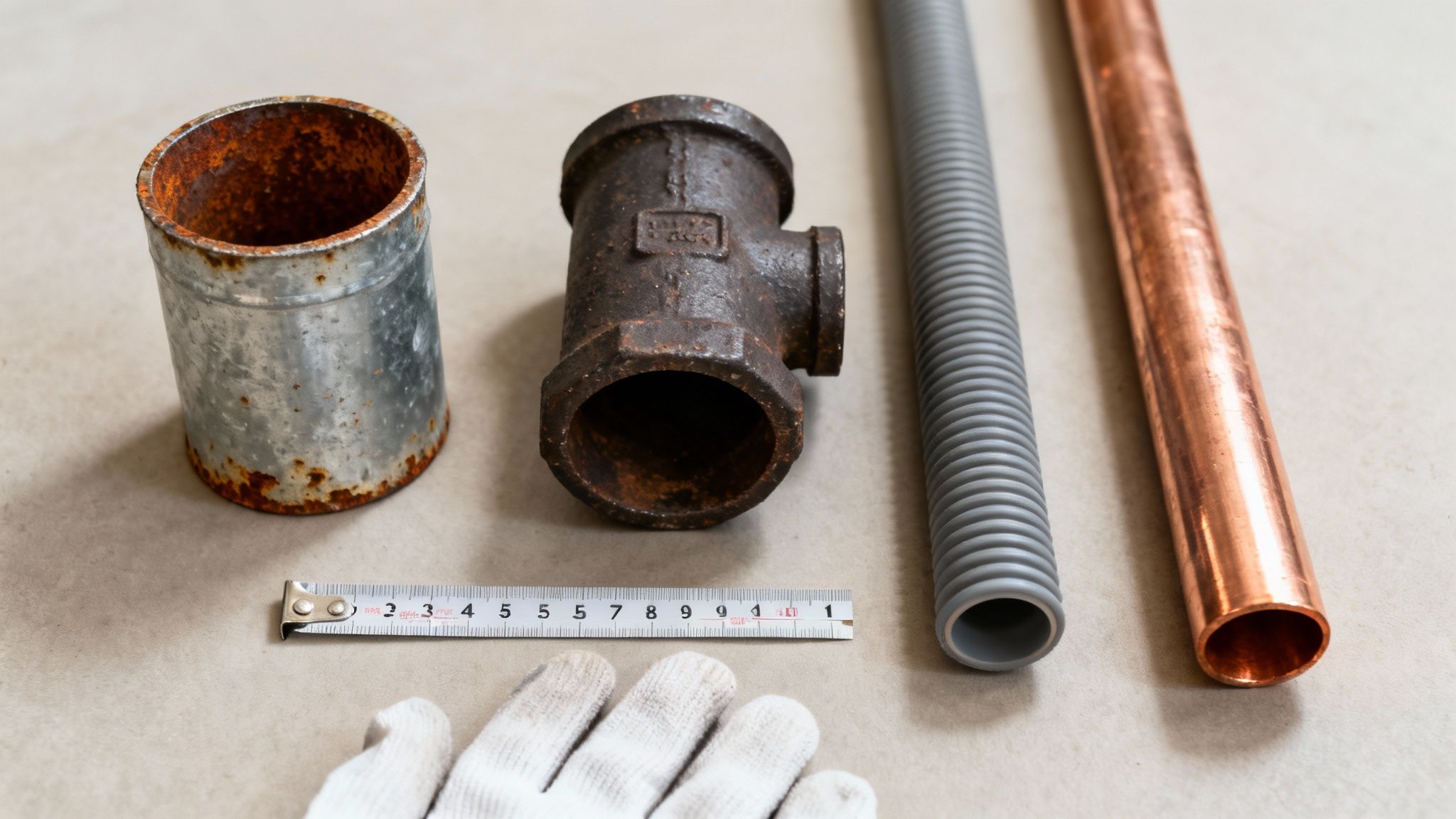
Many homes built in our area from the 1930s through the 1960s have galvanized steel pipes. They were the go-to material for years, but they have a major flaw. Over time, these pipes get clogged with rust and mineral scale from the inside out.
Eventually, that corrosion chokes the water flow down to a trickle. It’s the reason you might be seeing rusty water or dealing with weak shower pressure, even when the outside of the pipe looks perfectly fine.
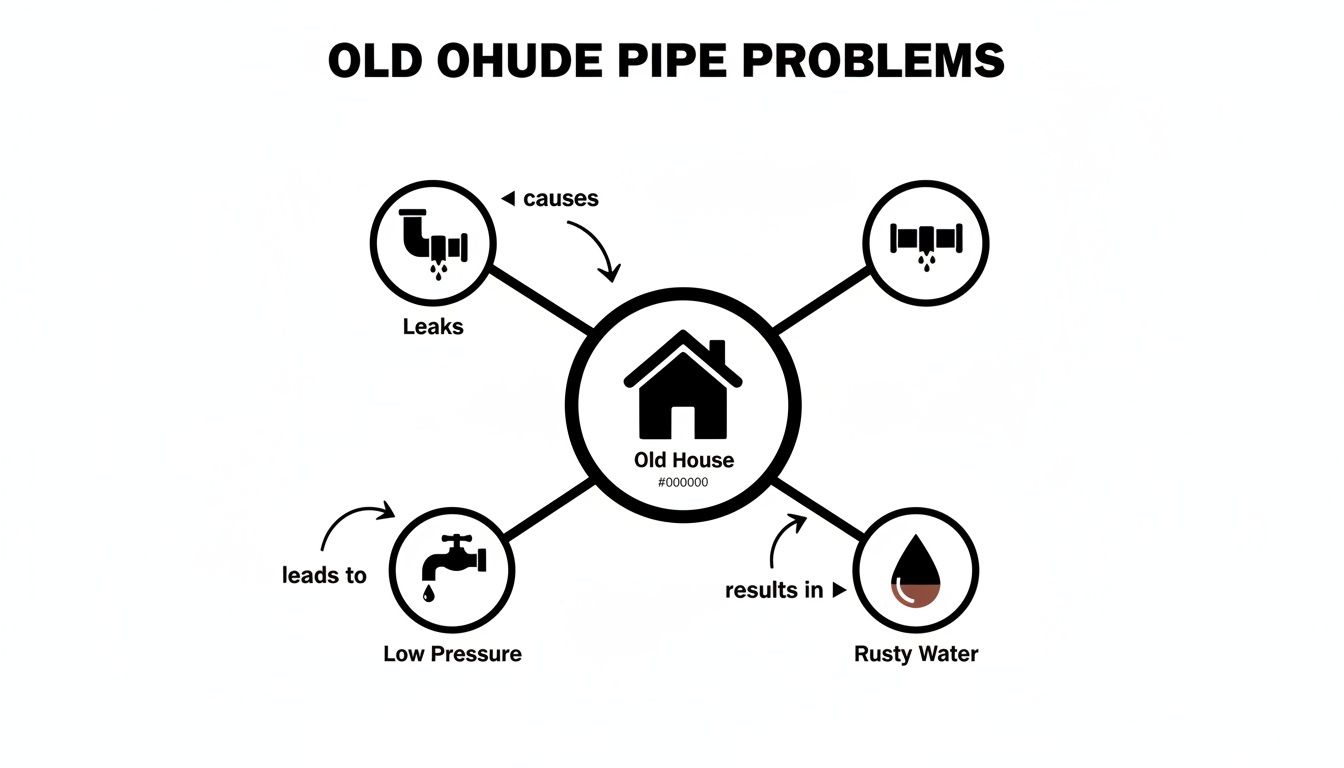
As you can see, those annoying problems like leaks, weak pressure, and discolored water are almost always symptoms of a much deeper issue with the pipes themselves.
Common Pipe Materials in Older Homes
Different construction eras meant different plumbing materials, and each comes with its own ticking clock. Here are the usual suspects you might find hiding in the walls of your Monterey County home.
| Pipe Material | Typical Lifespan | Common Problems |
|---|---|---|
| Galvanized Steel | 40-60 Years | Internal rust and corrosion, leading to low water pressure, discolored water, and eventual leaks. |
| Cast Iron | 50-75 Years | Prone to severe corrosion and rust over time, making it brittle and susceptible to cracks, especially in drain lines. |
| Polybutylene | 10-15 Years | A type of plastic pipe used from the late '70s to mid-'90s, it becomes brittle and is known for sudden, catastrophic failures. |
| Lead | Very long, but hazardous | Used in very old homes, it poses significant health risks by leaching lead into drinking water and should always be replaced. |
Finding any of these materials in your plumbing system is a clear sign that it’s time to get a professional plumbing inspection to see how they're holding up.
Why Age and Material Matter So Much
The simple truth is these older pipe materials were never designed to last forever. Galvanized iron pipes, a common sight in local mid-century homes, have a protective zinc coating that wears away over the decades. This leads to internal corrosion that causes rust buildup and restricts water flow, with performance dropping off after about 50 to 70 years.
This isn't just an inconvenience; it’s a system-wide failure waiting to happen. Patching one leak on a 60-year-old galvanized system is like putting a band-aid on a crumbling dam—another weak spot is almost guaranteed to spring a leak soon after.
The Problem with Polybutylene Pipes
If your home was built or repiped between the late 1970s and the mid-1990s, you might be dealing with polybutylene (PB) pipes. Usually gray in color, these pipes were once praised as a modern solution but turned out to be a ticking time bomb. Common chemicals in our public water supply, like chlorine, react with the plastic, causing it to become brittle and develop tiny cracks from the inside.
This means PB pipes are known for failing suddenly and without warning, leading to massive water damage. Because of their high failure rate, they were taken off the market and are now a major red flag for homeowners. The only way to know for sure if you have them is with a professional inspection. Our comprehensive plumbing inspection checklist gives you a good idea of what our experts look for.
Figuring out the material and condition of your plumbing is the most critical step in deciding when to replace the pipes in your older home. It’s the key piece of information you need to choose between a small repair and a full repipe that will protect your home for decades.
Five Clear Signs Your Plumbing System Is Failing
Sometimes a plumbing problem is just a quick fix. Other times, it's a loud warning that your entire system is on the verge of a major failure. In older homes, these warnings can be subtle at first, but ignoring them can lead to disaster.
Knowing what to look for can help you spot a system-wide problem before it turns into a catastrophic and expensive mess. These aren't just random quirks; they are specific symptoms that point directly to aging pipes. For homeowners in communities like Marina or Watsonville, recognizing these signs is the key to protecting your property.
1. You Have Recurring Leaks
A single leak might just be a fluke. But if you're constantly finding damp spots under sinks, seeing water stains on your ceiling, or calling a plumber for pinhole leaks every few months, you're dealing with a bigger problem. This is a classic sign that the whole plumbing system is corroded and getting brittle.
Think of it this way: patching one leak on a 60-year-old pipe is like putting a single new shingle on a failing roof. You might have fixed that one spot, but another one is almost guaranteed to pop up right behind it. Frequent leaks signal that the pipe material itself is failing. Our team offers professional and non-invasive plumbing leak detection services in Monterey County to pinpoint where these issues are hiding.
2. Your Water Pressure Is Weak or Inconsistent
Do your showers turn into a disappointing dribble whenever someone flushes a toilet or runs the dishwasher? This is one of the most common complaints we hear from owners of older homes in the Salinas area. It’s a tell-tale sign that your pipes are clogged with decades of rust and mineral buildup.
Old galvanized steel pipes are the usual culprits. Over the years, they corrode from the inside out, gradually narrowing the channel for water to flow through. This internal blockage acts like a bottleneck, restricting flow and reducing the pressure you feel at your faucets and showerheads.
3. Your Water Looks or Smells Strange
Your tap water should always be crystal clear. If it comes out with a brown or reddish tint, especially first thing in the morning, you're likely seeing rust that has flaked off from inside your pipes. This is a direct sign of advanced corrosion in old steel pipes.
Beyond the color, you might notice a metallic taste or an unusual odor. These are all indicators that your plumbing is contaminating the water supply before it ever reaches your glass. This is a clear signal that your pipes are deteriorating and need immediate professional assessment.
4. Your Pipes Are Making Strange Noises
Your plumbing shouldn't sound like a haunted house. If you hear banging, clanking, or gurgling sounds when you turn the water on or off, it’s often a sign of trouble. These noises, sometimes called "water hammer," can indicate issues with high water pressure, air trapped in the lines, or even pipes that have come loose.
In older systems, these sounds can also be a symptom of more serious issues, like deteriorating pipe supports or significant blockages. Don't dismiss strange sounds as a normal part of living in an older home.
5. You Have Visible Corrosion on Exposed Pipes
The final sign is one you can often see for yourself. Head down to your basement, crawlspace, or under your sinks and take a close look at any visible pipes. If you spot flaking, rust spots, or discoloration, you're looking at active corrosion.
This visible decay is a clear warning that the pipes are losing their structural integrity. It's only a matter of time before these weak spots turn into leaks or a full-blown burst pipe, which can cause costly water damage and expensive repairs. You can learn more about how our team has been helping local homeowners avoid these disasters since 1988 by visiting our Alvarez Plumbing homepage.
Repiping as a Smart Home Renovation Investment
It’s easy to look at a whole-home repipe as just a massive repair bill. But it’s smarter to see it as a powerful investment in your property's future health and value. Here in Monterey County, with high interest rates, many families are deciding to renovate their current homes instead of moving.
In places like Carmel-by-the-Sea and Pacific Grove, we're seeing a lot of homeowners modernizing older properties. In that trend, upgrading the plumbing has become one of the most impactful decisions you can make. It's a foundational improvement that pays you back for years.
Beyond a Simple Fix: A Proactive Upgrade
Think about it this way: constantly patching up old, failing pipes is like throwing money into a sinking ship. You’re paying for one temporary fix after another, never actually solving the root problem. Sooner or later, a major failure is practically a guarantee.
A full repipe, on the other hand, stops that endless cycle of costly emergency calls. It’s a proactive solution that buys you peace of mind, knowing your home is safe from the water damage that old galvanized pipes can cause. This shift from reactive repairs to a permanent solution makes it a true investment. Repiping is definitely one of those smart upgrades to add value to your home and improve its long-term functionality.
Increasing Your Home's Value and Appeal
When it’s time to sell, a house with brand-new plumbing is a massive selling point. Potential buyers see it as one less huge expense to worry about, making your property far more attractive than a similar home with its original, decades-old pipes.
This kind of upgrade shows that the home has been genuinely cared for. Replacing outdated pipes not only ensures better performance but also supports a higher resale value, improves water quality, and ensures you can use modern, smart fixtures without any issues.
"A new plumbing system is one of the most valuable 'invisible' upgrades you can make. It tells buyers the core of the home is solid, eliminating a huge point of hesitation and often justifying a higher asking price."
This is especially true in a competitive market like ours. Buyers are savvy, and a clean plumbing inspection report can make or break a deal. A full repipe modernizes your home’s circulatory system—a feature with real, tangible value. For more details, check out our guide on plumbing upgrades to know for aging homes in Monterey.
Preparing Your Home for the Future
Modern life asks a lot more from our plumbing. High-efficiency washing machines, tankless water heaters, and luxury showers all need strong, consistent water pressure to work right—something old, corroded pipes just can't deliver.
A repiping project sets your home up for success, ensuring it can handle the demands of today's appliances. The key benefits of this investment are clear:
- Improved Water Quality: New pipes made from copper or PEX won't leach rust into your water. You get cleaner, safer water for drinking, cooking, and bathing.
- Enhanced Performance: Say goodbye to weak showers and pressure drops. A new system delivers robust, reliable water flow to every fixture in your house.
- Long-Term Reliability: Modern piping materials are built to last 50 years or more, which means a repipe is a one-time investment that will serve your family for generations.
Ultimately, repiping transforms a potential liability into a valuable, long-lasting asset.
How We Figure Out What’s Wrong With Your Old Plumbing
When you think something’s wrong with your plumbing, you don't want a messy, long process just to get answers. Many homeowners here in Castroville and Prunedale worry that a plumbing inspection means tearing open walls. Thankfully, that’s not how we do things. Our process is designed to be as non-invasive as possible, giving you clear answers without turning your house into a construction zone.
It all starts with a simple conversation. An experienced, licensed plumber from our team will talk with you about what you’ve been noticing. Is it weak shower pressure in your Seaside home? Discolored water in Marina? Hearing your side of the story helps us focus our investigation.
A Modern Approach to Diagnosis
To get a real look at what’s happening inside your pipes, we use modern technology. Our goal is to see the problem firsthand, not just guess. This approach combines a plumber's experience with advanced tools to give us a complete picture of your plumbing's health.
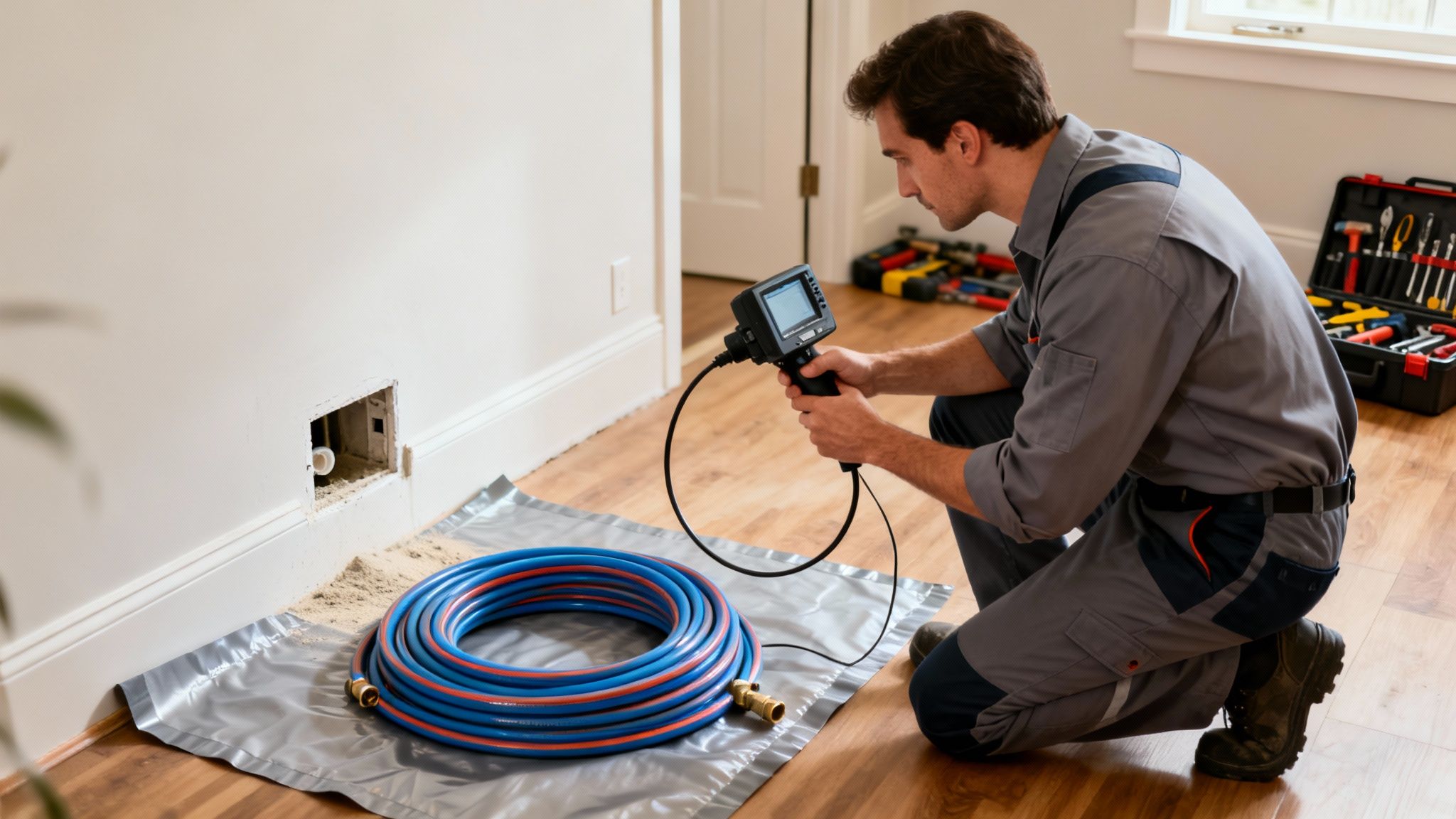
One of our most powerful tools is a non-invasive video camera inspection. We can guide a small, high-resolution camera deep into your drain lines to see the interior condition of your pipes up close. This lets us spot the real culprits behind your problems:
- Severe corrosion or rust buildup that's choking off water flow.
- Cracks, breaks, or collapses in older pipes that are ticking time bombs for major leaks.
- Tree root intrusion, a common headache in older Monterey County neighborhoods.
- Bellied or sagging pipes that create low spots where waste collects, causing recurring clogs.
This detailed look inside your system is a game-changer. You can learn more about how we use this technology in our guide to plumbing camera inspections in Salinas. It allows us to move from guesswork to a diagnosis based on hard evidence.
Getting to the Right Recommendation
Once we have all the facts, we’ll walk you through everything we found in plain English. No jargon, no confusion. We’ll show you the footage and explain what it means for your home. Our recommendation will always be based on what’s best for you and your property in the long run.
Sometimes, a simple spot repair is all that’s needed. If the rest of your system is in decent shape, this can be a great, cost-effective solution. However, if our inspection reveals widespread corrosion, multiple leaks, or failing pipe materials, a full repipe is often the more responsible and financially sound choice. Patching up a system that's failing everywhere only delays the inevitable.
At Alvarez Plumbing, our family has served this community since 1988. Our reputation is built on providing honest, thorough evaluations that prioritize your home's safety and your peace of mind.
Our team specializes in evaluating old systems and recommending efficient, long-lasting solutions—whether it's partial upgrades or full re-piping for peace of mind. Our goal is to give you a clear, honest path forward to a healthy, reliable plumbing system.
What to Expect During a Whole Home Repipe
The idea of replacing all the pipes in your home can feel overwhelming, but a professional, streamlined process makes all the difference. At Alvarez Plumbing, we've spent over 35 years perfecting our approach to solve your plumbing problems for good with as little disruption to your life as possible. We’re homeowners too, so we get it—you need your home to function, even during a major upgrade.
Our goal is simple: give you total peace of mind. A typical whole-home repipe for an average-sized house here in the Salinas area takes about 3 to 5 days. We work efficiently to protect your property and manage the workflow so your water is back on every single evening.
Our Step-by-Step Repiping Process
We believe in keeping you in the loop every step of the way. You won’t get any surprises from us, just clear communication and professional work that meets all local codes.
- Initial Consultation and Planning: We start by walking through your home with you, mapping out the most efficient way to get to your old pipes. We protect your floors, furniture, and belongings with drop cloths and plastic sheeting.
- Precise Access and Removal: Our plumbers make small, careful openings in the drywall to access and remove the old, failing pipes. We avoid large-scale demolition, which keeps the repair work simple.
- Installing New Pipes: Next, we install brand-new, high-quality PEX or copper piping. These modern materials are built to last for 50 years or more, giving your home a reliable plumbing system for decades.
- Testing and Inspection: Once the new system is in place, we thoroughly pressure-test everything to guarantee there are no leaks. We also handle all the necessary permits and schedule inspections with the city—whether you’re in Monterey, Carmel-by-the-Sea, or an unincorporated community.
- Restoration and Final Walkthrough: After the plumbing passes inspection, we coordinate any necessary drywall repairs to leave your home looking just as it did before we arrived. We’ll do a final walkthrough with you to make sure you’re completely satisfied.
As a family-owned business serving Monterey County since 1988, our commitment is to professional, code-compliant work. We handle the permits and inspections so you don't have to worry about a thing.
For bigger projects that might involve replacing main water lines outside, it helps to understand modern techniques like hydro excavation, which shows how we can work without tearing up your landscaping. Our streamlined process is designed to make this essential home upgrade as smooth and stress-free as possible.
Frequently Asked Questions About Repiping Your Home
Deciding to repipe your home is a huge decision, and it’s natural to have questions. Here in the Salinas and Monterey area, we find that homeowners are often worried about the same key things. We've put together answers to the questions we hear most often to give you some clarity.
How Much Does It Cost to Repipe a House in Monterey County?
This is usually the first question on everyone's mind, and the honest answer is: it depends. The final price is shaped by your home's size, the materials you choose (like copper or PEX), and how tricky it is to get to your existing pipes. A sprawling two-story home in Carmel-by-the-Sea is a much different job than a smaller single-story in Prunedale with an easy-to-access crawlspace.
Because every home has its own quirks, a custom quote is the only way to get a truly accurate number. An on-site visit lets our team see exactly what we're working with and give you a transparent, detailed price for the entire project.
Can We Live in Our Home During the Repipe?
Yes, absolutely! We get it—you can’t just pack up and leave for a week. Our plumbers are experts at scheduling the work to cause as little disruption to your family's routine as possible.
We tackle the job in isolated sections during the day, and we always make sure your water is turned back on every single evening before we head home. You’ll still be able to cook dinner, wash up, and use the bathrooms without major interruptions.
Will My Walls Need a Ton of Repairs Afterwards?
This is a big worry for many homeowners, but our process is designed to be as tidy as possible. Forget about entire walls being torn out. Instead, our plumbers make small, precise cuts just big enough to access and replace the old pipes.
Once the new plumbing is installed and passes inspection, patching these small openings is a straightforward job. We can even coordinate with trusted local drywall pros to make sure the repair is seamless, leaving your home looking just as it did before we started.
The goal is always to solve your plumbing problems for good, not to create a new renovation headache. Our clean, focused approach is a point of pride for our team.
How Long Do New Pipes Actually Last?
This is the best part of the whole process. A full repipe is a true long-term investment in your home’s health and value. Modern materials like PEX and copper are incredibly tough and are built to last for 50 years or even longer.
By replacing those old, failing pipes, you’re doing more than just stopping leaks. You’re securing your home for decades to come, guaranteeing reliable water and peace of mind for your family for a generation.
If your home has older plumbing or recurring issues, Alvarez Plumbing can inspect your system and suggest the best path forward—whether you need minor updates or a complete overhaul. Call the team at Alvarez Plumbing for a plumbing check-up in the Salinas area. Visit us at https://alvarezplumbingsalinas.com to schedule your consultation today.