Living here in the Monterey Bay area, from Salinas to Carmel-by-the-Sea, we know water is precious. Water conservation is now a top priority for every homeowner. As California deals with drought concerns, the plumbing inside your home is key to building a more sustainable future.
This isn't about giving up comfort. It's about making smart, efficient upgrades that lower your utility bills, add value to your home, and protect our local resources. We’re talking about real, long-term solutions that make a difference. These eco plumbing tips every California home needs are more than just a trend; they’re the new standard for smart homeowners. To truly create a greener home, consider holistic strategies and learn how to make your house more energy efficient and save money.
In this guide, we'll walk through the most important eco-plumbing tips for life here in Salinas and the surrounding communities. We'll show you how modern plumbing can help you save water, energy, and money without sacrificing performance. As a family-owned local business since 1988, Alvarez Plumbing has seen how these upgrades help our neighbors, and we’re here to share what we’ve learned.
1. Install Low-Flow Showerheads and Faucets
One of the easiest and most effective eco plumbing tips is upgrading to low-flow fixtures. This simple change helps with the water shortages that affect communities across Monterey County, from Salinas to Pacific Grove. Older showerheads can waste an amazing 5 gallons of water per minute (GPM). Modern low-flow models cut that down to 2.0 GPM or less—without losing that strong water pressure feel.
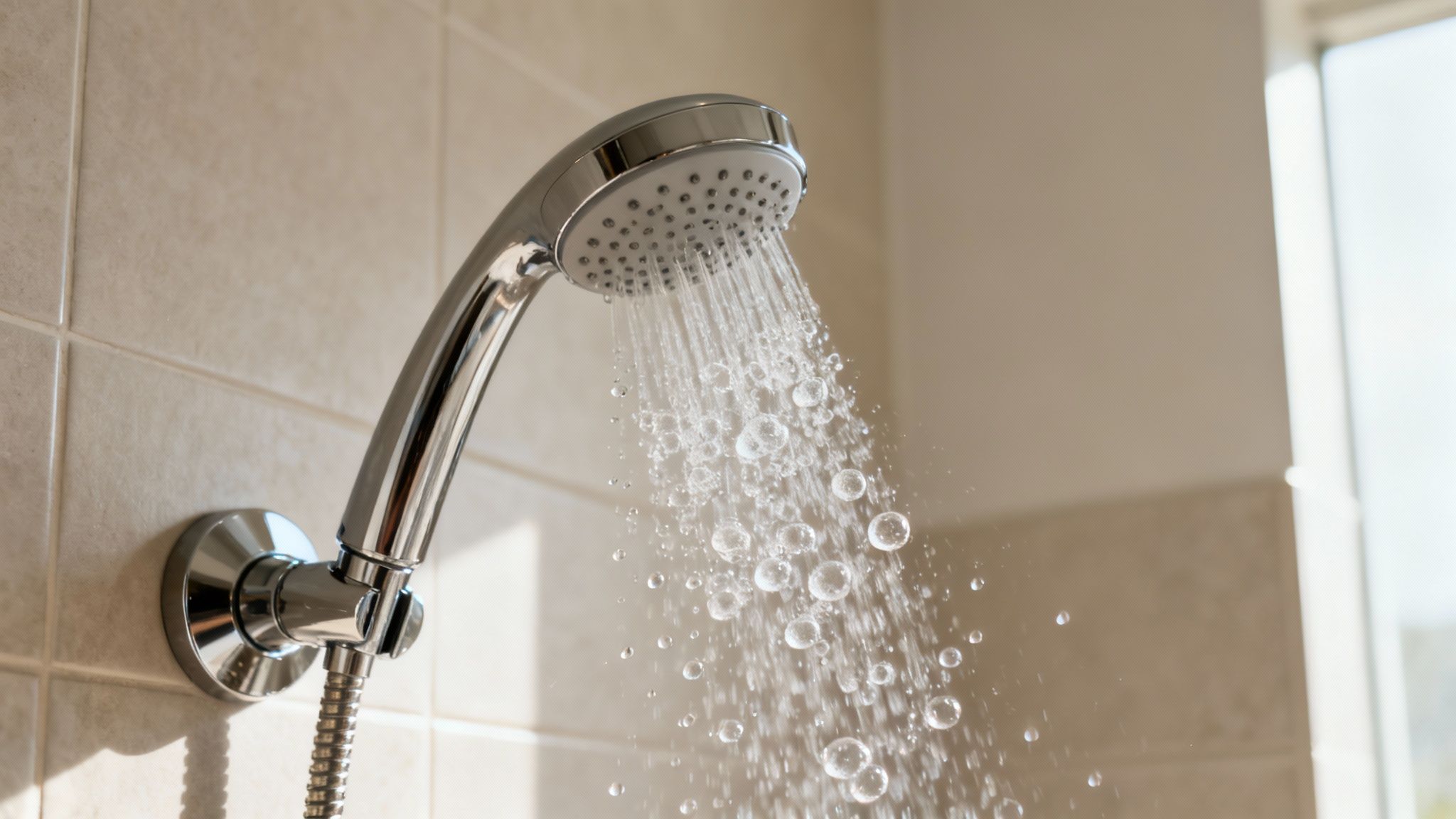
These fixtures work by mixing air into the water stream, which makes it feel like you’re using more water than you actually are. This technology is so important that California now requires these efficient fixtures in new homes and remodels. Upgrading isn't just a good idea; it’s the modern standard for responsible homeowners. The benefits go beyond saving water—using less hot water also lowers your energy bill.
Making the Switch to Low-Flow
While you can screw on a new faucet aerator yourself, getting the most savings often means calling a pro to make sure your whole system is working efficiently.
- Look for the WaterSense Label: Always choose fixtures with the EPA's WaterSense label. This guarantees the product meets strict standards for saving water and performing well.
- Don't Forget Faucets: Putting aerators on all your bathroom and kitchen faucets adds up to big water savings over time.
- Check for Local Rebates: Many cities in the Monterey Bay area offer rebates for upgrading to water-efficient fixtures, which makes the switch even cheaper.
- Get a Professional Install: For the best results, especially in older homes in areas like Prunedale or Castroville, a licensed plumber can ensure the new fixtures work perfectly with your existing plumbing and that the water pressure is just right.
Upgrading to high-efficiency fixtures is a key part of green plumbing. You can learn more about other eco-friendly plumbing solutions to make your home even more sustainable. For homeowners in Salinas and nearby areas, Alvarez Plumbing can recommend and install the best low-flow solutions to help you save water, energy, and money.
2. Upgrade to a Tankless Water Heater
Another great eco-plumbing tip is to change how you heat your water. Old-fashioned tank water heaters waste energy by keeping a large tank of water hot all day and night. A tankless water heater, also called an on-demand system, heats water only when you need it. This is a big deal for homeowners in communities like Salinas and Marina who want to save both water and energy.
These efficient systems can cut your water heating energy use by 24-34%. Instead of a big, bulky tank, a small unit heats water instantly as it flows through. This not only lowers your monthly PG&E bill but also gives you an endless supply of hot water. No more running out during a shower! For California homeowners, this upgrade fits perfectly with state goals for energy efficiency.
Getting a Tankless System Installed
Switching to a tankless water heater is a smart investment that needs professional planning to get the most benefit.
- Get the Right Size: A professional plumber can figure out the right size unit for your home. This ensures it can handle your family’s needs, even if you’re running the dishwasher and taking a shower at the same time.
- Check for Rebates: Utility companies like PG&E often offer rebates for installing high-efficiency appliances like tankless water heaters. This can help lower the upfront cost.
- Ensure Proper Setup: Upgrading might require changes to your gas line or electrical panel. An expert from Alvarez Plumbing will check this to make sure the installation is safe and up to code.
- Consider a Recirculation System: To get hot water even faster, ask your plumber about adding a recirculation system. This is a popular option for larger homes in places like Carmel Valley.
Making the switch is a big step toward a greener home. You can explore the tankless water heater pros and cons to decide if it's right for you. For homeowners in the Monterey Bay area, our experienced team can provide a full consultation to recommend and install the perfect tankless solution for your home.
3. Install Greywater Recycling Systems
For homeowners who are serious about saving water, a greywater recycling system is one of the most powerful eco-plumbing tips. These systems take the gently used water from your showers, bathroom sinks, and washing machine (called "greywater") and use it to water your landscape. This is a huge help during the drought conditions we often see in Monterey County, from Salinas to Seaside.
A greywater system can cut a home's total water use by 30-50%. That's a massive saving that lowers your water bill and eases the strain on our local water supply. California has approved residential greywater systems, making this a smart and practical tool. A simple "laundry-to-landscape" system, for instance, is an easy way to start reusing hundreds of gallons of water each month.
Making Greywater Systems Work for You
Setting up a greywater system needs careful planning to be safe and effective. While some simple setups can be done yourself, a professionally installed system is the best way to guarantee it works well for years to come.
- Start Simple: A basic system that sends water from your washing machine to your trees is a great way to start. More complex systems that collect water from showers might need pumps and filters.
- Use Plant-Friendly Soaps: You'll need to switch to biodegradable soaps and detergents that don't have bleach, salt, or boron, as these can harm your plants.
- Get a Professional Installation: A professional plumber will make sure the system is installed correctly to prevent greywater from pooling or running off your property. This also prevents any backflow that could contaminate your clean water supply.
- Plan for Maintenance: These systems need regular check-ups, like cleaning filters, to keep them running smoothly.
- Check Local Rules: Before you start, it’s important to know the permit rules in your city, whether it's Watsonville or Carmel-by-the-Sea.
A greywater system is a big step toward a more sustainable home. You can learn more about whether a residential grey water system is right for you to understand the benefits. The experts at Alvarez Plumbing can design and install a system that fits your property and follows all local codes.
4. Upgrade to Water-Efficient Toilets
Toilets use nearly 30% of a home's indoor water, so upgrading them is one of the smartest eco-plumbing tips you can follow. If your home in Prunedale or Pacific Grove was built before the 1990s, you likely have an old toilet that uses 3.5 to 7 gallons per flush (GPF). Replacing it can save a huge amount of water.
The most popular choice today is the dual-flush toilet. It uses a small amount of water (around 1.28 GPF or less) for liquid waste and a little more for solid waste. This technology is so important that California now requires toilets to use no more than 1.28 GPF in new homes and remodels. For those wanting to save the most water, composting toilets use no water at all.
Making the Switch to a Better Toilet
Changing your toilet is a strategic upgrade for long-term savings. A professional installation ensures you get the full benefit of this water-saving change.
- Start with the Busiest Bathroom: To see the biggest impact quickly, install a new dual-flush toilet in your most-used bathroom first.
- Check for Local Rebates: Many water agencies in the Monterey Bay area offer rebates for replacing old, inefficient toilets. Check with your local provider before you buy.
- Teach Your Family: Make sure everyone at home knows how to use the dual-flush buttons correctly to save the most water.
- Professional Installation is Key: Proper installation is critical. An expert plumber from Alvarez Plumbing will make sure the new toilet is sealed correctly to prevent leaks and works perfectly, saving you from future headaches.
Upgrading your toilets is a key part of having a water-smart home. To understand the investment, you can explore toilet installation costs and see how the long-term savings make it worthwhile. For homeowners in Salinas and the surrounding areas, we can help you pick and install the perfect WaterSense-certified toilet.
5. Install Smart Irrigation and Drip Systems
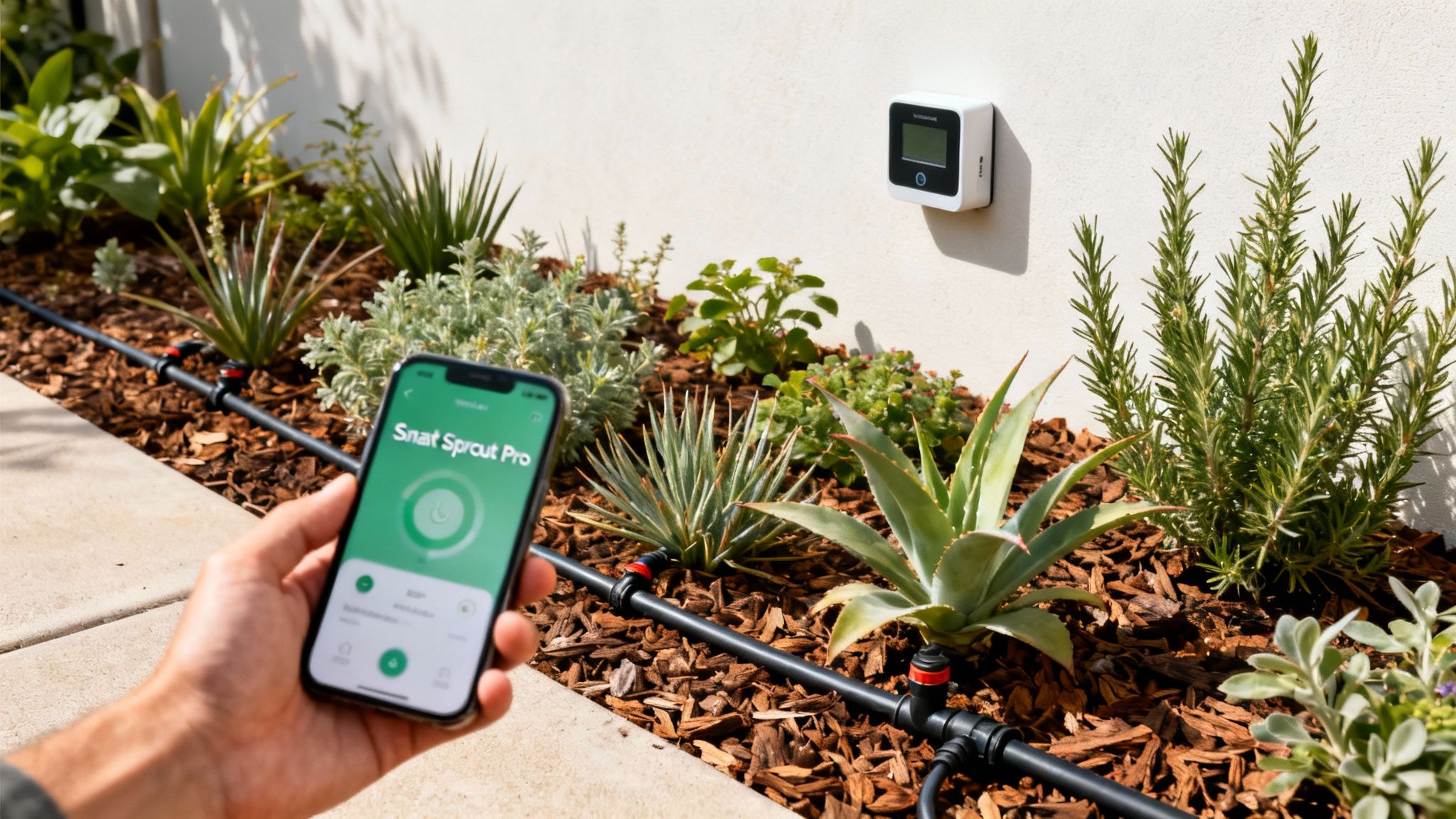
For many homes in California, especially in areas like Salinas, outdoor watering uses more than half of all residential water. One of the best eco-plumbing tips is to switch to smart irrigation controllers and drip systems. This combo fights water waste from evaporation, a big problem during our state's droughts. Old-school sprinklers can lose up to 50% of water to wind and sun, but a modern drip system delivers water right to the plant's roots.
Smart controllers are the brains of the system. They use local weather data to automatically adjust watering schedules. This stops your system from running on a foggy morning in Pacific Grove or right after a rare rain shower in Prunedale, saving a lot of water. Combining a smart controller with a drip system can cut your landscape water use by an amazing 20-50%.
Putting Smart Irrigation to Work
Switching from sprinklers to a smart drip system is more than a simple swap. It requires professional planning to save the most water and keep your landscape healthy.
- Zone Your Landscape: A professional will design different watering zones based on your plants. A tree needs different amounts of water than a flower bed. Proper zoning ensures each plant gets what it needs without overwatering others.
- Choose a WaterSense Controller: Look for smart controllers with the EPA's WaterSense label. These devices are proven to use real-time weather data to adjust watering.
- Look for Rebates: Many local water agencies in Monterey County offer big rebates for installing smart controllers and switching to drip systems. Check with your utility provider before you start.
- Get a Professional Install: An experienced plumber from Alvarez Plumbing can design an efficient drip layout and install the system correctly so it won't leak. This prevents common problems that can ruin your water-saving efforts.
Using smart technology with the right plants is key. Explore creative smart drought-tolerant landscaping ideas to create a beautiful, low-water yard that’s perfect for California. For a full audit and installation of a water-saving irrigation system, our team has the expertise you need.
6. Install Hot Water Recirculation Pumps and Insulated Pipes
Waiting for the shower to get hot is frustrating and wastes a lot of water. A great eco-plumbing tip is to install a hot water recirculation system. This smart upgrade keeps hot water flowing through your pipes, so it’s ready the moment you need it. For homes in Salinas or Carmel Valley where the water heater is far from the bathroom, this can save over 12,000 gallons of water a year.
Putting a recirculation pump together with insulated pipes is a powerful combo. Insulating hot water pipes stops heat from escaping, which reduces the energy needed to keep the water hot. This is so effective that California's building codes now require pipe insulation in new homes. Together, these systems give you instant hot water and save a lot of water and energy.
Putting Recirculation and Insulation to Work
Installing this system correctly is key to getting the most benefit. A professional plumber can design a system that fits your home's layout.
- Choose the Right System: Pick a "demand-activated" system instead of one that runs all the time. These pumps turn on with a button or sensor, using much less energy.
- Insulate Accessible Pipes: Wrap all the hot water pipes you can reach with insulation, especially the long ones running to your kitchen or bathrooms.
- Check for Rebates: Before you install, check with your utility provider, like PG&E. They often offer rebates for energy-saving upgrades like recirculation pumps.
- Get Professional Advice: An experienced plumber can tell you if this system is a good fit for your home and install it correctly for maximum savings.
You can learn more about making your plumbing more efficient when you read about the best way to insulate pipes for your home. For expert advice and installation in the Monterey Bay area, the team at Alvarez Plumbing is ready to help.
7. Implement Rainwater Harvesting Systems
Another smart eco-plumbing tip is to collect rainwater. A rainwater harvesting system catches the water that runs off your roof and stores it in barrels or tanks for later. This is a big help for homeowners from Salinas to Pacific Grove, where our rainfall can be unpredictable. This strategy not only gives you a backup water source but also helps reduce stormwater runoff into Monterey Bay.
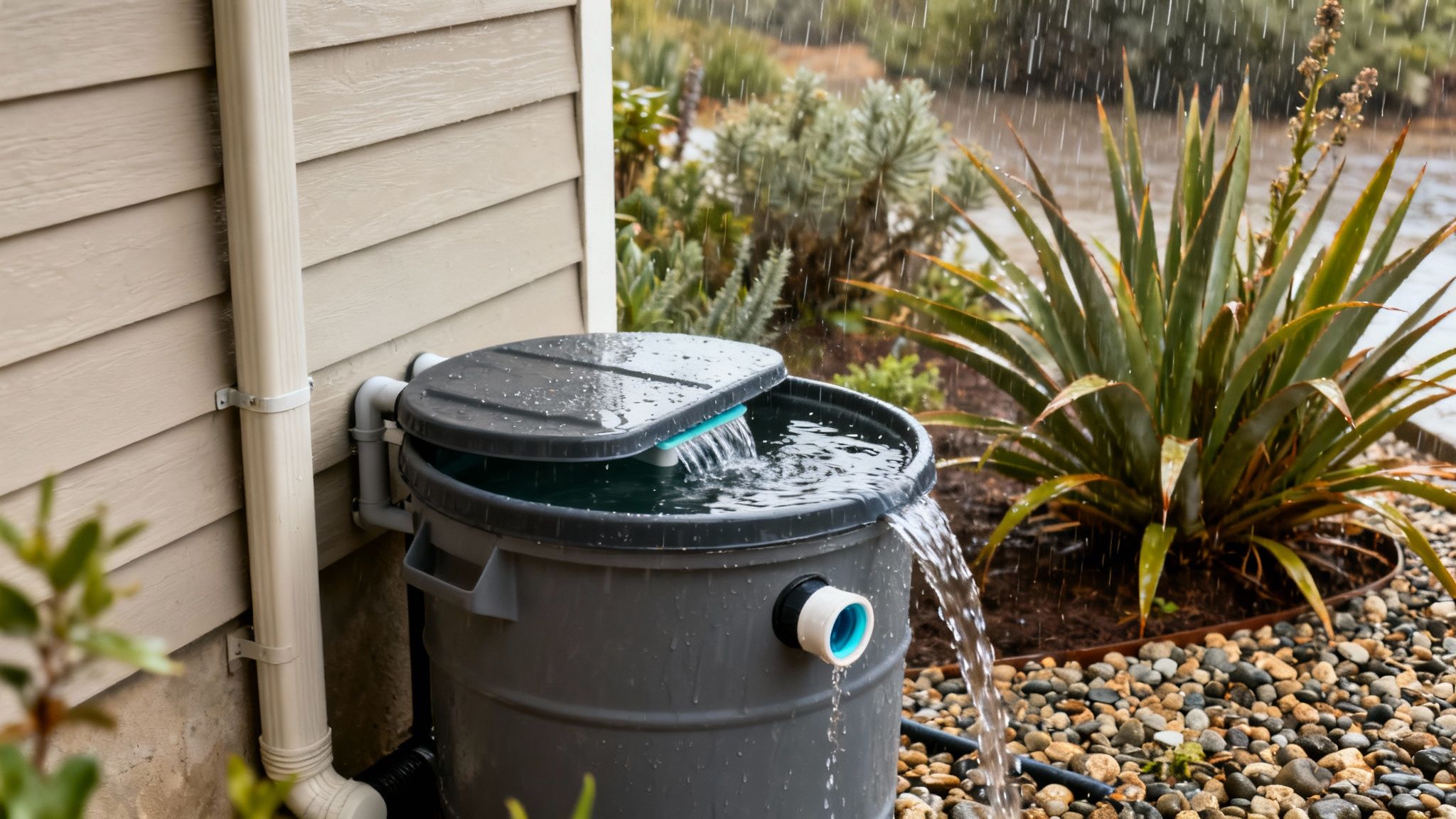
Systems can be as simple as a 50-gallon rain barrel for a small garden or as big as a large tank that can supply all your landscaping needs. By using rainwater for things like watering plants or washing your car, you use less treated city water. This makes your home more self-sufficient and eco-friendly.
Putting Rainwater Harvesting to Work
Setting up a rainwater harvesting system needs good planning. While putting in a single rain barrel is an easy DIY project, bigger systems need a professional.
- Start Small: If you're new to this, start with one or two rain barrels. This helps you learn how they work before investing in a bigger system.
- Keep the Water Clean: Install a "first-flush diverter." This simple device gets rid of the first bit of dirty water from your roof, so the water you store is cleaner.
- Check Local Rules: Before you start, check with your city. Rules about system size and permits can be different across Monterey County.
- Get Professional Help for Big Systems: For large tanks, a professional installation is key. An expert from Alvarez Plumbing can make sure your system is the right size, won't damage your home's foundation, and works safely with your landscape plumbing.
8. Perform Regular Leak Detection and Maintenance
One of the most important eco-plumbing tips is regular leak detection and maintenance. A tiny, hidden drip might not seem like a big deal, but it can waste hundreds of gallons of water a week. That adds up to thousands of gallons wasted each year before you even see any damage.
For homeowners across Monterey County, from Prunedale to Pacific Grove, stopping this waste is a key part of being a responsible water user. Professional leak detection uses special tools like acoustic sensors to find small leaks hidden in walls or under floors. Finding and fixing these issues early is much cheaper than dealing with major water damage and high bills later on.
Putting Leak Detection to Work
A mix of simple homeowner checks and professional inspections is the best way to prevent hidden water waste.
- Check Your Water Meter: A simple DIY test is to turn off all water in your house and check your water meter. If the dial is still moving, you probably have a hidden leak.
- Look for Signs of Trouble: Regularly check under sinks and around toilets for moisture, mold, or warped floors.
- Use the Food Coloring Test: Put a few drops of food coloring in your toilet tank and wait 15 minutes without flushing. If color shows up in the bowl, the flapper is leaking. This is a simple fix but saves a lot of water.
- Schedule Professional Inspections: For homes over 25 years old, an annual professional inspection is a smart move. A licensed plumber can find problems before they become emergencies.
Being proactive is the best approach. Instead of waiting for a problem, homeowners in Salinas and nearby communities can rely on the experts at Alvarez Plumbing. We use the latest tools to find and fix leaks fast, helping you save water and prevent costly damage.
8-Point Eco-Plumbing Comparison for California Homes
| Item | 🔄 Implementation Complexity | ⚡ Resource Requirements | 📊 Expected Outcomes | Ideal Use Cases | 💡 ⭐ Key Advantages |
|---|---|---|---|---|---|
| Install Low-Flow Showerheads and Aerators | Low — DIY retrofit, no major plumbing | Low cost ($15–$75/fixture); WaterSense options | 25–60% water per shower; lower water-heating costs | Older homes, renters, quick upgrades | Quick payback (6–12 mo); maintains pressure; rebates available ⭐⭐⭐ |
| Upgrade to a Tankless Water Heater | Medium–High — professional install; possible gas/vent upgrades | High upfront ($1,000–$3,500); may need gas/vent work & permits | 24–34% energy savings; endless hot water; 15–20+ yr life | Small homes, condos, space-constrained properties | Compact footprint; long life; utility rebates eligible ⭐⭐⭐ |
| Install Greywater Recycling Systems | High — plumbing rework, separate lines, permits | Variable $500–$8,000+; filtration, tanks, ongoing maintenance | 30–50% household water reduction (landscape/toilet reuse) | Homes with irrigation demand; drought-prone sites | Large water savings; reduces municipal demand; CA-compliant under AB1881 ⭐⭐⭐ |
| Upgrade to Water-Efficient Dual-Flush or Composting Toilets | Medium — usually professional install; some user training | Dual-flush $200–$600; composting $1,500–$5,000+; possible rebates | Major indoor water savings (~13,000 gal/person vs old toilets) | Older pre-1990 homes; high-use bathrooms; off-grid/rural (composting) | High indoor impact; sewer cost savings; rebate programs ⭐⭐⭐ |
| Smart Irrigation Controllers & Drip Irrigation | Medium–High — system design, zoning, sensor setup | $500–$3,000+; controllers, sensors, drip tubing; Wi‑Fi recommended | 20–50% landscape water savings; reduced runoff & overwatering | Landscaped properties where irrigation = large share of use | Best landscape savings; remote scheduling; substantial rebates ⭐⭐⭐ |
| Hot Water Recirculation Pumps & Insulated Pipes | Medium — pump install, possible return line, pipe insulation | $800–$2,000 typical; pump energy small; insulation materials | Eliminates cold-water waste (~12,000+ gal/yr); faster hot delivery; 1–3 yr payback | Homes with long pipe runs or distant fixtures | Convenience + water/energy savings; modest cost; quick payback ⭐⭐ |
| Rainwater Harvesting Systems | Medium — gutter/diverter + tank; larger systems need permits | $500–$15,000+ depending on tank size; pumps/filters; space needed | Supplemental non-potable supply; reduces runoff; region-dependent yield | Northern/coastal CA or properties with sufficient roof area | Increases water independence; stormwater mitigation; scalable ⭐⭐ |
| Regular Leak Detection & Pipe Maintenance | Low–Medium — periodic inspections, occasional invasive repairs | Detection $200–$500/visit; repair costs variable; possible subsidies | Saves $900–$1,800+/yr; prevents damage; extends system life | All homes, esp. older (>25 yrs) or with unexplained high bills | High ROI; early problem prevention; often utility-supported ⭐⭐⭐ |
From Tips to Action: Partner with Alvarez for a Greener Home
You’ve learned about the best eco plumbing tips every California home needs. From the quick savings of low-flow fixtures to the long-term benefits of greywater recycling, it’s clear that saving water is now a key part of being a homeowner here. For residents in Salinas, Monterey, and across the Central Coast, these practices aren't just about saving money. They're about protecting our region's water supply and making our homes more resilient.
The path to a greener home starts with small steps. But to really save the most water and energy, it’s important to know the difference between a simple DIY task and a complex upgrade. While anyone can install a new faucet aerator, the real impact comes from professionally installed, high-efficiency systems designed for your home.
Key Takeaways for Your Sustainable Home
Here’s a quick recap of the most important points:
- Efficient Fixtures are the Foundation: Upgrading to WaterSense-labeled toilets, showerheads, and faucets is the easiest and most affordable place to start.
- Heat Water Smarter: A tankless water heater, a recirculation pump, or insulated pipes can significantly lower your energy bills and stop water waste.
- Focus on Outdoor Water Use: In communities from Carmel Valley to Prunedale, smart irrigation controllers and drip systems are essential for having a beautiful yard without wasting water.
- Advanced Systems Offer the Biggest Impact: For homeowners serious about sustainability, greywater and rainwater systems offer the next level of conservation, reducing your reliance on the city's water supply.
Moving from Knowledge to Action
Knowing these things helps you make smart choices for your wallet and the environment. But knowledge alone doesn't fix a hidden leak or install a tankless water heater. Real savings come from having these systems installed correctly by a professional.
This is where a DIY approach can fall short. An improperly installed system can be inefficient or even unsafe. For projects that change your home's core plumbing, professional expertise is a must. A local, experienced plumber understands everything from water rules in Pacific Grove to soil conditions in Watsonville.
Since 1988, Alvarez Plumbing has been a trusted, family-owned partner for homeowners throughout Monterey County. We don't just fix pipes; we provide sustainable plumbing solutions that match our community's goals. We know every home in Seaside, Marina, and Castroville is different, and we are committed to recommending and installing the right eco-friendly upgrades for you. When you work with us, you're investing in a more efficient and valuable home.
Ready to turn these eco plumbing tips into reality? Contact Alvarez Plumbing today for a professional consultation, and let our experts help you build a more sustainable and water-wise home.