If you're smelling something like rotten eggs in your Salinas home, it's probably not the ocean breeze. That foul sewer odor is a direct warning from your plumbing system, and it’s one you shouldn't ignore. Ignoring it can lead to serious health risks and even costlier sewage backups down the road.
Why That Sewer Smell Is a Serious Warning Sign
When you walk into your home in Salinas or Monterey and get hit with that unmistakable, unpleasant odor, it’s more than just an annoyance. It’s a clear signal that your plumbing’s defenses have been breached. Your entire system is designed with a series of seals, traps, and vents meant to contain sewer gases and push them safely outside. The moment you can smell them, you know one of those protective barriers has failed.
As a family-owned company serving Monterey County since 1988, we've seen it all. We know this smell is a common but often misunderstood issue. Sometimes, the cause is simple, like a dried-out P-trap in a guest bathroom that just hasn't been used in a while. But it can also point to much bigger, more complex problems that need an expert’s touch.
More Than Just a Bad Smell
That rotten egg odor is actually a mixture of gases, including hydrogen sulfide, which can cause everything from headaches to dizziness. Letting it linger allows the underlying plumbing issue to get worse. The real problem could be something like:
- A failing toilet seal: The wax ring at the base of your toilet is meant to create an airtight seal. If it cracks or dries out, gas can easily escape.
- A blocked plumbing vent: Your roof vents allow gas to escape and help your drains flow smoothly. If they get clogged with leaves after a storm, that gas has nowhere to go but back into your home.
- A damaged sewer line: This is a big one, especially in older Pacific Grove homes with clay piping. Tree roots or shifting soil can crack the line, letting gas—and sewage—leak out.
A persistent sewer gas smell is never normal. Even a faint odor points to a problem that needs to be solved. Ignoring it lets the issue get worse and potentially exposes your family to harmful gases like hydrogen sulfide and methane.
If the smell is strong, getting worse, or you're also dealing with multiple slow drains, you may need immediate help. Searches for "emergency plumber near me" have increased by 19%, showing how quickly these issues can escalate. It’s always good to understand your options for emergency plumbing services before you're in a real bind. And remember, while we're talking about plumbing, other persistent odors like a musty smell can signal different serious household issues, such as mold.
How Your Plumbing Vents and Traps Keep Odors Out
Ever wonder how your home’s plumbing system manages to keep those awful sewer smells from invading your living space? It's all thanks to a surprisingly simple but brilliant team-up between two key components: plumbing vents and P-traps. Think of them as the silent guardians of your home's air quality.
When this system works, you never notice it. But when it fails, your nose will be the first to know.
First up are the plumbing vents. These are the pipes running from your drains straight up through the roof. Their main job is to let air into the plumbing system, preventing a vacuum from forming when water goes down the drain. Without that airflow, water would get sucked right out of the P-traps, leaving you defenseless against odors.
Then you have the P-trap, that U-shaped curve of pipe you can spot under any sink. Its sole purpose is to hold a small amount of water at all times. This little puddle acts as a physical seal, literally blocking sewer gases from creeping up the drain and into your home. Simple, yet incredibly effective.
What Happens When the System Fails
The problem starts when the water barrier in that P-trap vanishes. This can happen for a few common reasons. If you have a guest bathroom in your Seaside or Marina home that doesn’t get much use, the water in the trap can just evaporate over time. A small, slow leak in the pipe can also drain the trap dry.
Either way, you’re left with an open invitation for sewer gas to enter.
This visual breaks down the most common culprits behind that sewer smell you've noticed, from a simple dried-out P-trap to more serious main line issues.
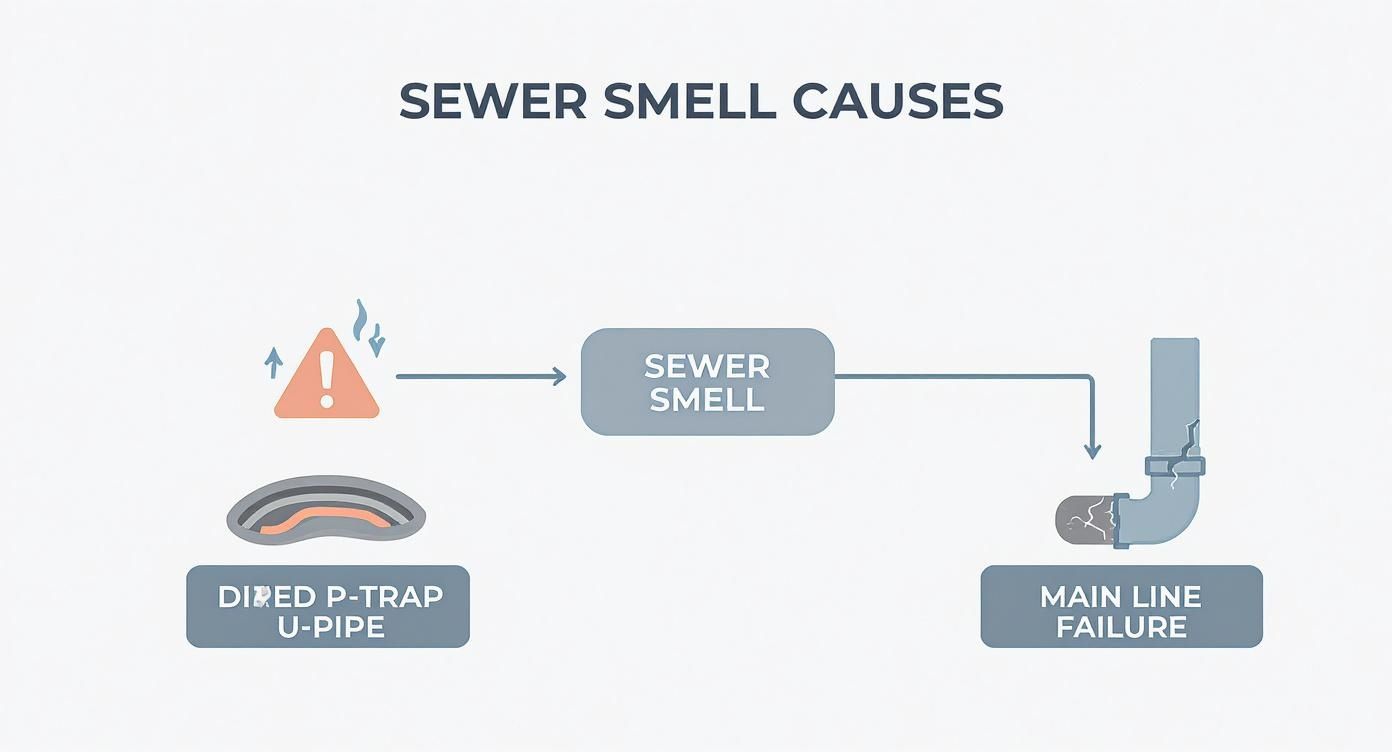
As you can see, while several things can go wrong, a faulty P-trap is often ground zero for odor problems.
A blocked vent pipe is another major troublemaker. It's easy for leaves, bird nests, or other debris to clog the vent opening on your roof, especially after a storm. This blockage creates negative pressure that siphons the water right out of the P-trap, breaking the seal. Gurgling drains are a classic tell-tale sign that this might be your issue.
In fact, poor maintenance and malfunctioning traps in plumbing systems are among the top real causes of sewer odors. Traps often become ineffective due to evaporation or leaks, a common source of that lingering sewer smell in homes.
If you’ve already tried refilling the traps by running water and the smell just won’t quit, you might be dealing with a partial clog that's messing with proper drainage. For more tips on keeping your pipes flowing freely, check out our guide on how to keep your drains clear.
Common Causes of Sewer Odors in Monterey County
That awful smell creeping into your home isn’t just a random nuisance—it’s your plumbing system trying to tell you something. From Marina to Carmel Valley, our team at Alvarez Plumbing has seen it all, and a lot of the time, different homes are dealing with the very same problems. Figuring out what’s wrong is all about matching the symptom to the right cause.
Some fixes are surprisingly simple. The most common culprit we see is a dried-out P-trap, especially in a guest bathroom that doesn't get much use. Thankfully, it's also the easiest to check. Just run the sink or shower for a minute to refill the trap and bring back that crucial water barrier.
If that doesn't work, however, you might have a more complex issue on your hands.
Pinpointing the Source of the Smell
When refilling the P-trap doesn’t get rid of the odor, it’s time to play detective. Here in Monterey County, with our mix of brand-new builds and historic homes, we run into a few specific problems that homeowners often overlook.
Here's a quick symptom checker to help you narrow down the possibilities.
Sewer Smell Symptom Checker
| Symptom | Potential Cause | What to Do |
|---|---|---|
| Smell is strongest around a toilet that wobbles slightly. | Failing Toilet Wax Ring | The wax seal at the base of your toilet has likely degraded. It needs to be replaced to create a new, airtight seal. This is a job for a pro. |
| The odor smells "sewer-like" but is coming from a shower or sink drain, especially one used often. | Biofilm Buildup | This isn't actually sewer gas but a stinky buildup of bacteria, soap scum, and hair in the drain. A professional drain cleaning should clear it up. |
| A persistent sewer smell that you can't locate, sometimes stronger outside or in the basement. | Cracked Sewer Line | This is a serious one. Shifting soil or aggressive tree roots can crack the main line. This requires a professional camera inspection to confirm. |
It's helpful to understand the bigger picture of what happens to wastewater after it leaves your home. A problem can pop up anywhere along that journey, from your drain all the way to the municipal line.
Getting the diagnosis right from the start saves you a ton of time and frustration. For more tips on keeping your pipes clear of the gunk that causes these smells, check out our guide on how to prevent clogged drains.
When Sewer Odors Signal a Main Line Failure
Sometimes, that awful smell isn't just an annoyance—it's a serious warning sign that a major problem is brewing underground with your main sewer line. This is a real concern for homeowners, especially in some of the older parts of Salinas and Castroville. Out there, many homes still have original cast-iron or clay pipes, which are prime targets for invasive tree roots and shifting soil.
A simple drain clog is one thing. A main line failure? That’s a whole different level of trouble.
If you notice the sewer smell is actually stronger outside your house than inside, that's a huge red flag. Other tell-tale signs are hearing gurgling sounds from multiple drains at once or noticing that every single drain in your house—from the kitchen sink to the shower—is moving slow. These are classic symptoms that the blockage isn't in a single pipe but in the main artery of your entire plumbing system.
More Than Just a Bad Smell
A failing main line isn't just about the odor; it poses a direct threat to your home and your family's health. You're dealing with sewer gases like hydrogen sulfide, which can cause everything from headaches to serious respiratory issues. Even more urgently, a blocked or broken main line is the number one cause of a messy, destructive, and deeply unpleasant sewage backup straight into your home.
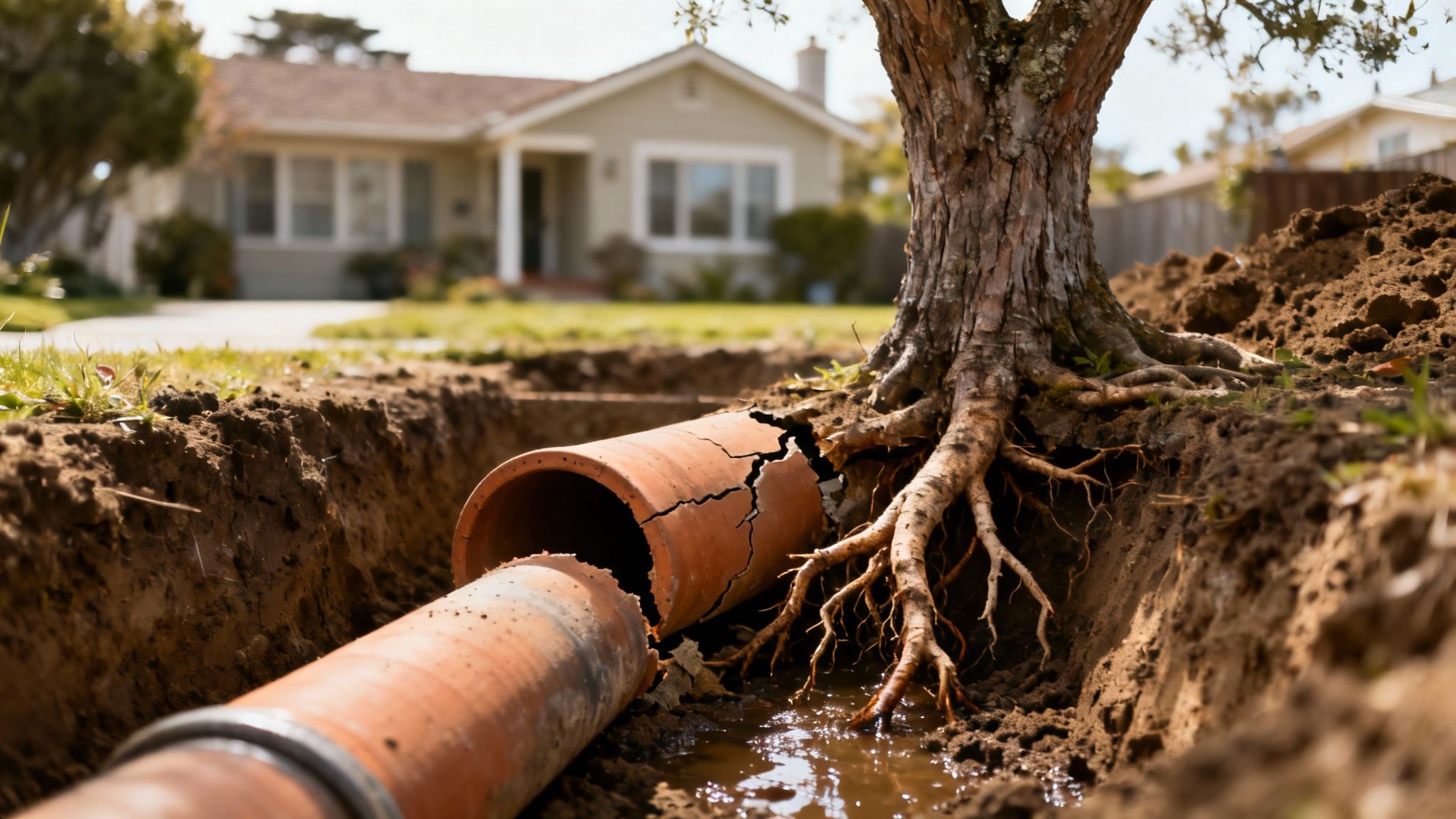
And this isn’t just a local problem. Aging sewer infrastructure is a widespread issue that causes these kinds of problems in communities across the country. Pipes that have been buried for decades start to break down, allowing those foul-smelling gases to seep out and find their way into homes. You can read more about the challenges our nation faces with its aging water and sewer line infrastructure on GlobeNewswire.
Don’t guess when it comes to your main sewer line. A problem here can escalate quickly from a bad smell to a full-blown plumbing emergency, risking costly water damage to your property.
Because the stakes are so high, a professional diagnosis isn't just a good idea—it's essential. Our team uses specialized camera equipment to pinpoint the exact source of the problem without any destructive guesswork. Understanding the process and what to expect helps you make a clear-headed decision, which is why we've put together a guide on the cost of a sewer line camera inspection.
Why Local Expertise Matters for Salinas Plumbing
When you’re dealing with a weird sewer smell, a generic article from some national blog isn't going to get you very far. Plumbing problems here in Monterey County are just different, shaped by our unique geography and history. The issues we run into in a classic adobe home in Carmel are worlds apart from what we see in a new build out in Prunedale—and only a local plumber really gets those nuances.
Our sandy soil, the wide mix of housing ages, and our sometimes-aging infrastructure create a special set of challenges that call for real, on-the-ground experience. The Alvarez Plumbing team has been serving this community since 1988, which has given us an unmatched insight into the region’s particular plumbing quirks.
 residential plumbing system in Salinas.” />
Experience with Local Infrastructure
We know exactly how aggressive tree roots tear into the old clay sewer pipes you see all over Pacific Grove. We've seen, time and again, how improperly vented drains in older homes across Seaside and Marina lead to stubborn odor problems that have other plumbers just scratching their heads. For us, this isn't a guessing game; it's knowledge built from over three decades of work right here.
We don't just treat the symptom; we go straight for the source. Our deep familiarity with local building codes and common regional issues means we find the problem faster and more accurately, saving you both time and money.
Our whole approach is built on diagnostics, not assumptions. We bring in advanced tools like sewer camera inspections to get a clear look at what’s really going on inside your pipes. This tech lets us pinpoint the true cause of that smell, whether it’s a tiny crack, a mess of roots, or a section of pipe that has completely collapsed.
This diagnostic-first method ensures we’re giving you a solution that lasts, not just a quick fix. By understanding the specific challenges of Salinas and the greater Monterey Bay area, we can get the job done right the first time, protecting your home and giving you back your peace of mind.
Answering Your Questions About Sewer Smells
After 35 years serving homeowners across the Monterey Bay area, our family has fielded just about every question you can imagine when it comes to weird plumbing smells. We hear the same concerns from our neighbors in Salinas all the time, so let's clear the air and get you some straightforward answers.
Is It Dangerous to Smell Sewer Gas in My House?
Yes, it absolutely can be. That "rotten egg" smell comes from a compound called hydrogen sulfide, which is no joke. Even at low levels, it can trigger headaches, dizziness, and nausea. You definitely don't want your family breathing that in for long.
The bigger worry is methane, another gas in the mix, which can be flammable in high concentrations. If the smell is strong and unmistakable, don't wait. Open up some windows to ventilate, get everyone out, and call a professional. Think of that smell as your home's built-in alarm system—it's telling you something is wrong.
The Sewer Smell Comes and Goes. What Does That Mean?
An odor that plays hide-and-seek is a classic plumbing mystery. More often than not, it’s a sign that a P-trap in a seldom-used sink or floor drain has dried out, breaking the water seal that blocks sewer gas. Once water runs through it again, the seal is restored, and the smell vanishes.
Another possibility is a venting problem. Sometimes, strong winds blowing across the vent pipe on your roof can create a downdraft, temporarily pushing sewer gas back inside. It could also point to a partial clog that only acts up during heavy water use, like when the washing machine drains. That on-again, off-again nature is frustrating, but it's a clear signal that one of your plumbing’s defenses isn't holding up.
Let's be clear: a random whiff of sewer gas is never normal. A healthy, sealed plumbing system should be completely odor-free. That fleeting smell is an early warning that a small issue is brewing, and it will almost certainly get worse if ignored.
Can I Just Pour Bleach Down the Drain to Fix It?
Pouring bleach or a heavy-duty drain cleaner down the drain might mask the smell for a little while, but it’s like putting a bandage on a broken bone. It does nothing to fix the actual problem, whether that's a dried-out P-trap, a blocked vent stack, or a crack in your sewer line.
Worse yet, those harsh chemicals can do a real number on your pipes, especially in the beautiful older and historic homes we see all around Pacific Grove and Monterey. It's always smarter to find the real culprit instead of reaching for a quick fix that could end up causing a much more expensive problem.
Why Do I Only Smell It in My Bathroom?
When the smell is cornered in just one bathroom, the source is almost always in that room. It's a process of elimination, and these are the usual suspects:
- A dry P-trap: The drain in a guest shower or sink that nobody uses is a prime candidate.
- A bad wax seal: The wax ring that seals your toilet to the floor can fail, allowing gas to seep out from the base. A wobbly toilet is a dead giveaway.
- Biofilm buildup: Gunk and bacteria can build up in a specific drain, creating its own foul odor that smells like sewage.
Start by running water for a minute in every sink, shower, and tub in that bathroom. Give the toilet a gentle nudge to check for any rocking. If those simple checks don't solve it, it's time for a closer look from a professional. This is a core part of our comprehensive plumbing inspection checklist.
Don't just get used to that unpleasant and potentially unsafe sewer smell. The expert team at Alvarez Plumbing has been tracking down and fixing these problems for homeowners across Monterey County since 1988. We use modern tools and decades of experience to pinpoint the real cause and provide a solution that lasts. For honest answers and reliable service, contact us today at https://alvarezplumbingsalinas.com.