
More homeowners are choosing to repipe their homes rather than slapping on another repair, and for good reason: it’s often the smarter long-term investment. If you're constantly dealing with leaks, pathetic water pressure, or rusty water, those aren't just minor quirks. They're warning signs that your entire plumbing system is failing, and a full repipe is likely more cost-effective than an endless parade of patch jobs.
Why Constant Plumbing Repairs Stop Making Sense
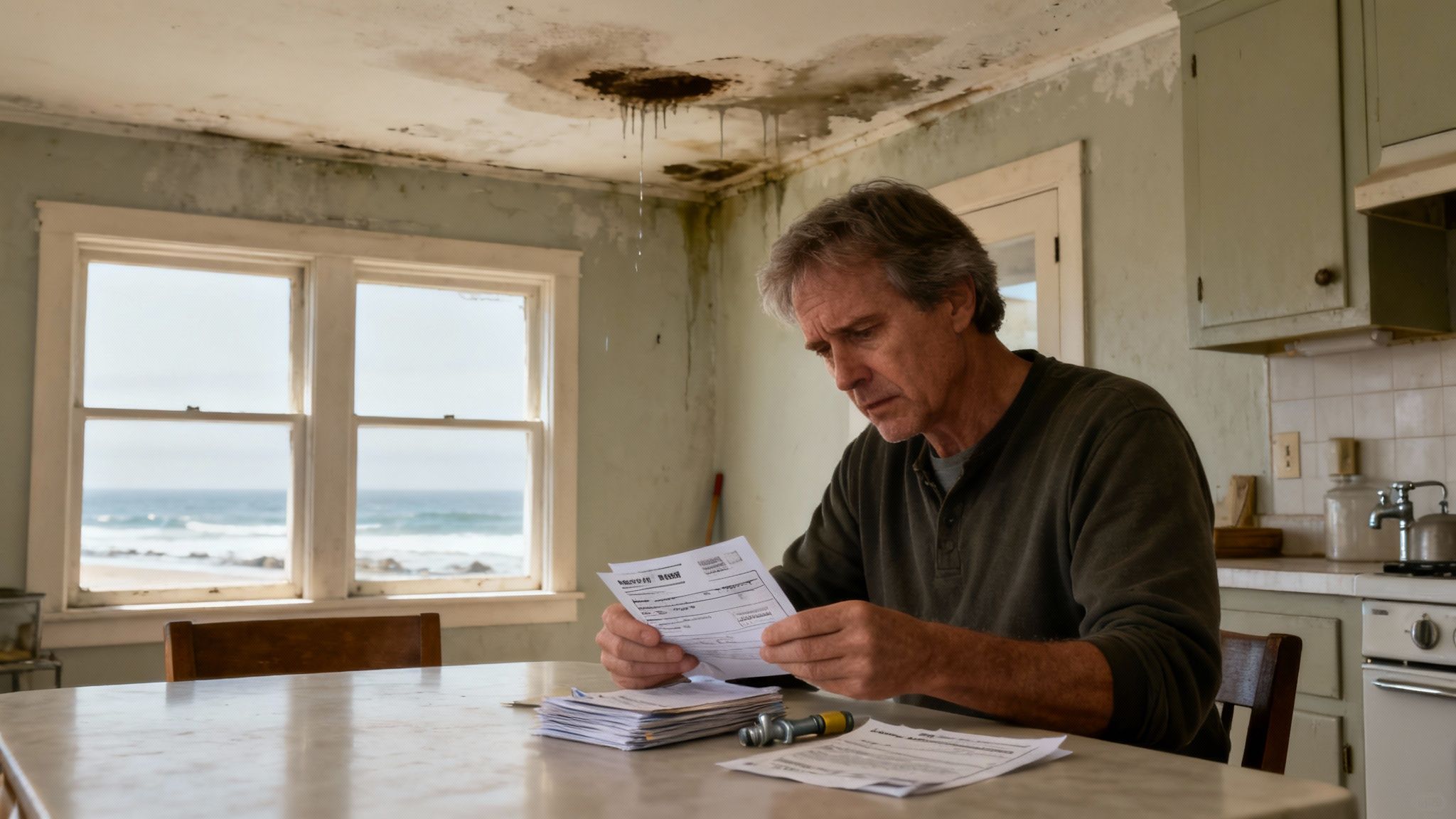
If you're staring at yet another plumbing bill for your older Monterey Bay home, you're in good company. For many of us in Salinas, Pacific Grove, and Carmel, the cycle of patching up old, failing pipes is becoming a financially draining trap. A single repair might seem affordable on the surface, but the real issue is the bigger problem that's being ignored.
A lot of homes in our area are over 40 years old, often built with galvanized steel pipes that are now well past their prime. These pipes corrode from the inside out—a process that gets a nice little boost from the salty, humid coastal air we live with in communities like Marina and Seaside.
The True Cost of "Just One More" Repair
Kicking the can down the road with a simple fix feels like the easy choice. Historically, a quick patch on a corroded pipe was the go-to solution. But those fixes add up fast when the next one is always right around the corner. When you compare the cost of multiple repairs to a one-time repipe, you start to see the long-term value.
Think of it this way: putting a patch on a rusty pipe is like putting a single new shingle on a 50-year-old roof. Sure, it might stop today's leak, but it does absolutely nothing about the fact that the entire system is deteriorating. Homeowners are increasingly staying in their homes longer and choosing to upgrade aging systems, and repiping is a smart way to invest in your home's long-term health.
The real risk isn't just the bill for the next repair; it's the potential for a catastrophic failure. A burst pipe can cause thousands of dollars in water damage in the blink of an eye, ruining floors, furniture, and creating a stressful emergency you never saw coming.
Moving from Reactive to Proactive
Repiping is about breaking free from that reactive, stressful cycle of repairs and making a proactive investment in your home's health and your own peace of mind. Instead of anxiously waiting for the next drip, you're guaranteeing your plumbing is solid for decades to come.
Here’s a quick breakdown of why a one-time repipe usually wins out over endless repairs:
| Consideration | A Series of Repairs | A Whole-Home Repipe |
|---|---|---|
| Long-Term Cost | The bills just keep coming, often adding up to more than the cost of a single repipe. | A one-time investment that shuts the door on future repair bills and water damage costs. |
| Peace of Mind | Constant worry about when and where the next leak will pop up. | Confidence in a modern, reliable plumbing system that will last for decades. |
| Water Quality | Can lead to gross, discolored water as old pipes continue to shed rust and corrosion. | Provides clean, clear water from brand-new, corrosion-resistant pipes. |
| Property Value | A long history of plumbing issues can be a major red flag for potential buyers. | A huge selling point that increases your home's value and appeal on the market. |
By learning to spot the signs of systemic failure, you can make an informed choice that protects both your home and your wallet. Keeping an eye on your plumbing is key, and our plumbing maintenance checklist is a great place to start. This guide will help you figure out when it's finally time to stop fixing and start fresh.
Seven Signs Your Home Needs a Repipe, Not Another Repair
It’s easy to write off a little leak or a faucet that sputters as just another thing for the weekend to-do list. But what if those small, annoying issues aren't really isolated incidents? Often, they're the early warning signs of a much bigger problem quietly unfolding inside your walls: a failing plumbing system.
For homeowners in older neighborhoods from Watsonville to Prunedale, catching these clues can mean the difference between a planned, controlled upgrade and a middle-of-the-night emergency. Here are seven critical signs your home is telling you it’s time for a full repipe, not just one more patch job.
1. Your Water Is Discolored or Rusty
If the water coming out of your taps has a brown or rusty tint, especially first thing in the morning, that’s a huge red flag. This is the classic calling card of decaying galvanized steel pipes, a material used heavily in homes built before the 1970s. The protective zinc coating has long since worn away, meaning the pipes are now rusting from the inside out and dropping those corrosion particles straight into your water.
A spot repair can't fix this. The rust you can see is just a symptom of a system-wide problem; the rest of the pipes are in the same bad shape.
2. You’re Dealing with Persistently Low Water Pressure
Does your shower feel more like a light drizzle? Is the washing machine taking forever to fill? When you have chronically low water pressure all over the house, it almost always points to severe corrosion and mineral scale choking your pipes.
Think of it like a clogged artery. Over decades, rust and mineral buildup coat the inside of the pipes, making the opening smaller and smaller. This severely restricts water flow, and no single repair can clear out a blockage that runs the entire length of your plumbing.
3. Leaks Are Becoming a Frequent Problem
One leak is an annoyance. A second one feels like a coincidence. But if you're dealing with three or more in a short span of time, you've got a pattern on your hands. When you start playing whack-a-mole with leaks popping up in different parts of the house, it’s a clear sign your plumbing has reached the end of its functional life.
Patching one weak spot just sends that pressure down the line to the next weakest point. This is especially dangerous with hidden leaks, which can cause massive damage before you even know they're there. For homes on a concrete foundation here in the Salinas area, it's vital to know the common signs of a slab leak.
When a plumbing system starts to fail, it rarely happens in just one spot. Frequent leaks are a symptom of widespread material fatigue, and a full repipe is the only permanent solution to prevent the next inevitable failure.
4. You Can See Visible Corrosion on Exposed Pipes
Take a quick look at the pipes you can actually see—in the basement, a crawlspace, or under the kitchen sink. Do you notice any flaking, weird discoloration, or little dimples on the pipe’s surface? These are textbook signs of corrosion.
If the pipes that are exposed to the open air look like that, you can bet the ones hidden inside your walls and floors are in even worse shape.
5. Your Water Tastes or Smells Off
Plain and simple, your water shouldn't taste or smell like anything. If you're getting a metallic taste or a musty odor from the tap, it's often a direct result of old pipes breaking down. The metals from the pipe material itself are leaching into your water, which affects not only the taste but its overall quality and safety.
6. You Hear Strange Noises Coming from Your Pipes
Do your pipes creak, groan, or make a shuddering sound when you turn a faucet on or off? Some noises are simple fixes, like a condition called "water hammer." But persistent clanking or deep groaning can also mean the pipes are unstable or have major internal blockages that are disrupting the water flow.
7. Your Home Is Over 40 Years Old
When it comes to plumbing, age is definitely more than just a number. If your home was built more than 40 years ago and it still has the original galvanized or polybutylene pipes, you are living on borrowed time. These materials have a known, finite lifespan.
Being proactive and replacing them is far smarter—and ultimately cheaper—than waiting around for a catastrophic failure. Many of the beautiful older homes in Pacific Grove and Carmel-by-the-Sea fall squarely into this category. A full repipe isn't just a repair; it's a long-term investment in your home's health and reliability.
A Practical Guide to Choosing Between Repipe and Repair
Figuring out the right move for your home's plumbing goes way beyond a simple pros and cons list. It’s really about looking down the road at the long-term impact on your wallet, your property's value, and your own peace of mind. The choice between another repair and a full repipe isn't always cut and dried, but a few key signals can make the best path forward crystal clear.
We see this dilemma play out all the time here in the Monterey Bay region. A single, isolated leak in a newer Marina home? That’s a straightforward case for a professional repair. But when we get a call from a homeowner in an older Carmel Valley house with its original pipes, and it’s their third leak this year, the conversation changes. In that situation, a whole-home repipe is almost always the smarter, more permanent financial move.
Comparing Key Decision Factors
Let's break this down into four critical areas that really matter when you're weighing your options. This should help you size up your own situation and see why more homeowners are choosing to repipe—and when you should, too.
-
Long-Term Costs: Look, a single repair is always cheaper upfront. No question. But if your pipes are failing as a whole system, you're just putting a down payment on a string of future emergency calls. A full repipe is a one-time investment that stops the bleeding from recurring service fees, water damage cleanup, and those sneaky-high water bills from hidden leaks.
-
Impact on Property Value: A history of plumbing problems can be a huge red flag for potential buyers. A brand-new plumbing system, on the other hand, is a powerful selling point. It communicates that a core part of the house is modern, reliable, and won't be a headache for the next owner, directly boosting your home’s marketability and value.
-
Level of Disruption: A small repair is quick and doesn't disrupt your life much. A full repipe is definitely a bigger project, but modern materials and techniques have made it far less invasive than it used to be. For many, a few days of planned work is a much better deal than the sudden chaos of a burst pipe emergency on a Saturday night.
-
Overall Peace of Mind: This might be the most important factor of all. Living with old, failing pipes means you're always waiting for the other shoe to drop. A repipe offers a permanent fix and the confidence that your home's plumbing is solid for decades.
This simple decision tree can help visualize the core question you should be asking yourself whenever a plumbing problem pops up.
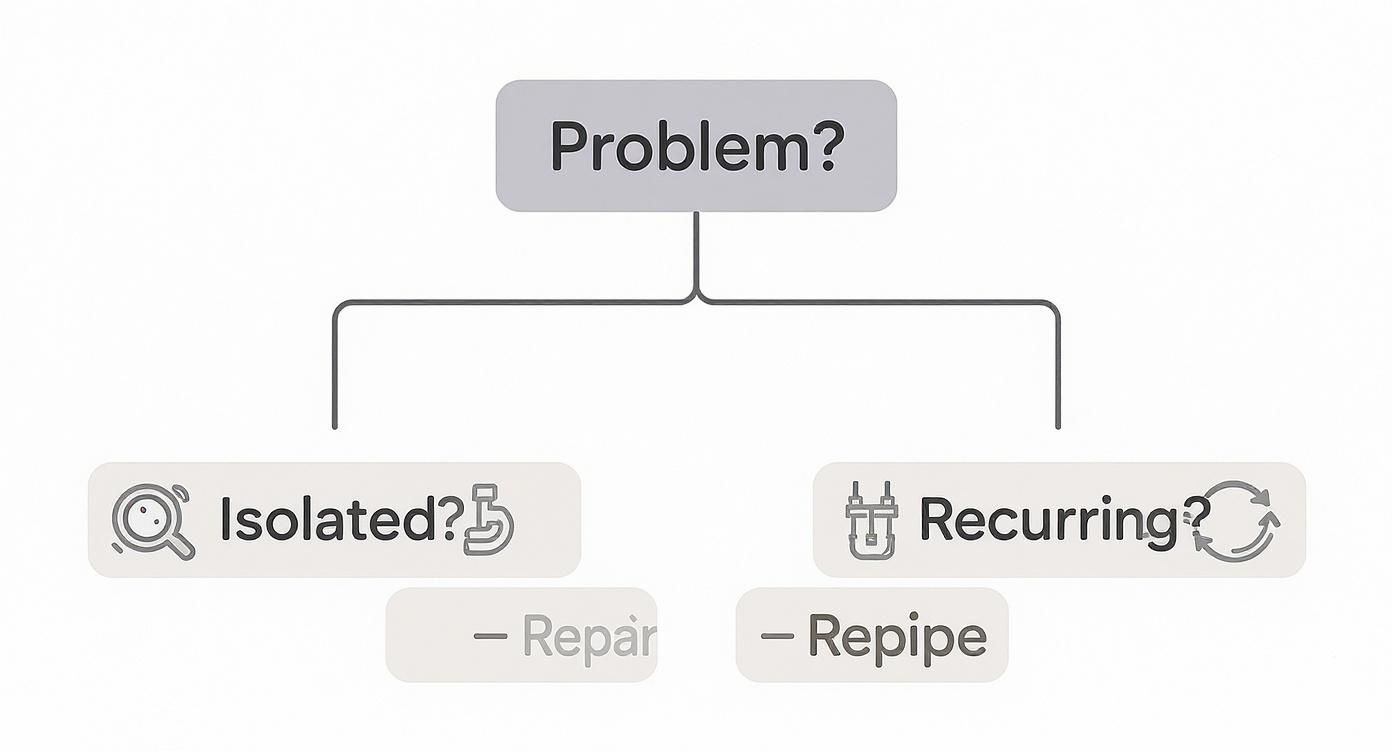
The key takeaway is that the frequency of the problem is your best clue. It tells you whether you need a spot fix or a system-wide solution.
Repipe vs. Repair Decision Matrix for Monterey Bay Homeowners
To make this even clearer, we've put together a quick reference table. Think of it as a cheat sheet to help you match your current situation with the most logical solution for your home.
| Consideration | When to Choose Repair | When to Choose Repipe |
|---|---|---|
| Problem Scope | The leak or clog is a single, isolated incident in an otherwise healthy system. | You're experiencing multiple leaks, clogs, or low pressure in different parts of the house. |
| Age of Pipes | Your home's plumbing is less than 30-40 years old and made of modern materials like copper or PVC. | Your pipes are over 50 years old, especially if they are galvanized steel or original cast iron. |
| Symptom Frequency | This is the first plumbing issue you've had in years. | You're calling a plumber for leaks or clogs every few months; it feels like a recurring problem. |
| Water Quality | Your water is clear and flows with good pressure. | Your water is discolored (rusty, brown), has a metallic taste, or you see visible flakes of corrosion. |
| Future Plans | You need a quick, affordable fix and aren't planning major renovations soon. | You're planning a remodel or want to increase your home's value for a future sale. |
| Long-Term Budget | Your primary concern is the immediate, upfront cost of the current problem. | You're looking for the best long-term investment to avoid the cumulative cost of repeated repairs and potential water damage. |
This matrix isn't a substitute for a professional opinion, but it gives you a solid framework for thinking through the problem like a pro. If your answers consistently fall in the "Repipe" column, it's time to have a serious conversation about a long-term fix.
When a Repair Is the Right Call
A simple repair makes perfect sense when the problem is clearly isolated. For example, if a single fixture is dripping because of a worn-out washer or a pipe was accidentally nicked during a renovation, a targeted repair is all you need. The key is that the rest of your plumbing system is in good shape.
If you're not sure about the scope of the damage, a professional inspection is the smartest next step. Using high-tech tools, a plumber can get eyes inside your pipes to assess their real condition. You can learn more about how a sewer line camera inspection can pinpoint problems and give you a definitive answer.
When Repiping Becomes the Obvious Solution
A repipe becomes the clear winner when you're seeing signs of system-wide failure, which we touched on earlier. Recurring leaks, low water pressure all over the house, and rusty water are all tell-tale signs that your pipes have simply reached the end of their service life. Patching them one at a time is like putting a band-aid on a broken arm.
This shift toward proactive, system-wide upgrades is part of a larger trend we're seeing. Homeowners are getting tired of temporary fixes and are increasingly opting for permanent solutions, especially with less disruptive technologies like PEX piping now available.
Ultimately, the decision comes down to this: are you fixing a single problem, or are you just treating a symptom of a much larger illness? An honest look at your home's plumbing history will almost always point you to the most sensible and cost-effective answer.
Picking the Right Pipes for Your Home
So, you’ve decided a full repipe is the smartest path forward. Now for the next big question: what kind of pipes are we going to install? The good news is, you can forget about the old galvanized steel pipes that caused all these problems in the first place. Today’s materials are worlds better. For most folks here in Salinas and around the Monterey Bay, the decision usually boils down to two excellent choices: classic copper or modern PEX.
Knowing the difference is key to feeling good about your investment. Both are a huge leap forward from old, rusty pipes, but each has its own strengths depending on your budget, the style of your home, and what you want for the long haul.
The Classic Choice: Copper Pipes
There’s a reason copper has been the king of plumbing for decades. It's tough as nails, often lasting 50 years or even longer. Copper is also naturally biostatic, which is a fancy way of saying it stops bacteria from growing—a great feature for keeping your water clean and safe.
But copper isn't perfect. It's a rigid material, which means installing it can be a bigger job, sometimes requiring us to open up more of your walls to run the new lines properly. It can also corrode under certain conditions, particularly if your water is highly acidic.
The Modern Solution: PEX Piping
PEX (a type of flexible plastic tubing) has become the new favorite for many repiping jobs, and for good reason. Its flexibility is its superpower. Instead of making big cuts in your drywall, our plumbers can often thread PEX tubing through walls and around corners, which means a lot less disruption and mess in your home.
That flexibility also means fewer fittings and connection points are needed. In the plumbing world, fewer connections mean fewer potential spots for a leak to ever start.
For homes along the coast in Seaside or Castroville, PEX brings another huge benefit to the table: it’s completely immune to corrosion and mineral buildup. The hard water we often see in our area won't stick to the inside of PEX pipes, which helps keep your water pressure strong for years.
Copper vs. PEX: The Head-to-Head Breakdown
This isn't really about which material is "better" in general, but which one is the right fit for your home. Let's put them side-by-side to make the decision easier.
| Feature | Copper Piping | PEX Piping |
|---|---|---|
| Durability | The long-term champ, often lasting 50+ years. | Very durable, with a typical lifespan of 30-50 years. |
| Installation Cost | Higher. The material itself costs more, and the rigid pipes mean more labor. | Lower. The material is more affordable, and its flexibility makes for a faster install. |
| Corrosion Resistance | Generally very good, but can be susceptible to acidic water or pinhole leaks over time. | Excellent. PEX is completely resistant to rust, corrosion, and scale from hard water. |
| Installation Process | More invasive. Usually requires more cutting into walls and ceilings. | Much less invasive. Can be snaked through existing wall cavities, minimizing drywall repair. |
| Freeze Resistance | Will burst if the water inside freezes solid. | Can expand slightly if frozen, making it much less likely to burst in a cold snap. |
At the end of the day, either option is a massive improvement over old, failing pipes. If you're just dealing with one leaky section, a targeted water line repair might be all you need. But for a whole-home solution, the choice between PEX and copper is an important conversation to have with your plumber. We find that for many of the older homes in the Monterey Bay area, PEX offers a powerful mix of performance, cost-effectiveness, and a less disruptive installation—which is why it’s quickly becoming the go-to choice for homeowners.
What to Expect During a Whole Home Repipe Project

We get it. The idea of replacing every pipe in your house sounds like a massive, disruptive ordeal. But knowing what’s coming can make the whole thing feel a lot less intimidating. When you work with a professional crew that’s been doing this for decades, a whole-home repipe is actually a very organized process designed to get your plumbing back in peak condition with as little fuss as possible.
As a family-owned business that's been serving our neighbors in Salinas and Monterey since 1988, we’ve dialed in a system that respects your home and your schedule. It’s not just about ripping out old pipes; it's about giving you a smooth, transparent experience from the first phone call until the job is done right.
The Initial Consultation and Inspection
It all starts with a simple conversation. We’ll visit your home for a no-pressure consultation and just listen. We want to hear about your concerns—whether it’s the rusty water coming from your taps in Pacific Grove or the frustratingly low water pressure you're dealing with in Watsonville. From there, we'll do a detailed inspection of your current plumbing to see exactly what we're working with.
This first step is all about fact-finding. It lets us give you an honest, accurate recommendation. We'll tell you straight up if a full repipe is the smart long-term move or if you can still get by with some targeted repairs for now.
Meticulous Planning and Preparation
Once you give us the green light, our team gets to work mapping everything out. We chart the most efficient path for the new pipes, which helps us minimize the number of small openings we need to make in your walls or ceilings.
Before any work begins, we take the time to protect your home. We lay down drop cloths and plastic sheeting to cover floors, furniture, and anything else in the work areas. Keeping your home clean and safe is a top priority.
A well-planned repiping project is a clean one. Our goal is to treat your home like our own, which means we focus just as much on preparation and cleanup as we do on the plumbing itself.
The Repiping Process Step by Step
A typical whole-home repipe follows a systematic process that we’ve refined over 35+ years. Here’s a general idea of how it usually goes:
- Strategic Access: Our plumbers will make small, precise openings in the drywall to get to the old pipes and run the new lines. We're experts at finding the path of least resistance to keep this part of the job as tidy and minimal as possible.
- Running New Lines: Next, we install the new PEX or copper pipes, usually running them alongside the old system. The best part? Your water stays on for most of this phase.
- The Switchover: Once all the new lines are in place, we'll need to turn off your home's main water supply to connect the new pipes to your faucets and fixtures. This is typically the only time you’ll be without water, and we hustle to keep this downtime to just a few hours.
- Testing and Inspection: After everything is connected, we turn the water back on and meticulously test the entire system. We check every single connection for leaks and make sure you have strong, steady water pressure at every tap.
- Wall Repair and Cleanup: We then handle the basic drywall patching for the access points we created. Once the plumbing is officially done, we do a full cleanup, leaving your home looking just like it did when we first arrived.
For a standard single-family home in communities like Marina or Prunedale, a complete repipe usually takes between two to five days. We make sure to keep you in the loop every step of the way, so you always know what’s happening and what to expect next.
Why a Local Expert Makes All the Difference
When you’re facing a project as big as repiping your home, the plumber you choose is every bit as important as the materials you install. Sure, any licensed plumber can swap out pipes. But only a true local expert understands the unique quirks and challenges of homes right here in the Monterey Bay area. For us, this isn't just another job—it's about taking care of our neighbors.
As a family-owned business serving Salinas and the surrounding communities since 1988, we've pretty much seen it all. We know the specific plumbing used in historic Monterey homes, the common problems that pop up in mid-century houses in Prunedale, and the needs of newer construction in Marina. That deep, hands-on experience means we spot potential issues before they become headaches and can recommend solutions that are a perfect fit for our local homes and coastal climate.
Trust Built on Decades of Local Service
Choosing a local plumber means you’re picking a partner with a long-standing reputation to protect right here in our community. We’re not some faceless national chain; we live and work here, too. Our entire business is built on providing honest advice and clear, upfront pricing so you feel completely confident in your decision.
We also have a rock-solid understanding of the specific building codes for every municipality from Watsonville to Carmel-by-the-Sea. This know-how ensures your project isn't just done right, but that it's also fully compliant, protecting your home's value and your family's safety. Knowing the local rules inside and out prevents frustrating delays and keeps the project running smoothly from start to finish.
A repiping project is a significant investment in your home's future. A local expert provides more than just technical skill—they provide peace of mind that comes from knowing your home is in the hands of a trusted neighbor who is committed to quality.
More Than Just Plumbers—We're Your Partners
Our goal has always been to be more than a service provider. We want to be your go-to partner for keeping your home's plumbing healthy for the long run. When you call us, you're getting a team that is genuinely invested in the well-being of our community. When picking an expert for a major project, it’s also smart to consider their commitment to communication and availability, which is why many great companies act as responsive plumbing professionals.
From our detailed, no-pressure inspections to the final walkthrough, we make clear communication and respect for your property our top priorities. Whether you need a small fix or a complete system overhaul, our dedicated team is here to help. If you're looking for a trusted plumber in Monterey, our local knowledge makes all the difference in delivering a solution that lasts.
Your Top Repiping Questions, Answered
Making the decision to repipe your home is a big one, and it's natural to have questions. To help you feel more comfortable with the process, we've gathered the questions we hear most often from homeowners right here in Salinas and Monterey.
How Long Does a Whole-Home Repipe Take?
You might be imagining weeks of disruption, but most people are surprised at how quickly we can get the job done right. For a typical home in areas like Monterey or Carmel-by-the-Sea, a full repipe usually takes between two to five days. Our crew has this process down to a science, planning every step to keep things moving smoothly and finish on schedule.
Will My House Be a Complete Mess During the Project?
Not on our watch. We treat your home like it’s our own, which means being meticulously clean. We lay down protective coverings for your floors and furniture and are careful to contain dust. The openings we make in the drywall are small and precise, and we do a full cleanup at the end of every single day so you can still live comfortably in your home.
Does Repiping My Home Actually Increase Its Value?
Without a doubt. A brand-new plumbing system is a huge plus for potential buyers, especially in the many beautiful older homes found across our region. It gives them confidence knowing they won't be inheriting a bunch of plumbing headaches. This kind of upgrade doesn't just make your property easier to sell—it can genuinely bump up the final price.
Is It a Good Idea to Only Repipe Part of My House?
Sometimes, but you have to be careful it isn't just a band-aid fix. If one specific pipe is causing trouble but the rest of your system is in good shape, a partial repipe can be the right call. The problem is, if your home has old, system-wide piping like galvanized steel, fixing one spot often just sends the pressure down the line to the next weakest point.
A partial repipe can feel like a temporary win, but a full repipe is the permanent solution. The only way to know for sure is with an honest inspection to figure out which approach is the smarter investment for your home.
This is exactly why so many homeowners are choosing a full repipe over another temporary repair—it solves the root of the problem for good.
If you're tired of dealing with one plumbing issue after another, it might be time to think about a long-term fix. For a straightforward, professional look at your home's plumbing, put your trust in the local team at Alvarez Plumbing. Give us a call today to schedule your personalized inspection.