For homeowners in Salinas, Carmel-by-the-Sea, or anywhere across Monterey County, your plumbing system works hard year-round. From the damp, salty air in Pacific Grove that accelerates corrosion to the hard water challenges common in Prunedale, our local environment puts unique stress on pipes and fixtures. Ignoring small issues can lead to big emergencies, property damage, and wasted water—a critical concern during California's frequent droughts. That’s why our team at Alvarez Plumbing, a family-owned business serving this community since 1988, developed this comprehensive plumbing maintenance checklist.
This isn't about complex DIY repairs; it’s about empowering you with the knowledge to spot potential problems early. For homeowners and property investors, implementing a proactive plumbing maintenance checklist is a vital component of effective property management, safeguarding asset value and resident comfort. Think of this as your guide to protecting your investment, saving money, and ensuring your system runs smoothly, from the summer tourist season in Monterey to the quiet, rainy winters in Carmel Valley. We'll walk you through the key areas, providing professional insights to help you know when it's time to call in the experts.
1. Meticulous Leak & Water Damage Detection
The first and most critical step in any effective plumbing maintenance checklist is a systematic hunt for leaks and water damage. This isn't just a quick look under the kitchen sink; it's a comprehensive inspection of every plumbing fixture, connection, and supply line in your property. The goal is to catch silent leaks before they escalate into catastrophic failures, which can cause thousands of dollars in damage, disrupt your life, and lead to mold growth—a common issue in our coastal climate.
In areas like Salinas and Watsonville, where homes can range from new builds to historic properties, the potential for hidden plumbing issues is high. A slow drip from a washing machine hose or a barely perceptible leak from a toilet supply line can go unnoticed for months, quietly saturating drywall, subflooring, and structural beams. Early detection is your best defense against these costly and stressful scenarios.
Why It's the Top Priority
A proactive approach to leak detection is about more than just preventing a mess; it’s a smart financial decision. Undetected water leaks are one of the most common and expensive problems homeowners face.
Key Insight: Regularly checking for leaks shifts your plumbing strategy from reactive (calling for an emergency repair after a flood) to proactive (fixing a small issue before it becomes a major disaster). This simple change in mindset saves money, time, and immense stress.
The following infographic highlights the significant impact that diligent leak detection can have.
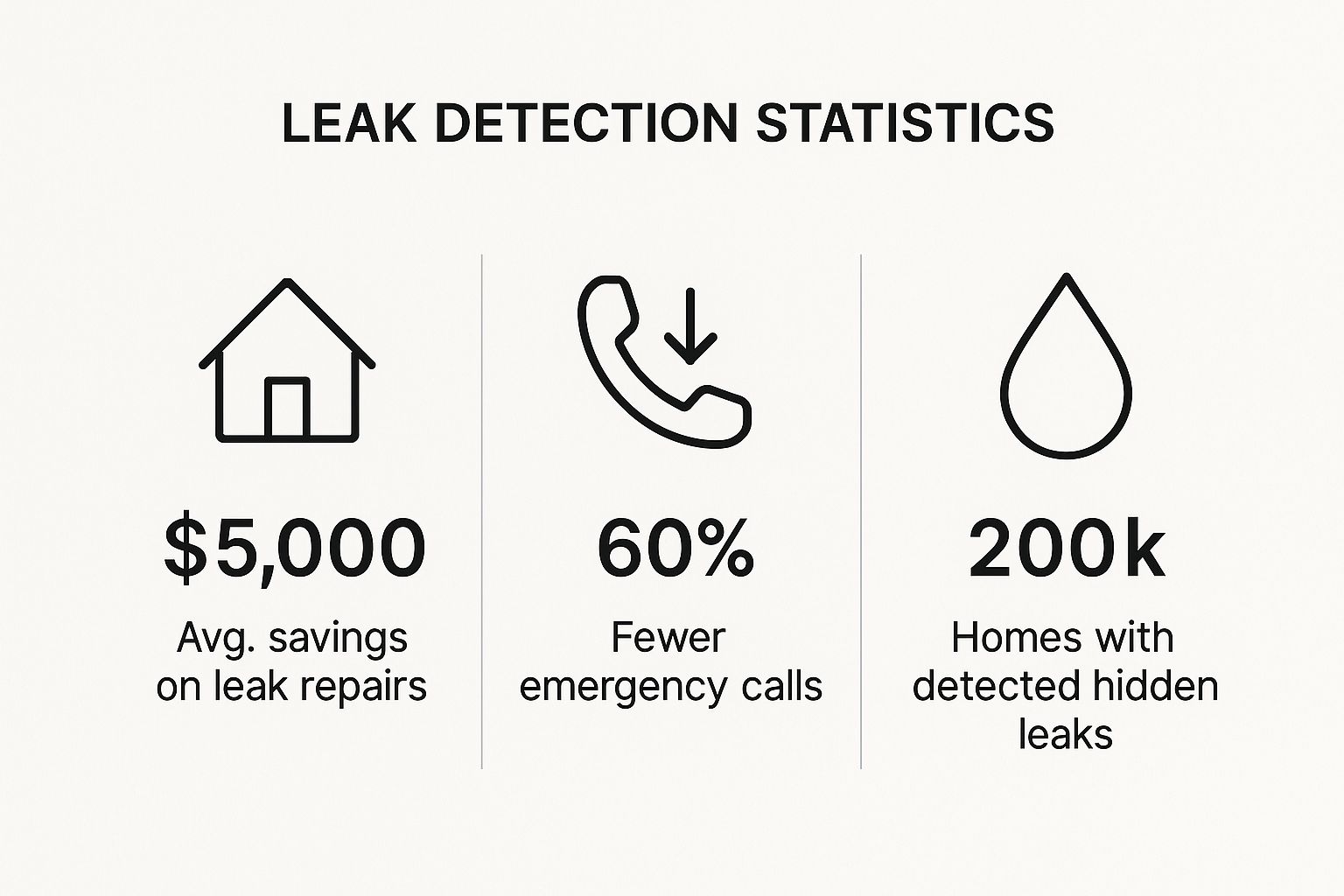
As the data shows, the benefits are substantial, from saving thousands on potential repairs to drastically reducing the need for emergency service calls.
Actionable Tips for Leak Detection
Performing a basic visual inspection between professional visits can help you spot trouble early. Here’s a brief summary of what to look for, but remember that a licensed plumber has the tools to find leaks you can't see or hear.
- Check Your Water Meter: Note the reading on your water meter, then avoid using any water for two hours. If the reading has changed, you likely have a hidden leak. This is a critical first step for uncovering issues like a slab leak. For more information, you can explore the signs of a slab leak on alvarezplumbingsalinas.com.
- The Food Coloring Test: Add a few drops of food coloring to your toilet tank. Wait 15-20 minutes without flushing. If you see color in the bowl, the flapper is leaking, wasting hundreds of gallons of water.
- Inspect Visible Pipes: Use a flashlight to inspect pipes under sinks in kitchens and bathrooms, especially in older Pacific Grove homes. Look for moisture, rust, or mineral deposits.
- When to Call a Pro: If you suspect a leak but can't find it, it's time to call us. We use advanced diagnostic tools to pinpoint the source without unnecessary damage to your home.
2. Drain Cleaning and Maintenance
The second essential task on your plumbing maintenance checklist is the regular upkeep of your drains. This goes far beyond just clearing an occasional clog; it involves a proactive strategy to maintain clear, efficient drainage throughout your home. From kitchen sinks dealing with grease to bathroom drains collecting hair, your drainage system is constantly under stress. Consistent maintenance prevents slow drains, foul odors, and surprise backups that can bring your home or business to a standstill.
For properties in Marina and Seaside, where a mix of older and newer plumbing systems exists, neglecting drain health can lead to chronic issues. A seemingly minor slow drain can signal a more significant blockage forming deep within the pipes—a problem that is much easier and cheaper for a professional to resolve with routine care than with an emergency call.
Why It's a Key Priority
Proactive drain maintenance is crucial for hygiene, convenience, and preventing costly repairs. A clean drain system functions silently and efficiently, whereas a neglected one can lead to disruptive and unsanitary backups. Restaurants in Carmel-by-the-Sea know this well; their grease traps require regular professional service to comply with local health codes and prevent serious plumbing emergencies.
Key Insight: Viewing drain care as regular maintenance, rather than an emergency response, preserves the integrity of your entire plumbing system. This approach stops clogs before they start and protects your pipes from the long-term damage caused by buildup and harsh chemical cleaners.
This simple shift ensures your plumbing remains a reliable asset, not a source of unexpected problems.
Actionable Tips for Drain Maintenance
While major blockages require professional attention, you can take a few steps to keep drains flowing. Here’s a brief summary of what we recommend:
- Use Natural Cleaners: Once a month, a mixture of baking soda and vinegar can help break down minor buildup without harming your pipes.
- Install Hair Catchers: Place mesh screens or hair catchers over shower and tub drains. This is the single most effective way to prevent hair clogs.
- Avoid Clog-Causing Materials: Never pour grease, coffee grounds, or fibrous food scraps down the kitchen sink.
- Choose Professional Cleaning: For persistent slow drains or recurring clogs, store-bought chemical drain cleaners are a temporary fix that can damage pipes. Professional hydro-jetting is the safest and most effective solution. You can learn more about our drain cleaning services in Monterey.
3. Water Heater Inspection and Maintenance
A crucial component of any plumbing maintenance checklist is the regular inspection of your water heater. Whether you have a traditional tank model or a modern tankless unit, this appliance works tirelessly. Proactive maintenance ensures it operates efficiently and safely, preventing surprise cold showers, costly breakdowns, and even dangerous failures.
In Monterey County, where hard water can cause mineral sediment buildup, an annual flush by a professional is essential. This sediment can significantly reduce your water heater's efficiency and lifespan. For homeowners from Salinas to Carmel-by-the-Sea, this professional service protects your investment and keeps utility bills in check.
Why It's a Top Priority
Neglecting your water heater is a gamble. A well-maintained unit can last years longer than one that is ignored, saving you thousands in premature replacement costs. Furthermore, routine checks ensure safety mechanisms, like the temperature and pressure relief valve, are functioning correctly to prevent a potential rupture.
Key Insight: Consistent water heater maintenance is a small investment of time that pays significant dividends in appliance longevity, energy savings, and home safety. It turns a potential liability into a reliable asset.
Data from manufacturers confirms that annual professional service can extend a water heater's life from an average of 8-12 years to over 15 years.
Actionable Tips for Water Heater Maintenance
A comprehensive annual inspection should always be left to a licensed plumber, especially for gas units. Here are some things you can check visually between service appointments:
- Look for Leaks: Check around the base of the water heater and at the connections on top for any signs of water or corrosion.
- Check the Temperature: Your water heater should be set to 120°F. This temperature is hot enough for household needs but helps prevent scalding and reduces energy consumption.
- Listen for Strange Noises: Popping or rumbling sounds can indicate significant sediment buildup at the bottom of the tank, a sign that it needs immediate professional flushing.
- Schedule Professional Service: An annual service call is essential. A professional will test the T&P valve, check the anode rod, and flush the tank to remove sediment. For a detailed guide, check this water heater maintenance schedule on alvarezplumbingsalinas.com.
4. Toilet Maintenance and Adjustments
Often overlooked until it fails, the toilet is one of the hardest-working fixtures in your home. Proper toilet maintenance is a crucial part of any plumbing maintenance checklist, focusing on preventing water waste and ensuring powerful, efficient flushing.
In places like Prunedale or Marina, where water conservation is always a priority, a constantly running or leaking toilet is a major source of wasted resources and high utility bills. According to the EPA, fixing common toilet leaks can save a household hundreds of gallons of water per day.
Why It's a Top Priority
A malfunctioning toilet is more than an annoyance; it’s a financial drain. Internal leaks are often silent, wasting thousands of gallons of water each month without any obvious signs. Ensuring the mechanisms are correctly adjusted and the seals are intact is key to efficient operation.
Key Insight: Consistent toilet maintenance shifts your focus from dealing with clogs and overflows to preventing them. Simple professional adjustments and part replacements are inexpensive and quick, saving you from costly emergency calls and premature fixture replacement.
Neglecting these small parts can lead to bigger problems, including water damage to the floor and subfloor if a seal fails completely.
Actionable Tips for Toilet Maintenance
While a full inspection is best left to a professional, you can perform these simple checks to spot problems early:
- The Food Coloring Test: Add a few drops of food coloring to the toilet tank. Don't flush. After 20-30 minutes, check the bowl. If any color has seeped in, your flapper is leaking and needs to be replaced by a pro.
- Check for Stability: The toilet should not rock or move when you sit on it. A wobbly toilet can break the wax seal at the base, leading to leaks and sewer gas odors.
- Note Weak Flushing: If your toilet isn't flushing with force, it could be a sign of a clog forming or an issue with the fill valve.
- Call for Repairs: Don't delay a repair. Fixing a running toilet is one of the most cost-effective ways to lower your water bill. If you're considering an upgrade, it's wise to understand the factors that influence the cost of a new toilet installation.
5. Water Pressure Testing and Regulation
A crucial but often overlooked part of a plumbing maintenance checklist is checking your property's water pressure. It’s about ensuring the pressure is within a safe, optimal range to protect your entire plumbing system from premature failure.
In areas like Marina and Seaside, municipal water pressure can fluctuate and often runs high. If your home isn't equipped with a functioning pressure regulator, this high pressure can silently damage everything from your washing machine hoses to your water heater, drastically shortening their lifespan.
Why It's a Top Priority
Maintaining the correct water pressure protects your investment. High pressure is a primary cause of pinhole leaks and catastrophic pipe bursts, while low pressure can signal underlying issues like blockages or a failing regulator.
Key Insight: Water pressure is the "blood pressure" of your plumbing system. Keeping it within the ideal range of 45-65 PSI prevents chronic stress on your pipes and appliances, saving you from sudden, costly emergencies.
This proactive step safeguards your property and extends the life of your appliances.
Actionable Tips for Water Pressure Management
Managing your home's water pressure is a job for a qualified plumber. Here's what you should know and when to call us:
- Signs of High Pressure: Do you hear a "water hammer" (banging noise) when you turn off a faucet? Do your faucets drip constantly? These are signs of high pressure.
- Signs of Low Pressure: If you are dealing with weak showers or slow-filling appliances, it could be a sign of a failing Pressure Reducing Valve (PRV), a hidden leak, or a clog in your lines.
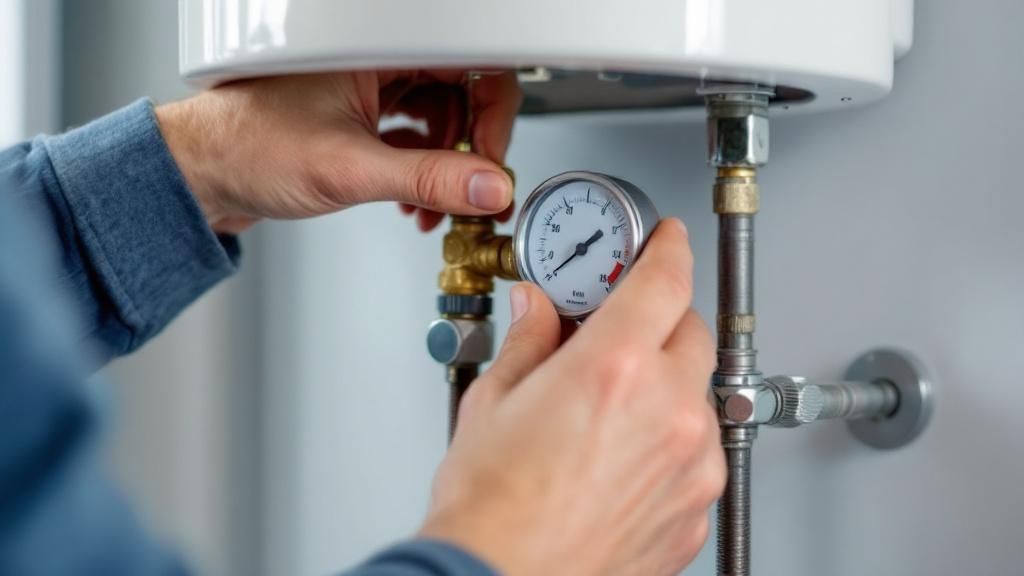
- Professional Testing: The only way to know your exact pressure is with a gauge. As part of a whole-home inspection, we'll test your pressure at the hose bib.
- Regulator Inspection and Replacement: If your pressure is above 80 PSI, a pressure-reducing valve (PRV) should be installed or inspected. These devices have a lifespan of 7-10 years and require professional replacement to ensure your system is protected.
6. Pipe Insulation and Weatherproofing
A crucial component of a comprehensive plumbing maintenance checklist is pipe insulation and weatherproofing. This preventative measure is a strategic defense against temperature extremes that can wreak havoc on your plumbing system. The primary goal is to protect your pipes from freezing during cold snaps, which we occasionally experience in Monterey County.
In communities from Salinas to Carmel Valley, where temperatures can dip unexpectedly, uninsulated pipes in areas like crawl spaces, garages, or attics are highly vulnerable. A frozen pipe can burst, leading to severe water damage and costly emergency repairs. Proper insulation acts as a protective blanket, preventing catastrophic failures.
Why It's a Key Priority
Protecting your pipes from the elements is a smart investment. Burst pipes due to freezing are a common source of homeowner insurance claims, and most of this damage is entirely preventable. Furthermore, insulating hot water pipes keeps the water hotter for longer, reducing the energy your water heater consumes.
Key Insight: Effective pipe insulation is not just a winter precaution; it’s an year-round efficiency upgrade. It safeguards your property against freeze damage while simultaneously lowering your monthly energy bills, making it an essential task for any responsible property owner.
This proactive step transforms your plumbing from a potential liability into a resilient and efficient system.
Actionable Tips for Insulation and Weatherproofing
While a professional can ensure comprehensive coverage, you can identify vulnerable areas yourself. Here’s what to look for before calling for an expert installation:
- Target Vulnerable Areas: Check for exposed pipes in unheated or poorly insulated spaces. This includes basements, crawl spaces, attics, and garages, which are the most common sites for frozen pipes.
- Seal Air Leaks: Inspect where pipes enter your home from the outside. If you see gaps, they need to be sealed by a professional to prevent cold drafts from reaching the pipes inside your walls.
- Protect Outdoor Faucets: Before the first frost, disconnect all garden hoses from your outdoor spigots (hose bibs) to prevent them from freezing and cracking.
- Schedule Professional Insulation: For a truly effective job, have a plumber professionally install high-quality foam pipe insulation or electrical heat tape in the most exposed locations. This is the best way to ensure complete protection.
7. Garbage Disposal Cleaning and Maintenance
The garbage disposal is a hardworking kitchen appliance that demands regular attention. Proper maintenance is essential for preventing stubborn clogs, eliminating bacteria-fueled smells, and ensuring the unit operates efficiently.
In kitchens across Monterey County, from residential homes in Marina to bustling restaurants in Carmel-by-the-Sea, a neglected disposal can quickly lead to backed-up sinks and costly plumbing calls. Manufacturers emphasize that consistent care can extend a unit's life from an average of 8 years to as long as 15 years.
Why It's a Kitchen Priority
A well-maintained garbage disposal protects your entire kitchen's drainage system. Neglecting it allows food sludge and grease to build up not just in the unit but also in the connecting pipes, creating the perfect conditions for severe blockages.
Key Insight: Treating your garbage disposal as a machine, not a trash can, is fundamental. Its purpose is to break down small food particles, not to shred fibrous vegetables, bones, or non-food items. This simple understanding prevents the vast majority of jams and premature failures.
Regular maintenance is also about hygiene. Keeping the unit clean prevents the buildup of bacteria that can cause foul odors in your kitchen.
Actionable Tips for Disposal Maintenance
You can perform these simple tasks to keep your disposal in good shape. If problems persist, it's a sign you need professional service.
- Follow the Cold Water Rule: Always run a strong flow of cold water before, during, and for at least 30 seconds after using the disposal. Cold water helps keep grease solid so it can be chopped up and washed away.
- Clean and Freshen Weekly: A simple and effective cleaning method involves grinding a tray of ice cubes. To freshen it, grind a few lemon or orange peels.
- Know What to Avoid: Never put fibrous materials (celery stalks, corn husks), starchy foods (potato peels, pasta), grease, oil, coffee grounds, or large bones down the disposal.
- The Reset Button: If your disposal hums but doesn't spin, or stops working entirely, locate the small reset button on the bottom of the unit. Unplug the unit, ensure it's clear, and press the button firmly before calling for a repair.
While meticulous care for your garbage disposal is vital, ensuring the overall health of your kitchen extends to all appliances. For a comprehensive approach, review this essential kitchen equipment maintenance checklist.
7-Point Plumbing Maintenance Checklist Comparison
| Item | Implementation Complexity 🔄 | Resource Requirements ⚡ | Expected Outcomes 📊 | Ideal Use Cases 💡 | Key Advantages ⭐ |
|---|---|---|---|---|---|
| Check for Leaks and Water Damage | Moderate – requires thorough visual inspection. | Flashlight, food coloring. | Early leak detection, water damage prevention, reduced bills. | Regular home plumbing checks, property management. | Saves repair costs, prevents emergencies, maintains property value. |
| Drain Cleaning and Maintenance | Low to Moderate – routine but requires consistent effort. | Natural cleaners, hair catchers. | Prevents clogs and odors, maintains flow. | Weekly cleaning at homes, restaurants, hotels. | Reduces emergencies, extends fixture life, eliminates odors. |
| Water Heater Inspection | High – technical knowledge and professional service needed. | Professional inspection tools. | Extends heater life, improves efficiency, prevents failures. | Annual or semi-annual water heater upkeep. | Saves energy, prevents flooding, ensures safety. |
| Toilet Maintenance and Adjustments | Low to Moderate – simple checks, but repairs need a pro. | Food coloring. | Prevents water waste, improves flush efficiency. | Monthly and quarterly toilet checks in homes and commercial buildings. | Saves water, prevents odors, extends fixture life. |
| Water Pressure Testing | High – requires specialized tools and professional adjustment. | Professional pressure gauge. | Consistent pressure, fixture protection. | As part of a professional home inspection. | Prevents fixture damage, improves flow, extends appliance life. |
| Pipe Insulation and Weatherproofing | Moderate – installation labor intensive. | Professional installation. | Prevents freezing, reduces energy loss. | Critical before winter in cold climates. | Prevents freeze damage, lowers bills, maintains pipe integrity. |
| Garbage Disposal Maintenance | Low – routine cleaning with safety precautions. | Ice cubes, citrus peels. | Odor elimination, clog prevention, longer unit life. | Weekly cleaning in households, restaurants. | Prevents clogs, reduces repairs, eliminates odors. |
Your Partner in Plumbing Health: When to Call Alvarez Plumbing
Navigating this plumbing maintenance checklist is your first, most powerful step toward protecting your home or business in Monterey County. By proactively inspecting for leaks, testing your water pressure, and keeping an eye on your drains and appliances, you shift from a reactive mindset to one of proactive care. This approach isn't just about avoiding a sudden disaster; it's about extending the life of your entire plumbing system and conserving precious water resources here on the Central Coast.
Remember, the goal of this checklist is to build awareness, not to turn you into a master plumber overnight. Spotting a bit of moisture under the sink in your Salinas home or noticing a slow drain at your commercial property in Watsonville are crucial first steps. These are the early warning signs that allow you to call for professional help before the issue escalates into a full-blown emergency.
Key Takeaways for Proactive Plumbing Care
Mastering this checklist means recognizing the difference between a simple visual check and a complex job that requires professional expertise.
- Small Signs, Big Problems: A tiny drip, a gurgling drain, or a slight drop in water pressure can signal a much larger underlying issue. Addressing these early with a professional call is the most cost-effective strategy.
- Seasonal Preparedness is Crucial: Our unique coastal climate, from the cool, damp winters in Carmel Valley to the warm, dry summers in Prunedale, puts specific demands on your plumbing. Professional pipe insulation isn't just a suggestion; it's essential prevention.
- Your Water Heater Demands Respect: This appliance requires regular, professional attention, especially gas models. A professional tune-up ensures it operates safely and efficiently, preventing carbon monoxide risks and costly breakdowns.
Expert Insight: "For over 35 years, we've seen how a simple annual inspection can prevent thousands of dollars in water damage. A homeowner in Pacific Grove recently used this exact type of plumbing maintenance checklist, found a faulty pressure regulator, and called us. We replaced it, preventing what would have been certain pipe bursts down the line. That's the power of being proactive."
Think of this checklist as your guide for an annual physical for your property’s plumbing. While you can spot the symptoms, you rely on a professional for a full diagnosis and treatment plan. When your inspection uncovers something that seems off, that's your cue to call in the experts.
Don't wait for a small drip to become a major disaster. For a comprehensive inspection that goes beyond the basics or to address any concerns you've uncovered, trust the local, family-owned experts at Alvarez Plumbing. Schedule your professional plumbing tune-up today by visiting Alvarez Plumbing and ensure your system is in peak condition.