Imagine this: a massive Salinas winter storm is raging outside, and you're jolted awake by the sound of rushing water. Not from the rain, but from inside your house. A pipe just burst. In the minutes it takes to panic and try to find a solution, serious water damage can ruin your floors, walls, and belongings.
But what if you could stop it all instantly? Knowing how to locate your main water valve before it’s too late is the one skill that turns a catastrophe into a manageable problem. It's your home's first and best line of defense, and our seasoned plumbers are here to give you clear, visual instructions to find it.
Why Finding Your Water Valve Is a Non-Negotiable Skill
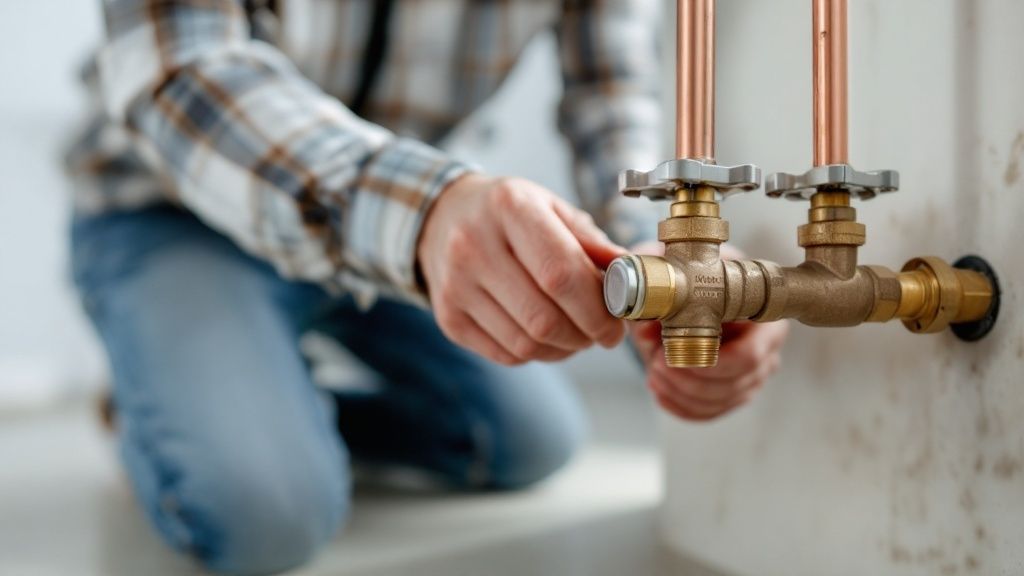
When you've got a plumbing emergency, every single second counts. Whether you're in a classic Pacific Grove home or a newer build out in Prunedale, a sudden leak doesn’t wait for a convenient time. Knowing where that main valve is located is the difference between mopping up a puddle and dealing with a devastating flood.
Think of it as the master switch for your home’s entire water supply. A quick turn shuts off the flow to every faucet, toilet, and appliance, immediately stopping the problem at its source. This single action puts you back in control and buys you precious time to call a professional without watching your home get ruined.
The Real Risks for Monterey Bay Homeowners
Our beautiful coastal weather, from Carmel-by-the-Sea to Marina, can be surprisingly tough on plumbing. That salty sea air we love? It speeds up corrosion, making older pipes especially vulnerable to sudden breaks. A burst pipe isn't just an inconvenience here; it's a serious threat that can cause major damage if not stopped quickly.
As a family-owned business serving this area since 1988, we've seen it all. The homeowners who always come out on top in an emergency are the ones who knew exactly where to go to shut their water off.
This isn't just about problem awareness; it's about being prepared for a professional solution. Knowing your valve’s location is an essential skill to minimize future maintenance repairs and protect your biggest investment. Taking a few minutes today to get prepared is the most important step you can take.
Where to Find Main Water Valves in Monterey Bay Homes
Every home in the Monterey Bay area has its own unique layout, but after 35+ years in the business, we've learned that most main water valves hide in just a few predictable spots. Think of this as your guided tour of the most common locations, tailored specifically for common home layouts from Salinas to Carmel Valley.
Your search should almost always start outside. The most frequent location for the main shut-off is near the street, right at the edge of your property line. Look for a concrete or plastic utility box cover set into the ground, which is often labeled "WATER." This is where the city's water line connects to your home's private plumbing system.
Checking Inside Your Home
If your search outside comes up empty, it's time to head indoors. In many homes, especially in places like Watsonville and Castroville, the main valve is located inside to protect it from the elements.
A few common interior spots include:
- Basement or Crawl Space: Look along the front foundation wall. This is typically where the main water supply pipe first enters your house.
- Garage: Check the walls, particularly the one closest to the street or your water meter. It's often right there in plain sight.
- Utility Closet: The valve is frequently located near the water heater, which makes it a convenient spot to check.
This infographic shows a typical interior valve setup, helping you visualize exactly what you should be looking for.
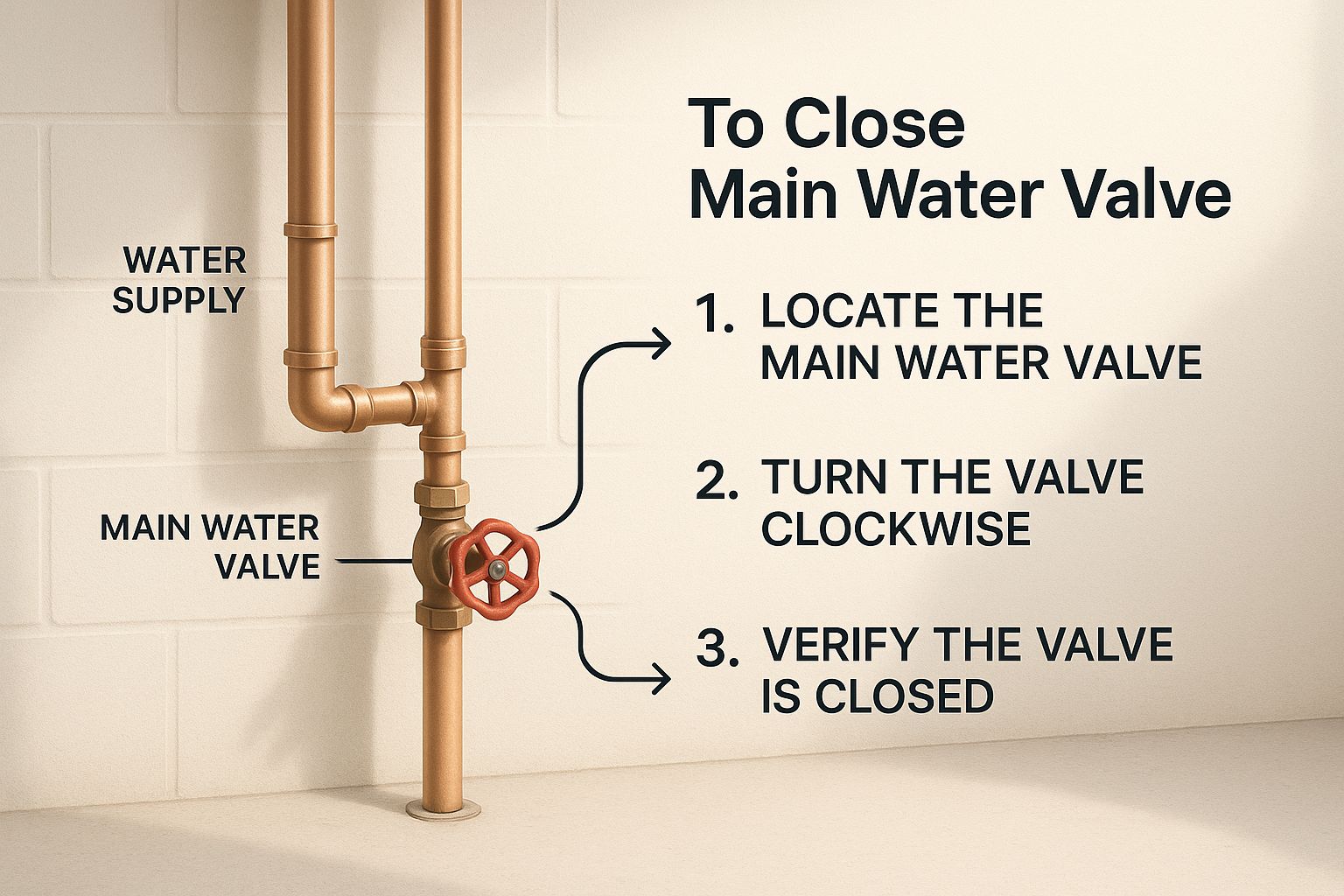
As you can see, the main valve is situated on the primary pipe entering the home, making it easier to identify among other plumbing fixtures.
Pro Tip from Our Plumbers: Don't get distracted by smaller valves for your irrigation system or individual fixtures like toilets and sinks. The main water valve will almost always be on the largest pipe coming into your home directly from the street or meter.
Once you find it, it’s a great idea to have a licensed plumber check it to ensure it’s in good working order. Including this as part of a regular maintenance routine can save you a major headache down the road. You can see what a comprehensive check-up involves with our plumbing inspection checklist.
Your Main Water Valve Location Checklist
To make your search even easier, we've put together this quick-reference table. It's designed to help you systematically check the most likely hiding spots for main water valves in homes across the Salinas and Monterey areas.
| Location Type | Where to Look | What You'll See |
|---|---|---|
| Outside | Near the street at your property line | A ground-level utility box, usually labeled "WATER." |
| Basement/Crawl Space | Along the front foundation wall | The largest pipe entering the home, often with a wheel or lever handle. |
| Garage | On the wall closest to the street | A valve on a pipe, sometimes near where your main hose bib is located. |
| Utility Room | Near the water heater or furnace | A valve on the main cold water inlet pipe leading to the water heater. |
Using this checklist turns a frantic, high-stress search into a confident and methodical process. Taking just a few minutes to locate your valve now provides invaluable peace of mind for when you might need it most. If you've checked these spots and still can't find it, don't hesitate to give a professional a call.
How to Confidently Identify the Right Valve
So you’ve found a pipe with a handle, but is it the right one? Making a positive ID is critical, especially when water is spraying everywhere. In our experience across the Monterey Bay area, we mostly see two types of main shut-off valves in homes.
First, there’s the gate valve. This one looks like a small, round spigot handle you’d turn like a wheel. The other common type is a ball valve, which has a straight lever handle. A quick quarter-turn of this lever, so it's perpendicular to the pipe, will shut off the water flow completely.
Avoiding Common Mix-Ups
A frequent point of confusion, especially in Carmel-by-the-Sea homes with beautiful, complex landscaping, is mistaking an irrigation valve for the main water line. These are often smaller and grouped together in a green box out in the yard.
Our Pro Tip: When our plumbers arrive at a home, we always look for the largest pipe coming into the house from the street. This is almost always the main water supply line, and the valve attached to it is the one you need.
This advice isn't meant to be a full DIY manual. It's about giving you the expert insight to know what you're looking at so you can act quickly in an emergency. Of course, knowing the condition of these valves is just as important as finding them; you can learn more about checking your water shut-off valves in our article. By simply identifying the correct valve, you empower yourself to act fast and prevent costly damage before a professional arrives.
Keeping Your Shut-Off Valve Ready for Action
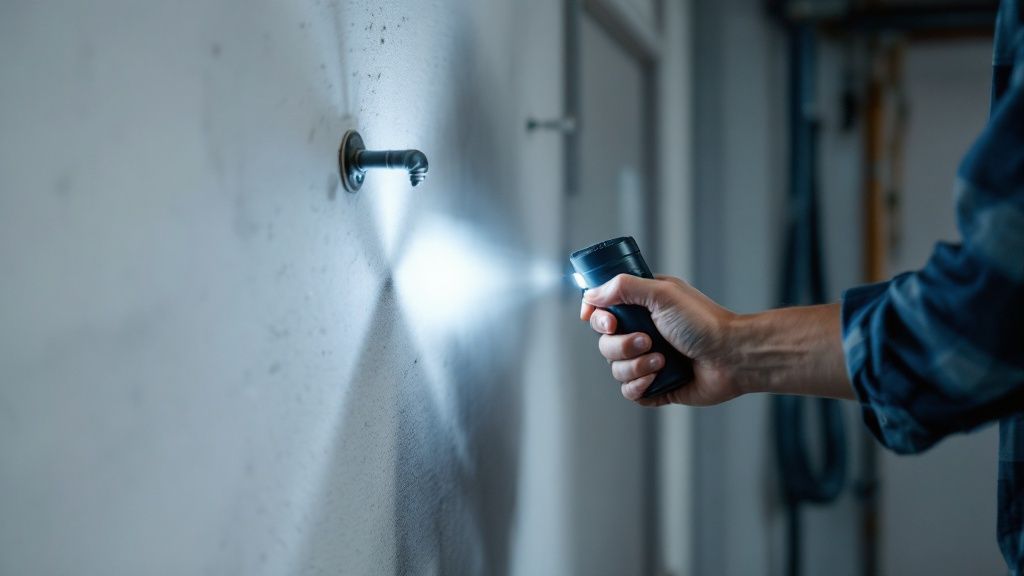
Finding the valve is a huge first step, but what happens if it's stuck solid when you need it most? This is a problem we see all the time, especially in coastal communities like Marina and Seaside, where the salty air causes metal parts to corrode and seize up after years of inactivity.
Forcing a stiff or rusted valve is a recipe for disaster. You could easily break it and turn a manageable leak into a full-blown flood. This is where a simple task can quickly spiral into a much bigger, more expensive problem. The smartest and safest move is to call in a professional. Our plumbers can safely test the valve to make sure it operates smoothly and won't fail you in a crisis.
Simple Steps for Future Peace of Mind
Once you know your valve is in good working order, a couple of simple actions can make a world of difference in an emergency. These are the high-impact tips we share with homeowners from Watsonville to Pacific Grove:
- Label It Clearly: Get a bright, waterproof tag and attach it directly to the main shut-off valve. This single step eliminates any guesswork when stress levels are high.
- Keep It Accessible: Make sure the area around the valve is always clear. Don’t let storage boxes, overgrown landscaping, or other clutter block your path.
As a family-owned business since 1988, we believe preparation is everything. A valve that's easy to find, access, and operate provides invaluable peace of mind.
This proactive approach isn't just about protecting your own home. Being prepared means you can stop a leak fast and wait for a professional plumber to handle the repair. If you’re ready to get proactive, our guide on how to shut off your main water supply offers even more helpful information.
When You Need to Call a Professional Plumber
Knowing how to shut off your home's water is a huge step in being a prepared homeowner. It empowers you to stop a bad situation from getting worse. But it's just as important to know when to put down the wrench and pick up the phone.
Trying to force a stubborn, rusted valve or attempting a DIY repair on a leaky one can snap a pipe in a heartbeat. That's a mistake you don't want to make. Your knowledge is for shutting the water off in an emergency, not for wrestling with parts that are clearly telling you something is wrong.
You should stop what you're doing and call a professional plumber right away if you run into any of these problems:
- You Can't Find the Valve: You've checked all the usual suspects inside and out, and it's still hiding. Don't tear your house apart; let an expert with experience in local homes find it for you.
- The Handle is Stuck or Broken: A handle that won't turn—or is already snapped off—is useless in a crisis. Putting your weight on it is a recipe for a broken pipe and a much bigger flood.
- The Valve is Leaking: If you see active drips, puddles, or even just chalky corrosion around the valve itself, it's failing. This needs immediate professional attention before it lets go completely.
Your Trusted Local Experts
As a family-owned business serving Salinas and Monterey County since 1988, we've seen just about every plumbing quirk and challenge this area has to offer. When you're dealing with a complicated issue or just aren't sure how to get in touch with someone for an emergency maintenance problem, a plumber you can trust is your most valuable resource.
Don’t wait for water to be spraying everywhere to find out your main valve is seized up. If you have any doubt about its condition, our team at Alvarez Plumbing is here to help.
Whether you just need a hand locating the valve or you're facing a full-blown crisis, our team is ready to provide fast and reliable emergency plumbing services.
Answering Your Questions About Main Water Valves
Our plumbers get a lot of questions about main water valves from homeowners across the Monterey Bay area. Knowing your way around this critical component can make a huge difference in an emergency. Here are a few of the most common questions we hear, with answers straight from our seasoned pros.
What Tools Might I Need to Shut Off My Water?
For most valves inside your home, you won't need any tools at all—they're designed to be turned by hand.
But if your main shut-off is outside in an underground meter box, you might need a special tool called a water meter key. It’s a long, T-shaped wrench that helps you lift the heavy lid and turn the valve.
A word of caution from our team, though: if that valve is stiff or feels stuck, don't try to force it. We’ve seen homeowners crank on a seized valve, only to break it and create a major flood. When in doubt, it's always smarter to call a professional.
How Often Should I Test My Main Water Valve?
It's a fantastic idea to have your main valve checked annually. While it might seem easy enough to test it yourself, we strongly recommend having a licensed plumber do it during a routine inspection.
This is especially true in older Pacific Grove homes where valves can sit untouched for decades. Over time, they can become brittle or seize up completely.
A professional plumber can safely test the valve to make sure it works properly. We know how to do it without the risk of it breaking or getting stuck in the "off" position—a situation that would leave you without any water until it's fixed.
Is the Valve Near the Street My Responsibility?
This is a great and very important question. That underground box near the street or sidewalk usually contains two separate valves: one on the city's side of the meter, and one on your side (the customer side).
You are only responsible for the customer-side valve, which is the one located between the water meter and your house.
Touching the city-side valve can lead to liability issues if it gets damaged. To avoid any confusion or potential fines in communities like Salinas or Monterey, it’s always best to have a professional plumber correctly identify which valve is yours. We can even tag it for you, so you know exactly which one to turn in an emergency.
If you're not sure where your valve is or you're worried about its condition, don't wait for a leak to find out. The friendly experts at Alvarez Plumbing have been serving our Monterey County neighbors since 1988 and are always ready to help. Schedule an inspection today for total peace of mind.