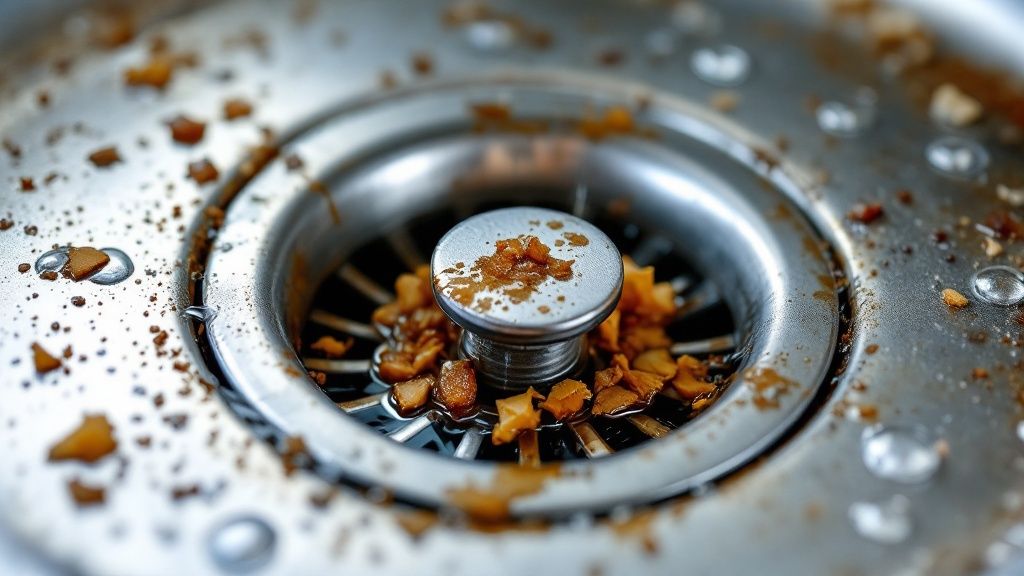
That slow-draining kitchen sink is more than just a minor headache; it’s a problem we see in homes all across our community, from Salinas to Carmel-by-the-Sea. The usual suspects are a combination of cooking grease, tiny food scraps, coffee grounds, and soap scum that quietly builds up day after day.
Understanding what’s happening down in your pipes is the first step toward a real solution.
Common Reasons Your Kitchen Sink Might Be Clogged
If you're staring at a sink full of murky water, you’re not alone. Here in Monterey County, we get calls about stubborn clogs in homes everywhere, from the historic neighborhoods of Pacific Grove to the newer builds out in Prunedale. And while every house is a bit different, the reasons for a backed-up sink are almost always the same.
The problem usually starts small. You pour a little leftover grease from a pan down the drain, thinking the hot water will just wash it through. But once that grease hits the cooler pipes further down the line, it solidifies and clings to the pipe walls. It creates a sticky trap for everything else you send down.
The Most Common Culprits
After more than 35 years of serving this community, we’ve seen it all. The main offenders that turn a slow drain into a complete standstill almost always boil down to these things:
- Grease, Fats, and Oils: This is, without a doubt, the number one enemy of your kitchen plumbing. They coat the inside of your pipes and create a stubborn sludge that grabs onto other debris.
- Food Scraps: Even with a garbage disposal, certain foods are a real problem. Starchy items like pasta, rice, and potato peels can expand with water and form a thick, pasty blockage inside your pipes.
- Coffee Grounds: They might seem harmless, but grounds don't dissolve in water. Instead, they clump together and get easily caught in that greasy buildup lining your pipes.
- Foreign Objects: Sometimes, small items like bottle caps or food ties accidentally fall down the drain and create an instant blockage.
- Older Pipes: In many of the beautiful, older homes around Monterey and Carmel, pipes can have decades of buildup or even corrosion that makes them more likely to clog.
Ignoring a slow drain is a recipe for bigger trouble. An untreated blockage puts stress on your pipes, which can lead to leaks, nasty odors, and even a full-blown sewage backup. Fixing major pipe damage often costs much more than routine professional drain cleaning.
As a family-owned business since 1988, we've learned that being careful about what goes down your drain can save you a massive headache later on.
Simple habits make the biggest difference. Scraping food scraps into the trash before you rinse dishes is a fantastic start. To learn more, check out our complete guide on how to prevent clogged drains.
DIY Methods to Try Before Calling a Plumber
When your sink starts draining slowly, it's tempting to grab a bottle of chemical drain cleaner. But before you do, here are a few safer, gentler first steps that our plumbers recommend for minor clogs. These methods can be surprisingly effective for small buildups and won't cause damage to your pipes.
This quick visual guide outlines the basic process for figuring out what's going on with a minor clog before it turns into a real headache.
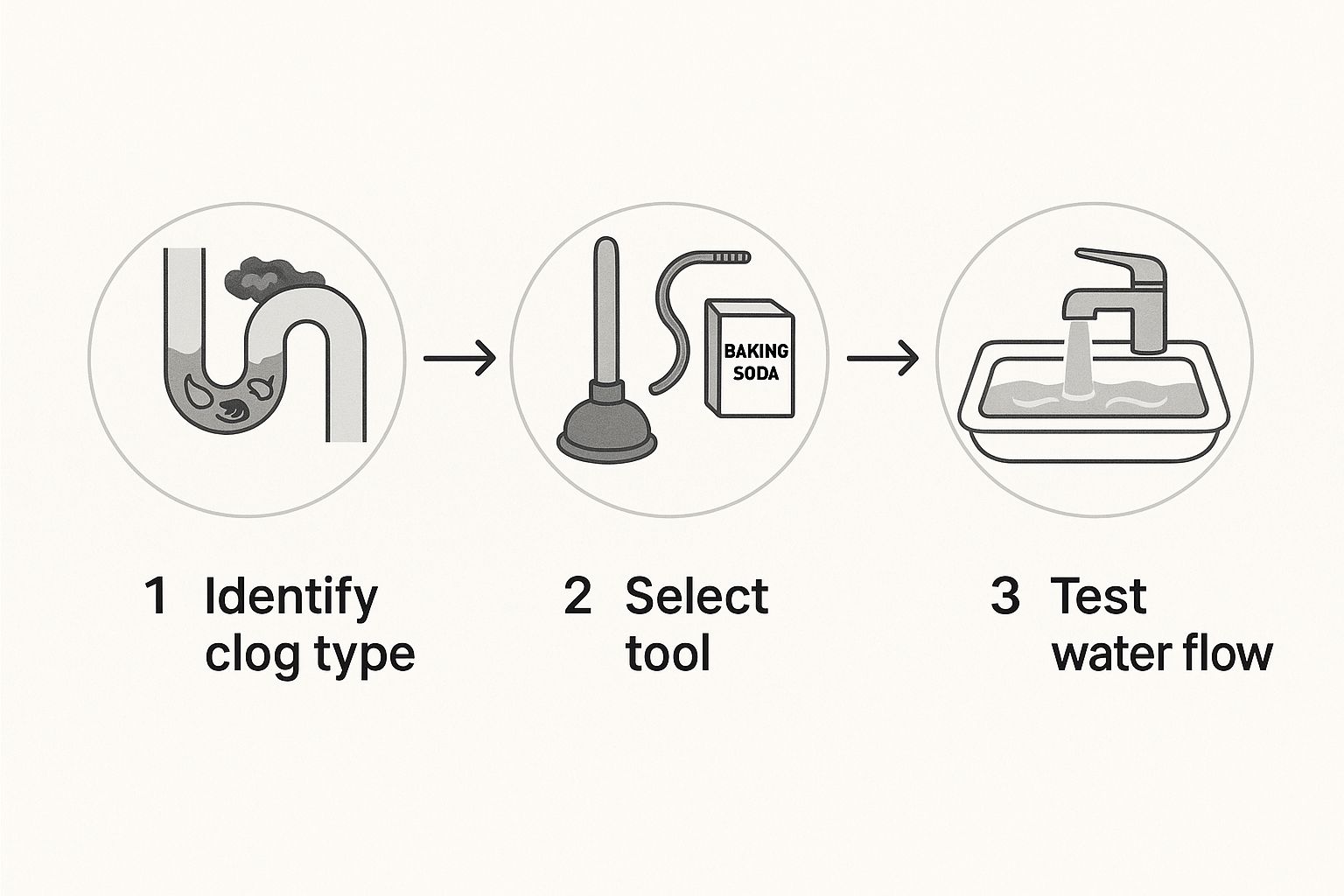
As you can see, the key is to first identify the likely culprit. That helps you choose the right tool for the job so you can quickly see if you've solved the problem.
Start with Boiling Water and a Plunger
Sometimes the simplest approach is the best one. Carefully pour a kettle of boiling water straight down the drain. This can often melt away light grease or soap scum. Give it a few minutes to work, then flush it with hot tap water.
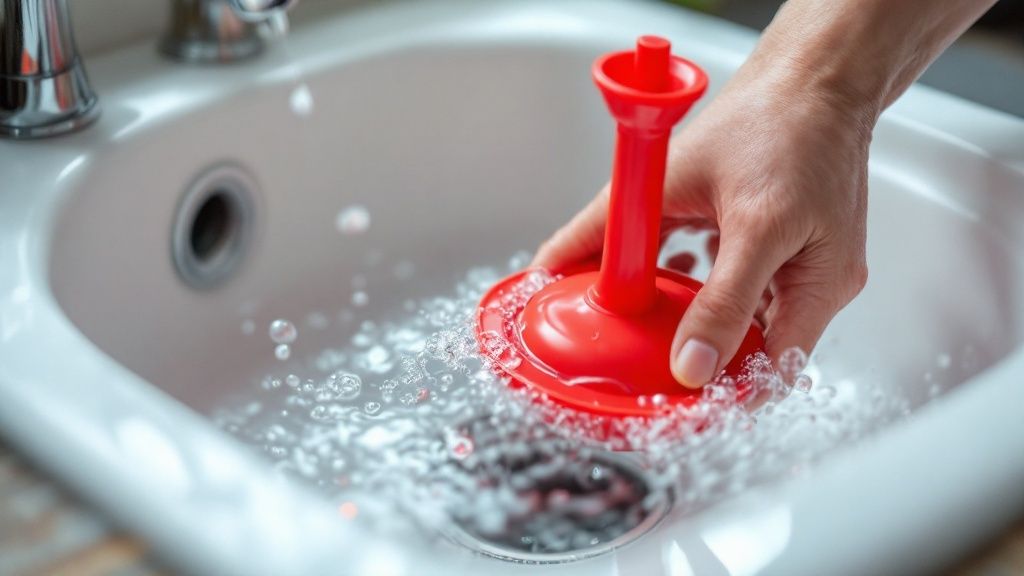
If the water is still backing up, it's time for the plunger. For a double-basin kitchen sink—a common setup in many Monterey and Seaside homes—you have to seal off the drain you're not plunging. A wet rag works perfectly. This creates the suction you need to dislodge the clog when you plunge the other side.
A word of caution from our team: Harsh chemical drain cleaners are a terrible idea, especially for the beautiful older homes in Pacific Grove and Carmel-by-the-Sea. Their corrosive ingredients can eat away at pipes, turning a simple clog into a costly leak. The chemical reaction also generates heat that can warp or melt PVC pipes.
The Baking Soda and Vinegar Method
If boiling water and plunging didn't work, this classic fizzy combo is your next move. It’s a safe, non-corrosive alternative.
Here's a quick summary of how it works:
- Pour about one cup of baking soda down the drain, followed by one cup of white vinegar.
- Immediately plug the drain to trap the fizzing reaction inside the pipe.
- Let it sit for 15-30 minutes, then flush thoroughly with hot water.
This simple reaction can break down minor food and grease clogs without the risks of commercial cleaners. There are several other effective chemical-free sink unclogging methods worth trying.
A Brief Note on Using a Drain Snake
For clogs a bit further down the pipe, a small drain snake (or auger) might seem like the next step. However, using one the wrong way can easily scratch or even puncture your pipes. If you’re not comfortable feeding the cable down the drain, it’s best to stop here. These tools are best left to professionals who know how to use them without causing damage.
If you try these simple methods and your sink is still clogged, it's a clear sign of a deeper issue that needs a professional’s touch. Continuing to experiment can make the problem worse.
When It’s Time to Call a Professional Plumber
You’ve poured boiling water down the drain, worked the plunger, and tried baking soda and vinegar. Still, that stubborn clog isn't budging. While DIY methods are great for simple clogs, a persistent blockage is your plumbing system’s way of waving a big red flag.
Knowing when to call a pro is the difference between a minor annoyance and an expensive disaster. A clog that keeps coming back, for instance, is a classic sign that the problem isn't just under your sink. It usually means there's a serious buildup of grease, sludge, or even tree roots much further down the line.
Foul Odors and Gurgling Sounds
Pay close attention to the sounds your plumbing makes. Are you hearing strange gurgling noises from your kitchen sink in Marina when you flush a toilet or run the dishwasher? That's a tell-tale sign of a deeper issue. Those sounds are caused by trapped air getting forced through water, which only happens when there's a significant blockage somewhere in the drain line.
Similarly, don't ignore a foul odor that smells like sewage. This almost always means waste isn't draining correctly and is sitting stagnant in your pipes, letting nasty gases seep back into your Watsonville home. These are clear symptoms of a serious drainage problem.
Water Backing Up in Other Drains
One of the most alarming signs is seeing water back up in a different drain. If you run the faucet in one side of the kitchen sink and see murky water rising in the other basin, stop what you're doing immediately. This is a clear indicator of a major blockage that's preventing wastewater from leaving your house.
This problem can get particularly bad during the rainy season here in Carmel Valley. When the ground gets saturated, any existing clogs in your main sewer line can get overwhelmed, forcing a messy sewage backup into your home.
If your toilet is bubbling when the kitchen sink drains or your shower backs up when the washing machine runs, the problem is in your main sewer line. This is never a DIY fix.
These aren't minor inconveniences; they signal a problem that requires professional equipment and expertise. If you keep trying DIY methods at this point, you risk making the clog worse. A professional sewer line camera inspection services can find the exact location and cause, saving you from turning a small problem into major water damage.
Why Alvarez Plumbing Is the Best Choice for Drain Cleaning in Monterey & Salinas
When you’ve tried every home remedy and that stubborn clog still won’t budge, it’s a clear sign the problem is beyond the reach of a plunger. This is where a professional plumber makes all the difference. We don't just show up with a bigger drain snake; we bring advanced technology and expertise to find the root cause of the problem and solve it for good.
In many of the older homes we service in Prunedale and Castroville, the issue is often years of accumulated sludge, hard water scale, or even pipe corrosion. Guessing what’s wrong is a recipe for temporary fixes.
Video Camera Inspection and Hydro Jetting
To truly understand what’s happening, we often start by looking inside your pipes. We use a specialized, high-resolution video camera inspection to see the exact cause and location of the blockage. This awesome piece of tech lets us pinpoint issues like severe grease buildup, intrusive tree roots, or corrosion.
Once we've identified the problem, one of the most effective tools in our arsenal is hydro jetting. This is way more than just snaking a drain. Hydro jetting uses a specialized hose to blast high-pressure water against the inside of your pipes. This powerful stream of water scours away everything in its path.
Hydro jetting doesn't just poke a hole through the clog like a traditional drain snake does. It completely cleans the entire inner diameter of the pipe, removing years of accumulated grease and mineral deposits.
While the global market for sink and drain unblockers is huge, as seen in this report on the growth of the drain unblocker market on dataintelo.com, consumer products simply can't handle severe blockages. Professional methods like hydro jetting provide a comprehensive, lasting solution. To see how this technology compares to older methods, check out our guide on hydro jetting vs. snaking in our detailed guide.
Your Trusted Monterey County Plumbers Since 1988
When a stubborn clog brings your kitchen to a halt, you need more than a quick fix—you need a team you can trust. Here at Alvarez Plumbing, we’re not just contractors; we're your neighbors. Our family-owned business has been proudly serving homeowners since 1988, from the bustling streets of Salinas to the quiet coastal lanes of Pacific Grove.
We’ve spent decades building our reputation on honest, reliable service. This means when you call us, you're getting a certified plumber who understands the unique plumbing challenges of our local homes. Whether it’s navigating the older pipes in a historic Carmel-by-the-Sea home or tackling the hard water issues common in Prunedale, our 35+ years of experience means we've seen it and fixed it all before.
Our Commitment to Monterey County Families
We know plumbing emergencies don't stick to a 9-to-5 schedule. That’s why we offer fast, same-day service and 24/7 emergency response across Monterey County. Our promise to you includes:
- Expert Technicians: Our team is equipped with advanced tools like hydro jetting and video camera inspection to solve your problem correctly the first time.
- Honest Advice: We believe in lasting solutions, not upselling you on services you don’t need. We’ll walk you through your options clearly.
- Clean & Respectful Service: We treat your home like our own. That means wearing shoe covers and thoroughly cleaning our work area before we leave.
As a family-run business, our goal is simple: to provide the kind of trustworthy, high-quality service we’d want for our own homes. We stand behind our work because our name is on it.
Making sure your drains run smoothly is about more than convenience; it’s about keeping your home healthy. As noted in industry research like this overview of trends in the drain cleaner and disinfectant market on straitsresearch.com, homeowners know that effective cleaning prevents nasty odors and biofilm buildup. Our professional services go far beyond what a bottle of store-bought chemicals can do.
When you choose Alvarez Plumbing, you’re choosing a local partner dedicated to keeping your home’s plumbing in top shape.
Common Questions About Kitchen Sink Clogs

After 35 years in the plumbing business, we've heard just about every question you can imagine about a backed-up kitchen sink. To save you some trouble, we've pulled together the answers to the questions we hear most often from folks right here in Monterey County.
How Can I Prevent My Kitchen Sink from Clogging?
The best way to fix a clog is to stop it from forming. It starts with simple habits, like always using a sink strainer to catch food scraps.
Another huge one is to never pour grease, fats, or oils down your sink. Let them cool, then scrape the gunk into the trash. When you do use your garbage disposal, run cold water. This helps keep any fats solid so the disposal can chop them up properly. A monthly hot water flush is also a great maintenance trick, particularly for homes in places like Salinas where hard water can make buildup happen faster.
Preventing clogs really comes down to small, consistent habits. Being mindful of what goes down your drain will save you headaches and protect your pipes.
Are Chemical Drain Cleaners Really That Bad?
From our professional standpoint, yes. Those harsh chemicals can't tell the difference between a clog and your actual pipes. Over time, they can eat away at older metal pipes and even damage modern PVC, leading to expensive leaks.
This is a big risk for the many beautiful, established homes in historic areas like Pacific Grove and Monterey. The chemicals can easily weaken pipe joints and create a much bigger mess. If you're looking for a safer alternative for routine cleaning, we suggest learning more about the benefits of a natural drain cleaner.
What Is the Difference Between a Drain and Sewer Clog?
This is a critical distinction. A single clogged kitchen sink usually points to a localized problem in that specific drain line.
But if you start seeing issues with multiple fixtures throughout your Seaside home—like toilets backing up or the shower drain making strange gurgling sounds—that's a huge red flag for a main sewer line blockage. A sewer line clog impacts your entire home's drainage system. It's a serious problem that requires immediate professional attention to prevent a messy and unsanitary sewage backup.