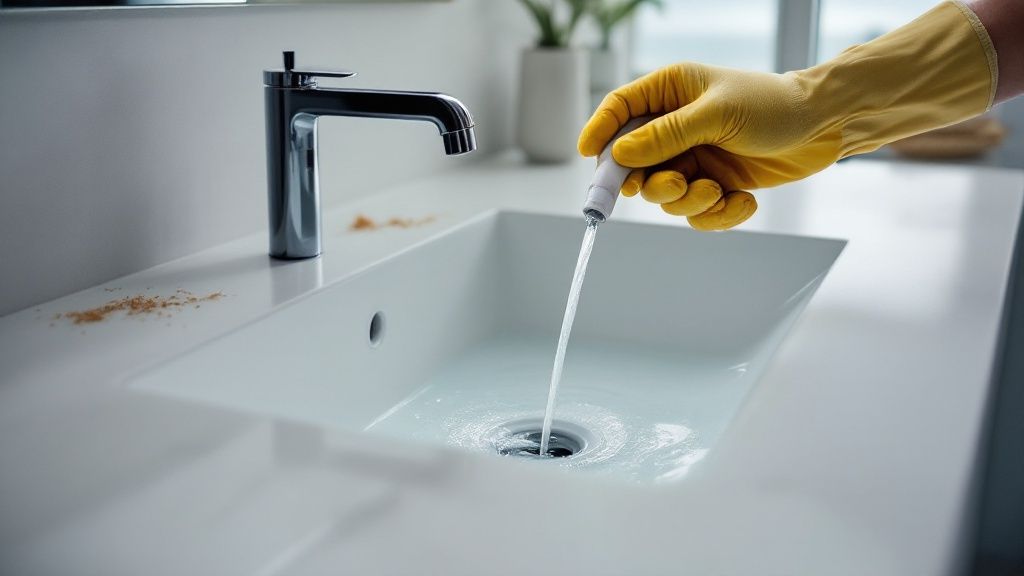
That gurgling sound coming from your sink isn't just an annoying noise. It’s your plumbing trying to tell you something is wrong. When a drain starts moving slowly, it's a clear sign that a clog is forming. What seems like a small problem now can quickly turn into a messy headache if you ignore it.
What a Slow Drain Says About Your Plumbing
When a drain in your Salinas or Carmel home starts taking its sweet time, it's telling a story. It’s a warning that a blockage is building up from things like hair, soap scum, and grease. These everyday items love to stick to the inside of your pipes, slowly making the path for water smaller and smaller.
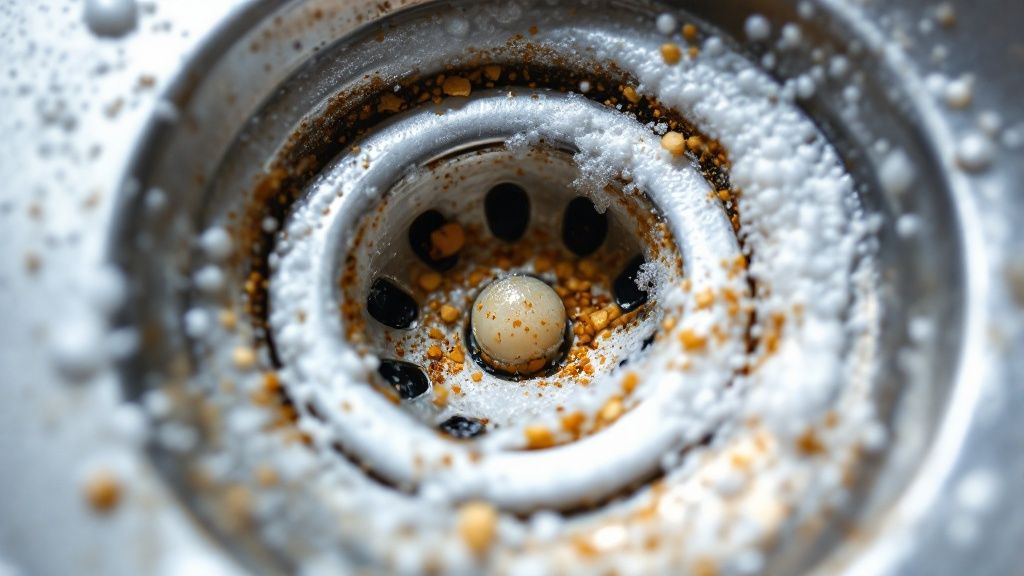
Here in Monterey County, we also have our own unique plumbing challenges. A fun trip to Asilomar State Beach can mean sand gets washed down the shower drain. That sand mixes with soap and can form a stubborn, gritty clog. And after a big family dinner in Prunedale, it’s easy for food scraps and cooking grease to team up and back up the kitchen sink.
These buildups don’t just pop up overnight. They grow over weeks or even months until you finally notice the water isn't going down like it used to.
Common Causes of Slow Drains in Local Homes
As a family-owned business serving this community since 1988, we've seen it all. Certain clogs are more common in specific parts of the house, especially with our local lifestyle here on the Central Coast.
Here’s a quick look at the most common reasons for clogs we see in Salinas, Monterey, and the surrounding areas.
| Location in Home | Primary Culprit | Why It's a Local Problem |
|---|---|---|
| Kitchen Sink | Grease, Coffee Grounds & Food | Common after large family gatherings or from homes that cook frequently in the Watsonville and Castroville areas. |
| Bathroom Shower | Hair, Soap Scum & Sand | Sand from our beautiful Monterey Peninsula beaches often mixes with soap, creating a tough, cement-like blockage. |
| Utility Sink | Dirt, Debris & Lint | Homes in more rural areas like Carmel Valley often have utility sinks that handle dirt from gardening or outdoor activities. |
Ignoring these early signs is where the real trouble starts. A simple slow drain can put a surprising amount of pressure on your whole plumbing system. Soon, you could be dealing with bad smells, hidden leaks, or a full-blown backup that causes serious water damage.
A Pro's Insight: "We've been serving this community since 1988, and the most common thing we see is a small problem that was ignored. A slow drain is your plumbing system's way of asking for help before an emergency happens."
Catching these warning signs early helps you act before a minor issue turns into a costly, messy repair job.
Why Chemical Drain Cleaners Are a Bad Idea
When you’re staring at a slow drain, grabbing a bottle of chemical cleaner feels like the quickest fix. But in our experience, especially for homeowners in places like Pacific Grove and Carmel-by-the-Sea with their beautiful, older homes, these harsh liquids can cause more problems than they solve.
These store-bought cleaners use a powerful chemical reaction to create intense heat. The idea is to dissolve the clog, but the reality is often much more damaging.
That heat and the corrosive chemicals don't just attack the clog; they can eat away at PVC pipes, soften old rubber seals, and speed up rust in metal pipes. Over time, this damage can lead to hidden leaks behind your walls or under your floors—a repair that's much more expensive than just clearing a simple clog.
A Temporary Fix at Best
Even when they seem to work, chemical cleaners often just burn a small tunnel through the middle of the gunk. They rarely get rid of the entire blockage.
This means your drain will probably start backing up again, and usually sooner rather than later. We've seen many homes in Seaside and Marina where we've had to replace entire sections of pipe that were severely damaged from the repeated use of these products.
Since our family started this business back in 1988, we've seen firsthand how chemical cleaners can turn a minor slow drain into a major plumbing emergency. They’re a gamble with your home’s plumbing that just isn’t worth the risk.
Think of it this way: the chemicals can't tell the difference between a clump of greasy buildup and the wall of your actual pipes. They attack everything they touch, and your plumbing is what pays the price. A smarter approach is to tackle the root cause of the clog safely. Of course, the best long-term strategy is always to learn how to prevent clogged drains in the first place.
Safe First Steps for Minor Drain Clogs
Before you call a professional, there are a couple of gentle, safe methods you can try for a minor slowdown. These are not a full-blown fix. Think of them as a way to see if you're dealing with a simple problem before calling for backup.
A common first step is to carefully pour boiling water down the drain. This can sometimes be enough to melt away light grease or soap scum. Another popular and safe method is using baking soda and vinegar. The fizzy reaction can sometimes loosen the gunk causing the slowdown. For a more detailed look, check out our guide to natural drain cleaner solutions.
A Gentle Approach for Your Pipes
This simple process uses basic household items to create a reaction that can break down minor clogs, all without the risk of damaging your pipes like harsh chemicals can.
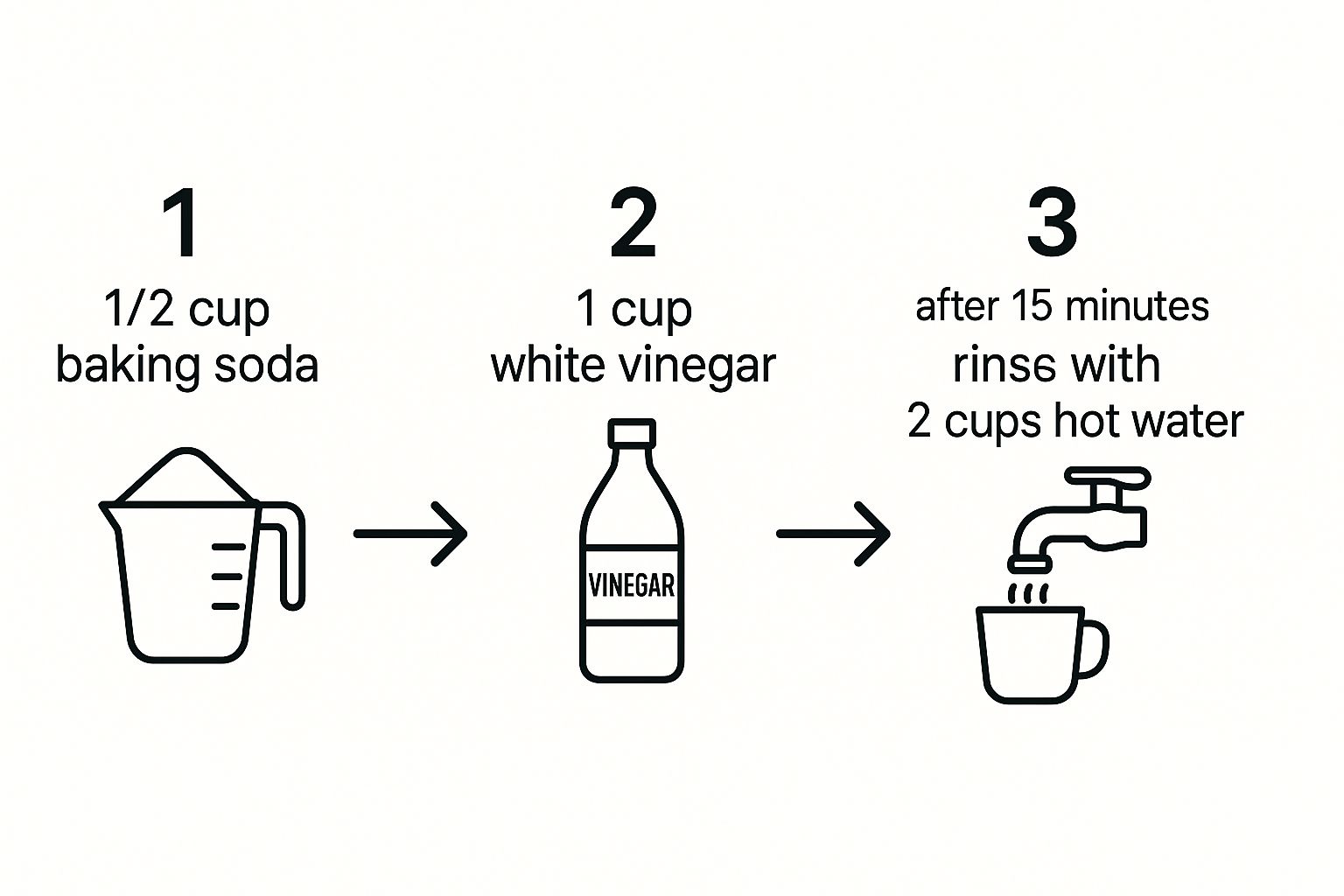
The key takeaway here is that this is a safe first step for small, localized clogs. But it’s important to know its limits—it's only effective against very minor buildups.
When to Stop: If you try a gentle method and see no improvement, it's time to stop. The same goes if multiple drains in your home are slow. This almost always points to a deeper issue in your main line that these simple fixes can't possibly reach.
The demand for effective plumbing solutions is huge. In fact, the global market for professional drain cleaning equipment was valued at around $2.42 billion and is expected to keep growing. You can read more about the growth of the drain cleaning market yourself. This shows why having the right professional tools is so important.
For anything more than a minor slowdown, calling a licensed plumber from Alvarez Plumbing is your safest and most effective choice.
When to Call a Professional Plumber
Some slow drains are much more than a simple inconvenience—they're your plumbing system’s way of waving a red flag. While the simple methods we've covered can handle a minor slowdown, certain signs point to a deeper problem that home remedies just can't touch.
Knowing when to put down the plunger and pick up the phone is key to preventing a messy, expensive emergency.
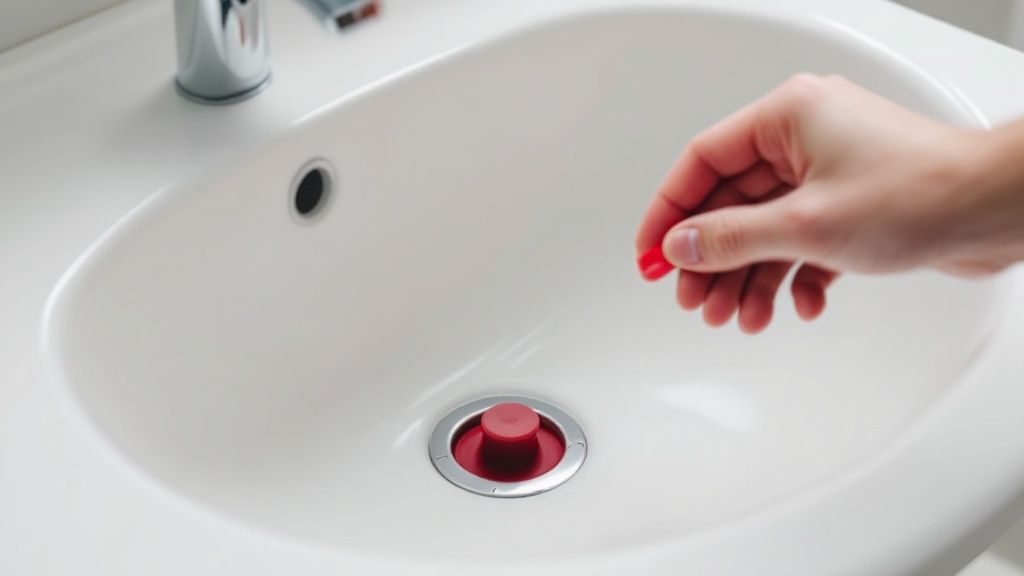
If you've tried everything and that clog just keeps coming back, that’s a clear signal something more serious is going on. A recurring clog means you're only clearing a small part of a much larger blockage.
Likewise, a foul odor that won't go away, especially a sewer gas smell, often points to an issue deep within your drain lines or a problem with your venting system.
But the biggest red flag of all? When multiple drains in your home start backing up at the same time. If your toilet gurgles every time the shower drains, or the kitchen sink and washing machine back up together, you're almost certainly dealing with a main sewer line clog. This is not a DIY job.
Local Issues That Require a Pro
Here in Monterey County, our beautiful landscape can sometimes cause unique plumbing headaches. In areas like Carmel Valley, for instance, the majestic oak trees have powerful root systems that can invade and crush sewer lines, causing constant backups that no amount of plunging will fix. Over in Marina, we've seen how shifting sandy soil can cause underground pipes to settle and break over time.
These are complex issues that require professional diagnosis and special equipment. We use tools that you can't get at a hardware store:
- Video Camera Inspections: We can send a small camera down the line to see exactly what’s causing the blockage, whether it's tree roots, a collapsed pipe, or years of buildup. No more guessing.
- Hydro-Jetting: For the toughest clogs, we use high-pressure water jets to safely scrub the inside of your pipes completely clean. This process removes grease, scale, and roots without damaging the pipe itself.
As a family-owned business serving this community since 1988, we know that calling a plumber can feel like a big step. But addressing these warning signs early with the right tools is always safer and cheaper than waiting for a major backup to flood your home.
The global demand for professional drain cleaning services was valued at around $12.3 billion in 2023, largely because aging infrastructure across the country requires expert attention. This trend highlights why professional-grade tools and experience are so vital. To really get a handle on the scope of this work, you can explore resources dedicated to understanding the plumbing and HVAC industry.
If you're curious about some of the tools we use on a daily basis, you can also learn more about the professional-grade handheld snake for drain cleaning in our other articles.
How to Keep Your Drains Flowing Freely
Let's be honest, the easiest clog to deal with is the one that never happens. A little bit of proactive maintenance is the best way to avoid the headache of a slow drain, whether you're in a busy Castroville neighborhood or a quiet home in Monterey. It just takes a few simple habits to make a world of difference.
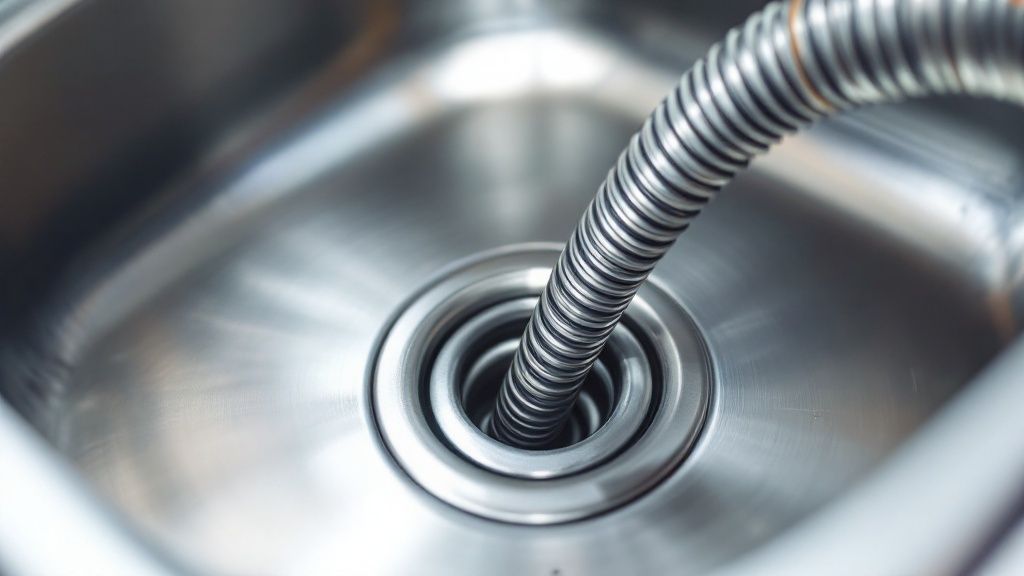
It all starts with being mindful of what’s going down your drains. In the kitchen, the number one rule is to never pour fats, oils, or grease down the sink. When that stuff cools, it turns solid inside your pipes and creates a sticky trap that catches every little food particle that follows.
For the bathroom, one of the most effective tools is a simple mesh drain strainer. They’re cheap, easy to find, and they do a fantastic job of catching hair and soap scum before they can form a stubborn blockage.
Seasonal Awareness and Long-Term Care
Living here on the Monterey Peninsula, our plumbing has to deal with some unique seasonal challenges. The heavy winter rains we get can put a serious strain on older city sewer systems. When that happens, the extra pressure can make any existing clogs in your own lines much worse, leading to slow drains when you least expect it.
This is where regular professional maintenance really shines. Having your drains inspected and cleaned by a pro can catch those little problems before they blow up into big ones. Think of it as a small investment in your home's long-term health.
As a family-owned business helping our neighbors since 1988, we believe in empowering homeowners. A little prevention goes a long way in avoiding plumbing headaches and keeping your home running smoothly.
When you adopt these habits, you become an active partner in your home's care. For a deeper dive, check out our full guide on how to keep drains clear and flowing perfectly all year round.
Common Questions About Slow Drains
As a family-owned plumbing company that's been serving Salinas and Monterey since 1988, we've heard just about every question you can imagine about slow drains. After decades in the business, you get a good sense of what's on homeowners' minds.
Here are straightforward answers to some of the most common ones we get.
How Do I Know If My Slow Drain Is a Serious Problem?
This is a great question. The answer usually comes down to how many drains are affected.
A single slow sink in your Prunedale bathroom, for instance, is often just a simple, local clog from hair and soap scum. It's annoying, but not an emergency.
However, if you're seeing multiple fixtures backing up at the same time—like a toilet gurgling when the shower in your Watsonville home drains—that’s a major red flag. This almost always points to a blockage in your main sewer line. That's a serious issue that needs professional attention before it turns into a messy sewage backup inside your home.
Are "Flushable" Wipes Really Safe for My Pipes?
Absolutely not. From our professional experience, these are one of the biggest causes of stubborn clogs all across Monterey County.
Despite what the package says, these wipes do not break down like toilet paper. Instead, they get snagged in the pipe, where they tangle with grease, hair, and other debris. Over time, they form dense blockages that only professional-grade equipment can break apart.
Always put wipes in the trash can, never down the toilet.
The safest rule for your plumbing is simple: only flush human waste and toilet paper. Anything else, including so-called "flushable" wipes, paper towels, or cotton swabs, belongs in the garbage.
Why Does My Drain Get Slower When It Rains?
This is a common issue here on the Monterey Peninsula, especially during heavy winter rains. When the ground gets soaked, all that water has to go somewhere.
If you have older or slightly cracked sewer lines, this groundwater can seep in and start to overwhelm your system. This extra water reduces your pipe’s capacity to handle wastewater from your home, causing drains inside to slow down or even back up.
The only way to know for sure if this is happening is with a professional camera inspection, which can find these leaky weak spots in your sewer line.
For more information, feel free to explore our detailed guide on clogged drain repair in Monterey.
A stubborn slow drain is more than an annoyance—it's your plumbing system asking for help. Don't wait for a small issue to become a major headache. Contact Alvarez Plumbing today for fast, reliable, and professional service. https://alvarezplumbingsalinas.com