That chalky, white gunk on your kitchen and bathroom faucets isn't just an eyesore—it's the calling card of the hard water we have all over the Monterey Bay area. A quick vinegar soak might clean it up for a day or two, but that’s just a temporary, cosmetic fix. It does nothing to solve the real problem happening inside your faucet.
Why Your Faucet Has That Ugly White Crust
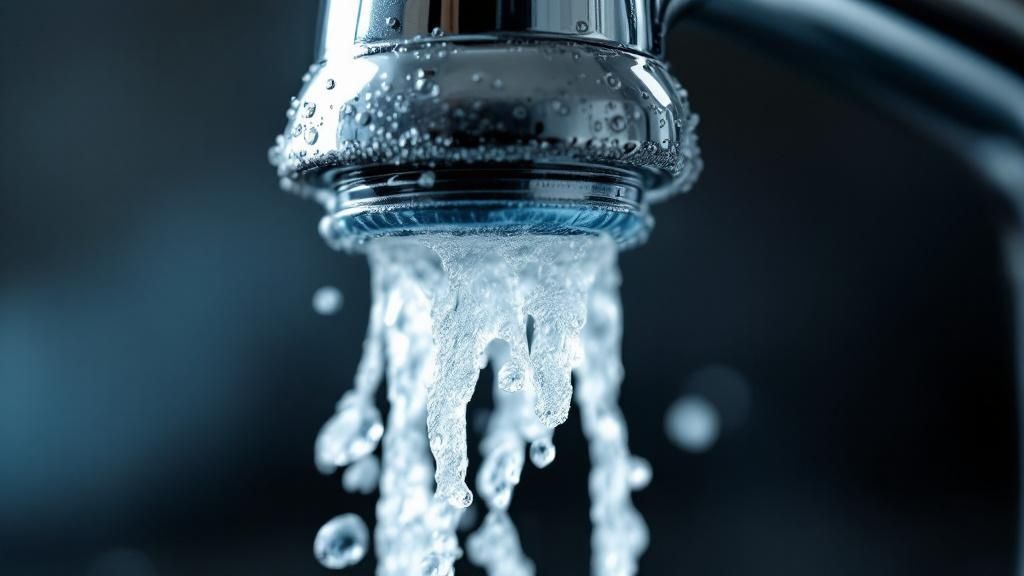
If you live anywhere from Salinas to Carmel Valley, you already know the deal with hard water. Our local water supply is loaded with minerals like calcium and magnesium. When water evaporates from your faucet, those minerals get left behind, creating that stubborn, crusty residue we all know as limescale.
But this buildup is more than just a cosmetic issue that makes your shiny fixtures look dull and neglected. It's actually a visible symptom of a much bigger issue brewing inside your plumbing.
More Than Just a Surface Problem
That limescale you see on the outside? It’s also building up on the inside of your faucet. Little by little, it chokes off water flow by clogging up the tiny holes in the aerator, which is that little screen at the tip of the faucet. Over time, this blockage can cause some seriously frustrating problems for homeowners in communities like Marina and Seaside.
You've probably noticed it yourself:
- Water pressure that’s gotten weak or sputters
- Water spraying out in weird directions instead of a nice, steady stream
- Faucet handles that are getting stiff and hard to turn
These aren't just minor annoyances. They're clear signs that the internal parts of your faucet are wearing out way too fast. Those mineral deposits grind against washers, O-rings, and cartridges, causing them to fail prematurely and leading to those dreaded drips and leaks.
To help you spot the trouble early, here's a quick guide to what you might be seeing on your faucets.
Quick Guide to Spotting Hard Water Faucet Damage
This table helps homeowners in communities like Marina and Seaside quickly identify the common symptoms of hard water buildup on their plumbing fixtures.
| Symptom | What It Looks Like | What It Means for Your Faucet |
|---|---|---|
| White or Green Crust | Chalky, powdery, or sometimes greenish buildup around the base and spout. | This is the classic sign of mineral deposits (limescale) being left behind as water evaporates. |
| Reduced Water Flow | The stream of water seems weaker than it used to be, or it sputters. | Mineral scale is likely clogging the aerator screen at the tip of your faucet, restricting water. |
| Erratic Spray Pattern | Water sprays sideways or in multiple directions instead of a single, smooth stream. | The tiny holes in your aerator are partially blocked by individual scale deposits. |
| Stiff Handle | The faucet handle becomes difficult to turn on, off, or adjust for temperature. | Scale is building up inside the faucet body, causing friction on the cartridge or valve stem. |
| Constant Dripping | A slow, persistent drip from the spout even when the faucet is turned off completely. | Mineral buildup has likely damaged an internal washer or O-ring, preventing a proper seal. |
Spotting these signs early can save you from a bigger headache down the road.
The Impact on Water Flow and Pressure
Hard water is a huge issue for homes across the country. In the United States, more than 85% of homes are dealing with it. When limescale takes hold inside faucets and pipes, it can absolutely kill your water flow. Some studies have shown that severe scale buildup can restrict flow by as much as 40%. That explains why your faucet has turned into a dribble or your shower pressure is so disappointing. You can explore more about how hard water affects your appliances to see the full picture.
As a family-owned business serving Monterey County since 1988, we've seen firsthand how ignoring limescale leads to bigger headaches. A crusty faucet is often the first warning sign of stress on your entire plumbing system.
Scrubbing the outside of your faucet might make it look better for a bit, but it does absolutely nothing to stop the damage happening on the inside. Understanding that is the first real step toward finding a lasting solution.
How Hard Water Silently Damages Your Entire Home
That crusty, white buildup you keep scrubbing off your faucet is really just the tip of the iceberg. It’s the most obvious sign of hard water, sure, but the same exact mineral deposits are quietly accumulating all through your home's plumbing. They're inside the pipes behind your walls and deep within your expensive appliances, causing slow, steady damage completely out of sight.
For homeowners here in Pacific Grove or Watsonville, this isn't just some minor cleaning hassle. It's a genuine threat to your home’s most essential systems. What starts as an annoying cosmetic issue on a faucet can easily spiral into much bigger, more expensive headaches down the line.
The Hidden Impact on Your Pipes and Appliances
Try to picture your plumbing system as the arteries of your home. The minerals in hard water, mostly calcium and magnesium, act like cholesterol. They gradually build up on the inside of your pipes in a process called scaling, narrowing the path for water to flow. It's the reason you might notice your water pressure slowly getting weaker over the years, especially during our dry Salinas Valley summers when water demand is high.
This internal buildup makes your entire system work much harder than it should. The consequences are pretty significant:
- Water Heater Failure: Scale creates an insulating layer on the heating element of your water heater. This forces the unit to run longer just to heat the same amount of water, spiking your energy bills and often causing it to burn out years ahead of schedule.
- Appliance Inefficiency: Your dishwasher and washing machine are also fighting a losing battle. Limescale clogs up their internal parts, making them less effective at cleaning and leading to more frequent breakdowns.
- Constant Clogs: Showerheads are famous for getting clogged with mineral deposits, which is what turns a refreshing shower into a weak, frustrating trickle.
As a family business serving Monterey County since 1988, we've seen countless premature appliance failures caused by untreated hard water. It's one of the most common—and preventable—causes of expensive plumbing repairs.
From Low Pressure to Leaks
Hard water buildup doesn’t just slow things down; it actively damages your fixtures and pipes. The accumulation of calcium and magnesium minerals creates rock-hard deposits that can choke off water flow. In some cases, these blockages can slash water pressure by as much as 24%. This not only hurts performance but also puts extra stress on your system, increasing the risk of leaks and pipe bursts that lead to serious home repairs.
In community living situations, handling issues like hard water damage often falls under larger maintenance plans. You can learn more about these HOA common area maintenance strategies.
Ultimately, ignoring the signs of hard water is like ignoring a slow leak—the problem will only get worse and more expensive. Protecting your plumbing is also directly tied to bigger goals like water conservation, which is a major concern for all of us here in California. A well-maintained, efficient system prevents waste. You can find more tips in our guide on how to conserve water at home.
Why Vinegar Soaks Are Only a Temporary Fix
When you spot that chalky white crust on your faucet, your first instinct is probably to look up a quick fix. You’ll find countless articles suggesting a simple vinegar soak. This usually involves wrapping a vinegar-soaked cloth or bag around the faucet for a while. The acid in the vinegar can dissolve some surface minerals, making things look shiny for a bit.
But that’s all it is—a temporary, cosmetic fix. A vinegar soak is like yanking the top off a single weed while ignoring the massive root system spreading just beneath the soil. It might look better for a day or two, but it does absolutely nothing to solve the real problem happening inside your faucet and pipes. While this can offer a brief visual improvement, it doesn't address the internal clogs causing low pressure. For a true, lasting solution that addresses the buildup inside and out, you need a professional approach.
The Limits of a Surface Clean
A baggie full of vinegar simply can’t get deep enough to make a real, lasting difference. The hard water minerals that are actually causing your low water pressure and damaging your fixtures are packed inside critical components where a surface soak will never reach.
Think about what's really getting clogged:
- The Aerator Screen: This little mesh filter at the tip of your faucet is full of tiny holes. A quick soak might clear a few on the very outside, but it won’t touch the hardened scale blocking the ones deeper inside.
- The Faucet Cartridge: This is the heart of your faucet, the part that controls both the water flow and the temperature. Mineral gunk inside the cartridge is what makes the handle stiff and causes those annoying drips. Vinegar can't get in there.
- Connecting Pipes: The pipes feeding your faucet are collecting scale, too. No amount of surface cleaning is going to reach the buildup that's slowly but surely narrowing your plumbing.
This is exactly why, a week or two after your DIY vinegar treatment, the problem is right back where you started. You’re only cleaning the symptom, not the source of the problem.
The Dangers of Harsher Chemicals
Frustrated when vinegar doesn’t deliver, some homeowners reach for a stronger, store-bought chemical cleaner. This is where a simple issue can quickly turn into a costly mistake. Many of those harsh products can easily damage the delicate finishes on modern faucets, stripping away the protective coating and causing permanent discoloration.
This is an even bigger worry for the beautiful, historic homes you’ll find in communities like Carmel-by-the-Sea. Older plumbing and vintage fixtures can be especially vulnerable to aggressive chemicals, which can corrode pipes and lead to leaks. We've seen it happen time and again.
The bottom line is this: while a vinegar scrub can give you a fleeting sense of accomplishment, it’s not a real strategy for faucet maintenance. It won't fix your water pressure, and it certainly won't stop the internal damage that leads to bigger issues.
If you're tired of seeing that crust return, you might find it helpful to read about other common plumbing problems that often have deeper roots than what you see on the surface.
Knowing When to Call a Professional Plumber
While a little surface scrubbing is fine for minor spots, there comes a point where a crusty faucet is signaling a much deeper issue. DIY methods just can't fix everything. Knowing when to put down the vinegar and pick up the phone can save you a ton of frustration—and prevent a small annoyance from turning into a major repair.
For homeowners in places like Prunedale or Castroville, the key is recognizing when the problem goes beyond what you can see. If you’ve cleaned your faucet multiple times only to have the buildup and poor performance return right away, that's a clear sign you’re not reaching the real source of the clog.
Clear Signs You Need a Plumber
Sometimes, your plumbing sends obvious signals that it’s time for professional help. If you notice any of the following issues, it's best to call in an expert who can properly diagnose and solve the problem for good.
Here are the most common red flags we see that mean a professional call is in order:
- Persistently Low Water Pressure: If cleaning the aerator doesn't restore your flow, the blockage is likely deeper in the faucet mechanism or the pipes themselves.
- Uneven or Spraying Water: When water shoots out sideways even after a good soak, it means the scale inside the aerator is too hardened for a simple vinegar solution to dissolve.
- Stiff or Squeaky Handles: Faucet handles that are difficult to turn mean mineral scale has infiltrated the internal cartridge. This is a delicate component that requires special tools to service without causing damage.
- Visible Corrosion or Flaking: If you see green or rust-colored spots, or if the finish on your faucet is flaking off, harsh minerals are eating away at the fixture itself.
As a family-owned business serving Monterey County since 1988, we can tell you that a stiff faucet handle is one of the biggest red flags. It almost always points to internal wear and tear that will lead to drips and leaks if it’s not addressed properly.
What an Alvarez Plumbing Pro Does Differently
When you call us for a faucet with hard water buildup, we don’t just do a surface clean. We perform a full diagnostic and repair service to restore your faucet to peak performance. This is where our 35+ years of experience really makes a difference.
Our process involves carefully disassembling the entire faucet. We then expertly clean all the internal components that you can't reach, like the cartridge, washers, and O-rings, removing all the hidden scale that causes stiffness and leaks. More importantly, we inspect the connecting plumbing to ensure there isn’t a more serious blockage forming down the line.
For more extensive hard water issues or if you're unsure how to proceed, knowing when to call in professional plumbing repair services is crucial.
Calling a licensed plumber isn't just about cleaning; it’s about protecting the investment you've made in your home's fixtures and plumbing system.
Protecting Your Home with a Long-Term Solution
Scrubbing the same chalky residue off your faucet week after week is exhausting. It feels like a chore that’s never truly finished.
That’s because cleaning the surface is only fixing the symptom, not the actual disease—the hard water flowing through your pipes every single day. Instead of constantly reacting to the problem, let's talk about a cure.
For families in Salinas and Monterey, the most effective way to handle hard water is to stop it before it ever reaches your fixtures. This is where a whole-home solution comes into play.
Beyond Cleaning to Preventing
The best way to eliminate hard water buildup from your faucet for good is to prevent it from forming in the first place. This is achieved with a water softener or conditioning system. Think of it as a filter for your entire house that works around the clock.
These systems are installed right where the water main enters your home. As water flows through, the system uses a process called ion exchange to grab and remove the hard minerals—calcium and magnesium—that cause all the trouble. What comes out the other side and flows to your faucets, showerheads, and appliances is softened water.
This simple infographic below shows the dramatic difference between simply cleaning the problem and preventing it entirely.
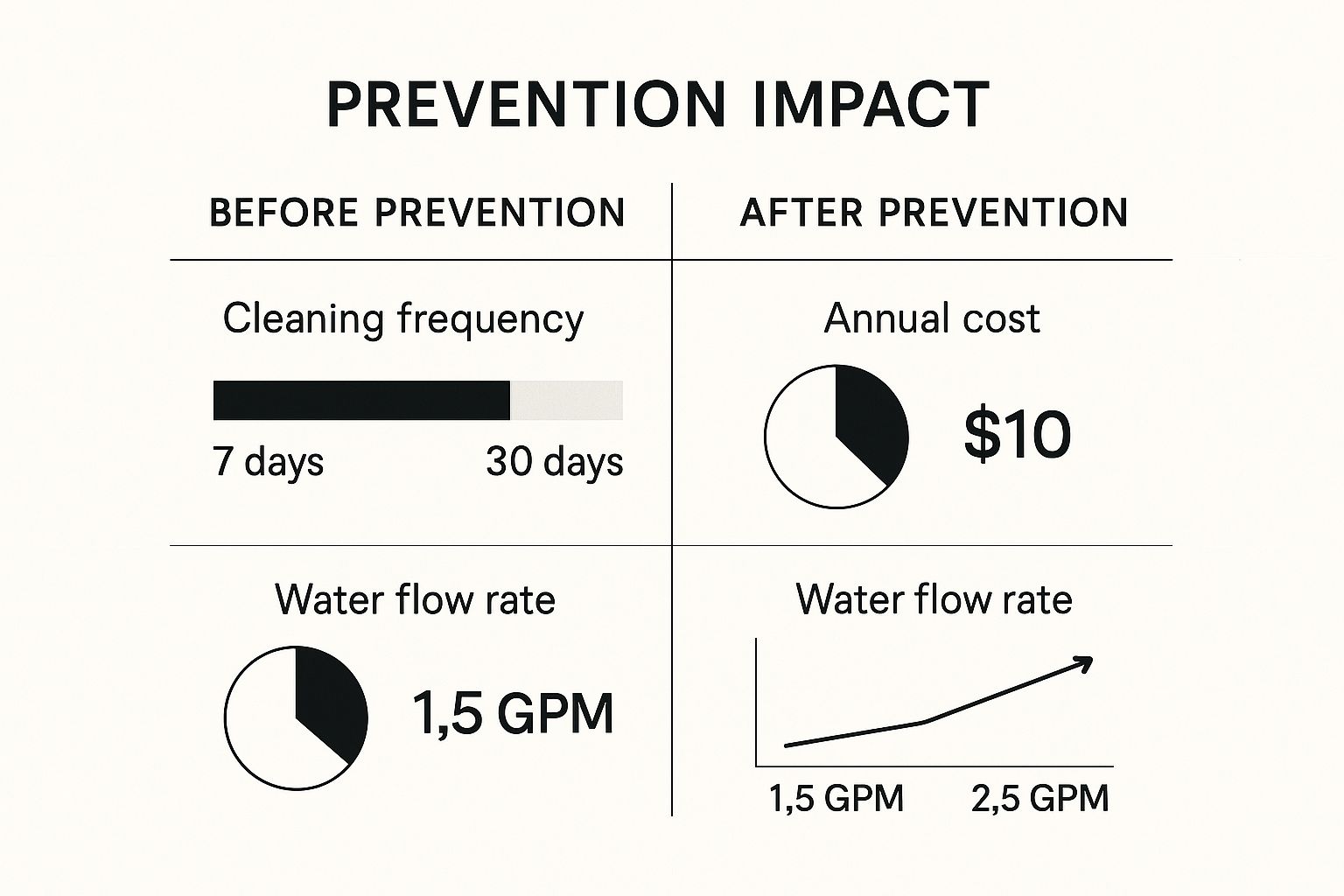
As you can see, the data clearly shows that a preventative solution not only saves you time and money but also restores your plumbing's performance.
When you weigh the options, it becomes clear that a water softener isn't just a purchase; it's an investment in your home's longevity and your own peace of mind. The table below breaks down the reality of dealing with hard water.
Comparing Short-Term Fixes to a Long-Term Solution
| Approach | Effectiveness | Cost | Best For |
|---|---|---|---|
| DIY Cleaning | Temporary. Scale starts reforming immediately after cleaning. Requires constant, repetitive effort. | Low upfront cost for supplies, but adds up over time. Doesn't account for the value of your time. | Quick cosmetic fixes before guests arrive or for minor, infrequent buildup. |
| Water Softener | Permanent. Prevents scale from ever forming, protecting all pipes and appliances. | Higher initial investment but saves money long-term on repairs, appliance replacement, and cleaning supplies. | Homeowners looking for a "set it and forget it" solution that protects their entire property. |
Ultimately, while regular cleaning is necessary for home hygiene, it's a reactive and never-ending battle against hard water. A water softener, on the other hand, is a proactive solution that addresses the root cause.
Real-World Benefits for Monterey County Families
Installing a water softener is about more than just having spotless faucets. It’s an investment in the health and longevity of your entire home’s plumbing system, which is a big deal for any homeowner, whether you're in a newer build in Marina or an older home in Pacific Grove.
The benefits are immediate and long-lasting:
- Protects Your Appliances: Your water heater, dishwasher, and washing machine will run more efficiently and last significantly longer without limescale clogging up their internal parts.
- Uses Less Soap: Soft water lathers much better, meaning you’ll use less soap, shampoo, and detergent to get the same clean results.
- Prevents Future Plumbing Calls: By stopping scale buildup in its tracks, you’re preventing the internal damage that leads to stiff handles, drips, and clogs.
- Better for Skin and Hair: Many people find that soft water leaves their skin feeling smoother and their hair more manageable.
As a family-owned company that's served this community since 1988, we see a water softener as one of the single best investments a homeowner can make to protect their property from the constant wear and tear of our local water.
It shifts your focus from constantly fixing small problems to enjoying a healthier, more efficient home. To dive deeper into the advantages, you can learn more about the numerous soft water benefits for Salinas, CA, residents in our detailed guide.
Your Hard Water Questions Answered
We get a lot of the same great questions from customers all across Monterey County. As a family-owned business serving our neighbors since 1988, we believe in giving direct, honest answers to help you make informed decisions about your home’s plumbing. Here are a few of the most common ones we hear.
Can Hard Water Permanently Damage My Expensive Faucets?
Yes, it absolutely can. Over time, those constant mineral deposits will do more than just dull the finish; they will actually corrode the metal and wear down the internal mechanics of your faucets, like seals and cartridges.
For homeowners in places like Carmel-by-the-Sea who've invested in beautiful, high-end fixtures, this kind of slow-motion damage is a serious concern. This internal wear is what leads to drips and leaks that, if ignored, eventually require a full faucet replacement. Addressing our local hard water early is the best way to protect that investment.
Is The White Buildup On My Faucet Dangerous to Drink?
Generally, no. The minerals that cause hard water, primarily calcium and magnesium, are not considered harmful to your health. The real issue isn't a health risk but the significant mechanical damage hard water does to your plumbing, fixtures, and appliances—which costs you money and causes frustration.
If you're curious about water quality in a broader sense, you can find more information in these frequently asked questions about water purity.
How Often Should I Check My Plumbing For Hard Water Issues in Salinas?
Given our local water quality, we recommend a professional plumbing inspection every one to two years. However, you should definitely call us sooner if you notice clear signs like:
- Decreasing water pressure
- Chalky residue that reappears quickly after cleaning
- Even faint dripping sounds
Sometimes, these symptoms can point to a hidden issue that's brewing out of sight. Our professional water leak detection services can pinpoint the source of a problem before it causes major damage. Proactive care truly saves homeowners thousands in the long run.
If you're tired of fighting a losing battle with hard water buildup, the team at Alvarez Plumbing is here to help you find a permanent solution. Contact us online or give us a call to schedule a consultation today!