If a cold shower ambushed your morning, you've stumbled upon the right place for some real-world gas hot water heater troubleshooting. The most common culprits we see in homes from Salinas to Santa Cruz are often pretty straightforward—a pilot light that refuses to stay lit, weird noises coming from the tank, or water that’s just not getting hot. Recognizing the signs is the first step to getting things back to normal.
Diagnosing Your Gas Water Heater Problems
As a family-owned plumbing service right here in Salinas since 1988, we've seen every water heater issue you can imagine across Monterey Bay. A sudden loss of hot water isn't just an inconvenience; it's your system telling you it needs professional attention. This guide is all about helping you confidently identify what might be wrong, so you know exactly what to tell the plumber when they arrive.
Our goal isn't to walk you through complex, potentially risky DIY repairs. Instead, we want to make you an informed homeowner. When you can describe the problem accurately, you can make a smarter decision and understand what our licensed plumbers are looking for when they arrive at your home, whether you're in Marina or Carmel-by-the-Sea.
To help you get a quick idea of what might be happening, we've put together this simple reference chart. It connects the strange symptoms you're noticing with the most likely professional diagnosis.
Common Gas Water Heater Symptoms at a Glance
| Symptom You're Experiencing | Most Likely Cause | Recommended Action |
|---|---|---|
| No hot water at all | Pilot light is out or thermocouple has failed | A quick visual check can confirm if the pilot is out. If it won't relight or stay lit, a professional thermocouple replacement is likely needed. |
| Water is lukewarm, not hot | Sediment buildup or a faulty thermostat | An annual professional tank flush can prevent sediment issues. If that doesn't help, the thermostat needs professional testing and potential replacement. |
| Rumbling or popping noises | Heavy sediment buildup at the bottom of the tank | This is a classic sign of mineral scale. Schedule a professional tank flush to clear it out and restore efficiency. |
| Water has a rotten egg smell | Bacteria in the tank, often reacting with the anode rod | A tank flush and potential anode rod replacement by a licensed plumber can solve this smelly problem. |
| Leaking from the bottom of the tank | Internal tank corrosion and failure | This is a critical issue. Turn off the water and gas supply to the heater immediately and call a professional for an emergency assessment. |
| Water leaking from a valve or pipe | Loose fitting or a faulty T&P valve | While sometimes a simple tightening is all that's needed, a faulty valve requires professional replacement to ensure your family's safety. |
This table is just a starting point, of course. A hands-on inspection from a licensed plumber is the only way to be certain, but it gives you a good idea of what's going on.
Common Issues We See in Monterey County
Our local water quality, especially in places like Carmel Valley and Salinas, is notoriously hard. That means it’s packed with dissolved minerals like calcium and magnesium. Over time, these minerals settle out and form a thick layer of sediment at the bottom of your water heater tank.
This sediment buildup is the root cause of so many common problems:
- Rumbling or Popping Noises: As the burner ignites, it has to heat the water through that crusty sediment layer. The water trapped underneath boils and steams, creating those unsettling sounds.
- Reduced Efficiency: Sediment acts like an insulator, forcing the burner to work overtime just to heat the water. This drives up your gas bills and puts extra stress on the unit.
- Lukewarm Water: If the sediment layer gets thick enough, it can physically block the heat from reaching the water, leaving you with a perpetually disappointing shower.
At Alvarez Plumbing, we’ve seen how quickly sediment can cripple a water heater's performance. An annual professional flush is one of the best things you can do to extend your heater's life and keep it running efficiently, especially with our local water conditions in Prunedale and Castroville.
Is It a Leak or Something Else?
Seeing a puddle of water around your unit is definitely alarming. While it's easy to assume the worst, it's not always a catastrophic failure. Sometimes, small leaks come from the pipe fittings or the pressure relief valve.
However, if water is dripping from the bottom of the tank itself, that often points to a serious internal corrosion issue. This is a clear sign the tank has failed and replacement is imminent.
It's also worth noting that other home appliances, like furnaces, have their own set of issues. While we focus on plumbing, understanding the range of common furnace repair needs can help you know who to call for what. Our job is to keep your plumbing systems, especially your gas water heater, running safely and smoothly for your family.
Troubleshooting a Pilot Light That Keeps Going Out
There’s nothing quite like the sudden shock of ice-cold water when you’re expecting a warm shower. If your gas hot water heater has stopped working, one of the most common culprits we see is a pilot light that just won't stay lit. We get calls about this specific issue all the time, from homes along the windy coast of Carmel-by-the-Sea to quiet neighborhoods in Castroville.
A stubborn pilot light is more than just an annoyance; it’s a critical failure. This small, continuous flame is what ignites the main burner that heats your water. When it goes out, your entire system shuts down.
Sometimes, the cause is simple, like a strong draft from an open window or a poorly sealed access panel, especially during the stormy winter months we get in Monterey County. But when the pilot light repeatedly goes out, it often points to a specific component failure.
This image shows some of the common signs of trouble, like leaks or corrosion, that can go hand-in-hand with a malfunctioning water heater.
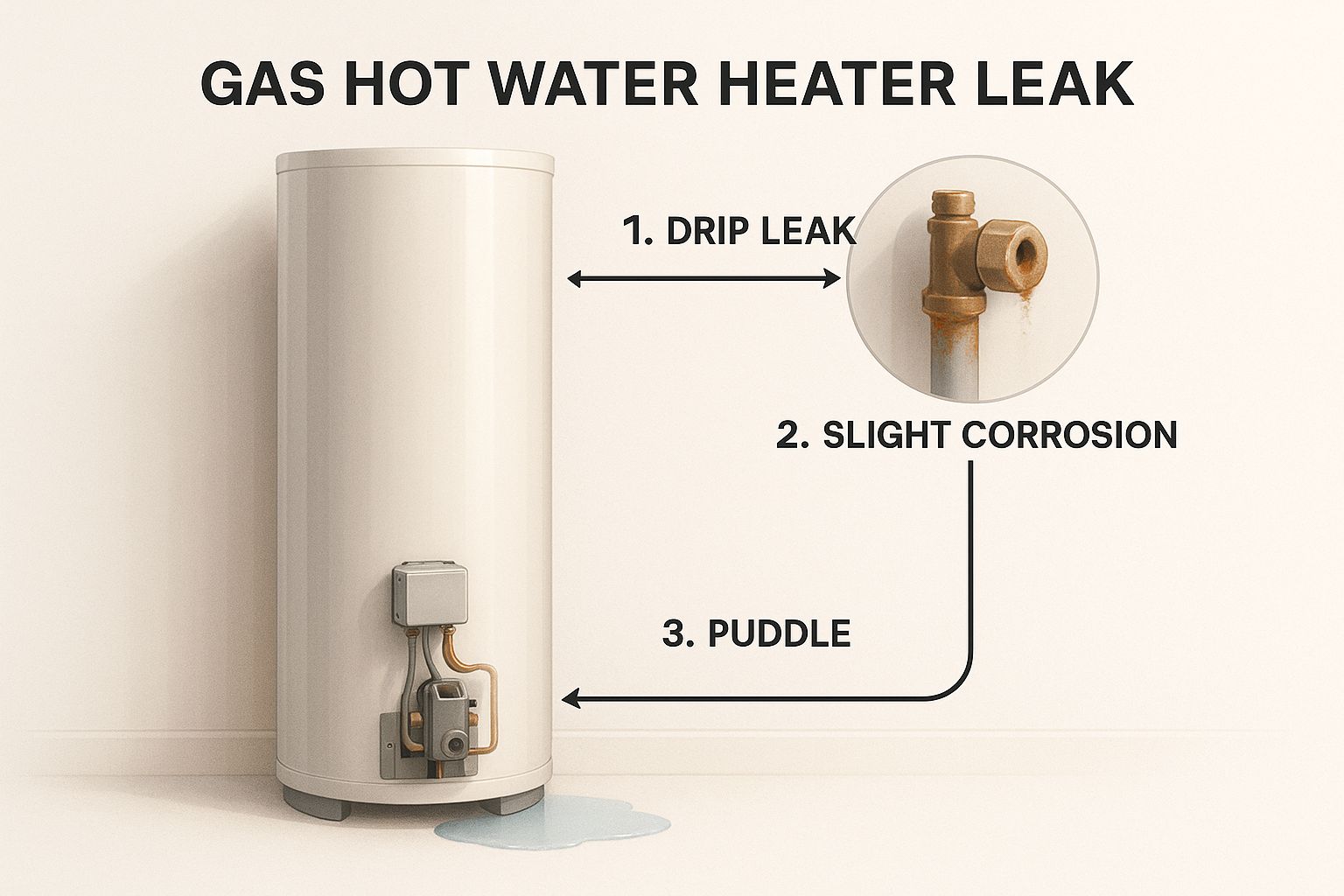
Visible issues like dripping water or rust around the valves often signal underlying problems that could also affect the pilot light’s stability. It’s a clear sign that it’s time for a professional inspection.
The Role of the Thermocouple
More often than not, a pilot light that keeps extinguishing is a classic symptom of a failing thermocouple. This is a small but absolutely essential safety device—a heat-sensitive sensor positioned right in the pilot flame.
Here’s a brief summary of how it works:
- The thermocouple gets hot from the pilot flame and generates a tiny electrical current.
- This current signals the gas control valve that it's safe to allow gas to flow.
- If the pilot flame goes out, the thermocouple cools, the current stops, and the gas valve automatically shuts off to prevent a gas leak.
So, if your thermocouple is faulty, it will mistakenly tell the gas valve to shut down, even when the pilot light is on.
As a family-owned business serving Monterey County since 1988, we've seen countless thermocouples fail over the years. It's a normal part of a water heater's life cycle, but diagnosing and replacing it correctly is a job that demands professional expertise and precision.
Why DIY Thermocouple Replacement Is Risky
It might seem tempting to watch a video and try to replace the thermocouple yourself. The part itself is inexpensive, but the risks involved are huge. An improper installation can lead to dangerous gas leaks or a complete failure of the water heater's safety system. This is a job strictly for licensed professionals.
A licensed plumber does more than just swap a part. We conduct a full diagnostic to confirm the thermocouple is actually the problem. Sometimes, the real issue is a dirty pilot orifice or a problem with the gas control valve itself. Simply replacing the thermocouple without fixing the root cause is a temporary fix at best. Taking care of your appliance means understanding the signs and knowing when to call for help, which is why we've put together a guide on handling hot water heater problems in Salinas.
Signs Your Thermocouple Is Failing
So, how do you know if the thermocouple is the likely suspect? The main symptom is a pilot light that won't stay lit after you release the control knob. You might be able to get it lit, but as soon as you let go, the flame dies.
If you're facing this issue, it's a clear signal that a component is failing and needs professional attention. Attempting to bypass or improperly install safety components can have serious consequences. For the safety of your home and family in Watsonville, Seaside, or anywhere in our service area, let a certified professional from Alvarez Plumbing handle it.
Solving Water Temperature Fluctuation Issues
Is your shower suddenly going from lukewarm to scalding hot without any warning? That unpredictable temperature swing isn't just frustrating; it's a clear sign your gas hot water heater needs a professional look. This kind of issue often points directly to a problem with the brains of the operation: the thermostat and the gas control valve.
When everything works correctly, these parts have a simple job: the thermostat reads the water temperature, and if it drops, it signals the gas control valve to open and ignite the burner. Once it's hot enough, it tells the valve to shut off.
But when a component starts to fail, that smooth process breaks down, leading to the erratic temperatures you're experiencing.
Why Temperatures Swing Wildly
A faulty thermostat is a common culprit. We recently had a service call in Pacific Grove where a family was dealing with water that was dangerously hot one minute and barely warm the next. The cause? A malfunctioning thermostat sensor that couldn't get an accurate reading.
This is more common than you might think. Thermostat malfunctions are a prevalent problem in gas hot water heater troubleshooting. For more general info, you can explore insights on common water heater problems from Freshwater Systems.
Several things can go wrong with these critical parts:
- A Faulty Sensor: The sensor probe that extends into the tank can get coated with mineral scale (a big issue here in Monterey County) or simply fail over time.
- A Worn-Out Shank: The part of the thermostat connecting to the gas valve can wear out, leading to poor communication between the two.
- Electrical Failure: The thermostat itself can have an internal electrical fault, causing it to send incorrect signals—or no signals at all.
Why Professional Diagnosis Is Key
You might be tempted to just crank the temperature dial up or down, but this rarely solves the underlying problem and won't fix a broken component. A professional diagnosis from a licensed plumber goes far deeper than just looking at the dial.
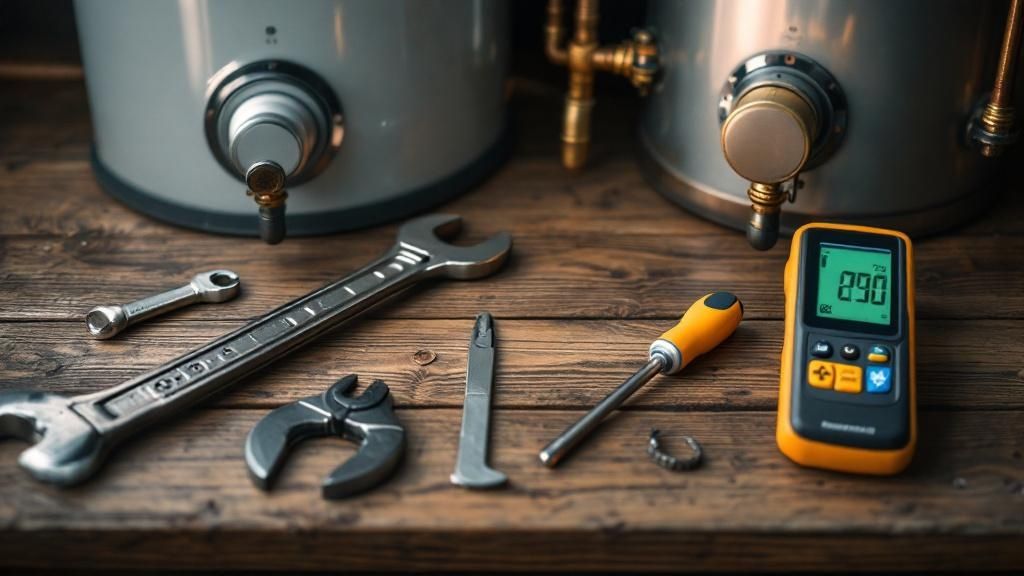
At Alvarez Plumbing, we don’t just guess. Our technicians use multimeters to test the thermostat's continuity, ensuring it can properly open and close the electrical circuit. This tells us definitively if the component has failed.
This testing process is critical. It allows us to distinguish between a simple calibration issue and a part that needs a complete replacement. We also inspect the sensor to make sure it’s properly seated and making good contact to read the water temperature accurately.
The Dangers of DIY Thermostat Replacement
Replacing a thermostat or gas control valve on a gas hot water heater is absolutely not a DIY job. These components are directly connected to your home’s gas line, and any mistake during installation can have severe consequences, including gas leaks or an explosion. A licensed plumber will safely shut off the gas, correctly install the new components with proper sealant, and meticulously test for leaks with a specialized detector.
For the safety of your family and your home in Salinas, Watsonville, or anywhere nearby, this is a repair that must be left to a trained and certified professional. If your water temperature is all over the map, give Alvarez Plumbing a call. We’ll get to the bottom of it and restore safe, reliable hot water to your home.
Recognizing Serious Warning Signs and Smells
While some gas hot water heater issues can wait for a scheduled appointment, others are your system's way of screaming for help. Your water heater will almost always give you a heads-up when a major problem is brewing. Learning to recognize these sounds and smells is critical—ignoring them can lead to expensive damage or, far more importantly, a dangerous situation for your family.
Over the years at Alvarez Plumbing, we've handled countless emergency calls across Monterey County, from Seaside to Pacific Grove, that started with a "funny noise" or a "weird smell." These aren't just minor quirks; they're urgent alerts that demand your attention.
Popping and Rumbling Noises
Does your water heater sound like it's making popcorn? If so, you're hearing the direct result of sediment buildup. This is an incredibly common problem here in areas with hard water, like Salinas and Carmel Valley. Over time, minerals like calcium and magnesium settle at the bottom of the tank, creating a thick, crusty layer of scale.
When the burner fires up, it has to heat the water through that mineral layer. The water trapped underneath the sediment gets superheated and boils, which creates the popping, banging, or rumbling sounds you’re hearing.
This noise is a sign that your system is being actively harmed:
- It wastes energy by forcing the burner to work overtime, which you'll see on your gas bill.
- It puts immense stress on the bottom of the tank, leading to metal fatigue and eventually cracks.
- It will eventually cause tank failure, turning what could have been a repair into a mandatory and much more expensive replacement.
A professional tank flush can often solve this, but if the sounds are loud and have been going on for a while, it signals a severe buildup that needs a professional eye on it right away.
As a family business serving this community since 1988, we can't stress this enough: unusual noises are your water heater's cry for help. Addressing them early prevents a much bigger, more expensive headache down the road.
The Rotten Egg Smell: The Most Critical Warning
There is one warning sign that trumps all others in urgency: the smell of rotten eggs or sulfur. Natural gas itself is odorless. Utility companies add a chemical called mercaptan to give it that distinct, awful smell for one reason: safety. If you smell this anywhere in your home, especially near your water heater, you may have a gas leak.
A gas leak is an emergency that requires immediate action. The risk of a fire or explosion is very real and should never be underestimated. You can learn more about this and other vital information in our detailed guide on water heater safety tips for Salinas, CA, homeowners.
What To Do If You Smell Gas
If you even think you smell gas, your family's safety is the only thing that matters. Follow these steps precisely and without a moment's hesitation:
- Don't Touch Anything Electrical: Don't flip light switches, use your phone, or unplug any appliances. A tiny spark could ignite the gas.
- Extinguish All Flames: Immediately put out any open flames, like candles.
- Evacuate Everyone Immediately: Get every single person and pet out of the house now. Leave the door open on your way out to help ventilate.
- Call for Help from a Safe Distance: Once you are safely outside and far from the house, call your gas company's emergency line and then 911. After that, call a licensed plumber like us.
Do not go back into your home for any reason until a professional from the gas company has declared it safe. Our certified technicians are equipped to handle gas line repairs with the utmost care, ensuring the safety of your home, whether you're in Prunedale, Castroville, or any of our surrounding communities. When it comes to gas hot water heater troubleshooting, smelling gas is the ultimate signal to stop what you're doing and get everyone out.
What Causes Low Hot Water Pressure
It's a story we hear all the time from homeowners in Seaside and Prunedale. The cold water comes blasting out of the faucet, no problem. But when you turn the handle to hot, you get nothing more than a sad, disappointing trickle.
When this happens, it’s a massive clue. The issue isn't with the city's water supply or the main line coming into your house. Instead, the problem is almost certainly located somewhere within your gas hot water heater or its own dedicated plumbing.
This specific brand of low pressure is a classic plumbing puzzle, and getting the diagnosis right is everything. The culprit is almost always a blockage somewhere between the point where cold water enters your heater and the point where hot water leaves it.
The #1 Culprit: Mineral Buildup
Here in Monterey County, from Salinas to the Carmel Valley, our water is notoriously hard. This just means it's packed with minerals like calcium and magnesium. While they’re perfectly harmless to drink, these minerals can absolutely wreak havoc on your plumbing over time.
As water gets heated inside your tank, those minerals drop out and form a hard, chalky scale. This scale loves to build up in a few key places, creating a bottleneck that strangles your hot water pressure. The most common spot for this clog to form is right at the hot water outlet nipple on top of your water heater.
Other Potential Blockages
While mineral scale is definitely the usual suspect, it’s not the only thing that can cause low hot water pressure. A proper gas hot water heater troubleshooting process means having a professional check these other possibilities, too.
- A Partially Closed Shut-Off Valve: Your heater has a shut-off valve on the cold-water inlet pipe that may have been bumped or not fully opened.
- Kinked or Damaged Flex Lines: Flexible supply lines connecting the heater to your pipes can easily get bent over time, creating a physical roadblock.
- Sediment in Faucet Aerators: Small bits of sediment can break loose from the tank and get trapped in the tiny screens of your faucets or showerheads.
As a family business that's been serving this community since 1988, we've learned that a systematic approach is non-negotiable. We always start our diagnosis at the source—the water heater—and work our way outward to be sure we find the real cause of the pressure drop.
Why a Professional Diagnosis Matters
Trying to fix low hot water pressure might seem straightforward, but it’s often more complex than it looks. Attempting to clear a clog yourself without the right tools can easily damage the pipes or even the water heater. A professional plumber brings the right diagnostic tools and, more importantly, the experience to identify the blockage safely and accurately.
We know how to tell the difference between a simple mineral buildup that can be carefully cleared and a bigger issue that might mean replacing a section of pipe or the heater itself. If you're tired of weak showers and trickling taps, you can learn more about how to fix low water pressure in our detailed guide. Getting that strong, steady flow of hot water back often requires a professional touch to ensure it’s done right.
Frequently Asked Questions About Gas Water Heaters
As a family-owned plumbing company serving Monterey County since 1988, we've fielded just about every question you can imagine about gas water heaters. From Watsonville to Carmel-by-the-Sea, homeowners tend to run into similar issues and have the same key concerns. We’ve put together some of the most common questions our team hears to give you clear, expert answers.
How Often Should I Have My Gas Water Heater Serviced?
We can't stress this enough: get it professionally serviced once a year. An annual check-up is hands down the best investment you can make for your water heater's health and longevity.
Here in Monterey County, our notoriously hard water is a huge factor. During a yearly service, our plumbers will perform a professional tank flush to clear out all the mineral sediment that builds up. Think of it like a regular oil change for your car. This simple yearly maintenance helps your heater run more efficiently (saving you money on gas bills), gets rid of those loud, rumbling noises, and can seriously extend its lifespan. It also lets us spot small problems, like a weakening anode rod or a sticky valve, before they blow up into a costly emergency.
What Is the Average Lifespan of a Gas Water Heater?
For a standard tank-style gas water heater, you're typically looking at a lifespan of 8 to 12 years. But that's not a hard-and-fast rule by any means.
Several things can affect how long your unit actually lasts:
- Water Quality: Like we mentioned, the hard water we have in Salinas, Prunedale, and the surrounding areas can shorten a heater's life by making it corrode and build up sediment faster.
- Maintenance Frequency: A heater that gets an annual flush will almost always outlive one that's been ignored for a decade. It's that simple.
- Usage: A big family in Marina using tons of hot water is going to put more wear and tear on their unit than a single person in Pacific Grove.
If your water heater is creeping up on that 10-year mark and you find yourself needing more frequent gas hot water heater troubleshooting, it’s often smarter to consider a replacement than to keep sinking money into repairs. To help you weigh the pros and cons, our guide on how to get the most of your water heater has some great insights.
Is a Little Bit of Water Around My Heater Normal?
No, absolutely not. Any water pooling around your heater, no matter how small the puddle seems, is a major red flag. It should never be considered normal.
Water can show up for a few reasons, and none of them are good. It might be a slow drip from a connecting pipe, or it could be coming from the temperature and pressure (T&P) relief valve, signaling dangerously high pressure inside the tank.
The worst-case scenario is a crack in the internal tank itself. This is an unfixable problem and means the heater has failed. Ignoring any leak, even a tiny one, can lead to massive water damage to your floors, walls, and foundation. Turn off the water and gas supply, and call a professional right away.
Should I Upgrade to a Tankless Water Heater?
Tankless, or "on-demand," water heaters are definitely getting more popular in Monterey County, and for good reason. Unlike a traditional tank that’s constantly heating 40 or 50 gallons of water, a tankless unit heats water instantly, right when you need it.
They offer some fantastic benefits, like an endless supply of hot water and much better energy efficiency. They also have a longer lifespan, often lasting 15 to 20 years. The tradeoff is that the initial installation cost is higher than a traditional tank model. The best choice really comes down to your family's hot water habits and your budget.
As you think about long-term appliance choices, it's also interesting to see how things are changing elsewhere. For example, looking at the new regulations impacting gas heating systems in new construction abroad gives us a peek at potential future trends in home energy.
If you're wrestling with any of these issues or just have more questions, don't hesitate to reach out. The experienced, licensed plumbers at Alvarez Plumbing are here to provide safe, reliable service across Monterey County. Contact us online or call us 24/7 for emergency support.